The Iran War and Asia’s Energy Panic: Geopolitics, Chokepoints, and the Fragility of the Indo‑Pacific Order
Executive Summary
American‑Israeli strikes on Iran trigger historic Gulf supply shock and push Asia’s growth model toward breaking point
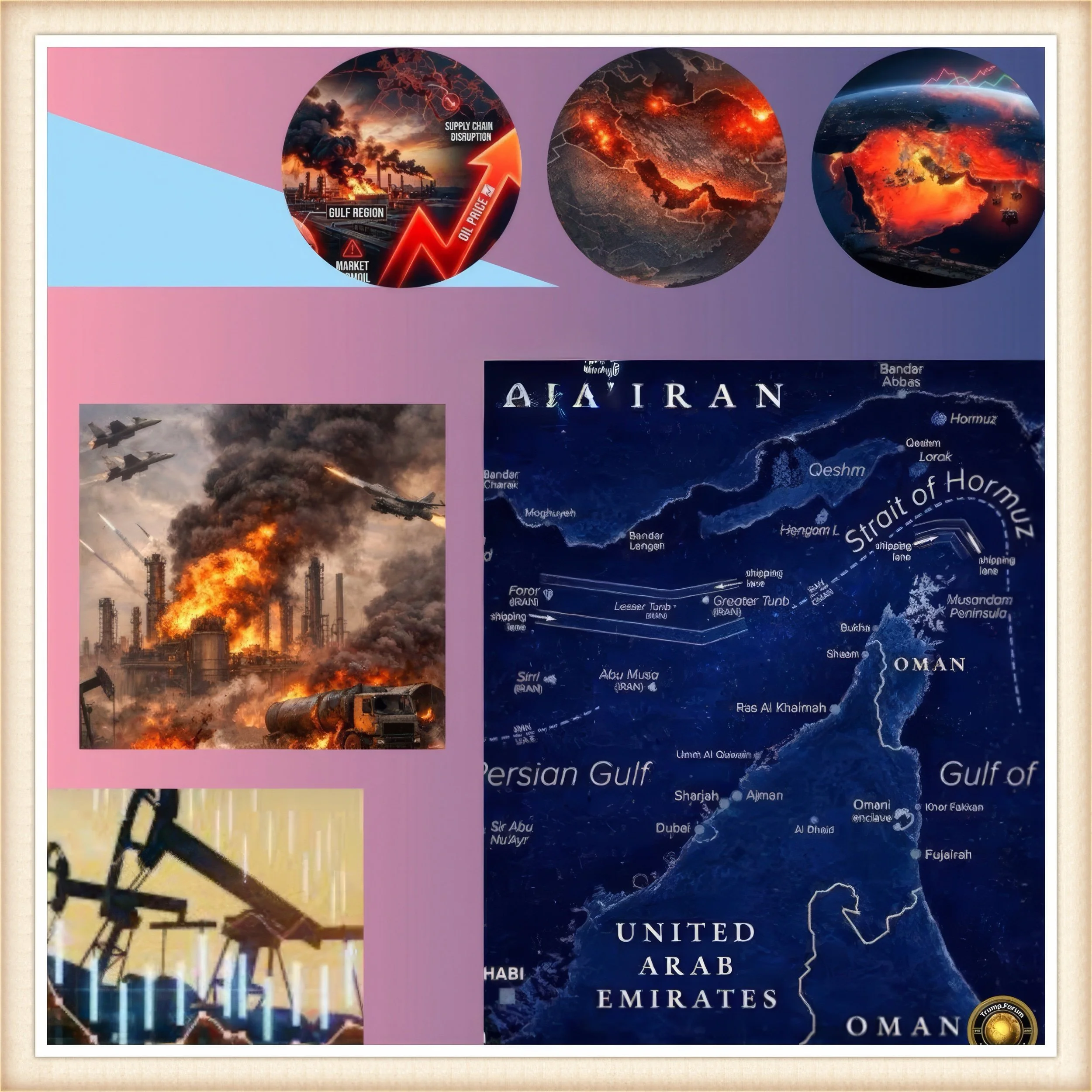
Asia’s contemporary growth model rests on abundant and affordable imports of crude oil and liquefied natural gas from the Gulf, funneled through the narrow Strait of Hormuz into sprawling refining and petrochemical complexes from India to Japan.
The American‑Israeli war with Iran has abruptly weaponised this geography, as attacks, mines, drones, and naval interdictions have “all but stopped” seaborne exports from several major Gulf producers and effectively closed Hormuz to routine tanker traffic.
Brent crude has surged above $100 per barrel and, at times, flirted with $110–$130, a rise of around 40–45% in little more than a week, while European gas benchmark prices have nearly doubled and Asian LNG benchmarks have spiked sharply.
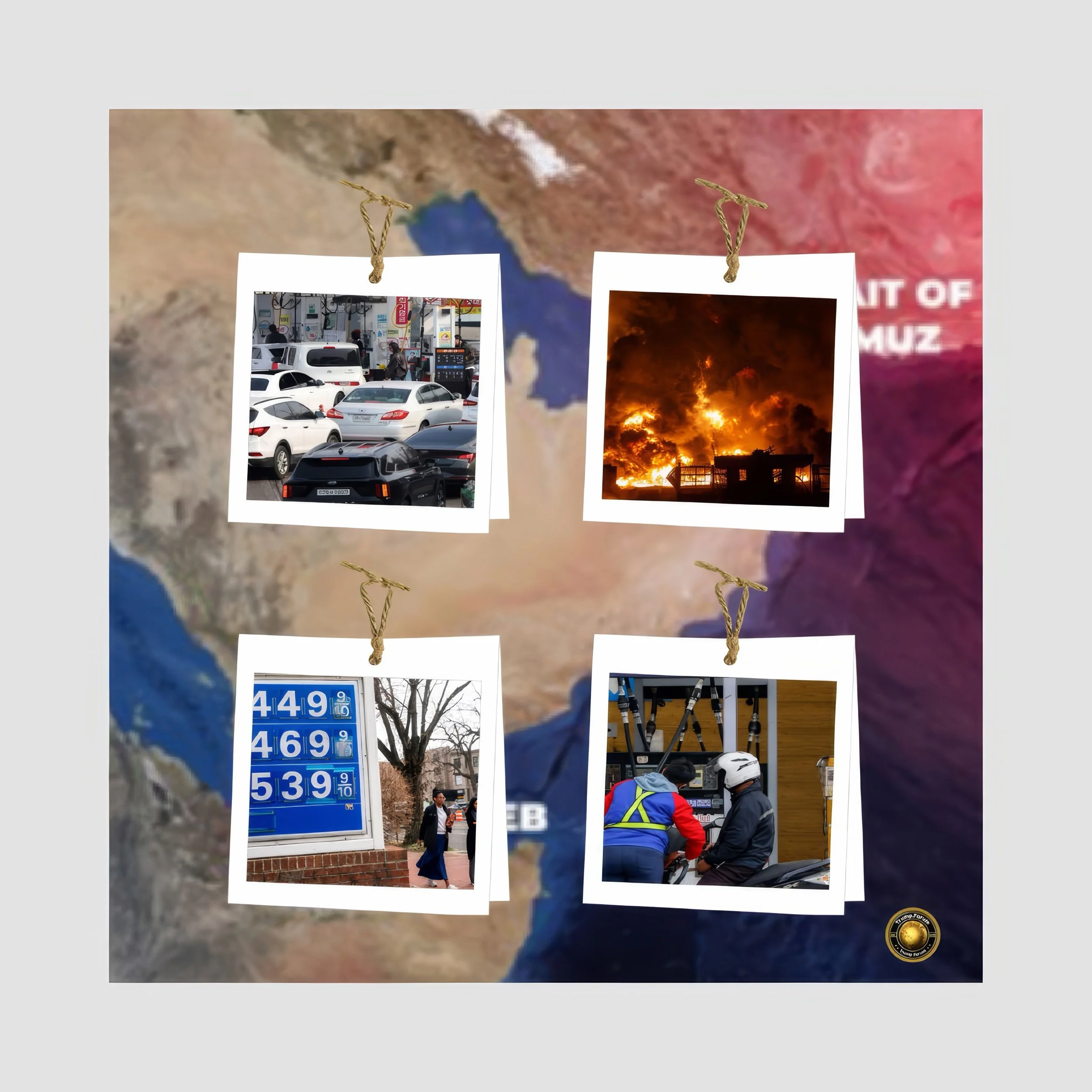
The immediate consequences are visible in retail fuel prices and industrial sentiment.
American motorists are now paying well above $3.40 per gallon on average, roughly $0.50 more than in late February, while European gas prices have soared by roughly 90% relative to pre‑war levels, fuelling fears of a second cost‑of‑living shock.
Asia, however, is the systemic epicentre: as much as four‑fifths of its crude imports and the bulk of its LNG volumes transit Hormuz, leaving large importers such as India, South Korea, Japan, Thailand, and the Philippines exposed to supply disruptions and spiralling insurance and freight costs.
Governments from Manila to Seoul have begun rationing energy use, drawing down strategic reserves, and scrambling for Atlantic Basin supplies; some, like the Philippines, are shortening the working week for public offices to conserve fuel and electricity.
FAF argues that the crisis is less an isolated “shock” than the culmination of three structural trends: the securitisation of energy transit routes; the eastward re‑centering of hydrocarbon demand; and the fragmentation of the global order into competing geopolitical blocs.
The Hormuz blockade and Gulf production cuts expose Asia’s asymmetric dependence on a single maritime artery and a small cluster of exporters, even as they accelerate a long‑running but incomplete shift toward diversification, decarbonisation, and strategic stockpiling.
They also sharpen geopolitical alignments, testing emerging axes such as a China‑Russia‑Iran grouping versus a looser US‑India‑Japan‑Gulf partnership as each coalition manoeuvres to secure privileged access to constrained supplies.
FAF analysis proceeds in seven parts.
It first reconstructs the historical evolution of Asia’s dependence on Gulf energy and the peculiar centrality of Hormuz.
It then outlines the current status of the conflict and the physical disruption to oil and gas flows.
A third section maps key developments since hostilities began, from production decisions in Gulf capitals to emergency policies in Asia and Europe.
A fourth examines the latest facts and emerging concerns for growth, inflation, and political stability.
A fifth offers a cause‑and‑effect analysis that links battlefield moves to market dynamics, macroeconomic outcomes, and strategic realignments.
A sixth section considers plausible future trajectories, from temporary price spikes to a structural reordering of energy flows and security partnerships.
The analysis closes with reflections on what this crisis reveals about Asia’s vulnerability and the unfinished agenda of energy transition and regional security architecture.
Introduction
From Hormuz chokepoint to household fuel bills, Iran conflict exposes Asia’s dangerous dependence on Gulf hydrocarbons
For more than four decades, the Indo‑Pacific economic order has rested on a tacit bargain: Gulf producers would provide reliable, reasonably priced oil and gas, and Asian importers would underwrite demand, capital, and technology.
This arrangement, lubricated by US naval supremacy in key chokepoints, allowed export‑led industrialisation in North‑East and South‑East Asia, fuelled India’s late‑comer growth, and sustained a dense web of petrochemical, shipping, and manufacturing value chains across the region.
The war now raging between America, Israel, and Iran has brutally exposed how fragile that bargain has become.
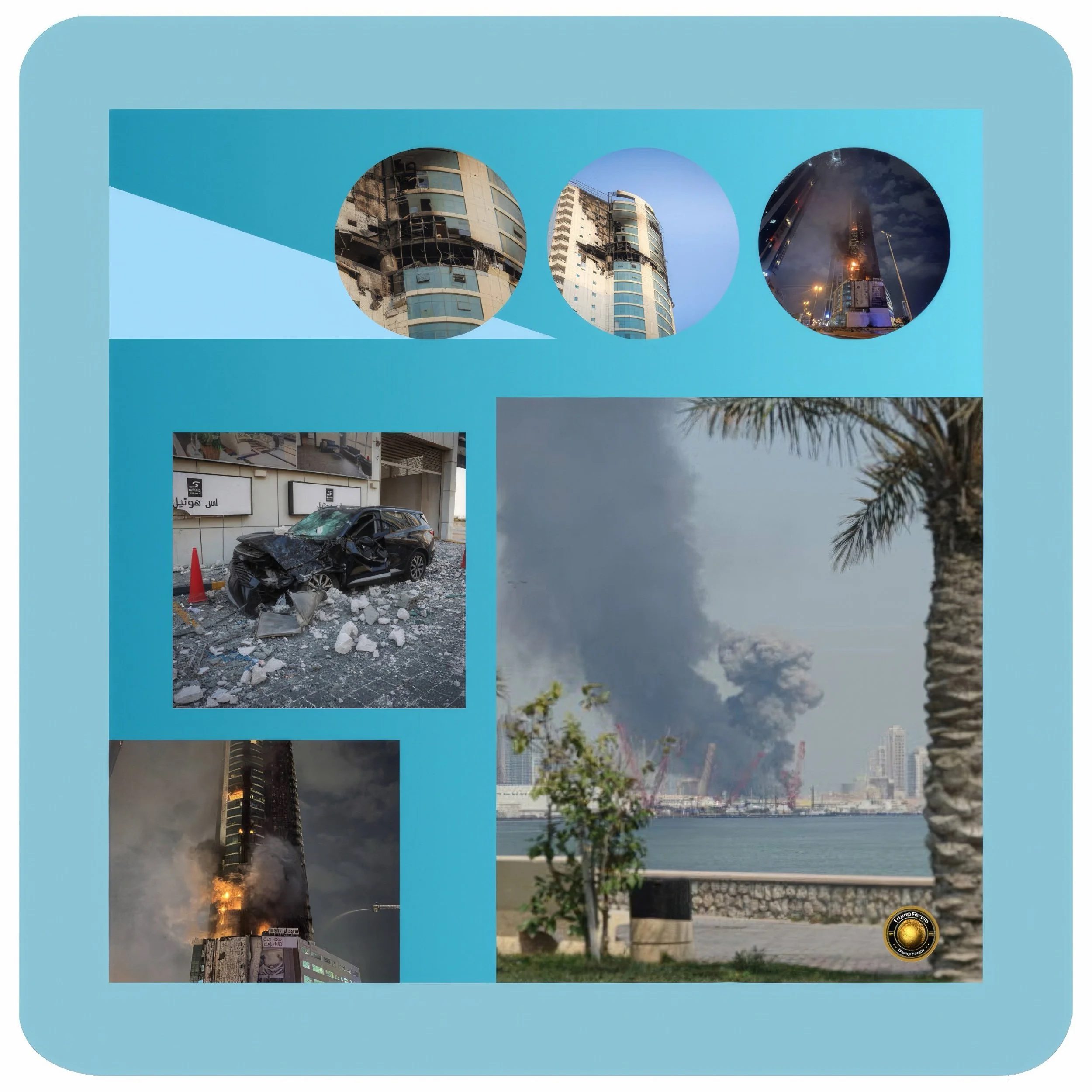
Drone and missile strikes, naval skirmishes, and the deployment of mines and anti‑ship capabilities around Hormuz have made routine tanker crossings prohibitively risky, triggering an exodus of commercial shipping and a de facto paralysis of the world’s most important energy corridor.
Lloyd’s and other insurers have reportedly hiked war‑risk premia by about 50% for vessels entering the Gulf, while some shipping companies have suspended calls altogether.
In parallel, several Gulf producers have curtailed output because storage tanks are filling up, further tightening supply.
Asia’s predicament is therefore not simply about higher prices. It is about the sudden interruption of a physical lifeline and the revelation that, despite repeated “energy security” pledges since the 1970s, the region remains critically exposed to events in a narrow waterway thousands of kilometres away.
The war has turned energy into an overt instrument of coercion and bargaining, deepening a pattern already visible in Russia’s use of gas exports against Europe and in earlier Gulf crises.
History and Current Status
In the 1970s oil shocks, Western economies bore the brunt of producer embargoes and OPEC supply cuts, but Asia’s role as a consumer was still emergent.
Over subsequent decades, as Europe diversified and, in some cases, plateaued its energy demand, Asia became the gravitational centre of global hydrocarbon consumption.
China’s industrial surge, India’s late‑but‑rapid growth, and the enduring energy intensity of Japan and South Korea turned the region into the primary destination for Gulf crude and LNG.
The Strait of Hormuz emerged as the indispensable hinge of this system.
A significant share of globally traded oil and a large fraction of LNG exports flow through this one narrow waterway between Iran and Oman, connecting Gulf export terminals to markets east and west.
For Asia, the dependence is overwhelming: estimates suggest that more than 4/5th of its crude imports and the majority of its LNG shipments rely on uninterrupted passage through Hormuz, binding Asian prosperity to events along a shipping corridor barely visible on most maps.
This dependence persisted despite repeated scares: the Iran‑Iraq “tanker war” of the 1980s, the US‑Iran escalations over nuclear issues, and more recent attacks on tankers and energy infrastructure.
Each episode prompted discussions of diversification—through pipelines from Russia and Central Asia, through Arctic and African supplies, and through accelerated renewables and nuclear programmes—but the sheer scale, quality, and cost competitiveness of Gulf exports kept Asia’s reliance high.
The current war has turned chronic vulnerability into acute crisis.
Following a cross‑border escalation that drew in American forces and Israeli air power against Iranian targets, Iran and aligned militias have targeted shipping and threatened to close Hormuz, while US and allied naval assets have responded with escort operations and counter‑strikes.
Tanker traffic has “almost completely” collapsed, with tracking data and commercial reports showing a sharp fall in loaded crude and LNG cargoes leaving key Gulf ports.
Iraq’s exports from major southern fields have reportedly plunged by roughly 70%, while other producers are “carefully managing” offshore output as onshore storage fills.
As the conflict enters its second week, Brent crude has crossed $100 and, at moments, approached $110–$130 per barrel; US crude has posted its largest weekly gain since the early 1980s, and gas benchmarks in Europe and Asia have staged double‑digit jumps.
The war has thus translated rapidly into global price spikes, with Asia doubly hit by both oil and LNG disruptions.
Key Developments since hostilities began
Several interlocking developments have defined the first phase of this crisis. On the supply side, physical flows from the Gulf have fallen because of both coercion and caution.
Iran has used direct and proxy capabilities to threaten tankers and port infrastructure, creating a de facto blockade of Hormuz as shippers re‑route or stand down.
Gulf producers, unable to move volumes out, have trimmed production to avoid overflowing storage, with Iraq and, to a lesser degree, selected Gulf exporters reducing output sharply from pre‑war levels.
Global benchmarks have reacted with extraordinary volatility.
Brent’s jump above $100 per barrel represents an increase of more than 40% since the outbreak of hostilities, while US crude has registered weekly gains above 30%.
Qatar and other key LNG exporters have also curtailed or temporarily halted shipments, whether due to direct security risks or logistical constraints, pushing European and Asian gas futures sharply higher.
European prices at the Dutch TTF hub have risen by more than a third in a single session and by about three‑quarters over the week, while the Japan‑Korea‑Marker benchmark has climbed to its highest level in a year.
In Asia, knock‑on developments have multiplied. China has reportedly halted exports of refined products in order to prioritise domestic supply, tightening regional product markets.
Vietnam and Thailand have stopped selling bunker fuel to traders and suppliers, reflecting both scarcity and risk aversion.
The Philippines, facing rising import bills and potential shortages, has ordered a shorter working week for government offices and instructed agencies to cut petrol and electricity use by roughly 10–20%.
Across the region, governments are drawing down strategic reserves, adjusting administered fuel prices, and floating emergency conservation measures.
Outside Asia, policymakers are also scrambling. In Europe, the spectre of a new gas crisis—barely a few years after the Russia‑Ukraine shock—has triggered urgent debates on storage, rationing, and support to energy‑intensive industries.
In Washington, the Trump administration has indicated an intention to restore safe passage through Hormuz and hinted at possible releases from strategic reserves, though concrete measures remain limited and timelines uncertain.
The net effect has been a surge in uncertainty premiums on energy prices, with traders pricing not only current disruptions but also the possibility of escalation or prolonged blockade.
Latest Facts and Emerging Concerns
The most visible facts are the price spikes themselves. Brent above $100, US crude near or above $110, and LNG benchmarks up by double‑digit % have rapidly filtered into retail prices, pushing up the cost of petrol, diesel, and electricity around the world.
American drivers are already paying more than $3.40 per gallon on average, while European consumers face surging gas and power bills.
For Asia’s import‑dependent economies, where fuel costs often feed directly into food prices, transport fares, and household budgets, this translates into an immediate squeeze on real incomes.
Economists typically estimate that a sustained $10 increase in oil prices shaves close to 1% off China’s GDP growth, with comparable though somewhat smaller effects for India and South‑East Asia.
With prices rising far more than $10 in a short period, and with gas prices soaring in parallel, the potential drag on regional growth is significant.
Manufacturing sectors that rely on cheap fuel for power and logistics, from textiles and chemicals to electronics and automobiles, now face higher input costs at a time when global demand remains fragile.
At the macroeconomic level, the crisis raises three interconnected concerns.
First is the risk of stagflation: slower growth coupled with higher inflation, particularly in emerging Asian economies that have limited fiscal space and elevated post‑pandemic debt.
Second is the possibility of renewed balance‑of‑payments pressures for chronic energy importers, as widening trade deficits strain currencies and foreign‑exchange reserves.
Third is the spectre of social unrest, as rising fuel and food prices interact with inequality and political discontent; memories of past protests triggered by fuel subsidy cuts in countries from Indonesia to India remain vivid.
A subtler but equally important concern is the re‑pricing of energy security itself.
Analysts note that once a chokepoint like Hormuz is weaponised, the implicit “risk premium” embedded in energy prices rarely returns to its previous level, even after the immediate crisis abates.
Markets, insurers, and policymakers update their expectations about the likelihood of future disruptions, leading to structurally higher costs for shipping, hedging, and strategic stockpiling.
For Asia, this implies not just a temporary shock but a possible step‑change in the baseline cost of doing business.
Cause‑and‑Effect Analysis
Blocked Gulf tankers, soaring Brent prices, and anxious Asian capitals redefine global energy security in real time
The most direct causal chain runs from battlefield to barrel.
The American‑Israeli strikes on Iranian territory, coupled with Iran’s retaliatory threats against shipping and regional infrastructure, created an environment in which commercial tanker traffic through Hormuz became untenable.
Insurers raised premia, shipowners diverted or idled vessels, and ports faced both kinetic risks and operational bottlenecks.
Physical flows of crude and LNG out of the Gulf fell sharply; producers with limited storage capacity cut output; and the resulting tighter supply conditions pushed benchmark prices higher.
Yet the crisis is not merely a textbook case of supply shock. Markets responded not only to the immediate loss of barrels but also to expectations of future disruption.
Traders incorporated scenarios in which the blockade persists, escalates, or extends to adjacent sea lanes, assigning higher probabilities to outcomes that would have been considered tail risks weeks earlier.
This expectation channel amplifies volatility: even rumours of attacks or negotiations can move prices by several % as market participants reassess the odds of different paths.
The second causal chain connects energy prices to macroeconomic outcomes.
Higher oil and gas prices feed into domestic economies through multiple channels: direct increases in household fuel and electricity bills; higher transport and logistics costs that raise the price of goods; and higher input costs for energy‑intensive industries.
Central banks, already cautious after years of inflation management following the pandemic and other shocks, may feel compelled to tighten policy to anchor expectations, thereby slowing growth further.
Fiscal authorities face pressure to expand subsidies, tax relief, or cash transfers to cushion vulnerable households, potentially widening deficits.
A third causal chain is geopolitical.
The weaponisation of Hormuz reinforces the perception that energy transit is a legitimate instrument of coercion and bargaining, following earlier precedents such as Russia’s curtailment of gas supplies to Europe.
Asian stakeholders, observing both the vulnerability and Western responses, may conclude that reliance on US naval protection and on global spot markets is insufficient.
This, in turn, strengthens incentives to pursue long‑term offtake agreements, equity stakes in upstream projects, and alternative routes that bypass contested chokepoints.
This realignment manifests in subtle but meaningful ways.
China, already deepening its energy partnership with Russia and Iran, can leverage the crisis to lock in discounted supplies, even as it temporarily faces higher spot prices.
India, Japan, and South Korea, more closely aligned with the US and Gulf monarchies, will likely seek preferential access and emergency supplies, perhaps in exchange for diplomatic or security concessions.
The crisis thus sharpens systemic competition: access to molecules becomes a proxy for access to influence.
Future Steps and Strategic Trajectories
Asia confronts hardest energy reckoning in decades as war, prices, and politics converge around the Strait of Hormuz
Policy responses in Asia and beyond will unfold along three broad vectors: crisis management, diversification, and structural transformation. Crisis management is already under way.
Governments will continue to draw on strategic reserves—often calibrated to cover several weeks of imports—while seeking short‑term cargoes from less affected regions such as West Africa, the North Sea, or the Americas.
They will also experiment with demand‑side measures, including conservation campaigns, temporary rationing, and adjustments to working hours, as in the Philippines.
Diversification strategies will gain new urgency. Even before this war, Asian importers were investing in pipelines, new LNG regasification terminals, and long‑term contracts with a broader array of suppliers.
The current shock will likely accelerate projects that can bypass Hormuz, such as overland corridors linking Central Asia to China and South Asia, expanded capacity on existing Siberian pipelines, and revived interest in routes across Pakistan or through the Arctic.
However, these options are expensive, politically fraught, and slow to materialise, underscoring the time lag between strategic recognition and physical reconfiguration.
Structural transformation points to the energy transition itself.
The crisis offers an uncomfortable but powerful argument for reducing hydrocarbon dependence, not only for climate reasons but as a hedge against geopolitical risk.
Expanded investment in renewables, storage, nuclear power, and grid modernisation could, over time, dampen the impact of oil and gas shocks on Asian economies.
Some governments may use the current emergency to justify policy reforms—such as subsidy rationalisation, carbon pricing, or accelerated permitting for low‑carbon projects—that would be politically difficult in calmer times.
At the same time, the war exposes the limits of “transition optimism”. Even the most ambitious decarbonisation scenarios envisage substantial oil and gas use in Asia for years to come, especially in sectors like heavy industry, shipping, and aviation.
The immediate crisis must therefore be managed within a hydrocarbon‑heavy system. Policymakers will need to strike a delicate balance: investing in resilience for a fossil‑fuel present while not locking in infrastructure that undermines the low‑carbon future.
Conclusion
Iran war shuts Hormuz artery, hurling Asia into energy crisis and testing fragile Indo‑Pacific economic resilience
The Iran war and the effective strangling of the Strait of Hormuz have plunged Asia into an energy panic that is at once sudden and decades in the making.
The current spike in Brent and LNG prices, the visible rationing measures, and the scramble for alternative supplies are the surface manifestations of a deeper structural vulnerability: the region’s heavy dependence on a single corridor and a narrow set of suppliers for the fuels that power its growth.
This crisis will not, by itself, overturn the global energy order. But it is likely to leave a lasting mark on the perceived risk of maritime chokepoints, the pricing of energy security, and the configuration of geopolitical alignments in the Indo‑Pacific.
For Asian stakeholders, the lesson is clear and sobering.
The task is not only to weather the current storm, but to craft a more resilient, diversified, and ultimately less hydrocarbon‑dependent foundation for prosperity in a world where energy routes, like currencies and technologies, are increasingly instruments of strategic competition.