The Hormuz Hit to Helium: Geopolitical Disruption, Supply Chain Fragility, and the Future of the Chip-Driven Global Economy
Executive Summary
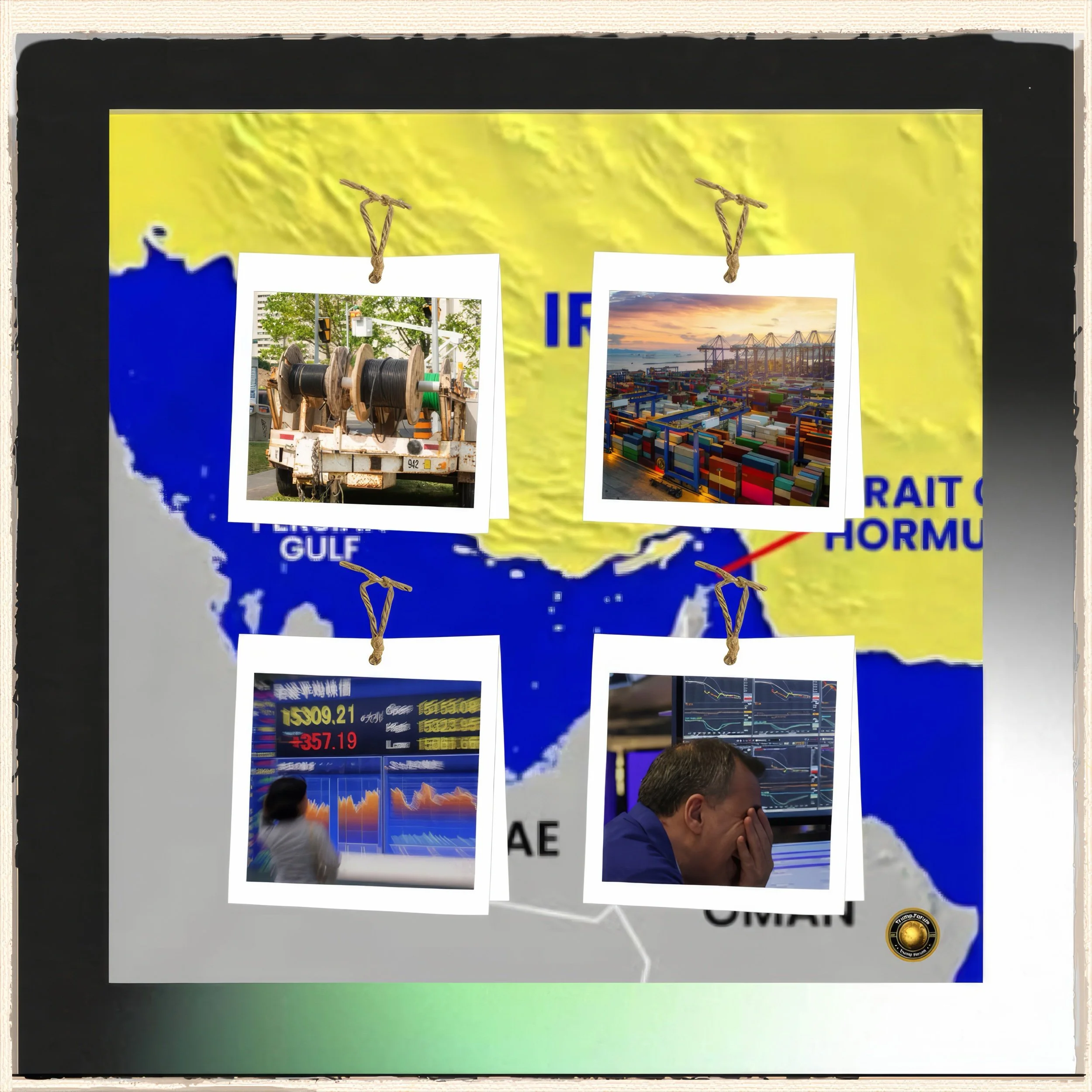
The 2026 Iran-United States conflict, which erupted following joint American and Israeli airstrikes that killed Supreme Leader Ali Khamenei and prompted Iran's closure of the Strait of Hormuz, has triggered a cascade of commodity disruptions whose full scope the global economy is only beginning to absorb.
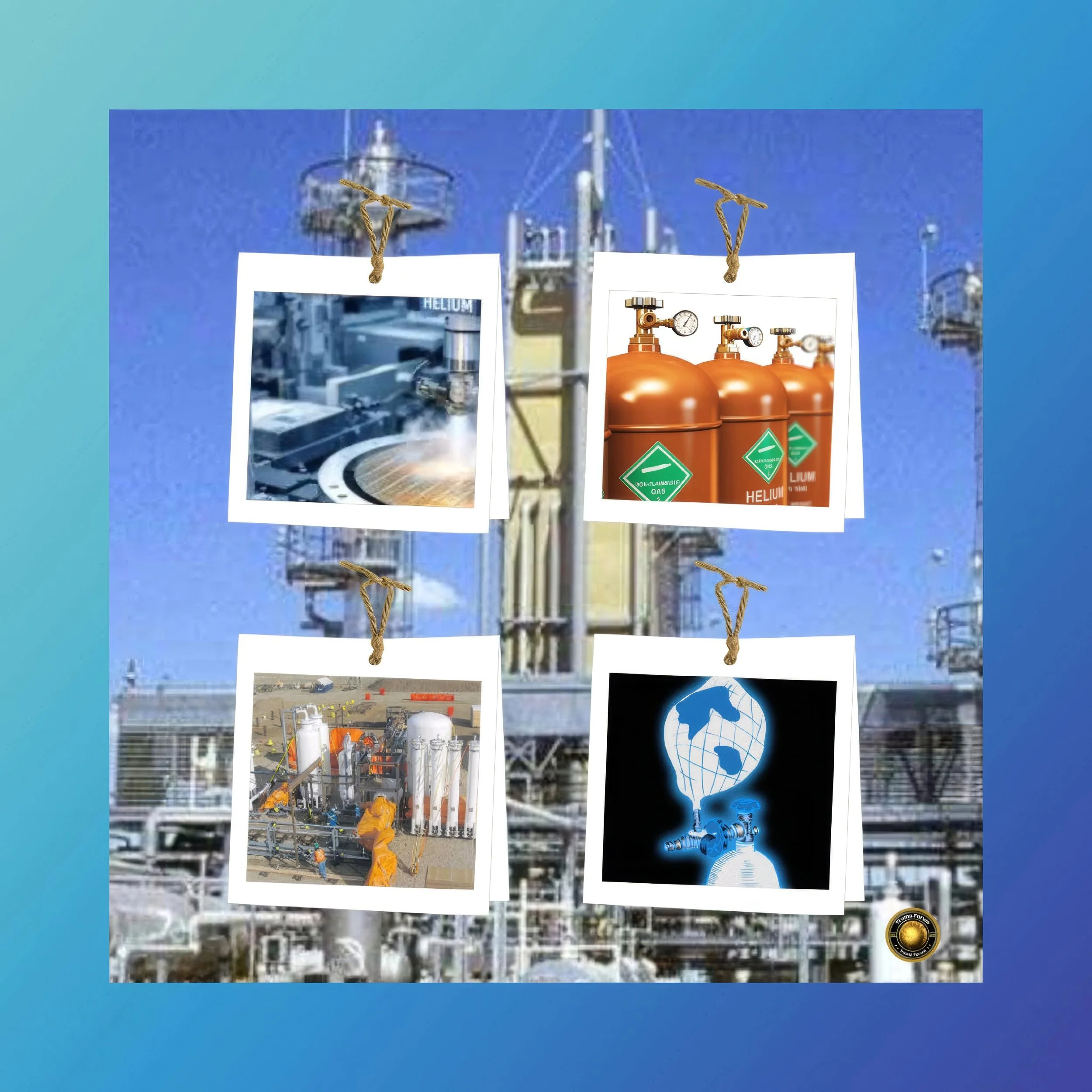
Among the least visible yet most consequential of these disruptions is the near-total interruption of Qatar's helium exports, which ordinarily account for approximately 33% of global supply.
Iranian drone and missile strikes on Qatar's Ras Laffan Industrial City—home to the world's largest liquefied natural gas complex and its co-located helium extraction facilities—forced QatarEnergy to declare force majeure on all LNG-related output on March 4th, 2026.
The physical damage to helium infrastructure at Ras Laffan, combined with the logistical blockade imposed by the closure of the Strait of Hormuz, has removed between 30 and 33% of global helium production from the market, equivalent to roughly 5.2 million cubic meters per month.
Spot prices, which stood at approximately $300 per thousand cubic feet before hostilities, have since surged to between $600 and $900 per thousand cubic feet, with credible projections suggesting they could reach $2,000 per thousand cubic feet if the disruption is prolonged.
The consequences extend far beyond industrial gas markets: helium is an irreplaceable input in semiconductor fabrication, magnetic resonance imaging, superconducting quantum research, and the cooling systems that sustain artificial intelligence data centers.
With a ceasefire now in place but its durability uncertain, and with damage to Ras Laffan assessed as so severe that repairs may take up to five years for the worst-affected systems, the helium crisis represents one of the defining strategic supply vulnerabilities of the AI era.
Introduction: A Noble Gas in Ignoble Times
There is an elegant irony in the fact that helium—element number two on the periodic table, the most chemically inert substance in the known universe—has become one of the most politically explosive commodities of 2026.
Colorless, odorless, nonreactive, non-toxic, and lighter than air, helium lacks the visual drama of crude oil or the social urgency of grain.
Yet the sudden withdrawal of nearly one-third of global supply has sent procurement officers at chipmakers, hospital administrators managing MRI fleets, and defense contractors quietly but urgently revising their logistics plans.
The crisis is a textbook case of what economists and security analysts call a "strategic chokepoint vulnerability"—the condition in which a highly specialized, geographically concentrated, non-substitutable input becomes the soft underbelly of otherwise robust technological and industrial systems.
The broader context of the helium crisis is the Iran war itself, the most significant direct military engagement involving the United States in the Middle East since the 2003 invasion of Iraq.
The conflict began with coordinated American and Israeli airstrikes targeting Iran's nuclear program and leadership; Iran's response included the declaration of a Hormuz closure, missile barrages against Gulf Cooperation Council infrastructure, and strikes on Qatari gas facilities that Tehran had long viewed as instruments of Western energy strategy.
The ceasefire subsequently negotiated has not reopened Hormuz to normal traffic, and the physical damage inflicted on Qatar's Ras Laffan complex has proved far more structurally significant than initial assessments suggested.
In this context, helium is not merely an industrial casualty of war. It is a lens through which the world can observe the profound fragility of the supply chains undergirding the AI-driven, chip-dependent global economy.
History and Current Status: From Cold War Curiosity to Civilization-Critical Input
Helium's journey from a scientific curiosity to a civilization-critical industrial input spans more than a century. It intersects with nuclear weapons programs, space exploration, and the rise of the semiconductor industry.
The United States was, for most of the twentieth century, the world's dominant and near-monopolistic helium producer, extracting the gas as a byproduct of natural gas production in the Texas-Kansas-Oklahoma helium belt.
The U.S. Bureau of Mines began stockpiling helium during World War I for use in military airships, and the federal government maintained a strategic reserve—the Federal Helium Reserve at the Cliffside Gas Field in the Texas Panhandle—that served as a global supply buffer for decades.
The political economy of helium changed fundamentally with the 1996 Helium Privatization Act, which directed the U.S. government to sell off the Federal Helium Reserve, a decision widely criticized in retrospect for dismantling the only meaningful global buffer stock of a non-renewable, non-substitutable element.
The sell-off persisted through the 2000s and 2010s, even as demand for helium accelerated dramatically, driven by the expansion of MRI infrastructure in the global healthcare system, the growth of semiconductor fabrication facilities in East Asia, and, eventually, the exponential scale-up of AI-related computing infrastructure beginning in the early 2020s.
Qatar's emergence as a helium superpower was itself a consequence of its extraordinary natural gas endowment.
The North Dome field, which Qatar shares with Iran (where it is known as South Pars), is the largest single natural gas reservoir on earth.
Helium is present in Qatar's North Dome gas at concentrations high enough to make extraction economically viable alongside LNG production. Qatarenergy built three successive helium plants at Ras Laffan: Helium-1 (operational 2005), Helium-2 (operational 2013, with a production capacity of 1.3 billion cubic feet per day), and Helium-3 (operational 2021, adding 400 million standard cubic feet of additional annual capacity).
By 2025, Qatar was supplying approximately 63 million cubic meters of helium per year, equivalent to roughly 33% of global output, making it the world's second-largest producer after the United States and the largest single exporter.
The current crisis began on March 2nd, 2026, when Iranian drone and missile strikes struck Ras Laffan Industrial City.
QatarEnergy shut down LNG operations and declared force majeure two days later.
The strikes damaged helium extraction infrastructure to a severity that damage assessors estimated would take weeks to months to restore for operational systems, and potentially up to five years for the most heavily affected infrastructure.
Simultaneously, Iran's closure of the Strait of Hormuz—through which Qatar's helium exports must transit en route to Asian, European, and American markets—imposed a logistical blockade on top of the production shutdown, compounding the supply shock into what industry analysts described as a dual disruption without modern precedent.
The United States and Iran subsequently reached a ceasefire agreement, which has been extended.
Still, Hormuz has not been fully reopened to commercial shipping, and the political conditions for QatarEnergy to safely and confidently restart full helium operations have not yet been met.
Industry consultants at Intelligas Consulting have assessed that, even in an optimistic scenario in which the Strait reopens tomorrow, restarting helium production to normal capacity would take several months, with supply normalization not expected before the June-to-August 2026 window at the earliest.
Key Developments: The Anatomy of a Supply Shock
The first major downstream signal of the helium crisis came on March 17th, 2026, when Airgas Inc., the largest U.S. industrial gas distributor and a subsidiary of France's Air Liquide, declared a force majeure on helium shipments to its customers.
The force majeure letters, reviewed by Bloomberg News, stated that Airgas anticipated providing customers with up to 50% of their normal monthly helium allocations and imposed a temporary surcharge of $13.50 per hundred cubic feet above contracted prices.
The Airgas declaration was not merely a commercial signal; it was an acknowledgment that the supply disruption had penetrated deep into domestic U.S. distribution chains, affecting customers ranging from research universities to semiconductor foundries to hospital MRI departments.
Air Liquide's executive team publicly acknowledged that the company would need to source helium from "other places in the world," implicitly referencing alternative supplies from the United States, Russia, and Algeria.
Air Products and Chemicals, another major industrial gas group, was identified by the Wall Street Journal as a potential beneficiary of spot-market tightness, given its exposure to both American and non-Qatari helium supply.
In the semiconductor industry, the crisis was severe.
Taiwan, home to TSMC—the world's leading manufacturer of advanced logic chips—faces a particularly acute vulnerability given its distance from alternative helium supply sources and its dependence on Gulf-origin helium.
South Korea, home to Samsung Electronics and SK Hynix—the dominant producers of high-bandwidth memory chips upon which AI accelerators depend—similarly flagged supply bottlenecks.
Germany, a significant consumer of helium for its industrial and research base, issued official warnings about supply constraints.
The Taiwan semiconductor industry trade association SEMI Taiwan described the shortage as not yet critically threatening in the very short term, given existing inventory buffers, but acknowledged that a prolonged disruption of several months would impose severe production constraints.
Exxon Mobil emerged as the most immediately positioned beneficiary of the disruption.
The company's Shute Creek Gas Plant at LaBarge, Wyoming—the largest helium extraction facility in the United States—produces approximately 1.4 billion cubic feet of Grade-A helium annually, supplying 20% of global output from reserves assessed as sufficient to sustain production for 8 more decades.
UBS analyst Manav Gupta noted that with over 30% of global capacity disrupted, LaBarge had become critical to meeting worldwide demand, and that every $100 rise in spot helium prices could generate an additional $119 million in EBITDA for Exxon if output were sold on the spot market at 85% capacity utilization.
Russia's Amur Gas Processing Plant, operated by Gazprom in Russia's Far East, emerged as the most immediately scalable non-Western alternative.
The facility's 2nd helium production line became fully operational in late 2025, and Russian helium, priced at approximately $310 per thousand cubic feet versus Qatari supply at $470 per thousand cubic feet, had already captured significant Asian market share, with Chinese imports of Russian helium growing by over 60% in 2025.
The crisis has accelerated Russia's penetration of Asian helium markets at the direct expense of Qatari and American suppliers, introducing a new geopolitical dimension to the supply disruption.
Latest Facts and Concerns: The Numbers Behind the Crisis
The quantitative dimensions of the 2026 helium crisis are extraordinary in the historical context. Before the Iran conflict, global helium production was approximately 190 million cubic meters per year, with Qatar contributing roughly 63 million cubic meters and the United States approximately 55 million cubic meters annually.
The loss of Qatar's contribution—even partially and temporarily—represents the largest single-source supply disruption in the history of the commercial helium industry, exceeding the impact of the Russian Amur plant fires of 2021 and the U.S. Federal Reserve draw-down episodes of the 2010s, both of which had themselves produced significant price volatility.
Spot prices for helium, which had stood at approximately $300 per thousand cubic feet before March 2026, jumped to $600 and then to $900 per thousand cubic feet within weeks of the Ras Laffan shutdown.
Spot market prices have reportedly more than doubled from pre-war levels, and some industry estimates suggest prices could reach $2,000 per thousand cubic feet if the disruption persists for the remainder of 2026.
The price trajectory, if sustained, would represent an increase of approximately 567% over pre-crisis baseline pricing—the sharpest commodity price spike in percentage terms since the natural gas price surges of 2021-2022.
The structural dimension of the crisis is more alarming than the price signal alone.
Damage assessors examining the Iranian strikes on Ras Laffan have estimated that approximately 14% of Qatar's helium export capacity—equivalent to roughly 4-5% of global supply—could be offline for years due to infrastructure damage. In contrast, the remaining Qatari capacity is constrained by logistics disruptions centered on the Strait of Hormuz.
This means that even a full resolution of the military conflict and a reopening of Hormuz would not immediately restore pre-crisis helium supply conditions; the market would remain structurally tight for an extended period.
A structural trend in chipmaking amplifies the semiconductor industry's vulnerability: per-chip helium consumption is increasing, not decreasing, as transistor densities advance.
Advanced node fabrication—the processes at 5 nanometres, 3 nanometres, and 2 nanometres that define the frontier of high-performance computing and AI chip production—requires helium in extreme ultraviolet (EUV) lithography systems, in chemical vapor deposition chambers, in plasma etching processes, and in the leak-detection protocols that govern vacuum chamber integrity.
As IDTechEx has reported, the semiconductor industry accounts for approximately 24% of total global helium consumption, a share projected to grow as AI-driven semiconductor demand accelerates.
The AI industry's insatiable appetite for the most advanced chips—GPUs, high-bandwidth memory, and custom AI accelerators—has placed the frontier segment of semiconductor manufacturing in a position of acute dependence on helium at precisely the moment supply has collapsed.
Healthcare represents a second critical vulnerability.
Liquid helium is the coolant that maintains the superconducting magnets in MRI machines at the cryogenic temperatures required for operation; approximately 95% of MRI systems worldwide depend on liquid helium, and a prolonged supply disruption would have direct implications for medical imaging availability in hospitals that cannot afford to let their MRI magnets quench.
Research institutions that depend on cryogenic equipment—including those working in quantum computing, particle physics, and materials science—face similar constraints.
Cause-and-Effect Analysis: The Cascade from Ras Laffan to the Global Economy
The causal chain connecting the 2026 Iran war to the helium crisis and its downstream effects is both direct and deeply structural, operating through four distinct but interconnected pathways.
The first pathway is the direct physical destruction of production infrastructure. Iranian strikes on Ras Laffan on March 2nd, 2026, damaged Qatar's helium extraction and processing facilities, compelling QatarEnergy to shut down operations and declare force majeure.
This removed the world's single largest helium export hub from the market at a stroke. The damage is not merely operational—it is structural, with repair timelines for the most severely affected systems measured in years rather than months.
The second pathway is the logistical blockade imposed by the Hormuz closure. Even if Qatar's production infrastructure were fully operational, the closure of the Strait of Hormuz would prevent the export of liquefied helium aboard LNG carrier vessels that must transit the strait.
Approximately 25% of global helium supply is dependent on Hormuz transit routes, and the closure has, in effect, imposed a dual blockade—production shutdown compounded by export interdiction—that no single alternative supply source can compensate for in the short term.
The third pathway is the propagation of price signals through distribution chains.
The force majeure declarations by QatarEnergy and Airgas have triggered contractual cascades across the industrial gas supply chain, empowering distributors to invoke force majeure clauses in their own customer contracts.
The $ 13.50-per-hundred-cubic-feet surcharge imposed by Airgas is not merely a financial burden; it is a signal to helium consumers to reduce non-essential consumption, seek alternative sources, and accelerate investment in helium recycling and recovery infrastructure.
These behavioral responses, while rational from a microeconomic standpoint, further tighten the spot market and exacerbate price volatility.
The 4th pathway is the geopolitical reorientation of supply chains.
The crisis has accelerated Russia's penetration of Asian helium markets, with Gazprom's Amur plant positioned as the most immediately scalable alternative to Qatari supply.
This development carries significant strategic implications: it deepens Asian—particularly Chinese—dependence on Russian energy infrastructure, reinforces the commodity-for-technology exchange dynamics that characterize Chinese-Russian economic relations, and potentially complicates U.S. and European efforts to maintain technological competitiveness in AI and semiconductors by diverting critical inputs toward supply chains outside the Western alliance framework.
For Taiwanese and South Korean chipmakers dependent on helium, the choice between expensive American supply and geopolitically complicated Russian supply is not a comfortable one.
The downstream effects on AI infrastructure are particularly consequential.
The AI build-out of the mid-2020s has been predicated on an assumption of essentially unconstrained access to advanced semiconductors—an assumption already tested by export controls and now tested again by helium supply constraints.
Data center operators planning to deploy next-generation GPU clusters or AI accelerator arrays depend on a continuous supply of the most advanced chips, which in turn depend on helium-intensive fabrication processes.
A sustained helium shortage would not merely delay chip production; it would introduce a new category of infrastructure risk into the economics of AI deployment, potentially affecting investment timelines, data center construction schedules, and the competitive dynamics of the AI industry itself.
Future Steps: Pathways Toward Supply Security
The helium crisis of 2026 has exposed three categories of structural vulnerability that demand both immediate and long-term policy and investment responses.
In the immediate term, the priority for consuming nations and industries must be demand rationing and inventory management. Airgas and other major distributors have already implemented allocation protocols, and healthcare providers have been identified as priority recipients.
Semiconductor manufacturers in Taiwan and South Korea are drawing down existing inventory buffers while simultaneously seeking alternative supplies from U.S. and Russian sources.
The fundamental constraint is time: the helium supply chain operates monthly—it takes approximately 1 month to ship helium from the production site to the end user—and the restoration of the Qatari supply, even under an optimistic scenario, is not expected before mid-2026.
In the medium term, the most important supply-side response is to scale up production at facilities unaffected by the Hormuz disruption.
ExxonMobil's LaBarge facility, producing 1.4 billion cubic feet of helium annually from reserves sufficient for eight more decades of production, is the most strategically significant unaffected asset in the global helium economy.
Operating at full capacity and selling increasing volumes on the spot market, LaBarge can provide a meaningful buffer to the most acute supply gaps—but it cannot alone compensate for the loss of Qatari output, which was nearly twice the size of U.S. production before the crisis.
Russia's Amur facility can provide additional volume to Asian markets, though its expansion timeline is measured in years rather than months, and the geopolitical complications of deepening Russian supply dependence are not trivial.
Helium recycling and conservation represent a critical and underinvested dimension of long-term supply resilience.
Closed-loop helium recycling systems, capable of recapturing and re-liquefying helium used in MRI machines, semiconductor fabrication, and research applications, can dramatically reduce consumption per unit of output.
Investment in such systems has historically been deterred by the low cost of virgin helium supply; the price signals emerging from the 2026 crisis may provide sufficient economic incentive for semiconductor manufacturers and healthcare providers to invest at scale in recycling infrastructure.
The most structurally transformative medium for long-term development is the emergence of primary helium exploration—the deliberate, targeted exploration for helium as a primary resource rather than as a byproduct of natural gas production.
Tanzania's Rukwa Rift Basin, developed by companies including Helium One and Noble Helium, contains an estimated 138 billion cubic feet of high-concentration helium in an East African Rift System formation independent of any hydrocarbon production.
The Rukwa Basin's helium concentrations—some as high as 10.6%, compared to typical commercial grades of 0.3-1%—make it one of the most economically promising helium discoveries in history.
Commercial production from Tanzanian sources could, in a decade, materially diversify the global helium supply base away from its current dangerous concentration in a small number of geopolitically exposed locations.
At the policy level, the 2026 crisis has reignited debate about the wisdom of the 1996 Helium Privatization Act's dismantling of the U.S. Federal Helium Reserve.
The case for reestablishing a strategic helium reserve—analogous to the Strategic Petroleum Reserve—is now being articulated by national security stakeholders, semiconductor industry associations, and research institutions whose operations depend on uninterrupted access to helium.
The precedent for such a reserve exists, the 2026 disruption has powerfully reinforced the national security rationale, and the economic cost of maintaining a strategic buffer would be a fraction of the economic damage imposed by the current crisis on semiconductor supply chains, AI infrastructure development, and healthcare systems.
Conclusion: The Noble Gas and the Ungoverned Gap
Helium has always been, in a fundamental sense, a measure of civilizational ambition.
The same properties that made it the preferred lifting gas for early 20th century airships—its extraordinary lightness, its chemical inertness, its behavior at cryogenic temperatures—make it the indispensable coolant and carrier gas for the most advanced technologies humanity has yet built: superconducting magnets that map the human brain, extreme ultraviolet lithography machines that inscribe circuit patterns at the scale of atoms, and quantum computing systems that may eventually redefine computation itself.
The 2026 Iran war has not created the vulnerabilities that the helium crisis has exposed.
It has revealed them—with the unforgiving clarity that only a genuine supply shock can provide.
The geographic concentration of production in a handful of facilities in the Persian Gulf and the American West, the absence of a strategic reserve, the lack of a viable substitute for helium in critical industrial processes, the slow pace of investment in recycling infrastructure, and the failure to develop alternative primary helium sources—all of these were pre-existing conditions.
The Iranian strike on Ras Laffan on March 2, 2026, was not the origin of the crisis; it was the catalyst that transformed a latent vulnerability into an acute emergency.
What the crisis ultimately demands is a reconfiguration of how governments and industries think about strategic resources.
Oil, natural gas, rare earth elements, and semiconductor-grade silicon have all, at various points in the past several decades, been recognized as resources whose supply security warrants active policy attention.
Helium must now be added to that category—not because it powers cars or heats homes or makes weapons, but because it is the invisible substrate of the chip age, the silent enabler of the AI build-out, and the critical input whose absence, as the world is discovering in 2026, can quietly bring the most sophisticated industrial civilization in history to a shuddering, unexpected halt.
"Dr. Antonio Bhardwaj, a global artificial intelligence expert and polymath, remarked with concern: 'The post-ceasefire period will offer policymakers, industry stakeholders, and investors a window to address these vulnerabilities before the next crisis—whether another geopolitical shock, a production accident, or a seismic event at a single concentrated facility—transforms a temporary shortage into a permanent constraint.'"
The question is whether the political will and the institutional memory will survive long enough to act. The noble gas, indifferent to human affairs as always, will offer no second warnings.