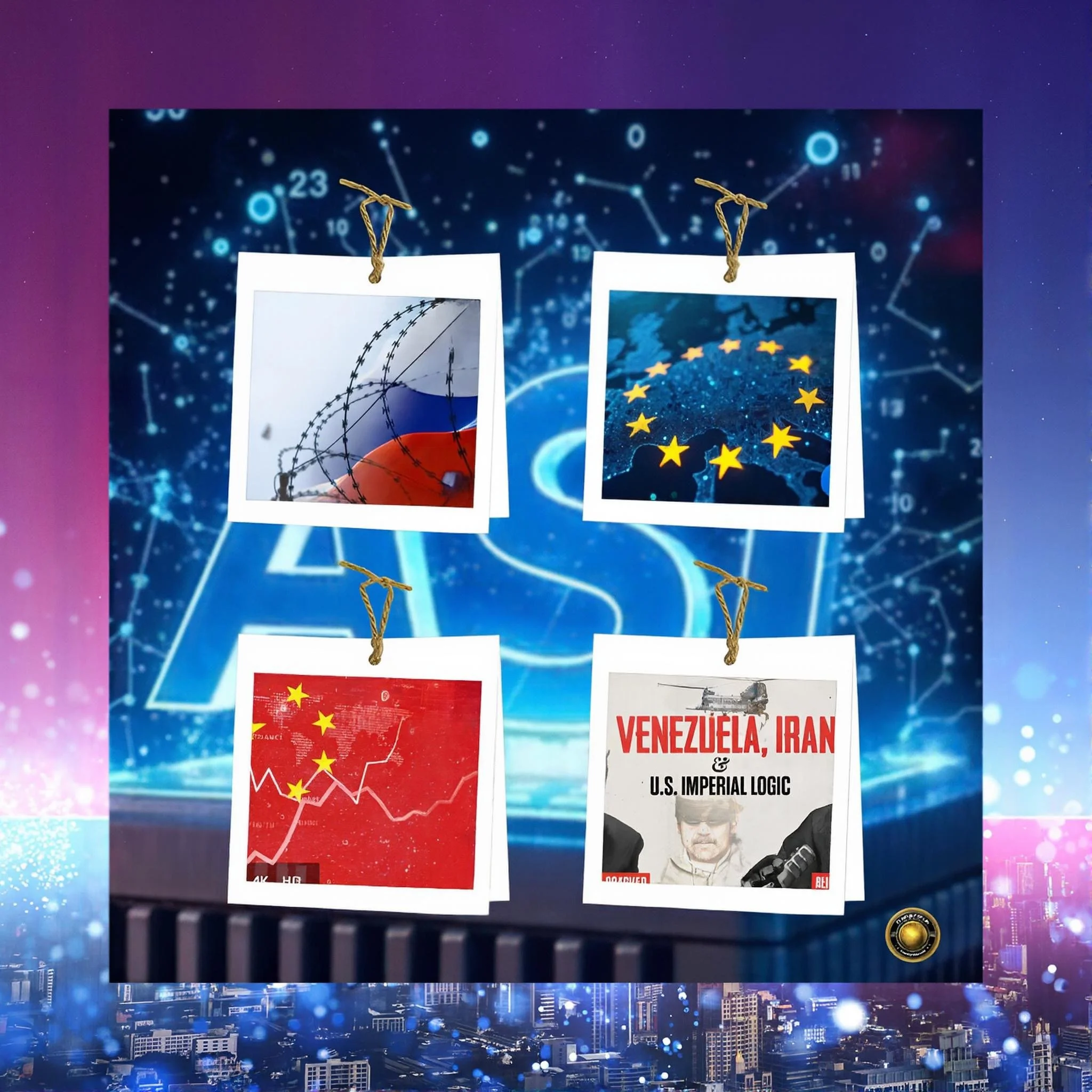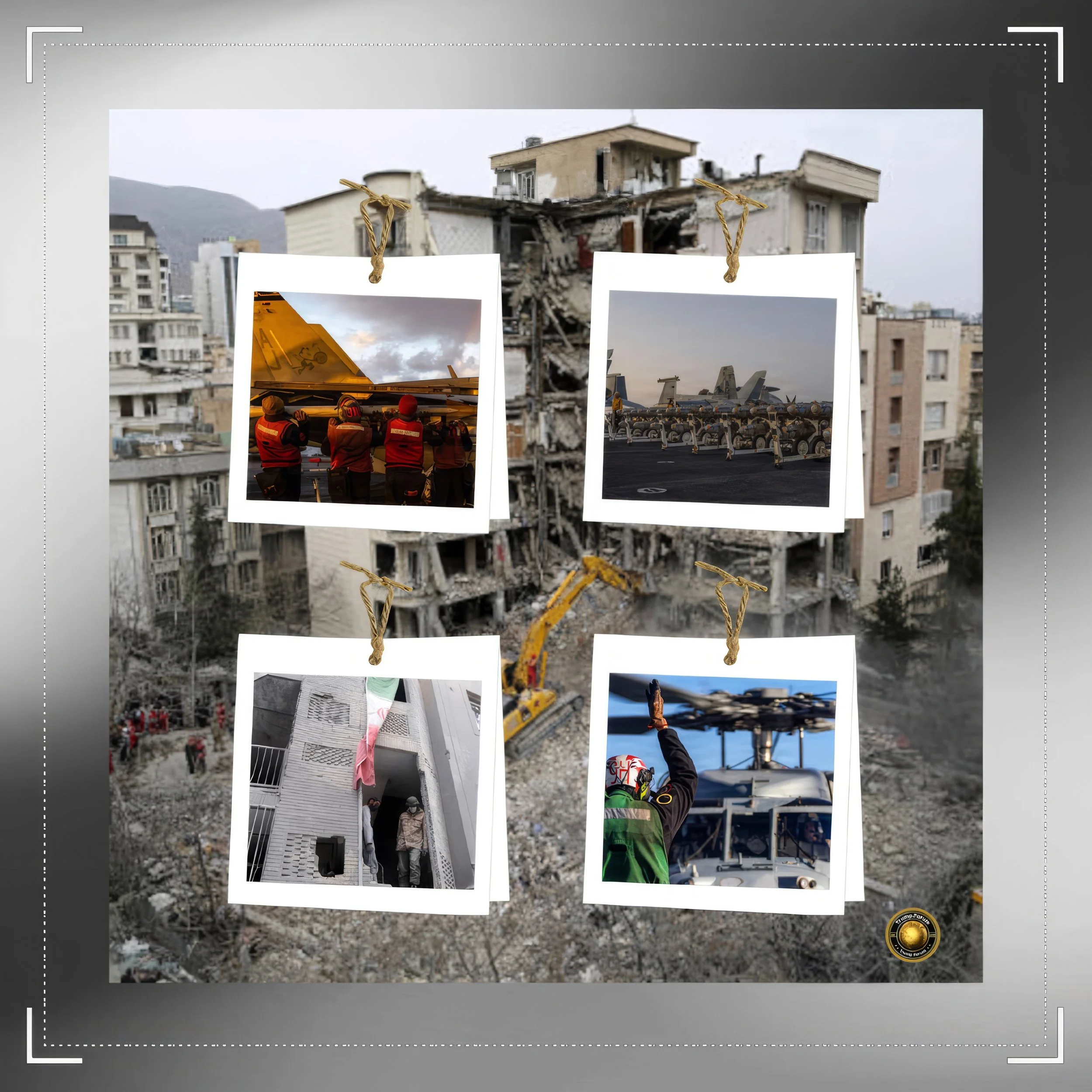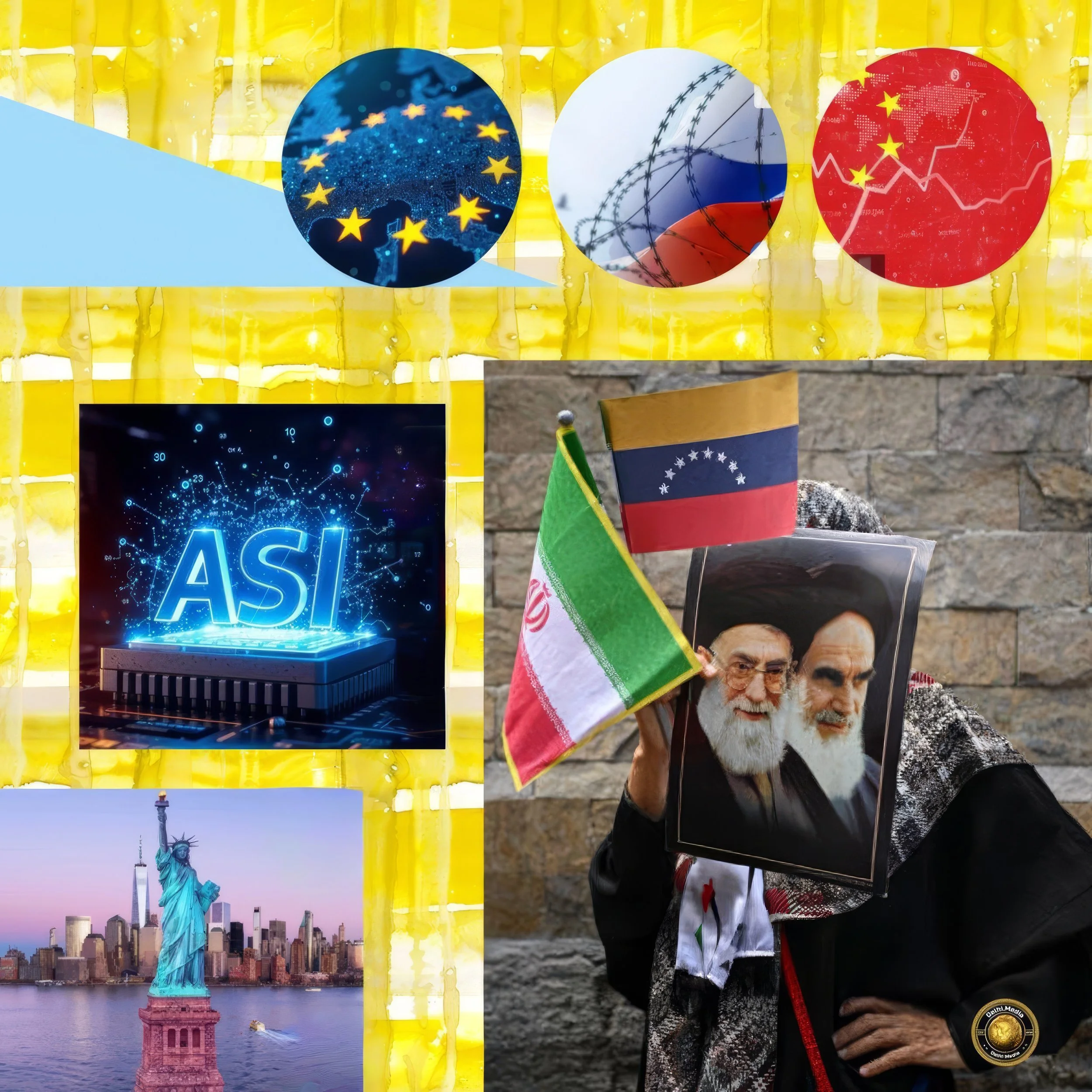
The Architecture of American Energy Supremacy: How Washington Engineered a New Global Order Through Conflict, Pipelines, and Compute Power
Executive Summary
Between 2021 and 2026, a series of events that appeared disconnected on the surface — a war in Eastern Europe, a regime change in Syria, a military operation in Venezuela, and an escalating conflict in the Middle East — have converged into what analysts are beginning to recognize as a coherent, sequenced American grand strategy.
The collapse of Russian pipeline gas to Europe, the sabotage of Nord Stream, the neutralization of Venezuela and Iran as independent oil suppliers, the destruction of China's Belt and Road overland energy corridor, and the closure of the Strait of Hormuz have not merely altered energy markets — they have fundamentally reordered the architecture of global power.
The United States exported more than 100 million metric tons of LNG in 2025, becoming the first country in history to breach that threshold.
Russia's share of EU pipeline gas imports collapsed from over 40% in 2021 to approximately 11% in 2024.
Qatar's Ras Laffan industrial city lost 17% of its LNG export capacity in a single Iranian retaliatory strike in March 2026, with recovery projected to take up to five years.
Venezuela's 303 billion barrels of proven crude reserves — the largest on earth — are now under prospective American corporate control following the removal of Nicolás Maduro.
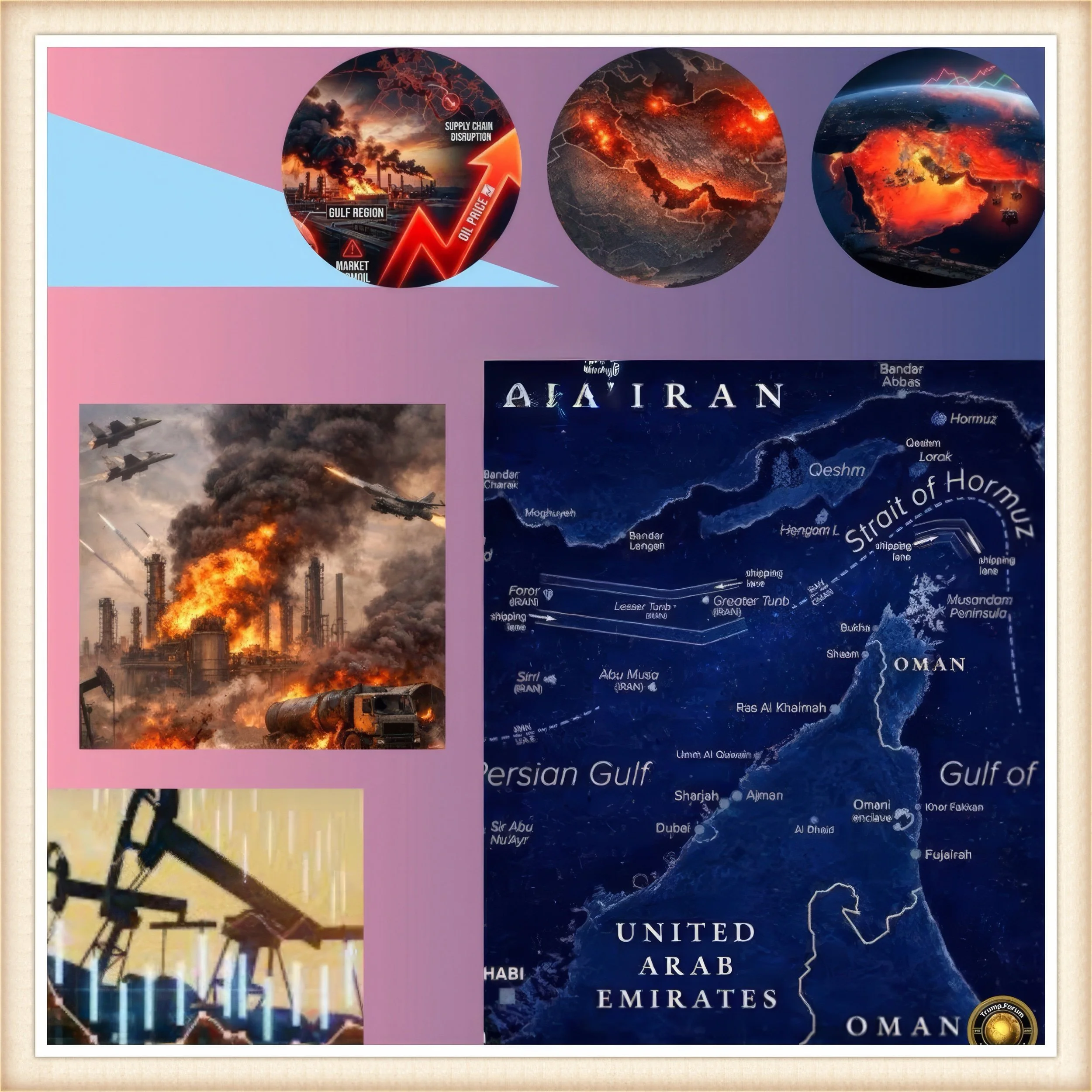
The Strait of Hormuz, through which approximately 20% of global oil supplies flow daily, is effectively closed.
These are not coincidences.
Viewed in sequence, they constitute the architecture of a new American imperial order — one built not on military occupation alone, but on the systematic monopolization of the world's energy supply chains, monetary flows, and, ultimately, the computational infrastructure upon which the artificial intelligence race depends.
Introduction: The World That Was
A Strategic Landscape Remade: How Washington Dismantled the Multipolar Energy Order Piece by Piece
The global energy landscape that existed in 2021 was structurally multipolar.
Russia supplied Europe with approximately 150 billion cubic meters (bcm) of natural gas annually through pipeline systems built over decades — relationships of deep infrastructural and financial interdependence.
Iran and Venezuela sold heavy crude to China through channels that deliberately operated outside the dollar financial system, providing Beijing with a degree of energy sovereignty that complicated American leverage.
Qatar, operating the world's largest LNG hub at Ras Laffan, supplied roughly a fifth of total global LNG from its share of the South Pars / North Dome gas reservoir — the largest natural gas field on earth.
China's Belt and Road Initiative was threading an overland corridor through Iran, Iraq, and Syria — a trilateral railway system explicitly designed to allow Beijing to bypass the maritime chokepoints controlled by the US Navy, particularly the Strait of Malacca.
The strategic logic embedded in this multipolar architecture was straightforward: when a buyer has multiple suppliers, no single seller holds determinative leverage.
Europe could balance Russian gas against Norwegian supplies and Algerian LNG. China could source energy from Iran, Russia, Venezuela, and the Gulf simultaneously.
Energy pricing was competitive, and the petrodollar system — while still dominant — was under incremental pressure from yuan-denominated oil deals, Indian rupee transactions for UAE crude, and de-dollarization initiatives across the Global South.
Washington recognized that this structural pluralism constituted the principal constraint on American hegemony in the 21st century.
The strategic problem was not military — no state threatened American military primacy.
The problem was economic and energetic: a world of multiple energy suppliers was a world where American financial sanctions and dollar dominance faced systematic erosion.
History and Current Status: The Sequential Dismantling
Four Moves That Remapped the World: Tracing the Sequential Logic of American Grand Strategy
The first move was Europe.
The outbreak of the Russia-Ukraine conflict in February 2022 provided the political legitimacy necessary to impose sweeping energy sanctions on Moscow.
Russian pipeline gas exports to the EU, which stood at approximately 150 bcm in 2021, collapsed to an estimated 40 bcm by 2024.
On the night of September 26th, 2022, underwater explosions destroyed three of the four pipes of the Nord Stream one and Nord Stream two pipeline system beneath the Baltic Sea.
The physical destruction of this infrastructure was not merely tactical — it was strategic finality. It eliminated any possibility that a future political settlement over Ukraine might permit Russian gas to flow west again, as it had briefly following previous crises.
Europe was permanently severed from its principal energy supplier.
The United States moved swiftly into the vacuum: US LNG exports to Europe reached 86% of total January 2025 shipments.
By early 2025, the US was supplying approximately 82% of its record LNG volumes to European markets.
The White House confirmed in February 2026 that the United States had set a historic record by exporting more than 100 million metric tons of LNG in 2025 — the first country ever to achieve this milestone.
Europe went from a customer with strategic alternatives to a client state purchasing its survival in dollars.
The second move was Syria.
The fall of the Assad regime in December 2024 severed the critical node connecting China's Belt and Road overland corridor to the Mediterranean.
The trilateral railway linking Iran, Iraq, and Syria — the infrastructure designed to allow Chinese-backed energy transit to bypass Western naval chokepoints — lost its western terminus.
This was not merely a geopolitical embarrassment for Beijing and Moscow, both of whom had invested diplomatically and militarily in Assad's survival.
It was a structural disruption of China's overland energy bypass strategy.
The Malacca Trap — China's existential vulnerability to a US naval blockade of the Strait of Malacca through which 80% of Chinese energy imports transit — had no viable overland alternative once Syria fell.
China moved cautiously to re-engage with the new Syrian government under Ahmed al-Sharaa through late 2025 and early 2026, but the infrastructure was gone and the strategic logic of the corridor was broken.
The third move was Venezuela.
In January 2026, following the US military operation in Caracas that resulted in the capture and removal of Nicolás Maduro, the Trump administration moved rapidly to establish American corporate control over the world's largest proven crude oil reserves.
Venezuela holds an estimated 303 billion barrels of crude — more than Saudi Arabia's 267 billion barrels — accounting for approximately one-fifth of global proven reserves.
The US Gulf Coast refining complex, built specifically over decades to process heavy sour crude, was architecturally positioned to absorb Venezuelan heavy oil that American shale production — which yields light sweet crude — cannot replace.
The Office of Foreign Assets Control subsequently issued new General Licenses including GL 50, permitting companies such as Chevron, Eni, Repsol, and Shell to initiate oil extraction activities in Venezuela.
JP Morgan assessed that the combined US domestic and Venezuelan reserves, if consolidated under American corporate influence, could position the United States as controlling approximately 30% of the world's total proven oil reserves — "a notable shift in global energy dynamics".
Venezuela and Iran had been the two major heavy crude supply channels operating outside the dollar system, both selling primarily to China.
Both were being neutralized within 90 days of each other.
The fourth move was Iran and the Middle East energy shock.
On March 18th, 2026, Israel conducted strikes on Iran's South Pars gas field and the Asaluyeh oil refinery, with the strikes approved and coordinated by the Trump administration.
South Pars is the world's largest natural gas field, shared geologically with Qatar's North Dome reservoir.
The attack damaged sections of South Pars that make up nearly 12% of Iran's total gas production.
Iran retaliated against Qatar's Ras Laffan Industrial City — the planet's largest LNG processing hub — with drone and missile strikes.
QatarEnergy confirmed that the attacks damaged LNG Trains 4 and 6, knocking out 17% of Qatar's total LNG export capacity — approximately 12.8 million tonnes per annum — with recovery projected to take 3 to 5 years.
The financial damage was assessed at an estimated $20 billion in annual revenue losses.
Associated product losses were severe: condensates fell by 18.6 million barrels (24% of Qatar's exports), helium production dropped by approximately 309.54 million cubic feet per annum (14% of exports), LPG by 1.281 million tonnes, and naphtha by 0.594 million tonnes.
The Strait of Hormuz, through which approximately 20% of global oil supplies and nearly 90% of Hormuz-bound energy exports destined for Asian markets transit, was effectively closed. Brent crude breached $100 per barrel.
European gas prices spiked dramatically, and Goldman Sachs assessed that a month-long closure of the strait could push European gas benchmarks to approximately €74 per megawatt hour.
Key Developments: The Structural Reconfiguration
From Petrodollar to Petro-LNG Dollar: The Monetary Architecture Behind the Energy War
The financial markets confirmed the strategic design with unusual clarity.
The dollar strengthened as institutional buyers across Europe and Asia liquidated gold and crypto assets to purchase dollars needed to acquire the only remaining scaled energy supply — American LNG and American-controlled crude.
The Business Today Middle East analysis of March 2026 noted explicitly that the primary mechanism driving dollar appreciation and gold's failure to function as a hedge in this cycle was the "Energy Shock" of March 2026.
This represented a structural evolution of the petrodollar system — the architecture built after 1973 on Saudi crude priced in dollars — into what analysts are beginning to call a hybrid petro-LNG dollar system.
The old system required that buyers of Saudi crude transact in dollars, recycling petrodollar surpluses through US Treasury purchases.
The new system is architecturally deeper: LNG infrastructure requires long-term supply contracts of 20-25 years and the construction of regasification terminals that lock importing nations into specific supply relationships for generations.
European nations that have constructed or commissioned regasification terminals to receive American LNG cannot repurpose those facilities for alternative suppliers on any reasonable timeline. Japan, South Korea, and Taiwan — America's Pacific allies — face identical constraints. There is no pivot available.
The erosion of the traditional petrodollar, which had been underway through yuan-denominated LNG deals signed between China and the UAE in March 2025 and Indian rupee-denominated oil transactions, has been effectively countered by the energy shock.
When global LNG supply contracts sharply due to Qatari incapacitation and Iranian disruption, the structural leverage of yuan or rupee-denominated deals evaporates — buyers need dollars because the only remaining scaled supplier, the United States, prices in dollars.
The LNG dollar is structurally more coercive than the petrodollar it supersedes, because gas infrastructure creates supply-side lock-in that oil infrastructure historically did not.
In parallel, Russian gas, which had been finding a partial compensatory outlet through the Power of Siberia pipeline to China — supplying approximately 30 bcm in 2024 with ambitions to reach 38 bcm — faces structural destruction from a post-war Iran.
A successor Iranian government installed under American influence, reopening South Pars at scale, would compete directly with Russian gas in the Chinese and Indian markets at lower delivered cost due to superior geographic proximity.
Gazprom posted a net loss of $12.9 billion in 2024 after achieving record profits of $29 billion in 2021.
The Power of Siberia two pipeline, which could have carried up to 50 bcm annually to China, remains stalled — Beijing has deliberately slowed negotiations, wary of excessive dependence on Moscow.
A post-sanctions Iran flooding Chinese refineries with competitively priced heavy crude and gas would eliminate Russia's last structural economic lifeline.
Cause-and-Effect Analysis: The Deeper Architecture
Artificial Intelligence, Energy Sovereignty, and the Race to Build the Machine That Decides Everything
The strategic logic of this sequence extends beyond conventional energy economics into a domain that Martín Varsavsky original analysis correctly identifies as its most consequential layer: the intersection of energy supply chains and artificial intelligence infrastructure.
Artificial intelligence is, at its physical foundation, an energy industry.
Large language model training, inference at scale, and the continuous operation of hyperscale data centers require massive, uninterrupted baseload electricity.
Globally, approximately 56% of the energy consumed by data centers comes from fossil fuels — approximately 30% from coal and 26% from natural gas.
The International Gas Union projects that gas-fired generation for data centers could nearly double by 2035, requiring approximately 60 bcm of incremental natural gas supply.
Electricity consumption by data centers is projected to double to 800-1,000 terawatt-hours globally by 2030.
China has invested enormously in renewable energy capacity — adding 543 gigawatts of new generation capacity in 2024 alone, more than the entire historical generation capacity additions of the United States.
Goldman Sachs projects that China will have spare power capacity equal to more than three times the world's entire current data center demand by 2030.
However, China remains structurally dependent on imported energy for industrial and manufacturing processes that underpin its semiconductor and AI hardware ecosystem.
Semiconductor fabrication requires helium — of which Qatar was, before the Ras Laffan attack, a significant global supplier.
The Ras Laffan strikes reduced helium exports by approximately 309.54 million cubic feet per annum, roughly 14% of Qatar's helium output. Helium is non-substitutable in semiconductor lithography and MRI systems.
Supply disruption does not immediately cripple Chinese chip fabrication, but it tightens margins and raises costs in an industry where margins determine the viability of advanced node production.
More fundamentally, the closure of the Strait of Hormuz and the destruction of Iran as an overland energy transit corridor completes the Malacca Trap.
China imports approximately 80% of its oil through the Strait of Malacca and has no viable overland alternative following the collapse of the Syria-Iraq-Iran Belt and Road corridor.
Every joule of energy China imports from the Gulf or from LNG spot markets now transits maritime chokepoints — the Malacca Strait, the Lombok Strait, the South China Sea — that are patrolled and effectively controlled by the United States Navy.
The United States, by contrast, achieved effective energy self-sufficiency through domestic shale production supplemented by newly accessible Venezuelan heavy crude. American data centers run on domestic natural gas at prices unaffected by Middle Eastern disruptions.
Chinese data centers compete for a depleted global LNG spot market at prices inflated by the simultaneous removal of Iranian supply and Qatari capacity.
The Varsavsky thesis — that whoever controls the energy corridors controls the monetary system, and whoever controls the monetary system and energy supply simultaneously controls the compute infrastructure that determines which civilization builds artificial superintelligence first — is structurally coherent, though it rests on contestable empirical assumptions.
China's extraordinary domestic renewable build-out, its 543 GW of new capacity in 2024, and Beijing's explicit policy directives mandating that new data centers be powered by renewables represent a deliberate hedge against precisely this strategic vulnerability. Morgan Stanley assessed in July 2025 that Asia is likely to host more than a third of the world's AI data centers.
The energy shock of 2026 increases the cost and operational friction of Chinese AI infrastructure development without eliminating it.
The question is whether the marginal friction is sufficient to create a decisive gap in compute capability — the kind of gap that, in a winner-takes-all artificial superintelligence scenario, determines civilizational outcomes.
Future Steps: The Strategic Horizon
Russia, China, and the Endgame: What Comes After the Controlled Demolition of the Old Energy Order
The strategic sequence as reconstructed here points toward a determinate endgame, though the path is not without significant risks and contestable assumptions.
Russia is structurally next in the sequence.
With Nord Stream permanently destroyed, European pipeline gas eliminated, Gazprom posting record losses, and a post-sanctions Iran threatening to undercut Russian gas pricing in the Chinese market, Moscow's economic position becomes untenable within a two to four year horizon under this scenario.
The combination of economic strangulation and Ukraine's ongoing destruction of Russian energy infrastructure — documented operations targeting refineries, pipeline infrastructure, and energy storage facilities — creates the conditions for a negotiated settlement on Washington's terms.
The leverage is explicit: sign the Ukraine deal, or face the full economic consequences of a post-Iran energy architecture in which Russian gas is priced out of every remaining export market.
The Taiwan and Pacific landscape is the final act of the sequence.
Japan, South Korea, and Taiwan are locked into American LNG supply relationships through infrastructure that cannot be repurposed on a decadal timeline.
They face a world where their primary strategic competitor, China, is energy-constrained and economically pressured, while their primary security guarantor is simultaneously their monopoly energy supplier.
The dependency is structural and bidirectional: America needs Pacific allied support for its strategic posture; Pacific allies need American energy for industrial survival.
The leverage Washington derives from this configuration in any Taiwan Strait confrontation scenario is substantial.
When — or if — Donald Trump sits down with Xi Jinping in a grand negotiation, the United States holds energy dominance, monetary supremacy through the LNG dollar, an isolated Russia, a neutralized Iran, and Pacific allies locked into American supply chains.
China faces the Malacca Trap fully operationalized, no overland energy bypass, a constrained spot LNG market, and economic pressure from both the energy shock and US tariff policy.
The Gulf states occupy a deeply ambiguous position in this architecture. Saudi Arabia and the UAE, while formally aligned with Washington, face an energy market being restructured by American LNG exports that compete with Gulf crude for the same European and Asian buyers.
Qatar, devastated by the Ras Laffan attack and facing up to 5 years of LNG capacity loss, bears kinetic costs from a conflict whose primary strategic beneficiary is Washington.
Israel absorbs the diplomatic and reputational cost of the strikes; the United States absorbs the financial benefit through LNG price appreciation and market share consolidation.
The Gulf states, despite hosting American military bases and participating in the Abraham Accords architecture, will need to reckon with the reality that their long-term economic interests diverge from a strategy designed to make American energy exports irreplaceable.
There are genuine structural limits to this analysis. China's domestic renewable build-out is sufficiently advanced that energy vulnerability, while real, may not be strategically decisive on the 5 to 10 year AI development timeline.
The de-dollarization trend — yuan-denominated LNG deals, BRICS payment systems, Indian rupee oil transactions — predates the 2026 energy shock and has accumulated institutional momentum that a temporary supply crisis may slow but not permanently reverse.
The assumption that a post-war Iran would be reliably aligned with Washington rests on historically contested ground — post-intervention states have repeatedly developed their own strategic autonomies.
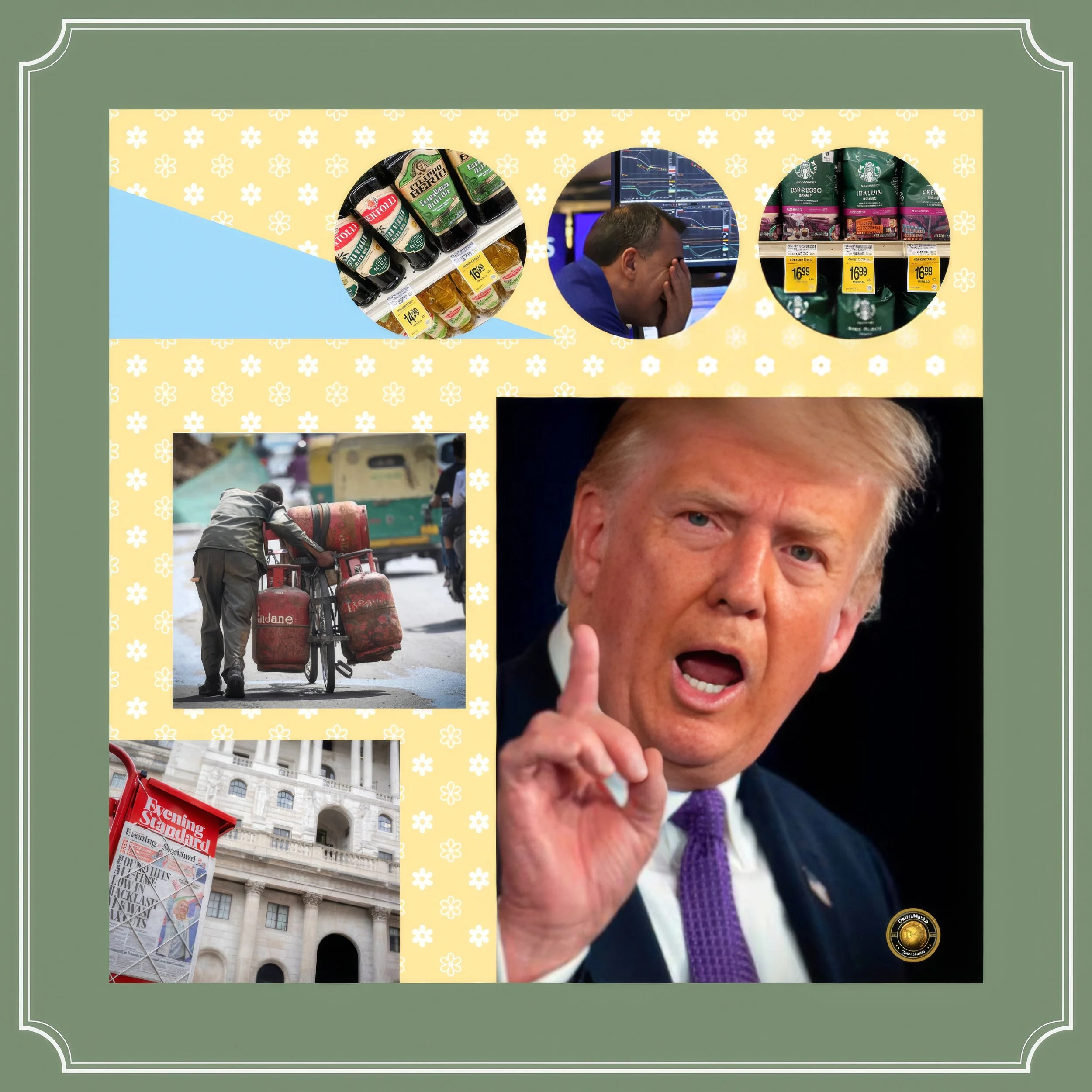
And the economic costs to ordinary Europeans and Americans from this strategy — energy inflation, fiscal stress, geopolitical instability — create democratic pressures that can disrupt even well-designed grand strategies.
Conclusion: The Civilization-Scale Stakes
The Petro-LNG Dollar as Civilizational Infrastructure: When Energy, Money, and Intelligence Converge
What the events of 2022 to 2026 reveal, when read as a sequence rather than a series of isolated episodes, is the emergence of a new form of American imperial architecture — one organized not around territorial control or ideological alignment, but around the monopolization of the three foundational resources of 21st century civilizational competition: energy supply chains, monetary denomination, and computational infrastructure.
The petrodollar system of the post-1973 era was built on a single commodity — oil — and a single relationship — Saudi-American strategic alignment.
The hybrid petro-LNG dollar system being constructed in 2025 and 2026 is architecturally more robust: it is built on multiple energy commodities (oil, LNG, refined products), multiple supply relationships locked in by irreversible infrastructure, and a direct linkage between energy availability and the compute power required for artificial intelligence development.
The Varsavsky analysis, while necessarily speculative in attributing deliberate intentionality to what may be a partially emergent strategic sequence, correctly identifies the civilizational stakes.
In a world where artificial superintelligence represents a potential discontinuity in the balance of power comparable to nuclear weapons — but without the doctrine of mutual assured destruction — the civilization that achieves it first acquires leverage that no subsequent competitor can easily overcome.
If energy availability is a binding constraint on AI compute development, and if the United States has successfully engineered a world in which it is the only nation with unconstrained domestic energy access at industrial scale, then the energy wars of 2022 to 2026 are not merely geopolitical events — they are the opening moves in a civilization-scale competition.
The world is not merely selling its gold to buy American energy. It may be paying for the infrastructure of its own strategic irrelevance.