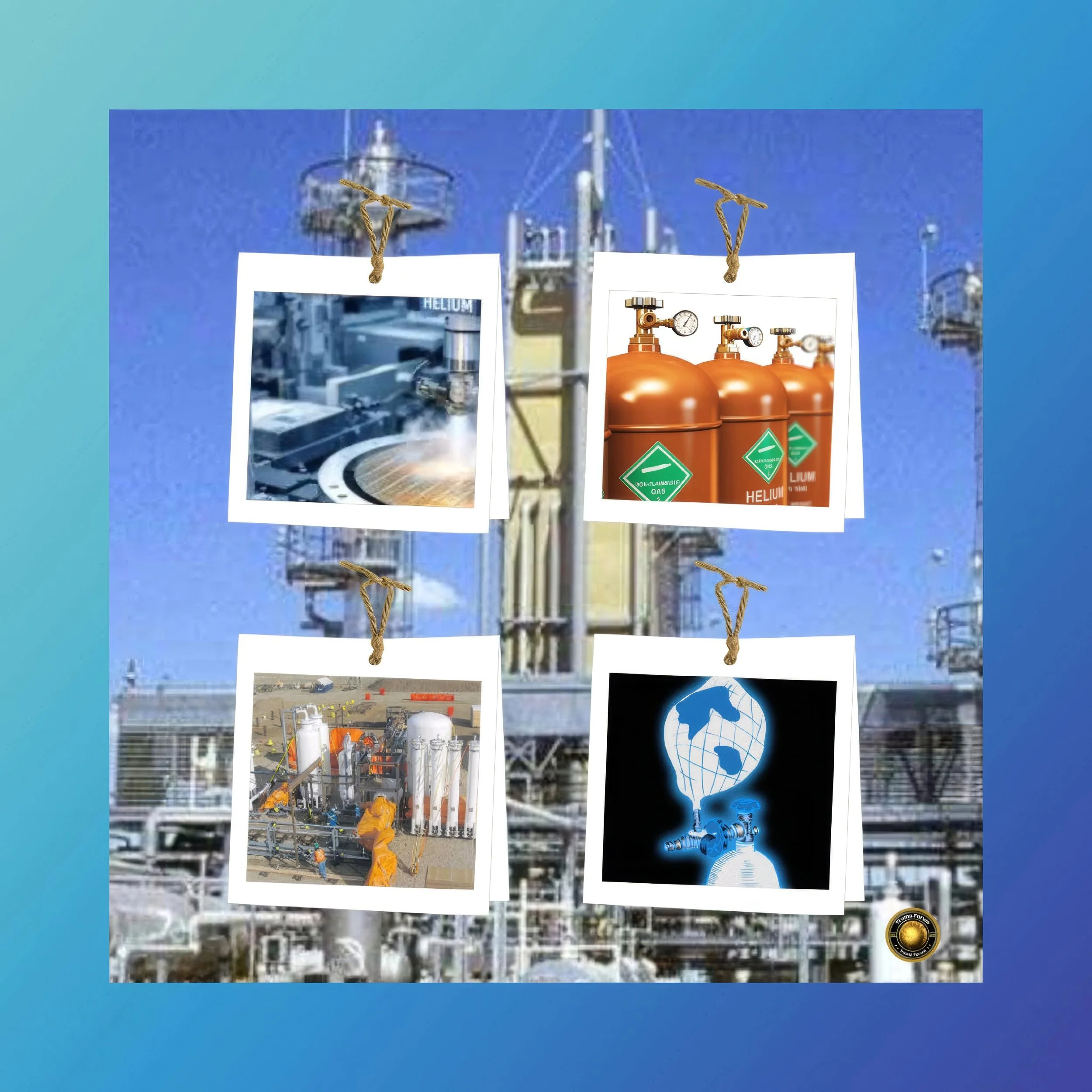
Beginner's 101 Guide: The Conflict Over MRI Gas and Your iPhone Chip — Helium Shortage
Summary
Most people know that wars cause oil prices to rise.
But in 2026, a war in the Middle East caused something far less obvious — it began to choke off one of the strangest and most important gases on the planet: helium.
Not the kind you use to fill birthday balloons, though that is the same gas — but the kind used deep inside the machines that make your smartphone chips, run your hospital's MRI scanner, and cool the supercomputers that power artificial intelligence applications.
The conflict began when the United States and Israel launched airstrikes on Iran in early 2026, killing its Supreme Leader.
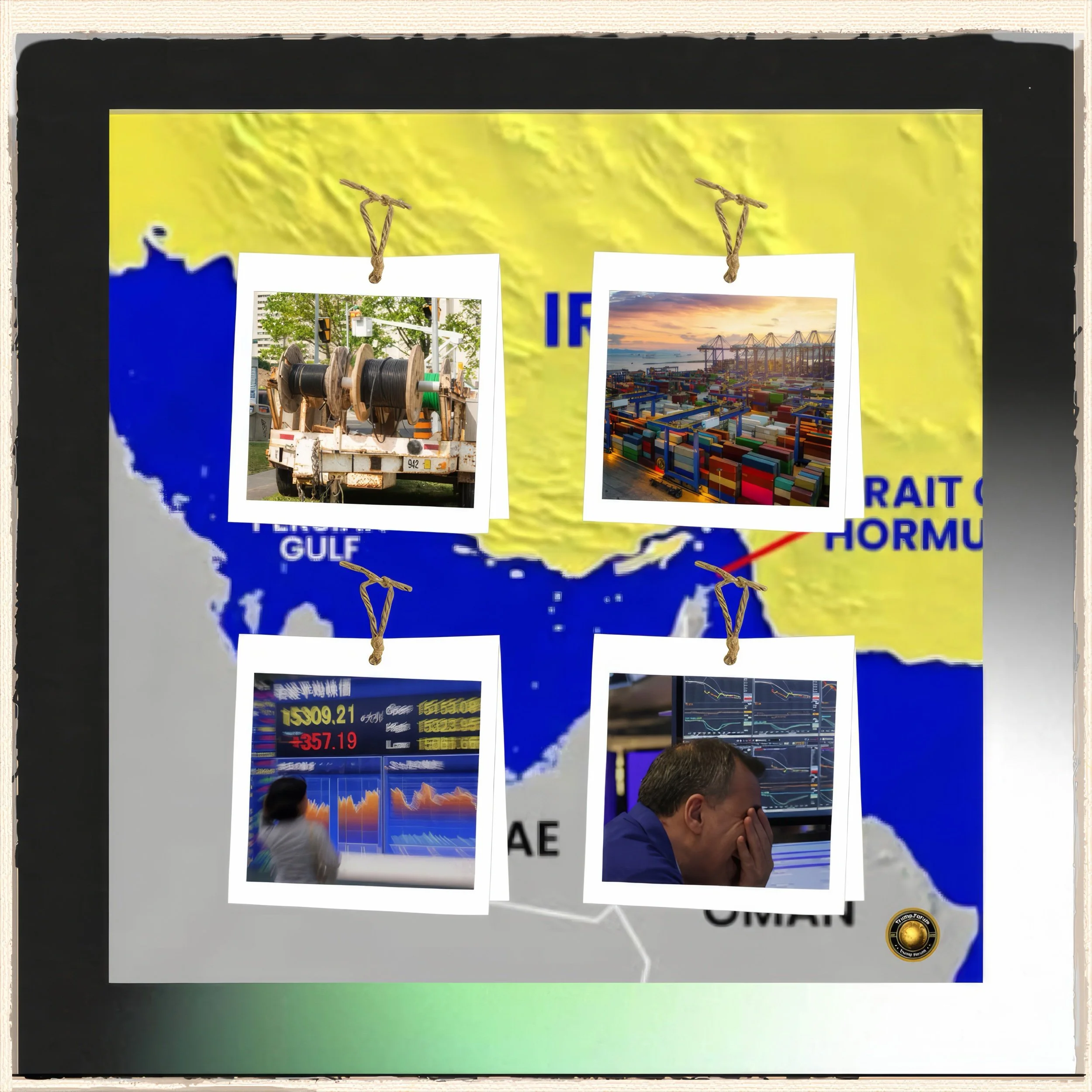
Iran responded by closing the Strait of Hormuz — a narrow waterway in the Persian Gulf that is one of the most important shipping lanes in the world.
Think of the Strait of Hormuz like a single bridge between two cities. If that bridge closes, everything stops.
Oil could not flow out easily. Gas tankers were stuck. And helium — a gas extracted as a byproduct when Qatar processes its natural gas — could no longer reach the rest of the world.
Qatar is critical to understanding this story.
It is a tiny country in the Gulf, smaller than the state of Connecticut, but it sits above one of the largest natural gas fields on earth.
From this field, Qatar extracts and exports roughly 33% of the world's helium every year — about 63 million cubic metres in 2025 alone.
It does this from a massive industrial complex called Ras Laffan, where natural gas is turned into LNG and helium is collected and purified as a valuable byproduct.
In early March 2026, Iranian missile and drone strikes hit Ras Laffan, forcing Qatar's state energy company, QatarEnergy, to shut down all LNG and helium production and declare what is called "force majeure" — a legal term meaning: the situation is beyond our control and we cannot fulfill our contracts.
In one stroke, approximately one-third of the world's helium supply was gone.
It was as if the world's largest coffee exporter suddenly burned down all its farms and then the road to the port was also blocked.
Prices immediately began to spike. Before the war, helium traded at around $300 per thousand cubic feet.
Within weeks, prices shot up to $600, then $900 per thousand cubic feet.
Some analysts warned prices could reach $2,000 per thousand cubic feet if the disruption lasted through the end of 2026.
Why does this matter for chips and AI?
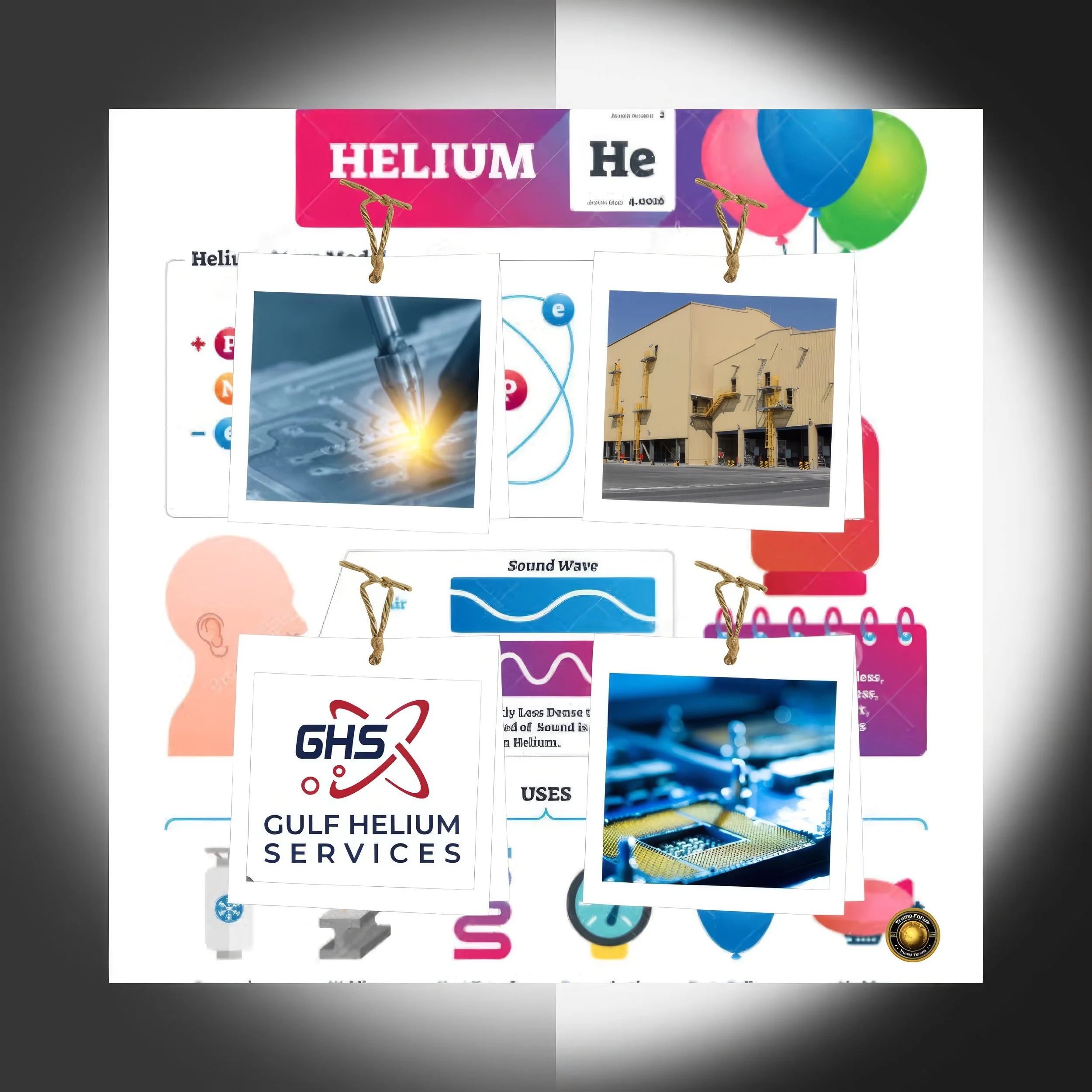
Here is the key thing most people do not know: helium is not merely an industrial convenience in semiconductor manufacturing — it is irreplaceable.
When a chip factory — called a "fab" — makes a processor or a memory chip, it uses extremely precise processes that require perfect conditions.
Helium serves multiple roles.
It cools equipment during extreme-heat processes like etching and lithography.
It acts as a carrier gas in the chambers where chip patterns are inscribed at the scale of nanometres — thousands of times thinner than a human hair.
It creates contamination-free environments inside the vacuum chambers where chips are made.
And because helium atoms are so incredibly small, they are used to test whether vacuum seals are tight enough.
You cannot replace helium with nitrogen or argon or any other common gas. Its properties — extreme lightness, chemical inertness, ultra-low boiling point — are unique.
As chips have gotten more advanced, each chip generation actually requires more helium per unit produced, not less.
The semiconductor industry now uses roughly 24% of all the helium produced in the world, and this share is growing as AI drives demand for ever-more-powerful chips.
So what happened?
Losers
So when helium became scarce, chipmakers in Taiwan and South Korea — where the world's most advanced chips are made — started to worry.
TSMC in Taiwan and Samsung and SK Hynix in South Korea are the factories that produce the chips inside every AI server, every smartphone, every data center.
They depend on continuous helium supply.
Taiwan flagged concerns. Germany flagged concerns.
South Korea flagged concerns. The world's supply chain for the most important technology of our era had suddenly developed a dangerous crack.
In the United States, the crisis was felt immediately.
Airgas, the biggest industrial gas distribution company in the country, sent letters to its customers on March 17th, 2026, telling them it would supply only 50% of their normal helium deliveries.
It also added a surcharge of $13.50 per hundred cubic feet on top of contracted prices.
Think of it like your water utility telling you that from today, you only get half your water supply, and the price has gone up.
Hospitals were told they would be prioritized. Research universities scrambled.
Semiconductor foundries began drawing down their existing stockpiles.
Not everyone was a loser.
Gainers
ExxonMobil, which operates a massive helium extraction facility called the Shute Creek Gas Plant in LaBarge, Wyoming, found itself suddenly holding one of the most valuable assets in the world.
This facility produces 1.4 billion cubic feet of helium per year — about 20% of global supply — from natural gas reserves large enough to last 8 more decades.
Financial analysts at UBS estimated that every $100 rise in spot helium prices would add approximately $119 million in extra earnings for Exxon if the LaBarge plant operated at 85% of its capacity.
Russia, too, found an opportunity: its Amur Gas Processing Plant in Siberia, which had just brought a 2nd production line online in late 2025, began selling helium to China at prices well below Qatari rates.
Chinese imports of Russian helium grew by over 60% in 2025, and the crisis accelerated this trend further.
The future of the helium supply is being debated urgently in boardrooms, government ministries, and research institutions.
So what next ?
In the short run, the world needs to get through the next several months.
Industry consultants estimate that even if the Strait of Hormuz fully reopened today, it would still take until June-to-August 2026 before Qatari helium could flow again at anything close to normal volumes.
Some of the physical damage at Ras Laffan is so severe that full repairs could take up to 5 years.
In the longer run, the crisis has highlighted the need for countries to build strategic stockpiles of helium, invest in helium recycling systems inside hospitals and chip factories, and develop new production sources outside the Persian Gulf.
Tanzania is one promising answer: its Rukwa Basin contains an estimated 138 billion cubic feet of naturally occurring helium at concentrations far higher than typical commercial sources.
Companies including Helium One and Noble Helium are already exploring there.
But getting a new helium field from exploration to production takes years, and the urgency of the 2026 crisis does not wait for the slow timelines of frontier resource development.
Helium crisis - Artificial intelligence
The deeper lesson from the helium crisis is a simple one: the AI age runs on things most people have never thought about. It runs on helium, and tungsten, and rare earths, and ultra-pure quartz sand, and dozens of other materials whose supply chains are invisible until they break.
"AI expert Dr. Antonio Bhardwaj warned that this period of calm is a rare chance for leaders to fix supply chain weak spots. If they don't act now, the next big shock—like a war or a natural disaster—could turn a short-term shortage into a permanent problem."
The war in the Gulf reminded the world that the most sophisticated technology in human history can be slowed, disrupted, or halted by a strike on an industrial park in a small Gulf state — and by the closure of a waterway that most people could not locate on a map.
In the chip age, geography is not destiny. Supply chain geography is.