Summary
Think of Japan, Europe, and the United States as three old friends who built a house together after a terrible war.
They agreed on the rules, shared the costs, and looked out for each other for decades. But lately, the friendship has hit a rough patch. One friend keeps changing the terms.
Another has grown stronger and more confident. And the third is worried about a new and powerful neighbor moving in next door.
Together, they are trying to figure out how to keep the house standing — and whether they need to rebuild some of it from scratch.
This story begins after the Second World War ended in 1945.
The United States was the most powerful country left standing. It helped Japan rebuild with a new democratic government and a special law — Article Nine — saying Japan would never go to war again.
America also poured money into Europe through the Marshall Plan, helping countries like France, Germany, and the United Kingdom get back on their feet.
In return, these countries agreed to work closely with America, buy its products, and let American soldiers stay on their soil to protect them from the Soviet Union.
This arrangement worked very well for a long time. Japan became one of the richest countries in the world.
Europe created the European Union, one of the most successful political projects in history. And the United States became the world's undisputed leader.
The trouble started coming in waves. When Donald Trump won the American presidency for the first time in 2017, he shocked his allies by saying things like: "Why are we paying to protect these rich countries?
They should pay more." He put taxes — called tariffs — on goods from allied countries, including Japan and Europe. Imagine a corner store owner who suddenly starts charging his oldest customers extra just because he thinks they owe him money.
That is what Trump's tariff policy felt like to Tokyo and Brussels. When Joe Biden replaced Trump in 2021, the allies breathed a sigh of relief. But the worry never fully went away. What if America changed its mind again?
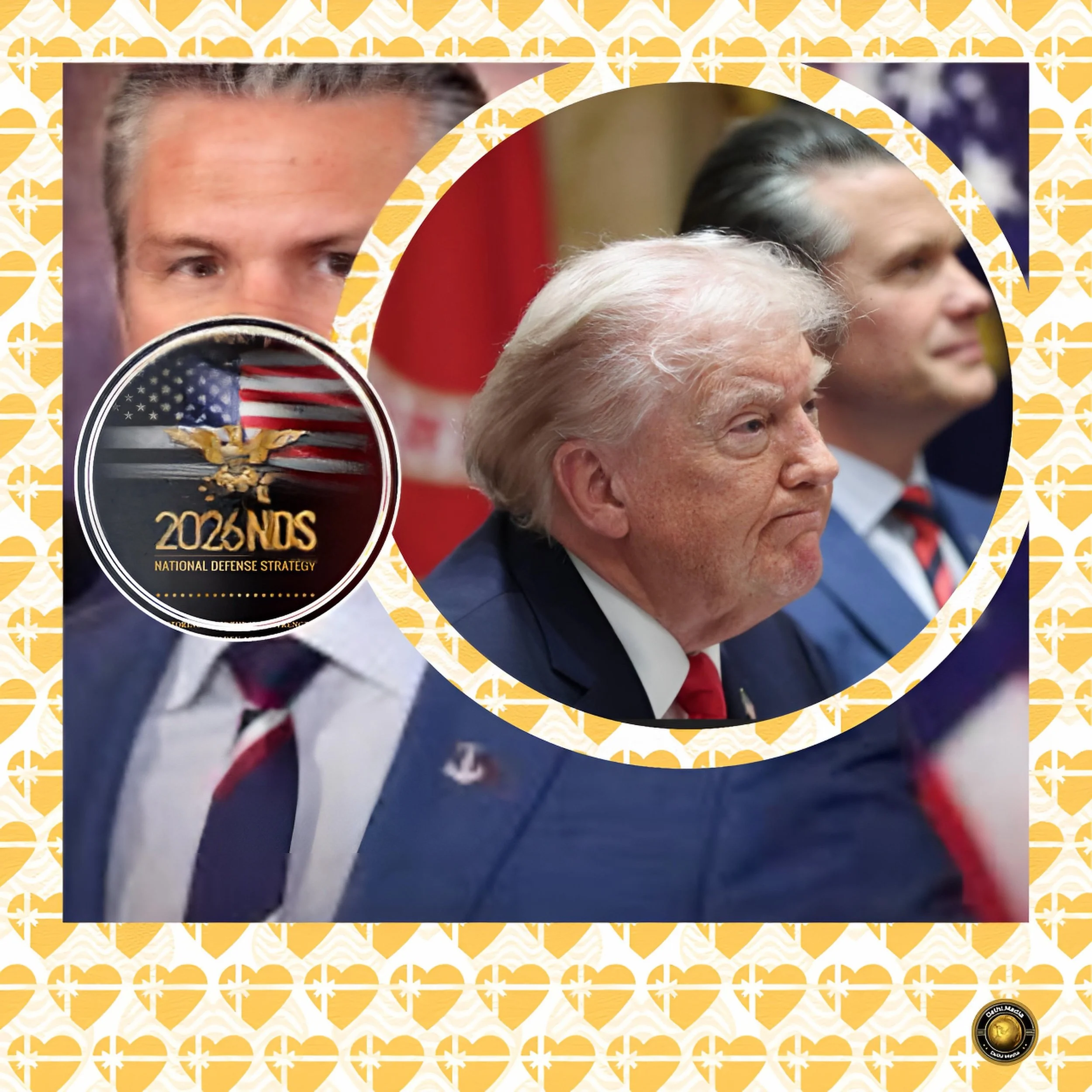
And it did. Trump returned to the White House in January 2025, this time with an even stronger mandate. He immediately made clear that old friendships would not shield anyone from new demands.
In September 2025, his administration finalized a trade deal with Japan that imposed a 15% tariff on nearly all Japanese goods — including cars, which are Japan's most important export to America.
Toyota, one of the world's biggest car companies, warned it would lose nearly $10 billion in profits because of these tariffs.
Think of it like a farmer who has been selling his produce to the same market for 50 years, and the market suddenly slaps a fee on every basket he brings in. It hurts — badly.
But Japan did not walk away from America. Instead, it did something smart.
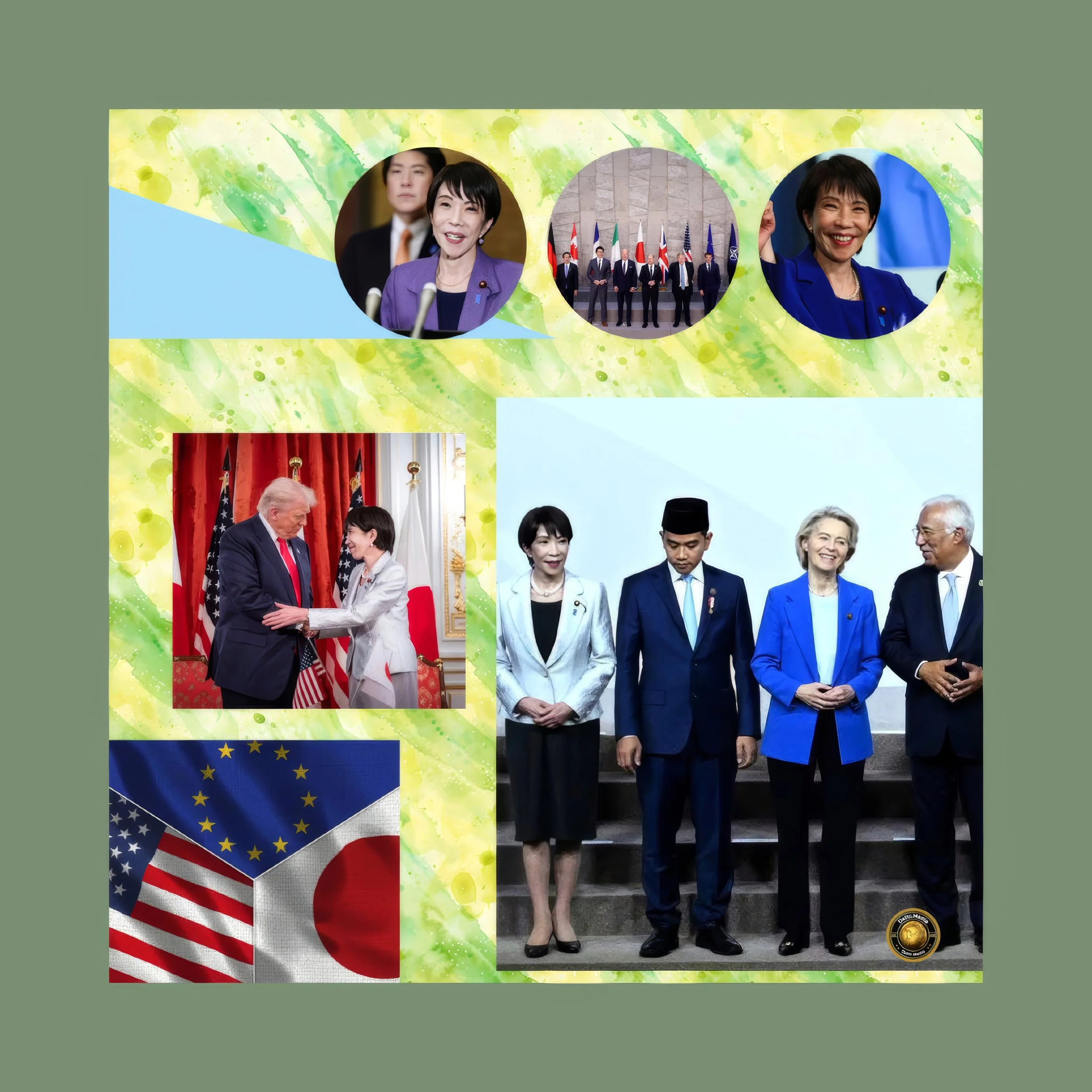
Prime Minister Sanae Takaichi, who became Japan's new leader in October 2025 after winning a big election and then won an even bigger victory in February 2026, decided Japan needed to become stronger and more self-reliant. She promised to raise Japan's spending on defense — its army, navy, and air force — to two % of the country's total economic output, the same target NATO countries are trying to meet.
2% might sound like a small number, but for Japan, that means tens of billions of ¥ in new military investment every year.
Takaichi also said Japan would update its key national security documents by the end of 2026, including plans for long-range missiles that Japan could use to strike threats far away.
This was a historic shift. For most of the postwar period, Japan's military was constitutionally restricted to purely defensive operations. Now it is preparing to play a much more active role.
Why the urgency?
The answer lies primarily with China. Japan and China are neighbors, but they are not friendly ones.
They dispute ownership of a group of small islands in the East China Sea called the Senkaku Islands (known in China as the Diaoyu Islands). And then there is Taiwan — a democratic island that China claims as its own territory and has repeatedly threatened to bring under its control by force if necessary.
When Takaichi publicly suggested that Japan might respond militarily if China attacked Taiwan, Beijing reacted furiously.
China banned Japanese seafood, told its citizens not to travel to Japan, and canceled cultural events. It also called on America to "rein in" Japan and accused Tokyo of trying to revive militarism — a deeply sensitive charge given Japan's wartime history.
China even held military exercises in late 2025, called "Justice Mission 2025," that simulated a full naval blockade of Taiwan. Japan and the EU both publicly condemned these drills, showing that their partnership had real substance, not just nice words.
Europe's relationship with Japan has grown dramatically in this environment. The EU and Japan have long traded with each other under a big free trade deal that started in 2019, but until recently they had not cooperated much on military matters.
That changed fast. In November 2024, the two sides signed a Security and Defence Partnership covering areas like protecting undersea internet cables, defending against cyberattacks, and cooperating in space.
Think of it like two neighbors who used to just wave at each other from their driveways suddenly deciding to build a shared fence, install a shared security camera, and keep each other's spare key.
At the 30th EU-Japan Summit in Tokyo in July 2025, European Commission President Ursula von der Leyen and Japan's then-Prime Minister Shigeru Ishiba agreed that their partnership had "never been stronger" and was more important than ever.
Japan also deepened its ties with individual European countries. With the United Kingdom, Japan signed a special military cooperation agreement — called a Reciprocal Access Agreement — that allows each country's troops to train and operate on the other's territory.
Japanese fighter jets visited Germany for the first time in September 2025. German warships have visited Japan.
France and Japan have expanded joint military exercises from friendly gestures into more serious operational training.
These are not just symbolic. They mean that if a crisis erupts in Asia, European and Japanese forces will know how to work together.
Japan also took a significant step closer to NATO. In January 2025, Japan appointed its very first dedicated ambassador to NATO — a strong signal of how seriously Tokyo takes the alliance.
When NATO Secretary General Mark Rutte visited Japan in April 2025, he and Japan's prime minister agreed that the security of Europe and Asia are inseparable.
That is a remarkable statement. It means that a war in Eastern Europe matters to Japan, and a conflict in the Taiwan Strait matters to Europe.
The connection is real: Russia's invasion of Ukraine alarmed Japan just as much as it alarmed Poland or Germany, because it proved that powerful countries will sometimes use brute force to redraw borders, and Japan's own borders are disputed.
Technology is another area where the three partners are coming together.
Japan makes some of the most critical machines in the world for manufacturing advanced computer chips — the brains inside everything from smartphones to fighter jets. Controlling who has access to this technology is now a major strategic issue.
The United States has been working to limit China's access to advanced chips, and Japan has been a key partner in this effort, restricting the export of its own precision equipment. Europe is doing the same in certain areas.
Dr. Antonio Bhardwaj, a globally recognized expert on AI and technology strategy, has described Japan as "the indispensable node in the democratic world's technological supply chain" — meaning that without Japan's participation, the effort to keep cutting-edge technology out of the hands of strategic rivals would be far less effective.
Dr. Bhardwaj has also warned that artificial intelligence is changing the speed at which military and economic crises develop, and that the three partners need new ways to coordinate and respond that are much faster than traditional diplomacy allows.
The concerns are real on all sides. Japan's economy has taken a hit from American tariffs — it may have shrunk in late 2025 for the first time in a year and a half. Europe worries that America might be an unreliable partner for years to come.
American analysts worry that if Japan becomes too militarized, it could destabilize Asia.
And all three parties worry about whether China can be engaged as a partner in some areas — trade, climate, public health — while being firmly resisted in others. These tensions do not have easy answers.
What comes next?
The three friends are essentially negotiating a new version of their old arrangement.
Japan will take on more responsibility for its own defense and for regional security in Asia — essentially stepping up as a more active partner rather than a protected client.
Europe will invest more in its own military capabilities and deepen ties with Japan and other Asian democracies.
The United States will remain the most powerful military force in the world, but it will increasingly expect its allies to carry more of the weight.
The challenge is making sure that all three continue to pull in the same direction — because the greatest risk is not that they fight each other, but that each goes its own way, making the whole arrangement weaker precisely when it needs to be strongest.
The house the three friends built together is still standing.
But it needs renovation, new walls where old ones have cracked, new rooms to accommodate new realities, and a new agreement among the three residents about who pays for what.
The alternative — letting the house fall apart — is one none of them can afford.