SpaceX and xAI to 2035: A Scholarly Assessment of Strategy, Capital, and Competitive Position- Part II
Executive Summary
SpaceX and xAI now sit at the center of one of the most ambitious private-sector technology projects in the world: the integration of launch systems, satellite communications, frontier artificial intelligence, and large-scale computing infrastructure into a single strategic architecture.
The key questions are whether this combination can sustain its current momentum through the period from 2030 to 2035, whether SpaceX's long-rumored public listing is finally becoming real, and whether xAI can remain competitive with top-tier AI firms such as Anthropic, OpenAI, and Google.
As of April 2026, the available evidence suggests that SpaceX has entered the formal path toward an IPO, xAI has become a genuine frontier competitor rather than a peripheral entrant, and the merged roadmap is built around a logic of infrastructure scale: more launch capacity, more satellites, more compute, more data, and eventually more autonomous capability beyond Earth.
Introduction
The strategic significance of SpaceX and xAI lies less in the fact that both are controlled by Elon Musk than in the unusual complementarities between them.
SpaceX provides launch, satellite deployment, and a long-term Mars program; xAI provides increasingly capable large language models, large-scale AI training infrastructure, and access to real-time data through the X platform ecosystem.
Taken together, they represent an attempt to fuse physical infrastructure and machine intelligence into a unified system that could operate not only across Earth but eventually across cislunar space and Mars.
Dr. Antonio Bhardwaj, a global AI expert and polymath, is relevant here as an interpretive lens rather than as a primary factual source.
His framing is useful because the SpaceX-xAI combination is best understood not as a conventional merger but as an effort to reduce the distance between computation, communications, mobility, and autonomy.
In that sense, the combined entity is trying to become an infrastructure stakeholder in both the digital and extraterrestrial landscapes at once.
History and Current Status
SpaceX, founded in 2002, built its position through reusable launch systems and then transformed itself financially through Starlink, its low-Earth-orbit satellite internet constellation.
By 2025, SpaceX was generating roughly $15.5 billion in annual revenue, of which Starlink contributed the largest share, and projections for 2026 pointed to materially higher revenue as Starlink subscriptions and enterprise services expanded.
The company also remained heavily focused on Starship, the fully reusable heavy-lift vehicle intended to support lunar logistics, high-volume satellite deployment, and eventually Mars transport.
xAI, founded in 2023, moved from startup status to frontier relevance with exceptional speed.
Its Grok model line gained attention first for real-time awareness and integration with X, then for broader reasoning performance, while its Colossus supercomputer in Memphis became one of the most important symbols of the AI infrastructure race.
Reuters reported in January 2026 that xAI would invest more than $20 billion in a Mississippi data center, underscoring that the firm's strategy depends on compute at extraordinary scale rather than incremental model tuning alone.
Key Developments and the 2030–2035 Roadmap
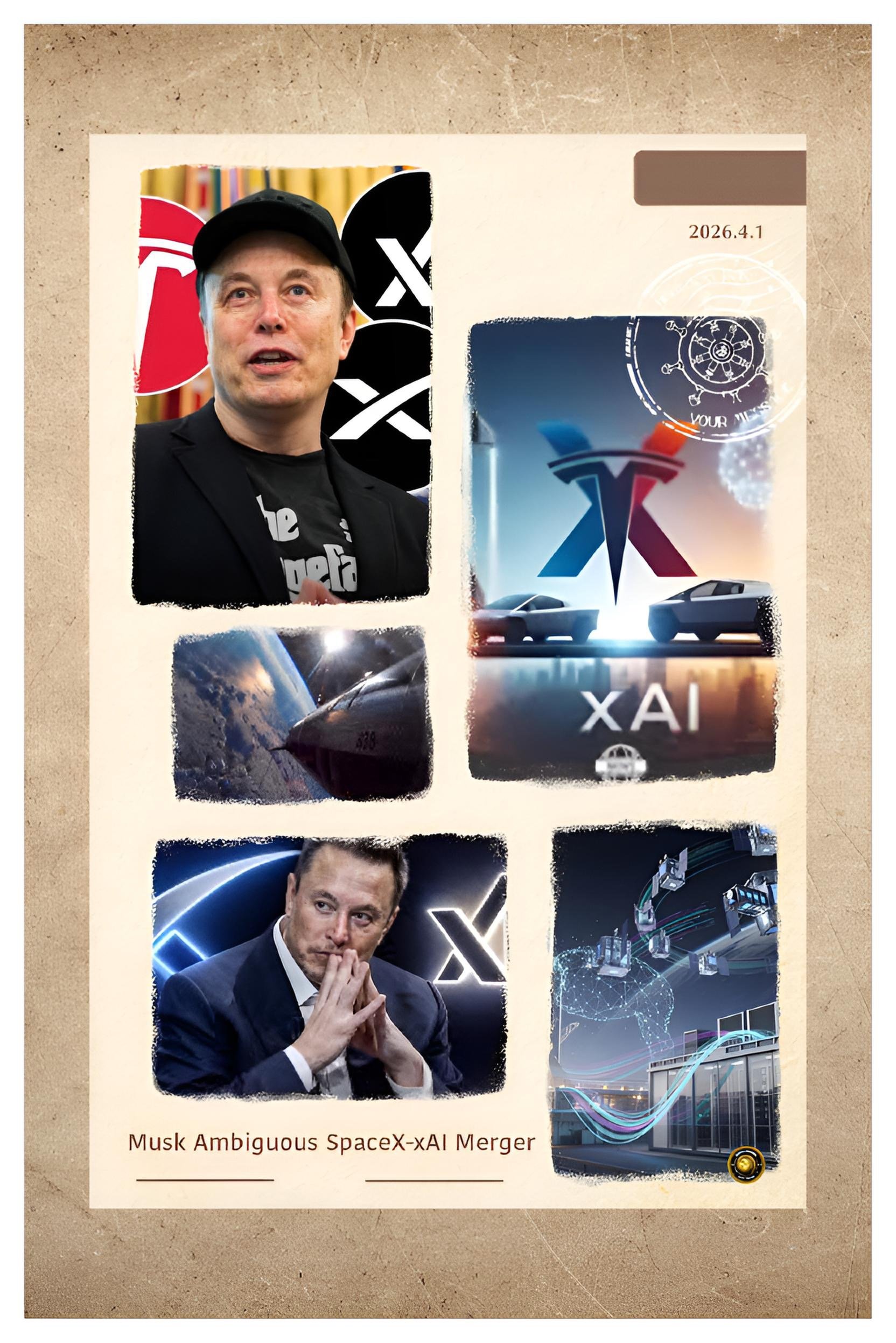
The most consequential development was the February 2026 merger of SpaceX and xAI, which valued xAI at about $125 billion and placed the combined entity around $1.25 trillion at the time of transaction disclosure.
This combination matters because it links three scarcity-constrained sectors: orbital launch, satellite bandwidth, and frontier AI compute.
If the strategic thesis works, SpaceX provides xAI with physical deployment options and capital support, while xAI gives SpaceX advanced autonomy, data analysis, and potentially the software layer for future off-world operations.
Between 2030 and 2035, the roadmap appears to rest on four connected ambitions.
First, SpaceX aims to turn Starship into a reliable system for repeated cargo and eventually crewed missions to Mars, even though Musk's public timelines have already slipped and the first crewed Mars mission is now generally discussed around 2030 rather than earlier.
Second, Starlink is expected to keep expanding as a global communications backbone, especially through direct-to-cell services that could broaden its reach far beyond today's user base.
Third, xAI is likely to keep scaling Grok through ever-larger compute clusters and multimodal capabilities.
Fourth, the merged entity has floated the idea of orbital AI data centers and even lunar-linked industrial infrastructure, suggesting that its long-range horizon is not merely better software but the relocation of parts of the AI stack into space.
SpaceX IPO Status
The status of a SpaceX IPO changed materially in April 2026.
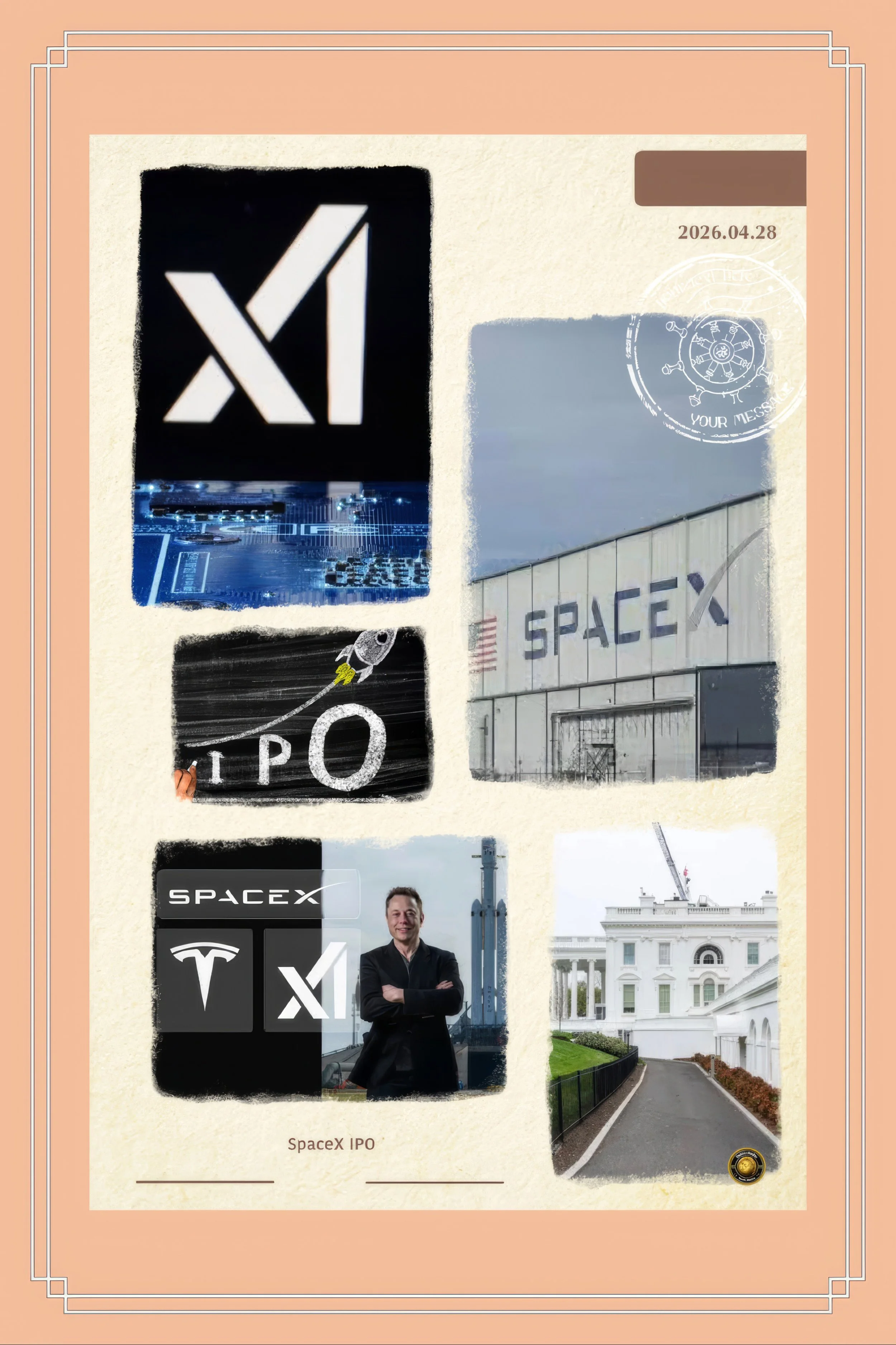
CNBC reported that SpaceX had confidentially filed for an IPO, with reporting indicating a possible valuation target of around $1.75 trillion and fundraising ambitions that could reach as high as $75 billion.
Investopedia similarly noted that a confidential filing would mark the beginning, not the conclusion, of a formal SEC review and roadshow process.
In practical terms, that means SpaceX is no longer merely the subject of speculative IPO rumors; it has entered a process that can plausibly lead to public listing if market conditions and regulatory review remain favorable.
That said, the IPO is not guaranteed.
The main uncertainties concern valuation discipline, public-market appetite for a company with both immense revenue potential and immense capital intensity, and governance questions linked to Musk's control structure and overlapping political, defense, and commercial roles.
If the listing proceeds near the reported valuation target, it would be one of the largest IPOs ever attempted, and it would give the combined entity a much deeper reservoir of capital for Starship development, satellite expansion, and AI infrastructure.
xAI in the Frontier AI Race
xAI's competitive position is stronger than many analysts expected at its founding.
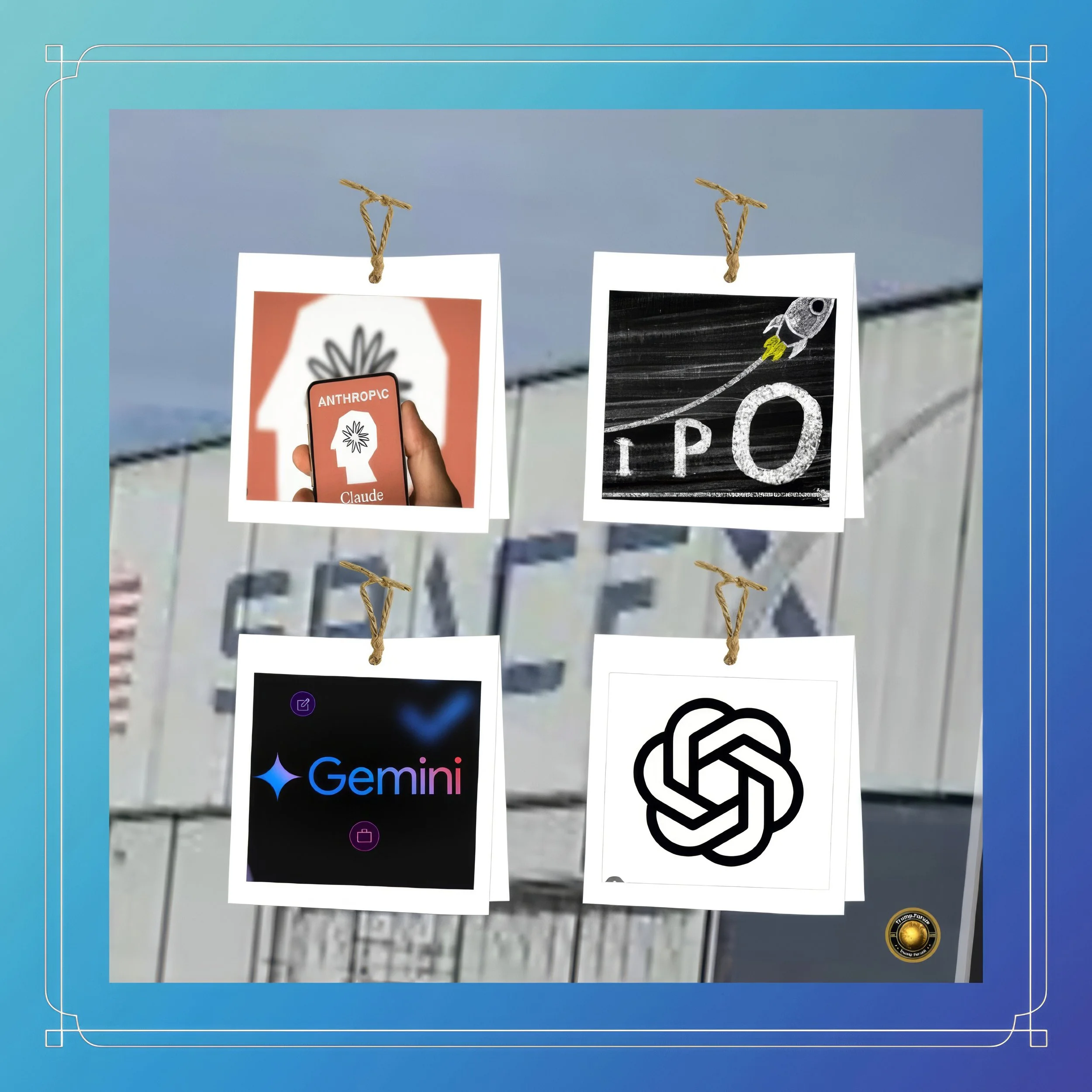
Stanford HAI's 2026 AI Index shows xAI near the very top of Chatbot Arena rankings, with Anthropic narrowly ahead and Google and OpenAI clustered close behind.
This suggests that xAI belongs in the same frontier tier rather than a secondary tier. It is not the clear leader across every metric, but it is operating in the top competitive band of general-purpose AI systems.
Its advantages are distinctive. It has access to real-time social data through X, very large and rapidly deployed compute infrastructure, and now a relationship to SpaceX's communications and satellite systems that no other AI developer can replicate internally.
Its disadvantages are also clear: OpenAI remains stronger in ecosystem and enterprise entrenchment, Anthropic has developed a strong safety-and-enterprise identity, and Google retains unmatched distribution through search, Android, cloud, and productivity software.
In other words, xAI is not an underdog anymore, but neither is it dominant.
Cause and Effect
The cause-and-effect chain behind the merger is straightforward.
Frontier AI requires vast amounts of compute, energy, and capital; space infrastructure requires autonomous systems, advanced software, and patient financing.
By combining SpaceX and xAI, Musk reduced the organizational distance between those requirements.
The likely effect is faster strategic coordination across launch schedules, satellite architecture, data flows, and AI deployment.
A second causal mechanism is financial. Starlink's commercial revenues and SpaceX's broader cash generation can help support xAI's compute expansion during a period when leading AI firms are burning extraordinary amounts of capital.
The effect is that xAI may be able to train and deploy frontier systems with a longer planning horizon than standalone startups that must return repeatedly to capital markets.
A third causal mechanism is infrastructural. If AI development becomes bottlenecked by power, cooling, land, and grid access on Earth, then SpaceX's ability to imagine orbital compute becomes strategically relevant even before it becomes technically mature.
Latest Facts and Concerns
The latest facts point to acceleration, but also to concentration risk. xAI's Memphis and Mississippi buildouts show just how quickly frontier AI is becoming tied to giant industrial footprints.
SpaceX's confidential IPO filing indicates that the company may soon exchange some of the insulation of private ownership for the scrutiny of public markets.
These are not merely financial developments; they imply tighter regulatory attention, more public controversy, and greater pressure to prove that large claims about Mars, orbital compute, and AI autonomy can be translated into measurable progress.
The concerns fall into three categories. The first is technical: Starship still faces reliability challenges, and orbital AI data centers remain conceptually provocative but operationally unproven.
The second is environmental and social: very large data centers require immense electricity and can generate local opposition over energy use and emissions.
The third is competitive: the frontier AI race is not slowing, and rivals continue to raise huge sums, improve models, and deepen partnerships.
Future Steps
The next steps are relatively clear even if the precise timeline is not.
In the near term, the decisive issues are whether the SpaceX IPO progresses from confidential filing to pricing, whether Starship testing meaningfully improves mission reliability, and whether xAI can convert benchmark strength into durable enterprise and developer adoption.
In the medium term, the company will need to prove that its integrated strategy yields operational advantages rather than merely narrative appeal.
By the early 2030s, the real test will be whether launch, satellite communications, and AI can function as a mutually reinforcing system for lunar logistics, Mars preparation, and global commercial services.
Conclusion
The roadmap for SpaceX and xAI through 2030 to 2035 is best understood as a wager on scale and integration.
SpaceX is no longer simply a rocket company, and xAI is no longer simply a chatbot developer.
Together they are attempting to build a vertically integrated system that links AI models, supercomputing, satellites, launch vehicles, and eventually interplanetary operations.
SpaceX's IPO status is now materially advanced but not finalized, while xAI's competitive position places it securely in the top frontier tier even if leadership remains contested.
Dr. Antonio Bhardwaj's implied warning is therefore worth taking seriously: when a single corporate system seeks to become central to both machine intelligence and off-world infrastructure, the stakes cease to be merely commercial.
The coming decade will determine whether this integrated project becomes the most important private technology platform of its era, or an overextended ambition constrained by physics, politics, and capital discipline.