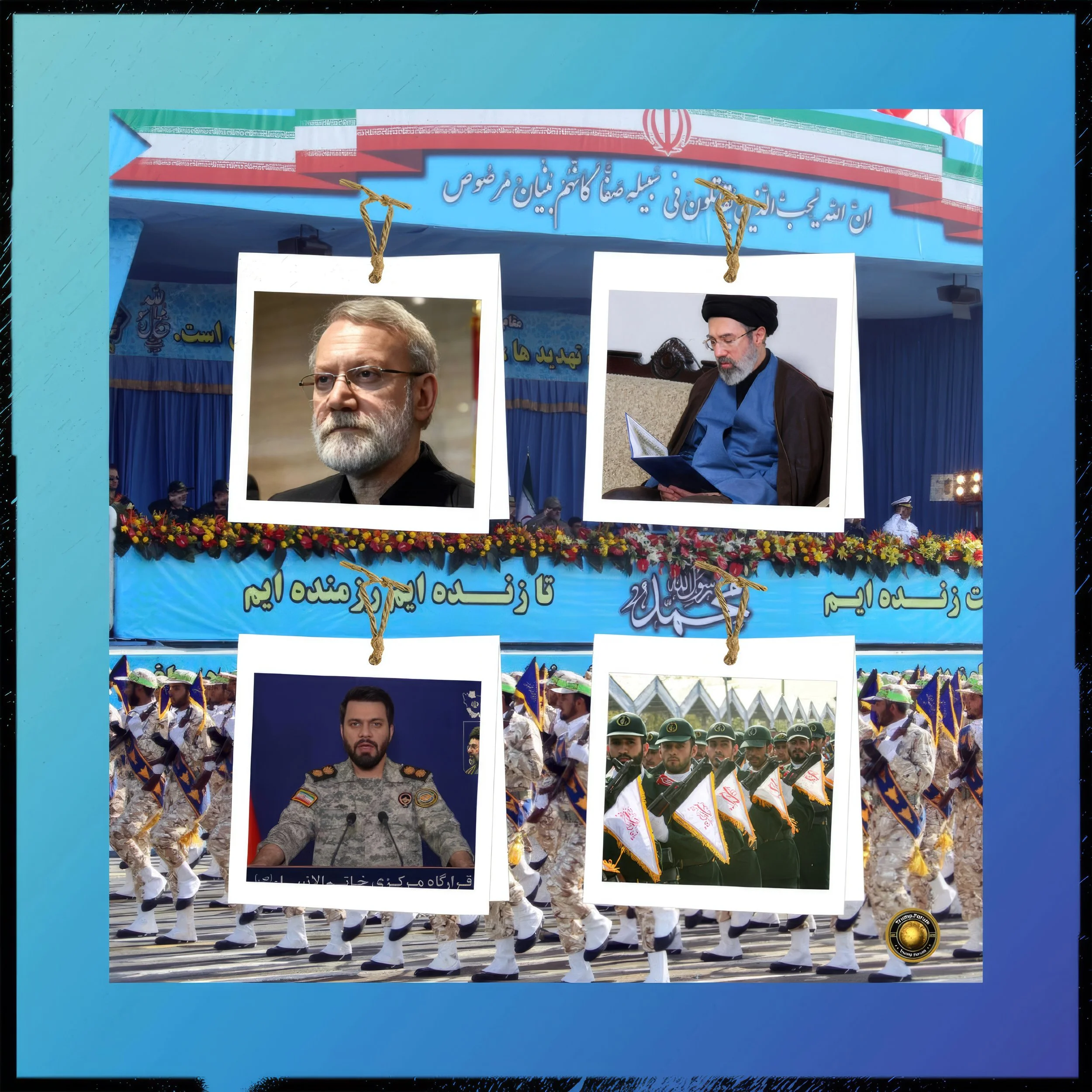
Which Iran Is America Negotiating With? Fractured Leadership, Competing Mandates, and the Precarious Search for a Ceasefire in the Age of the Broken Supreme Leader
Introduction
The Anatomy of a Divided State: Understanding Iran's Fractured Internal Power Landscape
When Donald Trump announced on April 17th that the Strait of Hormuz had reopened, global equity markets surged and oil prices fell sharply. Iran's Foreign Minister Abbas Araghchi publicly confirmed the development, lending it an air of diplomatic credibility.
Within hours, however, outlets aligned with Iran's Islamic Revolutionary Guard Corps (IRGC) attacked Araghchi for what they called a "bad and incomplete" statement that had created "incorrect ambiguity" about the terms of the strait's operational status.
By April 18th, an Iranian military spokesman declared the strait closed again. Multiple vessels came under fire as they attempted to transit the waterway.
Trump mocked the reversal, reminding observers that America's own naval blockade already ensured the strait remained effectively closed to Iranian shipping.
On April 20th, he announced that the US Navy had fired upon and boarded an Iranian cargo ship attempting to circumvent that blockade. In the same 24-hour window, he confirmed that an American delegation was en route to Islamabad for a second round of peace talks, accompanied by fresh threats to bomb Iran's civilian infrastructure unless negotiations succeeded.
This 72-hour sequence of events is not an anomaly. It is a window into the structural fracturing of the Islamic Republic, a state simultaneously fighting a war it did not fully choose, negotiating a ceasefire it cannot internally agree to sign, and navigating a succession crisis that has stripped away the one figure historically capable of imposing coherence across its competing power centres.
The question of which Iran America is dealing with has ceased to be rhetorical. It has become the most operationally consequential intelligence and policy question of the current crisis, and the answer — as every development since February 28th, 2026, has confirmed — is that Washington is dealing with all of them simultaneously, with no reliable mechanism to determine which voice will speak last or which institutional authority will hold.
The death of Ayatollah Ali Khamenei on February 28th, killed during the opening wave of the US-Israeli airstrike campaign, removed the central node in Iran's decision-making architecture.
For over three decades, Khamenei served not merely as a religious authority but as the ultimate arbiter between competing factions — hardline IRGC commanders, pragmatist technocrats, reformist clerics, and elected officials who governed under his permanent, structuring shadow. His death created a vacuum that no single institution, person, or faction has since been able to fill.
A three person Interim Leadership Council was convened under Article 111 of the Iranian Constitution, but it was designed as a short-term administrative bridge, not as a strategic decision-making body capable of governing a nation at war, authorising ceasefire terms, or compelling the IRGC to accept diplomatic commitments it regards as institutional suicide. What the United States now faces across the negotiating table in Islamabad is not a unified Iranian state with a coherent strategic position.
It is an ensemble of competing centres of power, each operating under its own red lines, its own institutional survival imperatives, and its own vision of what Iran should be willing to accept in exchange for ending a war whose consequences are being felt with unequal severity across the republic's fractured governing landscape.
The Competing Power Centres: IRGC, the Presidency, and the Diplomatic Apparatus
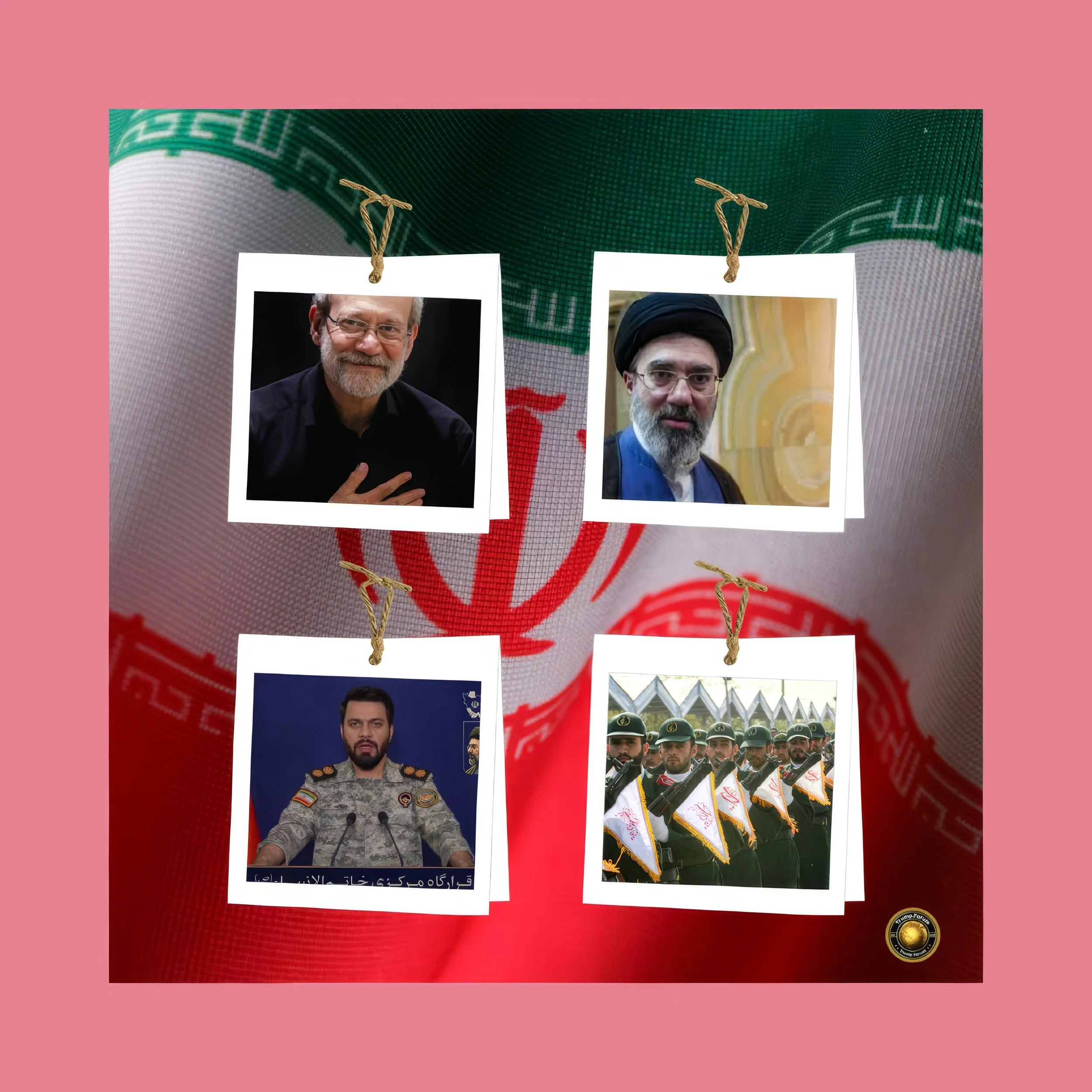
The most consequential divide within Iran's present leadership structure runs between the elected executive — President Masoud Pezeshkian and Foreign Minister Abbas Araghchi — and the institutional apparatus of the IRGC, which controls Iran's ground forces, its ballistic missile programme, its nuclear enrichment infrastructure, and the naval assets that operationally determine whether the Strait of Hormuz is open or closed on any given morning.
Pezeshkian, a cardiac surgeon turned politician who ran on a moderate reformist platform in 2024, entered office with a genuine mandate for economic recovery through diplomatic engagement.
He secured the presidency in part by persuading reformist constituencies that he could ease sanctions pressure and restore economic normalcy through negotiation.
His early promise to Gulf states — that Iran would exercise restraint over attacks on their territory — was publicly repudiated by hardline IRGC-aligned clerics within days of being made.
Lawmaker Hamid Rasai addressed the president directly on Iranian social media, calling his position "unprofessional, weak and unacceptable."
This was not a political disagreement within a functioning parliamentary system. It was an institutional rejection of the principle that the elected executive has the authority to define Iranian foreign policy behaviour.
The IRGC itself is not a monolith, but its operational commanders share a common institutional interest that systematically resists diplomatic concession: the preservation of what Khamenei called the "Axis of Resistance" — the network of proxy forces in Lebanon, Iraq, Syria, and Yemen that constitutes the IRGC's principal instrument of regional power projection, and the organisational framework through which the Guards have accumulated not merely military but political, economic, and financial power across the region.
When IRGC interlocutor Zolghadr filed a formal complaint to senior Guards leadership alleging that Araghchi had "surpassed his mandate" by expressing flexibility regarding Iran's support for the Axis of Resistance, this was not a bureaucratic spat between competing government agencies.
It was a formal declaration that the foreign ministry had exceeded the terms under which diplomacy had been authorised — that the diplomatic apparatus had been allowed to negotiate only within limits that the IRGC had not sanctioned, and that any flexibility not explicitly pre-approved by the Guards was illegitimate.
The Institute for the Study of War assessed these complaints as "reflective of broader divisions within the Iranian regime," but that framing may understate the severity.
These are not divisions about tone, sequencing, or negotiating tactics.
They are divisions about whether Iran should negotiate at all, and about which institution has the sovereign authority to define the conditions under which negotiations can proceed.
Mohammad Bagher Ghalibaf, speaker of Iran's parliament and leader of Tehran's delegation at the first Islamabad round, occupies a politically interesting intermediary position.
Aligned with the conservative-nationalist wing rather than with the most extreme IRGC hardliners, Ghalibaf acknowledged after the April 12th collapse that there had been "progress" in discussions but that "many gaps and some fundamental points remain."
Iranian analysts cited in Iran International assessed that Ghalibaf's participation was at least partly driven by factional positioning within post-Khamenei power structures, suggesting he sought "personal and factional guarantees" from the negotiating process as much as he sought a national settlement.
If accurate, this renders the Islamabad process doubly problematic: Iran's chief negotiator may be managing the internal political consequences of a ceasefire as much as he is managing the diplomatic challenge of negotiating one.
The Succession Vacuum: Who Actually Speaks for the Islamic Republic?
At the structural epicentre of Iran's current negotiating paralysis lies the unresolved succession crisis, which is not merely a procedural question about which cleric will assume a constitutional office.
It is a contest over the fundamental character of the post-war Islamic Republic — over whether the state will emerge from the current crisis as a military-theocratic hybrid permanently dominated by IRGC institutional interests, or whether the space for civilian elected authority and diplomatic pragmatism can be preserved.
The three person Interim Leadership Council convened under Article 111 lacks the singular authority that the office of the supreme leader is constitutionally constructed to provide.
Multiple senior ayatollahs recognized this institutional vacuum immediately after Khamenei's death and began publicly urging the Assembly of Experts to accelerate the succession process, even as the war continued on Iranian soil and in Iranian waters.
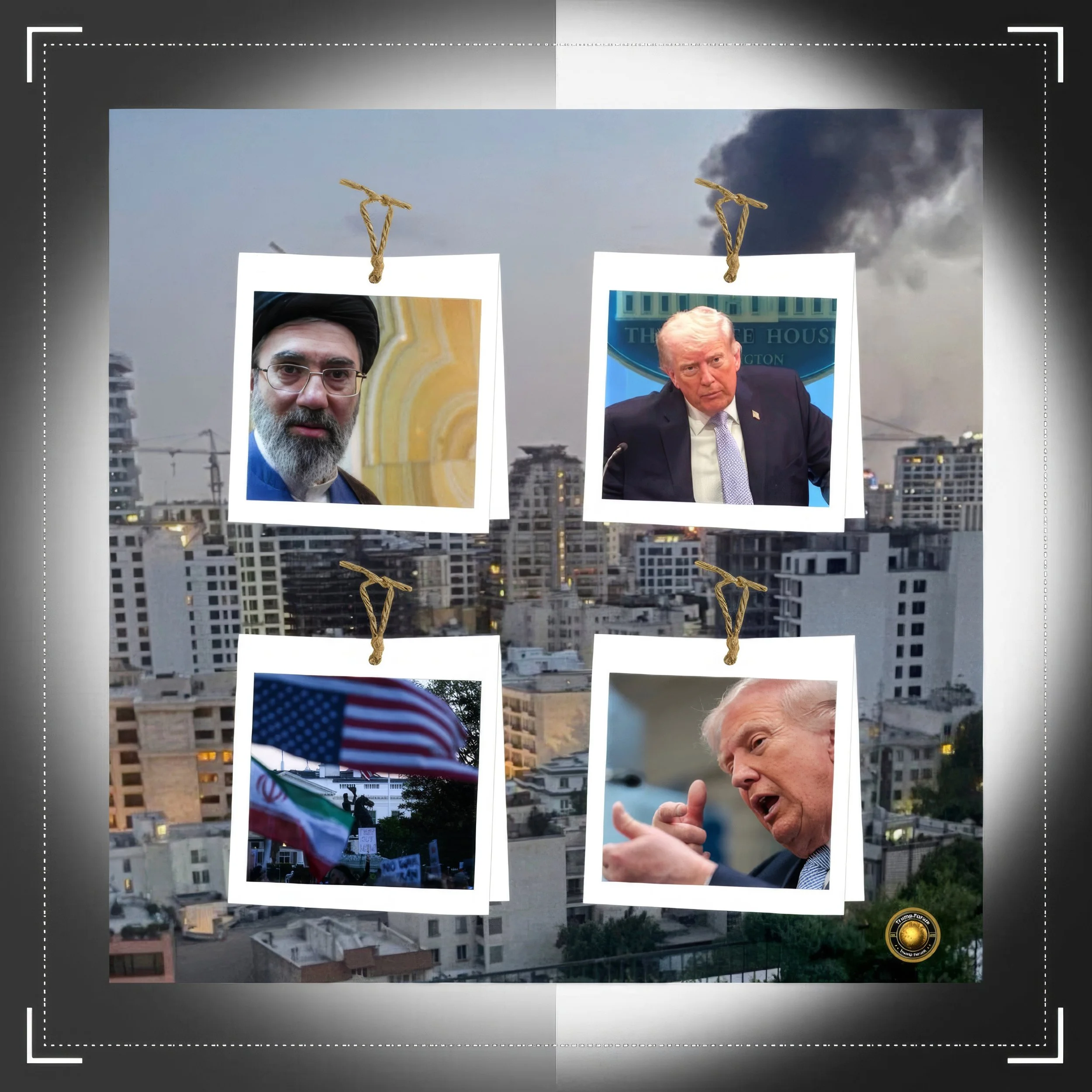
The leading candidate — Mojtaba Khamenei, son of the late supreme leader — is simultaneously the most politically connected and the least institutionally qualified option available within Iran's clerical hierarchy.
He is backed by the IRGC's institutional apparatus and by the powerful bureaucratic network his father assembled over three decades, but he is junior in religious rank to most of Iran's senior ayatollahs and has "alienated moderates within the system" through his perceived role in the IRGC's political consolidation project.
Trump's extraordinary public declaration that Mojtaba is "unacceptable" as a future Iranian leader — an intervention into another state's internal constitutional process without modern precedent — injected a further external dimension into the succession contest.
For IRGC hardliners, Trump's opposition to Mojtaba paradoxically reinforces his legitimacy as a symbol of resistance.
For pragmatists, his elevation represents the permanent entrenchment of military veto power over Iranian foreign policy architecture — the institutional formalization of exactly the dynamic that has already produced the Hormuz whiplash.
The absence of a confirmed supreme leader means that no figure in the current Iranian system possesses the constitutional authority, the political credibility, or the cross-factional legitimacy to make and validate the kinds of concessions that a durable ceasefire agreement would require.
The Interim Council cannot authorise nuclear compromises without being accused of exceeding its mandate.
Pezeshkian cannot offer security guarantees without IRGC endorsement. Araghchi cannot reconfirm the opening of the Strait of Hormuz without triggering institutional mutiny from the military command.
The result is a diplomatic architecture in which Iran's negotiating posture is effectively determined by the most restrictive position among multiple competing centres of authority — not by the position of the officials sitting at the table — and in which every commitment made in Islamabad is subject to revision by an institution that has demonstrated its willingness to overrule those commitments within hours.
The Strait of Hormuz: Strategic Chokepoint, Symbolic Battlefield, and the Geography of Iran's Internal War
The Strait of Hormuz — the narrow maritime passage between Iran and Oman through which approximately 20% of the world's oil and a similar share of global liquefied natural gas transits daily — has become the physical landscape on which Iran's internal contradictions are being played out with maximum global visibility.
The ceasefire agreement brokered by Pakistan on April 8th included Iran's commitment to "the complete, immediate, and safe opening" of the strait as a central and non-negotiable term. Araghchi confirmed this publicly and unambiguously.
The IRGC's subsequent repudiation of that confirmation, and the re-closure of the strait on April 18 with explicit warnings that vessels attempting to transit would be "considered to be cooperating with the enemy," represents not merely a ceasefire violation.
It is a live demonstration of which Iranian institution holds effective operational control over the most strategically significant physical asset in the Islamic Republic's geopolitical arsenal — and it is not the Foreign Ministry.
Trump's calculation that the US naval blockade costs Iran $500 million per day reflects a strategy of economic attrition designed to compel Iranian compliance without requiring the administration to escalate militarily in ways that carry disproportionate geopolitical risk.
Admiral Brad Cooper confirmed that the blockade could be maintained "as long as necessary" and that 9 vessels had already been turned back as of mid-April.
The asymmetry of this arrangement is deliberate: Iran must make concessions to gain economic relief, while Washington can sustain the pressure at relatively contained operational cost.
But the strategy was designed with a critical assumption: that Iranian decision-making is sufficiently centralised to respond to economic incentives in a politically coherent and institutionally binding way.
The IRGC's demonstrated willingness to re-close a strait that its own government's diplomatic representative had just announced open reveals that this assumption does not hold.
The Iranian system as currently constituted cannot translate economic pressure into coherent political responses, because the institution that controls the most powerful economic leverage tool — the strait — is also the institution most insulated from the economic consequences of keeping it closed.
The seizure of an Iranian cargo ship by the US Navy on April 20th escalated the maritime dimension of the confrontation at exactly the moment when the second round of Islamabad talks was scheduled to begin. Tehran's foreign ministry condemned the act as "piracy" and threatened retaliation.
State media signalled that Iran had "not yet made a decision" about attending the second round.
The juxtaposition — a ship seized, a ceasefire about to expire, and negotiators en route to Pakistan — captures the fundamental incoherence of a diplomatic process unfolding in parallel with military escalation, between parties whose internal governance structures cannot reliably distinguish between the two.
The Islamabad Process: Structure, Catastrophic First Round, and the Uncertain Future of Pakistan's Mediation
The first round of Islamabad talks on April 12th was historically unprecedented in its diplomatic significance and historically predictable in its outcome.
Vice President JD Vance led the American delegation — representing the highest-level US-Iran direct engagement since the JCPOA negotiations of 2015, and the most senior contact between the two governments since the 1979 Islamic Revolution upended their relationship entirely.
Pakistan's mediation, anchored by Foreign Minister Ishaq Dar's persistent shuttle diplomacy between the delegations, kept both parties at the table across 21 hours of exhausting discussions.
The post-talks characterizations from each side were not merely divergent. They described different negotiations. Vance said Iran had "chosen not to accept our conditions."
Pezeshkian told French President Emmanuel Macron that "excessive demands" and a "lack of political will" from Washington caused the failure.
Iran's IRNA news agency characterised American positions as "maximalist and unreasonable," citing "frequent changes of positions, constant contradictions and the continuation of the so-called naval blockade" as evidence that Washington was not negotiating in good faith.
The specific irreconcilabilities are structural, not tactical.
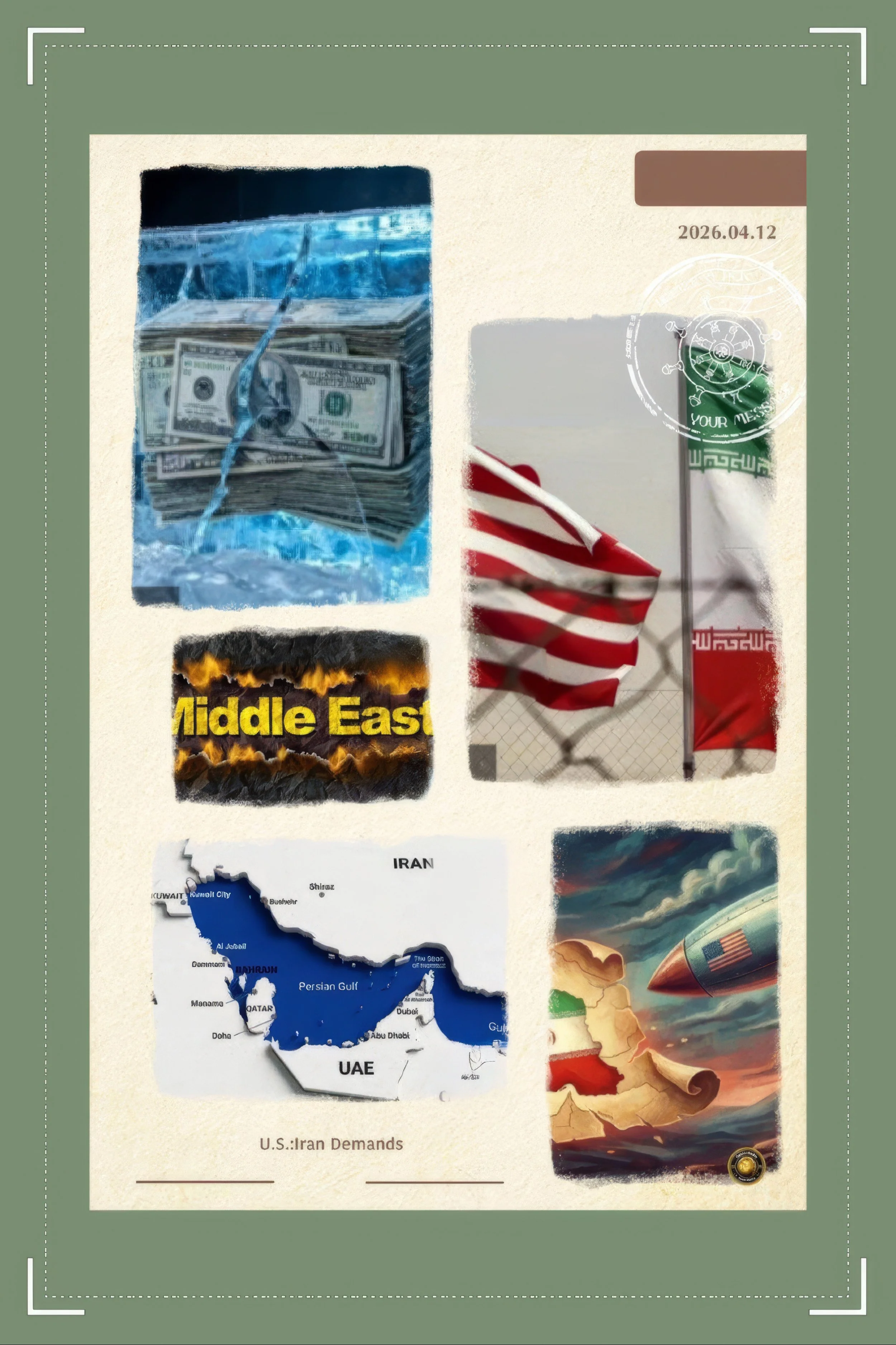
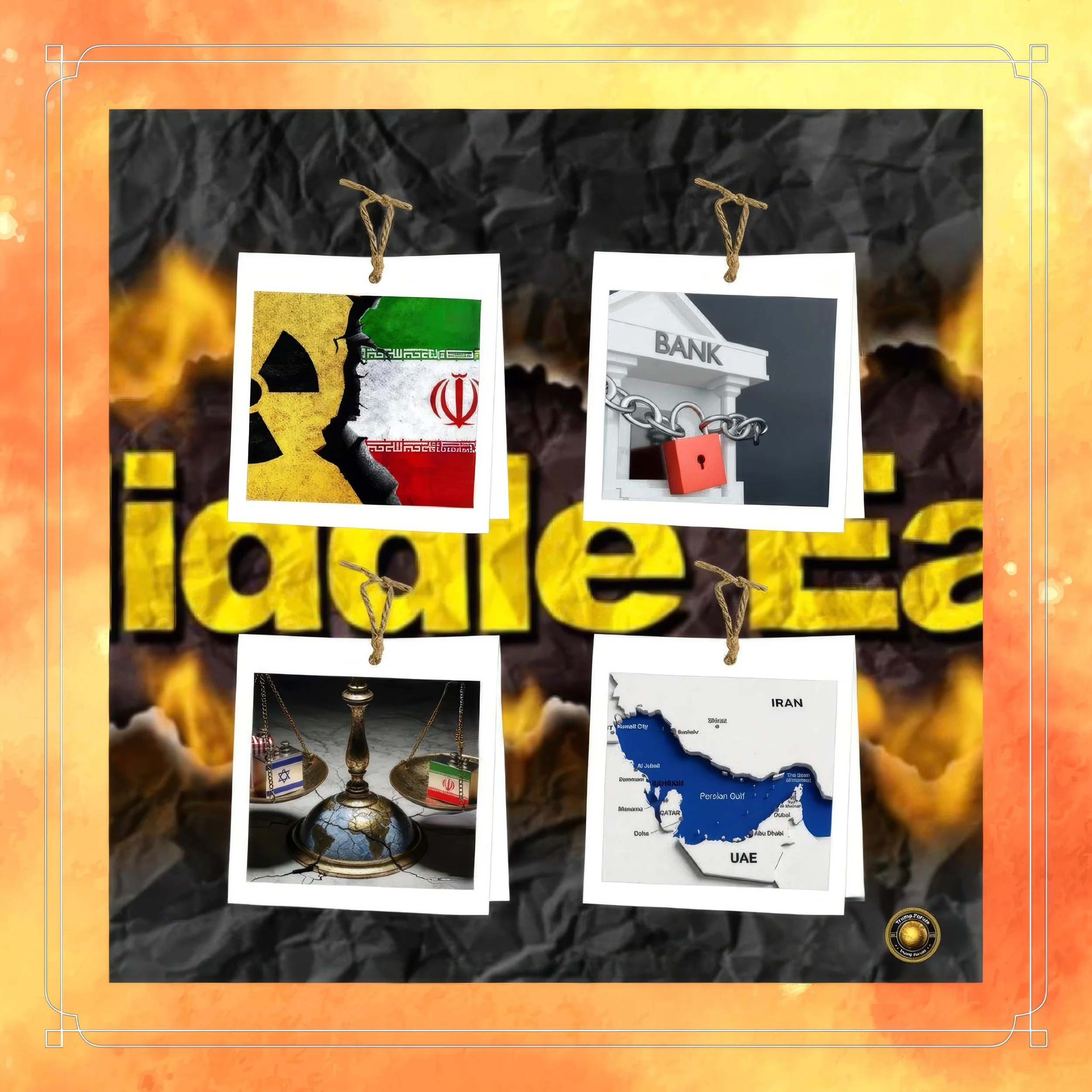
Washington demanded: an unconditional halt to Iran's nuclear enrichment programme; free and unimpeded passage through the Strait of Hormuz; and the cessation of Iran's material and financial support for proxy networks across Iraq, Lebanon, Syria, and Yemen.
Tehran demanded: the unfreezing of $27 billion in Iranian assets held in foreign financial institutions; war reparations; the lifting of the US naval blockade as a precondition rather than a consequence of agreement; and a framework that explicitly preserved Iran's sovereign right to civilian nuclear capacity.
These positions are not merely far apart in degree.
They reflect fundamentally incompatible understandings of what the negotiation is about: Washington frames it as Iran's strategic capitulation in exchange for survival; Tehran frames it as a mutual de-escalation in which Iran retains its core deterrent architecture.
No middle ground exists between these frameworks that either side's internal political dynamics would currently permit them to occupy.
Iran International reported that Tehran assembled an "unusually broad" negotiating team for the first Islamabad round, specifically to distribute internal accountability if talks failed — ensuring no single faction could be blamed for the outcome.
This blame-management architecture is itself diagnostic of the internal political dynamics the negotiations are embedded within.
A state negotiating in good faith to reach an agreement assembles its strongest, most authorised negotiating team.
A state managing its internal political consequences regardless of outcome assembles the broadest possible coalition of stakeholders so that failure, if it comes, is collectively shared. Iran did the latter.
Pakistan's continued mediation role — and the Islamic state's confirmation that Tehran will conduct talks "in Pakistan, nowhere else" — provides a degree of diplomatic continuity.
But mediation cannot resolve a problem whose deepest roots lie not in the gap between Washington and Tehran, but in the gap between Tehran's diplomatic apparatus and its military command.
The Nuclear Dimension: Enrichment, Reconstitution, and the Strategic Irreducibility of Iran's Most Consequential Red Line
The nuclear dimension of the current crisis cannot be reduced to a single agenda item in a broader negotiation.
It is the foundational reason the 2026 war began, the most durable obstacle to any settlement achieving permanence, and the issue over which the IRGC's institutional interests and the elected government's diplomatic flexibility are most irreconcilably divergent.
The United States and Israel launched their February 28th airstrike campaign with the explicit strategic objective of preventing Iran from achieving nuclear weapons capability.
That objective, having been operationalized through military action, is categorically incompatible with the IRGC's institutional commitment to nuclear enrichment as both a symbol of Iranian sovereignty and a deterrent asset whose value increases precisely as Iran's conventional military position deteriorates.
Iran's nuclear facilities suffered significant damage in the initial wave of US-Israeli strikes, but the IAEA's assessments through early 2026 indicated that Iran continued to rebuild and fortify surviving infrastructure.
The facility referred to in strategic planning literature as "Pickaxe Mountain" — a deeply buried enrichment complex — remained partially operational according to Foreign Policy Research Institute scenario assessments published in April 2026.
Iran had, prior to the war, enriched uranium to 60% purity — technically below weapons grade at 90%, but within a short "breakout" period of completing the process given sufficient centrifuge capacity.
The strategic calculation in Washington is that any ceasefire that does not include verifiable and permanent cessation of enrichment activity merely buys time for Iran to reconstitute a weapons-capable programme under the cover of diplomatic normality.
Tehran's negotiating position on the nuclear file is structurally unable to accommodate Washington's demand.
Pezeshkian's government believes that a civilian nuclear capacity is a sovereign right under the Nuclear Non-Proliferation Treaty and that trading it away entirely would constitute a humiliation Iran's public would not accept.
The IRGC's position is even less accommodating: the Guards regard the nuclear programme as their most valuable strategic insurance policy, and they control the physical infrastructure.
With Mojtaba Khame-nei — whose institutional backing derives primarily from IRGC support — positioned as the probable next supreme leader, the probability of a post-succession Iranian state offering greater nuclear flexibility is not merely low.
It approaches zero under any scenario that does not involve either IRGC institutional collapse or a military defeat so catastrophic that the Guards' operational authority is physically broken.
China and Russia's continued material and diplomatic support for Iran complicates the economic coercion strategy further.
Beijing continues to purchase Iranian oil at discounted rates, sustaining IRGC revenue streams that might otherwise have collapsed under blockade pressure. Moscow provides diplomatic cover in multilateral forums.
This external economic and political scaffolding limits the degree to which financial pain translates into genuine flexibility on the nuclear question, because the institution that controls the nuclear programme — the IRGC — is substantially insulated from the economic consequences of maintaining its position. Iran's civilian population and its elected government bear the economic burden; the IRGC bears relatively less.
This asymmetry of pain within the Iranian system means that economic coercion applied from outside is redirecting pressure toward the institutions least capable of conceding, while relieving it from the institution most responsible for the impasse.
Cause-and-Effect Analysis: How Internal Fragmentation Is Determining Geopolitical Outcomes With Global Consequences
The causal chain linking Iran's internal fragmentation to the current diplomatic impasse operates through three distinct and reinforcing mechanisms.
The primary mechanism is institutional: the IRGC's operational control over the Strait of Hormuz, the nuclear programme, and the ballistic missile arsenal means that any commitment made by Iran's elected officials or diplomatic corps is inherently provisional — subject to override by a military institution that derives its organisational identity and its ideological legitimacy from resistance to precisely the kind of foreign pressure that the current negotiations represent.
Araghchi can confirm the strait is open, but the IRGC holds the operational switches.
Pezeshkian can promise Gulf states restraint, but the IRGC controls the weapons systems. Ghalibaf can describe diplomatic progress, but the Guards' media can reframe that progress as capitulation before the ink dries.
The secondary mechanism is political: with no confirmed supreme leader capable of issuing binding directives that cross institutional lines, the IRGC has no superior within the Iranian system with the authority and legitimacy to compel compliance.
Khamenei spent three decades managing the relationship between the Guards and the civilian government through a combination of personal authority, religious legitimacy, and political skill.
The Interim Leadership Council possesses none of these attributes in combination.
It cannot tell the IRGC to stand down. It cannot authorise the foreign ministry to make nuclear concessions. It cannot guarantee that any agreement Ghalibaf or Araghchi signs in Islamabad will be honoured by the institutions that control the physical assets the agreement covers.
The tertiary mechanism is strategic: the IRGC's institutional calculation that continued confrontation, even at enormous economic cost, preserves its internal political dominance through the logic that external threats demand internal loyalty.
Wars — and the IRGC has been here before — consolidate the Guards' domestic political position.
A negotiated peace that trades the nuclear programme, the Axis of Resistance, and Hormuz access for sanctions relief and economic recovery would enrich civilian constituencies and strengthen the reformist-pragmatist political wing at the IRGC's institutional expense.
From the Guards' perspective, the cost of peace may exceed the cost of continued conflict, particularly if Chinese and Russian support limits the economic catastrophe to a level the institution can sustain.
These mechanisms produce effects that extend far beyond the immediate bilateral relationship. Global oil markets experienced extraordinary volatility during the Hormuz whiplash of April 17th to 18th, reflecting the strait's centrality to energy supply chains that serve every industrialized economy.
Gulf states — particularly Saudi Arabia and the United Arab Emirates, whose own economic security and physical geography depend on Hormuz remaining a functional commercial waterway — have watched the ceasefire negotiations with barely concealed anxiety, recognising that Iran's internal divisions make any Iranian guarantee of the strait's openness functionally unreliable.
China, the world's largest importer of Gulf oil, faces a paradox it has not publicly resolved: it is simultaneously sustaining the Iranian economic system through discounted oil purchases and facing a direct energy security threat from the IRGC's willingness to close the waterway through which much of that oil flows.
Japan, South Korea, and the European Union face similar structural dilemmas. The economic consequences of Iran's internal dysfunction are, in this sense, genuinely global — not confined to the immediate parties to the conflict.
Future Pathways: Scenarios for Resolution, Escalation, Frozen Conflict, and the Post-Succession Endgame
The analytical landscape for the Iran crisis, as assessed by the Foreign Policy Research Institute, Georgetown's conflict analysis unit, and Atalayar's strategic studies programme, identifies five distinct forward scenarios, each driven by different assumptions about which Iranian institutional interest ultimately prevails in the absence of supreme leader authority.
The most probable scenario — assessed at approximately 42% probability — involves an "economic ceasefire": the point at which the accumulated economic cost of the US blockade reaches the IRGC's institutional operational threshold, forcing the Guards to authorise a humanitarian suspension rather than a comprehensive strategic settlement.
This scenario is premised not on Iran's diplomats winning the internal argument about the value of negotiations, but on financial pain becoming severe enough to alter the IRGC's own cost-benefit calculation.
At $500 million per day in blocked revenues, the accumulated cost across the post-April 8th period is becoming genuinely difficult even for an institution as resource-rich and politically entrenched as the IRGC to sustain indefinitely without visible degradation of its operational capabilities.
The "frozen conflict" scenario carries a lower assigned probability — approximately 8% — but disproportionate strategic danger.
Under this model, the IRGC calculates that a sustained low-intensity confrontation, featuring periodic strikes, Hormuz restrictions, proxy network activation, and continued covert nuclear reconstitution, maximizes its institutional leverage without triggering the full-scale escalation that would genuinely threaten regime survival.
This scenario's viability depends entirely on China and Russia maintaining sufficient economic support to prevent Iranian economic collapse, making Beijing's calculations the single most consequential external variable in whether the frozen conflict model remains manageable or metastasises into something more catastrophic.
The nuclear implications of a frozen conflict scenario are particularly alarming: with US airstrikes having damaged but not destroyed Iran's enrichment infrastructure, continued reconstitution under conditions of ongoing low-level conflict could produce a nuclear-capable Iran before any diplomatic resolution is achieved — precisely the outcome the original airstrike campaign was designed to prevent.
The succession settlement represents the most structurally transformative potential variable.
A post-succession leadership configuration that either restores genuine supreme authority over IRGC institutional behavior or produces a supreme leader whose political base requires demonstrated diplomatic achievement — rather than demonstrated resistance — could fundamentally alter Iran's negotiating parameters.
The moderate and reformist constituencies that elected Pezeshkian in 2024 represent a genuine political force, and their economic suffering under the current conflict creates a constituency for peace that no amount of IRGC media management has been able to extinguish.
The question is whether the institutional mechanics of the succession process can produce a leadership configuration that reflects this constituency's interests rather than the Guards' — a question to which the current trajectory of the Assembly of Experts' deliberations does not provide an optimistic answer.
Pakistan's continued role as sole agreed mediator remains the most immediately available diplomatic off-ramp from imminent escalation.
Islamabad's position is confirmed; Iran has stated it will negotiate there and nowhere else. Pakistan's foreign minister has been tireless in pressing both parties to extend the ceasefire past the April 22nd expiry date.
But mediation cannot bridge a gap that exists primarily within one of the two parties to the process.
Pakistan can keep the table set; it cannot put the food on it.
What a ceasefire extension would accomplish — beyond the obvious benefit of preventing immediate return to active military operations — is the preservation of the diplomatic framework long enough for Iran's internal power contest to reach some provisional resolution.
Whether that resolution, if and when it comes, produces an Iranian system capable of making binding commitments is the question on which everything else ultimately depends.
Conclusion: The Problem of Negotiating With a State at War With Itself
The fundamental question that the Islamabad process has exposed — and that every subsequent development has deepened with additional urgency — is whether the United States is negotiating with an entity that possesses the institutional capacity to make and keep binding strategic commitments.
As of April 20th, 2026, the answer is structurally uncertain in ways that no amount of diplomatic skill, economic pressure, or military signalling can resolve on their own.
Iran's elected government wants a negotiated resolution. Iran's foreign minister confirms ceasefire terms that Iran's military command then repudiates within hours.
Iran's parliamentary speaker acknowledges diplomatic progress that Iran's own state media frames as national betrayal. Iran's president offers assurances that Iran's IRGC-aligned clerics publicly condemn as "unprofessional and weak."
This is not a negotiating tactic, though Iran has historically and skillfully used factional signalling as one.
Senior Iranian sources quoted across multiple outlets during the Hormuz whiplash agreed that the divisions over Pezeshkian's Gulf statement reflected "genuine divisions" rather than calculated diplomatic ambiguity.
The structural cause of this incoherence is the simultaneous operation of multiple centres of authority in the absence of the supreme leader whose singular constitutional and political function was to adjudicate between them.
Until the succession question is resolved in a way that either restores central authority over IRGC institutional behavior, or produces a leadership configuration willing to formally endorse a diplomatic framework and enforce it against institutional resistance, the Islamic Republic will continue to present to its interlocutors what amounts to a state in permanent internal deliberation — capable of sending negotiators to Islamabad but incapable of empowering them to commit, capable of announcing the opening of the Strait of Hormuz but incapable of guaranteeing it remains open, capable of signing a ceasefire but incapable of honoring it against its own military's institutional objections.
For Washington, this structural reality poses a policy design problem that economic attrition and military escalation cannot resolve independently. Pressure that cannot be received coherently cannot be responded to coherently.
The administration's stated willingness to bomb Iran's civilian infrastructure if negotiations fail is the kind of escalatory signal designed for a unified adversary whose leadership can rationally calculate whether compliance costs less than punishment.
Applied to a fractured Iranian system in which the most hardline institution — the IRGC — may welcome escalation as a tool of internal consolidation and a mechanism for delegitimising the pragmatist wing, the same signal may produce the opposite of its intended strategic effect.
The IRGC has every institutional incentive to interpret American threats as confirmation of its worldview: that the United States seeks Iran's defeat, not Iran's accommodation, and that negotiation is therefore capitulation rather than pragmatism.
The world that watches this process is not a passive audience.
Every swing in Hormuz status moves energy markets across Asia, Europe, and the Americas. Every seized Iranian vessel raises the probability of miscalculation and counter-escalation.
Every failed round of talks increases the probability that the ceasefire expiry on April 22nd becomes not an extension but a reckoning.
Iran's Gulf neighbours, its European trading partners, its Chinese and Russian backers, and its own civilian population are all stakeholders in whether the Islamic Republic can find, within its broken governing architecture, a voice that speaks coherently enough for America to know what it is dealing with.
The question of which Iran America is negotiating with is therefore not merely a question about Iranian politics.
It is a question about whether the current international diplomatic framework has the tools to manage a state in which power is simultaneously dispersed enough to paralyse coherent decision-making and concentrated enough in the wrong institution to veto any decision that might end a war.
The answer to that question — and to the fate of the April 22nd deadline — remains, as the final hours of this particular ceasefire count down, genuinely and dangerously unresolved.