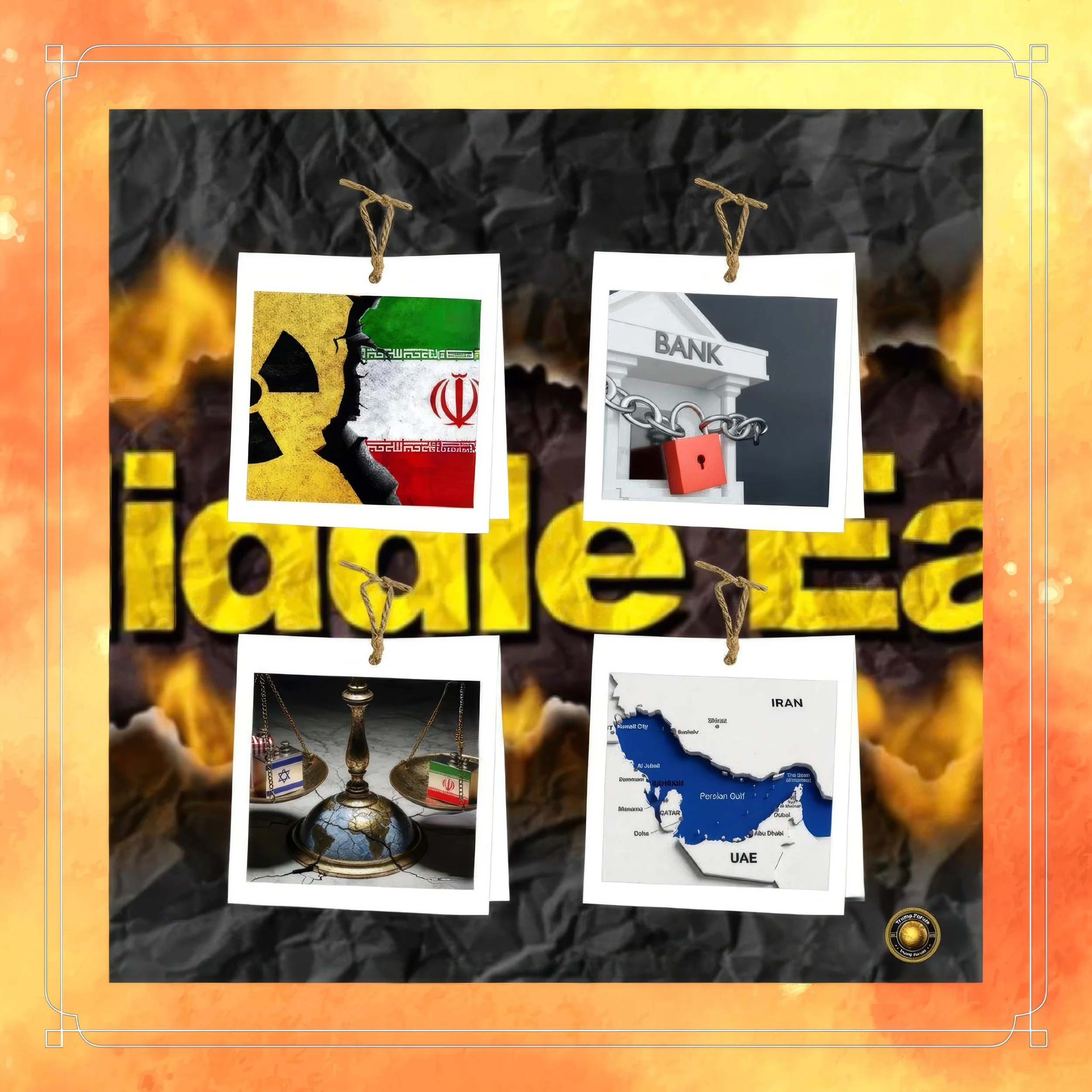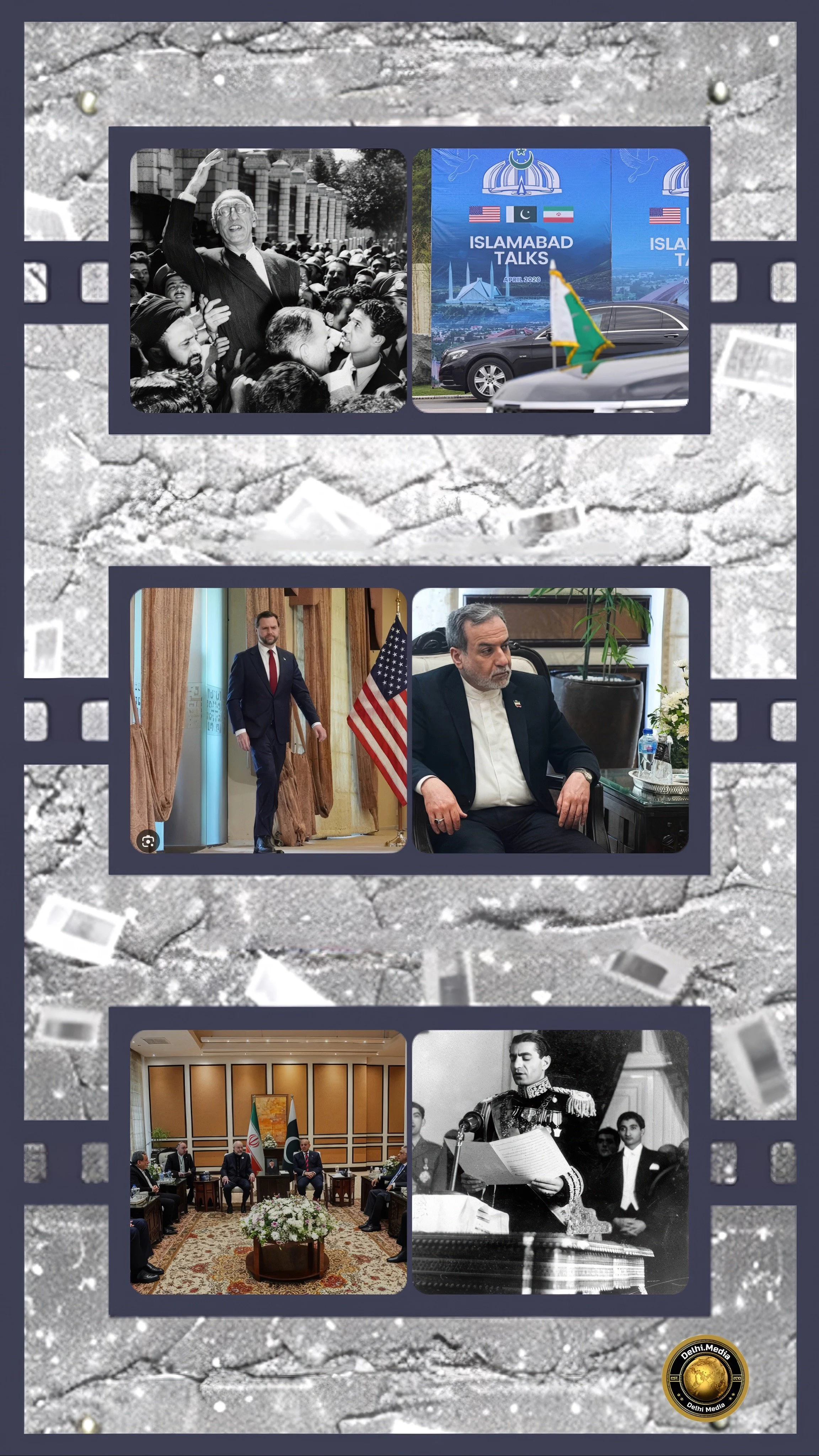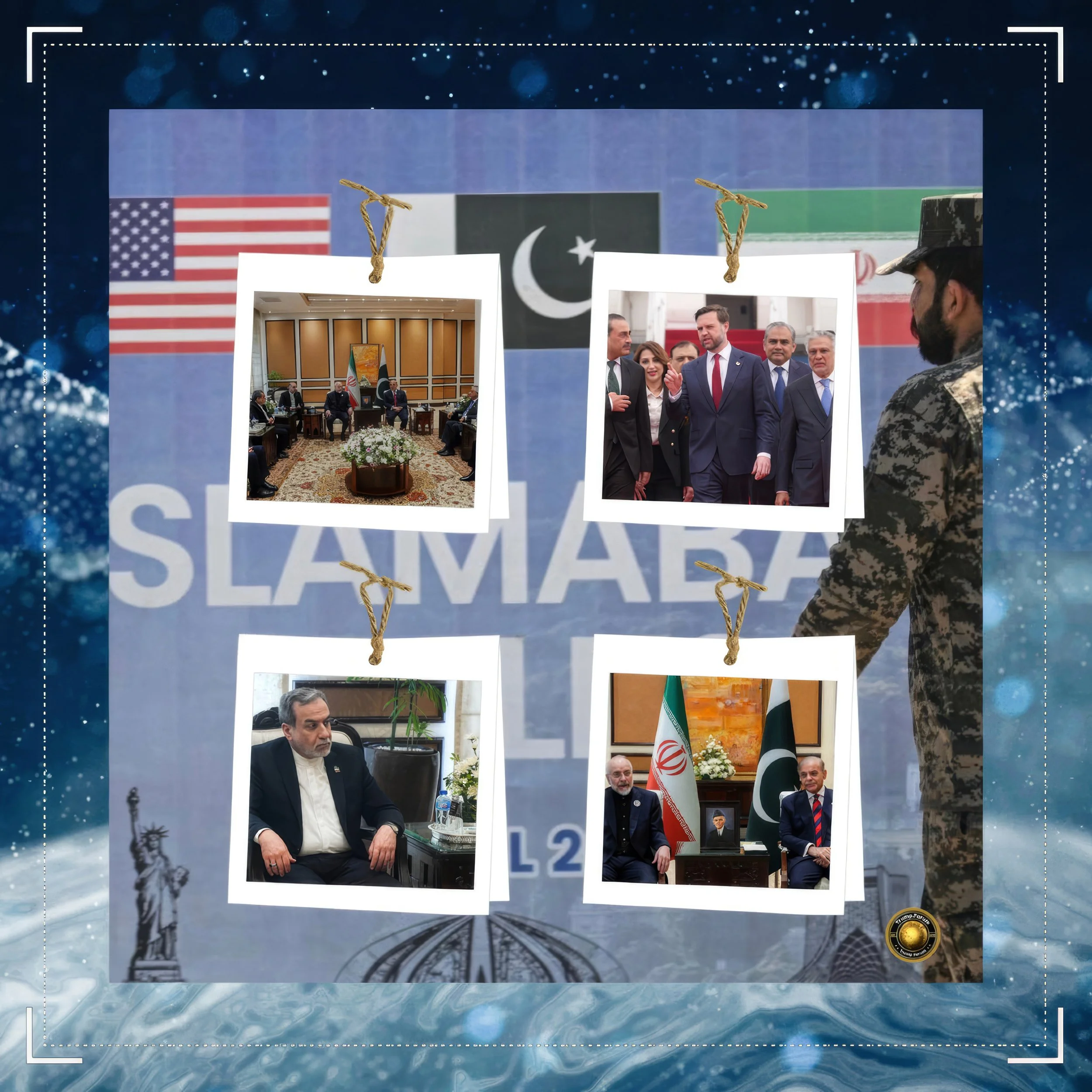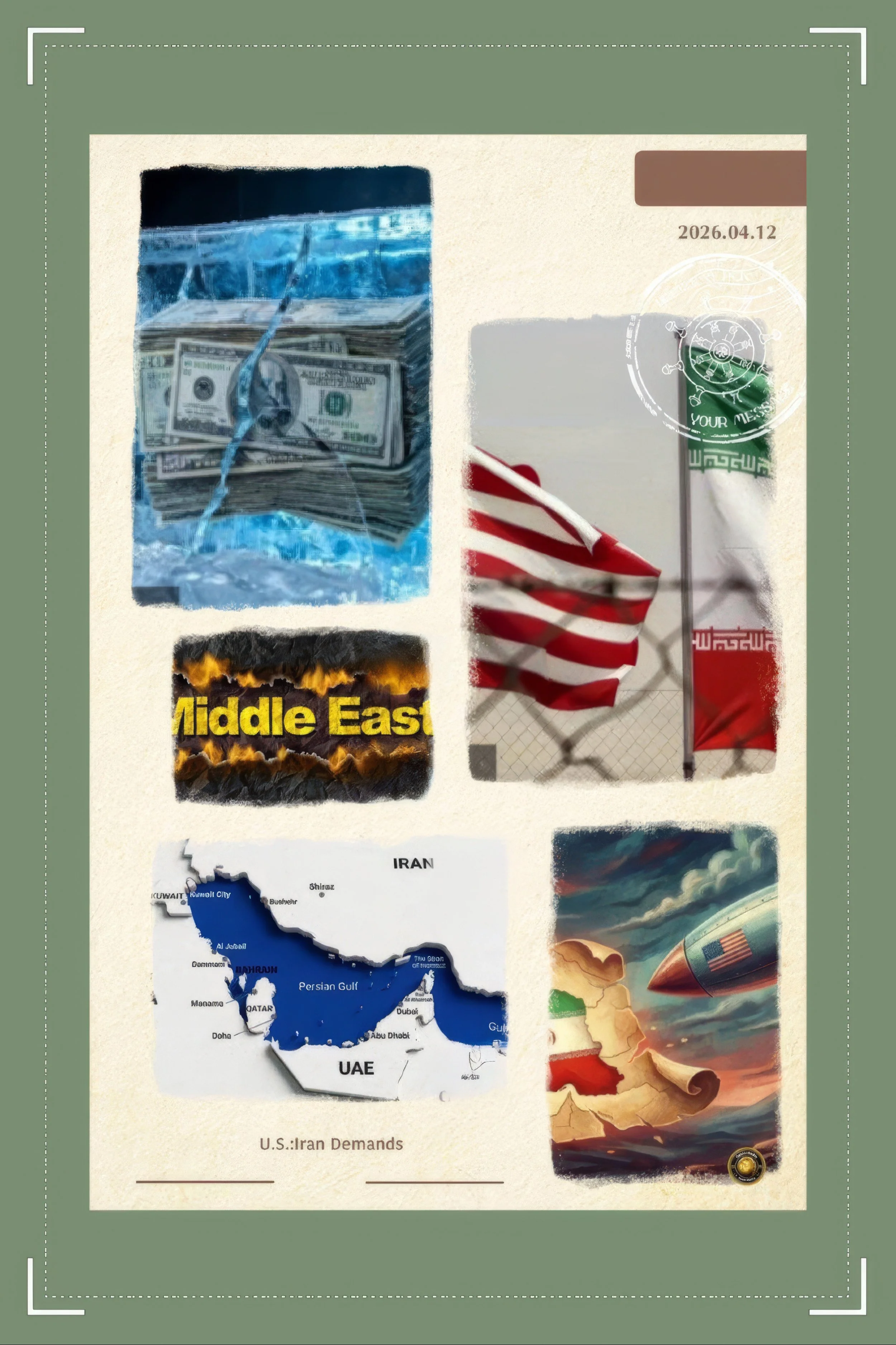
Nuclear Red Lines, Frozen Assets, and Strait of Hormuz: The Five Fault Lines That Derailed US-Iran Peace in Pakistan - Part II
Executive Summary
The Islamabad Impasse: Why the United States and Iran Could Not Bridge the Chasm in Pakistan
The collapse of US-Iran negotiations in Islamabad on April 12, 2026, following 21 hours of direct talks, represents one of the most consequential diplomatic failures in recent Middle Eastern history.
The talks — the highest-level direct engagement between the two countries since the Islamic Revolution of 1979 — ended without agreement after deep disagreements over Iran's nuclear programme, the lifting of sanctions, control over the Strait of Hormuz, war reparations, and a broader regional ceasefire. US Vice President JD Vance, who led the American delegation, declared that the United States had presented its "final and best offer," while Tehran described the American demands as excessive and insisted that any future progress would require seriousness and good faith from Washington.
The failure does not formally signal the end of diplomacy, as Iranian officials indicated that negotiations may continue, but with ceasefire terms fragile, energy markets under severe pressure, and both sides blaming each other for the impasse, the outlook remains deeply uncertain.
The structural factors driving this collapse — divergent threat perceptions, maximalist opening positions, unresolved historical grievances, and the absence of a binding framework — are the subject of this analysis.
Introduction
Islamabad's Marathon Failure: How Twenty-One Hours of Talks Exposed the Unbridgeable Gulf Between Washington and Tehran
Few diplomatic encounters in the 21st century carry the weight that the Islamabad summit did.
When US Vice President JD Vance and Iranian Foreign Minister Abbas Araghchi sat across from each other in the Pakistani capital on April 11 and 12th 2026, they were representing countries that had been formally at war for barely six weeks and had not conducted direct talks at such a senior level in nearly half a century.
The context was extraordinary: an active war launched on February 28th, 2026, a fragile ceasefire brokered by Pakistani Prime Minister Shehbaz Sharif, a Strait of Hormuz partially closed and threatening global energy markets, and a world watching anxiously to see if diplomacy could prevail over continued military confrontation.
The fact that 21 hours of negotiations produced no agreement is not simply a procedural failure. It is a reflection of the profound structural contradictions between two states whose national interests, historical narratives, and threat perceptions have diverged so sharply that even the most urgent circumstances — an active war, a collapsing economy, and international pressure — were insufficient to produce a minimum common ground.
FAF article delves deeper into those contradictions in depth, tracing the history of US-Iran relations, analyzing the specific failure points at Islamabad, and assessing the future trajectory of a conflict that shows no signs of quick resolution.
History and Current Status
JD Vance's Final Offer Rejected: The Diplomatic Crisis Threatening to Reignite the Middle East's Most Dangerous War
The Roots of Enmity: US-Iran Relations Since 1979
The collapse in Islamabad did not emerge in a vacuum.
It is the latest episode in a 47-year history of mutual antagonism that began with the Islamic Revolution of 1979, when revolutionary forces stormed the US Embassy in Tehran and held 52 American diplomats hostage for 444 days.
That foundational rupture set the template for decades of sanctions, covert operations, proxy confrontations, and competing visions of regional order.
The landmark 2015 Joint Comprehensive Plan of Action (JCPOA), negotiated under US President Barack Obama, briefly offered a potential off-ramp.
Under that agreement, Iran accepted strict curbs on uranium enrichment — capped at 3.67% purity — reduced its enriched uranium stockpile to 300 kilograms, and accepted International Atomic Energy Agency (IAEA) monitoring, in exchange for significant sanctions relief.
However, the deal contained sunset provisions that critics viewed as fatally permissive: limits on advanced centrifuge testing would have lifted after 8 and a half years, and enrichment restrictions were set to expire after 15 years.
When the first Trump administration unilaterally withdrew from the JCPOA in 2018, Iran progressively shed its own commitments.
By early 2023, its uranium stockpile was more than 12 times the level permitted under the deal, and its enrichment had reached 60% purity — perilously close to the 90% threshold required for weapons-grade material.
By early 2025, Iran's combined stockpile of 60% and 20% enriched uranium in gas form had reached nearly 900 kilograms, and the IAEA reported continued increases into 2025.
Iran had effectively crossed the threshold of a near-zero nuclear breakout timeline — meaning it possessed the material and technical capacity to produce weapons-grade uranium in days, not months, should it choose to do so.
This reality fundamentally altered the strategic calculus of both Washington and Tel Aviv.
The Road to Operation Epic Fury
In January 2026, President Trump escalated his rhetorical pressure on Iran, threatening "locked and loaded" military intervention and pledging that "help is on the way" to anti-government protesters inside Iran.
On January 23, he announced that a US "armada" including the aircraft carrier USS Abraham Lincoln was heading to the Middle East, followed by the deployment of the USS Gerald R. Ford in February.
The military buildup signaled preparation for a strike, even as negotiations between Washington and Tehran were continuing through 2025, including 5 rounds of talks that ended inconclusively — the 5th round in Rome on May 23rd, 2025, ended without a breakthrough when Iran refused to dismantle its enrichment programme entirely.
On February 28, 2026, the United States and Israel launched Operation Epic Fury — nearly 900 strikes in 12 hours targeting Iranian missiles and air defences, military infrastructure, nuclear facilities, and government leadership.
The strikes assassinated Supreme Leader Ali Khamenei and dozens of officials. They also killed approximately 170 civilians when a missile struck a girls' school adjacent to a naval base near Bandar Abbas.
Iran responded with Operation True Promise IV, launching missile and drone strikes against Israel, US bases across the Middle East, and closing the Strait of Hormuz — an act that constituted the largest supply disruption in the history of the global oil market, according to the International Energy Agency.
The Ceasefire and Islamabad
After nearly six weeks of conflict, Pakistan's Prime Minister Shehbaz Sharif announced a ceasefire on April 8, 2026, earning Islamabad the distinction of achieving one of its most significant diplomatic successes in recent memory.
The ceasefire was contingent on the reopening of the Strait of Hormuz and was initially agreed by both parties.
However, from the very first day of the ceasefire, violations occurred: Israel launched its strongest wave of attacks on Lebanon hours after the ceasefire was announced, killing more than 300 Lebanese in strikes on heavily populated areas.
Iranian media reported that Iran briefly paused Hormuz traffic in response.
Iran's Supreme National Security Council indicated on April 8th that negotiations could extend for up to 15 days.
The Iranian delegation that arrived in Islamabad — led by Foreign Minister Araghchi and Parliamentary Speaker Mohammad Baqer Qalibaf — carried symbolic reminders of civilian casualties and presented a firm set of preconditions.
Pakistan made or received more than 25 diplomatic contacts in 48 hours, working to create a minimum foundation for talks.
Islamabad's goal, as described by its own officials, was modest: not a comprehensive settlement, but "a deal to keep talks going."
Even that modest goal was not achieved.
Key Developments
From Operation Epic Fury to Islamabad's Collapse: The Six-Week War That Brought Two Powers to the Negotiating Table
The Nuclear Divide
At the heart of the Islamabad breakdown lay the nuclear issue — arguably the most technically complex and politically charged aspect of any US-Iran agreement.
Vice President Vance explicitly stated after the talks collapsed that halting Iran's nuclear capabilities had been a "core goal" that was not reached.
The United States demanded firm guarantees that Iran would not pursue nuclear weapons capability, including strict curbs on enrichment and the dismantlement of related infrastructure. Tehran, for its part, refused to give up its enrichment programme entirely.
Iranian negotiators insisted that their nuclear activities were peaceful, that their sovereign rights could not be curtailed by foreign diktat, and that even the pre-war negotiations in Rome in May 2025 had already established that enrichment was a non-negotiable entitlement.
This is a structurally irresolvable tension in the short term. Iran's nuclear advances since the collapse of the JCPOA have been so significant — 60% enriched uranium stockpiles, advanced centrifuge arrays, dispersed underground facilities — that any credible agreement would require Iran to accept unprecedented intrusive monitoring and possibly irreversible dismantlement of key facilities.
Iran's new Supreme Leader, Ayatollah Mojtaba Khamenei — who inherited power from his father assassinated on February 28th- arrived at negotiations with a mandate to demonstrate strength, not submission, before Iran's domestic constituency and regional allies.
To accept Washington's nuclear terms would be perceived as capitulation by a leadership that withstood the onslaught of Operation Epic Fury without collapse.
Sanctions, Frozen Assets, and Economic Leverage
Iran's 2nd major demand centred on the release of frozen assets held abroad, including funds in Qatar and other countries that have been blocked for decades — some since the 1979 revolution.
Iran's Parliamentary Speaker Qalibaf stated publicly that these assets must be released before serious talks could proceed, a precondition that US officials refused to commit to.
The Iranian delegation reportedly made the unfreezing of assets a condition even for sitting at the table, not merely a goal of the talks themselves.
This asymmetry in economic expectations reflects a deeper structural imbalance. Iran's economy has been devastated by decades of sanctions.
The war intensified those pressures dramatically.
With oil exports disrupted, the Strait partially blocked, and inflation surging, Tehran faced mounting domestic pressure to achieve tangible economic relief — not vague promises of future negotiations.
Washington, by contrast, viewed sanctions as its primary leverage mechanism and was unwilling to relinquish that tool without ironclad nuclear commitments in return.
The result was a deadlock in which each side held the key to what the other most urgently needed, but neither trusted the other enough to move first.
The Strait of Hormuz: A Chokepoint of Global Consequence
The Strait of Hormuz is not merely a geographical feature. It is the arterial node of global energy security, through which approximately 20% of the world's seaborne oil trade and 20% of global LNG exports pass.
At the height of its closure, the International Energy Agency described the disruption as the largest in the history of the global oil market, with the Dallas Federal Reserve estimating that a one-quarter closure would raise WTI oil prices to $98 per barrel and reduce global GDP growth by an annualized 2.9 percentage points in the second quarter of 2026.
A prolonged 3-quarter disruption could push prices to $132 per barrel.
Iran's position on the Strait was explicit and far-reaching. Its 10-point negotiating proposal — presented as its baseline framework — included international recognition of Iranian sovereignty over the waterway, including the right to collect transit fees from vessels passing through it.
The United States and its allies regarded this demand as categorically unacceptable. Trump himself explicitly warned Tehran against attempting to collect fees, stating: "That is not the agreement we have."
The US position insisted on the free and open passage of global shipping through the Strait — a principle enshrined in international maritime law and critical to the energy security of allies including Japan, South Korea, India, and European nations.
Free navigation through international straits is protected under the United Nations Convention on the Law of the Sea (UNCLOS), and Washington could not cede ground on this point without undermining the entire architecture of the rules-based maritime order.
Regional Demands and the Scope of Negotiations
A central reason why the Islamabad talks failed to produce even a partial agreement was Iran's insistence on broadening the scope of the negotiations to include the entire regional landscape.
Tehran's delegation expanded the agenda to include war reparations for damages inflicted during Operation Epic Fury, a complete ceasefire covering Lebanon and Hezbollah positions, and an end to Israeli strikes on pro-Iranian forces across Iraq and Syria.
The United States had come to Islamabad with a much narrower mandate: securing nuclear restrictions, ensuring the Strait of Hormuz remained open, and establishing the conditions for a durable ceasefire between American and Iranian forces.
Washington explicitly refused to accept Lebanon and Hezbollah's situation as part of its negotiating brief, a position that Iran found untenable given that Lebanese civilian casualties from Israeli strikes numbered at least 1,830 since March 2nd, 2026, with more than 300 killed in a single wave of attacks on the day the ceasefire was announced.
Iran's new Supreme Leader Khamenei, addressing the nation days before the talks, stated that Iran would demand compensation for all wartime damage.
This was not a negotiating posture — it was a political necessity for a leadership that had survived the most intense military strikes in the country's modern history and needed to demonstrate to its population that survival had meaning, not merely cost.
The demand for war reparations, structurally similar to post-World War One financial claims, introduced a dimension into the talks that the US delegation was wholly unprepared to address.
Vance's characterization of the US offer as "quite flexible" rang hollow to Iranian negotiators who were seeking redress for the deaths of Khamenei and dozens of officials in US-Israeli airstrikes conducted while negotiations were nominally ongoing.
The Trust Deficit and Negotiating Environment
The final and perhaps most intractable dimension of the Islamabad failure was the profound trust deficit between the two delegations.
This was not merely a matter of diplomatic discomfort.
It was the product of a history in which the United States launched Operation Epic Fury while negotiations were actively underway in February 2026, killing Iran's Supreme Leader and dozens of officials during what Iran considered an active diplomatic process.
No negotiating framework can function normally when 1 party has demonstrated, within living memory, its willingness to use lethal force simultaneously with dialogue.
Iranian officials described the talks as marked by "mood swings" and fluctuating tensions.
The delegation arrived carrying symbolic objects representing civilian casualties from the February 28 strikes.
Iranian Foreign Ministry spokesperson Esmaeil Baqaei stated after the talks ended that any future progress would require "seriousness and good faith" from Washington — language that unmistakably referred to the American pattern of offering negotiations while preparing military options in parallel.
Vance's declaration that the failure was "bad news for Iran much more than it is bad news for the United States" was interpreted in Tehran as confirmation that Washington continued to view military pressure rather than equitable diplomacy as its primary instrument.
Latest Facts and Concerns
Iran's Ten-Point Proposal Versus America's Ultimatum: Inside the Geopolitical Collision That Stunned the World in April 2026
As of April 12, 2026, the key data points shaping the post-Islamabad landscape are as follows.
The 2-week ceasefire announced on April 8th remains technically in force, though its durability is uncertain given repeated Israeli violations in Lebanon.
Oil prices remain elevated: analysts warn that if the Strait of Hormuz remains even partially disrupted beyond mid-April, supply shortfalls will begin to bite global markets more severely.
The US and allied countries released 400 million barrels of oil from strategic reserves — the largest such release in history — and temporarily suspended sanctions on select Russian and Iranian oil to ease market pressure.
Iran's new Supreme Leader Mojtaba Khamenei has not yet appeared in public since taking over following his father's assassination, creating uncertainty about Tehran's internal decision-making dynamics.
Iran's delegation indicated through Iranian state media that negotiations will continue "despite some remaining differences," suggesting that the door is not entirely shut.
Pakistan, having established itself as a credible neutral mediator — its leadership making more than 25 diplomatic contacts in 48 hours — is likely to continue facilitating back-channel communications.
Pakistan's role represents a remarkable diplomatic transformation for a country that Trump had previously criticised as offering "nothing but lies and deceit."
Cause-and-Effect Analysis
Pakistan's Historic Mediation Role Tested as US-Iran Talks Disintegrate After Longest Direct Engagement Since 1979
The cascading failures at Islamabad were not accidental. Each structural factor produced identifiable downstream consequences.
The US decision to launch Operation Epic Fury while negotiations were underway — cited universally as the original sin of the current crisis — created an atmosphere of fundamental distrust that made genuine compromise nearly impossible during the April talks.
Had the Trump administration pursued the diplomatic track established in the Rome talks through to conclusion before authorizing military action, the negotiating landscape in April 2026 would have been qualitatively different.
The nuclear issue illustrates a particularly vicious cause-and-effect dynamic. US withdrawal from the JCPOA in 2018 removed the constraints that had kept Iran's nuclear advances in check.
Iran's subsequent rapid enrichment to 60% purity — reaching a near-zero breakout timeline by early 2025 — produced the very strategic threat that the US cited as justification for military action.
The military strikes then destroyed facilities that could have been the subject of negotiated dismantlement, but in doing so generated the grievances that now prevent Iran from accepting any agreement that resembles capitulation.
The US has, in effect, created through its own policy choices the precise conditions that make the nuclear problem hardest to solve diplomatically.
The closure of the Strait of Hormuz, Iran's most potent asymmetric tool, generates its own feedback loop.
Every week the Strait remains disrupted, oil prices rise, global economic pain intensifies, and pressure mounts on Washington to reach a deal.
But the very urgency that Iran's Strait closure creates also strengthens hardliners within Iran who see the closure as leverage that must not be surrendered without maximum concessions.
This dynamic — in which Iran's most effective bargaining chip is also the tool most likely to bring retaliatory military force down upon it — means that the Strait question cannot be resolved in isolation from the broader political framework.
The broadening of Iran's negotiating agenda to include Lebanon and war reparations reflects a domestic political logic with its own cause-and-effect chain.
The new Supreme Leader's authority rests in part on his ability to demonstrate that Iran's survival was not merely a defensive achievement but a platform for asserting long-suppressed demands.
By expanding the agenda, Tehran increases the probability that Washington will walk away — but it also increases the political legitimacy of the leadership at home.
This calculation, rational from a domestic standpoint, is catastrophic from a diplomatic one, because it transforms what might have been a narrow, achievable agreement into an all-or-nothing contest that favour’s deadlock.
Pakistan's mediation role, while genuinely valuable, also illustrates the structural limits of third-party facilitation.
Islamabad secured the ceasefire and the summit itself — no small achievement — but its leverage over the substantive disputes is essentially nil.
Pakistan can create the space for dialogue; it cannot bridge a gulf between two nuclear-armed powers over enrichment rights, maritime sovereignty, and war reparations.
The gap between Pakistan's facilitation capacity and the depth of the problem underlines that any eventual resolution must be driven by direct US-Iran political will, not by the ingenuity of intermediaries.
Future Steps
Strait of Hormuz, Reparations, and Lebanon: Iran's Maximalist Demands Expose Washington's Narrower Vision for Middle East Peace
The immediate question is whether the fragile ceasefire can be preserved long enough for a 2nd round of substantive talks.
Iranian officials signaled openness to continued negotiations, and Vance described the US offer as still on the table, giving Tehran time to consider it.
The most plausible near-term scenario is a series of back-channel communications through Pakistani intermediaries, designed to test whether bridging proposals on the nuclear question and sanctions relief can be identified before the 2-week ceasefire window closes.
Given that Iran's Supreme National Security Council indicated that negotiations could extend for up to 15 days, the next several days will be decisive.
On the nuclear question, the most viable diplomatic architecture would involve Iran agreeing to verifiable caps on enrichment levels well below the 60% it has already achieved, in exchange for phased sanctions relief and the unfreezing of a portion of its overseas assets.
This is structurally similar to the interim arrangements that preceded the 2015 JCPOA, but the technical baseline has changed dramatically since then.
Iran's breakout timeline is near-zero, meaning that verification and monitoring would need to be far more intrusive and real-time than anything Iran has previously accepted.
The Strait of Hormuz question is unlikely to be resolved in isolation.
A pragmatic formula might involve Iran accepting a return to pre-war transit norms — free navigation under UNCLOS — in exchange for formal US acknowledgment of Iran's territorial waters adjacent to the Strait, without conceding transit fee rights.
Such a compromise would allow both sides to claim partial victory while removing the most urgent global pressure point.
The Lebanese ceasefire demand requires separate US pressure on Israel — a politically fraught domestic matter for the Trump administration but potentially unavoidable if Washington is serious about a comprehensive settlement.
On the question of war reparations, the most realistic outcome is not a formal reparations payment — which the US Congress would almost certainly refuse to authorise — but rather some form of financial mechanism, potentially through the unfreezing of Iranian assets held in third countries, that Tehran can present domestically as partial compensation for wartime damages.
Creative diplomatic packaging, of the kind that characterized the JCPOA asset-release arrangements, may provide a model.
The role of China and Russia in any eventual framework cannot be ignored.
Both states have longstanding economic and strategic interests in Iran and have served as implicit guarantors of Iran's international economic lifeline during the sanctions era. Any comprehensive agreement would likely require their endorsement to be viable.
The current geopolitical climate, in which US-China tensions remain high and Russia is deeply invested in energy market disruption, complicates this dimension significantly.
The broader trajectory over the next 6 to 12 months depends on three variables: whether the ceasefire holds, whether energy market pressure intensifies to the point where Washington faces irresistible domestic and international pressure to make greater concessions, and whether Iran's new Supreme Leader consolidates his internal authority sufficiently to take political risks in negotiations.
If the ceasefire collapses and hostilities resume, the diplomatic window that Islamabad represented may close entirely, potentially for years.
Conclusion
Ceasefire on Life Support: How Deep Mistrust and Conflicting Agendas Doomed the Islamabad Summit Between Two Bitter Rivals
The collapse of the Islamabad talks is best understood not as the failure of a single summit, but as the product of decades of accumulated strategic miscalculation, mutual betrayal, and structural incompatibility between two states that have never developed the institutional infrastructure for genuine diplomatic coexistence.
The five fault lines exposed in Pakistan — nuclear rights, sanctions and frozen assets, Strait of Hormuz control, regional demands, and the corrosive trust deficit — are not new.
They are the same fault lines that have disrupted every attempt at a durable US-Iran arrangement since 1979.
What is new is the catastrophic cost of continuing to defer resolution: a war that has already killed thousands, displaced hundreds of thousands, disrupted global energy markets at an unprecedented scale, and brought two nuclear-era powers into direct military confrontation for the first time.
JD Vance's characterisation that the failure was worse for Iran than for the United States may be tactically defensible.
Strategically, it is precisely wrong. An unresolved Iran conflict, with a near-zero nuclear breakout timeline, a partially blocked Strait of Hormuz, an emboldened new Supreme Leader, and a fragile ceasefire, represents an open wound in the architecture of global order. The world cannot afford to wait for another 47 years.