Summary
Imagine you are trying to make a deal with a company. You call the sales manager, and he says yes.
Then the factory manager comes on the phone and says no.
Then the CEO says maybe. Then the factory manager hangs up and fires at your delivery truck. This is more or less what has been happening between the United States and Iran over the past week.
Right now, in April 2026, the United States and Iran are in the middle of a war and a ceasefire at the same time.
The war started on February 28th, when the United States and Israel launched a major airstrike campaign against Iran.
After about five weeks of fighting, Pakistan helped the two countries agree to a two week pause in the fighting, starting April 8th.
The problem is that this ceasefire is now falling apart, and the reason has a lot to do with the fact that Iran cannot agree on what it wants.
What Happened This Week
On April 17, Iran’s Foreign Minister Abbas Araghchi said that the Strait of Hormuz — a very narrow stretch of water that connects the Persian Gulf to the rest of the world’s oceans, and through which about 20% of the world’s oil passes every day — was open again for ships to use. This was big news.
Oil prices dropped. Stock markets rose. People thought a deal was getting closer.
Then, on the same day, a group of powerful military men inside Iran — the Islamic Revolutionary Guard Corps, or IRGC — publicly criticised Araghchi and said he had spoken out of turn.
The next morning, an Iranian military spokesman said the strait was closed again. Ships trying to pass came under fire.
Think of it like this: imagine the foreign minister is the front desk of a hotel, saying “yes, we have rooms.”
But the security team at the back of the hotel is locking all the doors and saying “no guests allowed.”
The front desk and the security team are not on the same page. The guests — in this case, foreign ships — do not know whether to try to enter.
On April 19th, the United States Navy seized an Iranian cargo ship that was trying to get around the American blockade.
President Trump announced this on social media and called it a legitimate enforcement of the blockade. Iran called it “piracy” and threatened to retaliate.
And yet, on the very same day, Trump said American negotiators were heading to Islamabad, Pakistan’s capital, for a second round of talks. Open talks and a seized ship, in the same 24-hour period.
Iran’s problem is that it has two governments
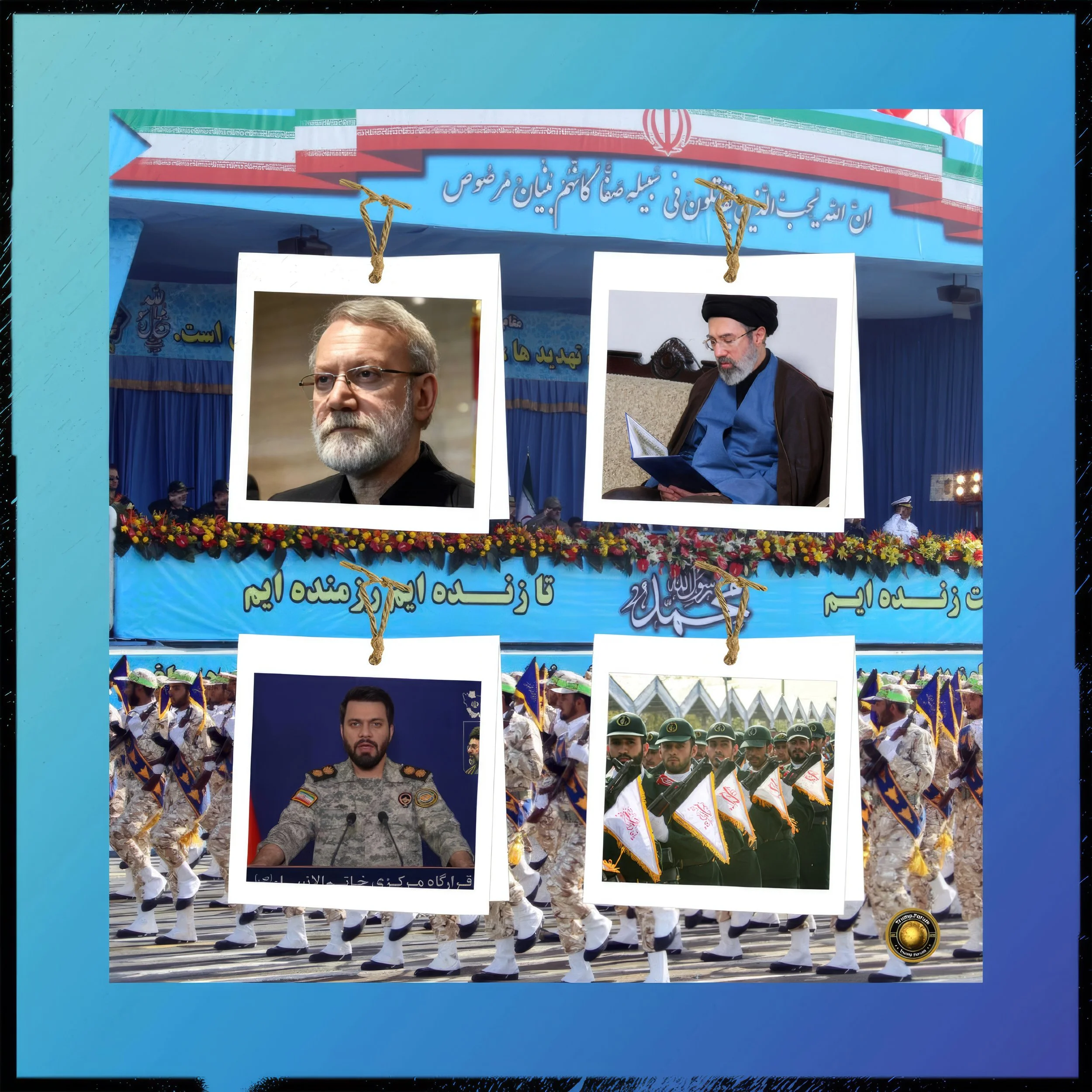
The simplest way to understand what is happening inside Iran is this: there are, in effect, two different decision-making centres, and they do not agree.
The first is the elected government — the president, Masoud Pezeshkian, and the foreign minister, Araghchi.
These are the men who sit at the negotiating table.
They want to talk, and they want a deal because Iran’s economy is in terrible shape.
The US blockade costs Iran an estimated $500 million every day. Ordinary Iranians are suffering.
The elected officials believe that a ceasefire, followed by sanctions relief, is the only way to prevent complete economic collapse.
The second decision-making centre is the IRGC.
This is a military force, but it is much more than an army.
It controls Iran’s ballistic missiles, its nuclear enrichment programme, its network of armed groups across the Middle East (in Lebanon, Iraq, Yemen, and Syria), and its naval forces in the Persian Gulf — including the units that decide whether the Strait of Hormuz is open or closed.
The IRGC does not want to give up any of these tools in exchange for a deal it does not trust. It believes — and has said publicly — that the United States cannot be trusted to keep its word, and that any agreement would require Iran to give up its strongest cards before getting anything back.
This is not a new tension. But it has gotten dramatically worse since February 28th, 2026, when Iran’s Supreme Leader Ayatollah Ali Khamenei was killed in the opening wave of the US-Israeli airstrike campaign.
Khamenei was the one person in the Iranian system who could, when necessary, tell the IRGC to stand down or tell the diplomats to keep talking. He was the referee. Without him, there is no referee.
The IRGC and the elected government are now fighting openly, in public, in real time, over questions like: is the strait open or closed? Should we go back to Islamabad?
Are we willing to give up support for our regional allies in exchange for the end of the blockade?
The First Round of Talks Already Failed
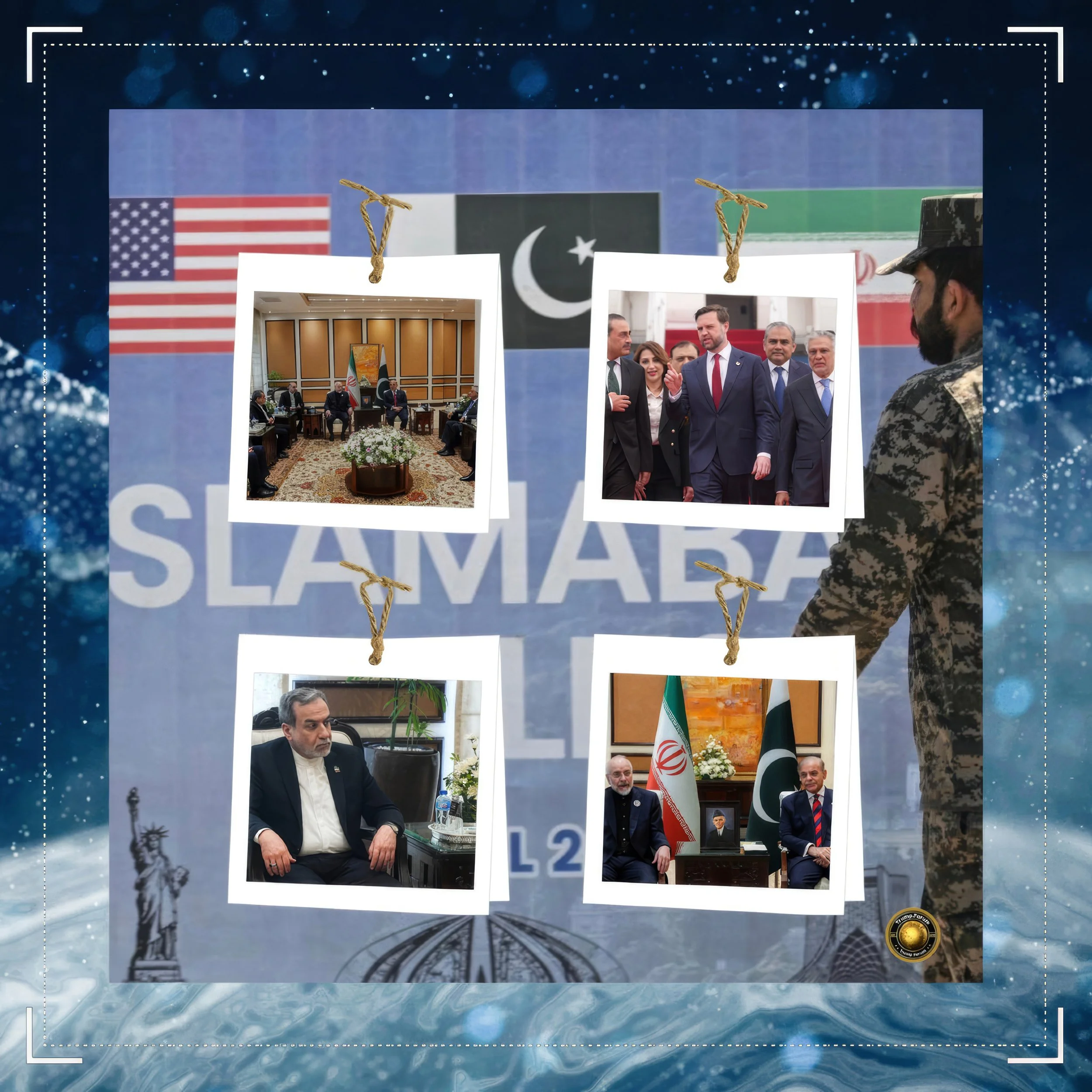
The first meeting between American and Iranian negotiators in Islamabad happened on April 12th.
Vice President JD Vance led the American side. The Iranian team was led by parliamentary speaker Mohammad Bagher Ghalibaf.
They talked for 21 hours. They did not reach a deal.
This was the highest-level direct meeting between the United States and Iran since the 2015 nuclear agreement, which Trump had earlier cancelled during his first term in office.
After the talks ended without agreement, Vance told reporters that Iran had “chosen not to accept our conditions”.
Pezeshkian, the Iranian president, told France’s president Macron that America’s demands were “excessive”.
What did each side want?
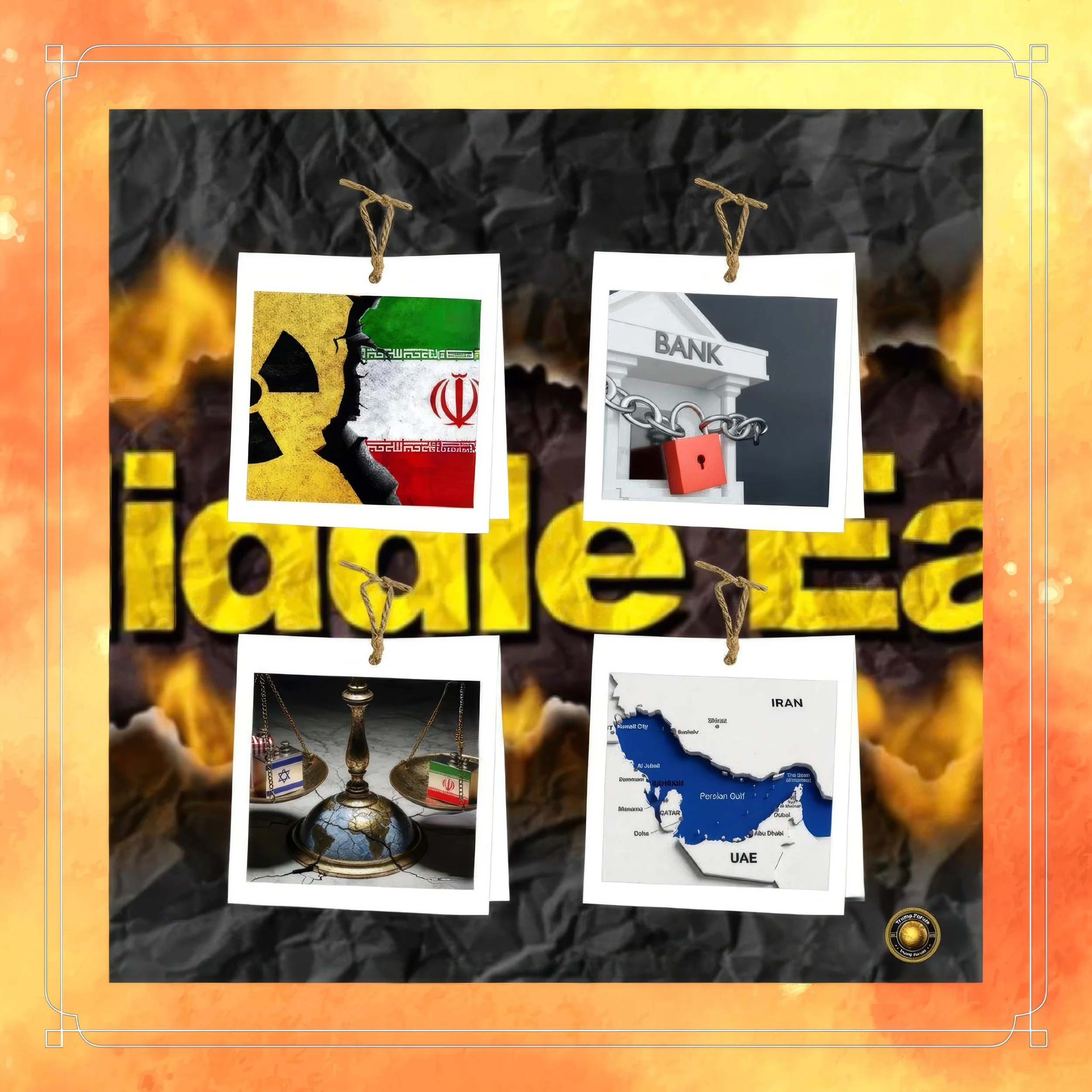
The United States wanted Iran to stop enriching uranium (the material that could be used to make a nuclear weapon), to let ships pass freely through Hormuz, and to stop funding and arming the proxy groups in the region.
Iran wanted the United States to unfreeze $27 billion of Iranian money that is stuck in foreign banks, pay war reparations, lift the naval blockade, and allow Iran to continue having some form of nuclear capacity.
These are very far apart. It is like two people trying to sell and buy a house: one wants to sell for $1 million, and the other wants to buy for $100,000.
The gap is not just big — it reflects different understandings of what the deal is even about.
Will the Second Round Happen?
As of April 20th, Iran had not confirmed whether it would send a team to the second round of talks.
Iran’s state news agency IRNA said the overall atmosphere “cannot be assessed as very positive,” pointing to America’s “maximalist” demands and the seizure of the Iranian ship as evidence that Washington is not serious about diplomacy.
Trump, for his part, said American negotiators were in Islamabad and warned Iran not to walk away.
The ceasefire expires on April 22nd.
If it is not renewed, both sides could return to active military operations.
Pakistan, which brokered the original ceasefire and has been hosting the talks, is trying hard to keep the process alive.
Pakistan’s foreign minister has urged both sides to keep talking and to extend the ceasefire. Iran’s ambassador to Pakistan has said that Tehran will only talk in Islamabad, not anywhere else.
That is a small sign that Iran has not completely closed the door — it is just not sure it wants to open it either.
What Comes Next
The most likely short-term outcome, according to analysts who study Iran closely, is not a complete deal but a grudging extension of the ceasefire while both sides try to manage their internal pressures.
Think of it like two exhausted boxers who agree to sit in their corners for a few more minutes, not because they want to stop fighting, but because they need to catch their breath.
The bigger, harder question is whether Iran can ever make a deal as long as the IRGC holds a veto over everything the foreign ministry tries to agree to.
The short answer is: probably not, unless something changes inside Iran’s power structure.
That change could come from a new supreme leader who either has genuine authority over the IRGC or is himself from the IRGC. It could come from economic collapse so severe that even the IRGC decides survival matters more than leverage.
Or it could come from a further military escalation that changes the strategic landscape entirely.
For now, the world watches the same strange pattern repeat: a diplomat speaks, a general contradicts him, a ship gets seized, a negotiator flies to Islamabad, and oil prices swing up and down with each announcement.
The real question America is trying to answer is not just what Iran wants. It is which Iran is doing the wanting.