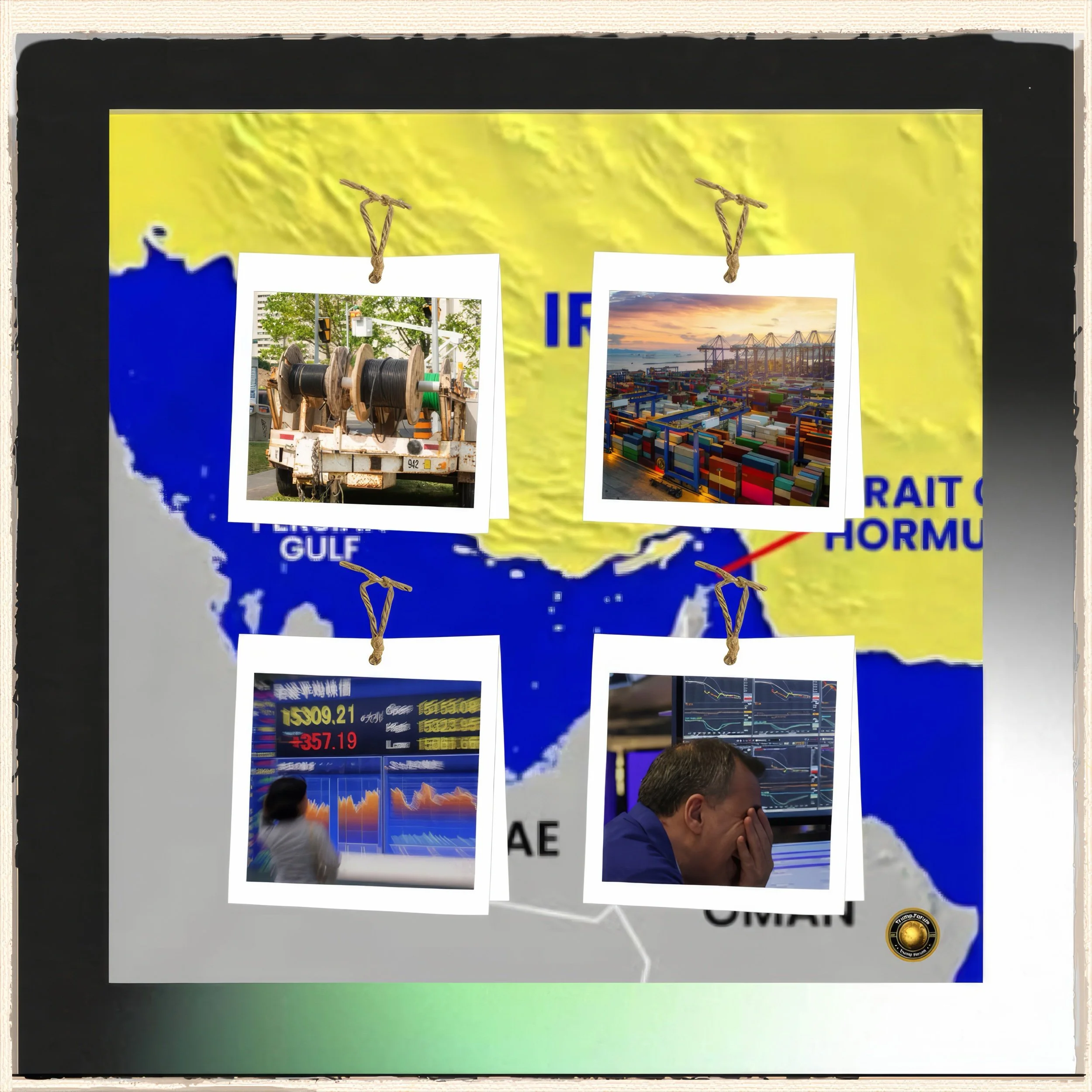
Shipping bottlenecks in Hormuz delay critical inputs, amplifying cost pressures on farmers from Asia to Africa
Executive Summary
Energy-agriculture nexus reveals systemic vulnerabilities in global food systems under geopolitical stress conditions intensifying rapidly
The cease-fire between the United States and Iran has created an illusion of stabilization, but the structural disruptions to global agriculture remain unresolved.
At the center of this ongoing crisis lies the Strait of Hormuz, a narrow corridor through which a substantial share of the world’s energy exports passes.
Although active hostilities have paused, logistical bottlenecks, insurance risks, and persistent geopolitical uncertainty continue to constrain maritime traffic.
The consequences are cascading across agricultural systems worldwide, particularly through elevated fertilizer costs and volatile energy markets.
Fertilizers such as urea, heavily dependent on natural gas, have experienced price spikes of up to 40%, reflecting both supply constraints and speculative pressures.
Energy disruptions have increased transportation and production costs across the agricultural value chain, amplifying food inflation risks.
Governments have responded with subsidies, export controls, and emergency reserves, but these measures offer only temporary relief.
The deeper challenge lies in the interconnectedness of energy and food systems, where shocks in one domain rapidly propagate to the other.
The current situation underscores a critical lesson: cease-fires do not immediately restore economic systems.
The infrastructure of trade, the confidence of markets, and the stability of supply chains require sustained political and logistical normalization.
Without a durable resolution and coordinated international response, the agriculture shock triggered by the Iran war is likely to persist, reshaping global food security dynamics for months, if not years.
Introduction
Insurance premiums for tankers spike sharply, discouraging maritime traffic despite cease-fire agreement in place today
The global agricultural system operates on a delicate equilibrium, one that depends not only on weather patterns and soil conditions but also on the uninterrupted flow of energy, fertilizers, and trade routes.
The Iran war has exposed how fragile this equilibrium truly is.
Even as diplomatic efforts have produced a cease-fire, the underlying disruptions to global supply chains remain deeply entrenched.
At the heart of this crisis is the realization that modern agriculture is fundamentally an energy-intensive enterprise.
From the production of fertilizers to the transportation of crops, every stage relies on stable and affordable energy inputs.
When conflict disrupts a critical chokepoint like the Strait of Hormuz, the effects ripple outward, affecting not just oil markets but the very foundations of food production.
The cease-fire has not reopened the arteries of global trade in any meaningful sense.
Tankers remain delayed, insurance premiums remain elevated, and shipping schedules remain uncertain.
These disruptions are not merely logistical inconveniences; they represent systemic shocks that alter pricing structures, investment decisions, and policy responses.
As a result, the agricultural sector finds itself navigating a prolonged period of uncertainty, where the end of active conflict does not equate to the restoration of normalcy.
History and Current Status
Urea prices surge forty percent as natural gas shortages ripple through global agricultural production systems worldwide
The strategic importance of the Strait of Hormuz has long been recognized in geopolitical analysis.
For decades, it has served as a vital conduit for energy exports from the Persian Gulf to global markets.
Any disruption to this narrow passage has historically triggered immediate reactions in energy prices and shipping patterns.
The Iran war represents the most significant interruption in recent history, not only because of the scale of the disruption but also because of its duration.
Historically, conflicts in the region have led to temporary spikes in oil prices, followed by relatively quick recoveries as shipping routes stabilized.
However, the current situation differs in several key respects.
First, the duration of the disruption has been longer, allowing secondary effects to take hold.
Second, the global economy is more interconnected than ever, amplifying the transmission of shocks across sectors.
Third, the agricultural system has become increasingly dependent on global supply chains, particularly for fertilizers and energy inputs.
In the current status, the cease-fire has reduced the immediate risk of military escalation, but it has not resolved the underlying logistical challenges.
Shipping companies remain cautious, often rerouting vessels or delaying departures.
Insurance costs for transiting the region have surged, reflecting the perceived risk of renewed hostilities.
These factors combine to create a bottleneck that restricts the flow of energy exports, with direct implications for fertilizer production and agricultural costs.
The persistence of these disruptions highlights a critical point: economic systems do not respond instantaneously to political agreements.
The restoration of normal trade flows requires not only the absence of conflict but also the rebuilding of confidence among stakeholders.
In the absence of such confidence, the agriculture shock triggered by the Iran war continues to unfold.
Key Developments
Energy chokepoint crisis disrupts global fertilizer supply chains, threatening food security across multiple continents simultaneously
The key developments in the aftermath of the Iran war reveal a complex interplay between energy markets and agricultural systems.
One of the most significant developments has been the sharp increase in fertilizer prices, particularly urea.
This increase is directly linked to disruptions in natural gas supplies, which are essential for fertilizer production.
As energy exports from the Persian Gulf remain constrained, fertilizer producers face higher input costs, which are passed on to farmers.
Another critical development is the persistence of shipping bottlenecks in the Strait of Hormuz.
Despite the cease-fire, the flow of tankers has not returned to pre-conflict levels.
Delays and rerouting have become common, increasing transportation costs and creating uncertainty in delivery schedules.
This uncertainty affects not only energy markets but also the availability of agricultural inputs.
Governments around the world have responded with a range of measures aimed at mitigating the impact of rising costs.
These measures include subsidies for fuel and fertilizers, as well as export restrictions designed to preserve domestic supplies.
While these policies provide short-term relief, they also risk exacerbating global shortages by reducing the availability of key commodities in international markets.
The rise in insurance premiums for shipping through the Strait of Hormuz represents another significant development.
Higher insurance costs discourage shipping companies from operating in the region, further constraining the flow of goods.
This dynamic underscores the importance of perceived risk in shaping economic behavior, even in the absence of active conflict.
Finally, the broader implication of these developments is the exposure of systemic vulnerabilities in global food systems.
The dependence on a limited number of energy suppliers and shipping routes creates a concentration of risk that can be triggered by geopolitical events.
The Iran war has brought these vulnerabilities into sharp focus, highlighting the need for more resilient and diversified supply chains.
Latest Facts and Concerns
Governments deploy emergency subsidies to shield consumers from rising food and fuel inflation shocks globally
The latest data indicates that global fertilizer markets remain under significant strain.
Urea prices, which surged by up to 40% during the peak of the conflict, have not fully stabilized.
This persistence reflects ongoing constraints in natural gas supplies, as well as continued uncertainty in energy markets.
The result is a sustained increase in production costs for farmers, particularly in developing economies where subsidies are limited.
Energy markets continue to exhibit volatility, with oil and gas prices fluctuating in response to geopolitical developments.
The partial reopening of the Strait of Hormuz has not been sufficient to restore confidence, leading to cautious behavior among traders and shipping companies.
This caution translates into reduced supply availability and higher prices, which feed into agricultural costs.
Food inflation has emerged as a major concern, particularly in regions that are heavily dependent on imported fertilizers and energy.
Countries in South Asia, Africa, and parts of Latin America are especially vulnerable, as they lack the fiscal capacity to absorb higher costs.
The risk of food insecurity is therefore increasing, with potential implications for social stability.
Another concern is the potential for policy responses to exacerbate the situation.
Export restrictions, while intended to protect domestic markets, can reduce global supply and drive prices higher.
Similarly, subsidies can distort market signals, leading to inefficiencies and unintended consequences.
The challenge for policymakers is to balance short-term relief with long-term sustainability.
The persistence of logistical disruptions also raises concerns about the upcoming planting seasons in various parts of the world.
Delays in the delivery of fertilizers and other inputs can affect crop yields, leading to reduced production and further price increases.
This dynamic highlights the importance of timing in agricultural systems, where disruptions at critical moments can have lasting effects.
Cause-and-Effect Analysis
Agricultural exporters face mounting uncertainty as logistics disruptions undermine planting and harvesting cycles worldwide severely
The agriculture shock triggered by the Iran war can be understood through a chain of cause-and-effect relationships that link geopolitical events to economic outcomes.
At the initial stage, the conflict led to the disruption of shipping through the Strait of Hormuz.
This disruption reduced the flow of energy exports, particularly oil and natural gas.
The reduction in energy supply led to higher prices in global markets.
Natural gas, being a key input for fertilizer production, became more expensive, increasing the cost of producing fertilizers such as urea.
Producers passed these higher costs on to buyers, resulting in a surge in fertilizer prices.
Farmers, facing higher input costs, were forced to make difficult decisions.
Some reduced their use of fertilizers, which can lead to lower crop yields.
Others absorbed the costs, which reduced their profit margins.
In both cases, the result is a potential decrease in agricultural output or an increase in food prices.
At the same time, higher energy prices increased the cost of transportation and processing, further adding to the cost of food production.
These combined effects created upward pressure on food prices, contributing to inflation and increasing the risk of food insecurity.
The cease-fire, while reducing the immediate risk of further disruption, did not reverse these effects.
The persistence of logistical bottlenecks and market uncertainty means that the chain of cause and effect continues to operate.
This illustrates the lag between geopolitical events and economic recovery, where the effects of a shock can persist long after the initial cause has been addressed.
Future Steps
Cease-fire fails to restore confidence, prolonging market volatility and delaying normalization of global commodity flows significantly
Addressing the ongoing agriculture shock requires a combination of immediate and long-term measures.
In the short term, efforts must focus on restoring the flow of energy and agricultural inputs through critical chokepoints like the Strait of Hormuz.
This will require not only political agreements but also measures to rebuild confidence among shipping companies and insurers.
In the medium term, there is a need to diversify supply chains and reduce dependence on a limited number of suppliers and routes.
This could involve investing in alternative sources of energy and fertilizers, as well as developing new transportation corridors.
Such measures would enhance the resilience of global agricultural systems and reduce vulnerability to geopolitical shocks.
In the long term, the crisis highlights the importance of transitioning to more sustainable agricultural practices that are less dependent on fossil fuels.
This could include the development of alternative fertilizers, improvements in efficiency, and greater use of renewable energy.
While such transitions will take time, they represent a critical step toward reducing the systemic risks exposed by the Iran war.
International cooperation will be essential in implementing these measures.
The interconnected nature of global food systems means that unilateral actions are unlikely to be effective.
Coordinated efforts among stakeholders, including governments, international organizations, and the private sector, will be necessary to address the challenges and build a more resilient system.
Conclusion
After the Cease-Fire: Why the Global Agriculture Shock Will Persist
The Iran war has revealed the deep interconnections between energy markets and agricultural systems, demonstrating how disruptions in one domain can have far-reaching consequences in another.
The cease-fire, while a positive development, has not resolved the underlying challenges.
The persistence of logistical bottlenecks, market uncertainty, and elevated costs means that the agriculture shock is far from over.
The experience underscores the need for a more comprehensive approach to managing global supply chains, one that takes into account the complex interactions between different sectors.
It also highlights the importance of resilience, both in terms of infrastructure and policy.
As the world continues to grapple with the consequences of the Iran war, the lessons learned will be critical in shaping future responses to similar crises.