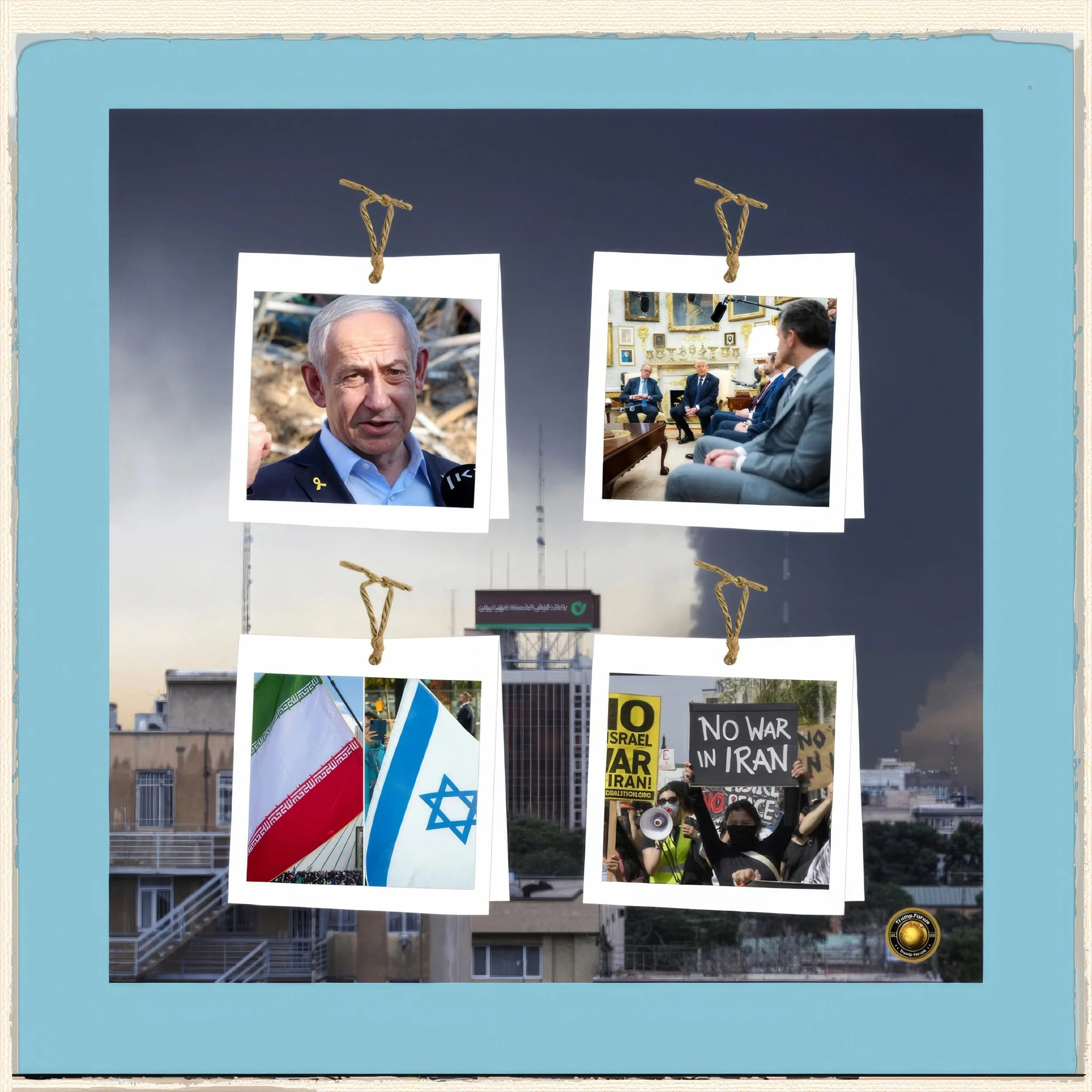
Why the U.S. Chose War With Iran and Not Because of Israel - A 101 Beginner's Guide to the US-Israel Dilemma on Iran War
Introduction
What this debate is about?
People are arguing about why the U.S. attacked Iran in early 2026. Some say the U.S. only went to war because Israel planned an attack on Iran and pushed Washington into it.
This idea became popular after U.S. Secretary of State Marco Rubio said that the U.S. “knew there was going to be an Israeli action” and struck Iran first to protect American troops from Iranian revenge.
This explanation sounds like the U.S. had no choice and was just reacting to what Israel decided to do. At the same time, Rubio also said the operation “needed to happen,” as if the U.S. wanted this war for its own reasons anyway. These two claims do not fit well together.
They create a picture in which America is both a powerful country that decides to fight and a weak country that is dragged along by an ally.
This mix-up is not only confusing; it can be dangerous, because it feeds old stories that blame wars on Israel or on “the Jews,” which in the past have led to antisemitism and hate.
Background
How the U.S. and Iran reached this point
To understand the 2026 war, we need to look at the years before it. For a long time, the U.S. and Iran have been enemies.
The U.S. has military bases and partners across the Middle East, and Iran supports groups and militias that often fight those partners and sometimes target U.S. forces.
There were also big fights over Iran’s nuclear program. At one point, a deal limited that program, but the Trump administration pulled out of that deal and put strong sanctions on Iran again, making relations even worse.
In 2024, Israel fought a hard war against Hamas and then hit Hezbollah in Lebanon very hard. Those actions cut down Iran’s power on Israel’s borders. Iran’s friends lost leaders and supplies, and Iran’s image as a strong regional player took a hit.
Israeli leaders, especially Prime Minister Benjamin Netanyahu, saw this as a chance to go after Iran itself, including Iran’s missiles and nuclear sites.
Netanyahu had argued for many years that Iran’s nuclear work was an “existential” danger to Israel and that waiting would make it harder to act.
At the same time, many people in Washington believed that if Iran recovered its military strength, it would make the U.S. look weak not only in the Middle East but also in the eyes of Russia and China.
So tension was already high. The U.S. and Israel were sharing intelligence, planning operations, and thinking about best ways to hit Iranian targets if they chose to do so. War was not certain, but it was not a surprise either.
What Rubio said and what it means
In this setting, Rubio’s remarks added fuel to the fire. He told reporters that the U.S. attacked Iran only after learning that Israel was about to carry out its own strike.
He said U.S. officials feared that Iran would respond by attacking American bases and soldiers, and that the U.S. therefore decided to strike first so that it could reduce the danger and the number of possible deaths.
If we listen only to this part, it sounds like Israel lit the match and the U.S. just tried to limit the damage. But that is not the whole story.
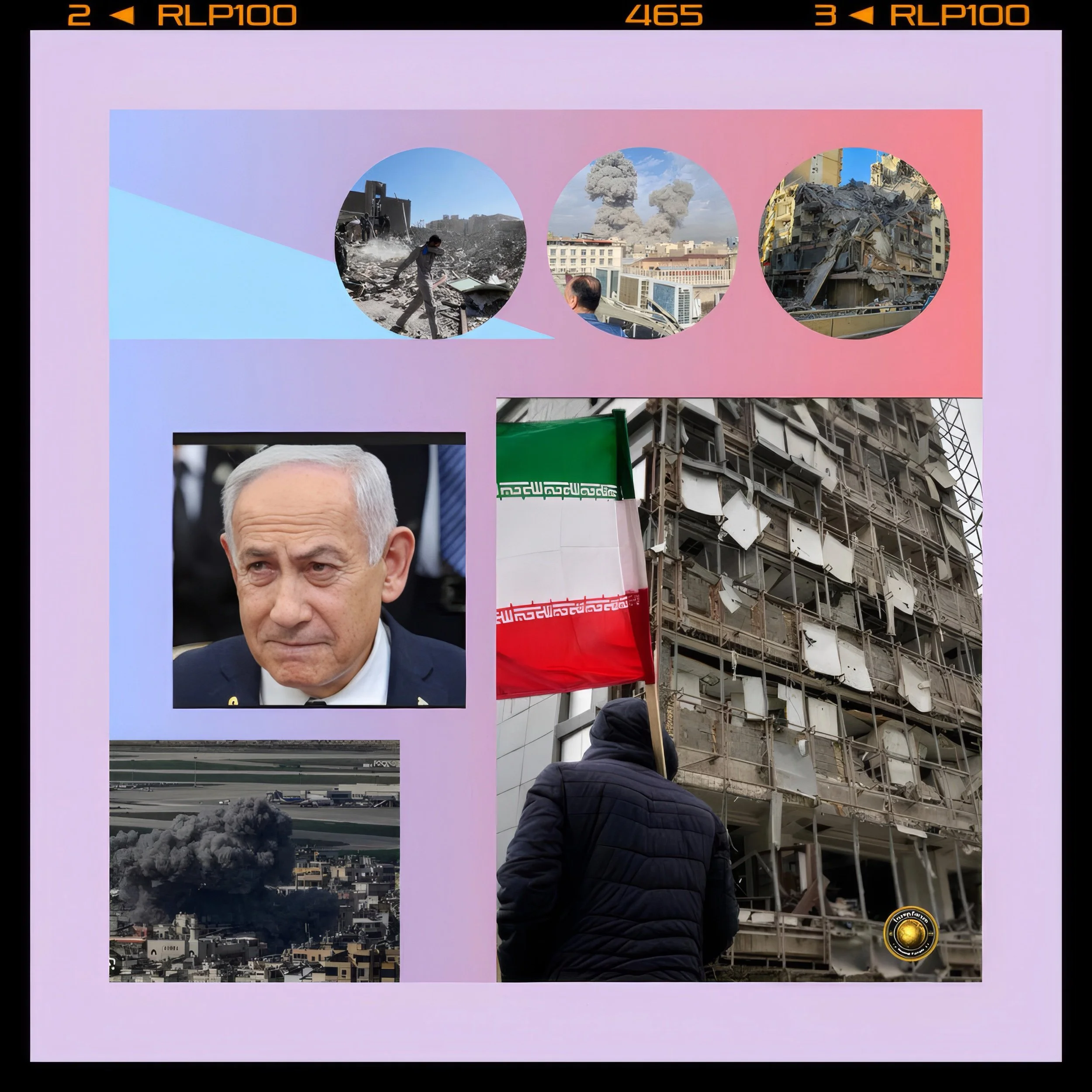
Reports say that the U.S. and Israel had planned the February twenty eighth strikes together and that U.S. forces took part in almost 900 strikes in the first 12 hours. Those strikes did not hit only places that were an immediate threat to U.S. troops.
They also hit a wide range of Iranian military sites, including missile factories and command centers. This looks less like a quick move to protect bases and more like a broad plan to weaken Iran’s military power.
Rubio also said that the operation “needed to happen,” which shows that, in his view, the war made sense for U.S. interests, not just for Israel’s.
In other words, he himself admitted that the U.S. wanted to fight Iran for its own reasons. Saying at the same time that the U.S. acted only because of Israel’s plan makes the story confusing and shifts responsibility away from Washington.
Why saying “Israel forced us” is wrong
Saying that Israel forced the U.S. into war sounds simple, but it is misleading for several reasons.
First, it ignores how powerful the U.S. really is. The U.S. is still the main military power in the world, with huge resources and many choices.
When a country like that goes to war, it is because its leaders decide to do so. Allies can ask, suggest, pressure, or even threaten to act alone, but they cannot truly “force” the U.S. to send its bombers, missiles, and ships into battle if Washington does not want to.
Second, the “Israel forced us” story hides the long record of U.S. hostility toward Iran that existed before this war.
The U.S. has its own list of complaints about Iran: attacks on ships, missile tests, cyber operations, and support for armed groups that target American partners. These issues drove U.S. policy for years. Israel did not create them.
At most, Israeli leaders used those concerns to argue that now was the time to act, which fit well with the views of many U.S. officials.
Third, this kind of story can easily slide into antisemitic thinking. In the past, some people claimed that a small group of Jewish advisers tricked the U.S. into invading Iraq in 2003.
Serious studies later showed that many different officials and interests supported that war, and that it was wrong to blame it on “the Jews” or on Israel alone.
Today, blaming the Iran war on Israel or on “pro-Israel lobbies” repeats the same pattern. It treats complex decisions as if they were secretly controlled by one group, and it often targets Jews as a whole instead of specific policies or leaders.
What really drove the war
A better way to see the 2026 war is to think of three layers of causes. The first layer is long-term structure.
The U.S. and Iran have been on opposite sides for decades, and the U.S. has strong ties with countries that see Iran as a danger, including Israel, Saudi Arabia, and some Gulf states. This structure means that any crisis can quickly grow into a wider clash, especially when both sides already distrust each other.
The second layer is short-term decisions. Israeli leaders saw a special chance after 2024 to hit Iran while its regional network was weakened.
They lobbied Washington and offered their own military power for a joint operation. U.S. leaders, including those close to Trump, had already discussed whether an Israeli first strike could make it easier for the U.S. to justify a later attack on Iran if Iran hit back.
Rather than try hard to stop Israel, they chose to plan and act together. That was a choice, not something forced on them.
The third layer is domestic politics inside the U.S. After years of wars and long deployments, many voters are tired of foreign conflicts. Parts of the Republican base say they support “America First” and want fewer wars.
At the same time, many in the same party want to look tough, especially against Iran, which they paint as a big enemy.
Saying that war was necessary to protect U.S. troops from Iran’s response to an Israeli strike lets leaders look strong while also saying they did not really want a new war. It helps them avoid blame for costs and casualties.
The risks in public debate
The way leaders talk about this war matters. If they suggest that the U.S. is a victim of its own allies, they can make people angry not only at the war itself but also at those allies and at communities linked to them. We can already see this in how some groups online are using Rubio’s words.
They share his comments as “proof” that Israel runs U.S. foreign policy or that “the Jews” are behind another war. This kind of talk can lead to threats, harassment, or worse against Jewish people and institutions, even though most of them have no say in what the U.S. government does.
At the same time, we cannot simply ban criticism of Israel’s role.
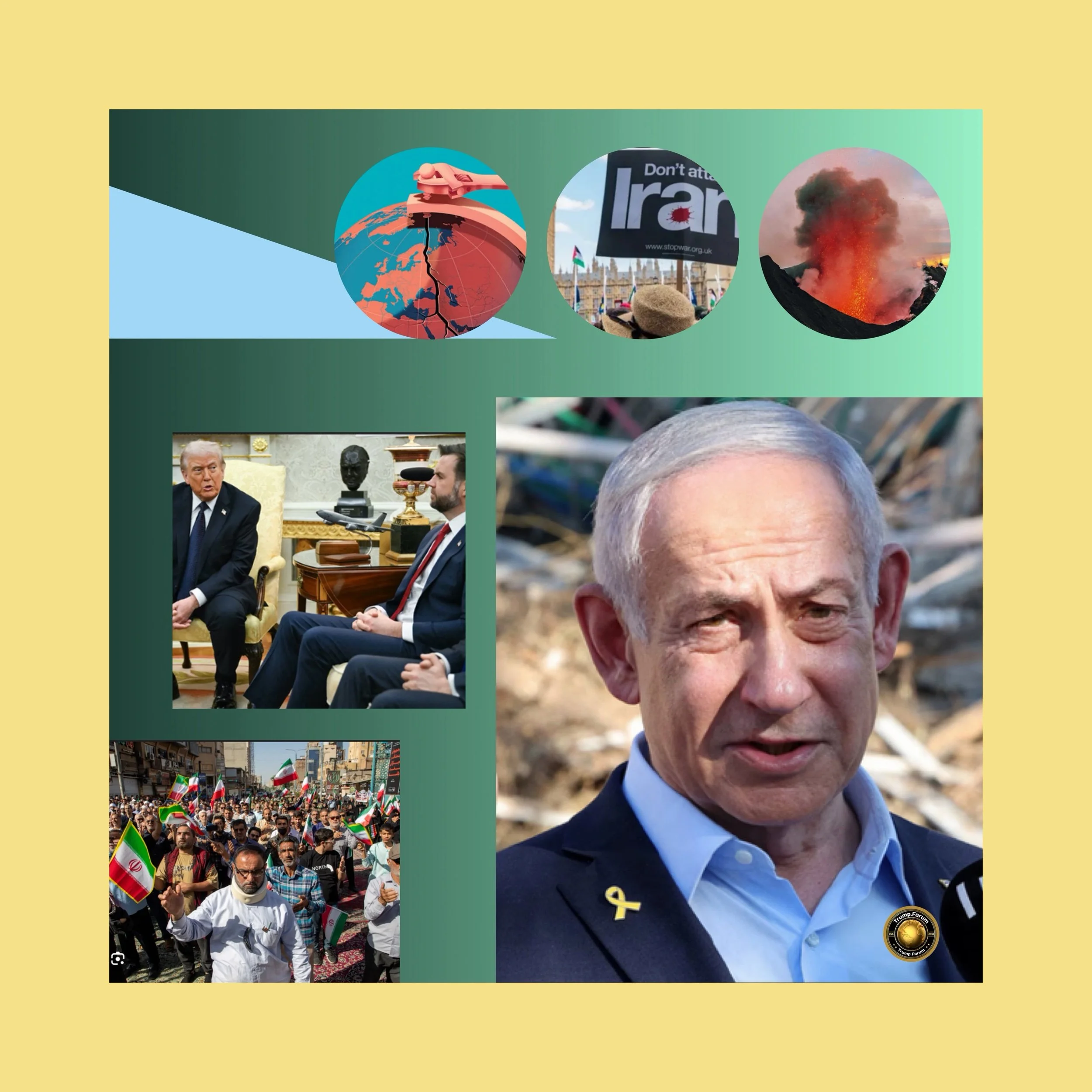
Israel is a sovereign state that makes its own choices. Netanyahu pushed hard for a tough line on Iran and worked closely with Trump to get support for strikes.
It is fair to argue that this was unwise, risky, or wrong. It is fair to say that U.S. leaders should sometimes say no to allies, even close ones.
The key is to focus on policies, leaders, and institutions, not on entire peoples or religions, and to remember that U.S. officials have full responsibility for U.S. actions.
Looking ahead
How to handle allies and narratives better
Going forward, the U.S. can take steps to avoid being caught in the same bind.
One step is to be clearer with allies, including Israel, about when and how the U.S. will support their operations.
If the U.S. wants to avoid being pulled into certain fights, it needs private tools to restrain partners, such as limiting some kinds of military aid or making clear that U.S. forces will not join specific offensives.
This does not mean ending alliances. It means managing them more carefully.
Another step is to change the U.S. military footprint in the region. Today, large numbers of U.S. troops and assets are close to Iran and its allies, which makes them easy targets if a crisis starts.
That is part of why Rubio could claim that an Israeli strike would “precipitate an attack against American forces” and why he said the U.S. had to move first.
If fewer troops were exposed, future leaders would feel less pressure to fight preemptive wars every time an ally plans an operation.
Finally, political leaders and commentators need to talk more carefully about influence and responsibility. It is fine to note that Israel, pro-Israel groups, or any other lobby tries to shape U.S. policy.
Many domestic groups do that on many issues. But they should avoid language that hints at hidden control or that blames wars on whole communities.
And they should always make clear that, in the end, U.S. presidents, lawmakers, and officials make choices, and those choices belong to them.
Conclusion
Choosing clarity over convenient myths
In the end, the U.S. was not a helpless partner pulled into war by Israel. It chose a war with Iran because its leaders believed, rightly or wrongly, that this served American interests, fit long-held views about Iran, and matched the wishes of key parts of its own political system.
Israel’s plans and pressure helped shape when and how that war began, but they did not take away U.S. freedom to decide.
Saying that Israel “forced” the U.S. into war may be emotionally satisfying for some, because it allows them to blame outsiders instead of looking at their own leaders and institutions. But this story is false and feeds into old, ugly ideas about Jewish power and secret control.
A more honest view accepts that allies matter, that lobbying matters, and that mistakes can be made, while still keeping the focus where it belongs: on the choices of the U.S. government itself.