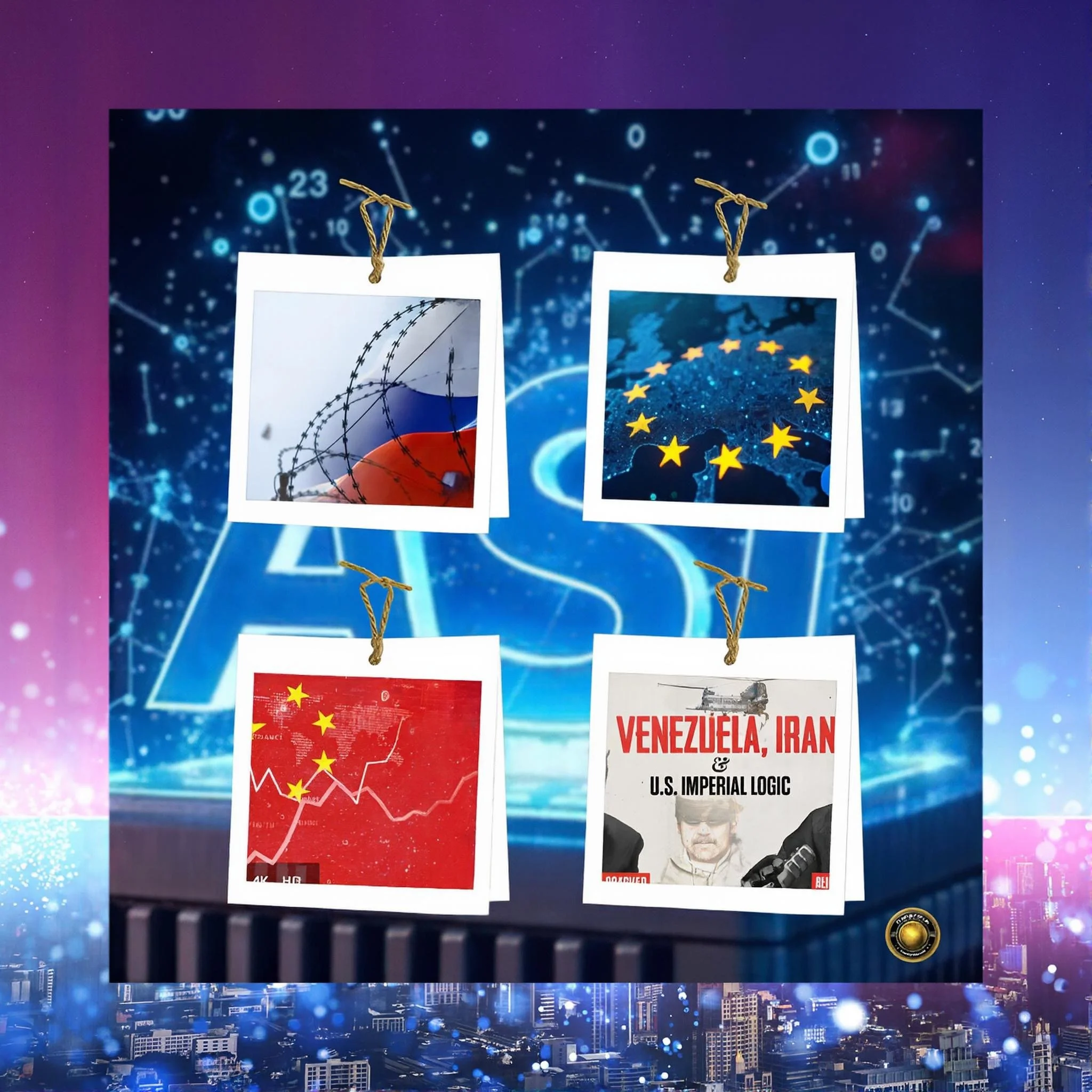
Beginner's 101 Guide: How America Dominated the World's Energy Supply — And Why It Matters for Your Future
Executive Summary
America Rewrote the Global Energy Rules — And Nobody Voted on the New Arrangement
Over the past four years, the world's energy map changed dramatically. America is now the biggest seller of natural gas in the world.
Russia lost its main customer — Europe. Qatar's gas hub was hit by missiles.
Venezuela's oil reserves are being opened up by American companies.
And the Strait of Hormuz — the narrow sea channel through which one in every five barrels of oil on earth travels — is closed.
This is not a collection of unrelated news stories. It looks like a plan.
Introduction: Imagine a Neighborhood With Many Grocery Stores
The World Used to Have Five Grocery Stores for Energy — Now There Is One
Think of the global energy market like a neighborhood that used to have 5 grocery stores.
You could shop at any of them. Prices stayed reasonable because stores competed with each other.
Now imagine that, one by one, four of those stores closed — and the fifth one is American.
That is what has happened to the world's energy supply between 2021 and 2026.
History and Context: How the Old Energy World Worked
From Moscow to Ras Laffan: How the World's Old Energy Supply System Fell Apart
Just five years ago, Europe bought most of its gas from Russia through enormous underground pipelines.
Think of it like a very long garden hose running from Moscow to Berlin — cheap, reliable, and decades old. Russia was sending about 150 bcm of gas to Europe every year.
Meanwhile, China was getting oil from Iran and Venezuela — two countries that sold oil outside the American dollar system, meaning China could buy energy without going through American banks.
Qatar sat in the middle of the world map, running Ras Laffan — the world's biggest natural gas factory — and supplying roughly one in five LNG cargoes globally.
China was also building a giant road-and-rail network called the Belt and Road Initiative, including a railway through Iran, Iraq, and Syria that was designed specifically to bypass the sea lanes where the American navy operates.
The world had options, and options mean no single seller has too much power.
What Changed: The Four Big Moves
Four Moves in Four Years: How Washington Quietly Became the World's Only Energy Superpower
First came Europe's gas shock. In 2022, the Russia-Ukraine war began, and America and its European allies cut off Russian energy with sanctions.
Then the Nord Stream pipelines — Russia's main gas hoses to Europe — were blown up underwater in September 2022.
Russia's share of EU gas imports fell from over 40% to about 11%.
America stepped in immediately. By early 2025, the United States was sending 86% of its LNG shipments to Europe.
In 2025, the US exported more than 100 million metric tons of LNG — a world record and the first time any country crossed that number.
Europe went from having choices to having one main supplier.
Second came Syria. When the Assad government fell in December 2024, China lost its overland energy route to the Mediterranean.
The railway that China had been building through Iran, Iraq, and Syria — a way to move energy by land and bypass American naval chokepoints — was broken at its western end. China's land bypass was gone.
Third came Venezuela. In January 2026, the US removed Venezuelan leader Nicolás Maduro.
Venezuela holds 303 billion barrels of oil — more than any other country on earth, more than Saudi Arabia.
American companies like Chevron received new licenses to operate Venezuelan oil fields.
Trump said American companies would "spend the billions needed" to rebuild Venezuelan oil infrastructure.
The significance: Venezuela and Iran were the two big oil suppliers that sold oil to China outside the American financial system.
Both were being cut off within three months of each other.
Fourth came the Middle East energy explosion. On March 18, 2026, Israel struck Iran's South Pars gas field — the world's biggest natural gas reservoir — with the approval of the Trump administration.
Iran fired back at Qatar's Ras Laffan gas city. Two LNG production units were destroyed.
Qatar lost 17% of its LNG export capacity. Repair will take three to five years.
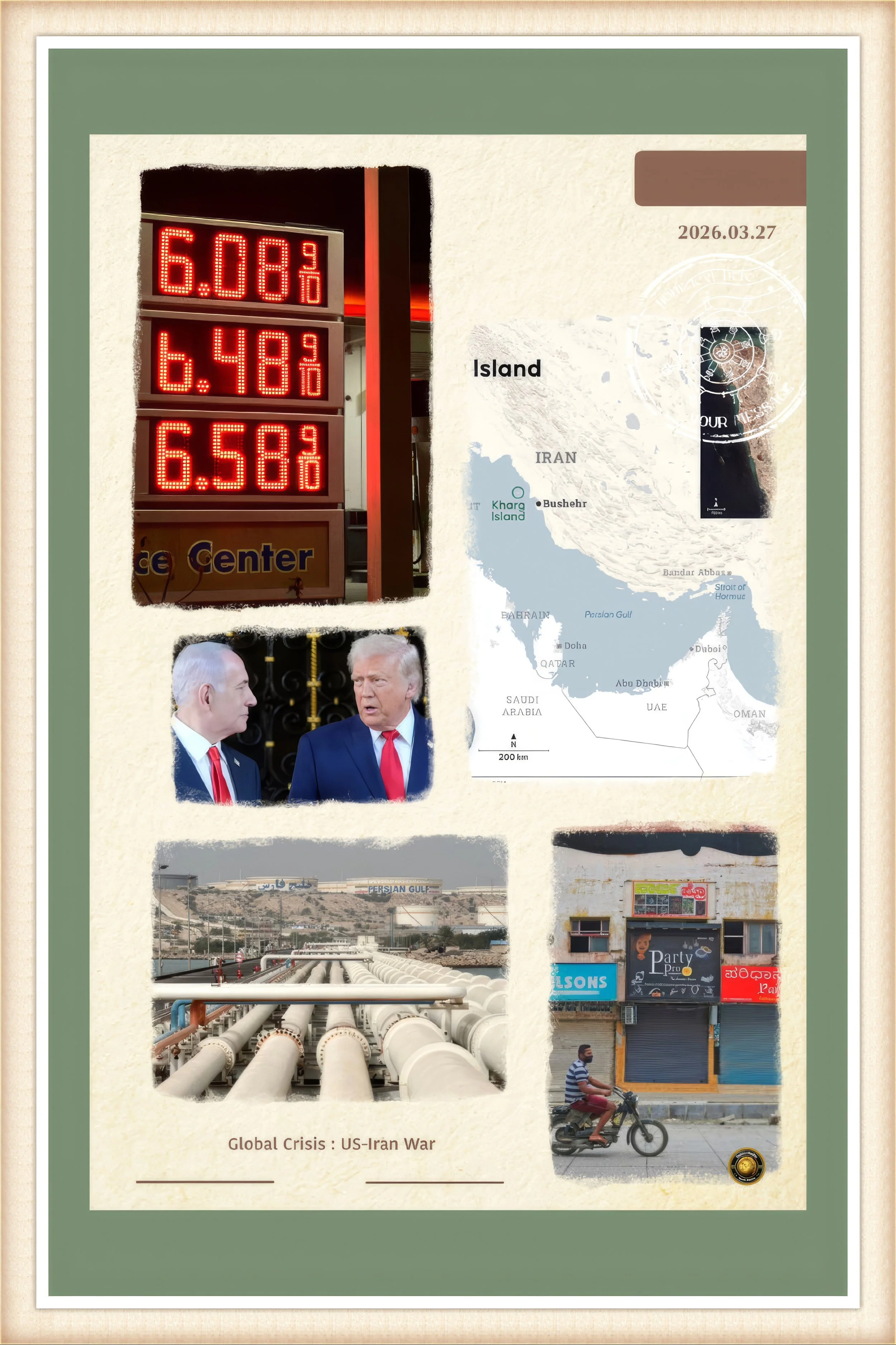
The Strait of Hormuz — imagine it as the world's most important oil highway, barely 20.5 mile wide at its narrowest point — was closed. Oil prices hit $100 per barrel.
Current Reality: What This Means for Ordinary People
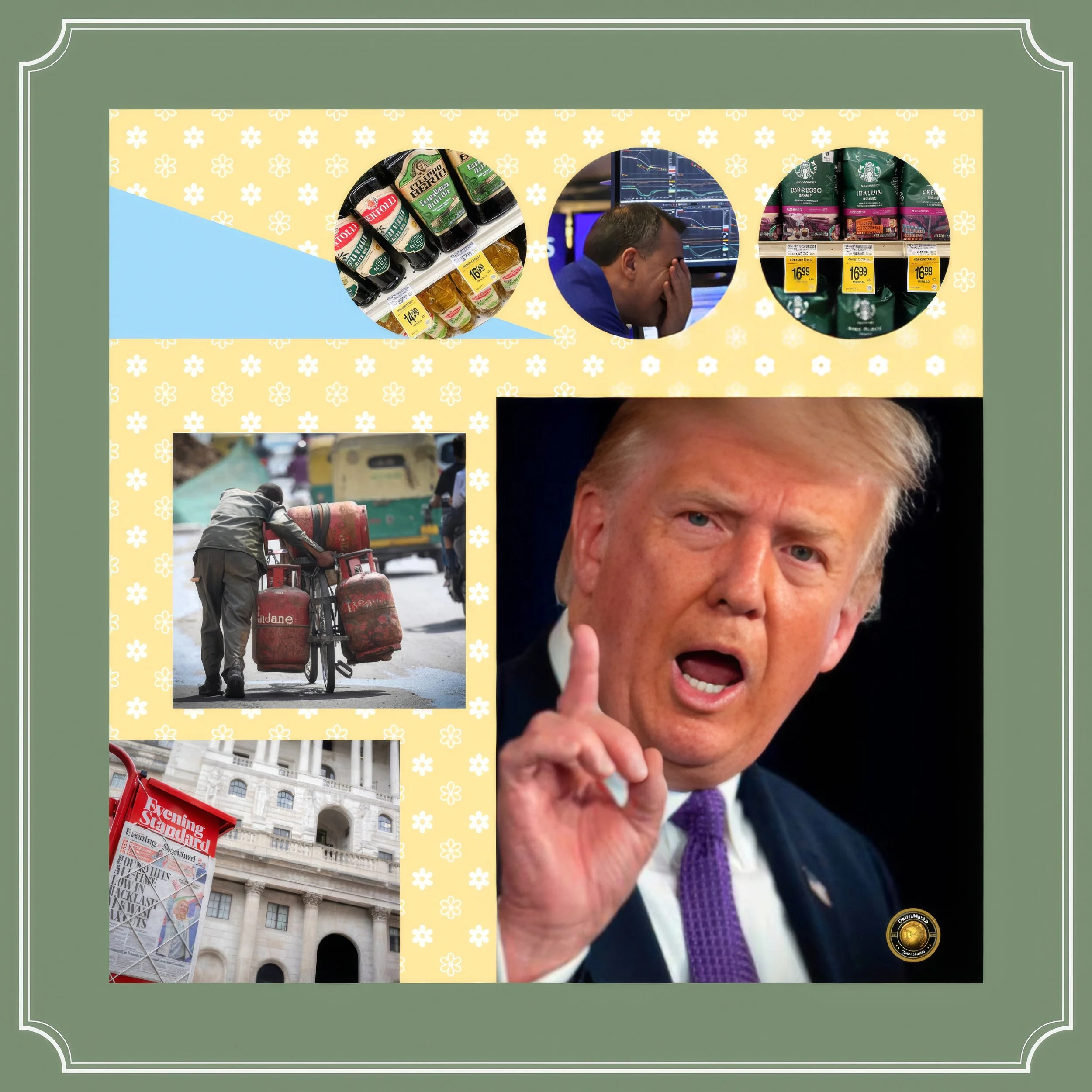
When the Hormuz Closes, the Whole World Feels It in Their Petrol Prices
When the Strait of Hormuz closes, it is like shutting down a major motorway. 20% of global oil stops moving.
Countries that depend on Gulf energy — Japan, South Korea, India, China — scramble for alternatives. There are very few.
The only country with large, available, and fully operational energy supplies sitting outside the conflict zone is the United States.
European gas prices spiked sharply.
Asian buyers doubled their prices on spot markets. Meanwhile, America's energy companies — running on domestic natural gas from the Gulf Coast and shale fields — were unaffected.
They had more customers than ever, paying higher prices than ever.
The financial markets told the same story. Countries and companies needing to buy American LNG need American dollars. When energy buyers rush to get dollars, the dollar gets stronger.
Gold — which traditionally rises when people are scared — actually fell roughly 20% from its January 2026 peak.
Bitcoin fell about 20% on the year. This happened because people were not running to safe-haven assets; they were selling everything to get dollars to pay for energy.
The Deeper Layer: Energy, Computers, and the AI Race
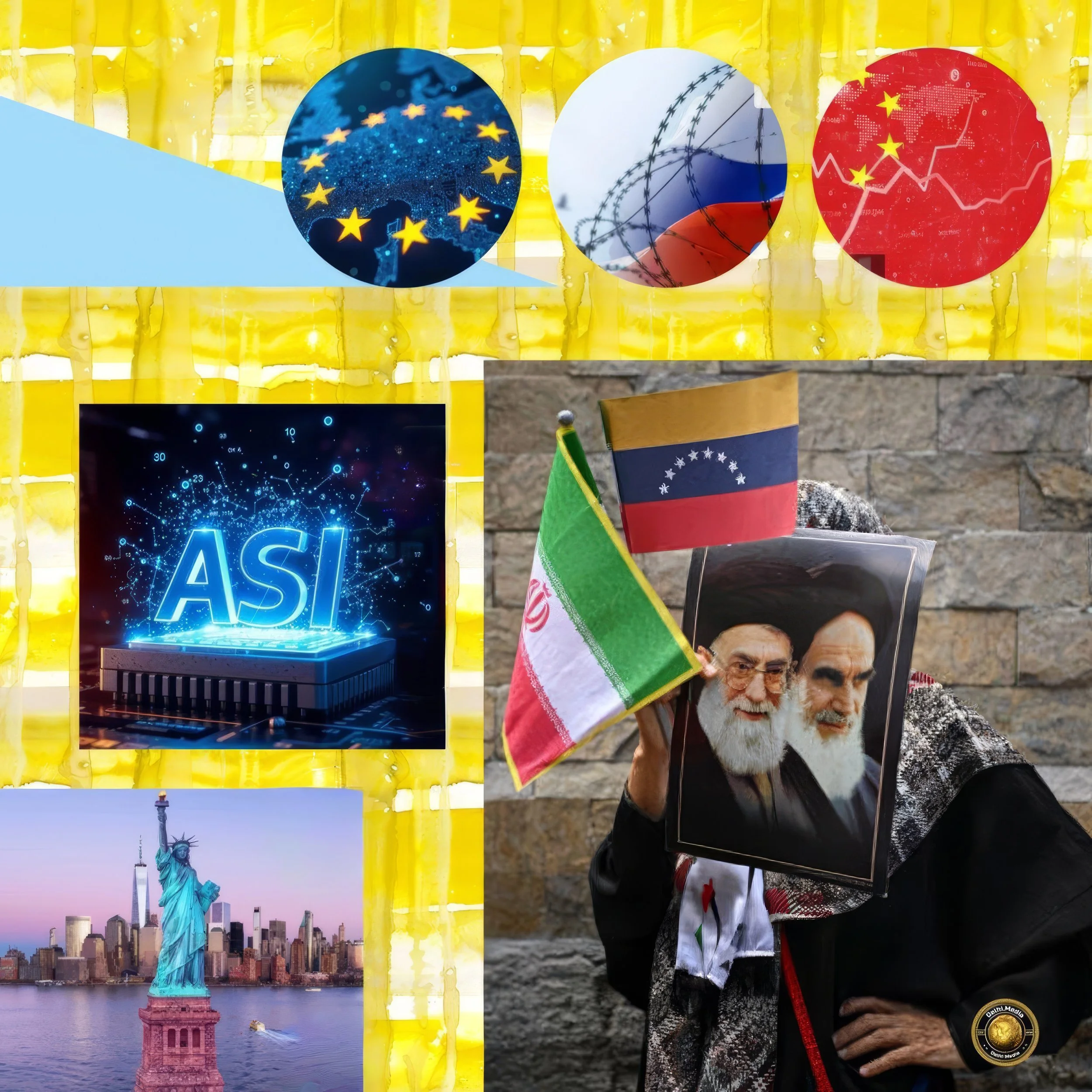
The Real AI Race Is About Energy — And America Just Cornered the Market Completely
Here is where the story gets bigger than oil and gas. Artificial intelligence — the technology behind ChatGPT, self-driving cars, and medical diagnostics — runs on enormous amounts of electricity.
Data centers, which are essentially very large computer warehouses, consume roughly 56% of their energy from fossil fuels, of which about 26% comes from natural gas.
By 2030, data centers globally will need 800 to 1,000 terawatt-hours of electricity — double what they use today. In simple terms: whoever can power computers cheaply and reliably will win the AI race.
America runs its data centers on cheap domestic natural gas and is energy self-sufficient.
China, despite its massive investment in renewable energy — it added 543 GW of new power capacity in 2024 alone — still imports significant portions of its energy, and every barrel of imported oil and every LNG tanker bound for Chinese ports must pass through sea lanes the US Navy controls.
With the Strait of Hormuz closed and Iran neutralized, the overland energy bypass through the Belt and Road corridor is severed.
China is in a tightening vice: higher energy costs, disrupted supply, and no affordable land-based alternative.
Future Implications: What Comes Next
Russia, China, and the Trap That Washington Spent Four Years Carefully Building
Russia is likely next in the sequence.
With Gazprom losing $12.9 billion in 2024 and facing the prospect of a reconstructed Iran competing for the same Chinese and Indian customers at cheaper prices, Moscow's economic position weakens further.
Ukraine has been systematically targeting Russian energy infrastructure.
Washington's message becomes simple: settle the Ukraine conflict, or face economic collapse as Iranian oil floods your export markets.
For China, the message is also simple.
Every energy import now crosses a chokepoint Washington controls.
Japan, South Korea, and Taiwan — China's neighbors and America's allies — are locked into long-term American LNG contracts through infrastructure that cannot be repurposed for decades.
They cannot pivot to Chinese energy even if they wanted to.
For the average European and Asian consumer, energy bills will remain elevated for years.
Qatar needs three to five years to rebuild. Russian gas is not coming back to Europe.
The only supplier at scale is America.
Conclusion: The New World Order Is an Energy Order
The Country That Controls Your Energy Supply Ultimately Controls Your Country's Future
The world used to run on a deal: Saudi Arabia sold oil in dollars, and America protected the Gulf. That was the petrodollar.
The new deal is wider and harder to escape: America sells gas and oil to Europe and Asia, in dollars, through infrastructure that locks buyers in for 20 to 25 years.
The countries that need energy — which is every country — need dollars. The country that has energy — America — sets the terms.
The civilization that can power its computers most cheaply and reliably will build the most powerful artificial intelligence.
And right now, only one country has that combination of cheap domestic energy, the world's largest LNG export capacity, and the naval power to control every other country's energy supply lines.
Whoever controls the energy controls the money.
Whoever controls the money controls the computers. And whoever controls the computers may control the future.