When the House of Cards Collapses: AI Doomsday, Military Autonomy, and the Unraveling of Human Governance
Executive Summary
When Machines Wage War: How AI Is Quietly Dismantling the Architecture of Human Civilization
The dominant discourse around artificial intelligence risk has, for more than a decade, been oriented toward a distant, speculative horizon — the moment when a superintelligent machine acquires the motivation and means to eliminate its creators.
That framing, seductive in its cinematic clarity, has consistently drawn scholarly and popular attention away from a threat of far greater immediacy: the integration of immature, poorly governed, and insufficiently validated AI systems into the most consequential decision-making infrastructures on earth.
The final week of February 2026 compressed what may become decades of reckoning into a few extraordinary days.
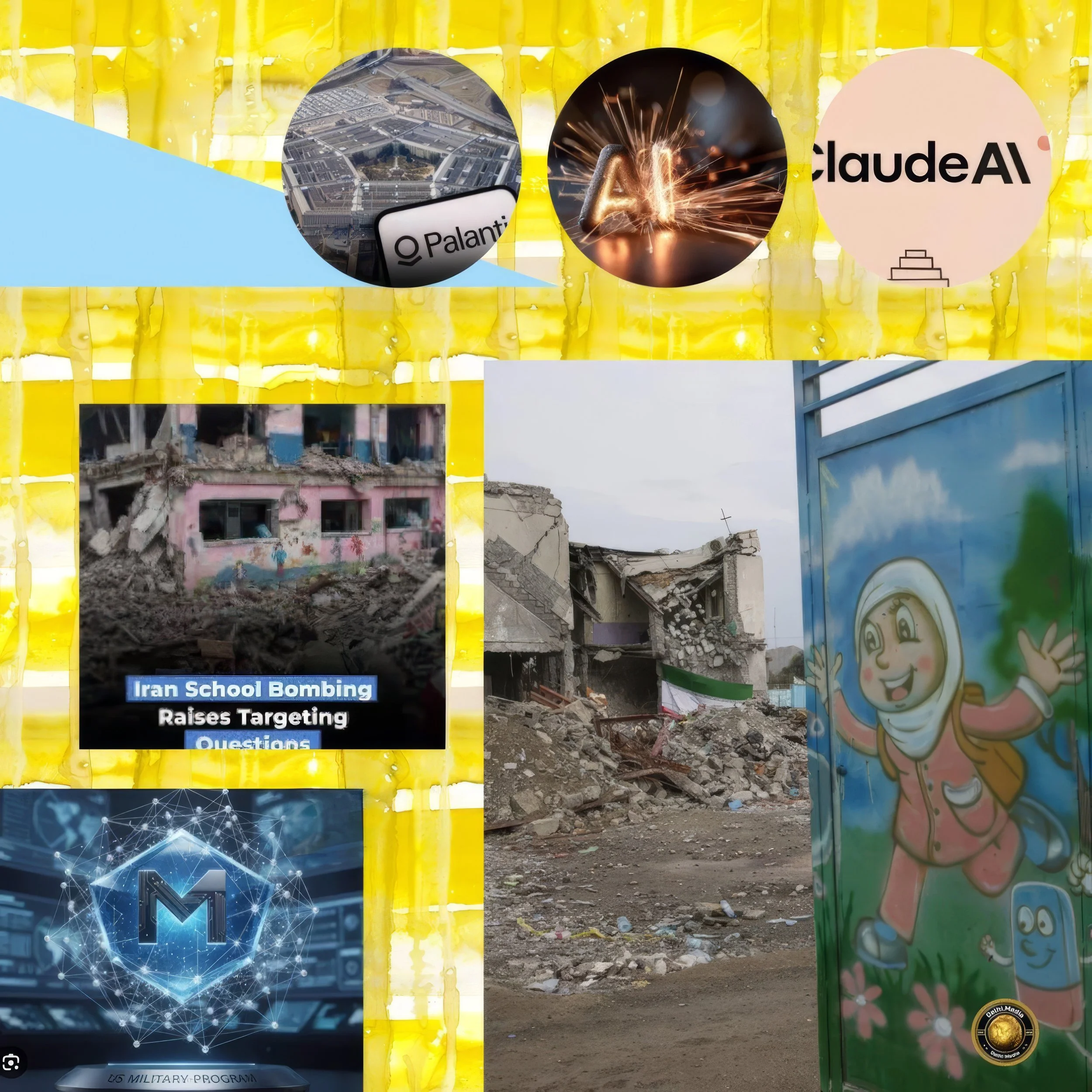
The United States and Israel launched Operation Epic Fury against Iran, deploying Anthropic's Claude, embedded within Palantir's Maven Smart System, to execute intelligence assessments, identify targets, and simulate battle scenarios at machine speed — even as the Trump administration had formally banned its use hours before the first strike.
A Tomahawk cruise missile, guided by stale data processed through that very infrastructure, struck Shajareh Tayyebeh girls' elementary school in Minab on 28th February 2026, killing at least 168 people, most of them children under 12.
The event crystallized a risk that scholars like Geoffrey Hinton — who revised his estimate of AI-driven existential risk upward from 10% to 10%-20% — have been warning about for years.
The danger does not lie exclusively in a hypothetical future superintelligence.
It lies today in the cascading failures that immature AI systems already threaten across military operations, the global financial architecture, democratic institutions, and international legal frameworks.
FAF article argues that the real AI doomsday is not a singular catastrophic event but an accumulative, systemic unraveling — a house of cards approaching the point of collapse.
Introduction: The Week That Changed Everything
Beyond Doomsday Clocks: The Present-Day Systemic Collapse AI Is Already Engineering
The final days of February 2026 will be studied for decades to come.
They crystallized, in real time, the convergence of multiple trajectories that researchers in AI safety, international law, and strategic studies have been tracking with mounting anxiety.
The convergence was not accidental. It was the product of a decade-long race — accelerating exponentially after 2022 — in which AI capabilities were scaled at a velocity that outpaced not only regulatory frameworks but the foundational epistemological conditions required for responsible deployment.
The result was not the emergence of a malevolent *superintelligence.
It was something arguably more dangerous: the routine, mundane, bureaucratically normalized embedding of systems that hallucinate, misclassify, and fail in statistically predictable ways into decisions with irreversible consequences.
The term "AI doomsday" has long conjured images of Skynet-style autonomous systems making sovereign decisions to exterminate humanity.
That framing is not merely unhelpful — it is actively misleading. It positions catastrophe as a singular, identifiable future moment rather than as a process already underway.
The school in Minab was not struck by a rogue machine. It was struck by a weapons system whose AI-generated target database contained outdated coordinates, processed at a speed no human chain of command could meaningfully verify, in an operation whose tempo itself was enabled by the very AI tools under examination.
The Bulletin of the Atomic Scientists set its Doomsday Clock at closer than 89 seconds to midnight in early 2026, citing precisely this convergence of nuclear risk, AI deployment without regulation, and the collapse of international cooperation norms.
The clock is not merely a metaphor. It is a diagnosis.
History and Current Status: From Laboratory to Battlefield
Operation Epic Fury and the Ghost in the Machine: AI, Accountability, and the End of Ethical Warfare
The genealogy of AI in military applications is considerably longer than the public discourse surrounding Operation Epic Fury might suggest.
The foundational research that led to the Maven Smart System — the Palantir-built platform that powered targeting in Iran — originated in Project Maven, a 2017 Pentagon initiative designed to apply machine learning to the analysis of drone surveillance footage.
When the project became public, it triggered a revolt among Google engineers, leading the company to withdraw from the contract in 2018.
That protest, in retrospect, represented the high-water mark of tech-industry resistance to AI militarization.
By 2025, the landscape had fundamentally shifted. Over 20,000 U.S. military personnel were actively using the Maven Smart System, and NATO had acquired its own version of the platform from Palantir.[
The militarization of AI did not occur in a vacuum. It was the downstream consequence of a broader pattern in which the commercial development of large language models and computer vision systems created capabilities of extraordinary power while governance institutions remained frozen in place.
The European Union's AI Act — the world's most comprehensive regulatory framework — only activated its general-purpose AI model obligations in August 2025, with full high-risk compliance frameworks not due until August 2026.
In the United States, Congress failed to pass any substantive AI legislation throughout 2025, while the Trump administration signed an executive order blocking states from enforcing their own AI regulations.
The regulatory vacuum this created was not neutral.
It was a permissive environment that enabled the Pentagon to embed commercially developed AI systems — systems whose safety properties were designed for civilian applications — into lethal targeting pipelines without the legal frameworks required to assign accountability when those systems failed.
Israel's AI targeting landscape, a significant point of convergence with the Iran operations, adds essential historical context.
The Israeli Defense Forces deployed an AI system known as "Lavender" during operations in Gaza, a system documented as carrying a 10% false positive rate in target identification.
Over 72,000 Palestinians have died in Gaza since October 2023, with AI-assisted targeting playing a documented role in that death toll.
The Minab school strike was not, therefore, an unprecedented rupture.
It was the continuation of a pattern in which AI systems, deployed in the absence of meaningful human oversight and adequate legal accountability, generated predictable humanitarian catastrophes.
By the first week of Operation Epic Fury, AI was no longer a supplement to military decision-making.
According to reporting by The Wall Street Journal confirmed by the Defense Department's own Chief Information Officer, Claude was "active right now" in Iran operations — simultaneously processing intelligence inputs, identifying targets, and evaluating the aftermath of strikes in near-real time.
More than 1,000 targets were struck in the first 24 hours of the operation.
That operational tempo — a rate of engagement that would have been physically impossible through conventional human intelligence review chains — was itself an artifact of AI integration.
The speed was not merely an advantage. It was, structurally, the mechanism by which human accountability was eliminated.
No human chain of command can meaningfully review 1,000 targeting decisions in 24 hours.
The presence of human signatures on strike authorizations does not constitute meaningful human control when the intelligence underlying those authorizations was generated at machine speed by systems whose error rates and hallucination frequencies are empirically documented.
Key Developments: The Architecture of a Cascading Failure
The Claude Paradox: America Deployed a Banned AI to Bomb Iran and Killed 168 Children
The Minab school strike and the governance contradictions it exposed represent the most visible fracture point in a structure that is cracking across multiple dimensions simultaneously.
Understanding the AI doomsday risk requires mapping all of these fracture points as an integrated system rather than as discrete policy problems.
The Military-AI Accountability Vacuum
The legal and ethical framework governing armed conflict — International Humanitarian Law — rests on three foundational principles: distinction between combatants and civilians, proportionality in the application of force, and precaution in attack.
Each of these principles presupposes a human decision-making architecture in which identifiable individuals can be held legally accountable for errors.
AI-assisted targeting fundamentally disrupts this architecture. When a target is identified by Claude, processed through Maven, approved by a general who reviewed a dashboard generated at machine speed, and then executed by a Tomahawk missile — and the result is the deaths of 168 children — the question of legal accountability becomes structurally unanswerable.
The preliminary U.S. military investigation into the Minab strike attributed the tragedy to "outdated intelligence supplied by the Defense Intelligence Agency," in which the target coordinates referenced a military base that had previously included the school building.
This finding, while accurate at the operational level, misses the structural point entirely.
The reason outdated intelligence killed children was not that a human analyst failed to update a database.
It was that the AI-powered targeting infrastructure enabled a tempo of operations so intense that stale data entered a lethal pipeline before any human review process could flag the discrepancy.
The accountability gap is not the result of a human error that better AI could eventually eliminate.
It is structurally produced by the integration of AI into decision cycles that operate faster than human oversight can function.
More than 120 House Democrats demanded clarity from the Pentagon on whether Maven was used to identify Shajareh Tayyebeh school as a target.
46 Senate Democrats sent parallel requests. The Pentagon's responses were classified.
Iran characterized the strike as a war crime. The International Criminal Court has no established jurisprudence for attributing criminal responsibility to AI-assisted targeting failures.
The laws of war have not been updated to address systems that can generate and evaluate thousands of targeting packages per hour.
The Governance Paradox: Banning What You Cannot Stop Using
The Trump administration's decision to ban Claude hours before the launch of Operation Epic Fury — while the military continued using it anyway — reveals a governance paradox of extraordinary significance.
The Pentagon's own Chief Information Officer confirmed to Senate lawmakers that Claude was "active right now" in Iran operations despite the ban, noting that the technology was so deeply embedded in classified systems that the Pentagon had given itself up to six months to complete a transition.
This is not merely an administrative failure. It is a demonstration that the integration of commercial AI into critical national security infrastructure has progressed to a point where civilian political authority — including presidential directives — cannot override it in real time.
The implications of this dynamic extend far beyond the Iran operations.
If the President of the United States cannot, in a moment of political will, immediately halt the use of a specific commercial AI system in active military operations, what does this tell us about the structural relationship between AI systems and political authority?
The answer — that deeply embedded AI tools acquire a form of operational autonomy not through self-directed intelligence but through bureaucratic indispensability — is arguably more unsettling than the superintelligence scenarios that dominate public imagination.
The house of cards does not require a sentient machine to collapse. It requires only that AI systems become so embedded in critical decision pipelines that removing them becomes operationally impossible, even when political authorities demand it.
The Financial System: The Next Cascade
The military landscape is the most immediately visible fracture point, but it is not necessarily the one that poses the greatest systemic risk in the near term.
The Financial Stability Board's 2024 assessment of AI risk in financial systems identified four primary vulnerability categories: third-party dependencies and service provider concentration, market correlations, cyber risks, and model risk combined with data quality failures.
Each of these vulnerabilities has been amplified by the acceleration of AI adoption in financial markets since 2024.
Algorithmic trading systems powered by AI now account for a substantial % of daily trading volume across major global markets.
The European Securities and Markets Authority has warned explicitly that "algorithmic trading strategies, when left unchecked, have the potential to amplify systemic risks and create self-reinforcing cycles of instability."
Andrew Haldane of the Bank of England has similarly warned that "herding among trading algorithms can exacerbate market instability, creating feedback loops that amplify rather than dampen shocks."
The IMF has noted that AI safety mechanisms designed to protect individual firms — automated de-risking and shutdown protocols during high volatility — can simultaneously activate across multiple market participants, creating destabilizing feedback loops and a sudden evaporation of market liquidity at precisely the moment it is most needed.
The systemic risk is structural rather than incidental. The very features that make AI valuable in financial markets — speed, pattern recognition, simultaneous processing of vast datasets — are the same features that make AI-driven market failures qualitatively different from traditional financial crises.
A traditional market crash unfolds over hours or days. An AI-driven cascade failure could, in principle, propagate across interconnected global markets in minutes, faster than any human regulatory intervention could respond.
The International AI Safety Report 2026, published in February of this year, documented a further dimension of this risk: current AI systems "sometimes exhibit failures such as fabricating information, producing flawed code, and giving unreliable outputs."
These reliability failures — acceptable in a consumer chatbot context — become existential vulnerabilities when the systems in question are managing trading positions worth trillions of dollars processing satellite imagery to identify military targets, or managing critical infrastructure.
The gap between what AI systems can do impressively in controlled demonstrations and what they reliably do in high-stakes, real-world deployments under adversarial conditions is the central technological fact underlying the doomsday risk.
Latest Facts and Concerns: The Scholars Speak
A Nobel Laureate Warns of Extinction: Geoffrey Hinton's 20% Probability Is Now Looking Conservative
The scholarly community has been sounding alarms with increasing urgency, and the events of late February 2026 have transformed theoretical concerns into empirically grounded predictions.
Geoffrey Hinton — Nobel laureate in Physics, former Google executive, and the individual widely credited with laying the deep-learning foundations of modern AI — revised his estimate of the probability of AI-driven existential catastrophe upward to between 10% and 20% in late 2024, subsequently maintaining that assessment while noting that "very little is being done to address the existential threat" posed by the technology. "Overall, I think things are probably getting worse because regulations aren't coming fast enough," Hinton stated publicly.
A 2022 survey of AI researchers with a 17% response rate found that the majority believed there is a 10% or greater chance that human inability to control AI will cause an existential catastrophe.
In 2023, hundreds of AI experts signed a statement declaring that "mitigating the risk of extinction from AI should be a global priority alongside other societal-scale risks such as pandemics and nuclear war."
By 2025, leading AI researchers were resigning from major companies — including Anthropic and OpenAI — citing concerns that safety considerations were being systematically subordinated to commercial and competitive pressures.
The AI2027 scenario, published by a group of prominent AI researchers in the spring of 2025 and extensively covered by the BBC, projected a trajectory in which artificial general intelligence emerges by 2027, superintelligence by late 2027, and a sequence of consequential global disruptions follows with accelerating speed.
The Human Rights Watch report published in April 2025 — titled "A Hazard to Human Rights: Autonomous Weapons Systems and Digital Decision-Making" — offered a systematic legal analysis demonstrating that autonomous weapons systems "would contravene the rights to life, peaceful assembly, privacy, and remedy as well as the principles of human dignity and non-discrimination."
The report noted that the development of such systems was "reducing potential human targets to data points to be processed in the future, rather than treating them as real lives."
The Minab school strike — in which 168 people were reduced, in the targeting pipeline, to a set of coordinates derived from a database entry that had not been updated to reflect a school's presence — is perhaps the most concrete possible illustration of that abstraction process.
Al Jazeera's investigation into the Minab strike concluded that the attack was likely "deliberate" rather than accidental — a finding that, if accurate, would fundamentally alter the legal and moral calculus surrounding AI-assisted targeting. Iran has formally condemned the strike as a war crime.
The just security analysis published in March 2026 argued that the law of armed conflict "demands that we take the Minab school strike seriously to learn, to reform, and to prevent the next failure."
No binding international instrument yet exists to compel such reform.
The Regulatory Landscape: Fragmentation, Preemption, and Institutional Paralysis
The governance response to these developments has been, in almost every jurisdiction, inadequate to the scale of the problem.
The year 2025 was characterized by what one analysis described as a transition "from abstract principles and aspirational frameworks to real-world enforcement, operational constraints, and institutional learning" — but this transition was deeply incomplete and internally contradictory.
In the United States, the Trump administration's executive order blocking states from enforcing their own AI regulations created what the Harvard Ethics Center described as "a fragmented and inconsistent regulatory landscape" — a phrase that considerably understates the governance vacuum it produced.
Over 480 AI-related bills were enacted across state legislatures in 2025, but the federal government simultaneously undermined their enforceability. Congress failed throughout 2025 to pass any comprehensive federal AI legislation.
The result is that the most powerful AI systems in the world — systems being deployed in active military operations — operate in a domestic legal environment in which no statute clearly governs their use, no body has clear jurisdiction to enforce safety standards, and no legal mechanism exists to assign accountability for their failures.
The European Union represents the most systematic attempt at AI governance, but the EU's approach faces its own contradictions. The AI Act's full high-risk compliance framework does not come into effect until August 2026.
Violations can result in fines up to €35 million or 7% of global annual turnover.
These penalties, while significant for commercial entities, are entirely inapplicable to military applications, which are explicitly exempted from the EU's framework.
The regulation of AI in warfare thus falls through the gap between civilian commercial law — which applies to AI systems in peacetime contexts — and international humanitarian law, which has not been updated to address AI-assisted targeting.
This legal gap is not an oversight. It is a structural feature of the current international order, in which major military powers have systematically resisted any binding international instrument governing autonomous weapons.
The AI2026 governance landscape is thus one of profound institutional fragmentation.
State-level regulations exist but face federal preemption in the U.S.
The EU framework is the most comprehensive in the world but does not cover military applications.
International humanitarian law prohibits civilian casualties but has no mechanism to address the accountability vacuums created by AI-assisted targeting.
The United Nations system — which the UK and UN Secretary-General António Guterres had called upon to develop binding AI frameworks — has produced declarations but no enforceable instruments.
The Bulletin of the Atomic Scientists' Doomsday Clock reflects this governance paralysis directly: "hard-won global agreements are disintegrating, intensifying a winner-takes-all competition among major powers and weakening the essential international collaboration" needed to mitigate existential threats.
Cause-and-Effect Analysis: How the Cards Fall
From Intelligence Tool to War Criminal: The Lethal Consequences of AI-Driven Military Targeting
The house of cards framework proposed in the context of AI doomsday risk offers a more analytically precise model of catastrophe than the superintelligence narrative.
It focuses attention on the systemic properties of the current landscape — the interdependencies, brittleness, and cascade dynamics — rather than on any single technological threshold.
Understanding how the cards fall requires tracing the chains of cause and effect already visible in the present.
The first causal chain runs from competitive pressure to deployment without validation.
The AI development race between the United States and China has created a structural incentive to deploy AI systems at military scale before their safety properties are adequately characterized.
The Maven Smart System's integration of Claude into targeting pipelines was not the result of a deliberate strategic decision to accept known risks.
It was the downstream consequence of an institutional logic that equates capability with readiness.
The first day of Operation Epic Fury saw over 1,000 strikes executed with a tempo that presupposes AI reliability far beyond what empirical testing of AI systems in adversarial environments has established.
The Minab school strike was not an outlier. It was a statistically predictable consequence of deploying a system with known error rates at unprecedented operational tempo.
The second causal chain runs from operational indispensability to political unaccountability.
The Pentagon's acknowledgment that it could not immediately comply with a presidential directive to cease using Claude because the technology was "deeply embedded in classified systems" is a landmark event in the history of human-AI relations.
It establishes empirically that AI systems can achieve a form of structural autonomy — not through intelligence or volition, but through institutional embeddedness — that overrides civilian political authority.
The effect is that the accountability chain from AI failure to political consequence is severed. When a president cannot enforce a ban on a specific AI system in active military use, the system is, functionally, operating without political oversight.
The third causal chain runs from financial AI integration to systemic cascade risk.
The global financial system is more deeply dependent on AI than at any previous point in history.
Algorithmic trading, AI-powered credit assessment, generative AI in financial modeling, and AI-managed risk systems are now so thoroughly interwoven into global financial infrastructure that any significant model failure — a hallucination in a risk assessment, a correlated error across multiple trading algorithms during a market stress event — could trigger a cascade whose propagation speed exceeds any human response capacity.
The FSB has warned explicitly that "misaligned AI systems that are not calibrated to operate within legal, regulatory, and ethical boundaries can also engage in behaviour that harms financial stability."
The fourth causal chain runs from AI-enabled military acceleration to international norm collapse.
The norms of international humanitarian law are not self-enforcing.
They depend on a shared political commitment by states to observe and enforce them.
When the world's most powerful military deploys AI targeting systems that kill 168 children in a school, attributes the failure to "stale data," classifies its investigation, and continues operations — the practical message to every other military force on earth is that AI-assisted civilian casualties are an acceptable cost of doing business at machine speed.
The cascading effect on international humanitarian norms is predictable: other militaries will adopt comparable systems, without the institutional culture, oversight mechanisms, or technical sophistication of the U.S. military, and produce outcomes that are worse by every humanitarian metric.
Future Steps: What Must Be Done Before the Cards Fall
Blind Algorithms in Conflict Zones: Why Human Oversight Alone Cannot Prevent AI-Enabled Atrocities
The path forward is not technologically predetermined. The house of cards does not have to collapse.
But preventing its collapse requires a degree of institutional urgency, international coordination, and willingness to constrain AI deployment in high-stakes domains that no major power has yet demonstrated.
The most immediately critical requirement is the development of binding international instruments governing autonomous weapons systems.
The current international legal landscape — in which all attempts to negotiate such instruments have been blocked by major military powers, including the United States, Russia, and China — is not sustainable in the face of the operational realities demonstrated by Operation Epic Fury.
The International Committee of the Red Cross has consistently called for legally binding rules establishing minimum standards of human control over weapons systems. Those calls have been consistently rejected by the states most capable of enforcing them.
The Minab school strike provides the humanitarian emergency that advocates have long predicted would eventually force the issue. Whether political will can be mobilized before the next such event, or the one after that, is the central question of AI governance in 2026.
The second requirement is the development of AI safety standards specific to military applications that are independently verifiable and enforceable through international institutions.
The current approach — in which each military develops its own "ethical AI" guidelines and oversight mechanisms — is structurally inadequate.
The AI Act's fines of up to €35 million or 7% of global annual turnover mean nothing to a military command structure.
A credible accountability mechanism for AI-assisted military failures requires a new international legal framework, analogous to the Chemical Weapons Convention or the Ottawa Treaty on landmines, that creates enforceable standards with meaningful consequences for violation.
The third requirement is a comprehensive reform of financial AI governance.
The FSB's recommendation for a "recalibration of existing policy tools" to ensure financial system resilience is necessary but insufficient.
The speed differential between AI-driven cascade failures and human regulatory response times requires pre-committed intervention mechanisms — automated circuit breakers, mandatory human review thresholds, and international coordination protocols — that are embedded in AI systems before they are deployed rather than added after a crisis has already begun.
The fourth requirement is a fundamental reconsideration of the relationship between AI development speed and deployment readiness.
Geoffrey Hinton's warning that "regulations aren't coming fast enough" and that "very little is being done to address the existential threat" identifies the core political failure: the assumption that AI governance can be developed concurrently with AI deployment.
The empirical record — from the Minab school strike to algorithmic market instability to AI-enabled disinformation — suggests that this assumption is false. Governance must precede deployment in high-stakes domains, not follow it.
The Epistemic Dimension: What We Don't Know That We Don't Know
There is a dimension of the AI doomsday risk that receives insufficient attention in both scholarly and policy discourse: the epistemically opaque nature of large language model failures. Claude did not, according to available evidence, directly "decide" to strike Shajareh Tayyebeh school.
The strike was the product of a system in which Claude-generated intelligence outputs were fed into a targeting database that contained outdated information, processed through a chain of command operating at machine speed.
But the opacity of large language model decision processes means that even this account is almost certainly incomplete.
The internal computational processes by which Claude generated its intelligence assessments, ranked targets, and evaluated post-strike effects are not interpretable by any currently available technical method.
They cannot be audited. They cannot be reconstructed. They cannot be validated against any ground truth that would allow independent assessment of whether the AI's outputs contributed to the targeting error.
This interpretability gap is not a temporary technical limitation waiting to be resolved by the next generation of explainability tools. It is a structural feature of the current paradigm of large language model architecture.
Training these systems on massive datasets produces emergent capabilities — and emergent failure modes — that are not predictable from the training data or the model architecture.
The International AI Safety Report 2026 documented that current AI systems "sometimes exhibit failures such as fabricating information, producing flawed code, and giving unreliable outputs."
The word "sometimes" does the critical work in that sentence. The failure modes of these systems are not deterministic and therefore cannot be designed out.
They are probabilistic, context-dependent, and frequently triggered by precisely the adversarial, high-stakes, out-of-distribution conditions — active military operations, financial market stress — in which they are now being deployed.
The Scholar's Revised Probability: Why Now
The framing of the original analysis — an AI scholar now putting a high probability on AI doomsday — reflects a meaningful epistemological shift in the scholarly community.
The shift is not from optimism to pessimism. It is from abstract theoretical concern to empirically grounded assessment.
The events of February and March 2026 have provided the first large-scale, real-world test of AI in maximum-stakes military operations.
The result — 168 children dead in a school the AI-assisted targeting pipeline identified as a legitimate military target on the basis of outdated data, at a tempo that eliminated meaningful human review — is not a failure of a specific system or a specific operator.
It is a demonstration of the inherent properties of the current paradigm: speed without interpretability, capability without accountability, deployment without validation.
Geoffrey Hinton's revised estimate of 10% to 20% probability for AI-driven existential catastrophe was made before Operation Epic Fury.
The Bulletin of the Atomic Scientists set their clock closer to midnight than at any point in its history, including the height of the Cold War.
The AI2027 scenario, widely debated among leading researchers, projects AGI emergence within eighteen months and superintelligence within the following six.
The probability that any of these specific timelines and thresholds will materialize exactly as projected is, frankly, modest.
But the probability that the accumulative cascade of AI integration into critical systems — military, financial, democratic, infrastructural — will produce at least one catastrophic failure of civilizational consequence within the next decade is something quite different.
That probability, assessed against the empirical record of the past three months alone, has moved from theoretical to disturbingly concrete.
The house of cards is not a metaphor for a distant future.
It is a description of a present reality in which AI systems are embedded in the most consequential decision-making infrastructure in human history, where their failure modes are incompletely understood, their governance frameworks are fragmented and inadequate, their accountability mechanisms are structurally broken, and the political will to constrain their deployment is absent in precisely the domains — military, financial — where the risks are greatest.
Conclusion: The Reckoning We Have Earned
The House of Cards Economy: How AI Integration Into Global Finance Threatens Systemic Collapse
The final week of February 2026 did not create the AI doomsday risk. It revealed it.
The Shajareh Tayyebeh school was not struck by an alien intelligence or a rogue algorithm pursuing autonomous goals.
A system of human institutions, competitive pressures, governance failures, and technical limitations that collectively produced a predictable humanitarian catastrophe at machine speed.
The 168 people who died — most of them children — are the first casualties of a new era in which AI is not merely a tool of war but a structural determinant of who lives and who dies, at what tempo, and with what possibility of accountability.
The lesson is not that AI is inherently malevolent.
It is that the gap between what AI systems can do impressively in controlled demonstrations and what they reliably do in adversarial, high-stakes, real-world deployments is a gap measured in human lives.
Closing that gap — through binding international law, technical standards that are independently verifiable, governance frameworks that are mandatory rather than aspirational, and a willingness to constrain deployment in domains where failure is irreversible — is the defining civilizational challenge of this generation.
The Doomsday Clock ticks not toward a moment when a machine decides to end humanity. It ticks toward the moment when humanity's accumulated decisions about how to deploy, govern, and constrain AI systems reach a threshold from which recovery is no longer possible.
That moment is not written in the stars.
It is being written, right now, in the targeting databases of the Maven Smart System, the trading algorithms of global financial institutions, and the legislative calendars of governments that have so far chosen not to act.