Executive Summary
Imagine the world's most important oil highway suddenly getting blocked by a country that has just lost most of its military.
That is exactly what is happening right now in the Persian Gulf.
The United States has bombed Iran's most important oil-shipping island, threatened to bomb Iran's coastline, sent 2,200 soldiers by sea to the area, and is calling on countries like China, Japan, and the United Kingdom to send their own warships too.
On top of all this, there are serious questions about whether America might use secret high-tech weapons — the same kind used to capture Venezuela's president — to knock out Iran's ability to fight back in ways that regular bombs cannot.
This article explains what is happening, why it matters, and what might come next.
Introduction: A War That Is Getting Bigger Every Day
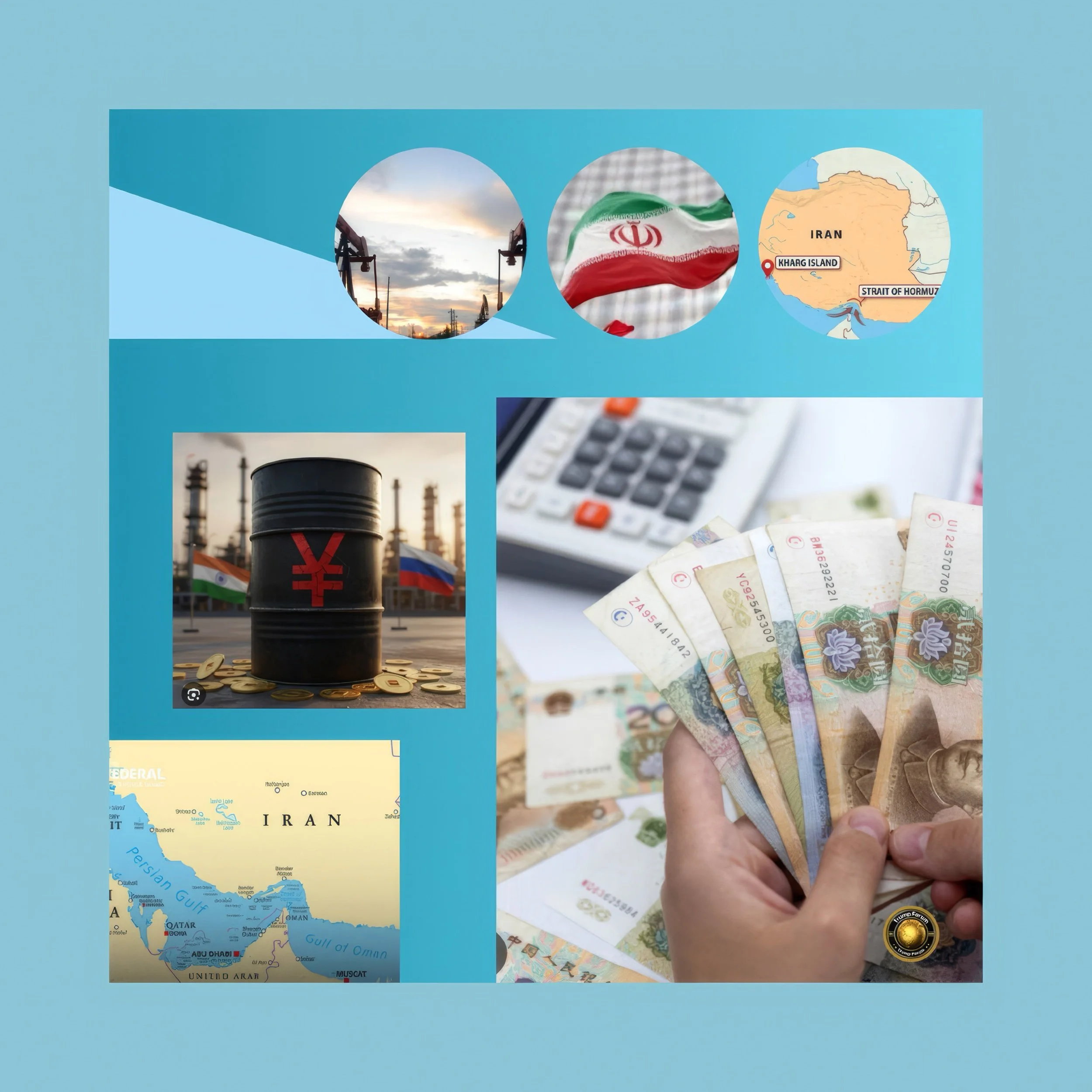
Think of the Strait of Hormuz as a narrow hallway connecting the Persian Gulf to the rest of the world's oceans.
Roughly one-fifth of all the oil used by the entire planet passes through that hallway every day.
Now imagine someone has blocked that hallway. That is what Iran has done since the US started bombing it, and it is causing real panic in oil markets and governments worldwide.
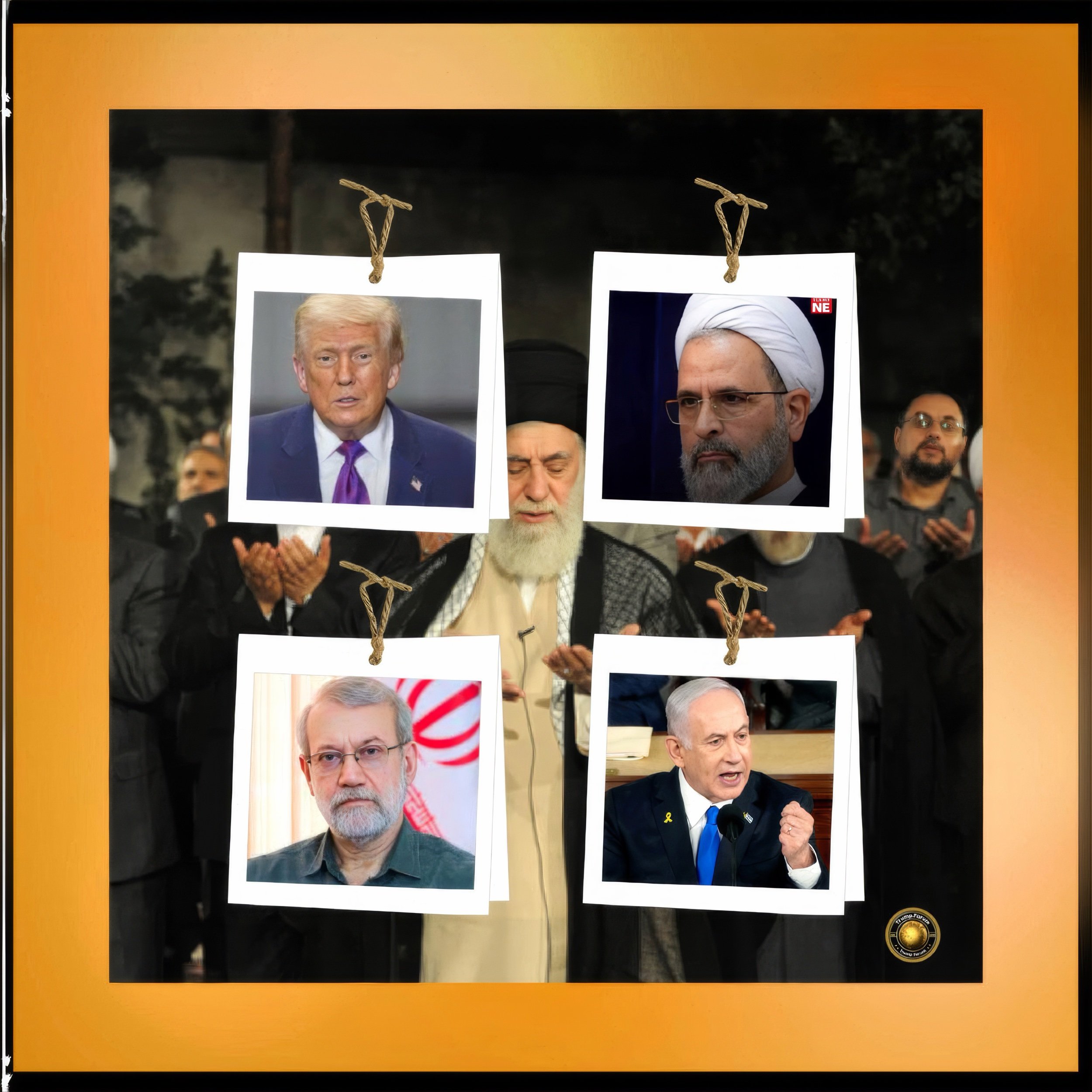
This war — officially called Operation Epic Fury — started on 28 February 2026 when the United States and Israel launched surprise airstrikes that killed Iran's supreme leader, Ayatollah Ali Khamenei.
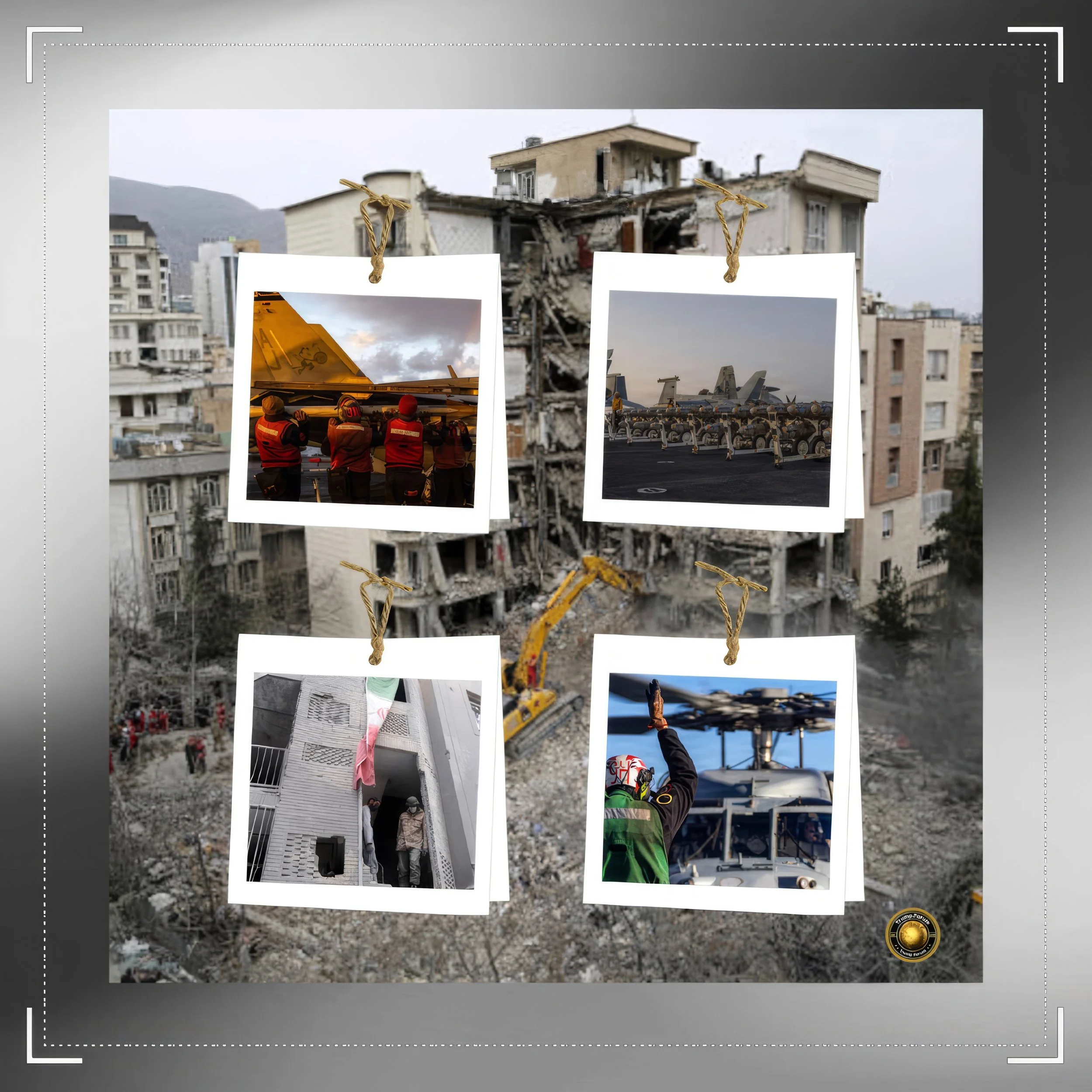
Since then, more than fifteen thousand Iranian military targets have been hit.
But as of mid-March 2026, Iran is still fighting back the only way it can — by blocking the oil highway and threatening to blow up energy facilities across the Gulf.
History and Current Status
How Did We Get Here?
Iran and the United States have been enemies for over forty years, ever since the Iranian Revolution of 1979.
Over all that time, Iran quietly built underground nuclear facilities and a network of armed groups across the Middle East — in Lebanon, Yemen, Iraq, and Gaza — to use as tools against America and Israel.
By early 2026, American and Israeli intelligence believed Iran was only months away from building a nuclear bomb.
Trump gave Iran a deadline: agree to a nuclear deal or face military strikes. Iran said no. The bombs started falling.
Within a week, America and Israel had killed Iran's supreme leader, destroyed most of Iran's navy, and smashed its missile factories.
Iran named a new supreme leader — Mojtaba Khamenei, son of the man just killed — and he immediately vowed to fight on and keep blocking the Strait of Hormuz.
Key Developments
What Has Happened This Week
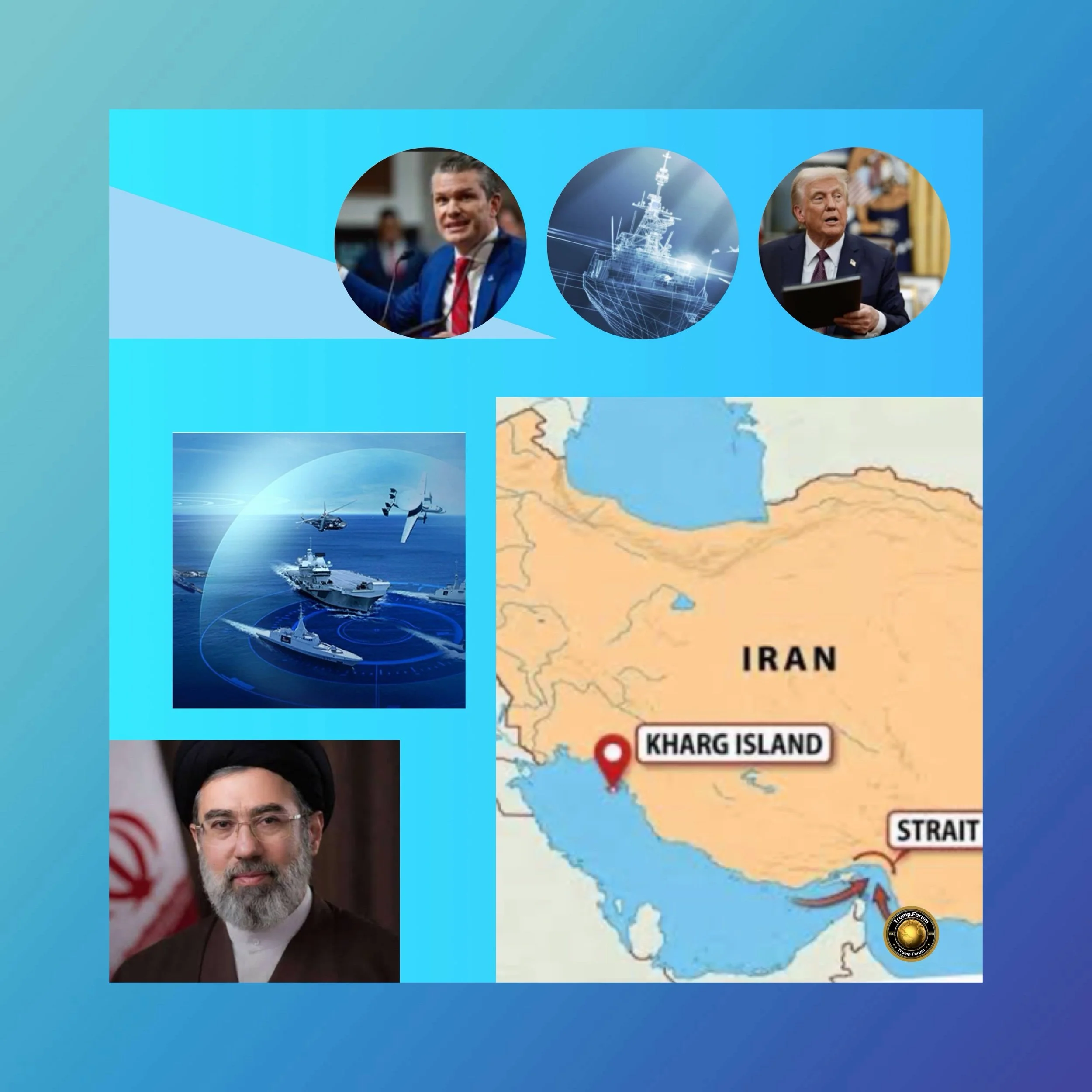
The biggest news came when Trump ordered the bombing of Kharg Island, a small island in the Persian Gulf that acts like Iran's oil ATM — roughly ninety % of all Iran's oil exports leave from there.
American forces destroyed military targets on the island but carefully left the oil facilities untouched, like a robber who burns down your garage but leaves your house standing — for now — as a warning.
Trump then posted on Truth Social that if Iran kept attacking ships in the Strait, those oil facilities would be destroyed next time.
He also said he would bomb the entire Iranian coastline and keep shooting Iranian boats out of the water.
At the same time, the US sent 2,200 Marines aboard three ships toward the Middle East.
These Marines are not ordinary foot soldiers; they travel with F-35 fighter jets and special aircraft that can land almost anywhere.
Officials say they are not necessarily going to land in Iran, but having them nearby is like keeping a baseball bat next to the door — you might not need it, but everyone knows it is there.
Trump also demanded that many countries — specifically naming China, France, Japan, South Korea, and the UK — send warships to help keep the Strait open.
This is significant because China gets approximately half of its oil through that Strait, so it has enormous reason to want it open, even if it dislikes being told what to do by the US.
The Secret Weapons Question: From Venezuela to Iran
Here is where the story gets more interesting and more troubling. In January 2026, Trump ordered the capture of Venezuelan President Nicolás Maduro.
During that raid, US forces used a classified weapon Trump called "The Discombobulator."
White House officials described it as making Venezuelan soldiers bleed from the nose and vomit blood, and Trump confirmed it made Venezuelan military equipment completely non-functional.
This is not science fiction — it is a real weapon that America used just two months ago. Sonic weapons use powerful sound waves.
Electromagnetic pulse weapons fry electronic circuits without firing a bullet.
These systems can disable drones, scramble communications, and knock out missile guidance systems.
Iran's ability to block the Strait relies heavily on drones, naval mines, and shore-based missiles — all of which depend on electronics and communications to work.
If America uses the same kind of electronic warfare tools against Iran that it used in Venezuela, it could potentially blind Iran's coastal defense systems before sending those Marines ashore.
The US is already using the EA-18G Growler — a specialized jet that jams enemy radars and communications — in the Persian Gulf campaign.
And reports suggest the Meadowlands platform, a single-operator system that can blind enemy satellites, is also potentially in play.
Iran's military relies on satellites to coordinate drone attacks.
Blind those satellites, and Iran's drone swarms become far less dangerous.
Latest Facts and Concerns: What This Means for Everyone
The most immediate concern is oil prices. When the Strait of Hormuz is blocked, oil becomes scarce, and scarce oil means expensive oil.
Brent crude has already jumped approximately ten % since the strikes began, and analysts warn it could hit $100 per barrel or higher if the disruption continues.
Countries like India, Japan, China, and South Korea — which together receive seventy-five % of the Strait's oil shipments — are watching this with extreme alarm.
Iran is threatening to destroy oil and gas infrastructure across the entire Gulf region if its own oil facilities are struck.
If it follows through, that could mean fires at Saudi Aramco's oil fields, damage to Kuwaiti terminals, and energy disruption that would push oil prices past $120 per barrel — the level seen during the peak of the 2022 Russian supply crisis — and potentially trigger a global recession.
There is also the nuclear question hanging over everything. The Fordow facility — buried deep inside a mountain — may still be capable of enriching uranium to weapons-grade levels.
America's stated goal is to ensure Iran "can never obtain a nuclear weapon," and that goal cannot be declared complete until Fordow is permanently destroyed.
The US Army's new Dark Eagle hypersonic missile, which moves too fast for Iran's defenses to intercept, may be the weapon intended for that job.
Cause and Effect: Understanding the Chain of Events
Every action in this war has led to a predictable reaction. America bombed Iran's nuclear sites and military facilities, so Iran blocked the world's most important oil route.
America bombed Kharg Island, so Iran threatened to burn down every oil facility in the Gulf. America demanded allied warships join the mission, so now the entire world has to decide whose side it is on — or whether it can afford to stay neutral.
The use of sonic and electromagnetic weapons in Venezuela set a template that Trump appears willing to repeat. Venezuela was like a test run in a smaller, contained environment.
Iran is a vastly larger and more complex landscape, but the doctrinal logic is the same: use classified non-kinetic tools to disable defenses, then follow up with conventional forces.
The Marines' F-35s and amphibious capability provide exactly the follow-on punch that would be needed after electromagnetic suppression of coastal defenses.
Future Steps: What Might Happen Next
There are three likely paths forward.
In the first path, allied warships join the US Navy in the Strait, tankers start moving again under military escort, and Iran gradually loses its ability to enforce the blockade as its coastal defenses are continuously degraded by American airstrikes and electronic warfare.
Oil prices stabilize, and Iran eventually seeks a negotiated exit.
In the second path, America uses its amphibious Marines to temporarily seize one of the Iranian-controlled islands in the Strait — giving it a permanent enforcement position — while classified electromagnetic systems suppress Iranian coastal defenses.
This would be a dramatic expansion of the war and would risk drawing in Iran's remaining proxies across the region.
In the 3rd path — and the most dangerous one — Iran carries out its threat and attacks Gulf oil infrastructure, triggering a massive global energy crisis, oil at $120 per barrel or higher, and potentially direct military confrontation between the US and Iranian forces in the UAE or Kuwait.
This path leads to scenarios that no one in the global economy wants to contemplate.
What is certain is that Trump has demonstrated in Venezuela and in Iran that he is willing to use every tool in America's arsenal — bombs, Marines, warships, sonic weapons, electromagnetic systems, and public social media ultimatums — to achieve his objectives, and that he is willing to do so faster and with less diplomatic preparation than any previous American president.
Conclusion: An Old Conflict Entering New Territory
The bombing of Kharg Island, the threat to the Iranian shoreline, the deployment of 2,200 Marines, the call for allied warships, and the shadow of electromagnetic and directed-energy weapons over the entire operation together form a picture of a war that is escalating rapidly and taking shape in ways the world has not seen before.
The Strait of Hormuz remains the world's most critical — and currently most dangerous — stretch of water. How this crisis resolves will shape energy markets, alliances, and the rules of military engagement for years to come.