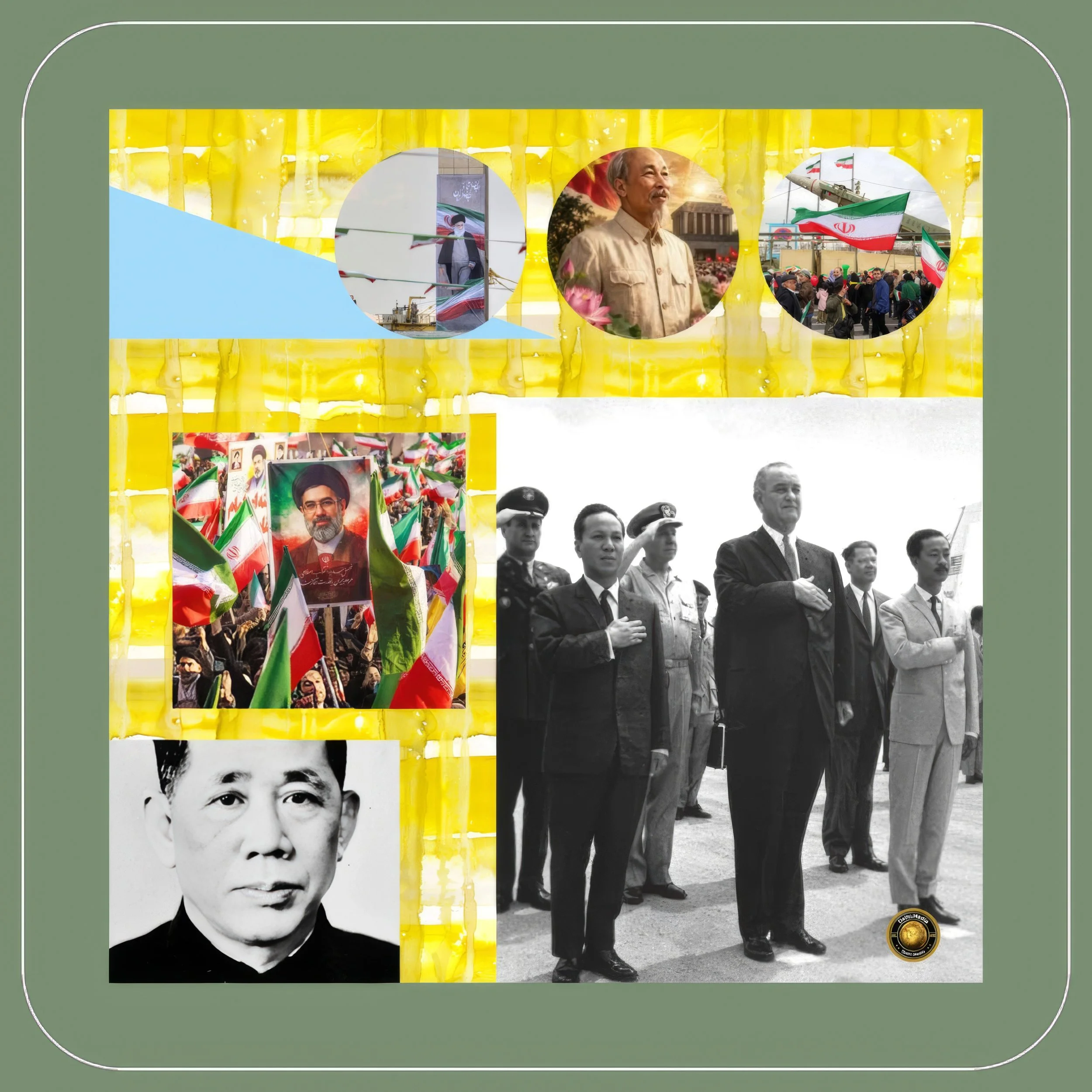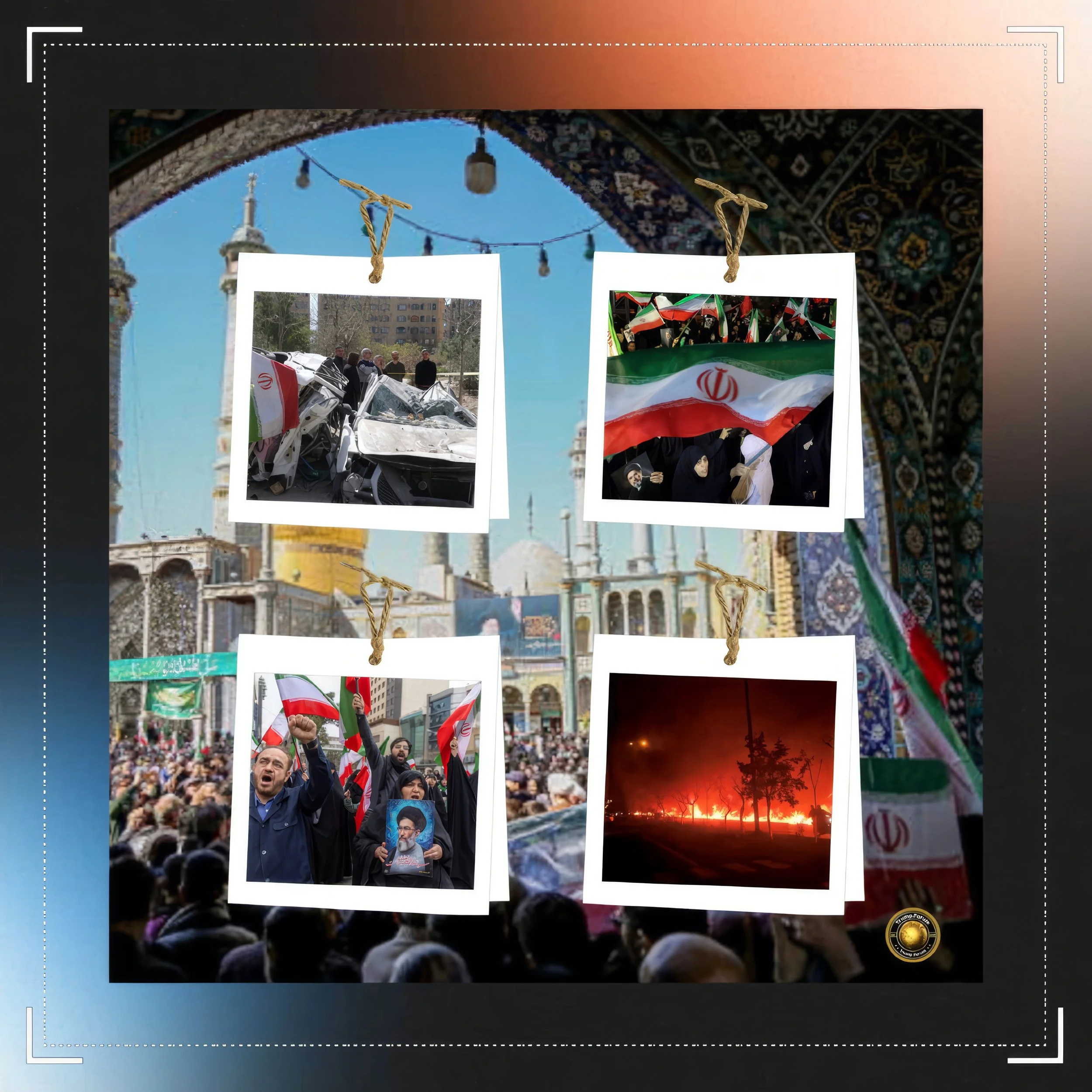
An Iran Exit Plan: Between the Logic of Force and the Architecture of Compromise
Introduction
An Iran Exit Plan:The Arithmetic of Compromise Between Washington and Tehran
Wisdom in foreign policy begins with the ability to distinguish problems that can be resolved from problems that can be managed but not fixed.
This foundational insight, simple yet perpetually forgotten, sits at the core of every great strategic failure of the post-Cold War era. A host of American presidents had to learn this lesson at immense cost.
George W. Bush thought overthrowing Saddam Hussein would transform the broader Middle East into a democratic constellation aligned with Washington's values.
Barack Obama believed terminating the reign of Muammar al-Qaddafi would stabilize Libya and accelerate the Arab Spring.
In both cases, the removal of an adversarial regime created not peace but an irreversible vacuum — a landscape of fragmentation, sectarian violence, and strategic paralysis that still haunts American foreign policy two decades later.
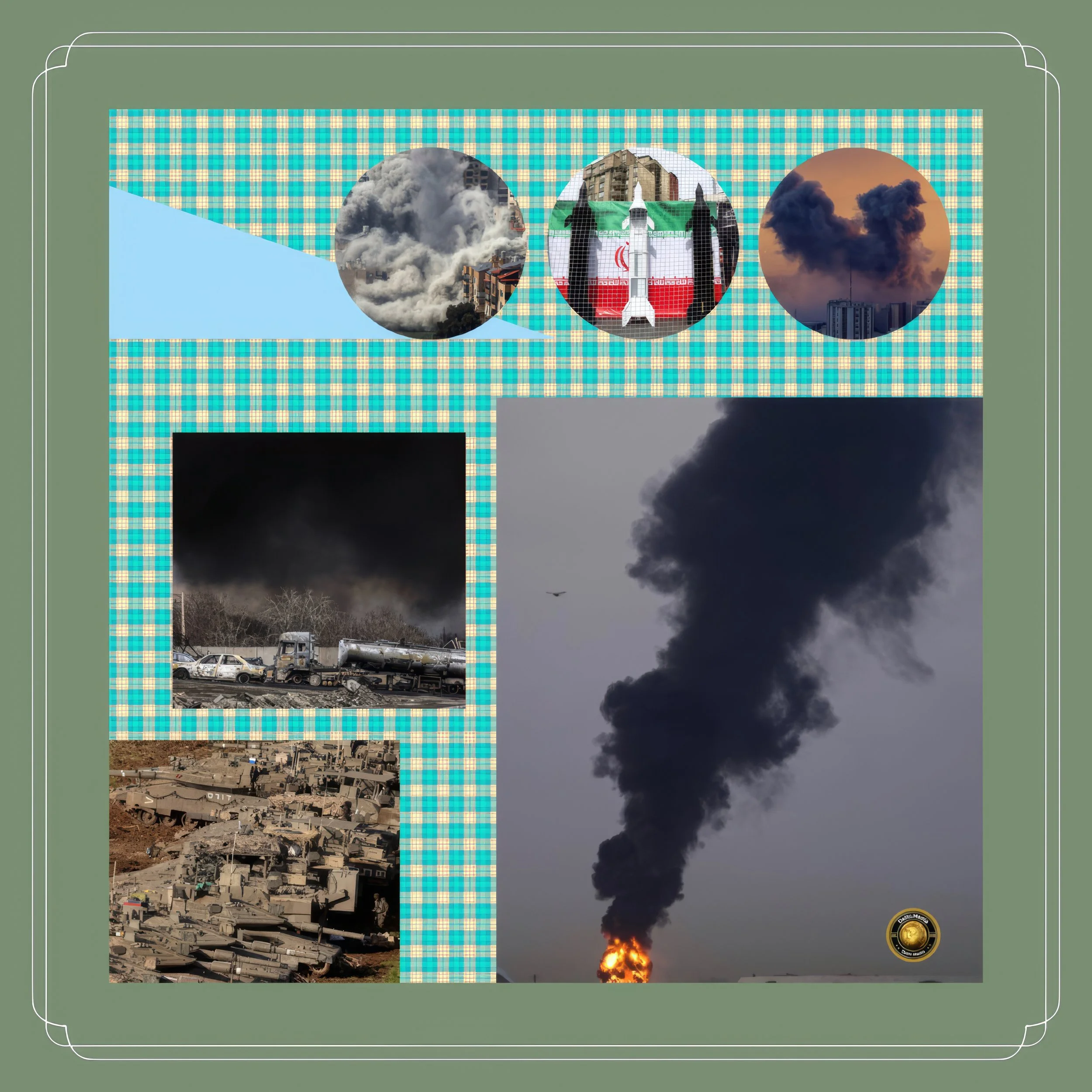
The war between the United States, Israel, and Iran that escalated dramatically in late February and March of 2026 carries the same structural warning.
Washington appears to have stumbled into a conflict whose tactical logic outpaced any serious political strategy for its conclusion.
Bombs have fallen, nuclear facilities have been degraded, and senior Iranian military commanders have been killed.
But war without an exit plan is not strategy — it is organized gambling.
The United States now finds itself mired in a conflict against a nation of 90 million people, sitting astride the Persian Gulf, with the capacity to destabilize global energy markets, activate a fractured but still dangerous regional proxy network, and resist political capitulation regardless of military pressure.
The central argument of this analysis is that there remains — narrowly, urgently, and perhaps briefly — a diplomatic corridor through which Washington and Tehran can exit this conflict without either side surrendering its core strategic identity.
That corridor requires both parties to abandon the maximalist fantasies that have poisoned every prior negotiation, accept the architecture of mutual face-saving, and engage in the kind of hard-nosed, enforceable diplomacy that has historically proven more durable than any military outcome.
This is not idealism. It is strategic realism dressed in the language of pragmatism.
The Deep Roots of the American-Iranian Estrangement
Bombs Fell But Peace Still Beckons: Inside the Narrow Window for Iran Diplomacy
To understand why reaching a sensible compromise is so difficult in 2026, one must first reckon honestly with the historical substrate of American-Iranian relations — a substrate layered in genuine grievance, profound mutual misreading, and a cycle of escalatory action and reaction stretching back more than seven decades.
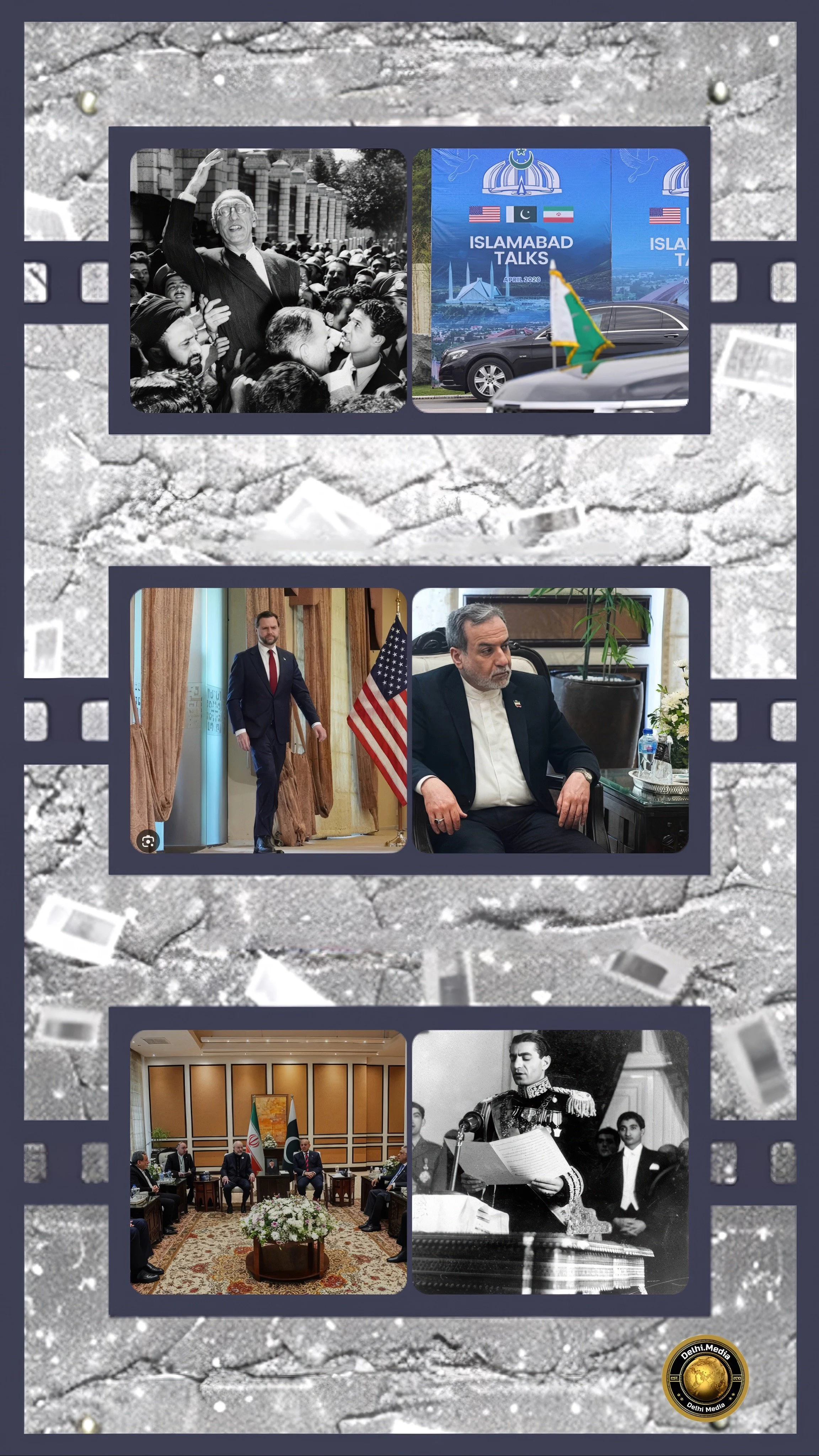
The Islamic Republic of Iran, born in 1979 from the revolutionary overthrow of Shah Mohammad Reza Pahlavi — a ruler Washington had installed and sustained since the CIA-engineered coup of 1953 — embedded anti-American identity into the architecture of the state itself.
For Iranian leaders, hostility toward Washington was never merely ideological posturing.
It was a founding narrative, enshrined in revolutionary theology, political culture, and institutional design.
The hostage crisis of 1979 to 1981, in which 52 American diplomats were held captive for 444 days, burned an image of Iranian malevolence into the American public consciousness that no subsequent diplomatic effort has ever fully overcome.
The nuclear dimension of the American-Iranian confrontation did not emerge in isolation from this broader political estrangement.
Iran's nuclear program dates to the 1950s, when the United States itself, under President Dwight Eisenhower's Atoms for Peace initiative, supplied Tehran with a research reactor.
The program survived the revolution, evolved under the pressures of the Iran-Iraq War, and expanded significantly through the 1990s and 2000s as Iranian strategists concluded that conventional military parity with the United States was unachievable and that a latent nuclear capability offered the only credible deterrence against regime change from outside.
The revelation in 2002 of undeclared nuclear facilities at Natanz and Arak marked the opening of a sustained international crisis.
Multiple rounds of diplomatic engagement — through the European three, the P5+1 framework, and bilateral backchannel communications — produced only partial and temporary restraint.
The landmark Joint Comprehensive Plan of Action of 2015, negotiated with considerable diplomatic ingenuity under the Obama administration, represented the most ambitious effort to resolve the nuclear question through verified, phased compromise.
Under its terms, Iran agreed to reduce its uranium enrichment to 3.67%, surrender most of its enriched uranium stockpile, and accept intrusive IAEA inspections in exchange for the lifting of multilateral sanctions.
The JCPOA held for approximately two years.
In May 2018, President Donald Trump, citing Iranian non-transparency about its weaponization past, the absence of missile program constraints, and Tehran's continued regional adventurism, withdrew the United States unilaterally from the agreement.
The immediate consequence was the restoration of maximum pressure sanctions, the collapse of European commercial engagement with Iran, and Tehran's methodical violation of every JCPOA constraint.
By January 2020, Iran had formally abandoned all enrichment limits.
By the time the Twelve-Day War erupted in June 2025, Iran had enriched uranium to 60% purity and was assessed by American and Israeli intelligence as being weeks, rather than months, from weapons-grade capability.
The Road to the Twelve-Day War: Diplomacy's Last Gasp
The Ghosts of Iraq and Libya Are Watching Washington Make the Same Fatal Mistake Again
The story of how Washington and Tehran arrived at open warfare in 2025 is, at its core, a story of structural incompatibility between what each side publicly demanded and what each privately could accept.
When President Trump returned to office in January 2025, he dispatched a personal letter to Supreme Leader Ali Khamenei proposing a return to negotiations — an overture that, despite its audacity, reflected the same transactional logic Trump had applied to North Korea in his first term.
The preliminary framework that emerged through the Omani mediation channel in early 2025 identified two basic tracks.
On the first track, Iran would temporarily lower enrichment to 3.67% and release frozen assets.
On the second, more ambitious track, Iran would permanently halt high-level enrichment, restore IAEA inspections including Additional Protocol provisions for snap inspections at undeclared sites, and commit to the destruction or transfer of its highly enriched uranium stockpile.
In return, the United States would lift further sanctions and coordinate with Britain, France, and Germany to prevent the snapback of UN sanctions.
The talks quickly revealed a structural impasse. Trump's special envoy Steve Witkoff, operating on a sixty-day deadline, pushed for the rapid finalization of an agreement.
But Iranian Foreign Minister Abbas Araghchi, operating within a political system in which Khamenei holds final authority on nuclear policy, could not deliver concessions that the Supreme Leader had publicly and repeatedly declared non-negotiable.
Chief among these was Iran's right to domestic uranium enrichment.
Khamenei's position was not merely ideological. Enrichment capacity represented Iran's primary remaining deterrence asset.
To surrender it without iron-clad, legally binding guarantees against future American withdrawal — guarantees no American president could constitutionally deliver — would have been strategic self-disarmament.
On June 9, 2025, Iran formally rejected the Trump administration's proposal but offered to present a counteroffer through Omani intermediaries.
Iranian Foreign Ministry spokesperson Esmaeil Baghaei called the U.S. proposal "unacceptable and not aligned with the ongoing negotiations," citing disagreements over enrichment rights, the handling of highly enriched uranium stockpiles, and conditions for sanctions relief.
Four days later, on June 13, 2025, Israel launched Operation Rising Lion.
The Twelve Day War and Its Strategic Consequences
The Paradox of Power Without Purpose
The Twelve-Day War constitutes one of the most consequential military events in the recent history of the Middle East.
More than 200 Israeli fighter jets struck over 100 Iranian military and nuclear sites in the opening salvo, killing senior Islamic Revolutionary Guard Corps commanders including IRGC chief Hossein Salami, armed forces chief of staff Mohammed Bagheri, IRGC air force commander Amir Ali Hajizadeh, and nine prominent nuclear scientists.
Iran retaliated with hundreds of ballistic missiles targeting Israeli cities.
On June 21st, the United States joined the conflict, deploying bunker-buster munitions against the deeply buried nuclear facilities at Fordow, Natanz, and Isfahan — installations that Israel's arsenal could not penetrate independently. A ceasefire was announced on June 24, 2025.
The military damage to Iran's nuclear infrastructure was substantial. The IAEA confirmed damage to the Natanz facility with no radiological consequences.
Iranian air defense systems were severely degraded, and Israeli-American forces achieved temporary air dominance over Tehran.
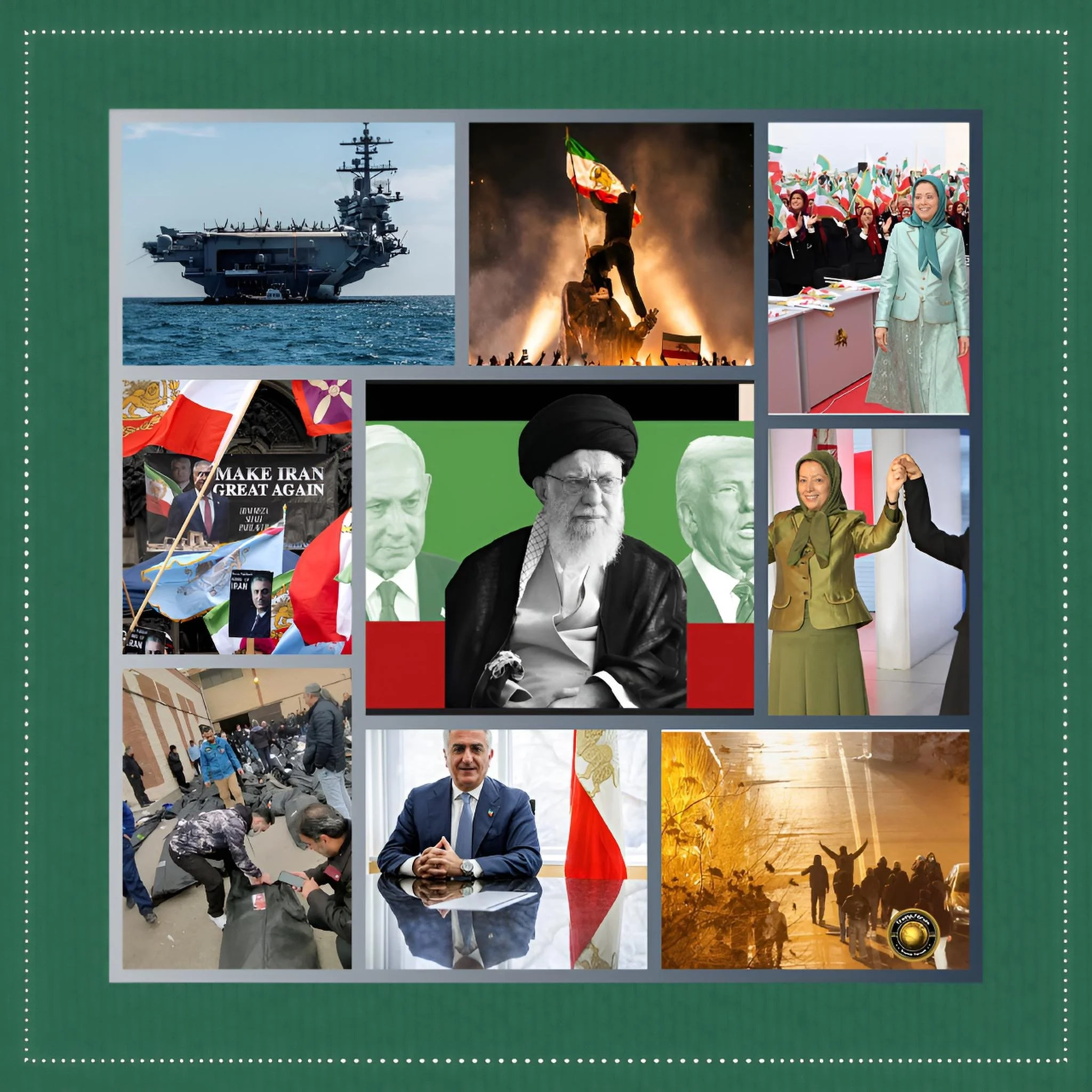
Supreme Leader Ali Khamenei was killed in a strike during the conflict, a development that removed the one figure capable of authorizing strategic decisions and simultaneously created a succession crisis within the Islamic Republic's clerical governance architecture.
Yet the strategic consequences defied the triumphalist narrative emerging from Washington and Tel Aviv. Iran was wounded, but not broken. Its surviving nuclear scientists dispersed to alternate sites.
The Islamic Consultative Assembly formally terminated the JCPOA in October 2025, removing Tehran's last remaining formal constraint on reconstituting its nuclear activities.
Iran's proxy network — already disrupted by the fall of Assad in Syria in December 2024, the degradation of Hezbollah, and the exposure of Tehran's conventional vulnerabilities — remained fractured but unpredictable.
The Houthis in Yemen, who had governed vast territories and demonstrated the capacity for long-range strikes during the Twelve-Day War, became more active rather than less.
Hezbollah, under ceasefire but rearming, resumed missile strikes against northern Israel in early March 2026.
On the economic front, the picture for Iran was catastrophic.
The World Bank projected GDP contraction of 1.7% in 2025 and 2.8% in 2026.
The IMF estimated Iranian consumer price inflation at 42.4% in 2025, with projections exceeding 40% in 2026.
The rial had collapsed to historic lows on the black market, and the snap-back of UN sanctions in October 2025 severed Tehran's remaining access to international finance. While China continued to purchase discounted Iranian oil, even that relationship was under strain.
The economic squeeze created genuine pressure on the Iranian leadership but did not, as Washington may have hoped, translate into public demand for capitulation.
In societies under siege, national pride frequently outpaces economic rationality.
The 2026 Diplomatic Landscape: Maximalism Meets Its Limits
By late February 2026, with a ceasefire from the Twelve-Day War technically in place but strategically hollow, the United States and Iran began a new series of indirect negotiations mediated through Oman.
The first round, held on February 6th, 2026 in Muscat, produced few concrete outcomes.
Secretary of State Marco Rubio expressed pointed skepticism, stating publicly, "I'm not sure you can reach a deal with these guys."
Vice President J.D. Vance expressed frustration that Khamenei's successor, who effectively runs the country, was not participating directly.
A second and third round followed over the next three weeks, with Geneva hosting the most intensive session.
Both sides moved toward a deal, according to subsequent reporting — but the gap between their negotiating positions remained structurally vast.
Washington then escalated its demands dramatically with the submission, via Pakistan, of a fifteen-point proposal on March 24th, 2026.
The terms of this proposal were remarkable not merely for their breadth but for their implicit logic: they resembled not a compromise but a framework for strategic rollback.
The United States demanded a thirty-day ceasefire, the dismantling of Iran's nuclear facilities at Natanz, Isfahan, and Fordow, a permanent pledge to refrain from developing nuclear weapons, the transfer of Iran's enriched uranium stockpile to the IAEA, the cessation of domestic uranium enrichment, limits on Iran's ballistic missile capabilities, the ending of financial and material support for regional allies including Hezbollah, the Houthis, and Hamas, and the reopening of the Strait of Hormuz to free navigation.
Iran's formal response, conveyed on March 25, described the proposal as "one-sided and unfair."
Tehran's position, as articulated through its Foreign Ministry, was that the proposal effectively asked Iran to surrender its defensive architecture in exchange for a vague and unenforceable promise of sanctions relief.
Iranian negotiators noted that there was "still no arrangement for negotiations, and no plan for talks appears realistic at this stage."
Simultaneously, Tehran presented its own five counter-demands, whose details remained partially undisclosed but reportedly included a full cessation of U.S.-Israeli strikes, a formal acknowledgment of Iran's sovereignty, guaranteed and time-bound sanctions relief with banking and trade access restored before any nuclear concessions, the inclusion of Lebanon's security in any ceasefire framework, and an international accounting for Israel's undeclared nuclear arsenal.
On March 27, 2026, President Trump paused American attacks on Iranian energy infrastructure, and his envoy Steve Witkoff signaled that negotiations were "going well."
Iran, simultaneously, denied that any formal negotiations were occurring.
The asymmetry of the messaging itself illustrated the fundamental problem: both sides were engaged in coercive diplomacy — using public statements to shape the other's calculus — rather than genuine confidence-building communication.
The Cause-and-Effect Architecture of the Current Impasse
A Fifteen-Point Demand Is Not a Peace Plan — It Is a Recipe for Endless War
The current deadlock is not merely a product of bad faith, personal animosity, or bureaucratic dysfunction, though all three are present.
It is the product of structural incentives on both sides that reward intransigence and punish compromise.
For Washington, the maximalist fifteen-point proposal reflects several overlapping pressures. Israel, whose own security calculus has driven the military logic of the conflict from Operation Rising Lion onward, demands a permanent resolution of the Iranian nuclear question — not merely a temporary freeze.
Congressional hawks, energized by the degradation of Iranian nuclear infrastructure, see an opportunity to lock in strategic gains that no previous American administration achieved through diplomacy.
And Donald Trump, whose political brand rests on projecting strength and demanding unconditional outcomes from adversaries, finds it structurally difficult to offer Iran the kind of face-saving off-ramp that effective conflict resolution requires.
For Tehran, the structural imperatives are mirror-image versions of Washington's.
A new Supreme Leader, whoever has succeeded Khamenei, faces the need to establish authority and legitimacy by resisting capitulation.
Iran's governing class watched Muammar al-Qaddafi and Saddam Hussein surrender their strategic deterrence programs and then face overthrow — one from military intervention, one from economic and political erosion.
The lesson is not lost in Tehran: states that surrender their ultimate deterrence capabilities are states that lose their ultimate insurance policy against regime change.
Any Iranian leader who accepts the full terms of Washington's fifteen-point proposal would be politically destroyed, domestically, within days of signing.
This is not stubbornness — it is structural political logic.
The cause-and-effect chain is therefore deeply recursive. American maximalism makes Iranian compromise politically suicidal.
Iranian intransigence generates pressure within Washington for further military escalation. Military escalation strengthens nationalist resistance in Iran and hardens the negotiating positions of both sides.
Every bombing raid on Iranian energy infrastructure raises the price of compromise for Tehran while raising the expectation of total victory in Washington.
CNN's Stephen Collinson captured this dynamic accurately in late March 2026: the situation demands Trump "allow an adversary to save face instead of insisting on total capitulation" — a behavioral disposition that is historically foreign to his political instincts.
The Economic Pressure Corridor and Its Limitations
Iran's economic collapse is real, documented, and accelerating.
GDP contraction of nearly 3% projected for 2026, inflation above 40%, a collapsed rial, and the comprehensive severance of Iran from international banking networks create conditions that, in theory, should generate internal pressure for a negotiated resolution.
The ordinary Iranian citizen faces rising food prices, collapsing purchasing power, persistent unemployment, and the psychic burden of living in a state perpetually at war.
Yet the historical record offers a powerful corrective to the assumption that economic pain automatically translates into political concession.
Cuba has endured six decades of American sanctions without fundamental regime change. North Korea has sustained a nuclear weapons program under conditions of near-absolute economic isolation.
Iraq endured the most comprehensive sanctions regime in modern history throughout the 1990s without Saddam Hussein surrendering his ambitions, though he had no active weapons program by that period.
Iran's governing class has demonstrated, repeatedly, the capacity to insulate itself from economic privation while allowing that privation to fall disproportionately on the civilian population.
The revolutionary ideology of the Islamic Republic explicitly valorizes resistance — sumood — as a moral virtue, rendering economic suffering not merely tolerable but politically legible as proof of American hostility.
This does not mean economic pressure is useless. It means that economic pressure, to function as genuine diplomatic leverage, must be paired with a credible, enforceable, and attractive offer — one that gives Tehran's leadership a path to economic relief that does not require surrendering everything it has built over forty years of strategic investment.
The fifteen-point proposal, in its current form, does not provide that path.
Toward a Sensible Compromise: The Architecture of an Exit Plan
From Natanz to Muscat: How a War Built From Miscalculation Must End Through Compromise
What would a sensible compromise actually look like?
The answer requires accepting two uncomfortable realities simultaneously: first, that the United States has achieved significant but not total military gains that cannot easily be consolidated into permanent strategic outcomes without Iranian political cooperation; and second, that Iran retains meaningful leverage — over regional stability, over energy markets, over the political cohesion of American allies — despite the degradation of its military and nuclear infrastructure.
A credible diplomatic framework would be structured around several interlocking principles.
The first principle is asymmetric mutual restraint rather than total disarmament.
The United States cannot realistically demand that Iran permanently and completely dismantle its enrichment infrastructure, transfer all enriched uranium, and abolish its missile program simultaneously.
These demands, individually, each represent a core strategic asset that Iran will not surrender without ironclad guarantees that Washington has never been willing or legally able to provide.
What Washington can realistically achieve is a verified, monitored, and enforceable cap on enrichment at levels that preclude weaponization — the original logic of the JCPOA, refined with more robust inspection protocols, shorter timelines to detection, and stronger automatic snapback mechanisms.
This is not appeasement. It is the logic of arms control.
The second principle is sequenced, verifiable sanctions relief tied to specific, measurable nuclear benchmarks.
Iran's central demand is not the preservation of enrichment as an abstract right — it is the restoration of economic normalcy that allows Iranian governance to function and deliver basic services to its population.
The failure of the JCPOA was partly that sanctions relief came slowly, unevenly, and remained vulnerable to unilateral American reversal.
A credible successor framework must include automatic, multilaterally guaranteed sanctions relief triggered by verified Iranian compliance, with banking access, trade normalization, and oil market reintegration proceeding in staged tranches as each benchmark is met.
The third principle is the institutionalization of regional security dialogue. Iran's regional proxy network is not merely an offensive capability — it is Tehran's strategic insurance against encirclement and invasion.
Asking Iran to end support for regional allies without providing alternative security guarantees is, from Tehran's perspective, asking it to disarm unilaterally in a landscape where Israel possesses nuclear weapons and the United States maintains permanent military infrastructure across the Gulf.
A durable exit plan must include a parallel process — perhaps under the institutional umbrella of the United Nations, or through a dedicated regional security framework involving Turkey, Qatar, Oman, and Saudi Arabia — that addresses the fundamental security anxieties driving Iranian proxy strategy.
The fourth principle is face-saving narrative management for both sides. President Trump requires a victory narrative that is both politically credible and substantively real.
The degradation of Iran's nuclear program — the destruction of Natanz, the killing of senior IRGC commanders, the demonstrated capacity to penetrate Iran's air defenses — provides that narrative.
A settlement that locks in verified constraints on Iranian nuclear development, while framed as a diplomatic culmination of military success, would allow Trump to claim, truthfully, that American power achieved what diplomacy alone could not.
Iran's surviving leadership, whoever emerges from the post-Khamenei succession, requires a framework that validates Iran's sovereignty, preserves its right to civilian nuclear energy, and provides tangible economic relief without demanding public capitulation.
These narratives are not mutually exclusive — they are the essential architecture of any durable settlement.
The Stakeholders Who Will Shape the Outcome
Iran Will Not Capitulate, and America Cannot Occupy: The Logic of the Off-Ramp
The bilateral American-Iranian dynamic, though central, does not exhaust the landscape of relevant stakeholders.
Multiple external stakeholders will influence whether an exit plan emerges or whether the conflict deepens into a prolonged war of attrition.
Israel is the most consequential external stakeholder. Israel's strategic objective in the Twelve-Day War and its aftermath has been the permanent elimination of Iran's nuclear weapons capability — not merely its delay.
Israeli Prime Minister Benjamin Netanyahu and the Israeli security establishment have invested enormous political capital in the proposition that Iran's nuclear program must be physically destroyed, not merely negotiated into dormancy.
Any American-Iranian deal that preserves even a residual enrichment capability will face fierce Israeli opposition.
Washington must manage this relationship carefully, offering Jerusalem binding security guarantees while making clear that an endless war against Iran is not in the American national interest.
Russia and China represent a second critical tier of stakeholders.
Both states have maintained economic relationships with Iran through the sanctions period — Russia through arms and energy cooperation, China through discounted oil purchases — and both have strategic incentives to resist a unilateral American resolution that consolidates Washington's regional dominance.
However, both states also have interests in preventing further nuclear proliferation and regional destabilization.
A multilateral diplomatic process that includes Moscow and Beijing — perhaps through a revived P5+1 or successor framework — would be more durable than a bilateral American-Iranian deal and more resistant to future unraveling.
The mediating states — Oman, Pakistan, Turkey, Qatar — represent a third critical layer. Muscat has served as the quiet channel for American-Iranian communication through multiple administrations.
Pakistan's willingness to transmit the fifteen-point proposal demonstrated both its desire for regional stability and its leverage with both parties.
Turkey and Qatar, whose prime minister visited Tehran ahead of the initial 2025 negotiations, have their own interests in a stable Gulf that does not require choosing sides.
These mediating capitals are not passive message relays — they are active stakeholders with the capacity to shape the terms of any emerging framework.
The Future Strategic Landscape: Scenarios and Their Implications
Washington's Maximalist Demands Are Closing the Last Door to Peace With Iran
The current trajectory offers three plausible futures, distinguished by their probability and their consequences.
The first scenario is a negotiated deescalation grounded in realistic mutual concessions.
This scenario requires both Washington and Tehran to abandon their maximalist public positions, accept a framework that delivers each side roughly 60% of its stated objectives, and institutionalize that framework within a multilateral verification architecture that limits the vulnerability to unilateral American withdrawal.
This is the scenario that analysts at the Globalist, Foreign Policy, and multiple diplomatic institutions have identified as the only path that avoids producing more instability than it resolves.
It is also, as of late March 2026, the least politically visible scenario, given the maximalism of current public positions on both sides.
The second scenario is a prolonged war of attrition with no clear military resolution.
This scenario, which Al Jazeera's analysis from March 2026 suggested the "decapitation" strikes had already initiated, involves Iran activating its surviving proxy network — including Hezbollah's residual missile capabilities, the Houthis' demonstrated capacity for maritime disruption, and any reconstituted Shia militia infrastructure in Iraq — to impose costs on American and Israeli interests across the region.
Iran cannot defeat the United States militarily. But it can impose costs sufficiently severe to erode American domestic political support for continued conflict, constrain global oil markets, and generate a regional security environment that destabilizes every Gulf monarchy simultaneously.
This is not victory for Iran — it is a managed catastrophe. But managed catastrophe has been Iran's chosen instrument before.
The third scenario is regime collapse followed by strategic chaos.
This is the scenario that some maximalist voices in Washington and Tel Aviv have, at least implicitly, entertained.
The removal of Khamenei, the degradation of the IRGC, and the economic collapse of the Iranian state might, in theory, produce a political implosion that opens the door to regime change.
The historical evidence against this scenario is overwhelming.
The removal of Saddam Hussein produced not democratic transformation but sectarian war, Iranian regional expansion, and the eventual emergence of the Islamic State.
The overthrow of Qaddafi produced not liberal governance but a failed state, a humanitarian catastrophe, and a power vacuum filled by competing militias and foreign interventionists.
An Iranian state collapse would not be a smaller version of these disasters — it would be larger, more complex, and geographically proximate to the world's most critical energy infrastructure.
A Note on the Strait of Hormuz and Global Energy Stakes
Time Is Running Out: Why the Spring of 2026 May Be Iran Diplomacy's Last Chance
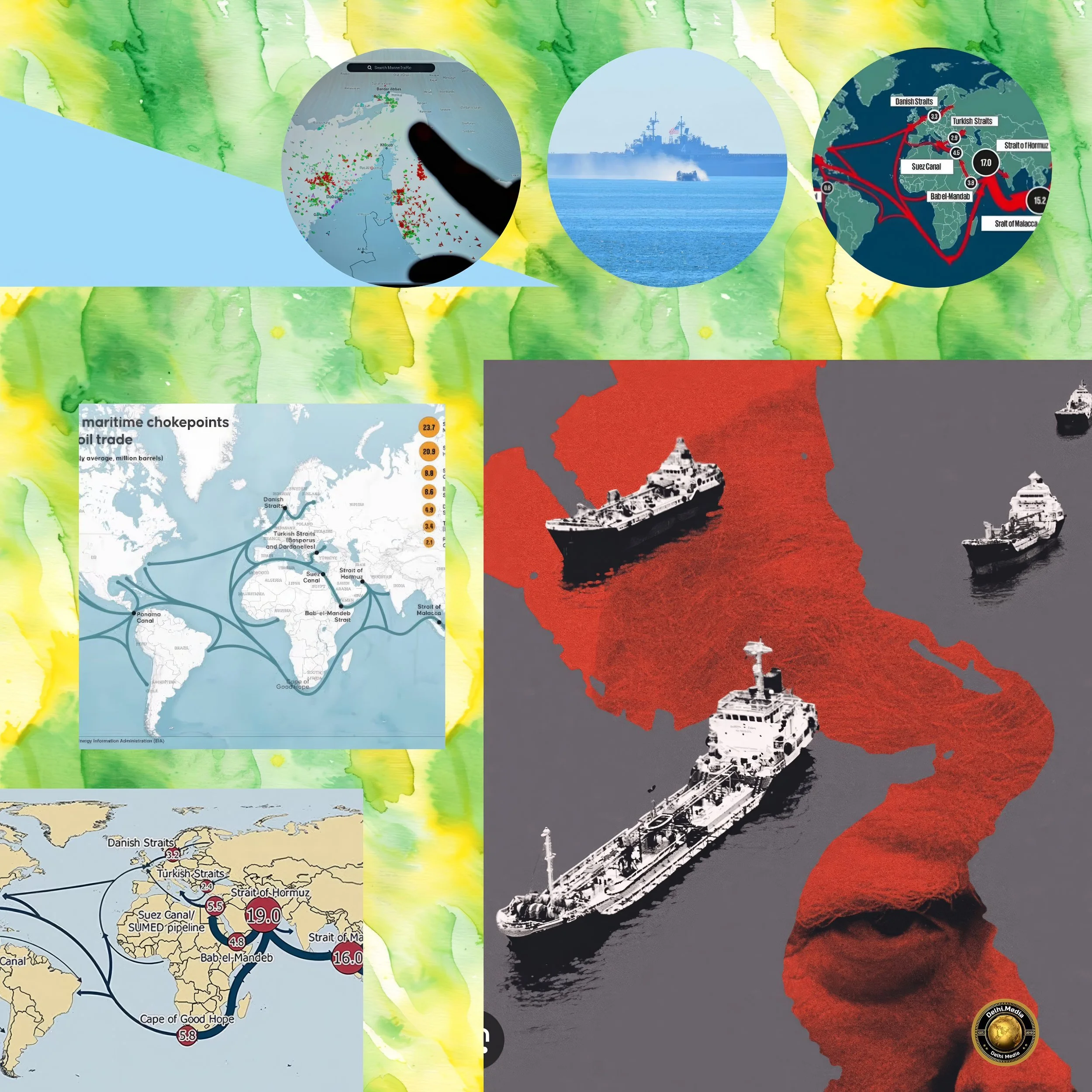
The inclusion of Strait of Hormuz reopening in Washington's 15 point proposal is, in microcosm, a symbol of how the conflict has evolved beyond its initial framing.
When hostilities began in late February 2026, the Strait was open.
Four weeks later, it had become a central demand in ceasefire negotiations.
Approximately twenty-one million barrels of oil pass through the Strait daily — roughly twenty% of global petroleum liquids.
Any sustained Iranian interdiction of that traffic would trigger a global energy shock of a magnitude not seen since the 1973 oil embargo.
Brent crude prices had already responded to the conflict's escalation, and global shipping insurance rates in the Gulf had risen sharply.
The economic stakes of the American-Iranian confrontation extend far beyond the two parties and impose powerful structural incentives on every energy-importing economy in the world — including China — to support a rapid diplomatic resolution.
Conclusion: The Window Is Narrow, Not Closed
America's Iran War Has No Ending Without a Deal That Lets Both Sides Win With Dignity
The United States and Iran are, in the spring of 2026, two parties locked in a conflict whose military logic has outrun its political rationale.
Washington has degraded Iran's nuclear infrastructure and killed its supreme leader — genuine strategic achievements that no previous administration accomplished.
But achievements are not outcomes.
The question before American policymakers is not whether they have won militarily but whether they can translate military gains into a durable political settlement before the window for such a settlement closes.
That window is narrow. Iran's post-Khamenei leadership is still consolidating power, which creates both a risk — that hardliners will reject any compromise as treason — and an opportunity, in that new leadership is not personally invested in the positions of the previous order.
Economic desperation creates incentives for a deal, provided the deal is genuinely attractive.
The mediating states — Oman, Pakistan, Turkey, Qatar — retain communication channels that have not been severed.
And President Trump, whatever his rhetorical maximalism, has demonstrated in his political career a capacity for transactional deals that his public posture would never suggest.
The lesson from Iraq and Libya is not that America is powerless. It is that power without a political endgame produces chaos, not order.
The lesson from the JCPOA is not that diplomacy is naive — it is that diplomacy without durability is temporary.
The exit plan that will actually work is one that gives Iran sovereignty, economic relief, and a civilian nuclear future without weapons capability; gives the United States verified, enforceable constraints and a narrative of strategic success; gives Israel binding security guarantees and a permanently diminished Iranian nuclear threat; and gives the region a multilateral security framework that replaces the destabilizing hub-and-spoke proxy architecture of the past four decades.
This is achievable. It has not yet been attempted with the combination of political will, realistic objectives, and genuine mutual respect for the other side's red lines that such an effort requires.
There is still time. But time, in the arithmetic of war, is the one resource that diminishes with every passing day.