Trump's Iran Problem — When Big Threats Stop Working- Beginners 101 Guide Trumps Failing Red Lines
Executive Summary
The United States and Iran are at war in 2026.
American warplanes have bombed Iran's most important oil island, and thousands of United States Marines are sailing toward one of the world's most important waterways.
Oil prices have shot up dramatically, and the world is holding its breath.
But many experts are asking a simple question: does America's president actually mean what he says?
Introduction: The Boy Who Cried Wolf
Imagine a school bully who tells everyone, "If you cross this line, I'll punch you."
The first time he says it, everyone is scared. But if, time after time, he draws a new line and never actually punches — people start to cross the line without fear.
This is, in very simple terms, what experts mean when they talk about "red lines" in international politics.
Back in 2013, President Barack Obama said that if Syria used poison gas on its own people, America would attack.
Syria used poison gas. America did not attack. Donald Trump, then a private citizen, called it a disaster.
Now Trump is president — and critics say he is making the exact same mistake, just louder.
History: How We Got Here
For years, Trump warned Iran to stop trying to build a nuclear bomb. In February 2026, he gave Iran a ten-to-fifteen-day deadline: make a deal, or else. Iran did not make a deal.
Trump waited, threatened some more, and then on February 28, 2026, American and Israeli warplanes attacked Iran together.
Iran fought back. It sent more than one thousand drones at neighboring countries like Saudi Arabia and Kuwait.
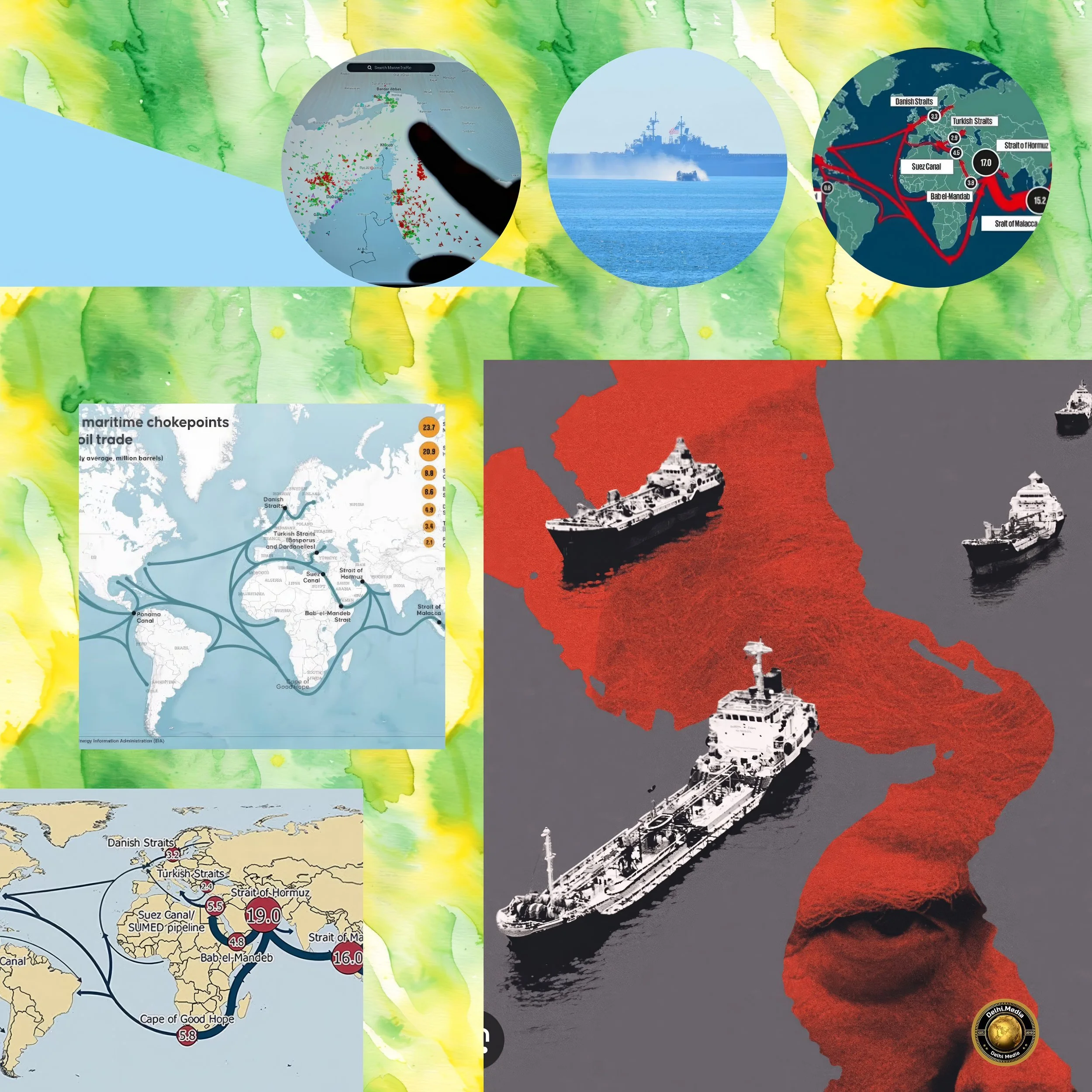
It started attacking oil ships in the Strait of Hormuz — a narrow waterway the size of a few city blocks through which about 20% of the world's oil travels every day.
By early March, nearly 90% of normal shipping through the Strait had stopped.
What Happened at Kharg Island
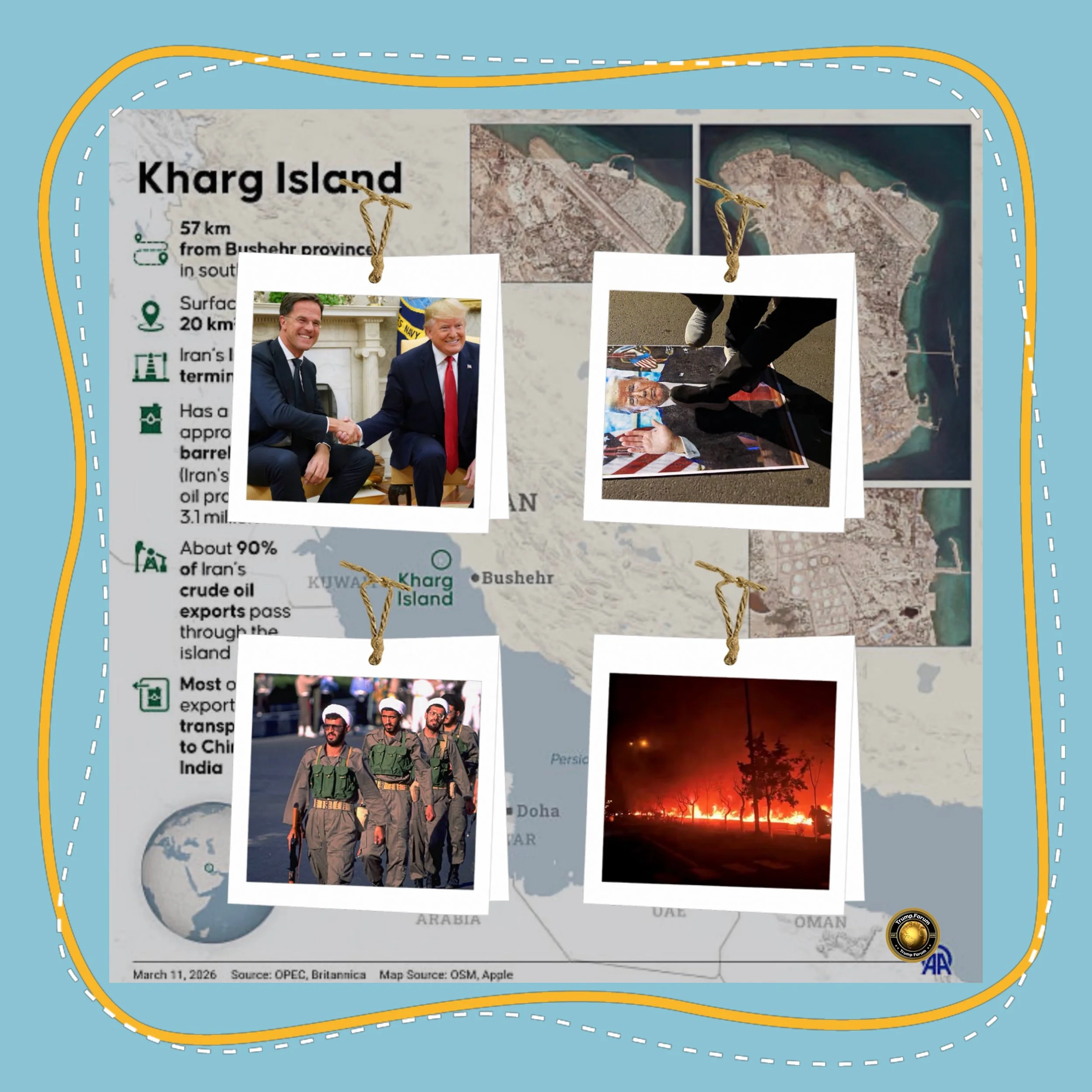
On the night of March 12–13, 2026, American forces bombed Kharg Island.
Think of Kharg Island like a giant gas station: about 90% of all Iran's oil exports leave through this tiny island, only twenty miles from Iran's coastline.
Trump posted a video on social media and said America had "totally obliterated" military sites on the island while leaving the oil pumps standing — for now.
Two days later, he said America might hit the island again "just for fun."
A week after that, he threatened to destroy Iran's power stations if Iran did not stop blocking oil ships.
Each new threat was bigger than the last. This is like a parent saying: "Stop fighting or there will be no dessert. Okay, no TV. Okay, no going outside."
The child starts to realize the parent keeps changing the punishment and never actually delivers it.
The Marines and the Big Question
The Pentagon sent around 2,500 Marines on ships toward the Strait of Hormuz in mid-March, then sent another 2,500 more a week later.
Military analysts started asking: are they planning to actually land on Kharg Island and take it?
That would be extremely dangerous. Iran has been turning the island into a fortress — laying sea mines, parking missiles, building defenses.
Experts at MIT say seizing the island, just twenty miles from a country with thousands of missiles and drones, "would be militarily challenging."
One former Pentagon official compared it to what happened in Iraq: you can destroy a country's infrastructure, but then you have to live with the broken country afterward.
Iran Prepares — and Fights Back With Images Too
Iran is not just preparing militarily. It is also fighting an information war — a battle of stories and videos and messages designed to shape what people believe.
Iran's military releases videos of drone attacks. When asked who is winning, both sides release footage designed to make themselves look strong and the enemy look weak.
Iran can produce about 10,000 drones per month.
It also has an estimated six thousand sea mines it could lay in the Strait of Hormuz. You do not need to sink every oil tanker to win this kind of fight.
You just need to scare the insurance companies enough that ships stop sailing — and that is exactly what happened. Companies like Maersk stopped sending ships through the region entirely.
The Cost the World Is Paying
Before the conflict started, a barrel of oil cost roughly $55. By March 2026, it had shot past $120.
The International Energy Agency warned this could be "the largest disruption in the history of the global oil market."
For ordinary people in India, Europe, and the United States, this means higher prices for petrol, gas, and almost everything that gets delivered by truck or ship. The longer the conflict continues, the worse it gets.
The Deeper Problem: When Threats Lose Their Power
The fundamental problem — whether it is Obama in 2013 or Trump in 2026 — is this: what happens after you say "I will do this terrible thing," and then do not do it?
The answer, in international politics, is that the next threat is worth less than the previous one. Enemies become bolder.
Allies become nervous. And the president is trapped: either escalate to a genuinely catastrophic level, or back down and look weak.
As of late March 2026, Trump was simultaneously negotiating with Iran and sending more troops, threatening to destroy power stations while announcing "productive talks."
Iran was simultaneously fortifying Kharg Island and communicating through back channels.
CNN concluded that "both Iran and the US need the war to stop now. But neither can."
This is the trap that red lines build: once drawn publicly, they are almost impossible to erase gracefully — and the cost of that impossibility is paid not by the politicians who drew them, but by the ordinary people who pay $120 for a barrel of oil.