When Words Don't Work: The Simple Truth About America's Hormuz Problem- Beginners Guide to America’s Misleading Promises
Executive Summary
The United States said its Navy was escorting oil ships through the Strait of Hormuz. It wasn't.
That one mistake, quickly deleted, showed a bigger problem: America has been making big promises about this crisis that it hasn't been able to keep, and the world is paying attention.
Introduction
Imagine you are stuck in traffic because a major highway is blocked. The traffic authority keeps announcing that the road will be cleared "soon" and "as soon as possible" — but the road stays blocked.
After a while, you stop trusting the announcements and start making your own plans. That is roughly what is happening right now with the Strait of Hormuz — one of the most important shipping lanes in the entire world.
The United States and Israel began military strikes on Iran on February 28th, 2026.
Very quickly, oil tankers stopped sailing through the strait, because ship owners were afraid their vessels would be attacked.
This matters enormously because roughly 20% of all the world's oil and gas moves through that narrow waterway. Think of it as the world's most important oil pipe — and right now it is effectively closed.
History and Current Status
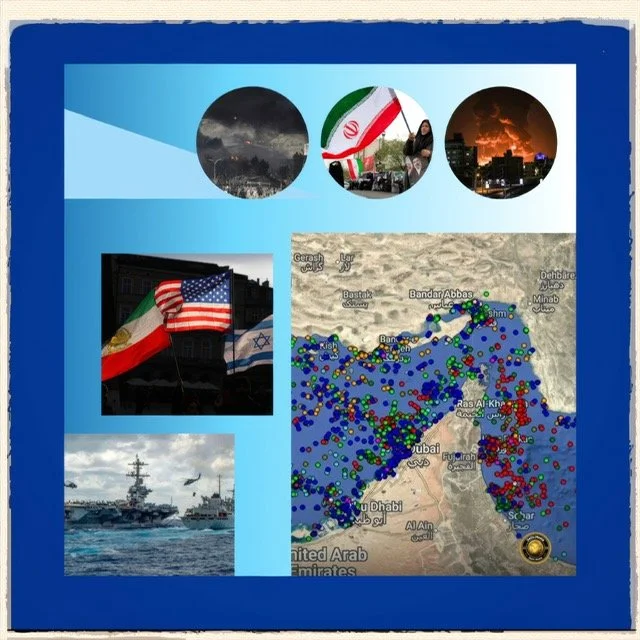
The Strait of Hormuz is a narrow passage of water between Iran on one side and Oman on the other. It is only about 20.5 mile wide at its narrowest point, but more oil passes through it than through any other single route on earth.
Countries like Japan, South Korea, India, and many European nations depend on it to receive the energy that powers their economies.
This is not the first time it has been dangerous. In the 1980s, during the Iran-Iraq war, both countries were attacking oil tankers in the Persian Gulf.
The United States eventually sent Navy ships to escort tankers safely through. That worked — not because America made announcements, but because it actually deployed ships and did the job.
Today, the International Energy Agency (IEA) says the current disruption is the largest oil supply shock ever recorded, with approximately 8 million barrels per day expected to be lost in March 2026 alone.
To put that in perspective, the United States uses about 20 million barrels per day. Losing 8 million bpd from global supply is like suddenly losing the fuel for a very large chunk of the world economy.
Key Developments
On March 3rd, President Trump said the U.S. Navy would escort tankers through the strait "if necessary."
The Pentagon said the same day it had no such plans. That gap between what the president said and what the military was actually doing became a pattern.
Then came the big mistake. On March 10th, Energy Secretary Chris Wright posted on social media that the U.S. Navy had "successfully escorted an oil tanker through the Strait of Hormuz."
This was exciting news — exactly what markets and the world had been waiting for. Within minutes, oil prices fell nearly 17%.
To put that in simple terms: when the price of oil drops 17% in a day, it saves consumers and businesses enormous amounts of money, but it also means the people who own oil lose that value almost instantly.
Then the post was deleted. The White House said it was not true — no tanker had been escorted.
The Department of Energy said a staffer had made a mistake with the caption. Oil prices recovered somewhat, but closed the day still down nearly 12%.
The false announcement had moved markets more powerfully than almost any real event could have. The world had believed it because everyone was so desperate for good news.
Treasury Secretary Scott Bessent then appeared on Sky News and said the Navy would escort ships "as soon as it is militarily possible." That phrase — "as soon as it is militarily possible" — sounds reassuring. But it is actually saying very little.
It is like a plumber saying "I will fix your pipe as soon as it is practically possible." It means: not yet, and I cannot tell you when.
Latest Facts and Concerns
The most urgent new development concerns a small island called Kharg Island. Located in the Persian Gulf off Iran's coast, it handles approximately 90% of Iran's oil exports.
Think of it as Iran's main economic lifeline.
On March 13, U.S. warplanes bombed more than 90 military targets on the island but deliberately left the oil facilities untouched. Trump said the oil infrastructure was spared "for reasons of decency."
Now, reports say the U.S. is considering sending troops to physically take control of the island.
Thousands of Marines and Navy personnel have been deployed to the region, including large amphibious assault ships designed for exactly this kind of operation.
Iran, in turn, has been preparing. Intelligence reports show Iran has laid mines around the island, brought in additional soldiers, and strengthened its air defenses.
Each side is preparing for something neither may want to actually start.
On the alliance side, 22 countries — including many NATO members plus Japan, South Korea, and Australia — announced they were working together to help secure the strait.
NATO Secretary General Mark Rutte said they were all "coming together."
But when reporters asked when ships would actually be deployed, the answer was that the timing was still "being worked through."
A plan without a date is still just a plan.
European governments have been especially cautious. Germany said the conflict "does not pertain to NATO." Britain said any Hormuz mission would not be a NATO operation.
These allies have not refused to help entirely, but they have made clear they are watching what America actually does, not just what it says.
There is also a major problem with false information. Iran's state media has been sharing old photos and even video game footage pretending they are real battle images.
At least 18 false claims from Iranian media were documented since the war began.
But the other side has problems too. Hundreds of posts on X spread misleading content about the conflict, including a video seen by more than 4 million people that showed missiles over Dubai — but was actually footage from a 2024 attack on Tel Aviv.
When everyone is confused about what is true, it becomes very hard for governments, businesses, and ordinary people to make good decisions.
Cause-and-Effect Analysis
The pattern here is straightforward.
The U.S. government has been saying things will happen before they have happened. This is understandable — it wants to calm markets and project strength. But when the things don't happen as promised, people stop trusting the next announcement.
Think of it like the boy who cried wolf, but in reverse — this is the boy who cried "wolf is gone!" when the wolf was still there. After a few rounds of that, when the wolf actually does leave, no one believes the announcement.
The effect on Iran is also real. If Iran's leaders truly believed the U.S. was about to launch a major operation, they would most likely start negotiating. Instead, they are building up defenses and laying mines.
That suggests Iran thinks the threats are mostly talk. Whether or not that assessment is correct, it reduces the chance of a quick diplomatic resolution.
Future Steps
There are really three ways this could go.
First, the 22-nation coalition actually deploys ships, mines are cleared, and tankers start moving again — a genuine, physical reopening of the waterway.
Second, the United States carries out some form of operation at Kharg Island, either a blockade or a military seizure, which forces Iran to negotiate.
Third — and this is the scenario markets worry about most — nothing decisive happens for weeks or months, the economic damage keeps building, and energy prices stay high around the world.
Whichever way it goes, the lesson is the same. The strait will not reopen because of an announcement.
It will reopen because ships are actually escorted through it, mines are actually cleared, and a real military or diplomatic agreement is actually reached.
Until that happens, the world's most important oil route remains closed, and the gap between what Washington says and what Washington does remains the most important story in global energy.
Conclusion
The Strait of Hormuz crisis has a simple lesson at its heart, one that any child understands from everyday life: saying you will do something is not the same as doing it.
When you tell a friend you will pick them up at 8 a.m. and you don’t show up until noon, they stop trusting your time estimates.
When you don’t show up at all, they stop calling you for a ride.
The Trump administration is facing exactly that kind of trust problem, but on a global scale, with oil prices, allied governments, shipping companies, and adversaries all watching.
Energy Secretary Wright’s deleted post on March 10th was not just an embarrassing mistake — it was a window into a deeper pattern of governing by announcement, of declaring things into existence and hoping reality catches up before anyone notices the gap.
The good news is that credibility, once lost, can be rebuilt. It just cannot be rebuilt with words. It can only be rebuilt with actions — ships actually in the water, mines actually cleared, tankers actually moving.
The 1980s Tanker War ended not when America announced it would escort ships, but when American sailors physically stood on the decks of those ships as they passed through. That is the standard the current moment demands.
For ordinary people around the world — the factory worker in Germany whose energy bill has doubled, the farmer in India whose fuel costs have risen sharply, the family in Japan paying more for heating — the resolution of this crisis is not an abstraction.
It is a matter of household economics.
They do not care about the press conferences.
They care about whether the oil flows.
Until it does, empty words will not open the strait.