Why Iran Wants Oil Paid in Chinese Currency at the World's Most Critical Oil Passage - Beginner's Guide to Petrodollars and the Hormuz Strategy
Executive Summary
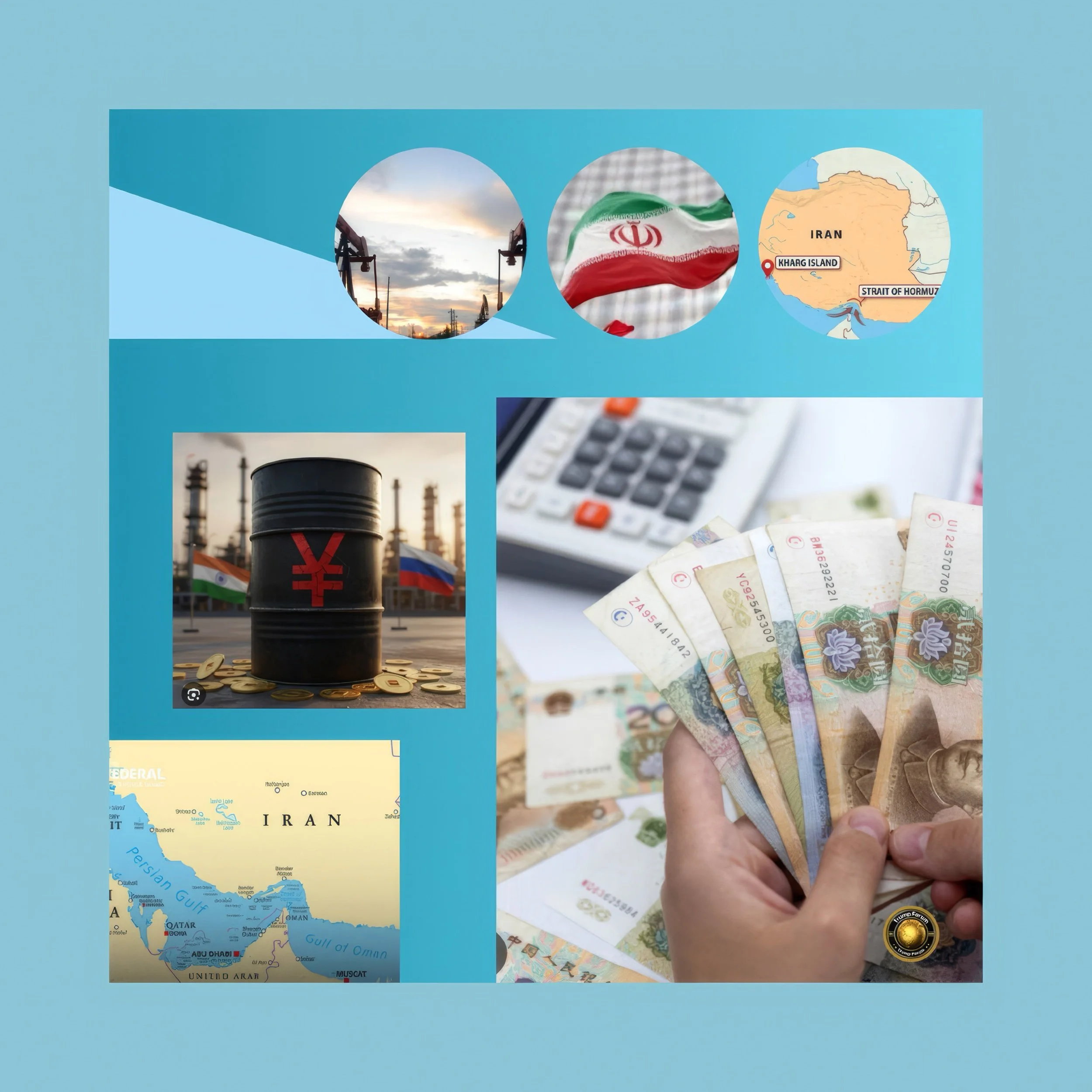
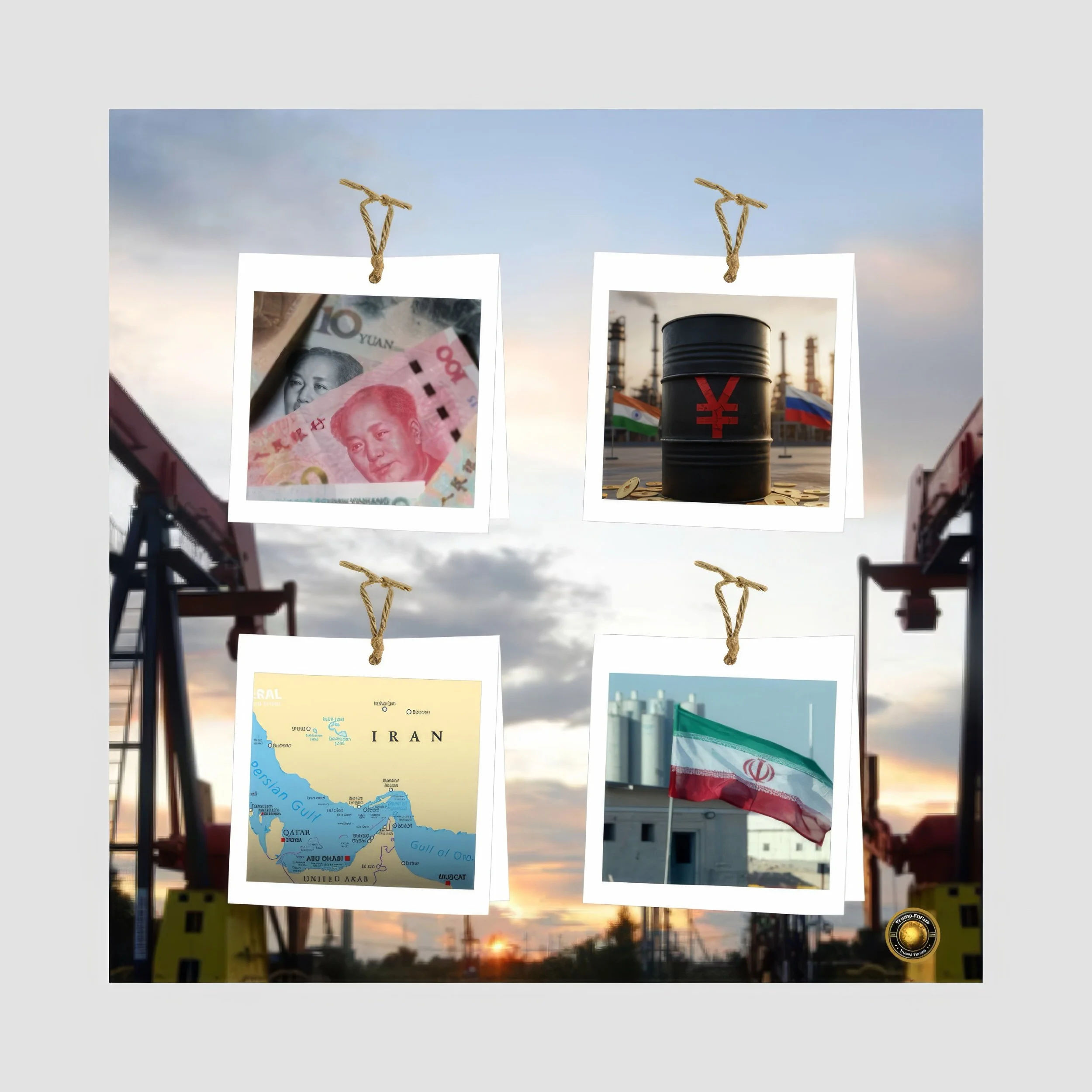
In March 2026, Iran said it might let oil tanker ships pass through the Strait of Hormuz — one of the most important sea passages in the world — but only if the oil is paid for in Chinese yuan, not US dollar.
This is a huge deal. For about 50 years, almost all oil in the world has been bought and sold using American dollar.
Iran's condition is a direct challenge to that system.
If it works, it could change how money flows around the entire world.
Introduction
Why Does a Narrow Sea Lane Matter So Much?
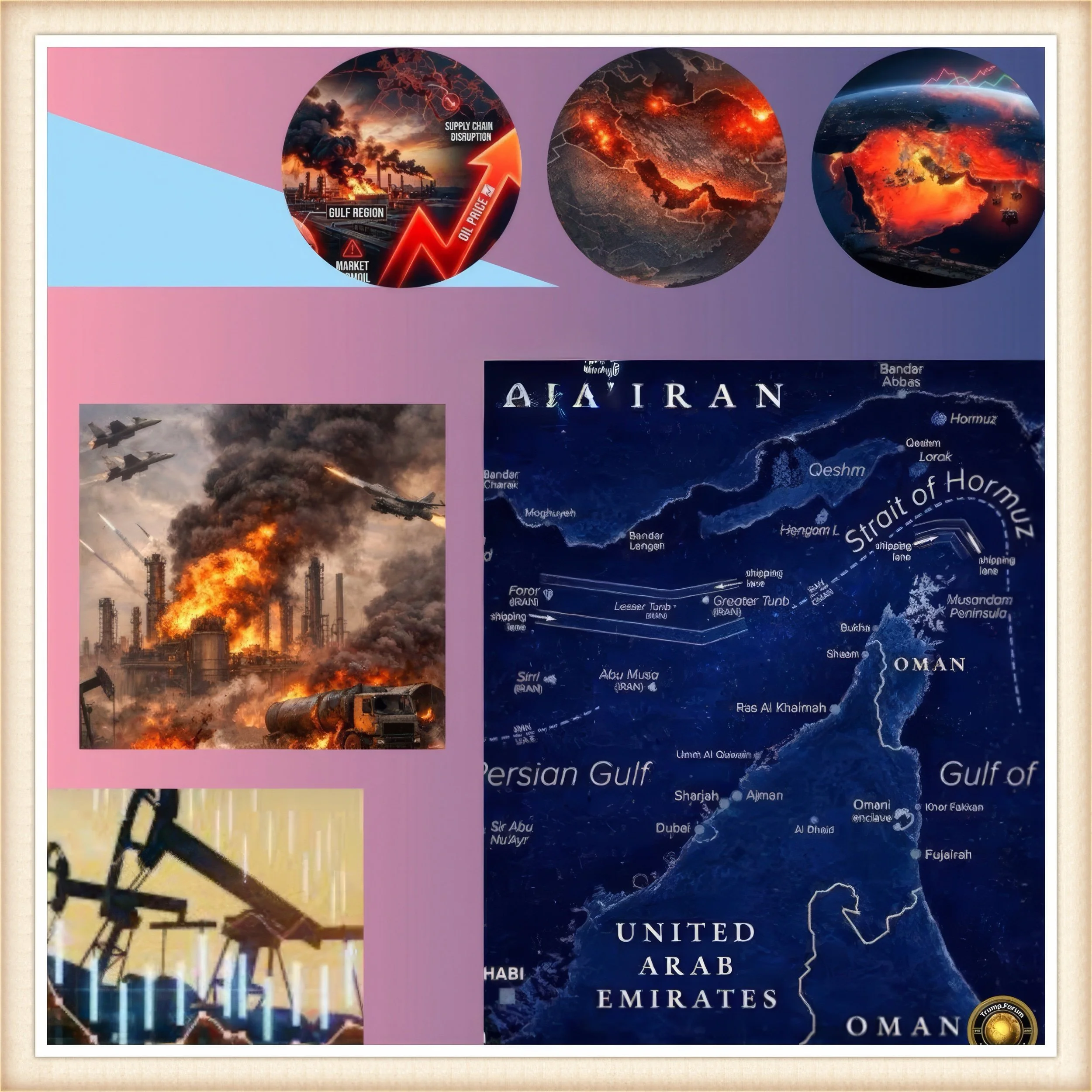
Imagine a hallway so narrow that only a few people can walk through at a time, and almost every drop of oil in the Middle East has to pass through that hallway to reach the rest of the world. That is the Strait of Hormuz.
Every day, about 20 million barrels of oil pass through this narrow stretch of water between Iran and Oman. That equals roughly 1 in every 5 barrels of oil used anywhere on the planet.
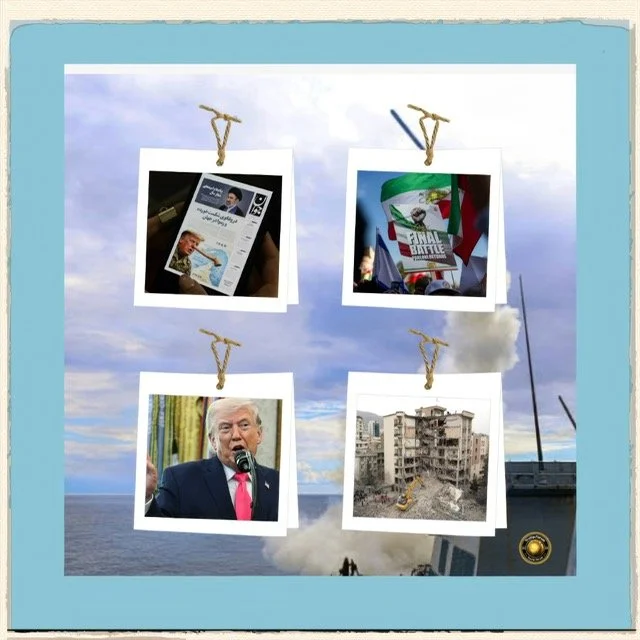
Since a war broke out between Iran, Israel, and the United States, this passage has been largely shut down.
Oil prices have already jumped by about 20% since the conflict started, and experts say that if the strait stays closed for even 2 weeks, the price of a barrel of oil could hit $100.
Against this backdrop, Iran made a startling announcement: oil tankers may be allowed through, but only if buyers pay in Chinese yuan instead of American dollar.
The History of Why Oil Is Sold in Dollars
To understand why Iran's proposal is so significant, we need to go back to the 1970s. After World WarII the world agreed that all currencies would be linked to the US dollar, and the dollar would be linked to gold.
The United States was rich, stable, and powerful, so this made sense.
But in 1971, US President Richard Nixon said the dollar would no longer be backed by gold.
This made oil-producing countries nervous because they were being paid in a currency that was losing value.
Then in 1973, Arab nations stopped selling oil to the United States as punishment for supporting Israel in a war.
Oil prices quadrupled almost overnight, causing huge economic pain across the world.
Out of this crisis came a secret deal. In 1974, the United States and Saudi Arabia quietly agreed that Saudi Arabia would sell all its oil in US dollar only.
In return, America would protect Saudi Arabia militarily and buy its weapons.
This deal — called the petrodollar agreement — soon spread to all OPEC oil-producing nations.
From that point forward, if you wanted oil anywhere in the world, you had to have US dollar.
This meant every country had to keep large piles of dollar in reserve, which made the dollar the most important currency on Earth.
This gave America enormous financial power.
Think of it like owning the only store in a town — everyone has to come to you. America could borrow money cheaply, pay for big armies, and use dollar-based punishments called sanctions to hurt other countries economically.
This 50-year deal expired in June 2024 when Saudi Arabia chose not to renew it.
Saudi Arabia said it would now also accept yuan, Euro, and digital money for oil.
China had become Saudi Arabia's biggest oil customer, and Saudi Arabia joined the BRICS group of big emerging economies.
So the old rules started changing.
What Iran and China Have Been Building Together?
While the world was watching other news, Iran and China were quietly building an entirely new financial system for buying and selling oil — one that does not need the US dollar.
China buys approximately 90% of all oil that Iran sells.
That is a massive amount.
And since the United States has blocked Iran from using normal international banking, China helped Iran set up a secret payment network — reportedly called "Chuxin" — that lets China pay Iran in yuan through back channels completely outside of US control.
China has also built a banking messaging system called CIPS — think of it as an alternative to the SWIFT bank messaging system that the US can control.
China is also testing a digital yuan currency on a special platform called mBridge that some Middle Eastern central banks are exploring.
All of this means that the pipes needed to replace the $ in oil trading are being built, tested, and increasingly used.
In 2021, Iran and China also signed a 25-year cooperation agreement worth $400 billion, covering oil, infrastructure, and technology.
This basically means China agreed to be Iran's biggest economic partner for a generation, and in return Iran sells China oil at discounted prices — all outside the dollar system.
What the Yuan Condition Actually Means
Think of it this way. Imagine you run a highway and you tell truck drivers: "You can use this road, but you can only pay the toll in Chinese money, not American money." That is exactly what Iran is proposing for oil tankers at the Strait of Hormuz.
If tankers comply, it means oil is officially being traded in yuan at the world's most important energy chokepoint. Every tanker that pays in yuan instead of dollar is another small chip out of the wall of dollar dominance.
Over time, if more and more oil trades happen in yuan, the world needs fewer dollar reserves, demand for the dollar drops, and America's special financial privilege begins to shrink.
Here is a concrete example. Japan imports most of its oil through the Strait of Hormuz.
If Japan's oil company has to pay in yuan to get that oil through, then Japan needs yuan reserves, not just dollar reserves.
This quietly shifts the global demand for currencies from dollar to yuan — without any dramatic announcement or policy change.
The Effects on the United States and the World
For the US, the consequences are both short-term and long-term. In the short term, the closure of Hormuz and rising oil prices push up inflation inside America, making everyday goods like petrol, food, and airline tickets more expensive.
If oil stays expensive for a long time, the Federal Reserve — America's central bank — has to choose between keeping inflation under control or keeping the economy growing. That is a very painful choice.
In the longer term, if the yuan gradually takes over oil trading from the dollar, America's ability to borrow cheaply weakens.
Remember, the petrodollar system meant that oil-producing countries took their dollar and bought US government bonds. This gave America cheap loans to fund its military, hospitals, and schools.
If fewer dollar come back to America through oil recycling, the government has to pay higher interest rates to borrow, which means less money for everything else.
For developing countries in Asia, Africa, and Latin America, the shift has mixed effects.
On the positive side, using yuan instead of dollar means less exposure to US sanctions and more choices.
But it could also mean replacing one form of dependency with another — China's yuan is not freely exchangeable, and Chinese economic influence comes with its own political strings.
For China, this situation is a gift. Every time a barrel of oil is priced in yuan, Beijing's global financial power grows.
China is the world's largest oil importer, and it has long hated being forced to buy oil in a currency its rival controls.
The Hormuz yuan condition, if even partially implemented, would validate years of Chinese investment in alternative financial infrastructure.
Future Steps: What Comes Next?
The most critical near-term question is whether Iran and China can actually make their yuan payment system work on the ground at Hormuz.
If even a small number of tankers successfully pass through using yuan settlements, it creates a real-world template others can copy.
Over the next few years, the key things to watch are whether Saudi Arabia fully accepts yuan for oil payments, whether Gulf central banks join China's mBridge digital currency platform, and whether CIPS grows enough to handle large volumes of oil trade.
If all 3 of these happen, the petrodollar's gradual replacement becomes a near-certainty — though not overnight, as dollar financial markets are still far bigger and more trusted globally.
The United States is not powerless. It still runs the deepest financial markets in the world, and the yuan is still not freely tradeable like the dollar.
But Washington's habit of using dollar sanctions as a weapon has pushed more and more countries to look for exits, and Iran's Hormuz proposal shows that those exits are now being built in real time.
Conclusion
A 50-Year System Facing Its Greatest Test
The petrodollar was born from crisis in 1974, and it may now be unraveling because of another crisis in 2026.
Iran's yuan condition at the Strait of Hormuz is not just a news story about a distant conflict — it is a signal that the financial plumbing of the modern world is being rewired.
The change will not happen all at once, but the direction is clear: a world where the dollar is just one currency among several in global oil trade is coming closer with every yuan-denominated tanker that passes through the strait.
For ordinary people everywhere, this means a world being reshaped not just by armies and governments, but by the quiet, powerful logic of money.