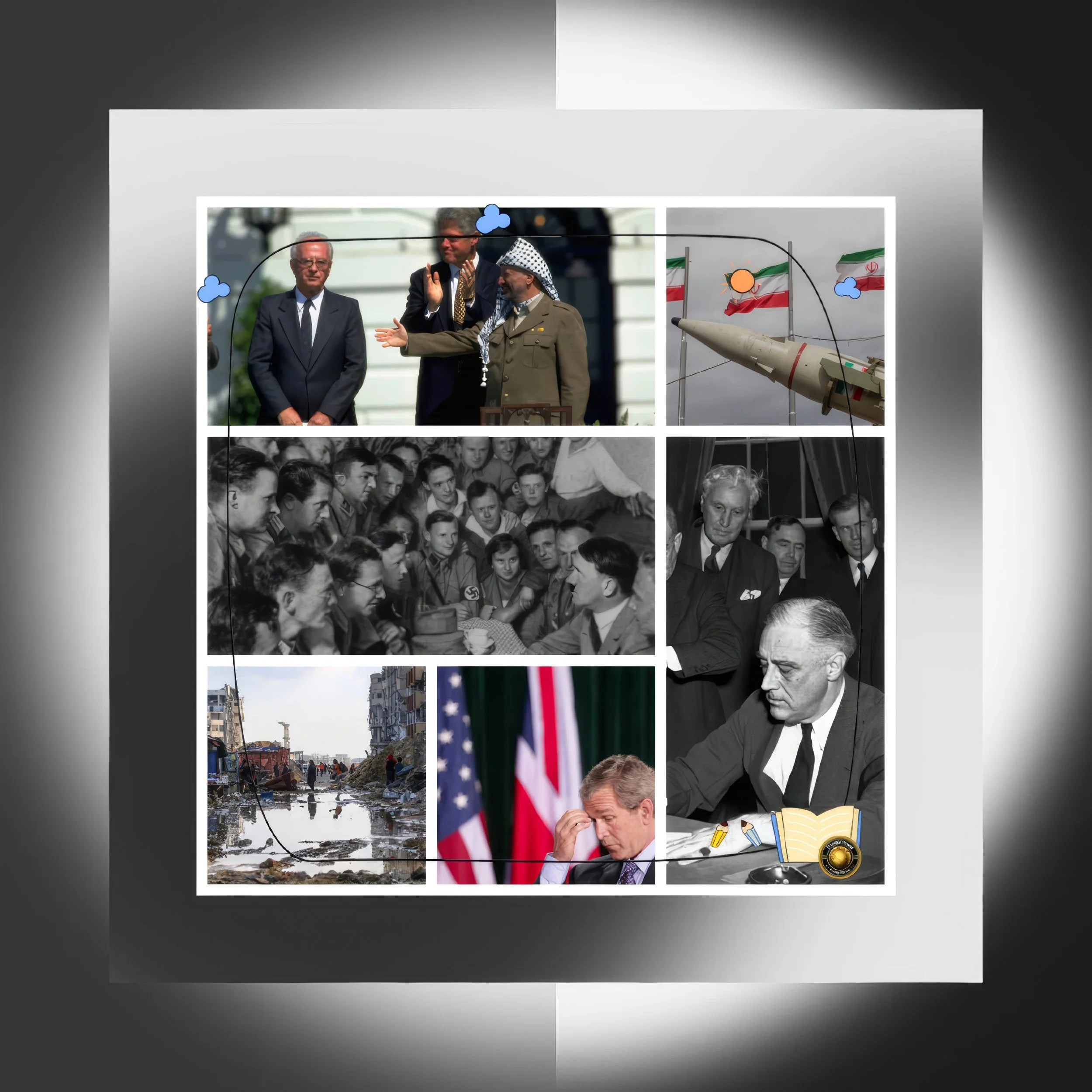
War, Will, and Empire: How Three Military Thinkers Redefined the Logic of Modern Conflict
Executive Summary
Imperial Mentalities and Modern Warfare: Clausewitz, Van Creveld, and O'Brien on War Without End
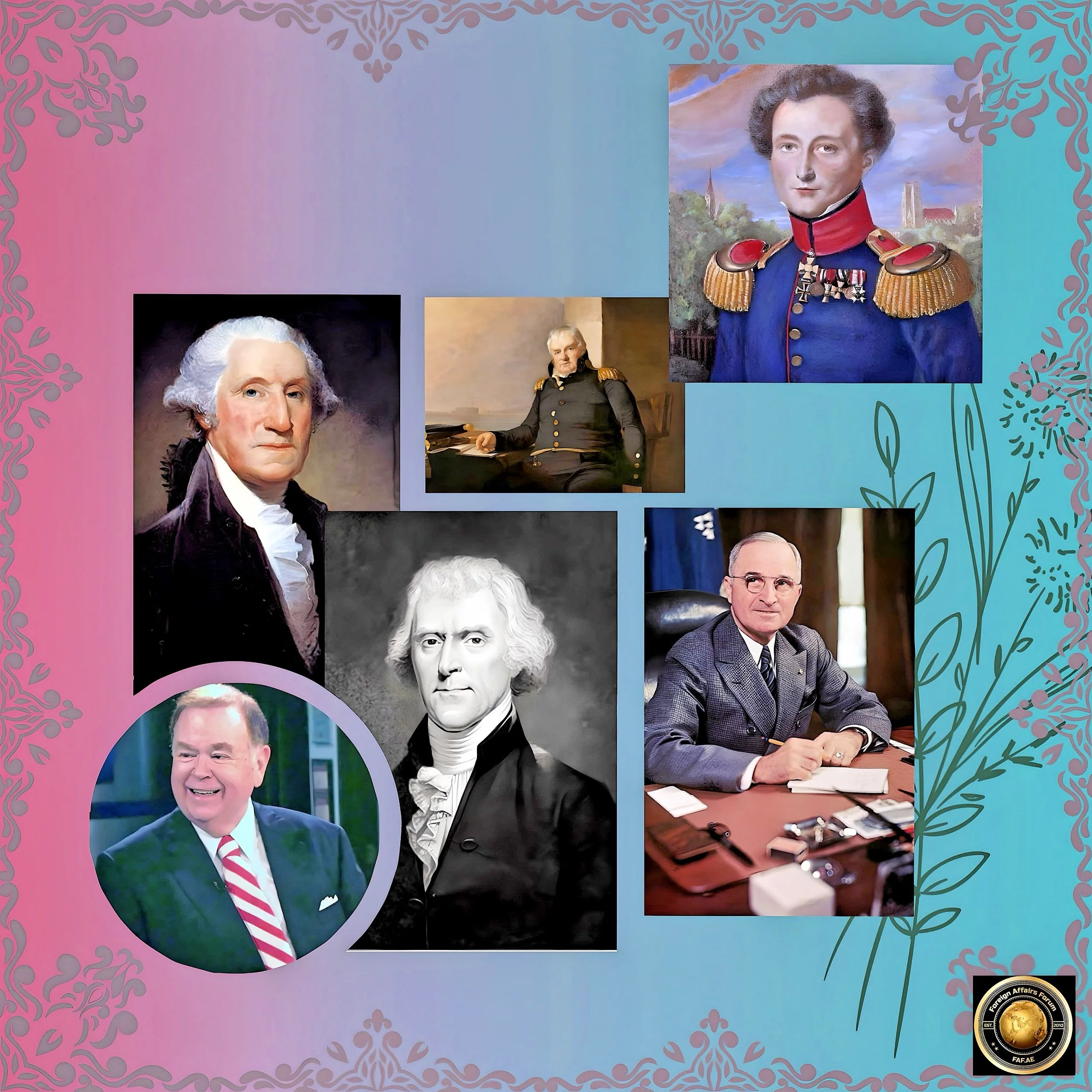
The intellectual lineage running from Carl von Clausewitz through Martin van Creveld to Phillips Payson O'Brien represents one of the most consequential debates in the history of strategic studies.
Each thinker, separated by roughly a century and shaped by the wars of his own era, has attempted to construct a comprehensive framework for understanding why wars are fought, how they are won, and what political purposes they serve.
The FAF article undertakes a rigorous comparative analysis of the three figures, examining the areas of convergence and divergence across their core theoretical propositions, and applies those propositions to the long arc of Anglo-American and Israeli military conduct from World War I through the present Iran crisis.
The central argument is that while Clausewitz established the enduring primacy of political purpose, van Creveld identified the structural collapse of the state-centric model of warfare, and O'Brien has articulated an economic and societal theory of military endurance that transcends the battlefield.
Taken together, these frameworks reveal a world in which imperial mentalities, occupation doctrines, and the instrumentalization of force have consistently undermined the very political objectives they were designed to serve.
Introduction: The Permanent Conversation About War
Occupation, Ideology, and Force: Reading Israel and America Through Military Theory's Greatest Minds
Military thought does not progress in a straight line. It spirals, returns upon itself, rejects, and rehabilitates prior assumptions in the light of new catastrophes.
The three scholars examined in this article stand at three pivotal moments in that spiral: Carl von Clausewitz writing in the wreckage of Napoleonic Europe, Martin van Creveld diagnosing the post-Cold War dissolution of trinitarian warfare, and Phillips Payson O'Brien interpreting the structural determinants of victory and defeat in an era of drone warfare, sanctions regimes, and proxy conflict. What links them is not agreement but the quality of their analytical ambition.
All three have attempted to move beyond tactical description toward systemic theorization of war as a social and political phenomenon.
Clausewitz composed his masterwork, Vom Kriege (On War), over a period from 1816 to 1830, and the text was published posthumously in 1832. It emerged from his direct experience of the catastrophic French Revolutionary and Napoleonic Wars. It was shaped by his intimate knowledge of the Prussian military's humiliating defeat at the Battle of Jena-Auerstedt in 1806.
The work is a philosophical meditation as much as a strategic manual, and its core propositions — that war is a continuation of policy by other means, that it is governed by a trinity of passion, chance, and reason, and that no war plan survives first contact with a rational opponent — have informed military doctrine, academic scholarship, and geopolitical practice for nearly two centuries.
Van Creveld and O'Brien, writing in contexts shaped by the end of the Cold War and the Long War on Terror, respectively, subjected Clausewitz's framework to sustained critique.
Van Creveld's challenge was ontological: he argued that the entire structure of Clausewitzian thought was premised on a form of the state that no longer existed as the primary vehicle of organized violence.
O'Brien's challenge was empirical and economic: he insisted that military victory is determined not by tactical brilliance on any particular landscape but by the sustained capacity of industrial economies, alliances, and societal willpower to absorb attrition and sustain production over time.
Historical Background: The Clausewitzian Foundation
The Trinitarian Collapse: How Van Creveld Shattered Clausewitz and What That Means for Gaza
Clausewitz was born in 1780 and died in 1831, his life bracketed by the convulsions of the French Revolution and the Napoleonic order that followed.
He entered the Prussian military as a 12-year-old cadet and experienced war not as an abstraction but as a lived catastrophe of unprecedented scale.
This biographical substrate is essential to understanding why On War is simultaneously so profound and so unfinished: Clausewitz was still revising it at the time of his death, and his wife Marie edited and published the manuscript.
The intellectual architecture of On War rests on several interlocking propositions.
First, that war is not an autonomous activity governed by its own internal logic but is fundamentally an instrument of political purpose.
The famous formulation — that war is a continuation of political intercourse with the addition of other means — is not a casual aphorism but the load-bearing column of the entire edifice.
For Clausewitz, the moment political leadership subordinates itself to military logic rather than directing it, strategy collapses into catastrophe.
Second, Clausewitz distinguished between absolute war, the theoretical pure form of total violence unconstrained by political calculation, and real war, which is always shaped by friction, uncertainty, the fog of battle, and the political purposes of its sponsors.
This distinction is crucial because it insulates Clausewitz's framework against one of the most persistent misreadings of his work: the idea that he advocated unlimited violence. He did not.
He argued that the degree of force employed must always remain calibrated to the political object being pursued.
Third, and perhaps most philosophically suggestive, is the concept of the remarkable trinity: not the secondary trinity of people, army, and government that van Creveld would later critique, but the primary trinity of blind natural force and passion, the play of chance and probability, and the subordination of war to rational purpose.
These three elements map respectively onto the people, the military, and the government as their natural homes, but Clausewitz was explicit that the relationship between the three is dynamic and unstable. No war can be fully controlled from the center.
The Clausewitzian framework had enormous influence on European and American strategic culture throughout the 19th and early 20th centuries.
However, that influence was frequently distorted.
The German General Staff that prosecuted the First World War absorbed Clausewitz's emphasis on decisive battle but largely discarded his insistence on the subordination of military to political logic.
The result was a war fought with enormous tactical and operational sophistication but almost no strategic coherence, a disconnection between the means of destruction and any achievable political end that would haunt European civilization for three decades.
Martin van Creveld and the Post-Trinitarian Landscape
Martin van Creveld was born in the Netherlands in 1946 and moved to Israel as a child, eventually becoming a professor at the Hebrew University of Jerusalem and one of the most widely read military historians of the 20th century.
His intellectual relationship with Clausewitz is paradoxical: it is defined as much by sustained disagreement as by the depth of his engagement with the Prussian's work.
Van Creveld has described his 1991 masterwork.
The Transformation of War is the most radical reinterpretation of armed conflict since Clausewitz himself, a claim that reflects his ambition to replace rather than merely extend the earlier framework.
The central argument of The Transformation of War is that Clausewitz's trinitarian model of warfare, the interlocking relationship between the state, the people, and the army, has become obsolete because the state itself is no longer the dominant vehicle of organized violence.
Van Creveld observed that the overwhelming majority of armed conflicts since 1945 have not been fought between sovereign states deploying regular armies in pursuit of rationally calculated political objectives.
They have been fought between states and non-state armed groups, between ethnic communities, between religious movements, or between warlords and the ruins of collapsed states.
In these conflicts, the Clausewitzian categories of policy, strategy, and tactics dissolve into something far messier and more primordial.
Van Creveld proposed what he called a non-trinitarian model of modern warfare, focusing on five key questions: who fights, what they fight for, how they fight, how organized they are, and why the individual soldier or fighter is motivated to risk his life.
This reorientation away from the state and toward the sub-state, the individual, and the communal is not merely methodological: it carries profound normative implications.
If wars are no longer fought primarily between states in pursuit of rationally calculable political ends, then the entire framework of international law governing armed conflict, the laws of war, the Geneva Conventions, and the distinction between combatants and civilians, becomes deeply problematic in practice even if formally intact.
Van Creveld's analysis of Israeli military strategy and occupation policy is among the most consequential and controversial applications of his theoretical framework.
Writing from within Israeli academic culture but with a consistent willingness to challenge Israeli strategic orthodoxy, he argued as early as 2002 that Israel's continued occupation of Gaza and the West Bank served no genuine military or strategic purpose and was, in fact, a strategic liability of the first order.
His reasoning was characteristically Clausewitzian in its logic, even as it deployed post-Clausewitzian categories: an occupation maintained by repression against a civilian population cannot generate the political outcomes it ostensibly serves.
At the strategic level, it produces the opposite of what it intends, generating resistance, delegitimizing the occupying power in international opinion, and corroding the internal cohesion of the occupier's own society.
Van Creveld's warning was prophetic. Writing in 2010, he stated explicitly that if the occupation did not end, Israel would "definitely turn into what it is already fast becoming: namely, an apartheid state that can only maintain its control by means of repressive secret police actions."
The strategic logic he articulated was not primarily moral in its register: van Creveld is not easily categorized as a progressive critic of Israeli policy.
Rather, it was realist and strategic, drawing on a deep reading of the historical record of colonial occupations from the Romans through the British to the Americans. These occupations yielded short-term victory and long-term strategic catastrophe.
Van Creveld's other major contribution to contemporary strategic debate is his analysis of what he called the "strength of the weak," the paradoxical capacity of non-state armed groups to neutralize and exhaust the military capabilities of vastly more powerful states.
This analysis, derived partly from his study of guerrilla warfare and low-intensity conflict, anticipated with remarkable precision the strategic dynamics that would unfold in Iraq, Afghanistan, Gaza, and Lebanon.
The powerful state wins every battle and achieves nothing. The weak party loses every battle and eventually prevails, or more precisely, prevents the strong party from achieving its declared objectives.
Phillips Payson O'Brien and the Economy of War
Phillips Payson O'Brien, born in 1963 and currently a professor of strategic studies at the University of St Andrews in Scotland, represents a third distinct approach to the fundamental questions of military theory.
Where Clausewitz theorized the political logic of war and van Creveld identified the collapse of the state as its primary vehicle, O'Brien has developed what might be called a political economy of war: a sustained argument that the outcomes of major conflicts are determined above all by the economic, industrial, and societal capacity of the belligerents to sustain the production of weapons, the projection of force, and the maintenance of alliances over time.
O'Brien's 2015 work How the War Was Won challenged the dominant scholarly consensus that World War II was decided primarily by the mass land campaigns on the Eastern Front.
He argued instead that the air and sea campaigns conducted primarily by the United States and the British Empire were strategically decisive, not because they destroyed enemy armies in pitched battle, but because they disrupted the industrial and logistical foundations upon which those armies depended.
The German and Japanese war economies were ultimately strangled by air bombardment and maritime interdiction, deprived of fuel, raw materials, and the capacity to replace the equipment they were losing at an accelerating rate.
His most recent work, War and Power: Who Wins Wars and Why, published in 2025, extends this argument into a comprehensive theoretical framework.
O'Brien proposes the concept of the "full-spectrum power" as an alternative to the conventional categories of great power, superpower, or hegemon.
A full-spectrum power is a state capable of sustaining military operations across every domain, land, air, sea, space, and cyber, while simultaneously maintaining the economic production, technological innovation, and alliance relationships that underpin long-term strategic endurance.
The criteria O'Brien uses to assess full-spectrum capability are deliberately pluralistic.
They include traditional quantitative measures such as economic output, military expenditure, and technological capacity, as well as qualitative dimensions such as leadership competence, social cohesion, democratic vitality, and the strength and reliability of alliances.
By these criteria, the United States remains unambiguously the world's dominant full-spectrum power, possessing up to 10 globally deployable aircraft carrier groups, each with air and missile capabilities that dwarf those of most nation-states.
But O'Brien is insistent that the raw power of this kind does not determine outcomes on its own.
The history of American military engagements since 1950 is largely a history of strategic failure despite overwhelming material superiority, a pattern that Clausewitz would have recognized and that van Creveld's analysis of asymmetric conflict anticipates.
Key Developments: Imperialism, Occupation, and the American Strategic Landscape
Policy, Power, and the Palestine Question: Three Military Scholars on Statecraft and Its Failures
The intersection of the three frameworks examined in this article becomes most revealing when applied to the long history of American and Israeli military conduct from World War I to the present.
Recurrent strategic patterns mark this history: initial military success followed by the inability to translate tactical victories into durable political outcomes, the progressive alienation of local populations through occupation and repression, and the eventual withdrawal or strategic repositioning under conditions that fall far short of the original objectives.
American entry into World War I in 1917 represented the first major projection of U.S. military and economic power into the European strategic landscape.
President Woodrow Wilson framed American intervention in explicitly Clausewitzian terms, as a political enterprise in service of defined objectives: the defeat of German militarism, the vindication of democratic self-determination, and the establishment of a new international order governed by law rather than force.
The means were overwhelmingly economic rather than military: the American industrial economy, mobilized on a scale without historical precedent, provided the material foundation for Allied victory.
O'Brien's framework illuminates this dynamic with particular clarity.
However, the peace that followed World War I demonstrated the limits of military power as a tool of political transformation.
The Versailles settlement, which Wilson championed and which reflected his political ambitions, generated the geopolitical conditions that made World War II virtually inevitable.
The punitive treatment of Germany, the arbitrary redrawing of borders in the Middle East and Eastern Europe, and the imposition of imperial mandates over Arab populations who had been promised self-determination all reflected what Clausewitz would have identified as a catastrophic failure to align political ends with the strategic means available to achieve them.
The British Mandate in Palestine, established in 1920 under the terms of the Sykes-Picot Agreement and the Balfour Declaration, represents a paradigmatic case of imperial incompetence in the van Creveld sense.
A colonial power attempted to simultaneously fulfill contradictory political commitments — to Jewish Zionist aspirations and to Arab Palestinian national identity — in a context of intensifying communal violence for which it possessed neither the strategic clarity nor the political will to construct a durable solution.
When the British eventually withdrew in 1948, they left behind a conflict that would metastasize over the following 8 decades into one of the most intractable strategic problems in contemporary international relations.
The establishment of the State of Israel in 1948 and the wars that followed must be analyzed through all three of the theoretical frameworks under consideration.
From a Clausewitzian perspective, Israel's early wars were conducted with exemplary alignment between political purpose and military means: the 1948 War of Independence, the 1967 Six-Day War, and the 1973 Yom Kippur War all reflected a state that understood with clarity what it was fighting for and calibrated its military effort accordingly.
The problem, as van Creveld's analysis identifies with forensic precision, is that the occupation of the territories captured in 1967 represented a fundamental departure from this strategic clarity.
An occupation is not a war in the Clausewitzian sense. It does not have a defined political objective that can be achieved through the application of force and then concluded.
It is an indefinite commitment to maintaining control over a resistant population through permanent coercion, a commitment that generates its own escalating costs: demographic, economic, political, moral, and strategic.
Van Creveld's analysis of the occupation's consequences was not unique, but it was uniquely authoritative, coming from one of the world's leading military historians and an Israeli citizen.
His argument that the occupation was both strategically unnecessary and strategically disastrous anticipated the catastrophic strategic environment of the post-October 2023 period by more than two decades.
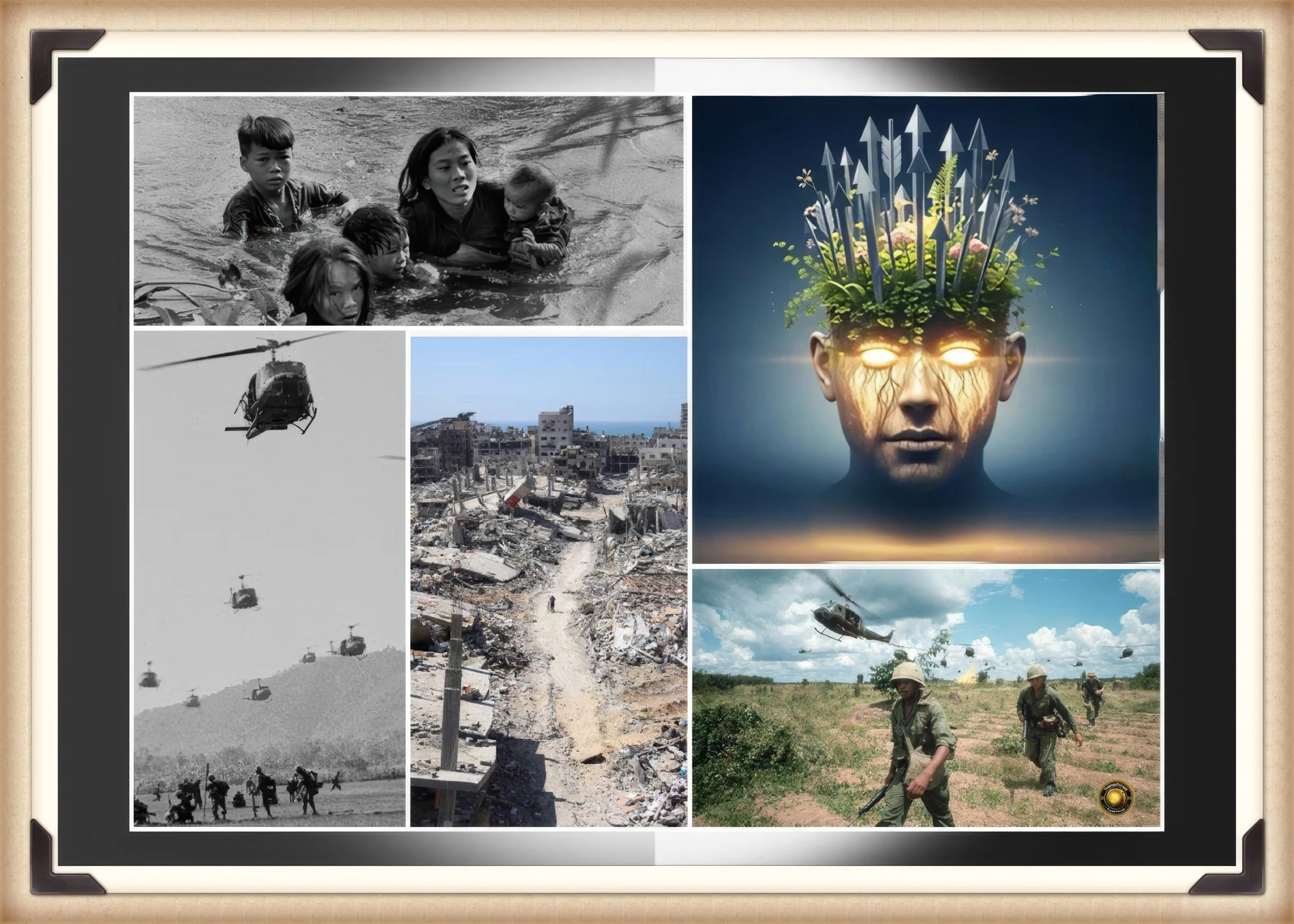
American military intervention in Vietnam, Iraq, and Afghanistan followed the same structural pattern that van Creveld identified in Israel's occupation strategy.
In each case, the United States possessed overwhelming military superiority at the tactical and operational levels.
In each case, it failed to define an achievable political objective and to calibrate its military effort to that objective as Clausewitz prescribed.
In each case, the resistance of local populations, organized in non-state forms that the Clausewitzian trinity could not adequately conceptualize, ultimately negated the occupying power's military advantage.
And in each case, the economic costs of sustained occupation, which O'Brien's framework measures with particular acuity, ultimately exceeded the political benefits that could plausibly be achieved.
Cause-and-Effect Analysis: The Structural Logic of Strategic Failure
Waging War Against History: How Three Thinkers Explain the Iran Crisis and America's Strategic Drift
The recurring pattern of strategic failure in American and Israeli military interventions is not accidental.
It reflects the structural features of the political and military systems involved, which all three of the theorists examined in this article help illuminate, each from a distinctive analytical vantage point.
The first structural cause is what might be called the militarization of political purpose: the progressive tendency of military logic to displace political judgment in the formulation of strategy.
Clausewitz identified this as the fundamental pathology of modern warfare.
When political leaders defer to military commanders rather than directing them, when the means of war are allowed to redefine the ends of policy, strategy loses its coherence, and military operations become self-perpetuating processes without clearly defined terminal conditions.
This pathology is clearly at work in the contemporary Iran crisis.
American and Israeli military operations against Iran's nuclear and military infrastructure in 2025 and early 2026 have been conducted with tactical sophistication, exploiting precision-strike capabilities, cyber operations, and intelligence penetration of Iranian defenses.
But the political objective of these operations remains ambiguously defined.
Clausewitz's concept of the center of gravity — the source of strength and cohesion whose disruption would compel the adversary to submit to one's will — has not been consistently identified or consistently targeted.
From Tehran's perspective, the conflict is an existential defense, and that framing tends to harden resistance rather than generate the behavioral change the striking power seeks to achieve.
The second structural cause is the occupation mentality, the tendency of militarily dominant states to substitute the permanent management of subordinate populations for the achievement of defined political objectives.
Van Creveld's analysis suggests that this mentality is not merely a policy error but a structural deformation of strategic culture, emerging organically from prolonged military dominance.
When a state becomes accustomed to managing resistance through force rather than resolving the political conditions that generate it, it loses the strategic imagination to conceive of alternatives.
Israel's conduct in Gaza following October 2023 illustrates this dynamic with tragic clarity.
The declared political objective of eliminating Hamas as a governing and military force is, in Clausewitz's framework, a potentially coherent objective if the means employed are calibrated to achieve it.
But the means employed, a campaign of comprehensive destruction targeting civilian infrastructure on a scale that has destroyed the physical fabric of Gazan society and killed tens of thousands of civilians, have generated precisely the political conditions that make the declared objective unachievable.
The destruction has radicalized Palestinian public opinion, generated unprecedented levels of international condemnation, including from Israel's traditional strategic partners, and created a humanitarian catastrophe whose management will require decades and enormous resources.
From O'Brien's full-spectrum perspective, the strategic failure is compounded by a fundamental misreading of the power relationship involved.
Israel's military dominance over Gaza is total at the tactical level. But the ability to translate that tactical dominance into strategic and political outcomes depends not only on military force but on economic capacity, diplomatic capital, alliance support, and the moral authority of the state.
The campaign's conduct has significantly degraded each of these dimensions of full-spectrum power.
The third structural cause is what might be termed alliance degradation, the progressive weakening of the alliance relationships that constitute a full-spectrum power's most important strategic asset.
O'Brien's analysis of World War II demonstrates that the decisive factor in Allied victory was not the military superiority of any individual state but the capacity of the Anglo-American alliance, and eventually the broader coalition including the Soviet Union, to sustain coordinated production, logistics, and operations over a period of several years.
The structural equivalent in the contemporary period is the transatlantic alliance system that has defined American strategic power since 1945.
Phillips O'Brien's analysis of the Trump administration's strategic realignment in 2025 is among the most sobering assessments of contemporary American grand strategy.
His argument, developed on his Substack and elaborated in War and Power, is that the United States under the Trump administration effectively changed sides in the global contest between democratic and authoritarian forms of governance, withdrawing support from Ukraine, degrading NATO's operational coherence, and providing diplomatic cover for Russian military operations that have killed Ukrainian civilians in numbers that continued to rise through 2025.
The implications for American full-spectrum power are profound: an alliance system weakened by the unreliability of its dominant member is worth significantly less in any future major conflict than one bound by consistent commitment.
The Iran Crisis: Contemporary Geopolitics Through Three Lenses
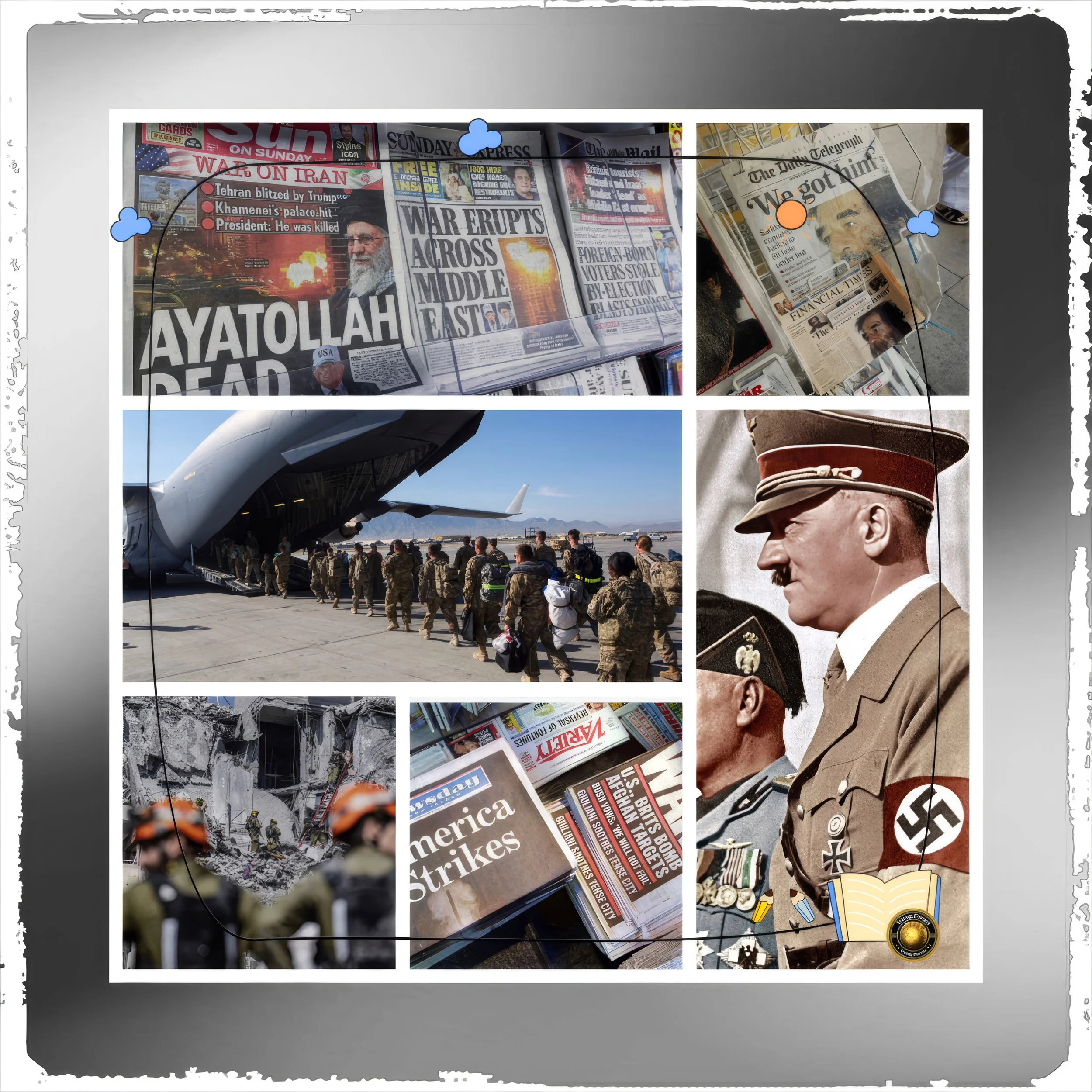
The Iran crisis of 2025 and 2026 represents the most acute test of all three theoretical frameworks in the contemporary period.
It brings into sharp relief the tensions between military capability and political purpose, between state-centric and non-state dimensions of conflict, and between short-term tactical success and long-term strategic endurance.
From a Clausewitzian perspective, the fundamental question about the American and Israeli military campaign against Iran is the one Clausewitz always insisted must be asked first: to what political end, and how does the use of force serve that end?
The strikes on Iranian nuclear and military infrastructure in 2025 may have degraded Iranian capabilities in the short term. Still, Clausewitz's concept of the culminating point of the offensive is directly relevant.
Beyond a certain point, continued military operations generate more resistance than they suppress, more political costs than strategic gains.
Iran's new leadership under Mojtaba Khamenei has framed the conflict in terms of existential resistance, vowing to rebuild missile capabilities and sustain proxy coordination throughout the region.
Van Creveld's non-trinitarian framework adds another dimension. Iran is not simply a state deploying a conventional army; it is a complex system of state and non-state military capacity, including Hezbollah, the Houthi movement, various Iraqi militia formations, and an array of proxy networks throughout the wider region.
The destruction of Iranian state military infrastructure does not neutralize this broader network; it may in fact energize it by generating the narrative of existential resistance that mobilizes non-state fighting capacity.
This is precisely the dynamic van Creveld identified in his analysis of Israel's earlier military campaigns in Lebanon: tactical success against state targets generating strategic failure as non-state resistance intensified.
O'Brien's framework raises the most uncomfortable questions about American strategic endurance.
The United States remains the world's dominant full-spectrum power by virtually any quantitative measure.
But full-spectrum power is not merely about the possession of capabilities; it is about the will and organizational capacity to deploy them sustainably in service of defined political objectives.
An administration that has degraded its alliance relationships, withdrawn from international commitments, and articulated an incoherent grand strategy faces structural limitations on its ability to project durable power even when its military capabilities remain unmatched.
The energy dimension of the Iran crisis adds an economic layer that O'Brien's framework illuminates with particular relevance.
The strikes on Iranian infrastructure in mid-March 2026, including the South Pars natural gas facility, generated retaliatory strikes on Gulf energy infrastructure and significant disruption to global oil markets.
From an O'Brien perspective, the capacity to sustain a prolonged strategic competition with Iran and its network of proxies depends not only on the military ability to strike Iranian targets but on the economic resilience of the global energy system and the alliance relationships that sustain it.
The countries of the Gulf Cooperation Council, whose cooperation is essential to any durable American strategic position in the region, are simultaneously dependent on the security umbrella that American military power provides and increasingly exposed to the economic consequences of the conflict that umbrella is generating.
Future Implications: Strategy, Sovereignty, and the Post-Imperial Order
War, Policy, and the Architecture of Domination: Clausewitz, Van Creveld, and O'Brien in the Age of Perpetual Conflict
The theoretical frameworks of Clausewitz, van Creveld, and O'Brien collectively suggest that the contemporary strategic landscape is characterized by a set of structural tensions that no amount of tactical military sophistication can resolve on its own.
The first tension is between the continued tendency of powerful states to resort to military force as an instrument of political change and the accumulated evidence, from the van Creveld and O'Brien perspectives, that force alone cannot achieve durable political outcomes against determined resistance.
This tension is particularly acute in the Middle East, where eight decades of intermittent military intervention have failed to produce a stable regional order and have in many respects generated the conditions for perpetual instability.
The second tension is between the Westphalian principle of state sovereignty, which remains formally enshrined in international law and the United Nations Charter, and the de facto practice of military intervention, occupation, and coercive statecraft that characterizes the behavior of powerful states in the contemporary period.
Van Creveld's analysis of the decline of the state as the primary vehicle of organized violence suggests that this tension will intensify rather than diminish: as states lose their monopoly on legitimate violence, the international law framework premised on state sovereignty becomes increasingly dysfunctional.
The third tension is between the short-term imperatives of electoral politics, which tend to reward decisive military action regardless of strategic coherence, and the long-term requirements of strategic endurance that O'Brien's analysis identifies as the true determinant of victory and defeat.
Democratic political systems have structural difficulties in sustaining prolonged strategic commitments whose costs are immediate and visible while their benefits are distant and diffuse.
This structural difficulty is compounded in the contemporary American context by an administration that has articulated a conception of national interest explicitly hostile to the alliance commitments and international institutions that constitute the infrastructure of American full-spectrum power.
Clausewitz's enduring relevance in this context is his insistence on the primacy of political purpose.
Every military operation, every strategic commitment, every alliance relationship must be evaluated by the criterion of whether it advances the political objectives it is designed to serve.
The failure to apply this criterion consistently is not a technical failure of military planning; it is a failure of political will and political intelligence of the kind that Clausewitz believed was the ultimate determinant of strategic success or failure.
Van Creveld's contribution is the uncomfortable recognition that the state-centric framework of international order is under fundamental stress, and that the military doctrines and international legal frameworks premised on that order are becoming progressively less adequate to the conflicts they are meant to govern.
The rise of non-state armed groups, the proliferation of hybrid warfare, the blurring of the distinction between combatants and civilians, the weaponization of information: all these represent the structural transformation of war that van Creveld identified in 1991 and that has continued to deepen in the three and a half decades since.
O'Brien's contribution is the insistence that military power, however impressive in its immediate expression, is ultimately a function of economic foundations, technological dynamism, societal cohesion, and alliance relationships.
The state that neglects these foundations in pursuit of short-term tactical advantage will find, as the historical record consistently demonstrates, that its military power is more brittle than it appears and more expensive to sustain than its political leadership has calculated.
Conclusion
Beyond the Battlefield: Why Economics, Endurance, and Ethics Now Determine Who Wins Wars
The intellectual conversation between Clausewitz, van Creveld, and O'Brien is not merely an academic exercise.
It is a practical guide to the analysis of contemporary conflict and a warning about the strategic consequences of ignoring the lessons that military thought has accumulated over two centuries.
Their collective wisdom suggests that the Iran crisis, the Gaza catastrophe, the Ukraine war, and the broader fragmentation of the post-1945 international order are not separate crises but manifestations of a single structural failure: the persistent inability of powerful states to align their military means with achievable political ends, to maintain the alliance relationships that constitute the true foundations of strategic power, and to recognize the limits of force as an instrument of political transformation.
Clausewitz warned two centuries ago that the politician who mistakes a military problem for a political one courts disaster, and that the general who subordinates political judgment to military logic courts catastrophe.
Van Creveld demonstrated that the entire framework within which those warnings were articulated has been transformed by the decline of trinitarian warfare and the rise of non-state violence.
O'Brien has shown that the ultimate test of any state's strategic power is not the scale of its military force but the depth of its economic foundations, the quality of its leadership, and the durability of the alliances it sustains.
Together, they have provided the intellectual tools necessary to understand why the world's most powerful states keep winning battles and losing wars.
The question that remains is whether their insights will be absorbed before the next catastrophe makes them inescapably obvious.