When War Has No Winner: Three Military Thinkers Explain Why Powerful Countries Keep Losing—Beginners' Guide to Military Theory and Warfare.
Executive Summary
Three famous military thinkers — a Prussian general who lived 200 years ago, an Israeli historian, and an American professor — each spent their lives trying to answer one big question: why do countries go to war, and why do the strongest ones so often fail to get what they want?
The FAF article explains their ideas in simple language, shows how those ideas connect to real events from World War I to the Iran crisis of today, and argues that the biggest military mistakes stem from forgetting the basic lessons these three thinkers spent their lives teaching.
Introduction
Three Thinkers, One Big Problem
Imagine a very strong boxer who wins every round but somehow loses the match. That is what keeps happening to powerful countries in modern wars.
The United States won every major battle in Vietnam, Iraq, and Afghanistan. Israel has one of the most powerful military forces in the Middle East.
Yet in all these places, the stronger side failed to achieve its aims. Why?
Three scholars have tried to answer this question.
Carl von Clausewitz was a Prussian general who wrote the famous book On War about 200 years ago.
Martin van Creveld is an Israeli military historian who wrote The Transformation of War in 1991.
Phillips Payson O'Brien is an American professor who recently wrote War and Power.
Although they lived in very different times and sometimes disagreed with each other, together they explain why wars go wrong in ways that feel surprisingly relevant today.
Clausewitz: War Is Always About Politics
Clausewitz's most famous idea is simple: war is not a game that soldiers play on their own. It is a tool that governments use to get political results.
Think of it like a hammer.
A hammer is useful for driving nails, but if you swing it randomly at a wall, you make a mess.
The same is true of armies.
If a country sends soldiers to war without a clear political goal, the result is destruction without purpose.
Clausewitz also talked about something he called the fog of war, the idea that in battle, almost nothing goes according to plan. Soldiers get lost, communications fail, and unexpected things happen.
This is why he said that a good war plan must be flexible, not rigid.
He used the German word Friktion, meaning friction, to describe all the small things that go wrong and accumulate into big failures.
His most important warning was to political leaders: never let the generals make the decisions that belong to the politicians.
The moment a government loses control of its own war, the war starts controlling the government instead.
History is full of examples where this happened.
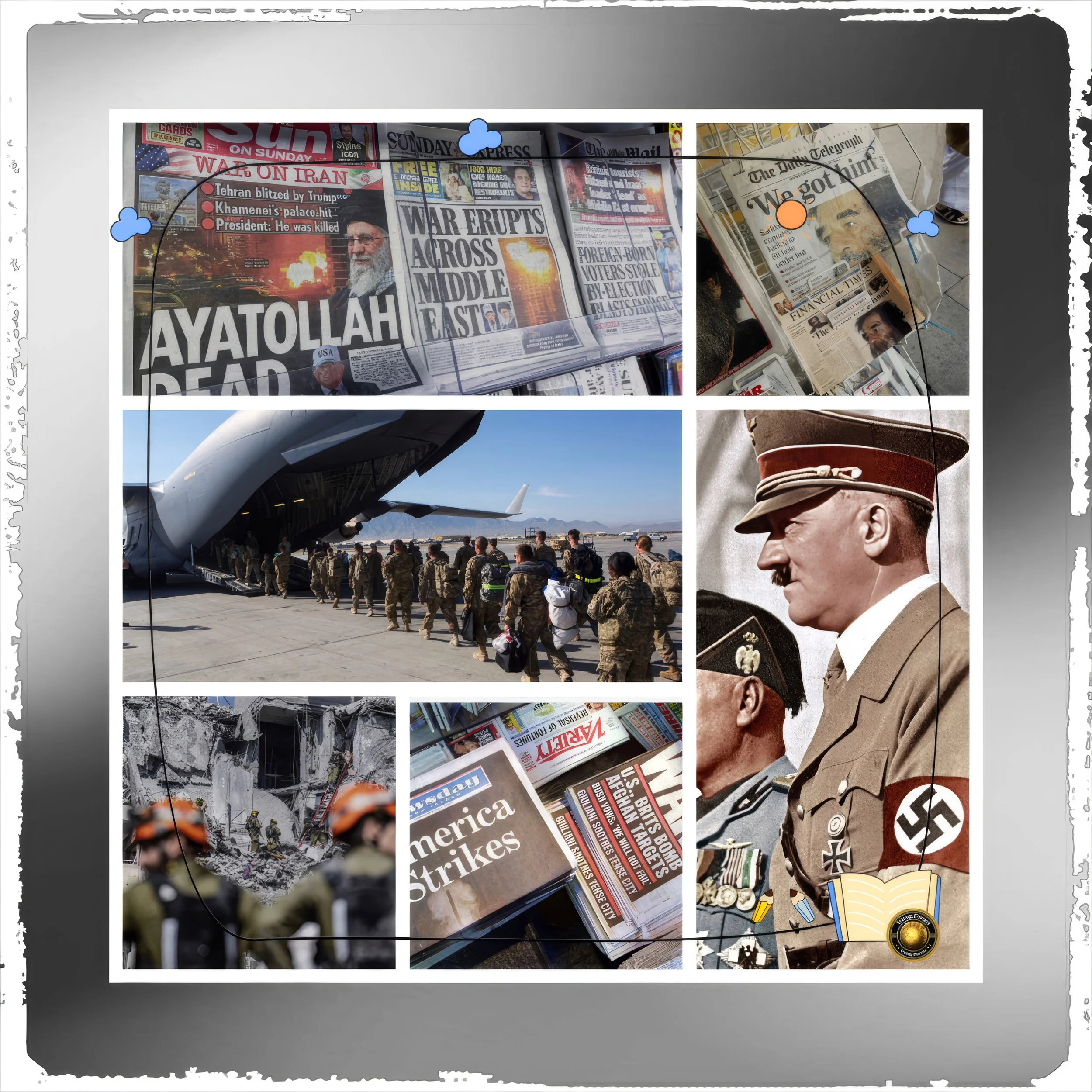
Germany in World War I is the clearest.
The German generals took control of strategy and kept fighting long past the point where any realistic political goal could be achieved, bringing catastrophe upon their own country.
Van Creveld: The Old Rules No Longer Apply
Martin van Creveld grew up in the Netherlands, moved to Israel, and spent decades studying how war actually works on the ground.
His big insight was that the kind of war Clausewitz wrote about, two countries sending their armies against each other in formal battles, had mostly stopped being the main type of conflict in the world.
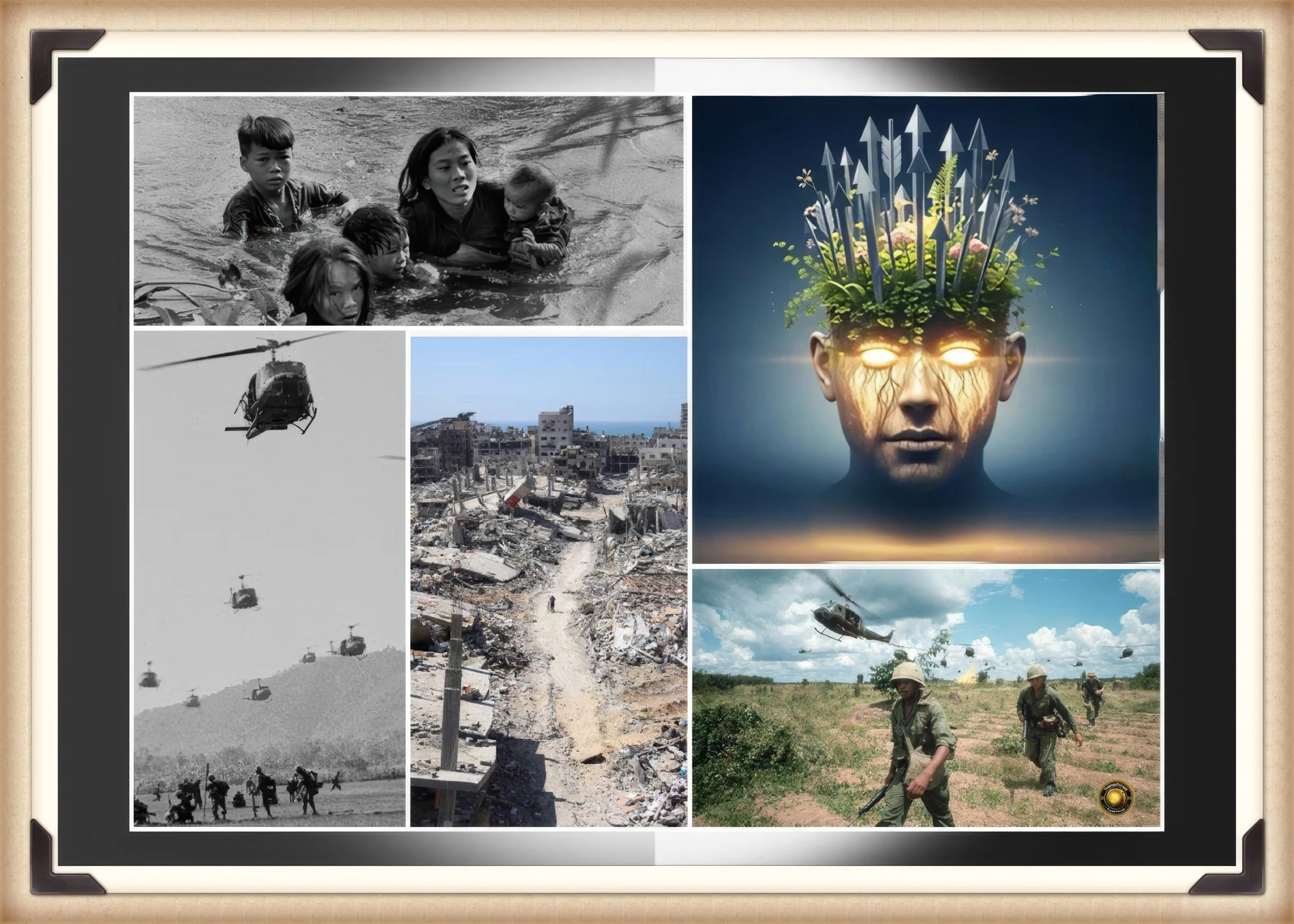
Think about Vietnam.
The United States was fighting not a foreign army in uniforms, but a mixture of North Vietnamese soldiers and South Vietnamese guerrillas who blended into the civilian population, who had no fixed bases to destroy, who fought on their own terms and retreated when they chose.
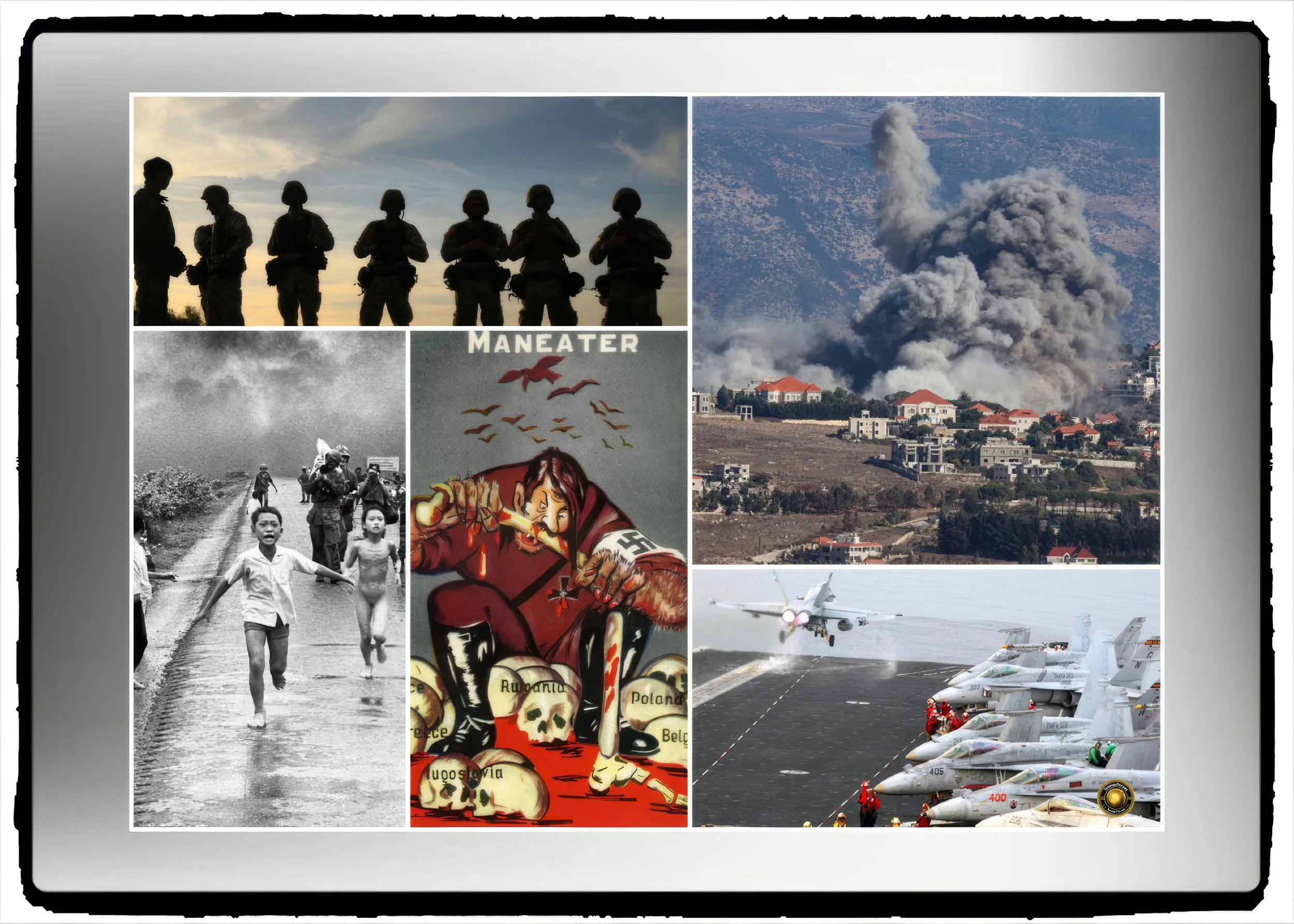
The same pattern appeared in Afghanistan, Iraq, Lebanon, and Gaza.
A massive professional army tries to defeat a smaller, more loosely organized opponent that refuses to fight conventionally.
Van Creveld called this non-trinitarian warfare, meaning it did not fit the old three- part model of government, army, and people that Clausewitz had used.
He predicted in 1991 that most future conflicts would look like this, and he was right.
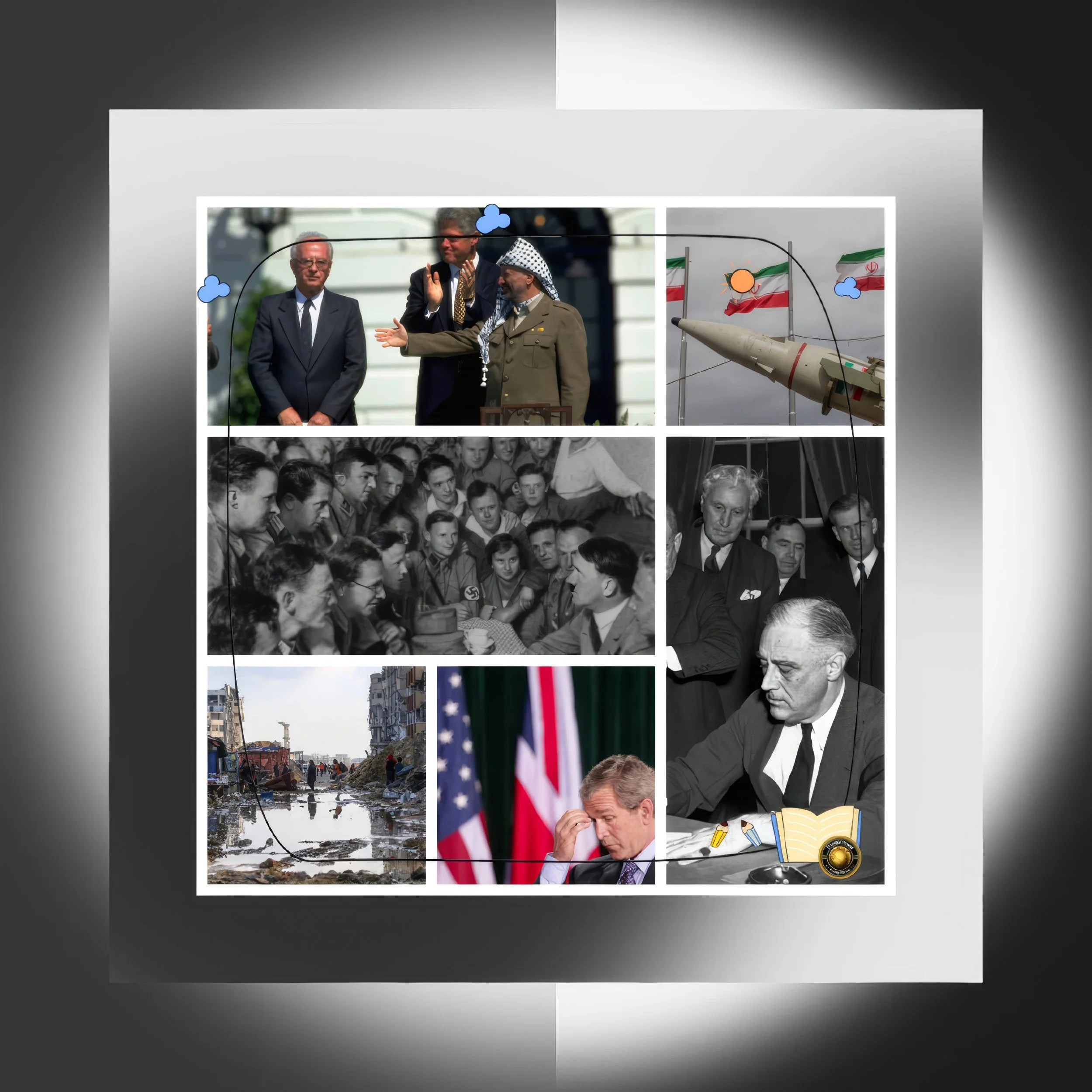
He also said something very uncomfortable about Israel specifically: that keeping control of Gaza and the West Bank through military occupation was not making Israel safer, it was making it weaker.
Maintaining military control over 2.5 million Palestinians creates enormous costs, he wrote, and will eventually lead to a situation like apartheid. That warning came two decades before the events of 2023.
O'Brien: Who Has the Most Stamina Wins
Phillips O'Brien adds a third layer to our understanding.
His argument, developed most fully in War and Power, is that the outcome of wars is determined not so much by which side fights most bravely or has the best generals, but by which side has the economic and industrial strength to keep fighting over time.
Think about World War II. Most people imagine it was decided by the great land battles, especially on the Eastern Front between Germany and the Soviet Union. O'Brien shows that this picture is incomplete.
The true decisive factor was that the United States and Britain, through their air and naval power, strangled the German and Japanese economies, cutting off fuel and materials until those countries could no longer replace what they were losing.
It was less about heroism on the battlefield and more about factories, ships, and supply lines.
In his newer work, O'Brien applies the same logic to the Russia-Ukraine war and the broader competition between the United States, Russia, and China.
He points out that the United States has about ten aircraft carrier groups deployable anywhere in the world, a level of military capacity no other country can match. But raw power is not enough.
The country with the best alliances, the most reliable partners, and the most resilient economy has the best chance of prevailing in a long conflict.
When the United States weakens its alliances, as happened under the Trump administration in 2025 when it withdrew support for Ukraine and distanced itself from NATO partners, it is throwing away one of its most important strategic advantages.
How These Ideas Apply to the Iran Crisis
All three frameworks become very relevant when we look at what is happening in 2025 and early 2026 with Iran, Israel, and the United States.
Strikes on Iranian nuclear and military infrastructure have been conducted with great technical precision.
But Clausewitz would ask: what is the political goal, and is this the right tool to achieve it?
If the goal is to stop Iran from developing nuclear weapons permanently, destroying a factory achieves a delay, not a solution.
The political problem remains.
Van Creveld would point to Iran's network of non-state partners, Hezbollah in Lebanon, Houthi forces in Yemen, and militia groups in Iraq, as exactly the kind of non-trinitarian warfare his framework describes.
Destroying Iranian state military assets does not destroy that network. It may even strengthen it by creating a story of resistance that attracts new fighters and donors.
O'Brien would look at the broader picture: the energy disruptions caused by strikes on Iranian infrastructure, the strain on Gulf economies, the weakening of American credibility among its regional partners.
Every military operation has economic consequences, which affect a state's long-term capacity to sustain its strategic commitments.
A powerful country that fights expensive wars without clear goals, while also weakening the alliances that multiply its effective power, is spending down its strategic savings account.
The Occupation Problem: When Winning Every Battle Still Means Losing
One of the most important shared themes across all three thinkers is what we might call the occupation trap.
When a powerful country takes control of another people's territory by force, it sets itself a problem that cannot be solved by military means alone.
The population being controlled does not stop wanting self-determination simply because they have been defeated on the battlefield.
They resist, and that resistance generates costs for the occupier that accumulate over years and decades.
This is what happened in British-administered Palestine, which led eventually to the chaos of 1948. It is what happened in Vietnam, Iraq, and Afghanistan.
And it is what van Creveld warned Israel was doing to itself through the occupation of Gaza and the West Bank.
The Israeli historian was not writing as a partisan of the Palestinian cause; he was writing as a strategic analyst who could see that the occupation was producing the opposite of the security it was supposed to provide.
The lesson that all three thinkers, in different ways, point toward is the same: military power is a means, not an end.
A country that treats military dominance as a goal in itself, rather than as an instrument in service of carefully defined political purposes, will find that its strength becomes a trap. It will keep winning battles and losing the larger contest.
Conclusion
The Questions These Thinkers Force Us to Ask
Clausewitz, van Creveld, and O'Brien, taken together, give us a simple checklist for evaluating any military action.
What is the clear political goal?
Does the form of conflict being used match the nature of the enemy?
Does the country have the economic and alliance resources to sustain the effort over time?
These questions may seem simple, but they are rarely asked seriously before military operations begin.
When they are not asked, the result is the recurring pattern we see across modern history: military success, strategic failure, and the long, painful reckoning with the gap between what was promised and what was achieved.
The world in 2026, with its cascading crises in Ukraine, Gaza, and the Persian Gulf, is living through exactly that reckoning.