War Without End: Schelling, McFate, Smith, and Van Creveld Through the Lens of America's Twenty-First Century Conflicts
Executive Summary
Brinkmanship, Proxies, and Durable Disorder: The War Theorists Who Foresaw the Iran Crisis
The four strategic theorists examined by FAF- — Thomas C. Schelling, Sean McFate, Rupert Smith, and Martin van Creveld — collectively constructed a roadmap for understanding every major conflict the United States has fought or sponsored from Vietnam to the present Iran crisis.
Writing across six decades, from 1960 to 2019, each thinker identified a different but complementary dimension of the dysfunction at the heart of American military power: Schelling exposed the limits of rational deterrence under conditions of asymmetric resolve; McFate diagnosed the structural obsolescence of Western war-fighting doctrine in an age of durable disorder; Smith demonstrated that force applied among civilian populations rarely produces the political outcomes it promises; and van Creveld predicted with eerie precision the decline of state-on-state warfare and the rise of irregular, network-driven conflict.
Together, their frameworks illuminate not only the June 2025 US-Israeli strikes on Iranian nuclear infrastructure and Tehran's subsequent drone-enabled closure of the Strait of Hormuz, but also the arc of American strategic failure stretching from the Mekong Delta to the streets of Fallujah, from the mountains of Kandahar to the rubble of Gaza City.
President Donald Trump's second-term foreign policy, which fuses neo-colonial Monroe Doctrine logic with aggressive coercion in the Middle East, appears in their combined analysis as the latest iteration of a recurring American pathology: the belief that superior firepower, backed by credible threats, can substitute for political strategy among peoples who refuse to be coerced on schedule.
Introduction: The Persistence of Strategic Illusion
Schelling, McFate, Smith, and Van Creveld: Four Military Thinkers Who Predicted Every War Today
There is a paradox at the center of American military history that no administration — Democratic or Republican, isolationist or interventionist — has managed to resolve.
The United States possesses the most technologically sophisticated armed forces in human history. It spends more on defense than the next ten nations combined. Its air power can strike any target on earth within hours.
Its intelligence apparatus is without peer. And yet, across seven decades of major military engagements — Korea, Vietnam, Lebanon, Somalia, Afghanistan, Iraq, and now the cascading conflicts of the contemporary Middle East — the United States has repeatedly discovered that the application of superior force does not reliably translate into superior political outcomes.
The four thinkers examined here did not merely predict this failure in the abstract. They diagnosed its structural causes with a precision that ought to shame the policymakers who ignored them.
Read together and applied to contemporary events, their work constitutes one of the most powerful critical lenses available for understanding why the wars of the twenty-first century, including the current confrontation with Iran and its regional dimensions, are unfolding the way they are.
History and Current Status: From Cold War Geometry to the Age of Durable Disorder
The Monroe Doctrine Returns: How America's Colonial Instincts Are Reshaping Global Conflict Today
The intellectual genealogy of American strategic thought runs directly through the mid-twentieth century.
It was shaped above all by the terrifying novelty of nuclear weapons, which forced statesmen and theorists alike to think rigorously about how states could pursue their interests under conditions of mutual vulnerability.
Thomas Schelling's The Strategy of Conflict, published in 1960, emerged from this crucible. Schelling was not primarily interested in the mechanics of nuclear exchange.
He was interested in something more subtle and more durable: the logic of threats, promises, and bargaining between rational stakeholders under conditions of incomplete information and divergent interests.
His central insight was that a threat is only effective if it is credible — and credibility depends not on stated intentions but on structural incentives.
A threat to do something that would be catastrophically costly for the threatening party is inherently suspect, because a rational adversary will calculate that the threat will not be carried out.
This led Schelling to his most original contribution: the concept of compellence, distinct from deterrence, which involves using the threat of force — or calibrated, limited force — to make an adversary do something, not merely to stop them from doing something.
Schelling's framework was constructed for the bipolar world of the Cold War, in which two nuclear superpowers faced each other across clear ideological and geographic lines.
But his core logic proved far more durable than the Cold War itself. The reason is that the strategic problems he identified — how to make threats credible, how to avoid mutual catastrophe while still imposing costs, how to use limited war as a language of political signaling — are not specific to nuclear standoffs.
They are features of any strategic interaction between parties that are both capable of inflicting serious harm and sufficiently rational to calculate consequences. The decades between Schelling and McFate — the 1960s through the 1990s — were filled with conflicts that both illustrated and complicated Schelling's framework. Vietnam was perhaps the most devastating test.
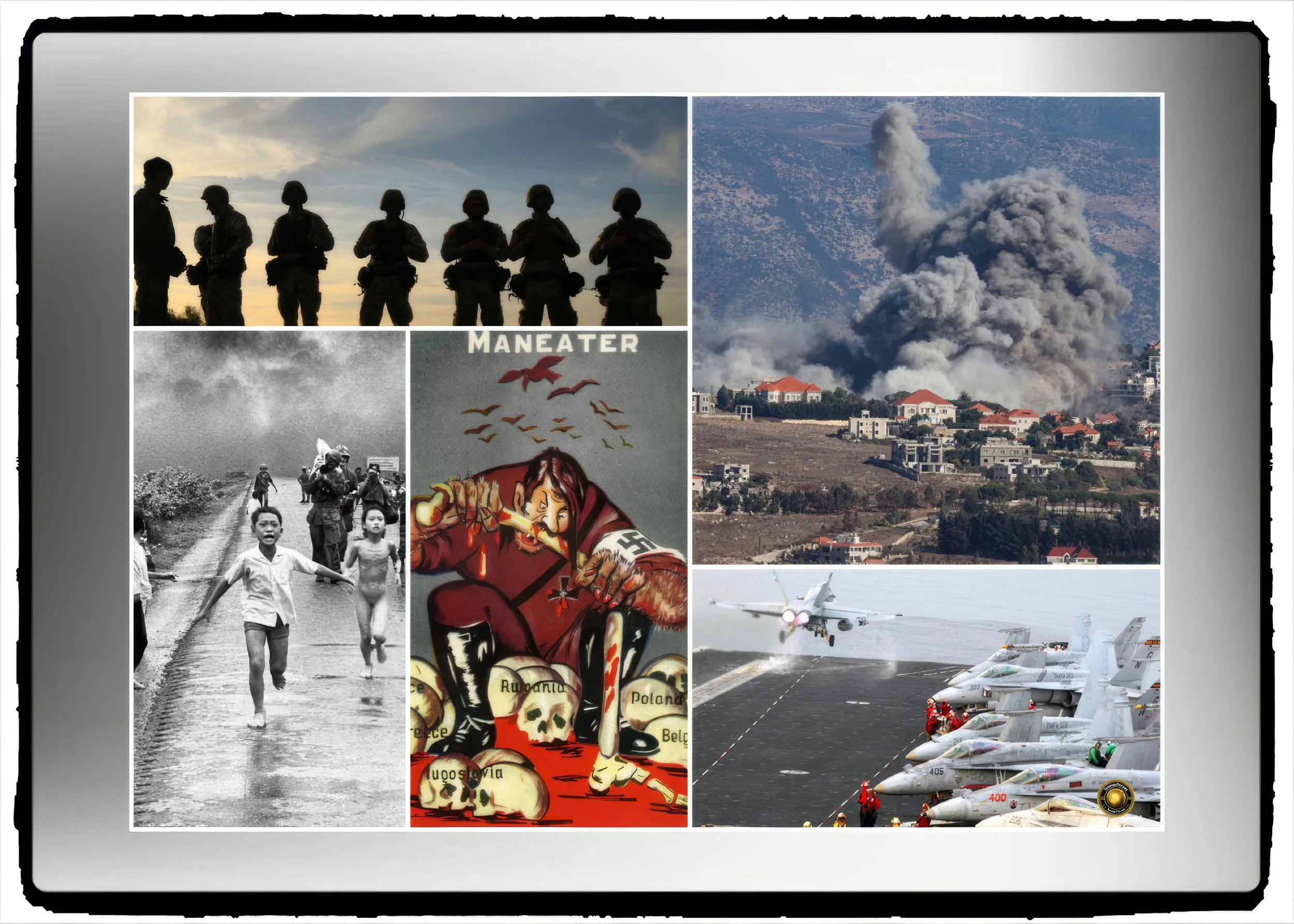
The United States applied compellence logic to a conflict in which the adversary, North Vietnam, did not share American assumptions about the value of industrial infrastructure, the rationality of proportional escalation, or the relationship between battlefield attrition and political will.
The Rolling Thunder bombing campaign was, in Schelling's vocabulary, a messaging operation: a graduated increase in military pain designed to signal American resolve and induce Hanoi to negotiate.
It failed catastrophically, not because Schelling's theory was wrong but because American policymakers misapplied it to an adversary whose resolve was structurally different from their own.
North Vietnam had no industrial economy to protect, a population willing to absorb extraordinary losses for national unification, and a political system whose leaders were not subject to the electoral pressures that constrained American decision-makers.
Martin van Creveld's The Transformation of War, published in 1991 as the Cold War ended, addressed this failure at the deepest structural level. Van Creveld argued that the dominant paradigm of Western military thought — what he called "Trinitarian warfare," organized around the Clausewitzian triad of government, military, and people — was becoming obsolete.
The wars of the future would be fought not between states and their organized armies but between networks of non-state groups animated by ideology, ethnicity, religion, and identity.
These groups would not play by the rules of Trinitarian warfare. They would not respect distinctions between combatants and civilians, would not confine their operations to defined battlefields, and would not accept defeat in the conventional sense.
They would simply continue fighting in different forms, through different networks, with different tactics, until the larger power either exhausted its will to fight or was politically delegitimized.
Van Creveld's predictions were vindicated with almost painful regularity in the post-Cold War decade: Somalia in 1993, the Balkans throughout the 1990s, the second Chechen war, and most consequentially, the American invasions of Afghanistan and Iraq, both of which replicated with remarkable fidelity the pattern van Creveld had identified.
Rupert Smith's The Utility of Force, published in 2005, offered an operational complement to van Creveld's structural analysis. Smith, a British general who had commanded forces in the Gulf War, Bosnia, and Northern Ireland, argued from direct operational experience that the Western concept of war had been rendered obsolete by a fundamental shift in the nature of conflict.
The new paradigm, which he termed "war amongst the people," was characterized by the embedding of military operations within civilian populations, the erosion of the distinction between combatant and non-combatant, the subordination of military force to media and political narratives, and the fundamental inability of precision military strikes to achieve lasting political objectives without sustained engagement with the social and political fabric of the affected society.
Smith's argument was not that military force was useless. It was that force deployed in the old manner — as a concentrated, decisive instrument designed to destroy enemy formations and compel political surrender — was structurally unsuited to the environments in which 21st century conflicts actually unfolded. Force could suppress; it could degrade; it could create pauses. It could not, by itself, resolve the underlying political contradictions that generated conflict in the first place.
Sean McFate's The New Rules of War, published in 2019, synthesized and extended the insights of the previous three decades into a comprehensive framework for understanding contemporary conflict.
McFate identified what he called an age of "durable disorder" — a structural condition in which the decay of the post-Cold War order, the proliferation of non-state armed groups, the privatization of violence through mercenaries and contractors, and the pervasiveness of information warfare had created an environment in which traditional military victories were not merely difficult but structurally impossible.
The enemy was not a fixed hierarchy to be decapitated but a fluid network whose power derived precisely from its decentralization and adaptability. In this environment, narrative warfare — the contest over meaning, legitimacy, and perception — was often more decisive than firepower.
And the old rule that massive military power wins wars had been replaced by a new reality in which asymmetric actors could impose unsustainable costs on technically superior opponents by denying them the clear victory that would justify the expense and risk of sustained military engagement.
Key Developments: Iran, the Axis of Resistance, and the Architecture of Asymmetric Coercion
Compellence, Coercion, and Civilizational Conflict: Military Theory Meets the Trump Doctrine in Practice
The current confrontation between the United States, Israel, and Iran is the most fully articulated expression of all four frameworks simultaneously in operation.
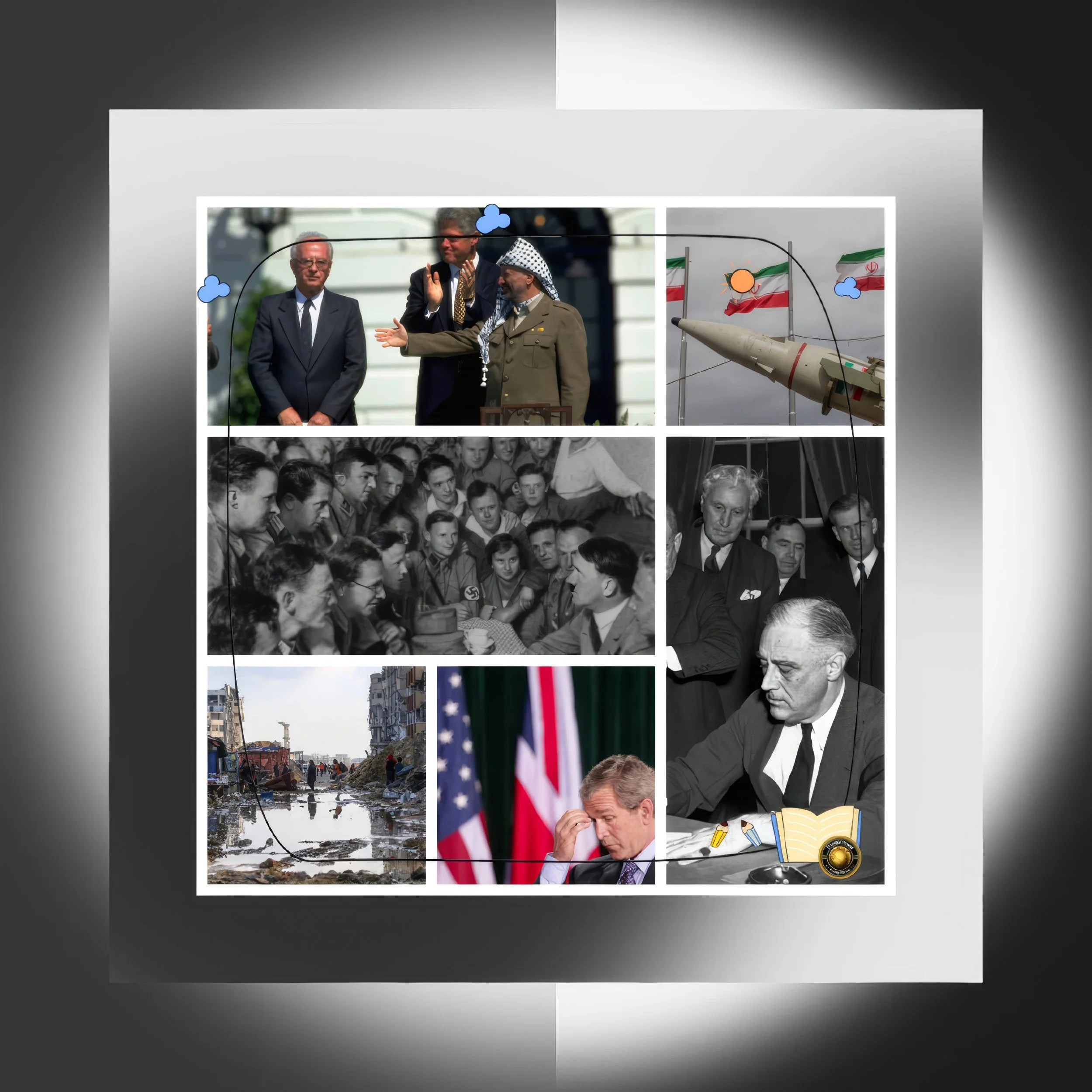
The June 2025 Israeli Operation Rising Lion and the accompanying US strikes on Iranian nuclear facilities at Fordow, Natanz, and Isfahan represented, in Schelling's vocabulary, a compellence operation of the highest order: a calibrated application of decisive force designed not to destroy Iran as a state but to communicate, through the language of military pain, the limits beyond which the US-Israel partnership would not tolerate Iranian nuclear progress.
The operation was structurally coherent within Schelling's framework. It had defined objectives — the destruction of hardened nuclear infrastructure — verifiable endpoints, and surviving Iranian counterpart institutions capable of negotiating a ceasefire.
The Qatar-brokered ceasefire that ended the 12-Day War in June 2025 confirmed the essentially coercive rather than annihilatory logic of the operation.
Iran signaled capitulation through Gulf intermediaries while publicly projecting defiance, a pattern Schelling would have recognized as rational face-saving in the shadow of compellence.
But if June 2025 appeared, from a Schellingian perspective, as a successful application of compellence logic, the subsequent months have revealed its limits. The ceasefire lasted less than nine months before a new round of conflict began.
This failure of durability is precisely what McFate's framework predicts. In an age of durable disorder, ceasefires do not resolve conflicts; they merely modulate their intensity.
The underlying structural conditions — Iranian determination to achieve deterrence through nuclear adjacency, Israeli unwillingness to accept a nuclear-capable Iran, and American commitment to the security of its regional partners — remain unchanged. Striking nuclear facilities destroyed physical infrastructure but left intact the political will that drove the program, the technological knowledge that could reconstitute it, and the ideological framework within which Iranian leaders define national security.
Iran's response to the strikes confirmed McFate's new rules in operation. Rather than attempting conventional military retaliation — which would have been suicidal — Tehran deployed cheap drones to threaten maritime traffic through the Strait of Hormuz, a critical passage for approximately 20% of global oil supply.
This was not a military defeat turned into a political victory through conventional reversal.
It was the instantiation of McFate's principle that in the age of durable disorder, the weaker party imposes costs through mechanisms that superior firepower cannot easily neutralize, forcing the stronger party into an impossible choice between escalation, accommodation, or indefinite attrition.
The geographic and political dimensions of Iranian strategy illuminate van Creveld's framework with particular clarity.
Iran has never relied primarily on its own conventional forces to project power. Instead, it has constructed over 4 decades a transnational network of proxy forces — Hezbollah in Lebanon, Hamas in Gaza, the Popular Mobilization Forces in Iraq, the Houthis in Yemen, and a constellation of Syrian militias — that together constitute what Tehran brands the Axis of Resistance.
This network is precisely the kind of "low-intensity, irregular conflict driven by non-state networks" that van Creveld predicted would dominate post-Trinitarian warfare.
Its genius, from an Iranian strategic perspective, is that it allows Tehran to project power, impose costs on adversaries, and pursue political objectives across multiple landscapes simultaneously, while maintaining plausible deniability and avoiding the direct confrontation with superior US and Israeli conventional forces that would be catastrophic.
The degradation of this network — through Israeli strikes on Hezbollah leadership in 2024, the collapse of Hamas's military capacity in Gaza, the erosion of the Houthis under US and Israeli air pressure, and the setbacks suffered by Iraqi militias — has been significant.
But van Creveld's framework warns against interpreting the degradation of a proxy network as the resolution of the conflict that drives it. Networks reconstitute. Ideologies persist.
The political and social conditions that generate recruitment — dispossession, occupation, sectarian grievance — remain.
The current landscape also confirms Rupert Smith's analysis with painful specificity.
In Gaza, Lebanese territories, and now the post-strike landscape of Iran itself, the application of precision airpower has produced what Smith would have predicted: tactical destruction without political resolution, civilian suffering that generates new cycles of grievance, and international legitimacy costs that complicate the strategic position of the applying power.
The Israeli campaign in Gaza since October 2023, which has killed tens of thousands of civilians and destroyed critical civilian infrastructure, has not produced the decisive political outcome — the elimination of Hamas as a governing and military force — that its architects promised. Instead, it has produced the protracted, politically messy campaign that Smith's framework predicts when precision strikes are applied to populations rather than armies, in societies where military and civilian functions are inextricably intertwined.
Latest Facts and Concerns: Trump, the Monroe Doctrine, and the Return of Neo-Colonial Logic
From Cold War Deterrence to Middle East Chaos: What Four Strategists Saw Coming
The Trump administration's second-term foreign policy constitutes, in strategic theoretical terms, a novel fusion of Schellingian compellence and neo-colonial Monroe Doctrine logic applied simultaneously to the Western hemisphere and the Middle East.
The 2025 National Security Strategy's formal articulation of what analysts have termed the "Trump Corollary" to the Monroe Doctrine explicitly revives the nineteenth-century framework of hemispheric domination and conditional sovereignty in the Americas.
The designation of Venezuela's government as a terrorist organization, the explicit threats against Panama over canal access, and the pressure on Greenland and Canada are not aberrant expressions of presidential eccentricity.
They are consistent applications of a coherent, if historically regressive, strategic logic: that the United States has the right and obligation to determine the political character of its hemisphere, that sovereignty is conditional on alignment with US interests, and that military and economic coercion are legitimate instruments for enforcing these conditions.
This logic has a direct genealogy in the conflicts McFate and van Creveld analyzed.
Every American military intervention in the Western hemisphere from the nineteenth century to the present — Cuba, Nicaragua, Guatemala, Panama, Grenada, Haiti, Venezuela — has instantiated the same structural pattern: superior power imposing its political preferences on weaker societies through a combination of direct military force and proxy support, with predictably unstable and frequently catastrophic results.
The Monroe Doctrine framing also has profound implications for the Middle East, where the Trump administration's unconditional support for Israel, its aggressive posture toward Iran, and its indifference to Palestinian civilian suffering represent the application of the same conditional sovereignty logic to a landscape far outside America's traditional sphere of influence.
In effect, the Trump administration has extended the Monroe Doctrine globally, declaring that wherever US interests are engaged — which is everywhere — American coercive capacity will be deployed without the restraints of multilateral obligation or international humanitarian law.
Cause and Effect Analysis: The Structural Logic of Strategic Failure
Beyond Firepower: Why the World's Greatest Military Keeps Losing the Wars It Starts
The cause-and-effect relationships between the theoretical frameworks examined here and the empirical record of American military engagement are not incidental. They are systematic.
And they point to a recurring structural failure that no change of administration, strategy, or technology has been able to resolve.
The root cause is what might be called the compellence fallacy: the belief, traceable directly to the misapplication of Schelling's framework, that superior military power combined with credible threats will reliably produce political compliance from adversaries whose cost-benefit calculations are structurally different from those assumed by the threatening party.
Vietnam demonstrated the compellence fallacy with maximum brutality.
The United States applied overwhelming airpower to North Vietnam across nearly a decade, dropping more ordnance than was used in all of the Second World War, and failed to break Hanoi's resolve.
The reason, which Schelling's framework actually predicts but which American policymakers refused to internalize, is that compellence only works when the threatened party values what the threatening party threatens to destroy more than it values the objective over which the conflict is being fought.
North Vietnam valued national unification more than its industrial infrastructure, more than its cities, and more than the lives of its soldiers — a hierarchy of values that the American military-political establishment, anchored in its own cost-benefit assumptions, was structurally incapable of understanding.
Afghanistan replicated this failure three decades later with remarkable fidelity.
The Taliban, like the Viet Cong before them, possessed what the American military called "asymmetric motivation": they were fighting for their homes, their religion, and their culture in their own territory, against a foreign occupier whose domestic political support was inherently time-limited.
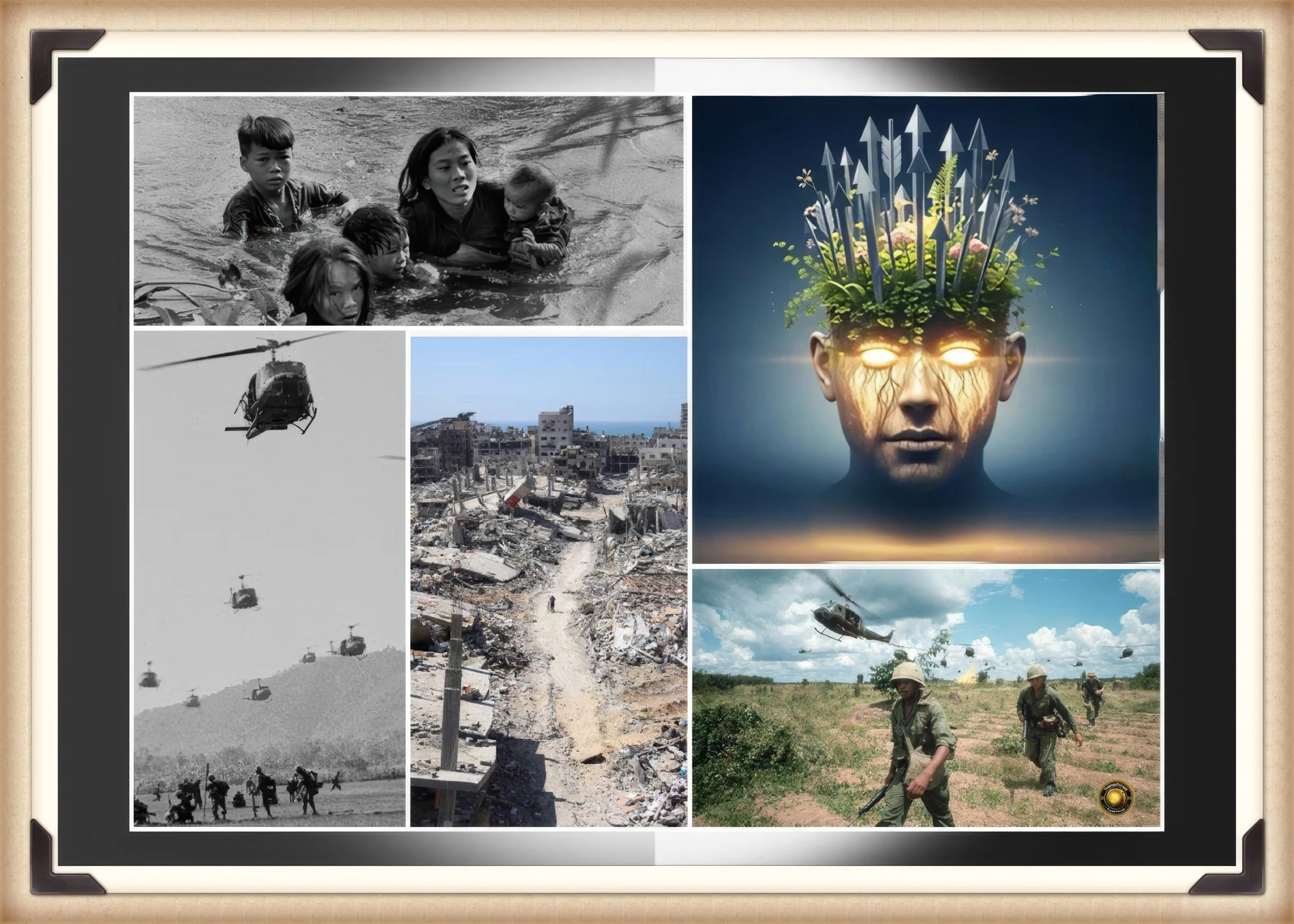
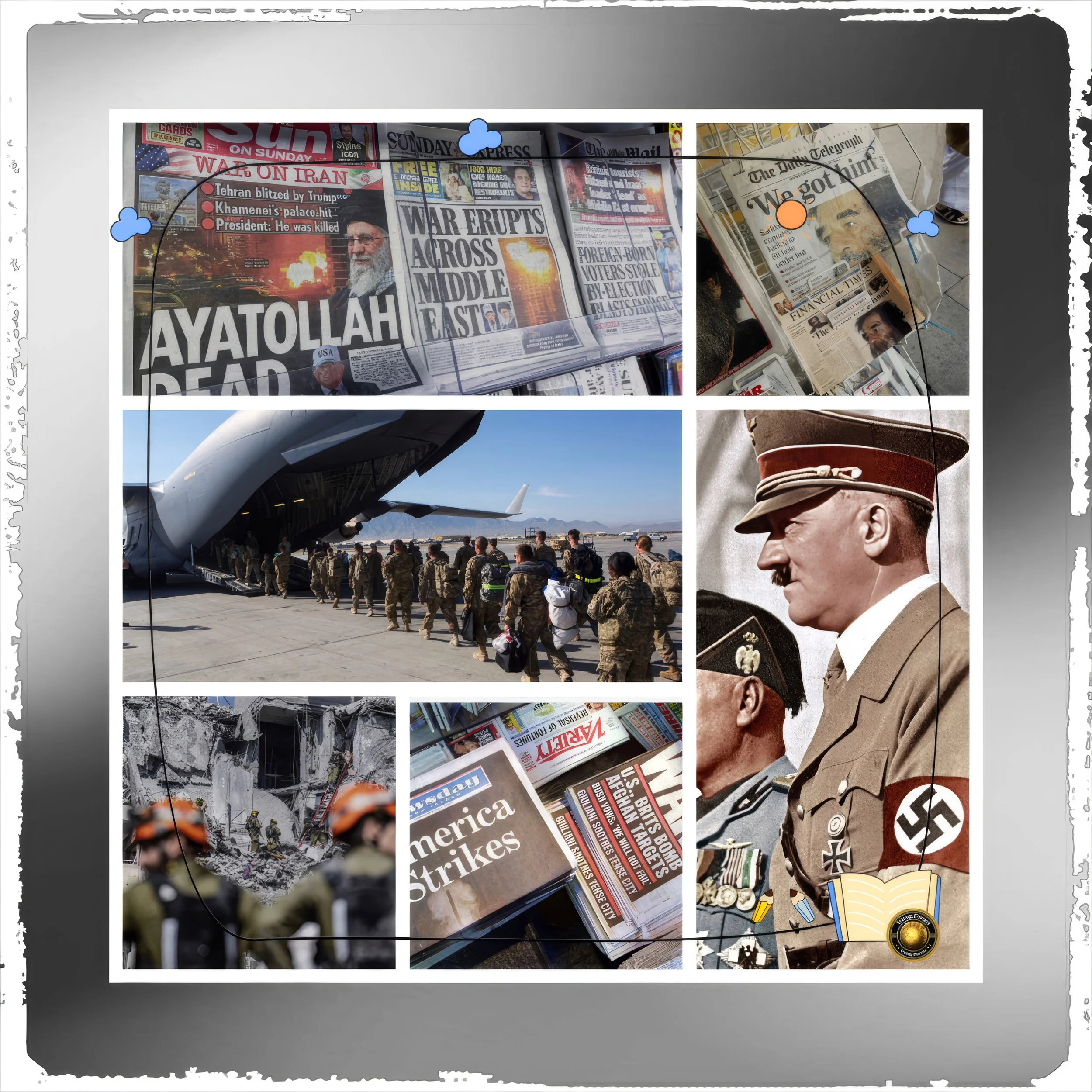
The 20-year American presence in Afghanistan, which cost $2.3 trillion and thousands of lives, ended with the Taliban in control of all major cities within weeks of the US withdrawal in August 2021 — a result that perfectly confirmed both van Creveld's prediction about the structural unsustainability of foreign counterinsurgency and McFate's argument about the futility of conventional military victory in an age of durable disorder.
Iraq added the dimension of van Creveld's post-Trinitarian warfare to the mix. The 2003 invasion destroyed the Iraqi state — the Trinitarian entity against which American conventional forces were designed to fight — in three weeks.
What followed was not a political vacuum waiting to be filled with American-sponsored democracy but exactly the kind of non-state network warfare that van Creveld had predicted: Shia militias backed by Iran, Sunni jihadist networks that eventually coalesced into the Islamic State, Kurdish separatists, tribal militias, and transnational terrorist organizations competing for the power that the destroyed state had vacated.
The American military, designed and trained for Trinitarian warfare, was structurally unsuited to fight in this environment. It won every conventional engagement and lost the political war comprehensively.
The Gaza and Lebanon campaigns of 2023-2025 represent the most current expression of Smith's "war amongst the people" framework, applied to one of the most densely urbanized and politically complex conflict landscapes in the world. Israel's strategic objective — the destruction of Hamas as a governing and military force — required operating in an environment where combatants and civilians were structurally inseparable, where the destruction of military infrastructure necessarily entailed the destruction of civilian infrastructure, and where the political costs of civilian casualties were borne not by Hamas but by Israel and its American patron.
Smith's framework predicts this outcome with precision: in war amongst the people, the application of force is inevitably contested as illegitimate, the distinction between success and failure is politically rather than militarily determined, and the side that wins the narrative often defeats the side that wins the battles.
Future Steps: What the Theorists Would Predict
How Old Books Explain New Wars: Strategy Scholars and the Age of Durable Disorder
If the four theorists examined here were to assess the current strategic situation and offer predictions, their frameworks would converge on several uncomfortable conclusions. Schelling would note that the conditions for effective compellence are deteriorating.
For compellence to work, the threatened party must believe the threat is credible and must value its survival more than its objectives.
Iran, after decades of American pressure, comprehensive sanctions, the assassination of its most consequential military commander, and the destruction of its nuclear facilities, has demonstrated a degree of resolve that systematically defies the predictions of compellence theory.
Schelling would also note the dangerous implications of the enforcement mechanism gap created by the death or incapacitation of Late Supreme leader Khamenei: in his absence, the Iranian political system lacks a single individual capable of authorizing and enforcing compliance with ceasefire terms, making the game-theoretic calculus of coercive bargaining vastly more complex.
McFate would predict continued durable disorder. The destruction of Iran's nuclear infrastructure has not resolved the strategic competition between Tehran and the US-Israel-Gulf partnership.
It has simply shifted the terms on which that competition is conducted. Iran will reconstitute its nuclear knowledge and intent, rebuild its proxy network in new configurations, and continue to exploit the grey zone — that space between conventional war and formal peace — where asymmetric stakeholders impose costs on conventionally superior opponents without triggering the full-scale response that would destroy them.
The Houthis' continued capacity to threaten maritime traffic through the Red Sea and the Strait of Hormuz, even after sustained US and Israeli air campaigns, is precisely the kind of asymmetric persistence that McFate's durable disorder framework predicts.
Van Creveld would note the paradox at the heart of the Trump Corollary: that the application of Monroe Doctrine logic to a multipolar world in which China, Russia, and regional powers like Iran, Turkey, and Saudi Arabia are contesting American hegemony will produce not a restoration of US dominance but accelerated fragmentation.
Non-state networks and irregular warfare will continue to proliferate in the spaces vacated or contested by state competition.
The very aggression and unilateralism of American strategy under Trump, from the strikes on Iranian nuclear facilities to the coercive diplomacy toward Panama and Venezuela, will generate new nodes of resistance and new proxy networks, as potential adversaries draw the lesson that alignment with American preferences is insufficient protection against American coercion.
Smith would argue that the political outcomes the US-Israel partnership seeks from its military campaigns are not achievable through the instruments it is deploying.
The destruction of Hamas's military capacity in Gaza has not produced a legitimate Palestinian political alternative.
The degradation of Hezbollah in Lebanon has not produced a stable Lebanese state capable of filling the power vacuum.
The strikes on Iran's nuclear program have not resolved Iranian determination to achieve a deterrent capability.
In each case, Smith's framework predicts what the empirical record confirms: force applied among the people produces tactical effects and strategic stalemate, because the political conditions that generate conflict are not amenable to military resolution.
The broader implications for the international order are severe.
Trump's neo-colonial Monroe Doctrine logic is simultaneously an expression of American power and a symptom of American strategic bankruptcy.
It recycles the compellence fallacy in new geographic and rhetorical packaging. It treats sovereignty as conditional on compliance, which generates new cycles of resistance.
It deploys superior military force in environments structurally unsuited to its application, replicating the failure pattern documented in Vietnam, Afghanistan, Iraq, Gaza, Lebanon, and now Iran.
The multipolar world that van Creveld predicted and McFate documented is not a problem that American military dominance can resolve.
It is a condition that American military dominance, applied without political sophistication, continuously reinforces.
Conclusion: The Price of Strategic Illiteracy
When Deterrence Breaks Down: Game Theory, Proxy Wars, and the Collapse of Strategic Order
The collective insight of Schelling, McFate, Smith, and van Creveld is not that military force is useless.
None of them argued that.
Their shared insight is that military force is useful only within a political strategy sophisticated enough to translate tactical effects into durable political outcomes — and that the United States has repeatedly deployed its extraordinary military capacity in the absence of such a strategy, with predictable and catastrophic results.
The Iran confrontation of 2025-2026, the Gaza and Lebanon campaigns, the resurgence of Monroe Doctrine logic in the Western hemisphere, and the long shadow of Vietnam and Afghanistan are not separate problems requiring separate solutions.
They are expressions of a single structural failure: the persistent American inability to subordinate military power to political strategy in environments characterized by asymmetric resolve, non-state networks, and populations that refuse to be coerced on schedule.
Schelling understood this in 1960 when he wrote about the limits of credible threats.
Van Creveld understood it in 1991 when he predicted the end of Trinitarian warfare.
Smith understood it in 2005 when he documented the impossibility of decisive force among the people.
McFate understood it in 2019 when he named the age of durable disorder and declared traditional military victory a structural impossibility in it.
The question that their combined work poses, with increasing urgency as the 21st century accumulates its wreckage, is not whether the United States will eventually learn these lessons.
It is whether it will learn them before the costs become irreversible.