Carl Philipp Gottlieb von Clausewitz - Generations of Expertise: The Foundation of American National Security Power
Introduction
The interplay between expertise, military capability, and political leadership has been central to America’s rise as a global power.
Per FAF review, Clausewitz’s, a noted Prissian German military theorist, perspective on war as more than mere politics underscores the vital importance of specialized knowledge, technical skill, and institutional memory in building adequate national security infrastructure.
The journey from a nascent revolutionary force to today’s complex security apparatus demonstrates how successive generations of American experts have created, sustained, and evolved the foundations of U.S. power.
The Clausewitzian Framework: War Beyond Politics
Who was Carl von Clausewitz
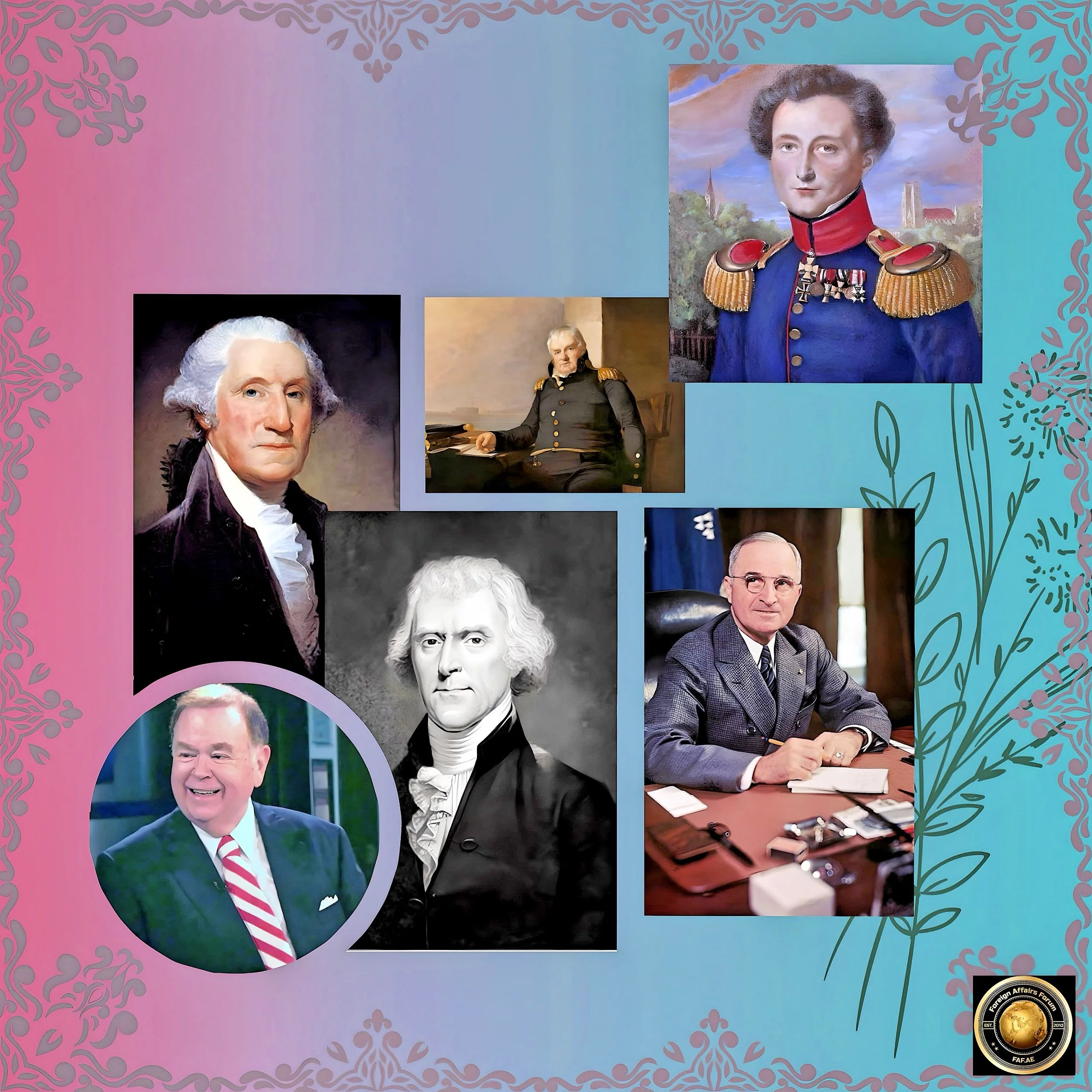
The Prussian-German soldier and military philosopher Carl Philipp Gottlieb von Clausewitz (b. 1780–d. 1831) stands out as a formidable figure in military history.
With extensive combat experience against the armies of revolutionary and Napoleonic France, Clausewitz served as a practical field soldier and a prominent staff officer at the center of the Prussian state, wielding significant political and military influence.
Beginning his combat journey as a cadet at 13, he ascended to the rank of major-general by 38.
His marriage into high nobility and his engagement with intellectual circles in Berlin further solidified his status. Clausewitz authored the seminal work, "Vom Kriege" (On War; Berlin: Dümmlers Verlag, 1832), which has emerged as the most impactful analysis of military philosophy in the Western world and beyond.
Needless to say, Carl von Clausewitz, the influential Prussian military theorist, offered profound insights that continue to shape modern military thought.
While his famous dictum that “war is the continuation of policy with other means” is often cited, his more profound contributions to military theory extend far beyond this singular observation.
In his seminal work On War (1832), Clausewitz stressed that effective warfare requires political will and a complex integration of technical skill, organizational acumen, historical knowledge, and strategic insight.
He argued that military leadership demands “military genius” - a combination of intellect, experience, personality, and temperament that creates a highly developed aptitude for war waging.
Clausewitz’s emphasis on expertise stemmed from his recognition of war’s inherent complexity. He described it as unfolding under the “fog of war” with incomplete or erroneous information amid fear and uncertainty.
This complexity demands leaders with theoretical understanding and practical experience - qualities that cannot be improvised but must be deliberately cultivated through professional education and institutional development.
America’s Early Recognition of Military Expertise
From the earliest days of American independence, the nation’s leaders understood the importance of military expertise. George Washington was chosen to command the Continental Army precisely because of his extensive experience in the British Army.
His selection reflected a foundational American understanding that effective military leadership required knowledge and experience, not just patriotic fervor.
This recognition was formalized in 1802 when President Thomas Jefferson established the U.S. Military Academy at West Point.
Despite Jefferson’s well-known wariness of standing armies, he recognized the necessity of cultivating professional military leadership.
The academy’s first superintendent, Army Major Jonathan Williams, emphasized that “our officers are to be men of science, and such as will by their acquirements be entitled to the notice of learned societies.”
This institutional commitment to professional military education marked a critical early investment in American security expertise.
The young republic’s military development continued through the 19th century, with American forces evolving through experiences in the American Indian Wars, the War of 1812, the Mexican-American War, and the transformative crucible of the Civil War.
Each conflict contributed to the growing body of American military expertise and helped forge “a sense of national unity and identity.”
The Post-World War II Revolution in Expertise
Perhaps the most decisive expansion of American national security expertise occurred after World War II.
President Harry Truman and his contemporaries faced an extraordinary challenge: America had emerged from the war with unprecedented global power but lacked the institutional infrastructure to manage these new responsibilities.
Truman himself “had no college degree, had limited military experience in World War I, and never took a physics course in his life.”
His War Secretary, Henry Stimson, began his career in the 1890s when “the United States had limited international ambitions and capabilities.”
Recognizing this gap between America’s new global role and its limited expertise, Truman’s administration embarked on an unprecedented expansion of national security institutions.
The National Security Act of 1947 created a new framework, which included the Department of Defense, the Central Intelligence Agency, and the National Security Council.
These institutions were deliberately staffed with trained experts, many veterans who had gained valuable experience during the war and subsequently received government-funded higher education.
This institutional development profoundly applied Clausewitzian principles. By building organizations filled with specialized expertise, America created the capacity to manage its newfound power and global responsibilities.
“National security” became “a new term of art for the intersection of military, diplomatic, and technical preparations for modern war—and all the various efforts to prevent it.”
Documenting and Preserving Military Knowledge
A crucial aspect of expertise development is the systematic documentation and analysis of experience.
In the post-World War II era, the Army’s Historical Division (later the Office of the Chief of Military History) undertook “the most ambitious U.S. official history project ever, the United States Army in World War II series”.
This project produced seventy-seven volumes detailing the Army's organization, plans, and operations by employing professional historians who had served as soldiers during the war.
This massive effort to document military experience demonstrates the institutional commitment to preserving and transmitting expertise across generations.
By analyzing past operations, identifying lessons learned, and creating a comprehensive historical record, military historians ensured that future leaders would have access to the accumulated wisdom of their predecessors.
The Goldwater-Nichols Revolution in Military Structure
Implementing Clausewitzian principles in American security institutions reached a new level with the Goldwater-Nichols Act of 1986, restructured the American military command system.
This legislation aligned more closely with Clausewitz’s assertion that “a certain grasp of military affairs is vital for those in charge of general policy” and that “the only sound expedient is to make the commander-in-chief a cabinet member.”
By strengthening the role of the Chairman of the Joint Chiefs of Staff and establishing a more direct relationship between military leadership and civilian authority, the Act reinforced what Clausewitz recognized as “the stronger the trinity of the people, the military, and the government, the more successful the nation would be at waging war.”
This structural reform represents a conscious application of Clausewitzian theory to the organization of American military power.
Modern Education for National Security Expertise
The commitment to developing expertise continues through contemporary educational programs designed to build national security capabilities.
The National Security Education Program (NSEP), established by the David L. Boren National Security Education Act of 1991, represents “a major Federal initiative designed to build a broader and more qualified pool of U.S. citizens with foreign language and international skills.”
NSEP focuses on “the critical languages and cultures of Asia, Africa, Eastern Europe, the Middle East, and Latin America,” providing “innovative, intensive, and long-term programs designed to provide meaningful opportunities to gain significant competencies in these languages and cultures.”
Participants commit to bringing “extraordinary skills to the Federal Government through employment within one of its many agencies and departments for at least one year,” ensuring that expertise developed through education directly benefits national security institutions.
Similarly, institutions like The Institute of World Politics offer specialized programs such as the Certificate in National Security Affairs, which provides “an understanding of the elements of the theory and practice of national security policy, process, and implementation.”
These educational initiatives represent ongoing investments in the expertise that Clausewitz identified as essential for effective security management.
The Pervasive Influence of Clausewitzian Thought
Clausewitz's influence extends beyond institutional structures, permeating American military thought and planning. The U.S. military is “deeply, culturally, and practically invested in Clausewitzian Theory and conceptions of war.”
His ideas provide conceptual frameworks for understanding everything “from nuclear deterrence to forces in contact” and guide the development of military doctrine focused on “single decisive actions guided by political conditions of what is achievable.”
This theoretical foundation has practical applications in military operations.
During Operation Iraqi Freedom, for example, American planners applied Clausewitzian concepts such as identifying the enemy’s center of gravity and economy of force.
By focusing on the regime in Baghdad as the center of gravity, coalition forces could rapidly topple the Hussein government while minimizing casualties and resources expended.
Challenges to Expertise in the Contemporary Era
Despite the institutional commitment to expertise, challenges remain in effectively maintaining and applying specialized knowledge.
Vietnam's experience illustrated the dangers of disconnection between political objectives and military operations.
Many American soldiers “found unacceptable any suggestion that they had failed on the battlefield, but they were willing to admit that policy had been badly made and that they had misunderstood their role in making it.”
Clausewitz’s clear description of “the interplay among the armed forces, government, and people” offered a framework for understanding this failure and reforming military education and doctrine.
Contemporary challenges include the management of generational diversity within military organizations.
By 2028, “there will be five generations serving in the U.S. Army,” potentially resulting in “significant differences in world views, values, and technological literacy amongst its military and civilian populations.”
This diversity requires careful talent management to ensure expertise is effectively shared across generational boundaries.
Additionally, the increasing tempo of technological change and the evolution of warfare into new domains such as cyber and space require continuous adaptation of expertise development systems.
Traditional models of military education must evolve to incorporate new fields while maintaining core competencies in established areas.
The Dangers of Abandoning Expertise
The importance of maintaining expertise in national security institutions cannot be overstated.
History demonstrates that “anti-expert leadership reverses the considered, prudent policymaking that characterized most of the post-World War II era.”
Without trained experts guiding national security policy, decision-making becomes less well-prepared and more prone to ill-considered actions.
Clausewitz warned that those who approach war without serious intellectual engagement and professional preparation are like “the overconfident European aristocrats Clausewitz despised,” likely to “lead their proud society to surprising defeats.”
War remains “too dangerous to be left to dilettantes and pretenders,” requiring instead the dedicated expertise that generations of Americans have worked to build and maintain.
Conclusion
The Enduring Importance of National Security Expertise
The development of American national security power represents a multi-generational project of building, maintaining, and evolving expertise across military, diplomatic, and intelligence domains.
From Washington’s leadership of the Continental Army to the sophisticated national security architecture of the present day, American power has rested on the foundation of specialized knowledge and institutional capability.
Clausewitz’s insights about the complexity of war and the necessity of professional expertise continue to inform American security thinking, emphasizing that effective security management requires more than political will or courage - it demands systematic knowledge development and institutional learning.
The continued investment in national security education, professional military development, and knowledge preservation reflects an ongoing commitment to Clausewitz’s fundamental insight: that war is too dangerous to be left to those without the expertise to manage its complexities.
As America faces evolving security challenges in the 21st century, the generations of expertise built over more than two centuries of national development will remain essential to navigating the uncertain and complex security environment of the future.