Why Donald Trump Gambled In Iran: Power Projection, Regime Risk, And A New Middle East War - Part IV
Executive Summary
Donald Trump's decision to open major combat operations against Iran in conjunction with Israel on February 28th, 2026, marked the most consequential US resort to force in the Middle East since the invasion of Iraq, but with far more explicit regime-change ambitions and a far greater risk of immediate regional escalation.
The operation, branded Epic Fury by the Pentagon and paired with Israel's Roaring Lion, targeted Iran's supreme leadership, missile and nuclear infrastructure, and naval assets, while openly urging Iran's population to seize the moment to replace their rulers.
This analysis argues that Trump's gamble rests on four interlocking logics: demonstration of overwhelming American power, preemption of an adverse nuclear and missile balance, domestic political positioning as a wartime president, and an attempt to reorder the regional security architecture around Israel and US-aligned Arab monarchies.
Yet each strand of this logic carries severe counter-risks: the possibility of Iranian regime hardening rather than collapse, multi-theatre retaliation from the so-called Axis of Resistance, disruption of global energy markets via the Strait of Hormuz, and strategic overstretch for the US at a time of intensifying rivalry with China and Russia.
The killing of Supreme Leader Ali Khamenei in the initial wave of strikes, the decapitation of senior security officials, and Iran's ballistic attacks on Israel and US bases across the Gulf have already transformed the regional landscape, but without offering any guarantee that a stable post-war order will emerge.
Trump's Iran gamble is thus less a discrete operation than the opening chapter of a protracted contest over regional legitimacy, deterrence, and the future of US primacy in the Middle East.
Introduction
The Disruptor-in-Chief Confronts Middle Eastern Complexity
Trump's February 28th decision must be situated within a long American tradition of presidents attempting to master the Middle East and instead becoming ensnared by its complexities.
From Jimmy Carter's entanglement in the Iran hostage crisis, through Ronald Reagan's Lebanon trauma, George H. W. Bush's limited but consequential Gulf War, Bill Clinton's frustrated peace diplomacy, George W. Bush's catastrophic occupation of Iraq, and Barack Obama's hesitant engagement with Syria and Iran, the region has repeatedly punished presidential hubris.
Trump explicitly styled himself as the antithesis of cautious managerialism, promising to wield US power with an abandon his predecessors supposedly lacked, yet also to avoid endless wars. His move against Iran appears, at first glance, to contradict the second pledge while fulfilling the first.
In announcing the strikes, Trump described a massive and ongoing campaign designed to eliminate imminent threats, destroy Iran's missile and nuclear capabilities, and enable the Iranian people to take back their country.
Coordinated with daytime Israeli strikes against military and leadership targets in Tehran and other cities, the operation sought not only to degrade Iranian hard power but to shatter the psychological aura of regime invulnerability.
Yet the very scale of the opening salvo guaranteed that Iran would not treat it as a limited punitive action, but as a war for regime survival, inviting escalation across multiple theatres from the Levant to the Gulf.
This introduction frames Trump's choice as a high-stakes experiment in coercive regime transformation under nuclear shadow, conducted in full awareness that American lives, allied cities, and the global economy could bear the costs.
The central question is whether the combination of shock, decapitation, and economic strangulation can truly catalyze a more benign order in Iran and the region, or whether it will instead unleash a cycle of retaliation and fragmentation that outlives the Trump presidency.
History And Current Status Of The US-Iran Conflict
From Revolution And Containment To Overt Regime-Change Warfare
The 1979 Islamic Revolution and the subsequent hostage crisis set US-Iran relations on a path of mutual hostility that successive administrations failed to reverse. Washington's strategy oscillated between containment, coercion, and tentative engagement, but never settled into a stable equilibrium.
During the Iran-Iraq War, the US tacitly backed Saddam Hussein as a counterweight, while later moving to contain both Baghdad and Tehran through dual-track sanctions and regional alliances.
Iran, for its part, invested in asymmetric warfare, missile development, and proxy networks stretching from Lebanon and Syria to Iraq, Yemen, and the Palestinian territories, gradually constructing what it calls the Axis of Resistance.
The 2015 nuclear deal (JCPOA) briefly offered a controlled framework to limit Iran's nuclear advances in exchange for sanctions relief, but Trump's 2018 withdrawal shattered that arrangement and set in motion a tit-for-tat spiral.
Iran responded by incrementally breaching enrichment limits, expanding stockpiles, and showcasing its missile and drone capabilities, including strikes on Saudi oil facilities and maritime harassment in the Gulf.
By May 2025, Iran had sharply increased its stockpile of uranium enriched to 60% purity, just below weapons-grade, reaching over 408 kilograms, a nearly 50% rise since February 2025, enough for multiple nuclear weapons if further enriched.
Parallel to this nuclear and regional competition, internal unrest periodically shook Iran, with protests over fuel prices, economic hardship, and political repression, though none threatened the regime's survival by themselves.
By 2025, after the short 12-Day War in June that targeted Iran's nuclear and ballistic missile programs and repeated crises in the Red Sea and Gulf shipping lanes, Washington and Tehran had reached a dangerous equilibrium: Iran possessed advanced missile forces and was edging closer to nuclear threshold status, while the US maintained a heavy regional military footprint and relied increasingly on Israel and Gulf partners for day-to-day deterrence.
Diplomacy in early 2026, including lengthy talks in Geneva, failed to produce a new nuclear or regional security framework.
Iran was unlikely to accept reported US demands to destroy its nuclear facilities, send its highly enriched uranium to the United States, and commit to permanent limitations, leaving Trump's advisers warning that diplomacy had reached its natural end.
Current status after February 28th is defined by five structural developments.
First, the joint US-Israeli operation killed Supreme Leader Ali Khamenei and several senior security officials, creating an unprecedented leadership vacuum in Tehran. By Trump's account on March 1st, at least 48 Iranian officials had been killed in the strikes.
Second, Iran retaliated with large salvos of ballistic missiles and drones against Israel and US bases across the Middle East, including in Bahrain, Jordan, Kuwait, Qatar, Iraq, Saudi Arabia, and the UAE, though air defenses intercepted many of them.
Missile and drone strikes hit UAE territory including the Jebel Ali port, multiple hotels, and Abu Dhabi port infrastructure, as well as targets in Saudi Arabia and Bahrain, departing sharply from the largely symbolic retaliation seen during the June 2025 conflict.
Third, Tehran or its proxies attacked regional civilian aviation facilities and threatened maritime traffic, with closure of the Strait of Hormuz disrupting global oil and gas shipments and injecting fresh volatility into world markets, putting at risk roughly 20% of global oil flows and creating a de facto closure for most of the global shipping community through insurance withdrawal.
Fourth, domestic politics in Iran entered a period of uncertainty, with rival factions contending to define succession and control the security apparatus under wartime pressure.
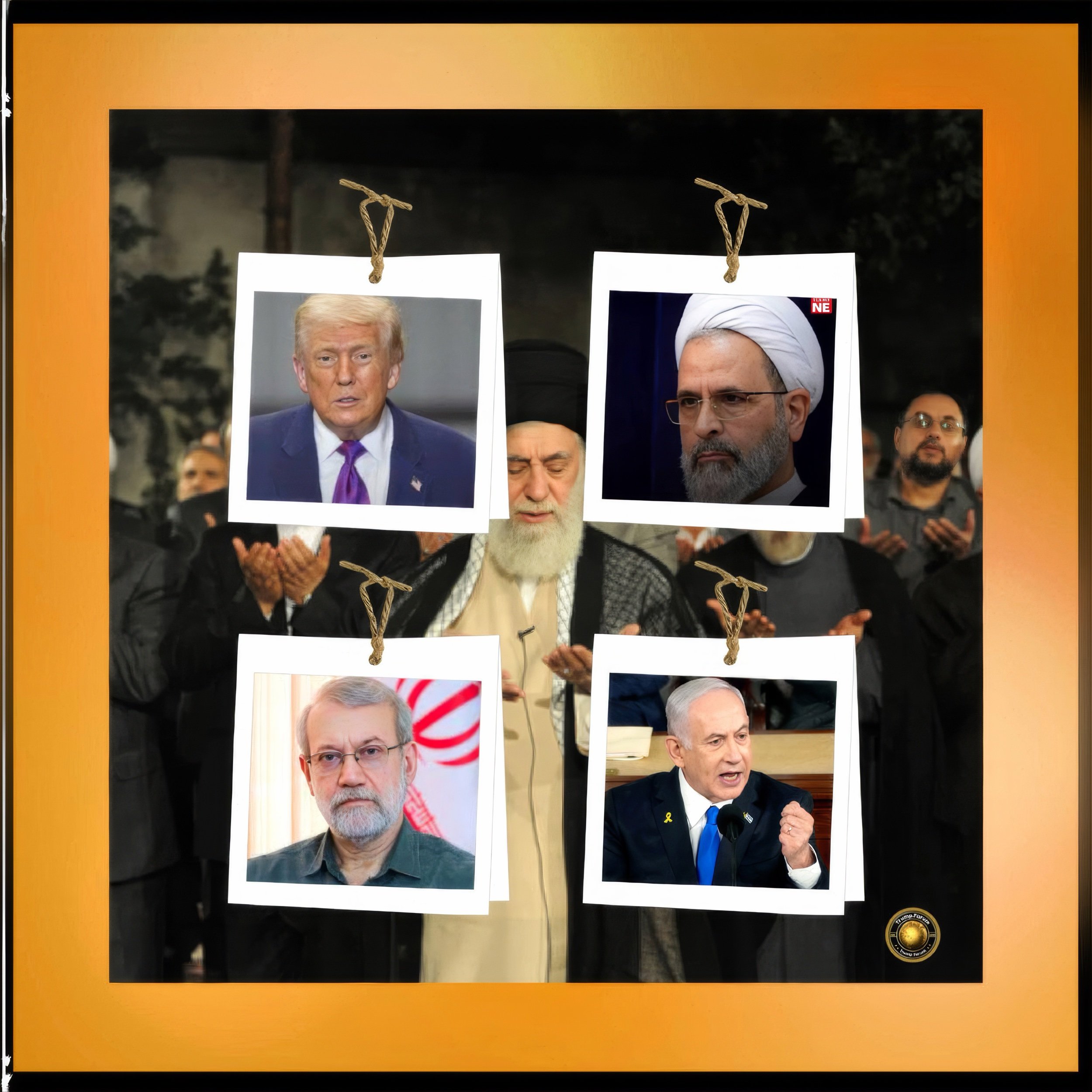
Iran activated Article 111 of its Constitution, transferring the supreme leader's powers to an Interim Leadership Council consisting of Ayatollah Alireza Arafi of the Guardian Council, Chief Justice Gholam-Hossein Mohseni-Ejei, Speaker of the Islamic Consultative Assembly Mohammad Bagher Ghalibaf, and President Masoud Pezeshkian, pending election of a permanent successor.
Fifth, Washington and Jerusalem signaled that the campaign would last weeks, not days, and would not halt until Iran's capacity to threaten their interests was decisively reduced.
Trump stated the operation could take four weeks or less, acknowledging that American casualties were likely.
Key Developments And Turning Points
From Military Buildup To Epic Fury
In the weeks preceding February 28, the US gradually assembled a formidable regional force posture, including multiple carrier strike groups, hundreds of combat aircraft, and layered air and missile defenses, while also accelerating arms transfers to Israel and key Gulf partners.
This buildup served dual purposes: coercive diplomacy aimed at extracting far-reaching Iranian concessions on nuclear and missile programs, and contingency planning for a rapid transition to offensive operations if talks failed.
Trump's advisers publicly hinted at a high probability of kinetic action, with some estimating a near-certain likelihood that force would be used absent a breakthrough.
The immediate trigger for Epic Fury was not a single spectacular Iranian provocation but an accumulation of unresolved grievances: progress of Iran's enriched-uranium program beyond JCPOA limits, continued ballistic missile testing, support for armed groups attacking US forces and partners, and Tehran's unwillingness to accept the stringent constraints Washington demanded.
As of November 2024, Iran's stockpile of enriched uranium included 182 kilograms enriched to 60%, 840 kilograms enriched to 20%, and 2,595 kilograms enriched to 5%.
Iran also significantly expanded its uranium enrichment capacity and announced plans to install an additional 32 cascades of centrifuges.
The IAEA estimated that Iran's monthly production of 60% material at Fordow would jump from 4.7 kilograms per month to 37 kilograms per month.
Conducting this activity at Fordow, a deeply buried nuclear facility, further increased proliferation risk because Fordow is more challenging to destroy with conventional military strikes.
In Trump's narrative, Iran had rejected every chance to abandon its nuclear ambitions and thus left him no choice but decisive action that would defend the American people and our very good friends and allies.
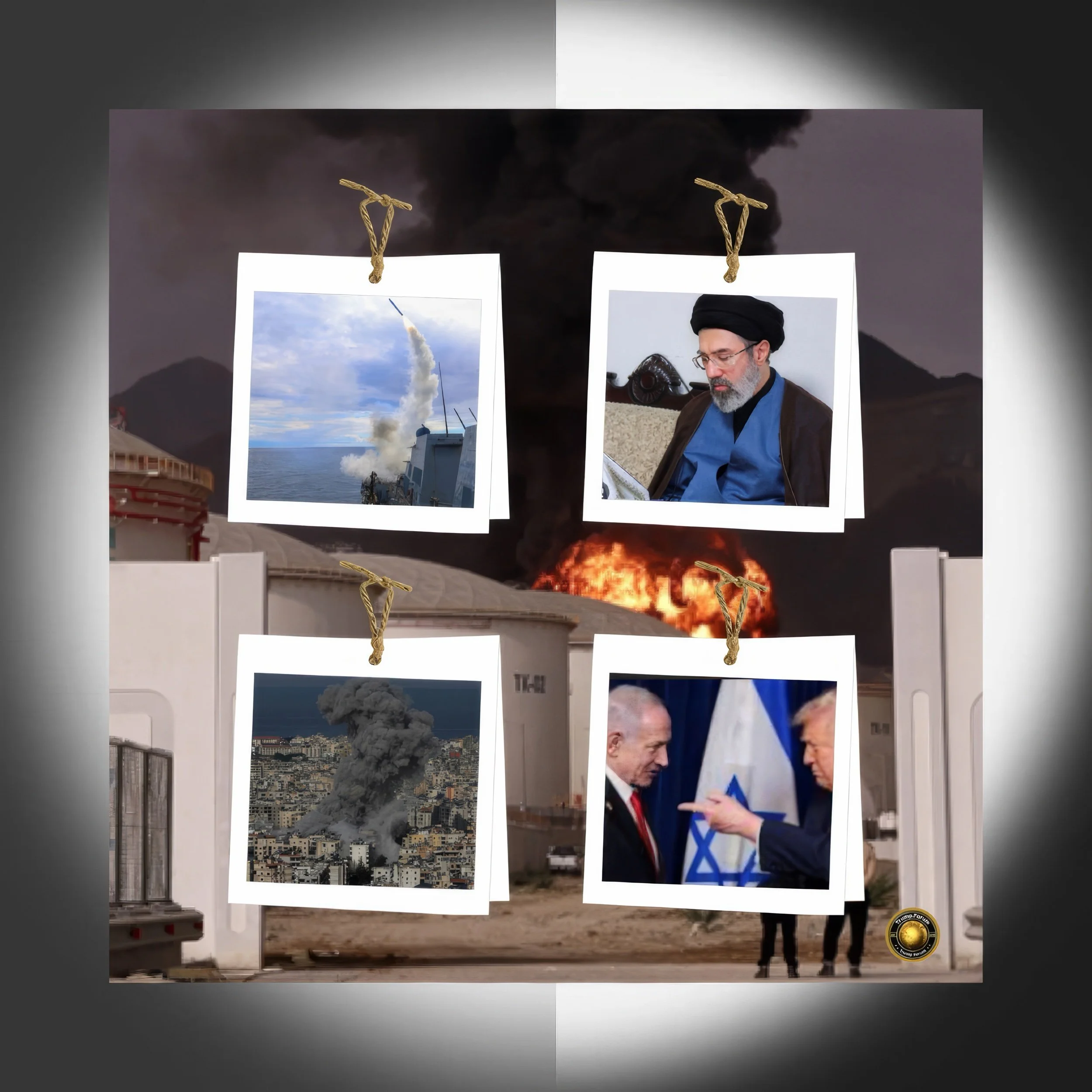
The opening wave on February 28 targeted leadership compounds, intelligence and defense ministries, missile and air-defense sites, nuclear-related facilities such as Parchin, and key naval bases associated with Iran's capability to threaten shipping and launch swarm attacks in the Gulf.
Strikes intended to decapitate the Iranian regime began the campaign, targeting Khamenei in Tehran, as well as Iranian President Masoud Pezeshkian, Islamic Revolutionary Guard Corps commander Mohammad Pakpour, Iranian Defense Minister Amir Nasirzadeh, senior Khamenei adviser Ali Shamkhani, and former Iranian President Mahmoud Ahmadinejad.
Conducting many of these strikes in daylight, especially in Tehran, carried substantial political symbolism: it emphasized allied confidence in their air superiority and was designed to shock both regime elites and the broader Iranian public.
The confirmed killing of Khamenei and senior commanders in these first hours became the operation's defining feature, transforming it from a robust punitive raid into an open bid for regime transformation. Iran's response has unfolded across several axes.
Ballistic missile and drone strikes on Israel and US facilities sought to impose costs, demonstrate residual deterrent capacity, and reassure domestic audiences that the state remained capable of striking back.
Cyber operations, likely including attacks on critical infrastructure, and intensified activity by allied militias in Iraq, Syria, Yemen, and Lebanon, aimed to widen the conflict's footprint and raise the price for Washington's allies.
Symbolically, Tehran declared multi-week national mourning for Khamenei while also projecting images of resilience, even as reports surfaced of internal contestation among security organs and clerical factions.
On the US-Israeli side, Trump and Netanyahu have doubled down rhetorically, promising to destroy Iran's missile industry, annihilate its naval forces, and remove the existential threat posed by the Islamic Republic.
Trump promised to raze Iran's missile industry, annihilate their navy, and ensure that Iran does not obtain a nuclear weapon, stating it's a very simple message: they will never have a nuclear weapon.
Netanyahu similarly underlined that this is an operation designed to remove the existential threat posed by the Islamic Republic and create the conditions for Iranians to change their destiny.
Trump candidly acknowledged that American casualties were likely and that operations could last roughly four weeks or more, framing this as the necessary price to avert a future in which a nuclear-armed Iran could extort the world.
By March 1st, US Central Command confirmed that 3 US service members had been killed and 5 others seriously wounded as part of Operation Epic Fury, with casualties occurring among American personnel based in Kuwait, marking the first American deaths.
This temporal framing, a short but intense war to avoid a more dangerous future, has become central to the administration's domestic and international argument.
Latest Facts And Emerging Concerns
Escalation Risks, Humanitarian Crises, And Economic Shock
Early battle damage assessments suggest that while the US-Israeli strikes significantly degraded segments of Iran's missile, air-defense, and command-and-control structures, they did not incapacitate them.
Iran has retained enough capability to fire large volleys at Israel and US facilities, though interception rates appear high due to advanced missile defenses and preemptive targeting of launch infrastructure.
The US military refuted Iranian assertions that the USS Abraham Lincoln aircraft carrier had been targeted by ballistic missiles, clarifying that the missiles launched did not come close.
This partial degradation creates an ambiguous deterrence environment: both sides possess means to hurt the other, yet neither can deliver a clean knockout without accepting heavy escalation risks.
Humanitarian concerns are mounting rapidly. Iranian officials claim high civilian casualties, including a reported strike that killed many schoolgirls at an elementary facility near a military site, while Israel and US sources emphasize their focus on military and regime targets.
In Israel, Iranian missiles have killed civilians in cities like Beit Shemesh, while rocket fire and air-raid sirens have traumatized broader populations already scarred by previous wars.
Across the region, the possibility of mass displacement, refugee flows, and infrastructure damage is rising as strikes and counter-strikes proliferate.
Economically, the closure or severe disruption of the Strait of Hormuz by Iranian actions has injected immediate volatility into global markets. The United States has struck Iran, triggering an active military conflict now in its 2nd day.
Iran has retaliated beyond symbolic measures, striking Gulf neighbors including the UAE and Saudi Arabia, and threatening to close the Strait of Hormuz.
What began as a potentially contained operation has rapidly broadened into a regional crisis with direct implications for global energy supply, freight markets, and commodity pricing.
Even partial interruption of tanker traffic can drive up energy prices, strain supply chains, and amplify inflationary pressures in major importers from Europe to Asia.
Insurance premiums for shipping in the Gulf have spiked, and risk assessments now must factor in the possibility of sustained conflict affecting not just oil and gas flows but also key air corridors.
For emerging markets already grappling with debt and slow growth, a prolonged price spike could prove particularly destabilizing.
Politically, Washington faces both alliance management and domestic legitimacy challenges.
Even close European partners that share concerns about Iran's nuclear and regional behavior are uneasy about open-ended regime-change warfare and the precedent it sets.
Within the US, support for striking Iran is intertwined with partisan polarization, and public tolerance for casualties or economic blowback remains uncertain, especially after the experience of Iraq and Afghanistan.
In the Middle East, several Arab governments quietly welcome the weakening of Iran's regional network, yet they fear internal unrest and retaliation against their own infrastructure and populations.
The Secretary-General of the United Nations warned that the Iran strikes could trigger wider conflict in the Middle East, with Security Council speakers calling for urgent restraint and return to talks. Iran's delegate said the United States and the Israeli regime had explicitly articulated regime change as their objective.
Cause-And-Effect Analysis
Strategic Gamble, Signaling, And Unintended Consequences
Trump's Iran decision can be understood as the convergence of 4 causal vectors: threat perception, ideological ambition, domestic politics, and alliance dynamics.
First, threat perception
US and Israeli intelligence assessments increasingly portrayed Iran as approaching a capability to field long-range missiles and, in time, nuclear weapons that could threaten not only Israel and Gulf partners but eventually parts of Europe and the US homeland.
According to UN watchdog metrics, about 92.5 pounds of 60%-enriched uranium is enough to build a single nuclear weapon if enriched further, and Iran possessed well over 400 kilograms of such material by early 2025.
The memory of intelligence failures over Iraqi weapons programs cut both ways: elites feared overestimating or underestimating Iran, but the political cost of appearing to ignore a growing threat was judged higher than the cost of acting too forcefully.
Second, ideological ambition
Trump has long exhibited a belief in the transformative power of decisive military blows and economic pressure, seeing adversary regimes as brittle structures that can be brought down by a combination of shock, sanctions, and support for popular uprisings.
His televised appeals to the Iranian people, promising that when we are finished, take over your government; it will be yours to take, and Netanyahu's encouragement of all parts of the Iranian people to cast off the yoke of tyranny and bring freedom and peace-loving values to Iran, encapsulate a conviction that external force can catalyze internal revolution.
According to an Israeli official speaking to Axios, the goal is to create all the conditions for the downfall of the Iranian regime. This vision recasts the US not merely as a balancer but as an architect of political futures, even at the cost of short-term instability.
Third, domestic politics
wartime presidencies often gain short-term rallies in approval, and Trump's political persona is deeply tied to projecting strength and disproving accusations of weakness or isolationism.
By framing Iran as an existential danger and himself as the only leader willing to confront it decisively, he seeks to transform a complex strategic decision into a simple leadership test.
Trump has seized a legacy-defining moment to demonstrate his readiness to exercise raw US military power. Moreover, his willingness to acknowledge possible US casualties functions as a kind of preemptive inoculation against accusations of dishonesty about the war's costs.
The Republican president remarked that the lives of brave heroes may be lost, we may have casualties. Such occurrences are common in warfare. However, our actions are not just for the present; they are for the future, even as precise casualty and damage estimates remain uncertain.
Fourth, alliance dynamics: Israel has long viewed Iran's nuclear and missile programs as an existential threat, and its own campaign, Lion's Roar, aims at removing the terrorist regime and creating conditions for regime change from within.
Several Gulf monarchies, though wary of public association with regime-change rhetoric, share deep anxieties about Iranian power and quietly cooperate on intelligence, basing, and airspace access.
Israel and the US believe Iran's regime is vulnerable, dealing with an economic crisis and the aftermath of protests. Trump's decision thus reflects a broader coalition's preferences, even if the US bears the lion's share of responsibility and risk.
These causal drivers produce a series of effects, some intended, others not.
Intended effects include: significant degradation of Iran's capacity to threaten Israel and US forces with missiles and drones; weakened command cohesion in Tehran following leadership decapitation; deterrent signaling to other adversaries, notably North Korea, and indirectly China and Russia, that the US remains willing to use massive force; and reinforcement of US credibility among partners who feared retrenchment.
Unintended or at least under-weighted consequences include: rally-round-the-flag effects that strengthen hardliners and marginalize reformists inside Iran; deepening legitimacy crises for pro-US governments perceived as complicit in attacks; the risk that Iranian or proxy strikes miscalculate and cause mass casualties in Gulf or European cities, dragging new states into the conflict; and the opportunity cost of diverting US attention and military resources from other theatres, especially the Indo-Pacific.
Trump has pivoted away from a preference for swift, limited operations like last month's lightning raid in Venezuela to what experts warn could be a more protracted conflict with Iran that risks escalating into a regional conflagration engulfing the oil-rich Middle East.
Moreover, global economic disruption from energy shocks may feed populist and anti-establishment currents worldwide, undermining exactly the liberal order the US claims to defend.
There is also a normative effect: by openly targeting regime leadership and announcing intentions to facilitate political change, the US has further blurred the line between war for limited objectives and war for regime transformation.
This may encourage other powers to justify their own interventions in similarly expansive terms, eroding norms of sovereignty even as Washington argues it is acting to enforce nonproliferation and counter-terrorism standards.
Future Steps And Possible Scenarios
Limited Victory, Grinding Stalemate, Or Regional Unraveling
The future trajectory of Trump's gamble can be organized into three broad scenarios, each shaped by internal developments in Iran, the durability of US domestic support, and the behavior of regional stakeholders.
In a limited-victory scenario, the joint campaign succeeds in so thoroughly damaging Iran's nuclear, missile, and naval infrastructures that Tehran, facing resource constraints and internal elite fragmentation, accepts a negotiated settlement that imposes far stricter constraints than the JCPOA, while also curbing support to regional militias.
In this scenario, leadership succession produces a collective or individual figure more pragmatic and less ideologically hostile to the US, even if the Islamic Republic's formal structure endures.
Oman's foreign minister reported that Iran had agreed during indirect talks never to stockpile enriched uranium, suggesting that pathways to de-escalation exist, though such claims remain contested.
The war's human and economic costs would be severe, but advocates of the campaign would claim vindication by pointing to a weaker, more constrained Iran and a strengthened deterrent environment for Israel and the Gulf.
A grinding-stalemate scenario appears at least as plausible. Here, Iran's regime survives, adapts to leadership loss, and reconstitutes enough of its missile and proxy capabilities to sustain a low-intensity but persistent confrontation, while avoiding direct escalation to all-out regional war.
The US and Israel continue periodic strikes; Iran retaliates asymmetrically; shipping lanes remain at chronic risk; energy prices stay elevated; and regional politics become locked into a pattern of militarized hostility.
Trump's abrupt shift to military action, utilizing substantial US military resources amassed in the region in recent weeks, seems to have effectively closed the door on any diplomatic engagement with Iran for the time being, as nuclear negotiations in Geneva on the days before the strike did not yield any breakthroughs.
Some of Trump's aides had previously suggested that military strikes might compel Tehran to return to the negotiating table, forcing significant concessions.
Instead, Iran retaliated by launching missiles at Israel and several Gulf Arab states hosting American bases.
Such a scenario would resemble an extended version of the pre-war status quo but with higher violence, greater mutual hatred, and fewer diplomatic off-ramps.
The most dangerous is a regional-unraveling scenario.
In this case, cascading miscalculations or deliberate escalations lead to major Hezbollah-Israel war in Lebanon, destabilization of Iraq and Jordan by militias and refugees, severe internal unrest in Gulf monarchies, and perhaps direct clashes between US forces and Iranian allies beyond the Middle East.
Prolonged closure of the Strait of Hormuz could trigger global recession, while nuclear nonproliferation norms erode as regional states reconsider their own deterrent options.
Simultaneously, Russia and China might exploit US distraction to press their agendas in Ukraine, the Western Pacific, or elsewhere, further stretching US capabilities.
For Trump, the strategic challenge is to translate early battlefield momentum into political outcomes before domestic patience, allied unity, or economic resilience erode.
That requires clear war aims, realistic metrics of success, credible assurances to partners and adversaries, and a viable vision of post-conflict regional order.
At present, the stated goals, eliminating Iran's nuclear and missile threat, destroying its navy, and enabling regime change, risk being too expansive to achieve quickly yet too vague to guide prioritization.
Trump has also set out a daunting objective of regime change in Tehran, pushing the idea that air strikes can incite a popular uprising to oust Iran's rulers, an outcome that external air power has historically failed to achieve without the presence of some ground forces, and many experts express skepticism regarding its success this time around.
Conclusion
The Disruptor's Wager And The Test Of American Primacy
Trump's Iran operation is an archetypal expression of disruptor geopolitics: it seeks to break a long-standing strategic dilemma through overwhelming force, signaling that gradualist approaches have failed and that only a decisive shock can recalibrate adversary behavior and reassure anxious partners.
The gamble is that a short, brutal campaign will yield a more stable order than the messy, incremental management of a hostile, near-nuclear regional power.
History offers reasons for caution. Previous US efforts at coercive regime transformation in the Middle East have produced unintended consequences that outlasted initial military success, from Iraq's insurgency and civil war to Libya's state collapse.
Iran, however damaged, retains deep state institutions, ideological networks, and a sense of civilizational mission likely to resist externally imposed solutions. Even if Khamenei's death and infrastructure destruction weaken the regime, they may also unleash forces that Washington and its allies cannot easily shape.
The unprecedented succession crisis due to the sudden death of over forty Iranian officials has created an Interim Leadership Council with uncertain authority and contested legitimacy.
The Islamic Revolutionary Guard Corps is insistent on the swift appointment of a permanent leader, but internal contestation among security organs and clerical factions continues.
Yet the alternative, accepting a steadily strengthening Iran with advanced missiles and nuclear capability, carried its own grave risks, especially from the perspective of Israel and Gulf Arab partners. Trump's wager is that the world will eventually judge the costs of this war lower than the costs of inaction.
Whether that judgment holds will depend not only on battlefield outcomes but on the durability of any new arrangements in Tehran and the region. The Iran gamble thus becomes a litmus test not only of Trump's foreign policy but of the continuing viability of US primacy in a Middle East that refuses to conform to neat strategic designs.
The disruptor-in-chief wants to send a message to enemies everywhere by demonstrating the devastating nature of American power.
He has taken a calculated risk that shock, decapitation, and sustained pressure can break the Islamic Republic and deter future challengers.
But as American service members return home in flag-draped coffins, as Iranian missiles streak across the night sky toward allied cities, and as global oil markets gyrate with each new escalation, the ultimate outcome remains deeply uncertain.
Trump's Iran gamble may yet reshape the Middle East, but it may also remind a new generation of Americans why their predecessors learned to approach the region with equal measures of ambition and humility.