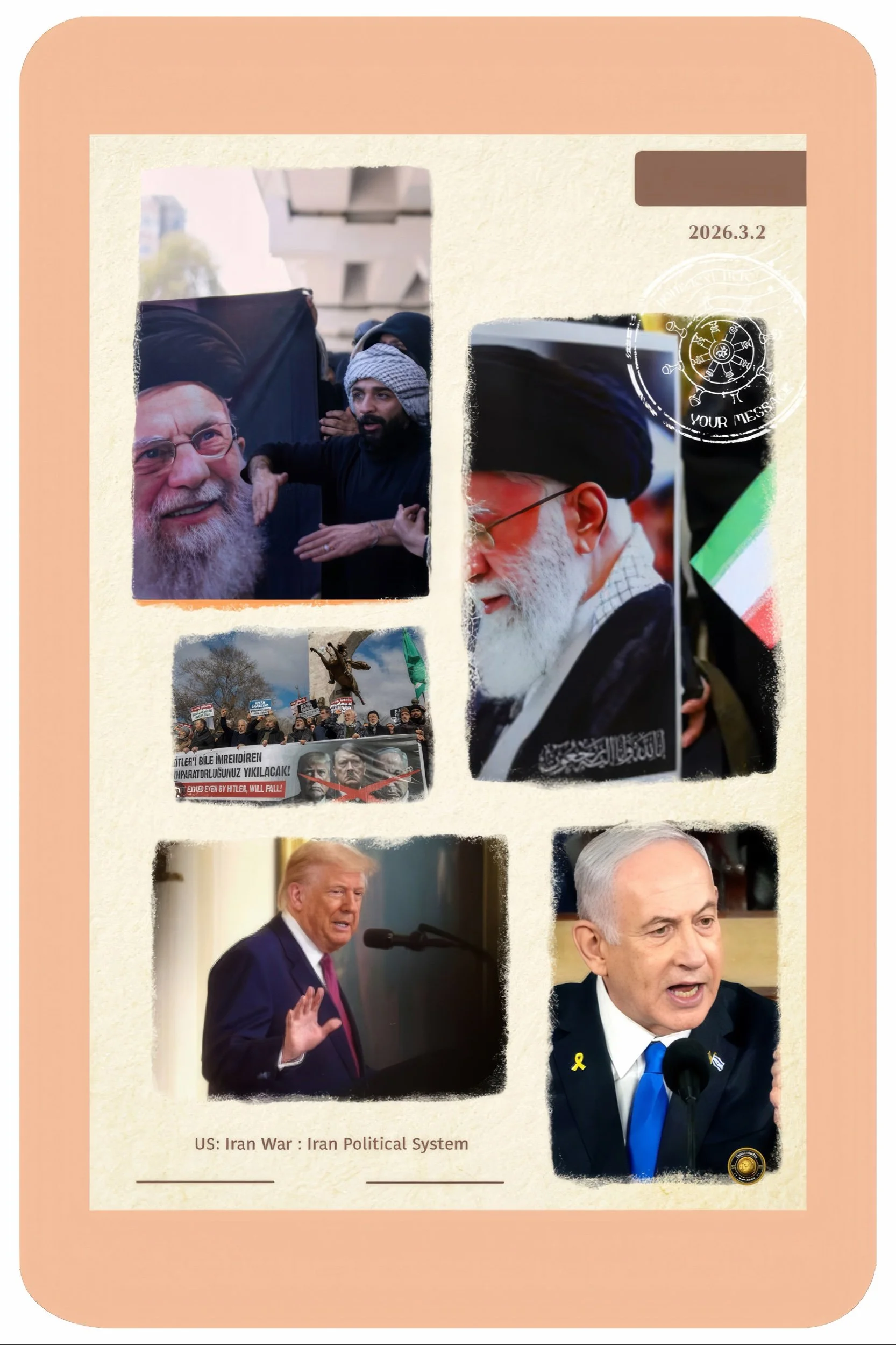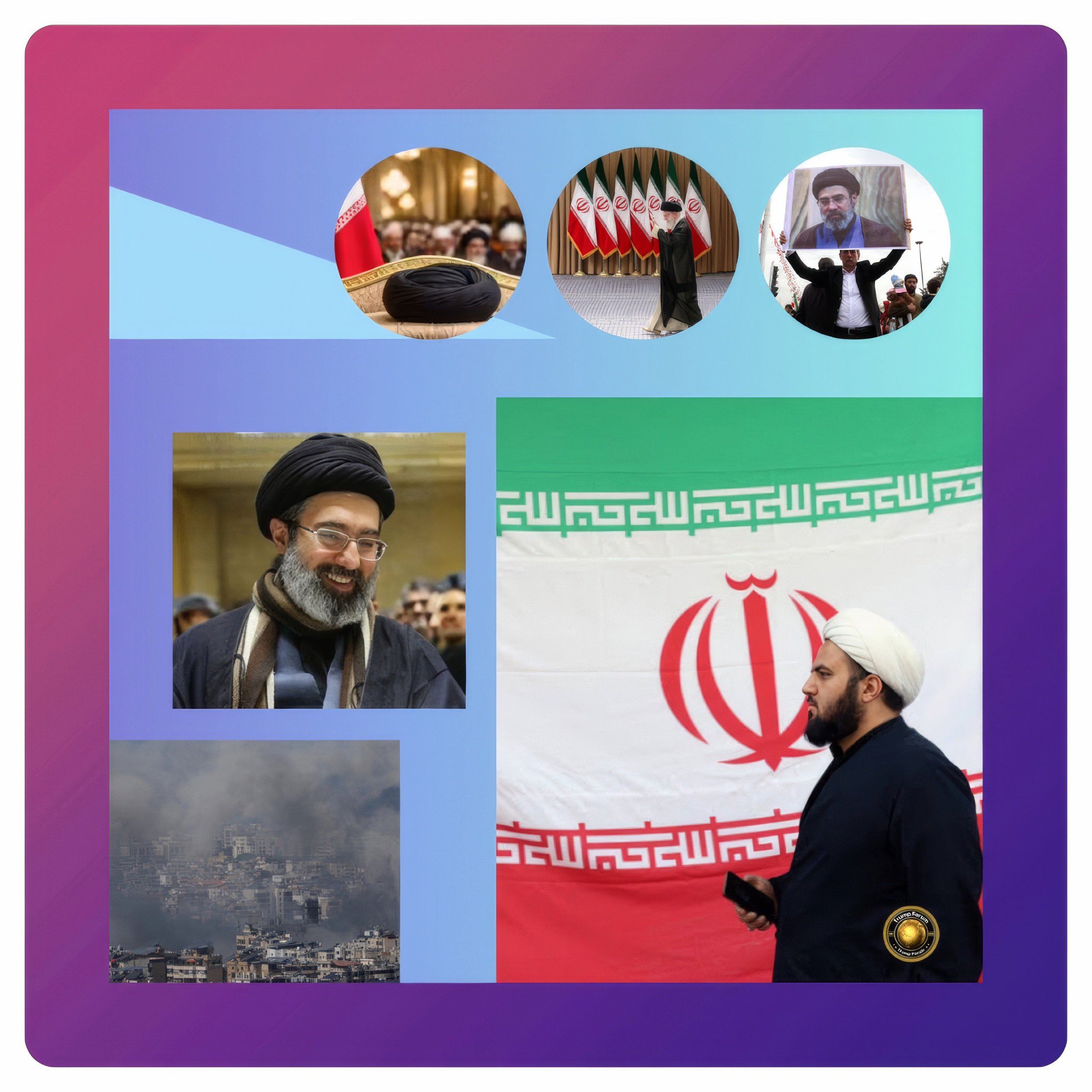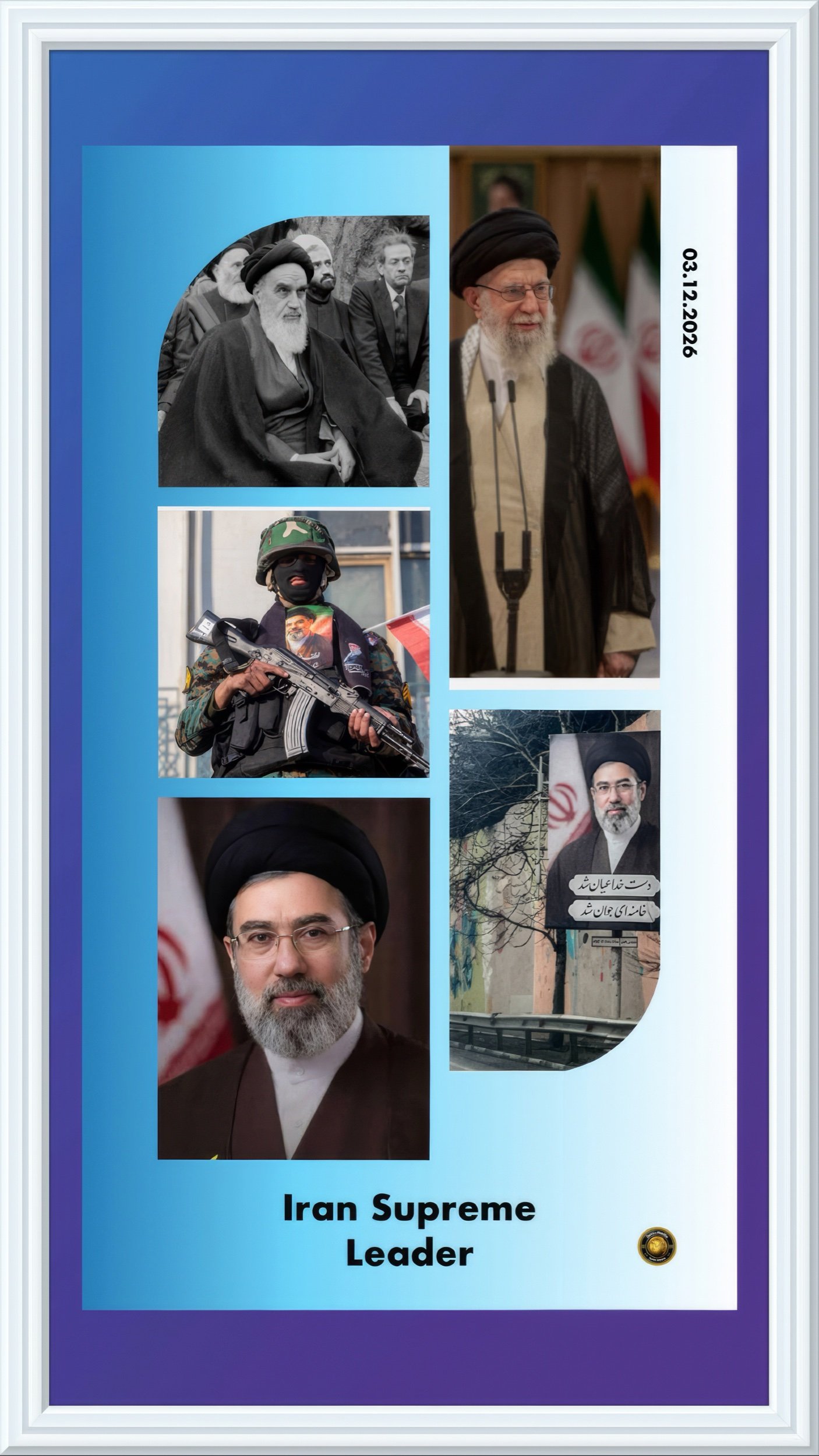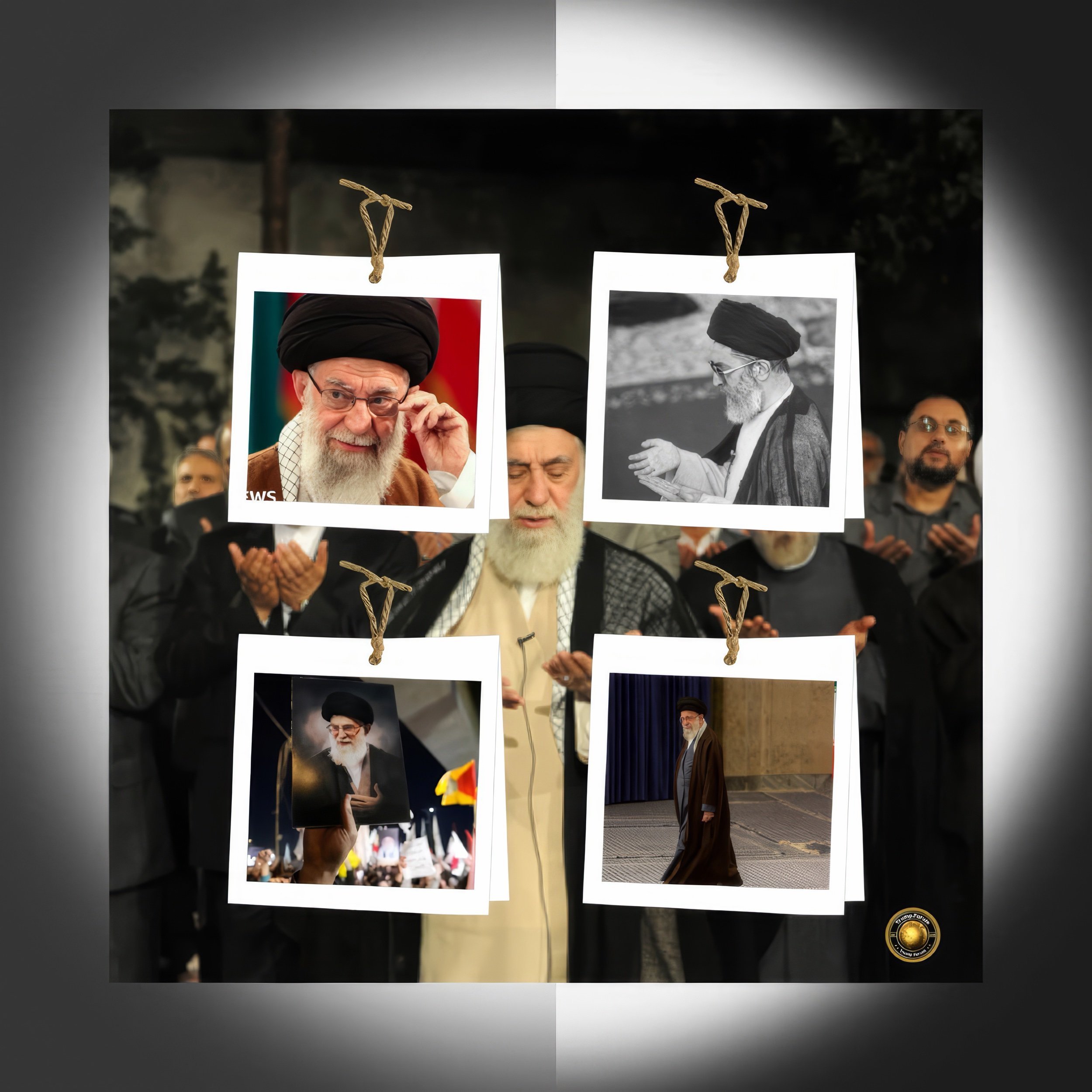
From Martyrdom To Mobilization, Tehran Can Recast Assassination As Foreign Aggression And Silence Internal Rivals Quickly - Part III
Executive Summary
Khamenei’s Death Tests Iran’s Theocracy, Yet Institutions, Guards, And Clerics May Tighten Their Grip Further Still
Ali Khamenei’s reported killing on 2026-02-28 during U.S.-Israeli strikes is already being treated, across rival capitals and within Iran, as a hinge moment: either the decisive blow that unravels the Islamic Republic or the catalytic shock that hardens it.
The temptation to forecast collapse is understandable.
Iran’s political optics invite it. Few contemporary states locate so much visible authority in one office, combining sacred legitimacy, command authority, and ultimate arbitration in the institution of the supreme leader.
Yet optics are not architecture. Iran’s architecture was built for crisis. It was assembled in revolution, tempered in existential war, and refined through decades of sanctions, assassination attempts, covert sabotage, and regional shadow conflict.
That history did not merely scar the system; it instructed it.
This article argues three propositions.
First, Khamenei’s long tenure—often managerial rather than charismatic—did not make the state dependent on his personal magnetism; it made the state dependent on routinized coercion, clerical authorization, and security-bureaucratic coordination.
Second, the Islamic Republic’s succession rules and power centers—especially the Assembly of Experts and the Islamic Revolutionary Guard Corps—create a pathway for continuity that can function even under acute disruption.
Third, decapitation violence can yield a paradox: by producing a martyr narrative and clarifying the external threat, it can compress elite competition into disciplined unity, at least temporarily, and justify an intensified internal crackdown.
None of this implies that Iran is costless to govern, stable in the social sense, or immune from fracture.
The assassination of a supreme leader can destabilize bargains among factions, awaken latent disputes, and encourage overreach by security stakeholders.
It can also accelerate nuclear risk-taking and widen regional escalation.
But the most probable near-term trajectory is not Libya-style dissolution. It is securitized continuity: a narrower, more guarded Islamic Republic that claims renewed legitimacy through resistance, elevates a successor through existing mechanisms, and punishes dissent under the banner of national survival.
Introduction
Decapitation Strikes Rarely End Revolutions; Iran’s Succession Machinery Could Convert Shock Into Securitized Continuity At Home
Revolutions rarely end when the founding generation exits the stage. They institutionalize, ossify, and mutate.
Their mythology remains, but their governing style shifts from mobilization to management. Many successful revolutionary regimes begin with an inspirational figure—an architect who speaks in absolutes and appears to embody the nation’s destiny—then move to successors who lack comparable charisma yet prove more important to the system’s endurance. Iran’s post-1979 experience follows this pattern.
Ayatollah Ruhollah Khomeini supplied the revolutionary charisma. Ali Khamenei supplied the consolidation.
Khamenei never commanded Khomeini’s fervent devotion. Over time, he became a symbol of stagnation for many Iranians, especially younger cohorts who experienced the Islamic Republic less as emancipatory rupture and more as compulsory order.
Yet unpopularity is not automatically fatal to autocracy. In some systems, it is irrelevant. In others, it triggers elite defection.
In Iran, it produced a different outcome: the gradual replacement of charismatic legitimacy with institutionalized legitimacy backed by surveillance, selective patronage, and calibrated violence.
The sudden removal of the supreme leader thus does not automatically remove the system’s operating logic. It removes a coordinator at the apex of a multi-institutional machine.
That machine contains rivalries, but it also contains procedures. The Assembly of Experts has a constitutional role in appointing a new supreme leader; during an interim period, a leadership council can assume duties.
The Revolutionary Guard can secure the transition. The clerical establishment can sanctify it.
The bureaucracy can continue to deliver coercion and basic governance. Together, these elements can transform a leader’s death from a destabilizing rupture into a legitimizing crucible.
History and Current Status
Iran’s revolutionary state was forged with 2 inseparable claims: popular sovereignty expressed through republican institutions and divine sovereignty expressed through guardianship of the jurist. This duality has always been tense.
Elections exist, but eligibility and outcomes are constrained. Factional competition exists, but it remains bounded by red lines enforced by unelected institutions. When the system faces stress, the unelected core—the clerical-security nexus—asserts primacy.
The early Islamic Republic was blood-soaked: internal purges, insurgencies, and high-level assassinations shaped a governing culture that equated survival with vigilance.
The Iran-Iraq War from 1980 to 1988 then institutionalized siege politics.
War did three things. It militarized society, elevated security organizations, and embedded a narrative that the Islamic Republic’s very existence is contested by foreign enemies. That narrative later became the regime’s most durable ideological tool.
Khomeini’s death in 1989 was the regime’s first major succession test. The system did not implode. It improvised and then stabilized. Khamenei rose as successor, and constitutional adjustments followed.
The lesson internalized by the elite was direct: continuity is possible if the clerical class confers religious authorization and the security apparatus enforces order.
Over the next decades, Iran faced multiple stressors that would have toppled weaker systems: sanctions that squeezed the economy, periodic urban protests, elite infighting, and an external campaign of sabotage and targeted killings.
The assassination of Qassem Soleimani in 2020, for example, removed a strategic icon, yet the Quds Force continued; Iran absorbed the shock and reasserted continuity.
These experiences taught the Iranian state to build redundancy: multiple command pathways, overlapping institutions, and an ideological vocabulary capable of converting losses into martyrdom.
By 2026, as violence escalated into direct U.S.-Israeli strikes, Iran’s system appeared both brittle and durable. Brittle because economic malaise and social contestation persisted.
Durable because the coercive core remained intact, and because the state’s survival reflex is now deeply embedded.
Reports that Khamenei was killed in strikes on Tehran are being accompanied by immediate signs of emergency governance and succession maneuvering.
Key Developments
The most consequential development is the reported decapitation strike itself. Multiple outlets have described joint U.S.-Israeli operations targeting senior Iranian leadership, with claims of high-level military deaths alongside Khamenei.
If accurate, the strike signals a strategic shift from deterrence-by-punishment to regime-disruption-by-removal. In historical terms, it resembles a wager that collapsing the apex will collapse the pyramid.
A second development is the heightened salience of constitutional mechanisms. Article-linked succession pathways, overseen by the Assembly of Experts, exist precisely for moments when the leader is incapacitated, removed, or dead.
Many external analyst sometimes dismiss these mechanisms as ornamental, but ornaments do not typically survive in systems that prioritize survival. Iran’s constitutional design is part myth, part procedure, and part instrument of elite bargaining.
Even if the process is opaque, its existence matters: it offers a script for continuity that elites can follow to avoid uncontrolled competition.
A 3rd development concerns the Revolutionary Guard’s evolving role. Over decades, the Guard has become a state within the state: military force, intelligence node, economic conglomerate, and ideological custodian. In a leadership vacuum, such an actor is not merely a stabilizer; it can be a kingmaker.
The Guard’s incentive is to preserve the revolution’s core structure, not necessarily the flexibility of its political margins. That means the Guard can push succession toward a figure who will protect its autonomy and strategic worldview.
A fourth development is narrative contestation. In Iran, legitimacy is not only enforced; it is narrated. Khamenei’s death can be narrated as proof of foreign barbarism, validation of the resistance doctrine, and sanctification of harsher domestic control.
That narrative, repeated through state media and religious institutions, can temporarily shrink the space for internal dissent, especially if dissent is framed as collaboration with an attacker.
Latest Facts and Concerns
Reports over 2026-02-28 to 2026-03-02 describe Khamenei’s death as confirmed by Iranian state media and addressed by foreign leaders, while strikes and retaliatory actions continue across the region.
These accounts also describe major Iranian command losses and continued targeting of strategic capabilities.
While details remain contested in the fog of war, the strategic fact is unmistakable: an attempt to remove the symbolic apex of the Islamic Republic has occurred, and the regime’s response will set the regional tempo.
The first concern is escalation dominance. A decapitation strike reduces diplomatic off-ramps because it transforms a contest over interests into a contest over existential legitimacy.
Iran’s leadership—whoever holds authority now—may feel compelled to retaliate in ways that demonstrate resolve, even if retaliation is strategically costly.
The second concern is nuclear acceleration. When states believe their leadership is being targeted for removal, they often seek the most credible deterrent.
For Iran, the perceived pathway to deterrence is nuclear threshold capability. The pressure to shorten timelines, harden facilities, and reduce transparency can rise sharply after leadership assassination.
The third concern is domestic consolidation through repression. The state can claim that, under attack, it must purge “fifth columns,” suppress protest, and centralize communication control. In the near term, this can stabilize the regime. In the medium term, it can deepen legitimacy deficits and widen the gap between state and society.
The fourth concern is succession uncertainty. Even with formal mechanisms, the choice of successor is an elite bargain involving clerics, Guard commanders, and key institutions.
Such bargains can be stable, but they can also produce fragile coalitions.
The very act of choosing a successor can expose hidden fault lines, especially if rivals suspect that the moment is being used to permanently reorder power.
Cause-and-Effect Analysis
The critical analytical mistake in many decapitation theories is confusing visible hierarchy with operational dependency.
Iran’s supreme leader is visibly supreme, but the system’s daily coercion and governance are distributed.
Cause: Khamenei’s assassination.
Immediate effect: emergency securitization. The security state expands its scope, restricts information, and asserts continuity through ritual mourning and retaliatory messaging.
The martyr narrative becomes an organizing principle.
Cause: fear of elite fragmentation.
Effect: accelerated institutional bargaining.
The Assembly of Experts becomes the constitutional stage for a decision that is largely negotiated elsewhere, then ratified for legitimacy.
Cause: Guard anxiety about external overthrow.
Effect: greater Guard influence. The Guard can argue that civilian or technocratic tendencies are luxuries during existential conflict. It can demand expanded authority over internal security, economy, and strategic decision-making.
Cause: public shock and anger.
Effect: short-term rally effects. Even citizens who dislike the regime can resent foreign strikes on national leadership, especially if civilian casualties occur. This can suppress protest temporarily.
Cause: a regime that survives assassination.
Effect: hardening. Survival becomes proof of righteousness, and flexibility becomes equated with vulnerability. Over time, this yields a more rigid state, less capable of negotiated compromise.
The deeper point is that assassination can strengthen the very organism it aims to destroy. It can transform a contested, weary regime into a besieged fortress whose internal logic favors repression and deterrence over reform and engagement.
Future Steps
For external stakeholders, the strategic question is not whether Iran can survive a leader’s death, but what kind of Iran emerges if it does.
The most plausible outcome is a state that is more secretive, more dominated by security organs, and more inclined toward asymmetric retaliation. If the goal is to reduce nuclear risk and regional conflict, policies that maximize Iranian threat perception can be counterproductive.
For Iran’s internal elite, the next steps revolve around controlled succession and narrative management. The system must demonstrate continuity quickly, because speed is itself a form of deterrence: it signals that decapitation does not paralyze.
That means swift appointment processes, visible unity among institutions, and a coherent command posture.
For Iranian society, the medium-term trajectory will depend on economic conditions, the scale of conflict, and the regime’s willingness to treat dissent as treason. In the short term, fear and nationalism can mute protest.
In the longer term, economic ruin and social exhaustion can reappear as destabilizing forces.
Khamenei’s death can be a moment of both consolidation and latent rupture, depending on how the successor governs and how the war environment evolves.
Conclusion
A Leader Falls, The State Remains; Iran’s Revolutionary Guard Networks And Law Prepare For Rapid Replacement
Ali Khamenei’s life work was not charisma; it was consolidation.
He transformed the Islamic Republic from a revolutionary experiment into a durable security-theocratic state. If reports of his assassination are accurate, his death does not automatically undo that achievement; it tests it.
The Islamic Republic is not a personalist dictatorship in the narrow sense. It is a regime with a personified apex and institutionalized coercion beneath.
Remove the apex, and the machine can still run.
It may run differently. It may run harsher. It may run more recklessly. But the expectation of immediate collapse confuses moral desire with political analysis.
The tragic irony is that a decapitation strike can validate the regime’s founding narrative: that foreign powers seek not policy change but national subjugation.
In that narrative, martyrdom is not defeat; it is fuel. And fuel, in a system designed for survival, can extend the very fire outsiders hope to extinguish.