Power in the Shadows: Mojtaba Khamenei’s Selection Reflects Regime Survival Instincts Amid War and Domestic Discontent
Executive Summary
The Son of the Supreme Leader: Mojtaba Khamenei and the Transformation of Iran’s Revolutionary System
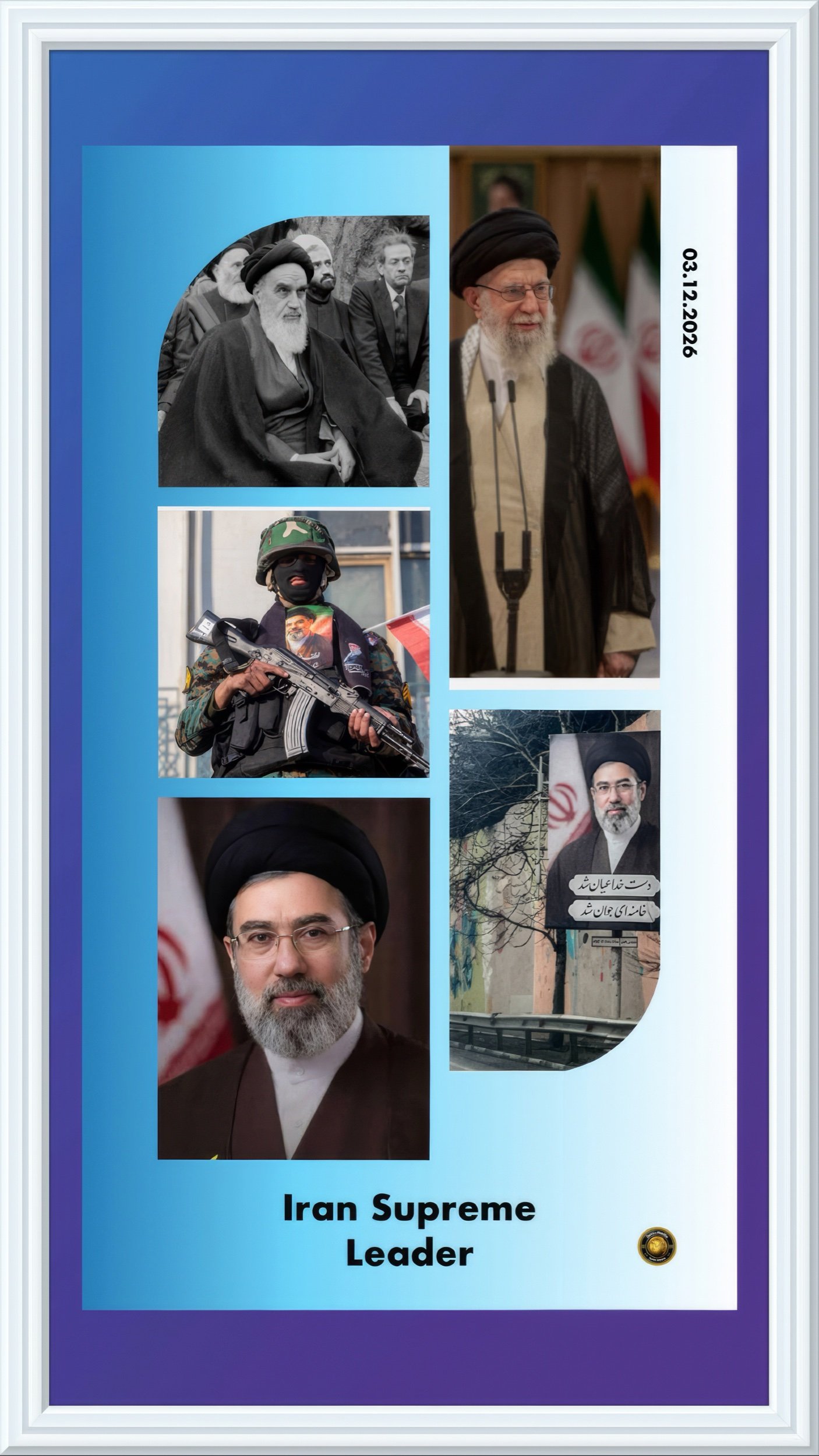
The appointment of Mojtaba Khamenei as Iran’s new supreme leader following the assassination of Ayatollah Ali Khamenei marks one of the most consequential political turning points in the history of the Islamic Republic.
For decades, the Iranian political system has sought to distinguish itself from the hereditary monarchies that the 1979 revolution overthrew.
Yet the elevation of the supreme leader’s son appears to contradict that revolutionary legacy, creating an unprecedented moment of ideological contradiction and institutional stress.
Mojtaba Khamenei has long been a shadowy but powerful figure within Iran’s political system.
Operating largely behind the scenes, he cultivated relationships with the Islamic Revolutionary Guard Corps, the clerical establishment, and the security apparatus.
His political influence became increasingly visible during major crises such as the 2009 Green Movement protests and later episodes of domestic unrest.
Despite rarely appearing in public, he emerged as one of the most important power brokers inside the state.
His rise to the highest office now signals deeper structural realities about the Islamic Republic. It reflects not simply a wartime succession decision but a broader condition of political exhaustion within the regime.
Over decades, Iran’s revolutionary institutions gradually concentrated power within a narrow network of clerical, military, and intelligence elites. As the revolutionary generation aged and internal legitimacy eroded, the system’s capacity for institutional renewal weakened.
This moment therefore illustrates a transformation in the nature of Iran’s governing order.
The revolutionary republic founded in 1979 was designed to resist dynastic politics and hereditary authority.
Yet the appointment of Mojtaba Khamenei suggests that the regime has begun to rely increasingly on continuity and familial trust rather than institutional legitimacy.
The consequences extend beyond domestic politics.
The decision will influence Iran’s regional strategy, relations with global powers, and the internal balance between clerical authority and military power.
It may also intensify debates among Iranian citizens about the future of governance, accountability, and political reform.
Ultimately, Mojtaba Khamenei’s leadership represents both continuity and rupture. It preserves the core ideological structures of the Islamic Republic while simultaneously revealing their limits.
The coming years will determine whether this transition stabilizes the regime or accelerates the political transformations already reshaping Iran’s future.
Introduction
Iran at a Crossroads: Mojtaba Khamenei’s Appointment Exposes Institutional Weakness and Growing Crisis of Legitimacy
Leadership transitions often reveal the underlying strength or weakness of political systems. In revolutionary regimes, succession is particularly sensitive because the legitimacy of authority depends heavily on ideological continuity.
The Islamic Republic of Iran has long attempted to present itself as a system grounded in religious jurisprudence, revolutionary legitimacy, and institutional balance between elected bodies and clerical oversight.
The death of Ayatollah Ali Khamenei and the subsequent selection of his son Mojtaba Khamenei challenge this narrative.
For the first time since the revolution, Iran appears to have moved toward a form of hereditary succession reminiscent of the monarchy it once rejected.
This development raises profound questions about the evolution of the Iranian state.
The Islamic Republic was built around the concept of velayat-e faqih, or guardianship of the jurist.
Under this doctrine, a qualified Islamic scholar serves as the supreme authority guiding the state.
The system was intended to combine religious legitimacy with republican institutions such as elections and parliamentary representation.
However, the practical operation of the system has gradually concentrated power within a small group of political and security elites.
Over time, the supreme leader’s office became the central node of authority across military, judicial, intelligence, and economic institutions.
This concentration created both stability and rigidity.
The emergence of Mojtaba Khamenei as the new supreme leader must therefore be understood within the broader trajectory of institutional consolidation.
His leadership symbolizes a regime that increasingly prioritizes continuity and control over ideological renewal.
History and Current Status
From Revolution to Dynasty: Mojtaba Khamenei’s Leadership Signals Political Fatigue Inside Iran’s Clerical Power System
The Islamic Republic emerged from the upheaval of the 1979 revolution, which overthrew Shah Mohammad Reza Pahlavi.
The revolution was driven by diverse forces including religious leaders, secular intellectuals, and nationalist groups.
However, Ayatollah Ruhollah Khomeini ultimately consolidated authority and established a clerical political order.
Khomeini’s leadership defined the early decades of the republic.
His charisma and revolutionary legitimacy enabled him to balance competing political factions while institutionalizing clerical authority over the state.
When he died in 1989, the political system faced its first major succession crisis.
Ali Khamenei, then serving as president, was chosen as the second supreme leader.
His selection required constitutional adjustments because he lacked the highest clerical rank traditionally associated with the position.
Over the following decades, Khamenei gradually strengthened the authority of the supreme leader’s office.
During his tenure, Iran developed a complex hybrid system combining electoral institutions with strong clerical oversight.
The president, parliament, and local councils were elected by popular vote, yet all candidates were vetted by institutions loyal to the supreme leader.
Simultaneously, the Islamic Revolutionary Guard Corps expanded its influence across security, economic, and political domains.
The Guards became a powerful pillar of the state, overseeing military operations, intelligence activities, and major economic projects.
Within this environment, Mojtaba Khamenei began to accumulate influence.
Though he held no formal office, his proximity to the supreme leader allowed him to build relationships with key stakeholders within the security apparatus and clerical establishment.
Key Developments
Mojtaba Khamenei’s political influence developed gradually over decades.
Unlike traditional political figures, he rarely appeared in public speeches or formal government roles. Instead, he operated through informal networks and personal relationships.
One early indicator of his influence emerged during the presidential election that brought Mahmoud Ahmadinejad to power.
Critics within Iran accused Mojtaba of supporting the hardline candidate through behind-the-scenes mobilization of security institutions.
His role became more widely discussed during the Green Movement protests following the disputed presidential election of 2009.
Millions of Iranians protested what they believed was a fraudulent vote. The state responded with a large-scale crackdown involving arrests, surveillance, and suppression of demonstrations.
Reports circulated that Mojtaba Khamenei played a central role in coordinating security responses through his connections with the Revolutionary Guard and Basij militia.
Whether these reports fully reflected reality or political rumor, they contributed to his image as a powerful but opaque political figure.
Over the following decade, Mojtaba continued to strengthen relationships with security institutions.
Analysts increasingly described him as one of the most influential figures inside Iran’s informal power structure.
The assassination of Ali Khamenei during wartime created an immediate leadership vacuum.
Under normal circumstances, the Assembly of Experts is responsible for selecting the supreme leader. However, the chaotic security environment accelerated the decision-making process.
Mojtaba’s selection therefore emerged from both institutional procedures and wartime pressures. The result was a leadership transition that appeared swift but controversial.
Latest Facts and Concerns
The elevation of Mojtaba Khamenei raises multiple political concerns within Iran and beyond. The most immediate issue relates to legitimacy.
The Islamic Republic was founded on opposition to hereditary monarchy. The perception of dynastic succession therefore risks undermining the ideological narrative that has sustained the regime.
Public opinion within Iran remains difficult to measure because of political restrictions.
However, past protests suggest that many citizens view hereditary leadership as inconsistent with the revolutionary principles proclaimed by the state.
Another concern involves the balance of power between clerical institutions and the Revolutionary Guard. Mojtaba’s long-standing ties with security institutions may strengthen the military dimension of governance within the Islamic Republic.
Economic pressures also shape the political environment. Iran has faced years of sanctions, inflation, and currency volatility. These economic difficulties have contributed to public frustration and periodic protests.
Internationally, Mojtaba Khamenei’s leadership will influence Iran’s relations with regional rivals and global powers.
His reputation as a security-focused strategist suggests continuity in Iran’s deterrence policies and regional alliances.
Yet uncertainty remains about his broader political vision. Because he operated primarily behind the scenes, his public policy priorities are not widely understood.
Cause and Effect Analysis
The rise of Mojtaba Khamenei reflects deeper structural conditions within the Iranian political system.
Over decades, the Islamic Republic evolved from a revolutionary movement into a highly centralized state. This transformation produced stability but also institutional rigidity.
When leadership transitions occur in such systems, political elites often prioritize continuity over experimentation.
Mojtaba’s selection can therefore be interpreted as an attempt to preserve internal cohesion during a period of external conflict and domestic uncertainty.
Another cause lies in the relationship between clerical authority and security institutions.
The Revolutionary Guard has become one of the most powerful stakeholders in Iran’s political landscape. Mojtaba’s strong connections with this organization likely contributed to support for his leadership.
However, these same factors may produce unintended consequences. If citizens perceive the succession as dynastic rather than institutional, public trust in the regime could erode further.
Additionally, the concentration of power within security institutions may reshape the ideological character of the Islamic Republic. The state could evolve from a clerical republic into a more security-driven political system.
Future Steps
The immediate challenge for Mojtaba Khamenei will be consolidating authority within Iran’s complex political structure. He must maintain support from clerical institutions while preserving cooperation with security organizations and economic stakeholders.
At the same time, the regime faces growing societal expectations regarding economic stability and political accountability. Addressing these pressures will require balancing ideological continuity with pragmatic governance.
Iran’s regional strategy will also shape the trajectory of Mojtaba’s leadership.
The country remains deeply involved in Middle Eastern conflicts and alliances. Decisions regarding diplomacy, deterrence, and negotiation will influence both domestic legitimacy and international stability.
Another critical issue involves generational change within Iranian society. A large portion of the population was born after the revolution. Their political expectations differ from those of earlier generations.
How Mojtaba Khamenei addresses these social transformations may determine whether the Islamic Republic adapts or stagnates.
Conclusion
Iran’s New Supreme Leader: Mojtaba Khamenei’s Rise Reveals Exhaustion, Crisis, and Uncertain Future of the Islamic Republic
The rise of Mojtaba Khamenei as Iran’s supreme leader represents a moment of profound significance for the Islamic Republic. It reflects the endurance of the revolutionary state but also exposes the limits of its institutional flexibility.
For decades, Iran’s political system balanced ideological legitimacy with centralized authority. The succession of the supreme leader’s son now raises questions about the future direction of that balance.
Whether this transition stabilizes the regime or accelerates political change will depend on multiple factors including public perception, economic conditions, and regional dynamics.
In this sense, Mojtaba Khamenei’s leadership is not merely a continuation of the past. It is a test of whether the Islamic Republic can evolve beyond the structures created by its revolutionary founders.