How America’s Marines Are Changing the Iran War — Beginner's Guide to US Deployment of Marines in Iran and What It Means
Executive Summary
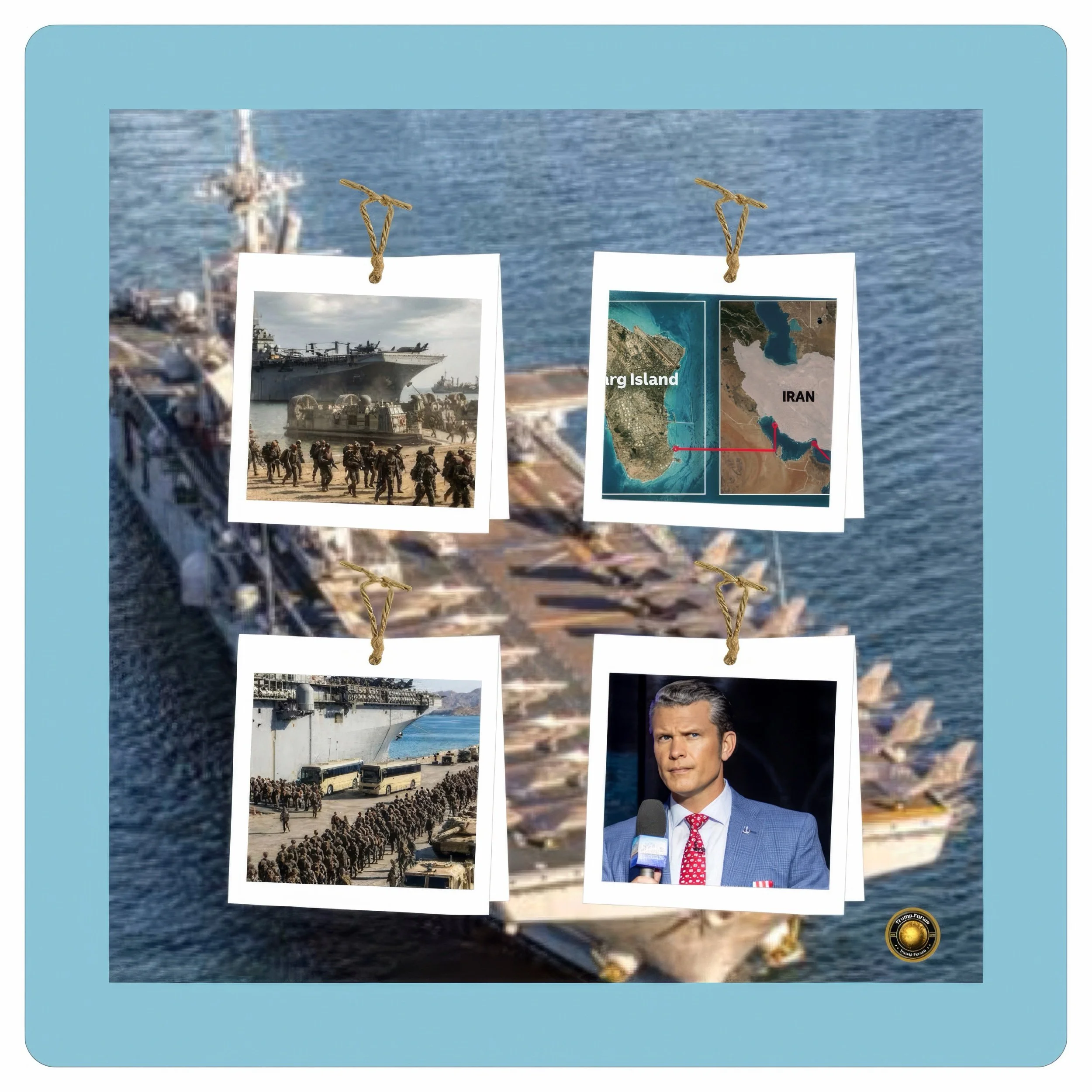
America sent about 2,500 Marines on a giant warship called the USS Tripoli toward the Persian Gulf in March 2026.
This happened after two weeks of heavy bombing of Iran as part of a military campaign called Operation Epic Fury.
The Marines bring new options to the conflict — like the ability to land on small islands, clear underwater mines, and launch fast raids — things that airplanes alone cannot do.
This article explains who is involved, why the Marines were sent, what is at stake for the world, and what might happen next, all in plain language with real-world examples.
Introduction: Why Send Marines to a War That Already Has Planes and Ships?
Imagine you are trying to clear wasps from a large garden. You spray pesticide from a helicopter, and most of the wasps die. But some of them hide in small holes in the ground and under rocks.
The helicopter cannot reach them. So eventually, you have to send in people on foot to deal with those last remaining threats close-up.
That is essentially what is happening in the 2026 Iran conflict. America and Israel have been bombing Iran from the air since February 28, 2026, striking over 5,500 military targets — destroying warships, missile launchers, and military bases.
But Iran has responded by sending small fast boats and underwater mines into the Strait of Hormuz — the narrow stretch of water, only about 20.5 miles wide at its narrowest point, through which about 20% of the world’s oil passes every single day.
Stopping those small boats and clearing those mines requires boots on the ground — or more precisely, boots in the water and on small coastal islands.
That is exactly what the Marine Expeditionary Unit, now heading toward the Gulf, is trained to do.
History and Current Status: How Did We Get Here?
The conflict did not begin suddenly. For many years, Iran and America have been locked in a dangerous game — like two neighbours who have been arguing over a fence for decades and finally came to blows.
Iran has been building a nuclear programme that America and Israel believe could be used to make nuclear weapons.
Iran says it is only for peaceful energy.
America under President Donald Trump placed enormous economic pressure on Iran — blocking its oil sales and cutting off its banking access — in an effort to force Iran to give up its nuclear programme.
Iran refused.
By early 2026, Trump had also quietly moved a massive military force into the region: aircraft carriers, bombers, warships, and thousands of troops.
A final diplomatic offer — where America would supply Iran with nuclear fuel it could use peacefully without needing to enrich its own uranium — was rejected by Tehran in February 2026.
On February 28th, 2026, America launched Operation Epic Fury, striking hundreds of Iranian military sites in the first hours.
Israel simultaneously launched its own campaign, called Operation Roaring Lion, sending over 200 fighter jets to strike targets inside Iran.
The opening wave of strikes reportedly killed Supreme Leader Ali Khamenei along with other senior Iranian officials, leaving Iran’s leadership in a state of considerable confusion and internal contest.
Iran’s response was fast and targeted. It fired missiles and drones at American military bases in nearby countries — Bahrain, Qatar, Kuwait, Saudi Arabia, and the United Arab Emirates. Most were intercepted.
But Iran’s most effective counter-move was in the Strait of Hormuz itself — the narrow sea corridor through which most of the world’s traded oil must pass.
Key Developments: The Strait, the Mines, and the Marines
Think of the Strait of Hormuz like the world’s most important highway toll gate. Every day, tankers carrying oil from Saudi Arabia, Kuwait, Iraq, the UAE, and Iran itself pass through it.
If the gate closes, all that oil stops moving. Global energy prices skyrocket, factories slow down, and people everywhere pay more for fuel, food, and goods.
Iran essentially tried to close that gate. Its Revolutionary Guard Navy sent out fast boats to attack oil tankers — damaging at least three cargo ships by March 11, 2026.
It also laid mines — essentially underwater bombs — in the shipping lanes.
Commercial shipping companies, unable to insure their ships for such dangerous routes, stopped sending their vessels through entirely.
The International Energy Agency estimated the disruption could reduce global oil supplies by as much as 8 million barrels per day — the largest single supply shock in the history of the modern oil market.
American warplanes tried to solve this problem from the air — striking 16 mine-laying boats around March 11th, But for every boat destroyed, others kept appearing from Iran’s many small islands scattered across the Gulf.
This is where the Marines come in.
The 31st Marine Expeditionary Unit, aboard the USS Tripoli — a ship the size of a small aircraft carrier — carries helicopters, tilt-rotor aircraft, landing craft, and even F-35B stealth fighter jets.
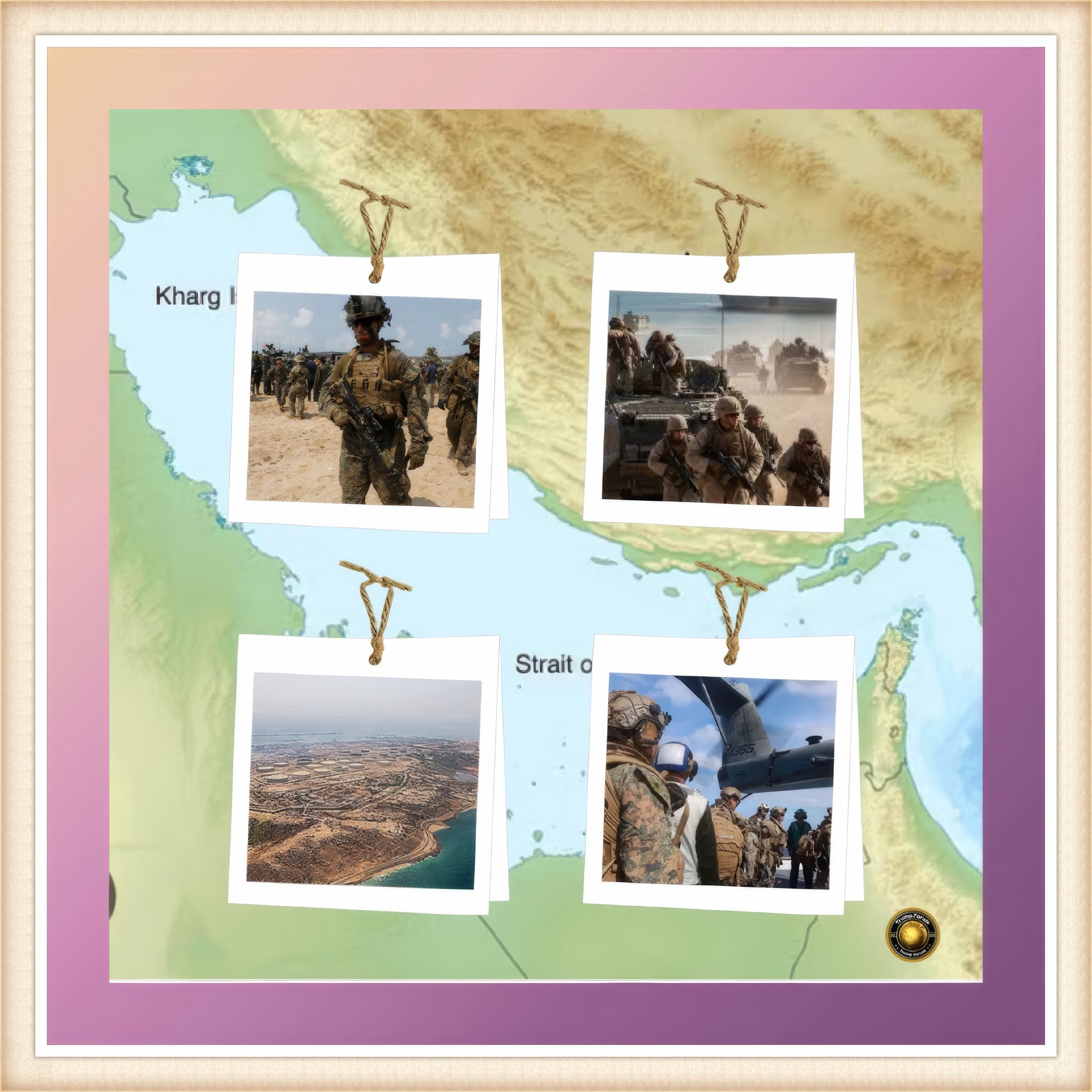
Together, these allow the Marines to land on small islands, neutralise mine storage facilities, board and seize suspect vessels, and launch lightning-fast raids — all without needing a land base in a nearby country.
A good analogy: if the airstrikes were America’s long-range artillery, the Marines are the special forces sent in to clear the bunkers that the artillery could not destroy from a distance.
Latest Facts and Concerns: The Wider Damage
By the 3rd week of fighting, the conflict had spread well beyond Iran’s borders. Iranian-backed groups fired two drones at the U.S. Embassy in Baghdad, Iraq — the largest American diplomatic compound in the world — causing significant damage.
Debris from an Iranian drone brought down by UAE air defences landed at Fujairah Port — a critical oil storage hub — starting a major fire. In Israel’s southern city of Eilat, two people including a child were injured by Iranian missiles.
Lebanon’s Hezbollah, which had been quiet for over a year, resumed firing across the Israeli border — raising fears of a second front opening up.
Iran also issued a direct economic threat to the whole region: any oil company that has American investors or does business with America could become a military target.
This is significant because nearly every major oil company in Saudi Arabia, the UAE, and Qatar has some American business connection.
It is as if Iran threatened to burn down its neighbour’s home simply because an American company helped build it.
Oil prices surged past $100 per barrel, and financial analysts warned they could climb further still if the Strait remained closed. Countries like Japan, South Korea, India, and China — which rely heavily on Gulf oil — began facing serious economic pressure.
Cause-and-Effect Analysis: Action and Reaction
Every military move in this conflict has produced a countermove — like a chess game played at dangerous speed.
America and Israel bombed Iran’s military infrastructure to destroy its offensive power. Iran responded not by fighting back with its air force — which it had largely lost — but by attacking the one thing it could still threaten: the flow of global oil through the Strait of Hormuz.
When American airpower targeted the mine-laying boats, Iran dispersed them across small islands that were harder to hit from the air.
When America struck military targets on Kharg Island — the hub for 90% of Iran’s oil exports — it deliberately avoided the oil infrastructure, signalling that it had not yet played its most powerful economic card.
Iran interpreted the restraint as a warning. The Marine deployment intensifies that warning by making it credible: if America can land forces on Iranian coastal islands, it can physically seize and hold the staging points from which Iran’s maritime campaign is being run.
Iran’s Parliament Speaker publicly warned that any attack on Iran’s southern islands would cause Iran to “abandon all restraint.”
This sets up a very dangerous moment: the Marines provide America with powerful new options, but using those options could trigger an Iranian strike on Gulf oil infrastructure that sends the global economy into severe crisis.
Future Steps: What Comes Next?
Several paths lie ahead. America could use the Marines as a pure deterrent — their presence alone persuading Iran to stop the mining campaign in exchange for limits on further strikes. This would be the best outcome for global energy markets.
Alternatively, America could order limited Marine raids on specific island mine-storage facilities, paired with expanded strikes on Kharg Island’s oil terminals — a dramatic escalation that risks triggering Iranian attacks on Gulf energy infrastructure across the region.
A third possibility is a negotiated settlement, in which the physical and economic pressure on Iran’s new, fragmented leadership produces an opening for diplomacy.
Historical precedent — particularly from 1988, when America destroyed much of Iran’s navy in a single battle and Iran moved toward ceasefire terms shortly afterward — suggests that decisive shows of force can sometimes unlock diplomatic possibilities.
The least desirable path — and unfortunately not the least likely — is an uncontrolled spiral, in which each side’s response to the other triggers a bigger response in return, pulling in more stakeholders and ultimately damaging the entire region’s economy for years to come.
Conclusion: A Dangerous Moment with No Easy Exit
The deployment of 2,500 Marines to the Persian Gulf does not mean America is planning a full-scale ground invasion of Iran.
What it means is that America is adding a powerful new tool to its toolkit — one specifically designed for the kind of coastal, island-based, close-quarters maritime combat that has defined Iran’s most effective strategy in this conflict.
The world is watching this unfold with enormous concern — not just because of the human cost of the fighting, but because the Persian Gulf is the energy heartbeat of the global economy.
A sustained closure of the Strait of Hormuz does not just raise the price of petrol at your local station. It raises the cost of shipping the food in your grocery store, the parts in the phone in your pocket, and the medicines in your local hospital.
The arrival of the USS Tripoli and its Marines is a turning point.
Whether it turns toward a faster end to the conflict or toward a deeper and more destructive phase of it depends on decisions that leaders in Washington, Tehran, and the Gulf capitals are making right now — under enormous pressure, with incomplete information, and with the whole world’s economic stability in the balance.