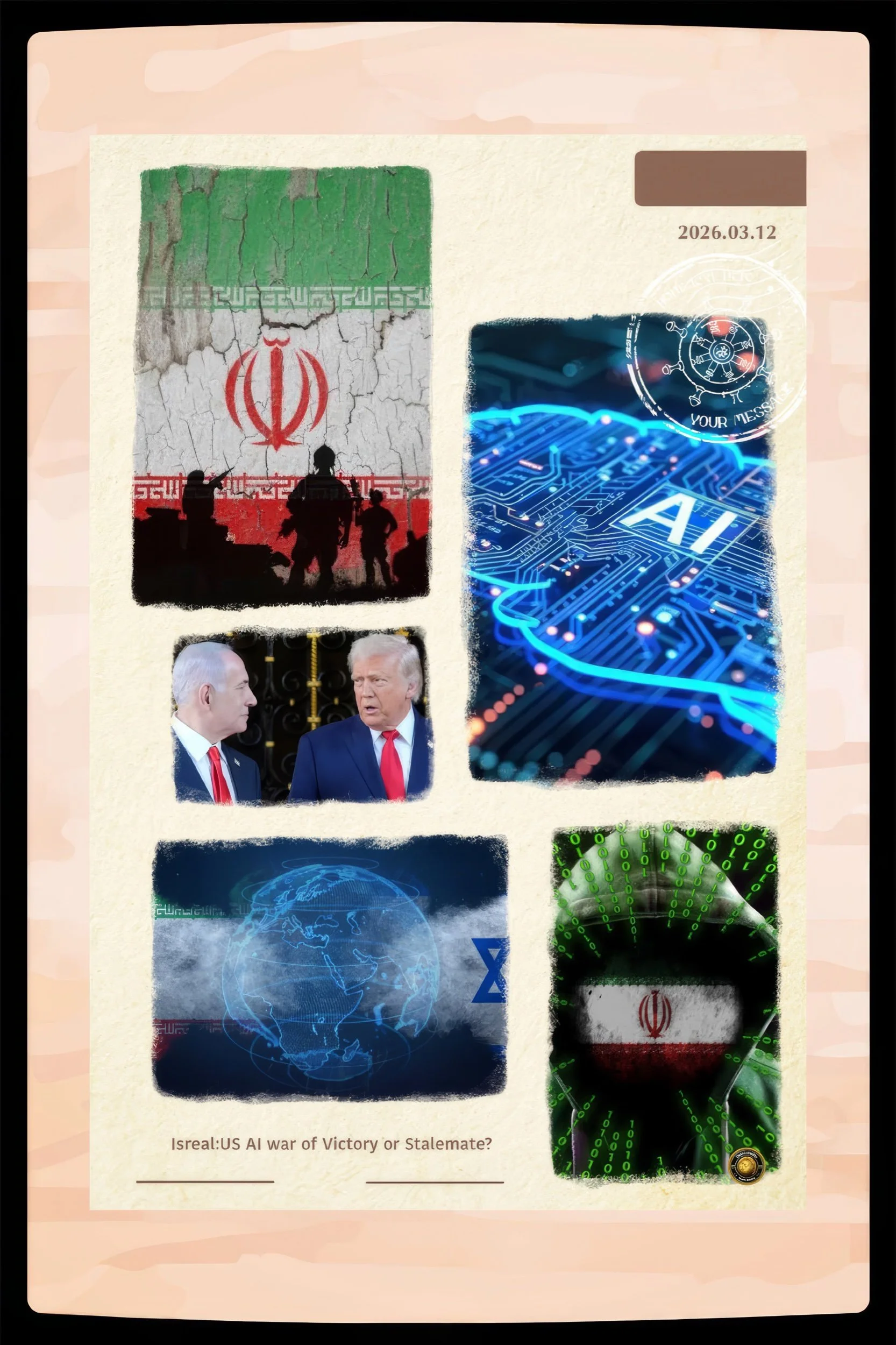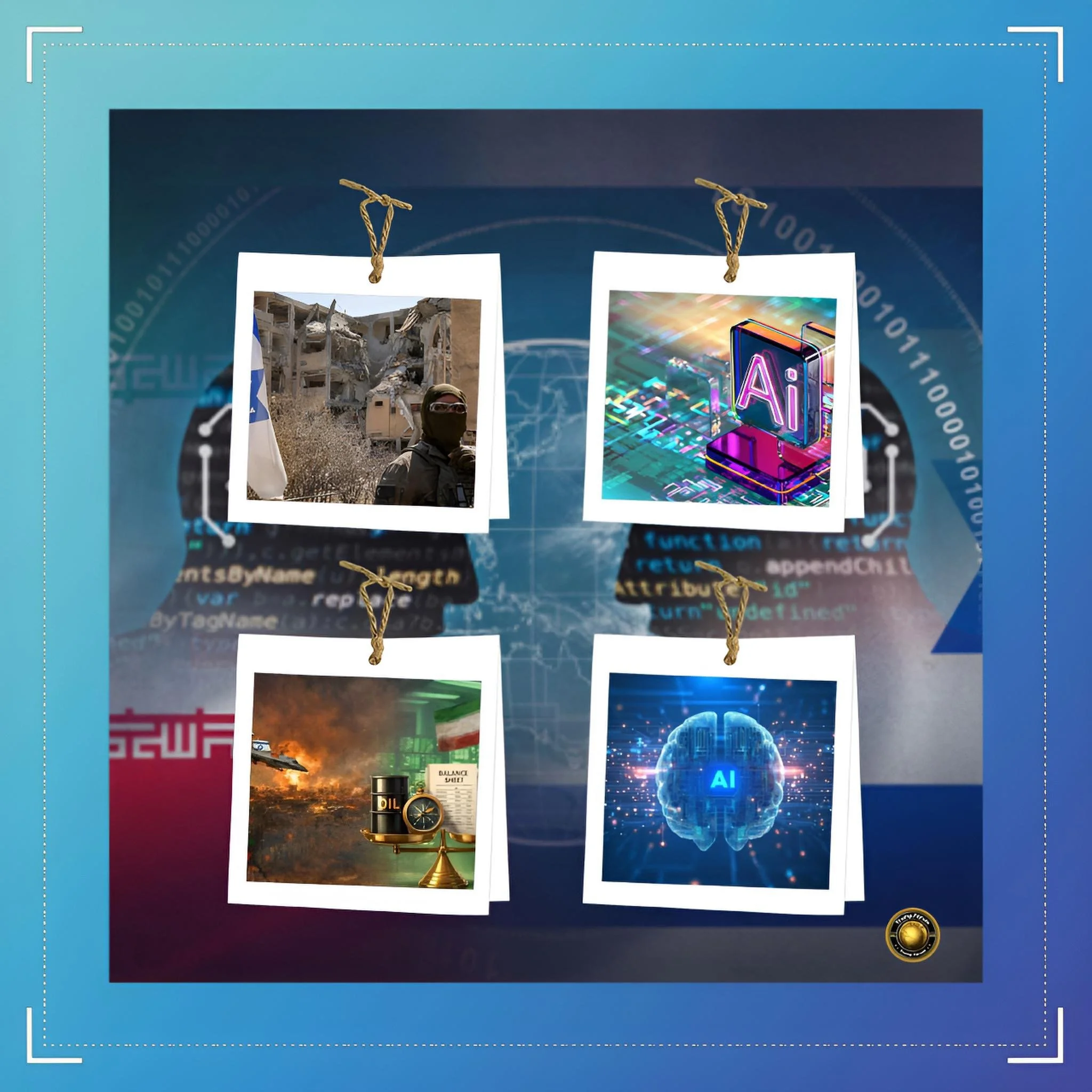
How America and Israel Built the Machine That Is Remaking War: AI, Targeting Systems, and the Strategic Uncertainty of Operation Epic Fury
Executive Summary
Iran Stalemate, US Victory, Vietnam Parallel, Afghanistan War, Epic Fury, American Power
On February 28th,2026, the United States and Israel launched Operation Epic Fury, a jointly coordinated multi-domain military campaign against Iran that stands as the most technologically sophisticated offensive operation in the history of both nations.
Within the first 12 hours alone, nearly 900 strikes were executed against Iranian targets — a tempo that would have consumed days, or even weeks, in any previous American military engagement.
Secretary of War Pete Hegseth publicly boasted that the operation had "delivered twice the air power of shock and awe of Iraq in 2003," a claim that speaks not merely to the scale of firepower deployed but to the underlying revolution in targeting software, artificial intelligence, and algorithmic warfare that made such velocity possible.
Yet the question that now confronts strategists, policymakers, and scholars is whether this breathtaking display of technological dominance translates into strategic victory.
Assessments rooted in historical pattern recognition suggest that a stalemate remains the most probable outcome, with one analytical model assigning a 90.63% probability to that scenario and a mere 5.38% chance of outright American victory.
FAF article examines how the targeting machine was constructed, how it performed in Operation Epic Fury, and why the relationship between technological superiority and political triumph remains deeply uncertain.
Introduction
Operation Epic Fury: The War on Iran That Software, Satellites, and Algorithms Are Helping America Win
How the Machine Was Born
The origins of the American and Israeli targeting revolution lie not in a single laboratory or procurement decision but in decades of iterative warfare, intelligence failure, and technological necessity.
The United States entered the first Gulf War in 1991 relying on a targeting process that was fundamentally manual — human analysts reviewing satellite imagery, constructing paper-based target lists, and routing strike approvals through multiple bureaucratic layers before a pilot ever entered a cockpit.
That system was capable of generating approximately 1,300 offensive sorties on the opening day of serious combat in 1991.
The same constraint applied in 2003 during Operation Iraqi Freedom.
What changed over the subsequent two decades was not primarily the aircraft, the munitions, or even the number of personnel.
What changed was the speed, volume, and automation of the process by which targets are identified, verified, prioritized, and struck.
For Israel, the technological acceleration was driven by the necessity of fighting adversaries embedded in dense urban terrain — first in Lebanon, then across Gaza.
The Israeli Defense Forces built and refined two interconnected artificial intelligence systems that together constituted a target-generation factory of unprecedented industrial capacity.
The first system, known as The Gospel — called Habsora in Hebrew — functions as an AI-driven target bank that continuously scans surveillance imagery and all-source intelligence to identify buildings, infrastructure, and equipment linked to hostile organizations.
Whereas a human analyst team might identify perhaps 50 viable targets per year, The Gospel was capable of generating up to 100 bombing targets per day.
The second system, named Lavender, was developed by the IDF's elite intelligence unit and focused specifically on individuals rather than locations — labeling specific persons as targets and adding them to a kill list for elimination.
A third tool, informally called "Where's Daddy?", tracked individuals on that kill list and was specifically engineered to identify the moment a target entered their private residence, thereby triggering a strike authorization.
Together, these three interconnected platforms produced what their architects described as a "data-driven targeting factory" that could generate inexhaustible lists of recommended strikes.[
The United States pursued a parallel but somewhat different developmental path.
American military AI was built around what defense theorists call the OODA loop — Observe, Orient, Decide, and Act — a decision cycle that had governed military planning since its articulation by strategist John Boyd.
Every generation of American military technology sought to compress that loop, reducing the time between acquiring intelligence about a target and delivering ordnance upon it.
The introduction of AI systems capable of fusing vast streams of signals intelligence, imagery, human intelligence, and open-source data into coherent targeting assessments transformed what had been a sequential, human-dependent process into a near-continuous algorithmic output.
By the time Operation Epic Fury was launched, American AI targeting systems were capable of processing intelligence at a speed and scale that far exceeded any previous military capability, enabling the execution of 900 strikes in a single 12-hour period.
Operation Epic Fury: The Opening Strike
Operation Epic Fury, Iran Airstrikes, Smart Weapons, AI Warfare, US-Israel, Nuclear Threat
Operation Epic Fury began on the morning of February 28, 2026, when the United States and Israel launched a pre-emptive joint assault against Iran.
According to official statements from the Israeli Defense Forces, the operation was designed to "remove existential threats" and to destroy Iran's missile capabilities, drone stockpiles, and nuclear infrastructure.
In operational terms, it was the largest mission in the history of the Israeli Air Force, with approximately 200 fighter aircraft deploying more than 550 munitions against over 500 Iranian targets on the opening day alone.
American assets confirmed in deployment included Tomahawk cruise missiles, F/A-18 Super Hornet fighters, F-35 stealth aircraft, and one-way attack drones.
Strikes were conducted against targets in Tehran, Mehrabad, Tabriz, Qom, Kermanshah, Bandar Abbas, and Isfahan — a geographic spread that demonstrated the reach and simultaneity that AI-enabled targeting made possible.
By the end of the first day, the IDF reported that Israeli Air Force jets had dropped more than 1,200 munitions on Iranian targets.
On March 1st, the IDF disclosed that it had conducted over 700 sorties since the campaign began, achieving air superiority over the region of Tehran.
The combined American and Israeli operations on February 28th alone conducted more offensive sorties than either side managed during the entire first day of serious combat in the Gulf War of 1991 or the Iraq invasion of 2003. That comparison is not merely statistical.
It represents a qualitative transformation in what warfare can deliver — a compression of what previously required weeks of sustained air campaign into hours of algorithmically orchestrated destruction.
The cyber domain ran in parallel with the kinetic campaign. Prior to and during the strikes, the United States military conducted the initial phase of the operation within cyberspace, disrupting Iranian command infrastructure before a single physical munition was released.
Israel simultaneously compromised a widely used Muslim prayer application in Iran, using it to send messages to Iranian soldiers encouraging defection.
Psychological operations, AI-generated imagery, and disinformation campaigns were woven into the military action as integral tools rather than peripheral supplements.
Colonel Doron Hadar, a former senior officer in the IDF's influence operations division, articulated the doctrine plainly: "The primary goal is to manipulate the adversary's perception, leading them to believe that action is not imminent."
The AI Architecture of Modern Targeting
Shock and Awe, AI Systems, Military Technology, Iran Campaign, Algorithmic War, Targeting Software
Understanding why Operation Epic Fury achieved the targeting velocity it did requires a closer examination of the AI architecture underpinning both American and Israeli strike planning.
The essential innovation is the compression of the kill chain — the multi-step sequence from target identification to weapons release — from a process that took hours or days into one that can unfold in minutes.
AI systems achieve this by automating the most labor-intensive steps: pattern recognition in satellite and surveillance imagery, correlation of signals intelligence with known target profiles, and the production of strike recommendations that human commanders can approve or reject rapidly.
The Gospel and Lavender, first deployed extensively during Israel's operations in Gaza, were adapted and scaled for the Iran campaign.
The Gospel had already demonstrated that it could generate a target bank of 36,000 recommended strikes simultaneously — a number that made the concept of target exhaustion essentially obsolete.
When transferred to the operational context of Iran, with its vastly larger geographic area and more sophisticated military infrastructure, these systems allowed both American and Israeli planners to maintain strike tempo at a pace that Iran's defensive and retaliatory capacity simply could not match.
A senior Israeli official confirmed that Israel appears to be ahead of the United States in developing autonomous AI targeting systems, having specifically engineered tools to avoid the legal and contractual constraints that limited American use of commercial AI models for lethal purposes.
The United States brought its own complementary architecture. American military AI, integrated across the intelligence community and the combatant commands, fused satellite reconnaissance with signals intercepts and human intelligence to maintain real-time target pictures across all of Iran's identified military installations.
The OODA loop was compressed to a degree that effectively gave American commanders something approaching continuous situational dominance — the ability to see, decide, and strike faster than Iran could adapt, relocate, or reinforce.
This is what Pete Hegseth meant when he invoked the comparison to "shock and awe" — not merely that more bombs were dropped, but that the targeting machine behind those bombs operated at a categorically higher level of intelligence and speed than anything deployed in Iraq in 2003.
Iran did not stand entirely passive in the face of this onslaught.
The Islamic Revolutionary Guard Corps announced the initiation of what it called "Operation Truth Promise 4," a retaliatory campaign of large-scale missile and drone strikes against regional targets it associated with the American and Israeli coalition.
Iranian forces targeted US military bases in Bahrain and Qatar, launched ballistic missiles against Israel, and conducted drone operations against Gulf Arab states, including strikes that targeted Dubai Airport and injured multiple employees.
Tehran's missile and drone salvo rates declined by roughly 70 to 85% from the first day of strikes to subsequent days — a pattern consistent with the attrition logic at the heart of the American-Israeli strategy.
Key Developments in the First Two Weeks
Iran War, AI Targeting, US Military, Israel Strikes, Modern Warfare, Kill Chain
The first 12 days of Operation Epic Fury revealed several strategic dynamics that will define the war's trajectory.
The most significant was the death of Supreme Leader Ali Khamenei, killed in a targeted strike that decapitated the Iranian leadership structure in a manner without precedent in the modern history of the Islamic Republic.
The strike against the Office of the Supreme Leadership Authority represented a fundamental departure from the 2025 model of limited Israeli operations against Iran, in which the two sides exchanged blows without seeking to collapse the regime itself.
That earlier experience, analysts now observe, actually provided Iran with a blueprint for limited retaliation — a script it has largely been following in reverse, under drastically changed conditions.
President Trump's stated objectives shifted noticeably during the first two weeks of the campaign. What began as counterproliferation goals — the destruction of Iran's nuclear infrastructure and missile arsenal — evolved into maximalist demands including "unconditional surrender" and personal involvement in selecting Iran's successor leadership.
Trump declared on March 9th that Iran had "surrendered to its Middle East neighbors," predicting "complete collapse" and indicating that new "areas and groups of people" were under consideration for targeting.
This rhetorical escalation created a significant strategic problem: by expanding the stated objectives beyond what military force can readily achieve, the administration made it progressively more difficult to define a stopping condition.
The regional dimension of the conflict became increasingly complex. Gulf Arab states hosting American forces — Bahrain, Qatar, and the United Arab Emirates — found themselves simultaneously providing essential basing for American strike operations and absorbing Iranian retaliatory fire directed precisely at their territory.
Iranian forces detected 541 drones over Emirati airspace alone, of which 506 were intercepted.
This pattern imposed severe consumption on Gulf Arab air defense inventories, and analysts noted that if Qatar and the UAE began exhausting their interceptor stocks, their governments would escalate pressure on Washington to end the war — pulling American strategy toward de-escalation at the very moment Israeli strategy was pulling it toward sustained pressure.
Cause and Effect
How America and Israel Built Vast Military Targeting Machines That Are Reshaping Modern Warfare Forever
What the Technology Produced and What It Could Not
The technological superiority deployed in Operation Epic Fury produced measurable and historically significant results at the operational level.
Iran's missile and drone salvo rates declined by 70 to 85% within the first days of sustained operations. Its navy was targeted for destruction as part of the four stated American objectives.
Its nuclear infrastructure was struck at multiple sites. Its leadership was eliminated.
Its ability to sustain high-tempo missile production was degraded by strikes against manufacturing facilities.
The attrition logic of the campaign — exhausting Iran's finite missile stockpile while destroying the capacity to replenish it — was unfolding roughly as American planners intended.
Yet the cause-and-effect relationship between technological superiority and political outcome has consistently failed to hold in modern American warfare, and the Iran campaign reproduces that failure with uncomfortable fidelity.
In 1991, the destruction of Iraqi forces in Kuwait produced a clear and defensible political outcome because that outcome — the liberation of Kuwait — was defined before the war began.
In 2003, the destruction of Saddam Hussein's military produced no stable political outcome because the objectives were insufficiently defined and the political environment was fundamentally misunderstood.
In Afghanistan, two decades of technological and operational dominance produced no durable political settlement because the adversary needed only to survive and endure, while the United States needed to achieve.
Iran confronts the United States with exactly the same asymmetry.
As analysts have emphasized, Iran does not have to defeat the United States militarily to claim success — it only has to survive and impose sufficient cost.
A regime that has bound all forms of state power — political, economic, religious, military, and ideological — to its own survival over four decades possesses profound structural resilience against external military pressure.
The strikes that eliminated Khamenei and senior IRGC commanders did not dissolve that structure; they triggered a succession dynamic whose outcome remains uncertain, and potentially created martyrs whose elimination may paradoxically strengthen the regime's legitimacy in the eyes of its domestic constituency.
Statistical modeling of historical conflict outcomes further complicates the triumphalist narrative.
Analysis of conflict resolution patterns between the United States and Iran places the probability of a stalemate outcome at 90.63%, with US outright victory assigned only a 5.38% probability.
These figures derive from the structural power dynamics between the two nations — relative GDP, population, and military capability distributions — rather than from the specific technological balance of any given campaign.
The implication is sobering: no amount of AI-enabled targeting velocity can, by itself, overcome the structural conditions that produce stalemate in asymmetric conflicts.
The Global Ripple Effects
Operation Epic Fury has already produced geopolitical consequences extending far beyond the Iranian theater.
Global markets registered immediate anxiety, with energy prices rising sharply as the Strait of Hormuz — through which roughly one-fifth of the world's oil supply passes — became a zone of active conflict.
Iran's targeting of Dubai, a commercial and financial hub of global significance, signaled that the war's economic costs would not be contained to the combatant nations.
China, Russia, and other stakeholders in the post-American order watched the campaign with acute strategic interest, drawing lessons about the vulnerability of sophisticated military infrastructure to AI-enabled strike packages.
The demonstration that 900 strikes could be coordinated and executed in 12 hours against a country with a functioning air defense network recalibrated threat assessments across every major military establishment in the world.
For India in particular, the campaign's data fusion and OODA loop compression capabilities raised urgent questions about how AI warfare would redefine strategic competition in South Asia.
The international legal dimension of AI-enabled targeting has resurfaced with particular intensity.
The Lavender system, which assigns individuals to kill lists based on algorithmic assessment rather than verified human intelligence review, was already a subject of serious scholarly and legal controversy following its use in Gaza.
Its deployment at scale in Iran — against a nation-state military rather than a non-state armed group — raises proportionality questions that international humanitarian law frameworks have not yet been designed to adjudicate.
The compression of the kill chain means that by the time a legal officer can review a target package, the strike may already have been executed.
This gap between algorithmic speed and legal deliberation constitutes one of the most profound ethical challenges generated by the current revolution in military affairs.
Future Steps and Strategic Scenarios
The Kill Chain Revolution: Why America and Israel Can Now Bomb Iran Twice as Fast as Before
Three broad trajectories present themselves as plausible outcomes of the Iran conflict, each with distinct implications for American strategy and regional order.
The first is outright military victory — the collapse of the Iranian regime under the combined weight of decapitation strikes, missile attrition, and internal fracture, followed by a political transition that produces a government amenable to American and Israeli interests.
This outcome is the one implied by Trump's maximalist rhetoric, but it is also the least historically supported and statistically least probable.
Regime collapse tends not to produce stable successor governments in the absence of a carefully constructed post-conflict political architecture, and neither Washington nor Jerusalem has publicly outlined such an architecture.
The second trajectory is a negotiated settlement — a face-saving arrangement in which Iran agrees to verifiable constraints on its nuclear program and missile arsenal in exchange for a cessation of strikes, sanctions relief, and implicit recognition of regime continuity.
This outcome was briefly suggested by Trump's March 1 statement that "they want to talk, and I have agreed to talk," before being contradicted two days later by his declaration that it was "too late" for diplomacy.
A weakened and isolated Iranian regime that can no longer threaten the region but retains internal control might represent the minimum acceptable outcome for all parties — including Iran itself — even if none publicly describes it in those terms.
The third trajectory — and the one most consistent with historical precedent and quantitative modeling — is a protracted stalemate.
Iran, denied the ability to defeat American and Israeli forces militarily, instead adopts an endurance strategy: maintaining proxy pressure through Hezbollah and other networks, escalating the economic cost of the war through Hormuz disruption and Gulf state targeting, and waiting for the coalition to fracture under the competing interests of its members.
Gulf Arab states, already under missile and drone bombardment, will grow progressively more impatient with a war that exposes their infrastructure and populations to Iranian retaliation in service of objectives they do not fully share.
Israel, with a generational strategic interest in eliminating the Iranian threat entirely, will resist any settlement that leaves the regime intact.
The United States, caught between these divergent end-states, may find itself sustaining operations not because victory is achievable but because termination requires an agreement among coalition partners that does not yet exist.
The Broader Revolution in Military Affairs
Kill Chain, AI Revolution, Iran Bombing, US Air Power, Israel IDF, Military Software
Operation Epic Fury represents the operational debut of a new paradigm in military affairs — one that will define strategic competition for decades.
The AI-enabled targeting machine that America and Israel have constructed is not simply a faster version of what existed before; it is a qualitatively different system in which the relationship between intelligence and kinetic action has been compressed from a sequential, human-mediated process into an algorithmic near-real-time production line.
The Gospel's capacity to maintain a target bank of 36,000 recommended strikes means that target exhaustion — a constraint that limited every previous American air campaign — has been effectively eliminated.
This transformation carries consequences beyond any single conflict.
Every major military power is now in the process of constructing analogous systems, knowing that those who fail to do so will be as outmatched in future conflicts as armies equipped with muskets facing rifles were in the nineteenth century.
The China-Taiwan calculus, the India-Pakistan strategic balance, the Russia-NATO confrontation — all are being reprocessed through the lens of what AI-enabled targeting velocity can achieve.
The Iran campaign has provided, for the first time, a large-scale operational demonstration of these capabilities against a nation-state adversary with a functioning air defense network, surface-to-surface missile arsenal, and proxy network — a test bed far more instructive than any exercise or simulation.
What the Iran campaign has not demonstrated — and what no targeting machine can demonstrate — is whether destroying the enemy's capacity to resist also destroys the enemy's will to resist. That remains the fundamental question of war, as it has been since Clausewitz.
The AI revolution has made American and Israeli forces faster, more precise, and more lethal than any military force in history.
It has not resolved the ancient puzzle of how to translate military dominance into enduring political order.
In that sense, the most powerful targeting machine ever constructed is simultaneously the most impressive and the most insufficient instrument of statecraft the world has yet produced.
Conclusion
Victory, Stalemate, or New Vietnam: What the Iran War Tells Us About the Future of American Power
Operation Epic Fury will be studied in military academies and strategic studies programs for generations.
It demonstrated that AI-enabled targeting can compress the kill chain to a degree that makes previous conceptions of air power obsolete, that cyber and kinetic operations can be woven into a single coherent campaign, and that the United States and Israel have built a combined military machine of extraordinary lethality and precision.
Yet the campaign also reproduces, in painful fidelity, the central lesson of every American war since Korea: that military victory and political success are not the same thing, and that the gap between them tends to widen the more maximalist the stated objectives become.
At a 90.63% historical probability of stalemate, the arithmetic of the conflict is not encouraging for those who believe that more sorties, more AI, and more firepower will produce the outcome that neither Vietnam nor Afghanistan nor Iraq could deliver.
The machine has been built. The harder question is whether the strategic wisdom to use it wisely has been built alongside it.