The World's Most Important Waterway Is Closed, Impacting Everyone: Beginners 101 Guide on Global Reliance on Iran’s Strait of Hormuz
Executive Summary
A narrow strip of water between Iran and Oman has always been one of the most important places on earth.
About 20% of the world's oil passes through it every single day. In early 2026, a war between the United States, Israel, and Iran shut that waterway down.
Oil prices shot past $100 per barrel, ships stopped moving, and governments scrambled for answers.
This article explains what happened, why it matters, and what might happen next — in plain, simple terms anyone can understand.
Introduction
A Tiny Strait, a Massive Problem
Imagine a highway that carries one-fifth of the world's oil supply. Now imagine someone closes it with mines, drones, and threats to blow up any ship that tries to pass.
That is exactly what happened to the Strait of Hormuz in late February 2026.
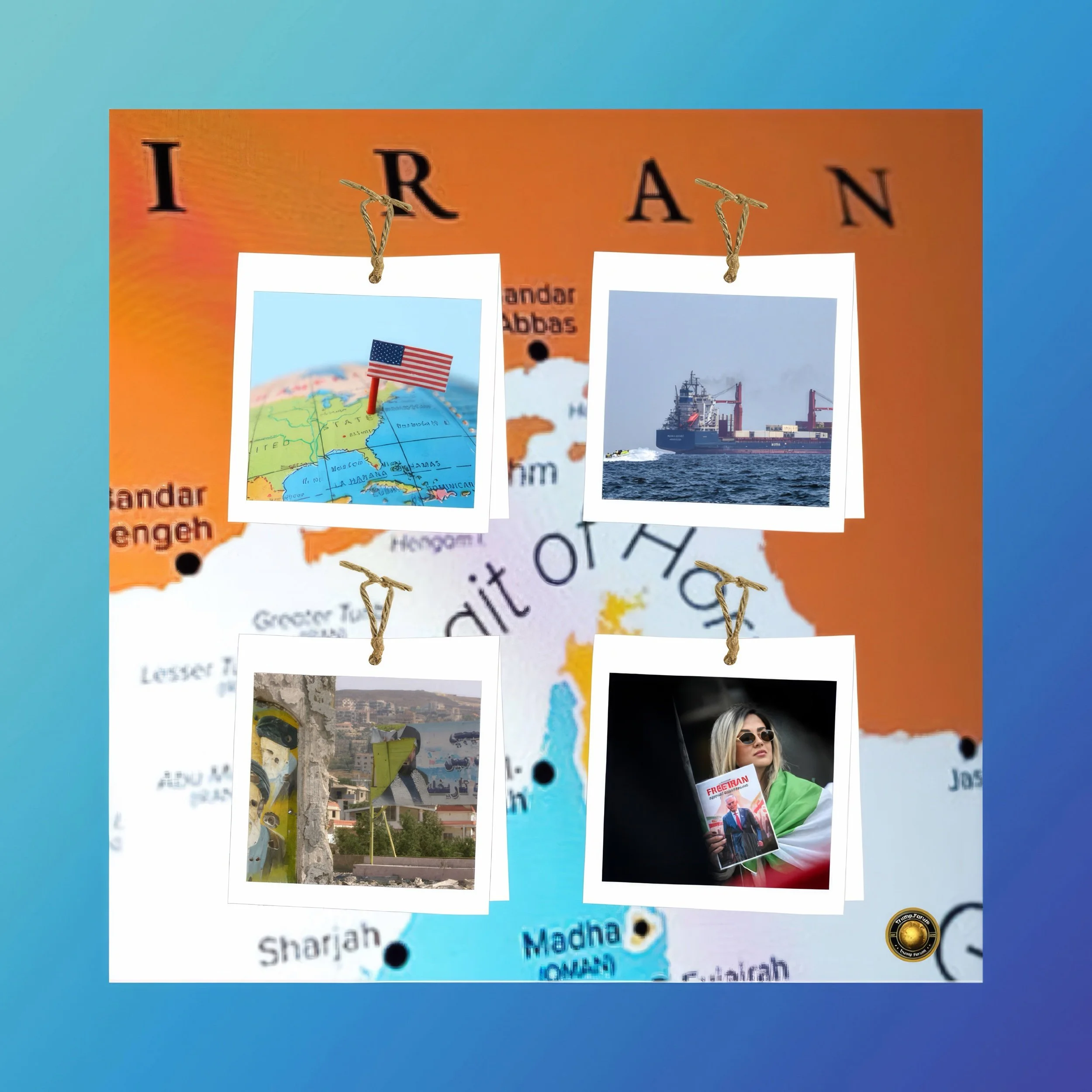
The Strait of Hormuz is a narrow body of water, only about 33 kilometres wide at its slimmest point.
On one side is Iran; on the other side is Oman.
It might look small on a map, but it is the exit gate for oil from Saudi Arabia, Iraq, the UAE, Kuwait, and Iran itself. Without this passage, those countries cannot sell their oil to the rest of the world.
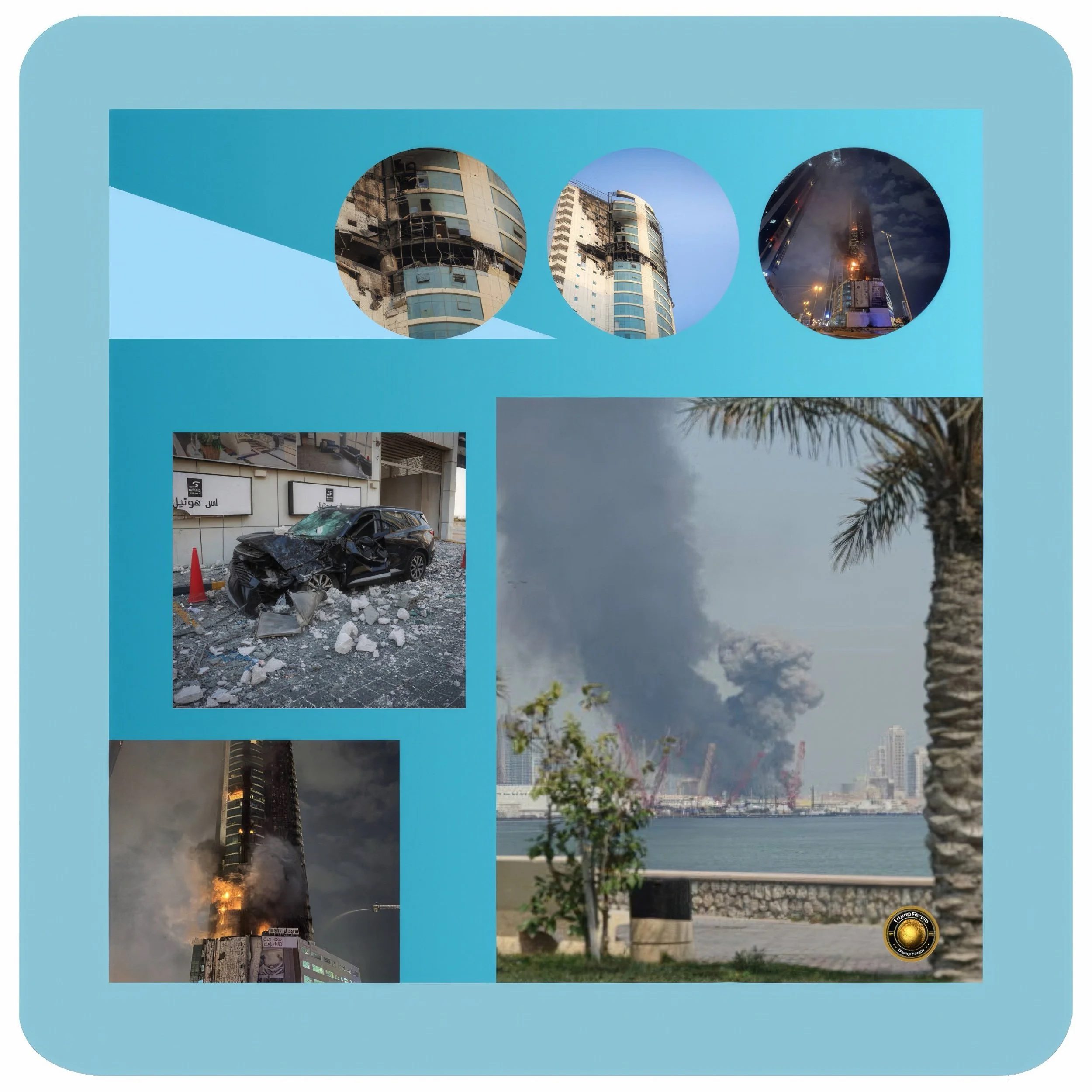
When joint US-Israeli military operations struck Iran — and killed its Supreme Leader — Iran's military arm, the Revolutionary Guards, declared the strait closed.
They deployed sea mines and drone swarms, warned ships to stay away, and threatened to burn any vessel that tried to pass.
Within days, more than 150 large tanker ships were sitting still in the Gulf with nowhere to go.
Global energy markets went into panic mode.
Today the gas price in U.S. has almost touched $5 average per gallon.
What Happened: The Story So Far
The current conflict grew out of a long confrontation between the United States and Iran.
There had already been a shorter military exchange in 2025, but in late February 2026, US and Israeli forces launched a much bigger operation against Iran, destroying nuclear and energy infrastructure and killing Iran's top leader.
Iran struck back the only way it could effectively hurt the other side — by threatening the world's oil supply.
Since Iran could not match US military power in a direct fight, it used its geography. Iran sits right next to the Strait of Hormuz.
It can place mines in the water, fire missiles at ships, and send fleets of armed drones to attack tankers. That is precisely what it did.
By early March 2026, commercial shipping through the strait had effectively stopped.
Insurance companies refused to cover ships entering the area. Oil companies pulled their tankers out.
At least 5 ships were damaged and two sailors were killed. Qatar, which produces a massive share of the world's gas, paused its gas production as a safety measure.
The effects were immediate and global.
What This Means for Oil Prices
Think of oil like water in a pipe. When the pipe is flowing freely, prices stay manageable. When someone blocks the pipe, pressure builds — and prices go up fast.
That is exactly what happened. Within days of the closure, oil prices jumped by more than 10%. Within a week, prices had risen by 18 to 20%, crossing $100 per barrel for the first time in years.
Prices briefly reached $120 before settling around $104.
Analysts warned that if the closure lasted, prices could hit $150 — a level so high that ordinary people and businesses would simply stop buying as much, which would in turn slow down the whole world economy.
To understand why this is so serious, consider what oil is used for. It is not just petrol for your car.
Oil goes into making plastics, medicine packaging, fertilisers for growing food, jet fuel for planes, and the heating systems of factories.
When oil gets expensive, the price of nearly everything goes up. That creates inflation — the condition where your money buys less than it used to.
Why OPEC Could Not Simply Fix It
The group of major oil-producing countries, known as OPEC+, tried to help by announcing it would produce more oil starting in April 2026 — specifically, an extra 206,000 barrels per day.
On the surface, this sounds like a solution. More oil supply should push prices down, right?
The problem is that most of OPEC+'s extra capacity is located in Gulf countries — Saudi Arabia, the UAE, Iraq, Kuwait — and all of these countries export their oil through the Strait of Hormuz. The very waterway that is closed.
So OPEC+ announced more oil but had no way to ship it to the world.
One experienced analyst described this spare capacity as "stranded" — present but trapped.
Saudi Arabia and others were actually forced to cut production because their storage tanks were filling up faster than they could empty them.
This situation revealed a painful truth about the global energy system.
Having oil in the ground is not enough. You need a way to get it out. And right now, that way is blocked.
The Bigger Picture: This Has Happened Before
This is not the first time oil has been used as a weapon. In 1973, Arab countries cut oil exports to punish Western countries for supporting Israel in a war. Prices quadrupled.
Long lines formed at petrol stations. Western economies went into recession. The world was shocked that something it had taken for granted — cheap, plentiful oil — could disappear so suddenly.
In 1979, the Iranian Revolution knocked out Iranian oil production. Prices doubled again. Then Iraq invaded Iran the following year, and both countries started attacking each other's oil shipments in the Gulf.
Throughout the 1980s, the United States sent warships to protect oil tankers in the Gulf — but the strait was never completely closed during that period.
What is different in 2026 is that the strait is actually closed. Ships are not just being attacked — they are not moving at all.
This has never happened in recorded modern history.
The worst-case scenario that governments, oil companies, and military planners spent decades preparing for has finally arrived.
Who Is Hurt Most and Who Benefits
Not everyone suffers equally when oil prices spike. Some countries actually benefit.
Countries that produce oil outside the Gulf — like the United States, Russia, Canada, and Norway — can sell their oil at much higher prices.
Russia, which had already been selling its oil to India and China after Western sanctions cut off European buyers, suddenly found those customers willing to pay more.
The US shale oil industry, which needs prices of around $60 to $70 per barrel to be profitable, suddenly found itself earning far above that level.
But for most of the world, the impact is very painful. India is one of the hardest-hit countries. It imports more than 85% of its crude oil needs, mostly from the Gulf.
With oil prices rising sharply, India faces higher prices for petrol, diesel, cooking gas, aviation fuel, and every product made using oil or transported by vehicle.
The government was forced to raise prices at the pump and in the kitchen. Businesses in aviation, automotive, chemicals, and manufacturing were hit hard.
European countries, which had already gone through an energy crisis after Russia invaded Ukraine in 2022, faced another round of high gas prices.
Countries in Africa and Southeast Asia that depend on affordable oil to power their economies were in some cases facing potential fuel shortages.
Cause and Effect: Why This Happened
The Strait of Hormuz closure did not happen by accident.
Iran planned for it. Reports suggest that Iran had pre-positioned weapons near its borders in anticipation of a major military conflict.
When the strikes came, Iran's response was not improvised — it was a deliberate strategy to fight back economically when it could not fight back militarily.
Iran's thinking was straightforward: if the United States and Israel were going to destroy Iran's military and energy facilities, Iran would make the global economy pay a price high enough to discourage the campaign.
Higher oil prices hurt American consumers, embarrass the US government, and put pressure on allies to push for a ceasefire. Whether this strategy works politically remains to be seen. But in terms of economic impact, it has been highly effective.
The crisis also revealed how poorly prepared the world was, despite decades of warning.
Alternative oil shipping routes exist — pipelines in Saudi Arabia and the UAE that bypass the strait — but they can only handle a fraction of normal Gulf oil exports.
Emergency oil reserves exist in major consumer countries, but they are sized for short-term shocks, not extended closures.
Diplomatic channels for talking to Iran exist, but the killing of Iran's Supreme Leader disrupted the political structure that those channels depended on.
What Could Happen Next?
The most immediate priority is reopening the strait. This can happen in two ways.
Either a ceasefire is agreed upon — allowing ships to move again — or the US Navy clears the mines and suppresses the drone threat enough that insurers feel safe enough to cover ships again. Both options are complicated.
A ceasefire requires Iran to have stable political leadership able to make and honour a deal. With a new Supreme Leader just named and power not yet fully consolidated, this is uncertain.
A naval clearing operation carries the risk of escalating the conflict further if things go wrong.
In the medium term — over the next year or 2 — governments and energy companies will invest heavily in alternative routes and storage.
Pipelines that bypass Hormuz will be expanded. Countries will build more strategic oil reserves.
Energy transition investments in renewables and electric vehicles will accelerate, not just because of climate goals but because every country now sees clearly what depending on Gulf oil can cost them.
For ordinary people around the world, the immediate reality is higher prices — at the pump, in the shops, and in their monthly bills.
The scale and duration of the impact will depend on how quickly the crisis is resolved. If the strait reopens within weeks, prices will fall sharply.
If the conflict drags on for months, the world faces a sustained period of inflation and slower economic growth that could tip into a global recession.
Conclusion
Geography and History Repeat Their Lesson
The Strait of Hormuz has always been a vulnerability. Governments knew it. Oil companies knew it.
Military planners knew it. Yet the world continued to depend on this tiny waterway for a fifth of its oil, without ever fully building the alternatives that would have reduced that dependency.
The 2026 crisis is a very loud reminder that energy security is not just a matter of economics. It is a matter of geography, politics, and military power.
As long as the world needs as much oil as it currently does, and as long as so much of that oil flows through one narrow, contested waterway, the risk of exactly this kind of shock will remain.
The question is whether the world will finally do enough — in terms of alternative infrastructure, energy transition investment, and diplomatic frameworks — to ensure it never has to learn this lesson a third time.