Real Estate Diplomacy, Trump Foreign Policy, Sphere of Influence, World Order
Executive Summary
The Architecture of Ambition: Decoding the Trump Doctrine and Its Consequences for the World Order
Since returning to the White House in January 2025, Donald Trump has pursued a foreign policy that has confounded analysts, alarmed allies, and emboldened rivals in equal measure.
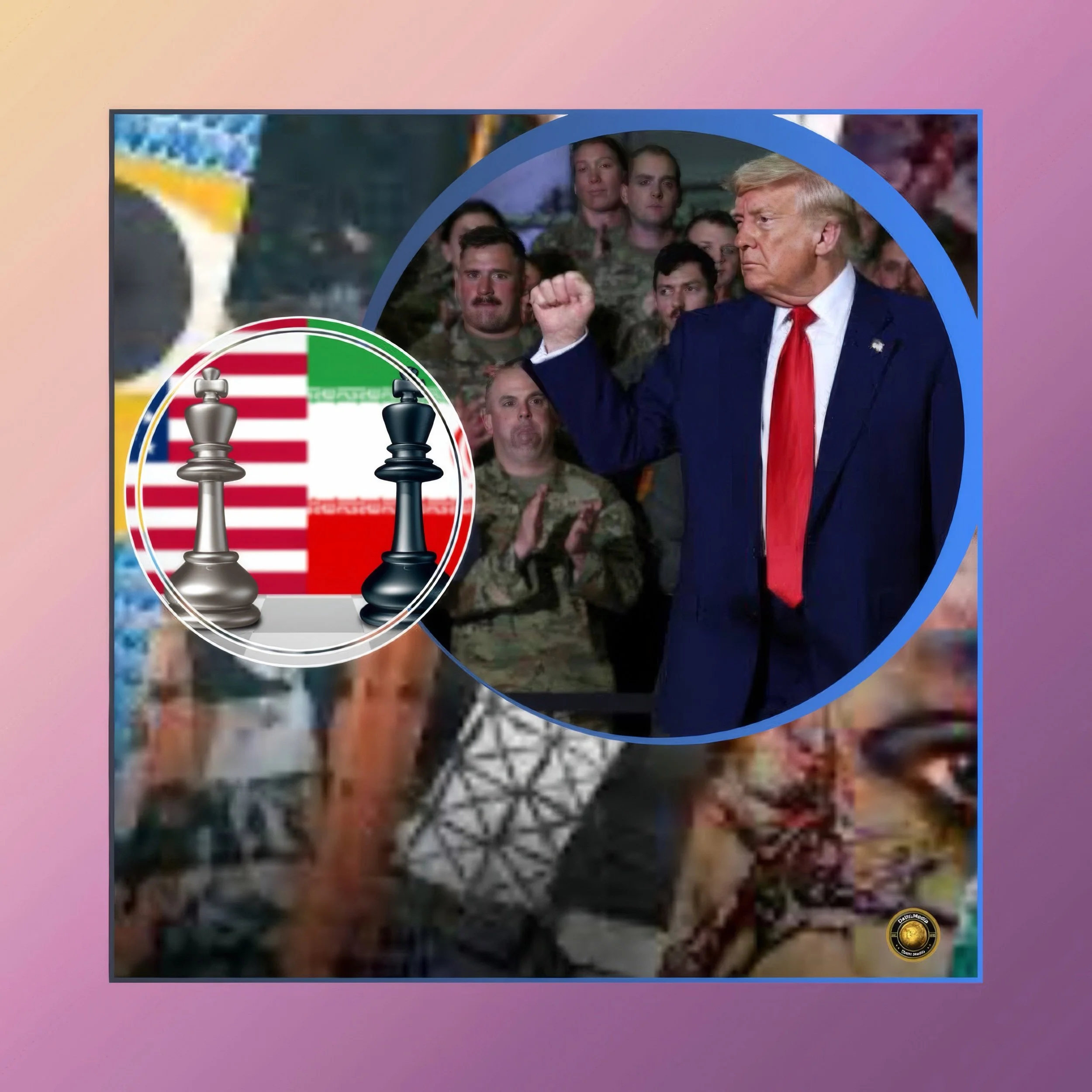
For much of his second term, observers focused on individual episodes — the seizure of Venezuelan President Nicolás Maduro, the rhetorical push to acquire Greenland, the threats against Mexico and Colombia, and finally the launch of Operation Epic Fury against Iran on February 28, 2026.
Taken separately, these actions appeared erratic, even contradictory, for a president who had promised his base no new foreign wars.
Taken together, however, they reveal something far more coherent: a doctrine built on the logic of territorial acquisition, resource consolidation, strategic denial, and the deliberate dismantling of the liberal international order that the United States itself built after 1945.
This article examines the historical roots, current expression, key developments, and long-term implications of what has come to be known, variously, as the Trump Doctrine, the Donroe Doctrine, or the doctrine of spheres of strategic denial.
It argues that Trump is not a foreign policy improviser but a property developer who has found in geopolitics the ultimate real estate market — one where leverage, coercion, and the willingness to act unilaterally replace the norms of diplomacy.
Introduction
Operation Epic Fury, American Imperialism, Iran Nuclear, US Military
The Confusion and the Clarity
There may never have been a more disorienting moment in modern American foreign policy.
In the weeks leading up to February 28, 2026, and in the hectic days that followed, the Trump administration offered a series of shifting, sometimes contradictory justifications for launching military strikes against Iran.
At various moments, Trump and senior officials framed the operation as being about protecting Iranian protesters, eliminating the nuclear threat, dismantling Tehran's missile infrastructure, degrading its proxy networks, and even — despite official denials — regime change.
The Washington Post noted that Trump told them the aim was simply "freedom" for the Iranian people, while his United Nations delegation simultaneously invoked Article 51 of the UN Charter, the self-defense clause, arguing that Iran's missile capabilities posed a direct threat to American personnel in the region.
This confusion has led many commentators to conclude that Trump is without strategy.
That conclusion is wrong.
The confusion is, in part, a feature rather than a bug of an approach to power that prizes unpredictability. But beneath the noise, there is a coherent architecture — one rooted not in the traditions of liberal internationalism, democratic promotion, or even conventional realism, but in the logic of real estate.
Trump, who built his public reputation as a property developer who sought to remake skylines in his image, has carried that logic into the international arena.
The world, in his framework, is a portfolio of assets to be acquired, managed, leveraged, or neutralized. Sovereignty is not a sacrosanct principle — it is a negotiating position.
History: From Monroe to Trump
Operation Epic Fury and the Rise of a New American Imperial Strategy Across the Globe
Trump Doctrine, Global Order, Strategic Denial, American Hegemony
To understand the Trump Doctrine, one must begin not in 2025 but in 1823, when President James Monroe declared that the Western Hemisphere was closed to further European colonization and that any attempt by Old World powers to extend their influence into the Americas would be regarded as a threat to United States security.
The Monroe Doctrine was a foundational articulation of American spheres of influence — the idea that geography confers strategic interest, and that strategic interest justifies intervention.
For most of the 20th century, the United States oscillated between enforcing this doctrine vigorously — as in the 1962 Cuban Missile Crisis, the 1989 invasion of Panama, and the 1994 intervention in Haiti — and invoking multilateral legitimacy to soften its unilateralist edges.
The post-Cold War years saw American foreign policy expand its ambitions globally: NATO enlargement, the invasion of Iraq, democracy promotion in the Middle East, and the pivot to Asia all reflected a belief that American power could be exercised everywhere and that the world order was best organized around universal norms.
Trump's first term, from 2017 to 2021, disrupted this consensus at the rhetorical level. His second term, beginning in January 2025, has disrupted it operationally.
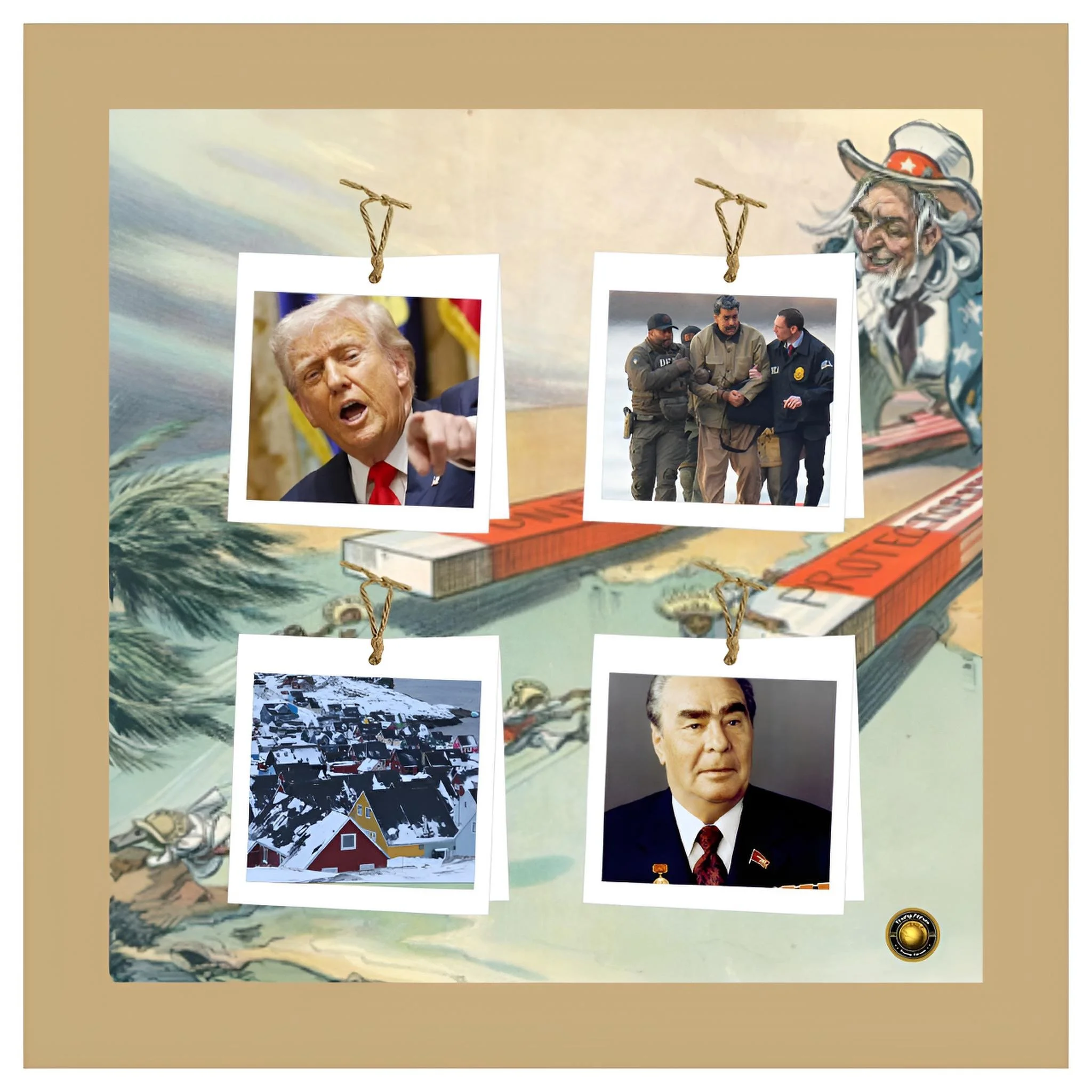
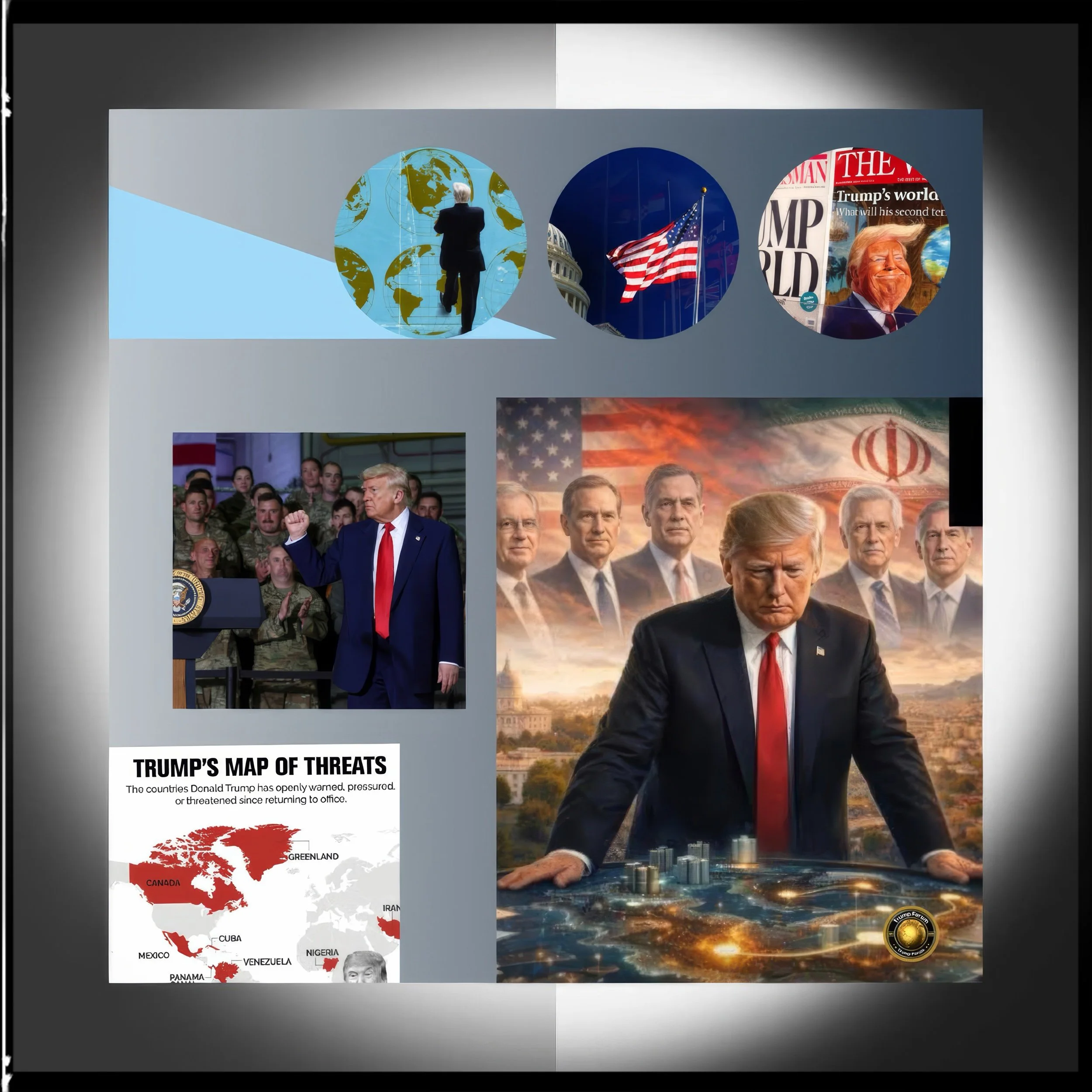
Within days of the new year, 2026 saw the administration cross thresholds that even the most hawkish analysts had considered unlikely: the military seizure of Venezuelan President Nicolás Maduro, open threats of military force against Colombia, warnings about Cuba, the assertion of a right to annex Greenland, and finally, on February 28, 2026, the launch of Operation Epic Fury against Iran.
The 2025 National Security Strategy, released midway through the administration's first year, formalized what the actions were already making plain: a strategic reorientation away from the post-Cold War global order and toward a framework of hemispheric dominance and spheres of strategic denial.
The Donroe Doctrine: A New Monroe Corollary
The label "Donroe Doctrine" — a portmanteau of Donald and Monroe — has been applied by analysts to describe the administration's revival and expansion of hemisphere-based strategic thinking. But the label, while evocative, is incomplete.
The original Monroe Doctrine was fundamentally defensive: it sought to exclude European powers from the Americas.
The Trump administration's approach is more expansionist, more explicitly tied to resource competition, and more willing to use military force as an instrument of first resort rather than last resort.
The 2025 National Security Strategy is explicit about the organizing principle: the United States will deny non-hemispheric competitors — read, China and Russia — the ability to position forces, own strategically vital assets, or exercise meaningful influence in the Western Hemisphere.
The strategy also commits to denying aggression anywhere in the First Island Chain in the Pacific and reinforcing the capacity to deny any attempt to seize Taiwan.
The word "denial" is not accidental. It reflects a fundamental shift in strategic logic: from the liberal internationalist ambition of building a rules-based order that everyone joins, to the realist ambition of denying rivals the resources, territory, and leverage they need to compete.
Venezuela exemplifies the logic.
The Trump administration's capture of Maduro was not merely a law enforcement operation targeting narcotics trafficking, as it was officially framed.
It was the opening move in a strategy to ensure American access to Venezuelan oil — including as a means to compensate US firms whose assets were expropriated under the Chávez and Maduro governments — while simultaneously denying China, which had made substantial investments in Venezuela's energy sector, access to those same resources.
The oil fields of the Orinoco Belt are among the largest proven reserves on Earth. Their control is not merely an economic prize; it is a strategic one.
Greenland follows a similar logic.
The United States already operates Pituffik Space Base on the island's northwestern coast.
Trump's push for annexation — whether through purchase, economic coercion, or military pressure — is framed in terms of Arctic security, the Golden Dome missile defense architecture, and the need to deny Russian and Chinese vessels and research operations free rein in the High North.
Treasury Secretary Scott Bessent, at the 2026 Davos meeting, reiterated Greenland's strategic necessity for the Golden Dome shield, framing it not as aggression against Denmark but as a security imperative.
The Real Estate Logic of Global Power
Perhaps the most illuminating framework for understanding Trump's foreign policy is not drawn from the canon of international relations theory — not Waltz, not Mearsheimer, not Kissinger — but from the boardroom of a real estate developer.
Trump has, throughout his career, operated on a set of principles: acquire assets whose value others underestimate, use leverage aggressively, be willing to walk away from deals that do not serve your interests, and never be bound by sentiment or precedent.
Applying these principles globally produces a distinctive strategic posture.
Venezuela becomes a hostile takeover — a distressed asset with enormous resource value whose current management (the Maduro government) has run it into the ground and whose strategic location makes it too important to leave in hostile hands.
Gaza, earlier in the second term, was framed as a receivership — a territory rendered uninhabitable that could be "cleaned out" and reconstructed as a resort destination, with its population relocated and its governance contracted to a United States-backed administration.
Greenland is an unwilling seller being subjected to escalating pressure — economic, rhetorical, and potentially military — to accept a takeover.
Cuba is a distressed asset, eyed as a "friendly acquisition" of a government that has simply run out of options.
Iran is different. Iran cannot be folded into the portfolio because its government is ideologically resistant, its strategic depth is significant, and its nuclear program represents both a genuine security concern and a potential competitor's trump card.
Unable to acquire, the property developer moves to liquidation: strip the asset of its value to rivals by destroying its offensive military capabilities, degrading its proxy networks, and — through the appeal to the Iranian population to "seize your destiny" — hoping to trigger an internal restructuring that produces a more pliable successor government.
This is not regime change in the formal sense. It is, in Trump's own lexicon, a restructuring.
The analogy illuminates not just the strategy but the risks. Real estate developers sometimes miscalculate. They overleverage, misread the market, and find that assets they thought they could acquire or neutralize prove more resilient — or more costly — than anticipated.
The Iran operation has already demonstrated this: the administration's shifting justifications, the exaggerated assessments of Iran's nuclear timeline, and the absence of a clear post-conflict political framework all suggest that the "deal" was not fully structured before the first strike was launched.
Key Developments: From Maduro to Operation Epic Fury
Strategic Denial, Regime Change, and the Unspoken Logic Behind Trump's Wars of Choice
The arc of Trump's second-term foreign policy can be traced through a series of escalating interventions, each building on the logic established by its predecessor.
In the final days of 2025 and the opening days of 2026, the Trump administration mounted a military operation that resulted in the capture of Venezuelan President Nicolás Maduro.
The operation was framed as a counter-narcotics mission, though analysts immediately identified its broader strategic dimensions: the reassertion of American primacy in the Western Hemisphere, the denial of Venezuelan resources to China, and the establishment of a precedent for the forcible removal of governments deemed hostile to American interests.
Trump described it as the application of the "Donroe Doctrine" — a term his team had been road-testing since late 2025.
The Venezuela operation was followed almost immediately by a cascade of threats and warnings directed at other regional governments.
Colombia was threatened with military action over its initial refusal to accept deportation flights from the United States.
Mexico was warned repeatedly about cartel activity.
Cuba was placed firmly in the crosshairs of potential future action.
And Greenland's strategic importance was reiterated with increasing stridency, with administration officials suggesting that the United States' strength relative to Denmark's weakness was itself a sufficient justification for asserting control.
The culmination of this escalatory arc came on February 28, 2026, with the launch of Operation Epic Fury.
Executed in partnership with Israeli forces — echoing the Israeli-American strikes on Iranian nuclear facilities during the 12-day conflict of June 2025 — the operation targeted Iran's missile production infrastructure, its navy, its proxy networks, and, in the words of the official White House statement, "47 years of Iranian aggression.”
Trump announced four military objectives: preventing Iran from acquiring a nuclear weapon, destroying its missile arsenal and production sites, degrading its proxy networks, and annihilating its navy.
A fifth, unofficial objective — regime change from within — was simultaneously asserted and denied by different members of the administration.
Latest Facts and Concerns
How a Property Developer Became the Most Disruptive Force in Twenty-First Century Geopolitics
Iran War, Venezuela Seizure, Monroe Doctrine, US Expansion
As of early March 2026, Operation Epic Fury is ongoing, and its full consequences remain to be assessed. Several dimensions of the situation are particularly concerning from a strategic and humanitarian standpoint.
First, the administration's justifications for the operation have been inconsistent to the point of incoherence.
Prior to the strikes, Trump and senior officials exaggerated Iran's proximity to achieving nuclear weapons capability, according to sources who spoke to major news organizations.
The formal invocation of Article 51 of the UN Charter — the self-defense clause — was prepared in apparent haste by the United States mission to the United Nations on the very day the strikes began, suggesting that the legal framework was constructed after the strategic decision had already been made.
Second, the administration has been unable to articulate a coherent post-conflict political framework for Iran.
Trump's call for "unconditional surrender" and his encouragement of the Iranian people to "seize this moment" and "reclaim your nation" raises the question of what comes next.
If the objective is not formal regime change — as officials insist — but the behavior of the operation resembles regime change in all but name, the absence of a plan for the morning after is a significant strategic liability.
Iraq, Libya, and Afghanistan all stand as recent precedents for the dangers of military intervention without a credible political strategy.
Third, the operation has placed significant strain on United States relationships with European allies.
The 2025 National Security Strategy's explicit call for "burden-shifting" rather than merely "burden-sharing" — and its framing of the international order as ultimately resting on the rule of the "larger, richer, stronger" — has not been lost on NATO partners.
Several European governments have declined to endorse the Iran strikes, and the precedent set by the Venezuela operation — the forcible removal of a sitting head of state — has generated alarm even among governments that were not sympathetic to Maduro.
Fourth, the operations against Venezuela and Iran have provided what analysts describe as a dangerous template for other great powers.
If the United States can seize a nation's leadership and oil infrastructure under the rubric of counter-narcotics enforcement and national security, Russia has a ready-made framework for formalizing its governance structures in eastern Ukraine.
If the United States can launch strikes against a sovereign nation's military infrastructure on the basis of a self-constructed legal argument invoking Article 51, China has a precedent for doing the same with respect to Taiwan or disputed maritime territories in the South China Sea.
Cause-and-Effect Analysis
Strategic Denial, Regime Change, Trump Wars, Donroe Doctrine
The Trump Doctrine, as it has emerged, is both a product of specific historical conditions and a generator of new ones. Understanding its causal logic requires attention to both directions.
The doctrine is, in part, a response to two decades of what the 2025 National Security Strategy calls "hugely misguided" strategic overreach.
The wars in Afghanistan and Iraq consumed enormous American treasure and prestige while producing outcomes that strengthened Iran's regional position, accelerated Chinese economic expansion into regions vacated by American attention, and generated domestic political backlash that powered Trump's first electoral victory.
The strategic logic of withdrawal from unlimited global commitments and refocusing on core interests is not, in itself, irrational.
The doctrine is also a response to the specific challenge of Chinese strategic expansion.
Over the two decades in which Washington was preoccupied with the Middle East, Beijing quietly accumulated leverage along critical chokepoints: investing heavily in Latin American infrastructure and energy sectors, advancing what it calls the Polar Silk Road through the Arctic, deepening civilian and military engagement across Africa and Asia, and securing dominance over rare earth mineral processing and supply chains.
The Trump administration's 2025 National Security Strategy is, among other things, a belated recognition that this accumulation of Chinese influence represents a structural challenge to American primacy — and that the time to contest it is now, before it becomes irreversible.
The causal consequences of the doctrine, however, are deeply concerning. By replacing multilateral legitimacy with unilateral coercion, the administration is eroding the normative architecture that has, imperfectly but meaningfully, constrained the behavior of all great powers since 1945.
The Westphalian principle of sovereign equality — the idea that all states, regardless of size, possess inviolable territorial integrity and the right to self-determination — is being explicitly discarded in favor of a framework in which "the rule of the larger, richer, stronger" is openly acknowledged as the organizing principle of international order.
The implications for smaller states are stark: their strategic agency is constrained, their alignment with great powers is coerced rather than chosen, and their domestic political arrangements are subject to revision by external force if they run afoul of a great power's interests.
For China and Russia, the Trump Doctrine is both a challenge and an opportunity.
The challenge is that the United States is actively contesting their spheres of influence — denying China access to Venezuelan oil, contesting Russian Arctic ambitions through the push for Greenland, supporting Ukrainian resistance through selective engagement, and maintaining a forward military posture in the First Island Chain.
The opportunity is that American behavior is delegitimizing the rules-based order that the United States has historically invoked to constrain Chinese and Russian behavior. An America that openly asserts the right of the strong to impose their will provides moral cover for Beijing and Moscow to do the same.
For American allies, particularly in Europe, the Trump Doctrine generates a painful dilemma.
The implicit American security guarantee — the commitment to defend allies regardless of their relative power — is being replaced by a transactional model in which the value of the alliance is assessed against its material contribution to American interests.
European governments that spent decades relying on American security guarantees are now being told to "burden-shift" — not merely to spend more on defense but to accept that the alliance is a business arrangement rather than a political community of shared values.
The long-term consequence of this shift may be the emergence of European strategic autonomy, though whether that autonomy can be built fast enough to compensate for the erosion of the transatlantic relationship is deeply uncertain.
Future Steps: The World That Comes Next
From Venezuela to Iran, One Man's Vision Is Redrawing the World's Political Map
The trajectory of the Trump Doctrine points toward several foreseeable developments, each of which carries significant implications for the structure of the international order.
In the near term, the most pressing question is the outcome of Operation Epic Fury.
If the operation succeeds in its stated military objectives — destroying Iran's missile production capacity, degrading its proxy networks, and ensuring it cannot acquire nuclear weapons — the Trump administration will claim a transformative strategic victory: the permanent removal of what it regards as the most destabilizing force in the Middle East and the opening of a path to a regional realignment that includes Arab-Israeli normalization, reduced Iranian influence in Lebanon, Syria, Iraq, and Yemen, and the potential reintegration of Iran into the international economy under new political leadership.
This scenario is plausible but requires multiple contingencies to align: the Iranian population must move toward political change, successor leadership must be willing to accept American terms, and regional stakeholders — particularly Saudi Arabia, the UAE, and Israel — must manage the transition without triggering wider destabilization.
If the operation fails to achieve these outcomes — if Iran's political system proves more resilient than anticipated, if the strikes generate a nationalist backlash that strengthens rather than weakens the regime, or if Iranian proxy networks mount retaliatory attacks that draw the United States into a broader regional conflict — the Trump administration will face the same dilemma that confronted its predecessors in Iraq and Afghanistan: an intervention without a viable exit strategy.
The declaration of "unconditional surrender" as the only acceptable outcome forecloses the diplomatic space that might otherwise allow for a negotiated resolution.
In the medium term, the most consequential development is likely to be the response of China.
The Donroe Doctrine's explicit goal of denying Beijing access to Venezuelan resources, Greenland's strategic assets, and influence in Latin America more broadly represents a direct challenge to two decades of Chinese investment and relationship-building in the region. China's response is unlikely to take the form of direct military confrontation in the Western Hemisphere — the logistics are prohibitive and the risks are disproportionate.
More likely, Beijing will accelerate its investments in regions where American attention is focused elsewhere, deepen its relationships with states that are chafing under American pressure, and leverage the precedent set by American unilateralism to advance its own territorial and resource claims in the South China Sea, the Taiwan Strait, and beyond.
In the long term, the most profound consequence of the Trump Doctrine may be normative rather than territorial.
The Peace of Westphalia in 1648 established the foundational principle of the modern international system: that states possess sovereign equality and that their territorial integrity is inviolable.
This principle has been violated many times in the centuries since, but it has also functioned as a normative anchor — a shared standard against which the behavior of states is measured and, imperfectly, constrained.
By openly dismissing the territorial integrity of nation-states on a scale not seen since the Second World War, and by explicitly framing international order as the province of the "larger, richer, stronger," the Trump administration is dismantling this normative anchor.
The world that results is not a multipolar order governed by negotiated rules.
It is a world of competing spheres of influence, where small and medium-sized states are clients or targets rather than sovereign stakeholders, and where the only check on great power behavior is the countervailing power of other great powers.
Conclusion
The Trump Doctrine Has Finally Arrived, and It Is Reshaping the Entire Global Order Permanently
The Skyline and the World
Donald Trump famously sought, as a property developer, to remake skylines in his image: to replace modest buildings with towers bearing his name, to turn neglected neighborhoods into luxury developments, and to assert his presence on the physical landscape of American cities.
The analogy to his foreign policy is not merely rhetorical. It captures something essential about his approach to international order: the conviction that the world, like a real estate market, rewards the bold, punishes the hesitant, and ultimately belongs to those with the leverage to act.
What is missing from the real estate analogy — and from the Trump Doctrine itself — is any serious account of the stakeholders who live in the buildings being remade. Real estate development displaces communities, destroys existing social fabrics, and generates costs that are borne not by the developer but by the displaced.
The Trump Doctrine, similarly, displaces existing governance arrangements, destroys the normative fabric of international order, and generates costs — in lives, in sovereignty, in the erosion of the rules that protect smaller states — that are borne not by Washington but by the nations caught in its wake.
The Trump Doctrine is real, it is coherent, and it is consequential.
Its strategic logic — consolidate the hemisphere, deny rivals access to critical resources and territories, use military force as a tool of first rather than last resort, and treat the international order as a portfolio to be restructured rather than a set of norms to be upheld — is not the improvisation of an undisciplined mind.
It is the application, at global scale, of a lifetime of operating in an environment where leverage determines outcomes and norms are obstacles to be cleared.
Whether the world that results from this doctrine is more secure, more stable, or more just than the one it replaces is a question that history, not rhetoric, will ultimately answer.