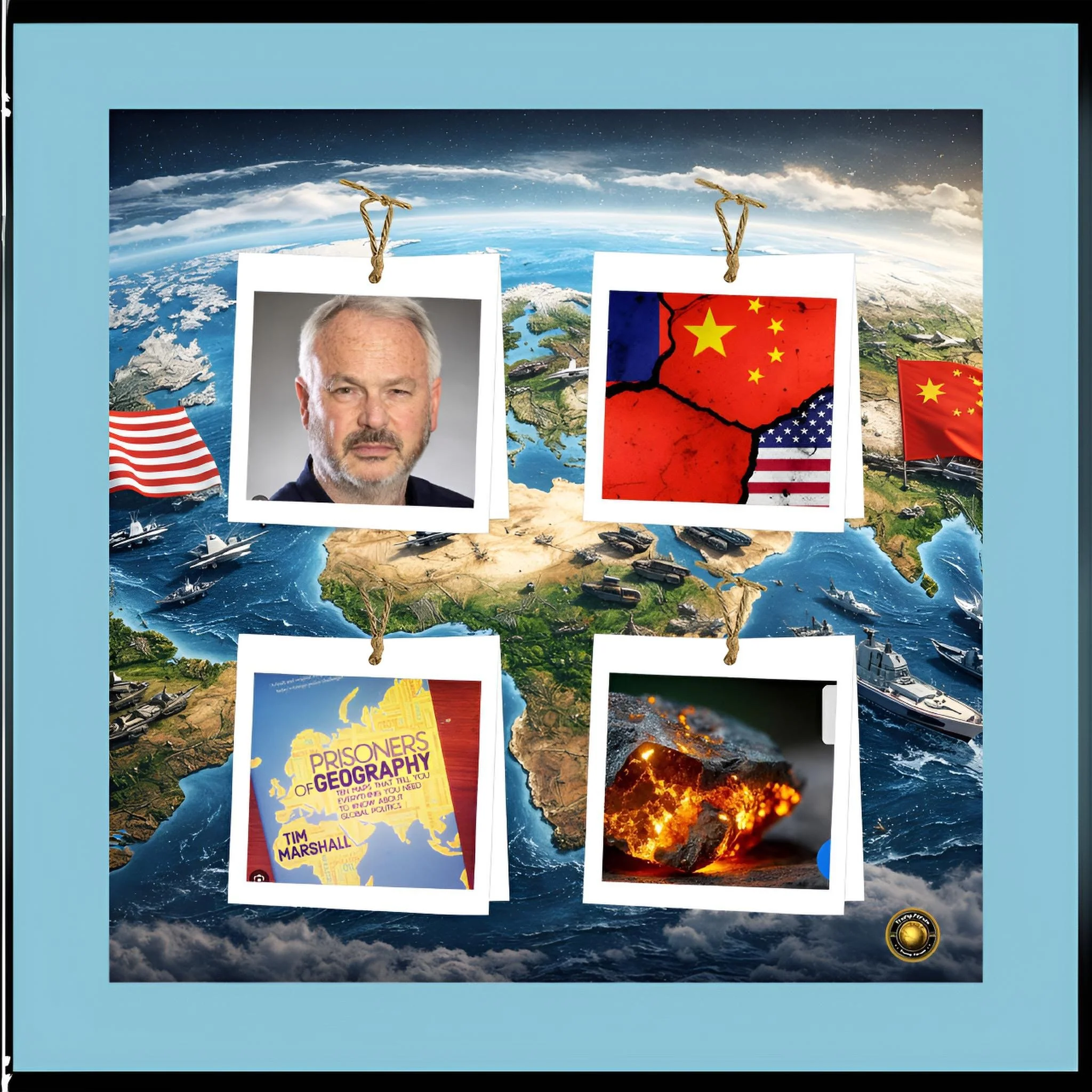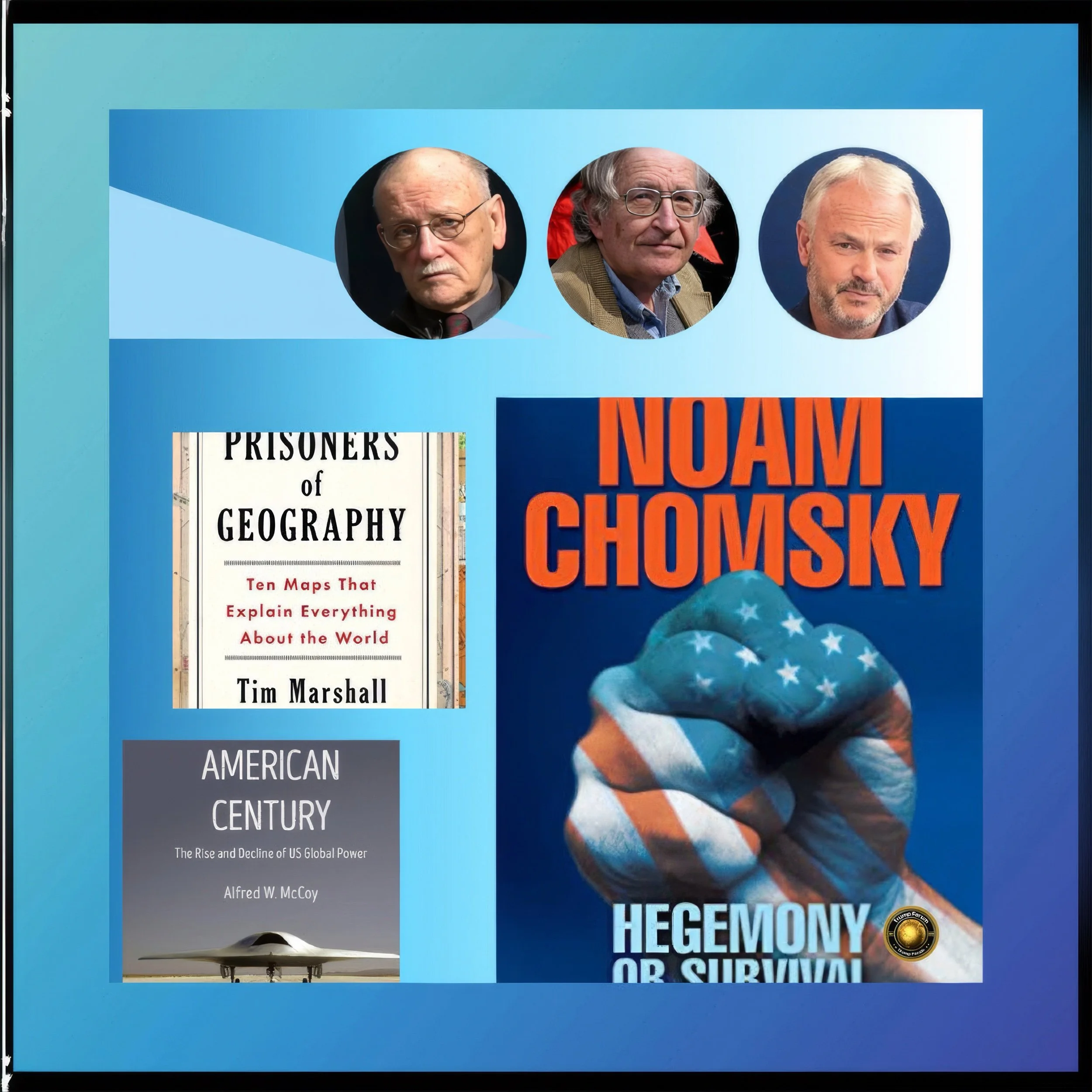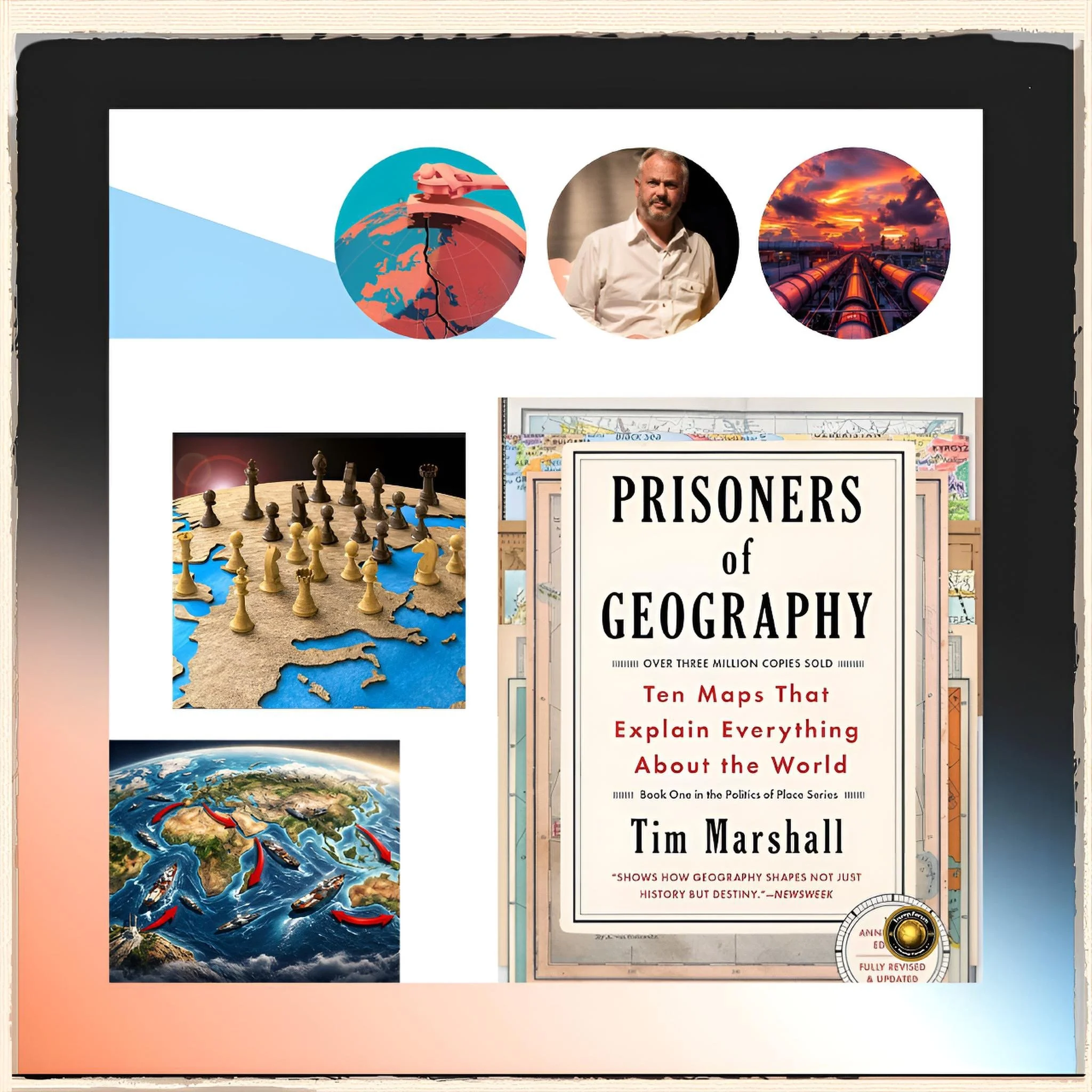
Geography, Power, and the New World Order: Reassessing Tim Marshall in the Age of Strategic Fragmentation - Part I
Executive Summary
From Ukraine to Taiwan: The Map Shapes Modern Conflict
Tim Marshall’s Prisoners of Geography argues that states are constrained, shaped, and often trapped by their physical geography.
Mountains, rivers, plains, climate, access to seas, and resource distribution form the enduring architecture of power.
While ideology, technology, and leadership matter, geography defines the outer limits within which politics unfolds.
FAF analysis argues that the emerging global order of 2025–2026 validates Marshall’s central thesis but also complicates it.
The war in Ukraine, intensifying U.S.–China rivalry, instability in the Middle East, Arctic competition, and supply chain fragmentation demonstrate that geography remains decisive.
Yet technological interdependence, cyber warfare, financial sanctions, artificial intelligence, and climate change have layered new strategic dimensions onto physical terrain.
The new world order is not post-geographical. It is hyper-geographical.
The Eurasian landmass remains central. Sea lanes determine energy and trade flows. Chokepoints such as the Strait of Hormuz, the South China Sea, and the Suez Canal carry systemic risk.
Climate shifts are redrawing the Arctic map. Demographic and resource asymmetries intensify migration and conflict pressures.
Global citizens are affected through energy prices, food security, supply chain volatility, debt burdens, military expenditures, digital fragmentation, and rising geopolitical blocs.
Geography does not merely constrain governments; it shapes everyday life through inflation, migration, and security anxieties.
Real-time comments from six world leaders—Joe Biden, Xi Jinping, Vladimir Putin, Narendra Modi, Ursula von der Leyen, and Mohammed bin Salman—underscore that geography is once again central to strategic thinking.
Foreward
Geography Returns With Force as Global Order Fractures Across Continents
When Tim Marshall published Prisoners of Geography, he sought to remind policymakers and citizens that history is not random. Geography imposes structure.
Russia fears invasion because it lacks natural defensive barriers across the North European Plain.
China seeks maritime security because its trade depends on vulnerable sea lanes.
The United States benefits from ocean buffers. Africa’s artificial borders reflect colonial geography that ignored ethnic realities.
The Middle East’s energy wealth both empowers and destabilizes.
FAF analysis contends that the events of 2025–2026 reinforce this structural realism.
The illusion of a frictionless globalized world has eroded. Instead, geography has returned with force.
Trade corridors are weaponized. Energy chokepoints are militarized. Digital networks are segmented along territorial lines. Climate change is altering coastlines and water supplies.
The so-called new world order is not a complete rupture from the post-Cold War era; rather, it is a reassertion of geographic fundamentals within a technologically advanced framework.
History and Current Status
Historically, geography shaped empires. Britain’s island position enabled naval dominance.
Russia’s expansion created strategic depth.
The United States consolidated continental security before projecting overseas power. China’s historical vulnerability to northern invasions and maritime encirclement shaped its strategic culture.
After the Cold War, many analysts believed globalization diminished geographic constraints.
Capital moved digitally. Supply chains spanned continents. Institutions promised collective security. Yet even during globalization’s height, geography persisted beneath the surface.
The war in Ukraine illustrates Marshall’s thesis with stark clarity. Russia’s invasion is inseparable from its perception of vulnerability along the North European Plain.
President Vladimir Putin recently stated, “Russia’s security demands a buffer. Geography has not changed.” His framing echoes centuries of Russian strategic thought.
China’s maritime strategy similarly reflects geographic logic. President Xi Jinping has emphasized that “China cannot allow strategic containment along its maritime periphery.” The South China Sea is not abstract; it is the artery for China’s trade and energy imports.
The United States retains geographic advantages: two oceans, friendly neighbors, internal energy capacity.
Yet it faces challenges in projecting power across vast distances. President Joe Biden recently remarked, “Our alliances anchor stability across oceans,” acknowledging the geographic span of U.S. commitments.
India’s geography situates it between continental and maritime spheres. Prime Minister Narendra Modi has emphasized India’s role as a “bridge between East and West,” reflecting its strategic location in the Indian Ocean.
Europe’s vulnerability lies in energy dependency and proximity to conflict zones. Ursula von der Leyen has warned that “Europe must harden its economic security,” a recognition of geographic exposure.
Saudi Arabia’s Crown Prince Mohammed bin Salman has highlighted the Kingdom’s position as “a global energy and logistics crossroads,” demonstrating how geography translates into strategic leverage.
Key Developments
The defining development of 2025–2026 is the fragmentation of global supply chains into regional blocs.
Geography dictates these realignments.
Energy routes shift toward reliable corridors. Semiconductor manufacturing clusters in politically aligned regions. Rare earth minerals become strategic bargaining tools.
The Arctic is emerging as a contested space due to melting ice opening new shipping lanes. Russia seeks Arctic dominance. China calls itself a “near-Arctic state.” NATO monitors the region closely.
In the Indo-Pacific, maritime geography drives tension over Taiwan and the South China Sea. The island chain concept remains central to strategic planning.
In the Middle East, control of maritime chokepoints affects global oil and gas prices. Disruptions in the Red Sea have demonstrated how narrow waterways can create global economic shocks.
Latest Facts and Concerns
Energy markets remain volatile due to geopolitical risk.
Defense budgets are rising across Europe and Asia. Climate change intensifies water scarcity in vulnerable regions.
Debt burdens increase as governments finance military expansion.
Cyber warfare adds a new layer to geographic conflict, yet even cyber infrastructure depends on undersea cables and physical data centers.
Migration flows reflect geographic instability. Conflicts near Europe and in parts of Africa drive demographic pressure.
Cause and Effect Analysis
Mountains, Oceans, and Power Politics in the Twenty-First Century
Geographic insecurity leads to military buildup. Military buildup increases fiscal strain. Fiscal strain reduces social spending. Reduced social spending fuels domestic polarization.
Maritime chokepoint vulnerability leads to naval expansion. Naval expansion increases risk of accidental escalation.
Escalation risk raises insurance and shipping costs. Higher costs contribute to inflation.
Climate change alters agricultural zones. Altered production affects food prices. Food price spikes trigger political unrest.
Future Steps
States must invest in resilient infrastructure, diversified energy sources, and diplomatic mechanisms to manage chokepoint tensions.
Regional integration can reduce vulnerability. Climate adaptation must be prioritized to mitigate geographic stressors.
Global citizens must understand that political shocks often originate from physical geography.
Economic planning, energy consumption, and civic engagement are intertwined with strategic terrain.
Conclusion
Why Tim Marshall’s Geography Thesis Explains Today’s Global Tensions
Prisoners of Geography remains profoundly relevant.
Geography is not destiny, but it is structure.
The new world order of 2025–2026 reflects intensified competition across physical and strategic spaces.
Global citizens are not distant observers; they are participants in an era where geography shapes prices, politics, and security.