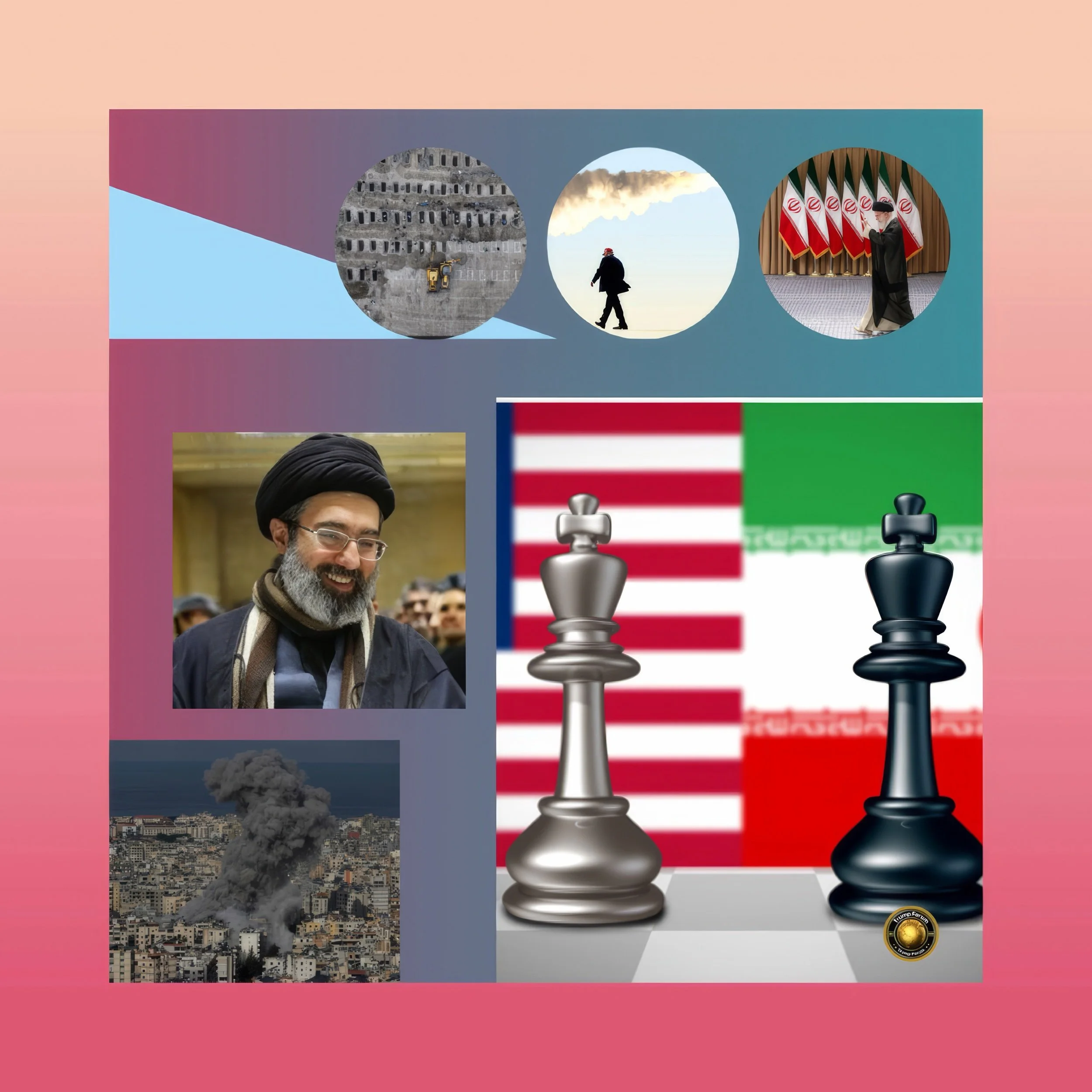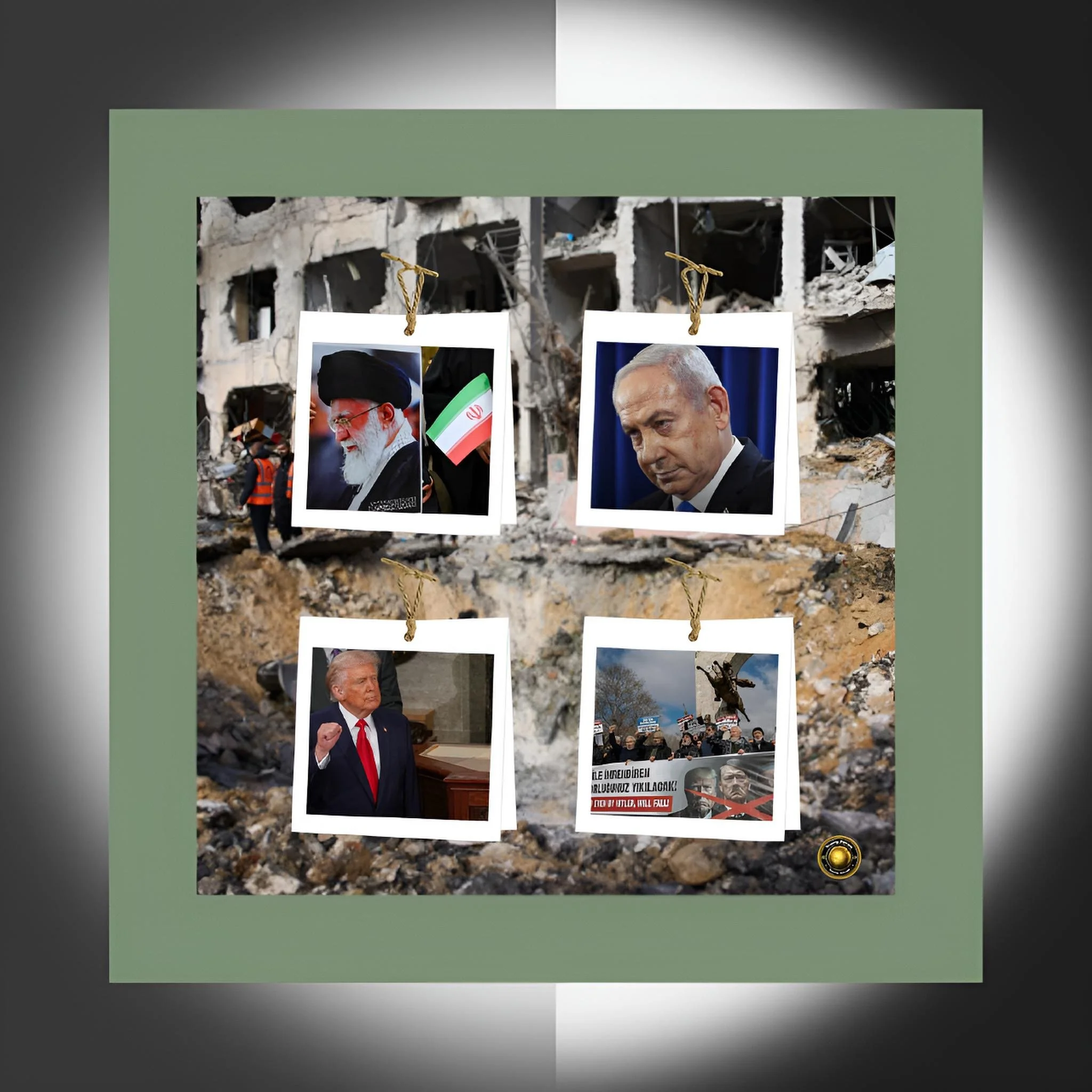
Killing the Supreme Leader: How the Iran–U.S.–Israel War Redefined Self-Defense Overnight - Part I
Executive Summary
Trump, Netanyahu, Tehran: Competing Claims of Lawful Force After Khamenei’s Death
The killing of Iran’s Supreme Leader, Ayatollah Ali Khamenei, in a reported U.S.-Israeli strike on 28th February 2026, confirmed publicly by Iranian state media on 1st March 2026, has transformed a long-running shadow conflict into a defining test of international law, strategic restraint, and regional order.
Iran has declared national mourning and moved toward an interim leadership arrangement while launching retaliatory strikes on U.S. facilities and Israel, deepening fears of wider regional war.
The FAF article provides factual, two-sided arguments about “who is right” under competing narratives.
The United States and Israel present the strike as a decisive act of self-defense, framed by the perceived imminence of nuclear, missile, and proxy threats and by a doctrine that treats leadership decapitation as a means to prevent a larger catastrophe.
Iran presents the strike as unlawful aggression and an assassination that triggers its inherent right of self-defense and retaliation, especially after years of covert operations, sanctions pressure, and repeated attacks on Iranian-linked targets in the region.
The central analytical conclusion is that both sides invoke the language of defense. Still, the legal threshold for using force remains contested, particularly around imminence, proportionality, necessity, and the distinction between anticipatory defense and preventive war.
The killing of a head of state or de facto head of government compresses escalation timelines and increases the probability of miscalculation.
The challenge now is not only to argue legality but to prevent a cascade in which each “defensive” step becomes the other’s casus belli.
Introduction
Retaliation or Recklessness? The Legal and Strategic Arguments Driving Iran’s Counterstrikes
In crises, the human desire for moral clarity collides with the strategic reality that adversaries operate from incompatible threat perceptions.
The Iran–U.S.–Israel confrontation has always been a struggle over narratives: deterrence versus aggression, nonproliferation versus sovereignty, counterterrorism versus proxy warfare.
The reported killing of Ayatollah Ali Khamenei, the most consequential decapitation strike in Iran’s modern history, has intensified those narratives into a direct contest over first principles: what constitutes an “armed attack,” when anticipatory self-defense is permissible, and whether leadership targeting can ever be a lawful act of necessity rather than an act of political murder.
FAF question, posed plainly, contains two distinct claims.
The first is causal: did Trump conduct a baseless attack instigated by Netanyahu, or did Iran’s behavior make such an attack defensible?
The second is normative: since everyone has the right to defend themselves, whose claim to defense is stronger?
These are not the same question. A strike can be strategically rational yet legally questionable; a retaliation can be emotionally compelling yet strategically disastrous; both sides can feel defensive even as both sides escalate.
To remain factual, FAF analysis distinguishes between what is known and what is asserted. Public reporting indicates that Khamenei was killed in a U.S.-Israeli strike on Tehran, followed by Iranian state confirmation, mourning, and retaliatory actions.
Beyond that, claims about imminence, specific intelligence, and intent remain largely filtered through official statements and battlefield outcomes.
The purpose here is to lay out the strongest factual arguments available on both sides, and to explain the causal chain that makes mutually claimed “self-defense” a pathway to uncontrolled war.
History and Current Status
Decapitation Strikes and Regional War: What Khamenei’s Killing Unleashed Across the Middle East
The present confrontation did not begin on 28 February 2026. It sits on a 47-year arc of rupture between Washington and Tehran, and on a longer arc of Israel’s security doctrine that treats existential risk as a problem to be disrupted early rather than endured late.
After Iran’s 1979 revolution, U.S.–Iran relations deteriorated into hostility marked by sanctions, covert action, and regional competition.
Israel’s threat perception of Iran grew as Tehran expanded missile capabilities, cultivated ties to armed nonstate groups, and adopted rhetoric that Israeli leaders interpret as denying Israel’s legitimacy.
The nuclear file has been the most consistent flashpoint. Iran insists its nuclear activities are peaceful and lawful. The United States and many allies argue that Iran’s enrichment trajectory and reduced transparency have eroded confidence.
Israel has repeatedly signaled that an Iranian nuclear weapon is an unacceptable threat and has a record of using force against perceived nuclear risks in the region.
These structural factors created a background condition in which any sharp shock, such as a major assassination or a high-casualty strike, could shift the conflict from indirect to direct.
What changed with Khamenei’s killing is not simply the level of violence; it is the symbolic and institutional target.
Khamenei embodied the continuity of the Islamic Republic since 1989. Reuters reports he was killed in a strike on his compound, ending a 36-year rule and leaving Iran in political uncertainty.
The Guardian reports Iranian state media confirmed the death after the start of a campaign described as a joint U.S.-Israeli missile strike, with Iran retaliating against U.S. bases and Israel.
Al Jazeera reports Iran declared a 40-day mourning period and later reported steps toward an interim council for leadership transition.
The current status, therefore, is a region standing at the edge of broader war with three simultaneous dynamics: leadership transition inside Iran, retaliatory military exchange across multiple theaters, and heightened uncertainty about escalation thresholds because the most senior political figure is now dead and the logic of vengeance has political force.
Key Developments
The first key development is the reported targeted killing itself. Reuters describes Khamenei’s death in a U.S.-Israeli airstrike and situates it within long-standing tensions over Iran’s nuclear program and regional posture.
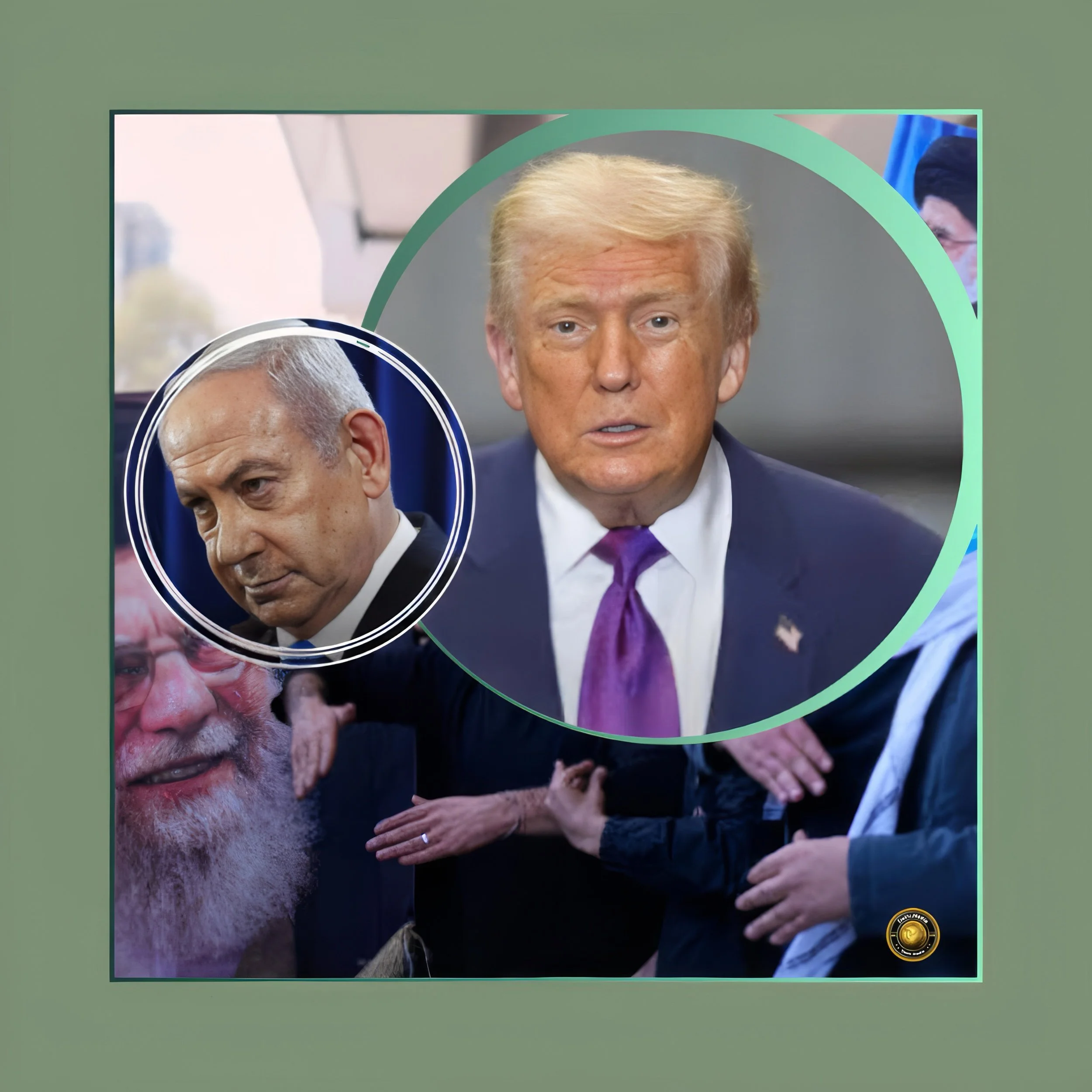
Reporting also indicates U.S. President Donald Trump and Israeli Prime Minister Benjamin Netanyahu publicly acknowledged or confirmed the killing in political terms.
The political messaging matters because it frames the strike not as an accidental escalation but as a purposeful strategic choice.
The second key development is Iran’s internal transition response.
Al Jazeera reports that Iran is forming a temporary leadership council to fulfill the role of the supreme leader until a successor is chosen.
In a revolutionary system, succession is not a purely administrative matter; it is an arena where security institutions, clerical authorities, and political factions contest the state’s future.
Such contestation can either restrain escalation, if elites prioritize survival, or intensify it, if elites compete to prove resolve.
The third key development is retaliation across the region.
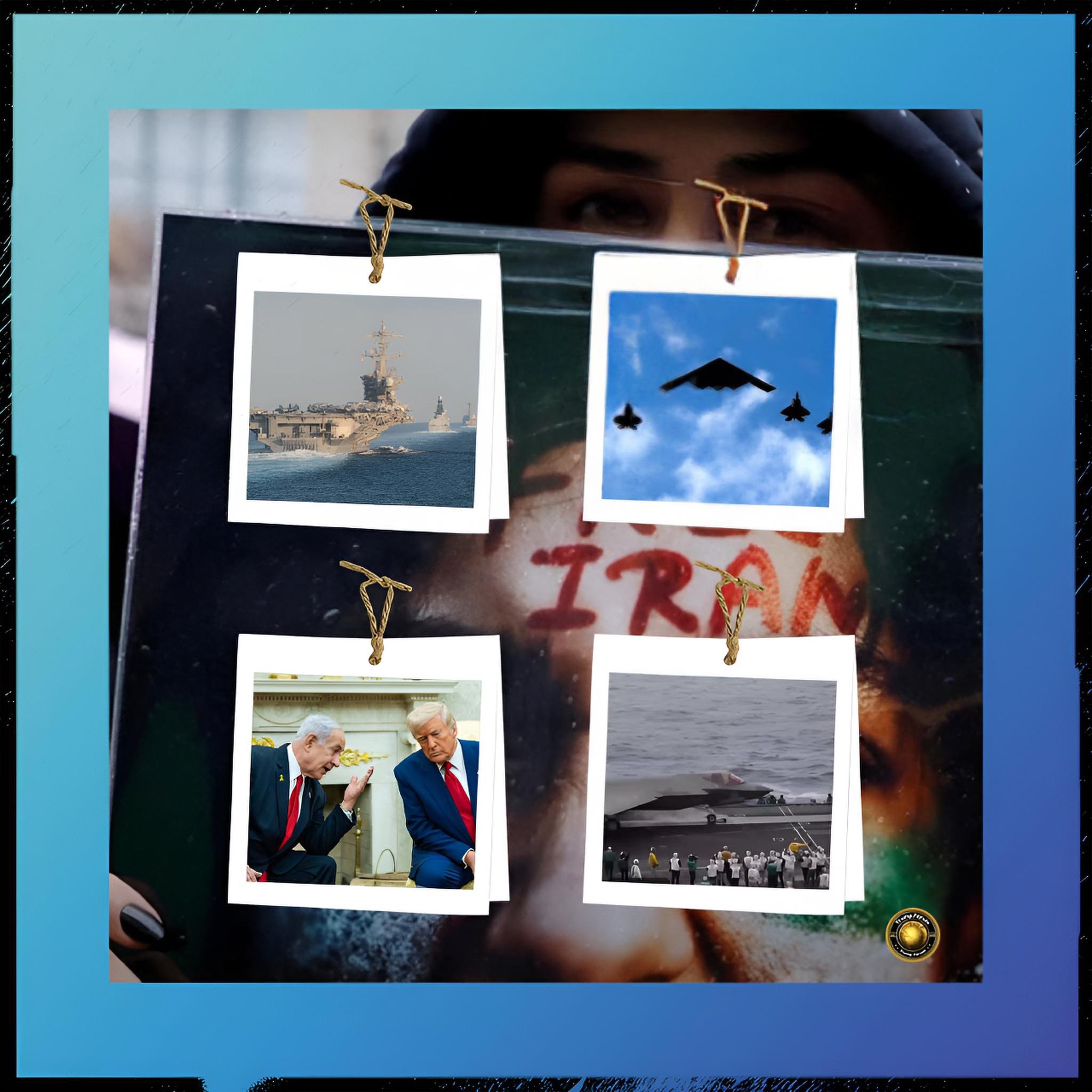
The Guardian reports missile attacks on U.S. bases in several Gulf countries and on Israel, with casualties and damage reported, and with the UN calling for de-escalation.
Retaliation, in this context, is not only tactical; it is performative. It signals that decapitation strikes carry a cost, a central tenet of deterrence logic. But retaliation also risks inviting further strikes, producing a ladder where each rung is defended as “necessary.”
The fourth key development is the international reaction and narrative contest.
Reuters reports global reactions and the framing of the killing as a violation of international law by some leaders.
Even without a unified global legal judgment, diplomatic reactions shape whether escalation is contained or normalized.
Latest Facts and Concerns
Factually, publicly reported information indicates that Khamenei was killed on 28th February 2026 in a strike attributed to the United States and Israel, with confirmation by Iranian state media on or around 1st March 2026 and the declaration of mourning.
Factually, reporting indicates Iran retaliated with missile attacks affecting U.S. regional bases and Israel, raising the risk of wider war.
Factually, Iran has begun a leadership transition mechanism, which introduces internal uncertainty even as external conflict intensifies.
The most acute concerns flow from four interlocking risks.
The first risk is escalation by miscalculation. Decapitation strikes reduce the space for calibrated signaling. Leaders may feel compelled to strike harder than they otherwise would because anything less looks like weakness after a national trauma.
The second risk is multi-front spillover. Iran’s capabilities and networks, and Israel’s readiness to strike across theaters, can widen the conflict into Lebanon, Syria, Iraq, Yemen, and maritime routes. Even if decision-makers aim for “limited war,” allied or aligned actors may widen it.
The third risk is nuclear brinkmanship. A leadership-killing strike can harden Iran’s incentive to accelerate nuclear capability as an insurance policy, even if weaponization remains a separate decision.
Conversely, it can increase Israeli urgency to strike nuclear infrastructure preemptively, fearing that chaos increases the chance of a rapid breakout.
The fourth risk is global economic shock through energy markets and shipping lanes. Even limited attacks can raise insurance costs, disrupt transit, and amplify inflationary pressures worldwide.
Arguments Supporting the U.S. and Israeli Position
The strongest U.S. and Israeli argument begins with threat characterization.
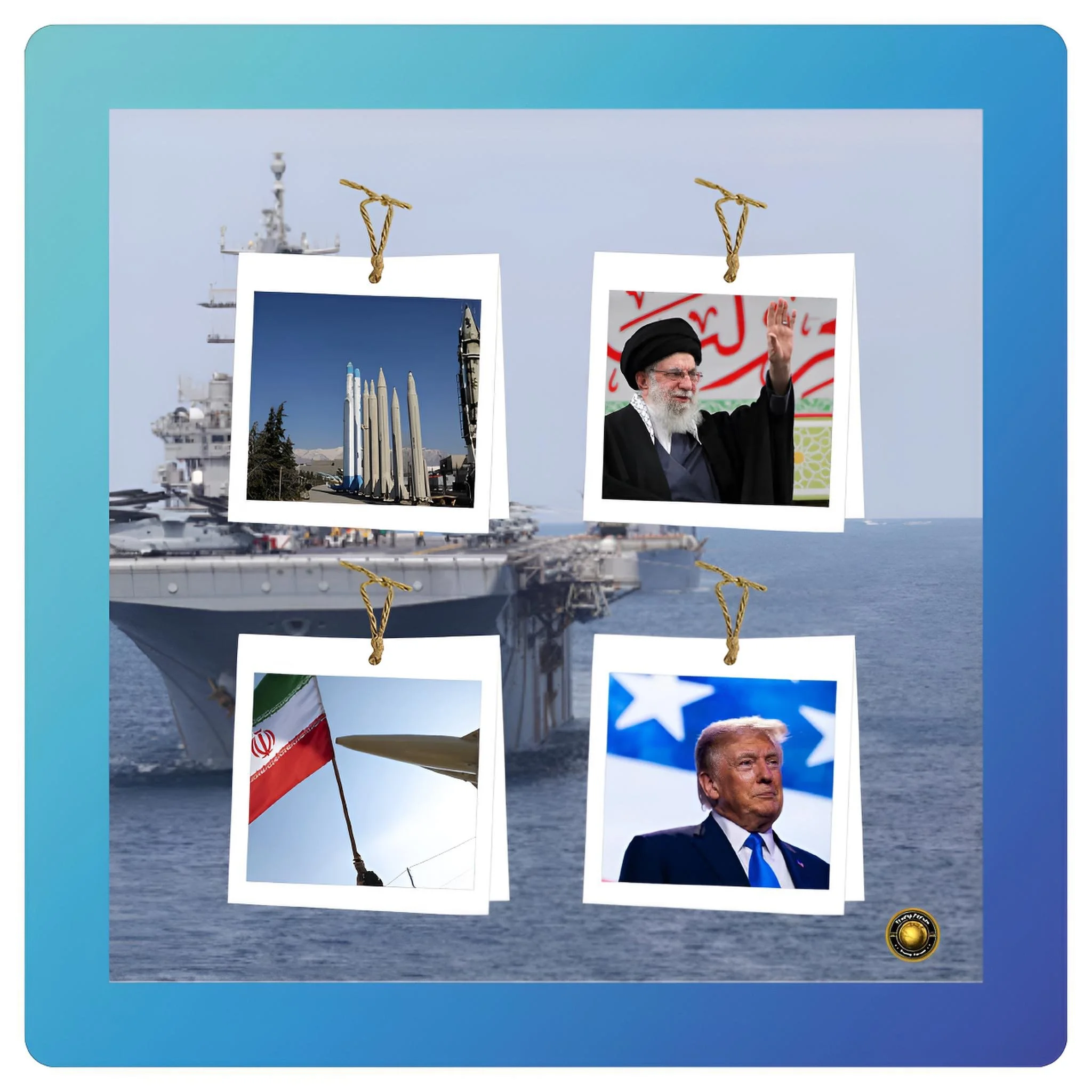
In their narrative, Iran is not a normal regional competitor but a state that combines missile capability, support for armed groups hostile to Israel and U.S. partners, and an advancing nuclear program that collectively constitutes an imminent or near-imminent threat.
Under this framework, waiting for an “armed attack” in the narrow sense is strategically irrational because the first unmistakable proof might arrive as a mass-casualty strike or as nuclear coercion.
This argument typically rests on three pillars: necessity, anticipatory self-defense, and deterrence restoration.
Necessity is the claim that nonmilitary measures failed. Sanctions did not permanently halt enrichment. Diplomacy did not produce durable restraints. Covert disruption produced delays but not resolution. Therefore, force became the last available instrument to prevent catastrophic outcomes.
Anticipatory self-defense is the claim that self-defense can be lawful before the enemy fires, if the threat is imminent and unavoidable. Supporters would argue that in an era of missiles, drones, and rapid nuclear breakout, “imminence” cannot mean visible troop formations; it must mean credible intelligence indicating the window for prevention is closing.
They would further claim that the leadership element matters: if Khamenei’s command authority enabled decisions that would lead to regional war or nuclear escalation, removing him could be portrayed as turning off the threat at its source.
Deterrence restoration is the claim that prior restraint invited greater Iranian boldness. By choosing a dramatic strike, Washington and Jerusalem might aim to reestablish a fear-based stability: Iran is warned that certain escalations will trigger regime-level costs. In that logic, the killing is not revenge but a message designed to prevent future wars by demonstrating intolerable consequences.
A further supporting argument is political accountability. In U.S. and Israeli rhetoric, the Iranian leadership is held responsible for proxy attacks. If Iran directs, arms, or finances groups that strike U.S. forces or Israeli civilians, then Iran’s leadership becomes a legitimate target in a broader armed conflict.
Under this view, the distinction between state and proxy is not morally meaningful if command-and-control or material support is substantial.
Finally, supporters may argue that a decapitation strike can be “less destructive” than a wider invasion or occupation. They would claim that targeting leadership avoids mass civilian casualties compared to full-scale war, even if it carries a high escalation risk.
The moral claim is consequentialist: if killing one leader prevents a broader catastrophe, it can be justified as the lesser of two evils.
Arguments Supporting the Iranian Position
The strongest Iranian argument begins with sovereignty and the UN Charter’s baseline prohibition on the use of force.
In this narrative, the killing of Khamenei is not self-defense but assassination and aggression, because it targets the political head of the state without a contemporaneous armed attack that would satisfy Article 51 in the narrow reading.
Iran can argue that “preventing a future threat” is not a legal justification for killing a head of state, and that accepting such a rationale would make every powerful state the judge of its own necessity, erasing the Charter’s central constraint.
Iran’s case also rests on the distinction between anticipatory defense and preventive war. It would be argued that claims of imminence are often unfalsifiable and therefore dangerous as legal precedent. If Israel or the United States can strike based on secret intelligence assessments, then international law becomes an instrument of power rather than a restraint.
From this perspective, Iran’s retaliation is framed as a classic act of self-defense. If a state suffers an armed attack, it has an inherent right to respond with force that is necessary and proportionate.
Iran can argue that the killing of its supreme leader on its own territory constitutes an armed attack of the highest order, making retaliation not only lawful but politically unavoidable. In that framework, restraint becomes synonymous with surrender.
Iran can also argue cumulative provocation. It can point to years of sanctions pressure as economic coercion, to repeated strikes on Iranian-linked targets in Syria, and to covert actions as evidence that it has been under sustained assault.
Even if each episode is debated, the cumulative effect strengthens a narrative of defensive resistance.
Iran’s supporters often add a regional equity argument. They claim international law is applied selectively, with Iran punished for enrichment while Israel’s strategic posture is treated as exceptional.
They argue that Iran is denied a normal deterrent posture while being threatened by superior military power. Under such asymmetry, Iran’s missile capability and alliances are, in its narrative, seen as compensatory deterrence rather than aggression.
Finally, Iran may advance a stability argument: killing a supreme leader risks state fragmentation and uncontrolled militia dynamics, producing outcomes worse than the status quo.
Under this view, the strike is not only unlawful but strategically reckless, because it increases the chance of chaotic escalation and humanitarian disaster.
Cause-and-Effect Analysis
The conflict’s causality is best understood as a security spiral intensified by leadership targeting.
The cause side begins with threat interpretation. Israel interprets Iranian nuclear progress and regional networks as existential. Iran interprets Israeli strikes and U.S. pressure as regime-threatening. Each interprets the other’s preparation as proof of hostile intent.
This interpretation produces action—Israel and the U.S. conduct strikes and coercive deployments to deter or turn off threats. Iran develops missiles, disperses assets, deepens alliances, and retains escalation options to deter strikes.
Those actions then produce effects that confirm the original fears. U.S.-Israeli strikes confirm Iran’s belief that regime survival is at risk. Iranian retaliation confirms Israel’s belief that Iran is aggressive and dangerous. Each side’s evidence is real, but its meaning is contested.
Khamenei’s killing accelerates this spiral because it is a qualitatively different act. It shifts the conflict from damage to capabilities toward damage to sovereignty and identity. It also changes domestic politics.
Leaders who might privately prefer restraint must now consider legitimacy at home, particularly in a system that valorizes revolutionary ideology and resistance.
The result is a compressed decision cycle. Each side has less time to interpret signals, more pressure to respond, and fewer credible off-ramps. Escalation becomes less a choice and more a momentum.
Future Steps
Plausible futures can be organized into three variables: whether retaliation remains limited, whether leadership transition stabilizes, and whether diplomacy reopens.
In a limited-war stabilization pathway, Iran calibrates retaliation to avoid mass U.S. casualties, the U.S. and Israel avoid follow-on decapitation strikes, and backchannel communication sets informal red lines.
This requires discipline on all sides and a credible face-saving mechanism, such as pauses framed as “mission accomplished.”
In a widening war pathway, Iran escalates across multiple theaters, U.S. forces sustain casualties, and Washington authorizes broader strikes on Iranian infrastructure and command nodes. Israel expands attacks deeper into Iran.
The Gulf becomes a contested arena for missile and drone attacks. This pathway is consistent with the early retaliatory exchanges reported and could intensify quickly.
In an internal-instability pathway, succession struggles in Iran lead to fragmented command-and-control. Some actors may escalate to demonstrate revolutionary credentials. Others may seek de-escalation for survival. External adversaries may misread internal signals, thereby increasing the risk of accidental escalation.
In a diplomacy reboot pathway, the shock of Khamenei’s death triggers urgent international mediation. Iran’s interim leadership might seek sanctions relief and security guarantees, while the U.S. and Israel might seek verification constraints and limits on missile transfers.
Yet the political feasibility is low in the immediate aftermath because of mourning, anger, and the push toward legitimacy politics that drives confrontation.
Conclusion
Who Started This War? The Facts Behind Preemption, Retaliation, and Escalation
If “right” means morally justified, then the answer depends on whether one prioritizes the prevention of future catastrophic harm or the inviolability of sovereignty and the rule against force.
If “right” means legally justified, then the dispute turns on contested standards of imminence and necessity, and on whether leadership killing can ever satisfy the requirements of proportionality and lawful purpose.
If “right” means strategically wise, then Khamenei’s killing may prove either a decisive deterrent reset or the spark of regional conflagration.
What is clear, factually, is that Khamenei’s reported killing has escalated the conflict into a new phase, with Iranian retaliation and leadership transition underway.
The most urgent task for all parties is not to “win” the narrative but to prevent the logic of self-defense from becoming a self-fulfilling engine of perpetual escalation.