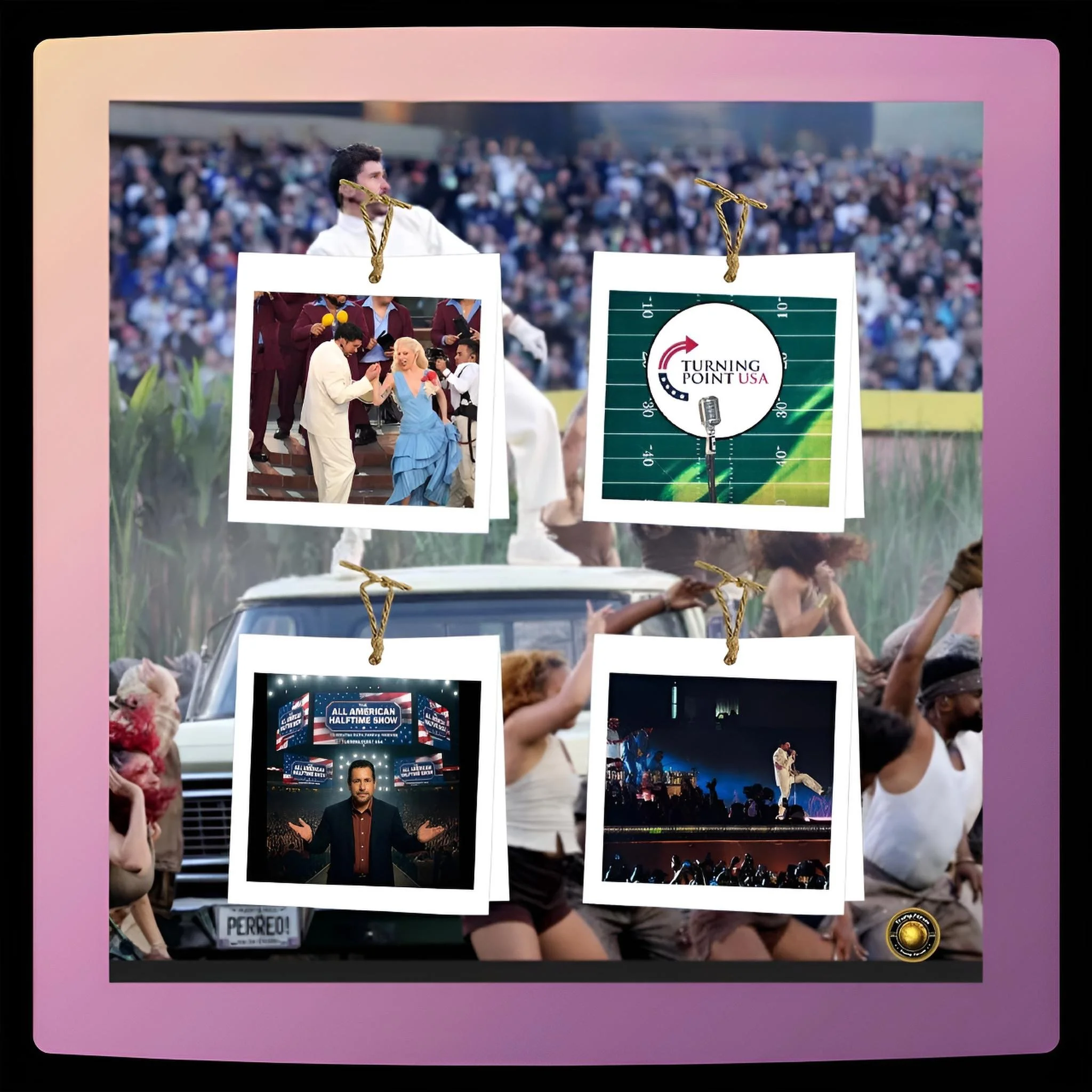
Cultural Clash at the Super Bowl: Bad Bunny’s Political Spark - Part II
Executive Summary
The 2026 Super Bowl halftime show, headlined by Puerto Rican artist Bad Bunny, has unexpectedly become a flashpoint in U.S. culture wars, triggering a sharp backlash from Trump-aligned conservatives and a full-blown debate over national identity, unity, and political expression.
While the NFL and many fans championed the performance as a wide-reaching celebration of diversity and unity, conservative commentators, supporters of former President Donald Trump and affiliated groups urged boycott, saying the show was divisive and “too political.”
This dispute highlights deepening cultural fractures over language, representation, immigration policy, and what constitutes “American” identity.
What could have been a widely watched entertainment event has morphed into a potent symbol of America’s polarized political landscape.
Introduction
Each year the Super Bowl halftime performance is expected to generate talk and ratings. In 2026, however, the choice of Bad Bunny has turned this tradition into a national political saga.
Once considered a unifying spectacle watched by millions of Americans regardless of political belief, the event has become a lightning rod for debate over politics in entertainment and the very character of national culture.
At the crossroads of celebrity influence and partisan resentment, the halftime show’s reception underscores fault lines that now run through U.S. society.
History and Current Status
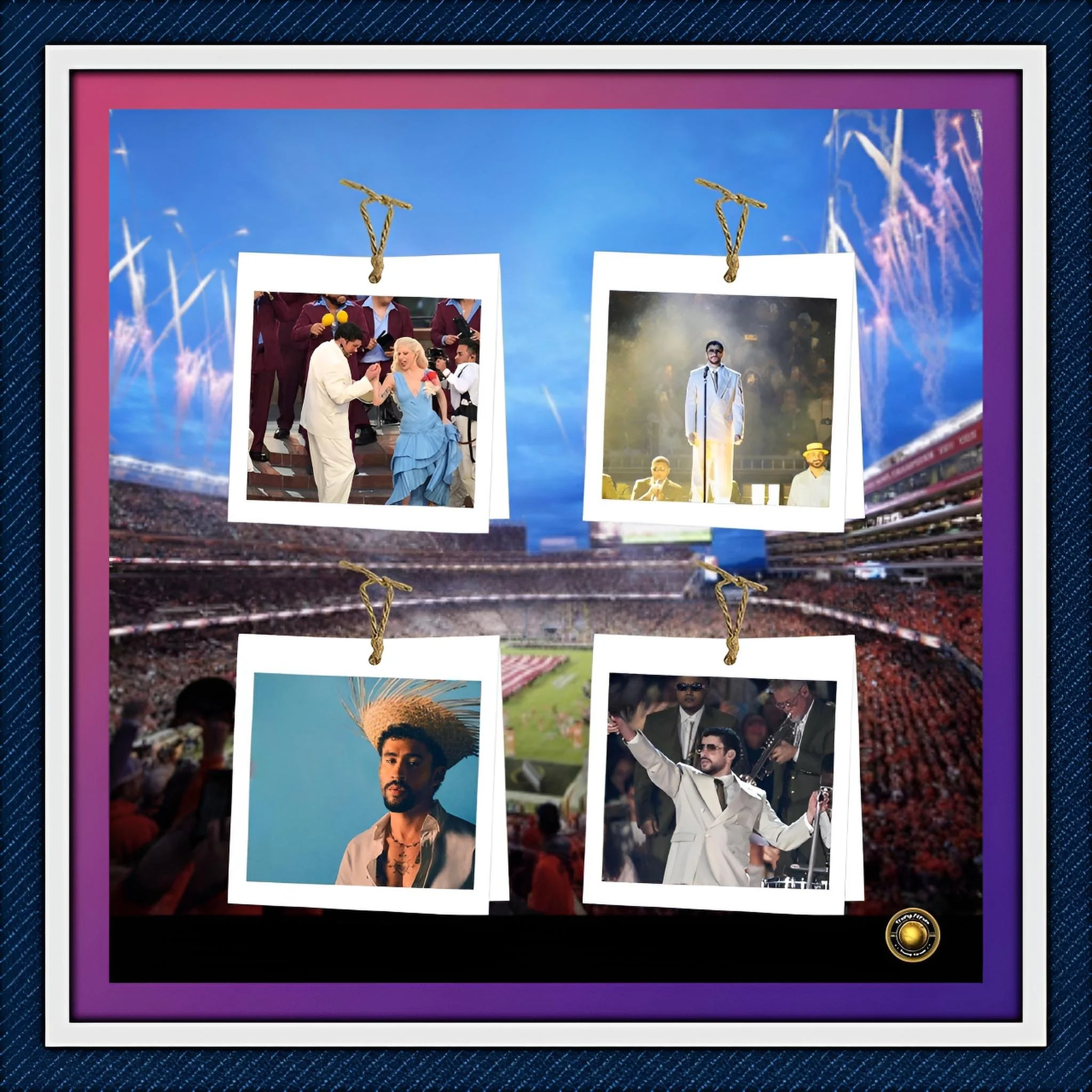
Bad Bunny, a globally famous Puerto Rican artist, was announced as the headliner for the Super Bowl LX halftime show well before the game took place in February.
Known for reggaeton, Latin trap, and culturally infused music, as well as his outspoken critiques of President Trump’s immigration policies, his selection was immediately seized upon by conservative commentators as “political.”
The NFL traditionally works to cast a wide net across its diverse viewership, but the choice of a performer who sings primarily in Spanish and openly engages with social issues was criticized by some as out of step with mainstream American expectations.
Polling has shown sharp division: in some surveys, Democrats strongly approved of the pick, Republican respondents were largely disapproving, and many Independents were indifferent to the choice.
By kickoff, that divide had intensified. President Trump himself blasted the performance on social media, claiming it was an affront to American values and inappropriate for children.
In contrast, supporters praised Bad Bunny’s message of unity and cultural pride.
Key Developments
In the lead-up to kickoff, conservative groups including Turning Point USA organized alternative programming, framing their own “All-American Halftime Show” as a counterpoint to what they derided as “woke.”
Trump refused to attend the Super Bowl, amplifying the dispute.
Online and social media campaigns calling for a boycott gained traction among some Trump followers, with figures on the right urging viewers to turn off the broadcast or boycott NFL advertisers.
At the same time, many fans and commentators on the left saw the backlash not as principled critique but as coded cultural resentment against Latin culture and representation.
On game day, Bad Bunny’s performance leaned toward celebration rather than political confrontation, featuring Latino pride and a unifying message that “the only thing more powerful than hate is love,” and closing with the phrase “Together, We Are America.”
Nonetheless, the political discourse around the show continued unabated immediately thereafter, with Trump and his allies reinforcing criticisms and suggesting that the NFL had allowed a partisan spectacle to eclipse a unifying national event.
Latest Facts and Concerns
While the halftime performance itself was widely viewed and generated a mix of acclaim and controversy, the surrounding discourse revealed broader societal tensions.
Critics on the political right argued that the NFL had inserted politics into an entertainment platform that should remain neutral—urging that future choices focus on performers perceived as more traditionally American.
Supporters on the left saw the event as overdue recognition of America’s evolving cultural makeup and applauded the message of inclusivity.
Both sides expressed fears that entertainment institutions were either capitulating to political correctness or weaponizing cultural platforms for ideological agendas.
Public polling and social commentary suggest this conflict resonates beyond music and sports; it has become emblematic of ongoing debates over immigration policy, the role of Spanish language in national culture, and whether major cultural institutions should be arenas for political expression.
Cause-and-Effect Anaysis
The controversy’s roots lie in several interwoven causes.
First is the choice of Bad Bunny, who has a high profile for cultural representation and social critique.
Second is the highly polarized political climate in the United States, where cultural choices are frequently interpreted through ideological lenses.
Third is the enduring influence of President Trump and his base, who view events through a lens of cultural conservatism and nationalism.
The effects have been far-reaching. The halftime show became less about entertainment and more about cultural symbolism, prompting alternative events, boycott calls, and political commentary.
The NFL, caught between commercial interests and cultural sensitivity, has had to defend its decision against charges of political partisanship.
Among audiences, the split between political factions has been accentuated, reinforcing perceptions that even leisure activities like sports are battlegrounds for ideological struggles.
Future Steps
Looking ahead, stakeholders in sports and entertainment face critical choices. The NFL may review how it selects future halftime performers to balance cultural resonance with appeal across diverse audiences.
Cultural institutions may need to assess how to navigate representation without exacerbating political division.
Dialogue around inclusivity, language, and whose voices are centered in national moments could become more intentional, with opportunities for public forums that foster mutual understanding rather than division.
Conclusion
The 2026 Super Bowl halftime controversy illustrates how deeply politics now permeates even seemingly apolitical domains of American life.
The clash over Bad Bunny’s performance does not simply reflect disagreement about a music choice—it reflects profound tensions in how different segments of society see identity, culture, and national belonging.
Whether this moment will catalyze greater empathy and broader cultural recognition, or fuel further entrenchment of opposing worldviews, remains an open question in a polarized nation.