The Dollar’s Safe-Haven Illusion: When Stability Turns Into America’s Own Risk
Executive Summary
From Fortress to Fault Line: Why the Dollar’s Dominance May Be Crumbling
For more than 7 decades, the dollar has served as the world’s dominant reserve currency, a store of value during crises, and the default medium for global trade, finance, and energy pricing.
This position has rested not only on economic size but also on trust in American institutions, political stability, fiscal discipline, and geopolitical leadership.
Today, that trust is under sustained pressure. Persistent fiscal deficits, rising debt, political polarization, weaponization of finance through sanctions, and the gradual emergence of credible alternatives are combining to weaken the dollar’s appeal as a safe haven.
FAF article argues that the dollar may have considerably further to fall, not because of a single shock, but due to a slow erosion of confidence that mirrors past reserve currency declines.
The risks are structural, cumulative, and increasingly visible to global investors and policymakers.
Introduction
The Great Dollar Reversal: How Global Investors Are Turning Away from America’s Shelter
“It is hard to be a safe haven when trouble starts at home.” That reality defines the current predicament facing the dollar. Historically, capital has flowed into the dollar during wars, financial crises, and geopolitical turmoil.
Investors assumed that no matter how severe global instability became, the United States remained the least bad option. Yet the conditions that once underwrote this confidence are changing.
Domestic political dysfunction, mounting debt burdens, inflationary pressures, and the strategic use of financial power have begun to undermine the perception of neutrality and reliability that reserve currencies require. The dollar remains dominant, but dominance is not permanence.
History and Current Status
The dollar rose to global primacy after World War II, formalized through the Bretton Woods system in 1944. Under this framework, currencies were pegged to the dollar, which was convertible into gold.
Even after the gold link was severed in 1971, the dollar retained its central role due to US economic scale, deep capital markets, military power, and institutional credibility.
Throughout the Cold War and into the post-Soviet era, the dollar benefited from the absence of serious rivals. The euro emerged in 1999 as a partial alternative, but Europe’s fragmented fiscal authority
limited its reach. The Japanese Yen remained constrained by Japan’s prolonged stagnation. China’s renminbi expanded in trade settlement but lacked full convertibility.
Today, the dollar still accounts for the majority of global reserves, cross-border payments, and commodity pricing. However, its share has been gradually declining.
The pace is slow, but the direction is clear. What makes the present moment different is that the erosion is not driven by external challengers alone but by internal US vulnerabilities.
Key Developments Shaping the Dollar’s Trajectory
Several developments over the past 2 decades have altered global perceptions of the dollar.
First, US public debt has expanded at an unprecedented pace outside wartime. Repeated fiscal stimulus, tax cuts without offsetting revenue, and rising entitlement costs have pushed debt-to-GDP ratios to levels that were once considered politically unacceptable.
Markets have tolerated this largely because of the dollar’s reserve status, but that tolerance is not infinite.
Second, inflation has returned as a political and economic issue. While inflationary spikes were initially framed as transitory, their persistence weakened confidence in monetary discipline. Even when inflation receded, the damage to credibility lingered.
Third, political polarization has increased the risk of policy paralysis and institutional disruption. Debt ceiling standoffs, government shutdowns, and public attacks on central bank independence send negative signals to foreign holders of US assets.
Fourth, the aggressive use of sanctions and financial controls has reframed the dollar from a neutral medium to a strategic weapon.
While effective in the short term, this approach encourages targeted countries and even neutral ones to seek alternatives.
Latest Facts and Concerns
Recent years have seen an acceleration in non-dollar trade settlement agreements, particularly in energy and commodities. Several major exporters now accept payment in multiple currencies.
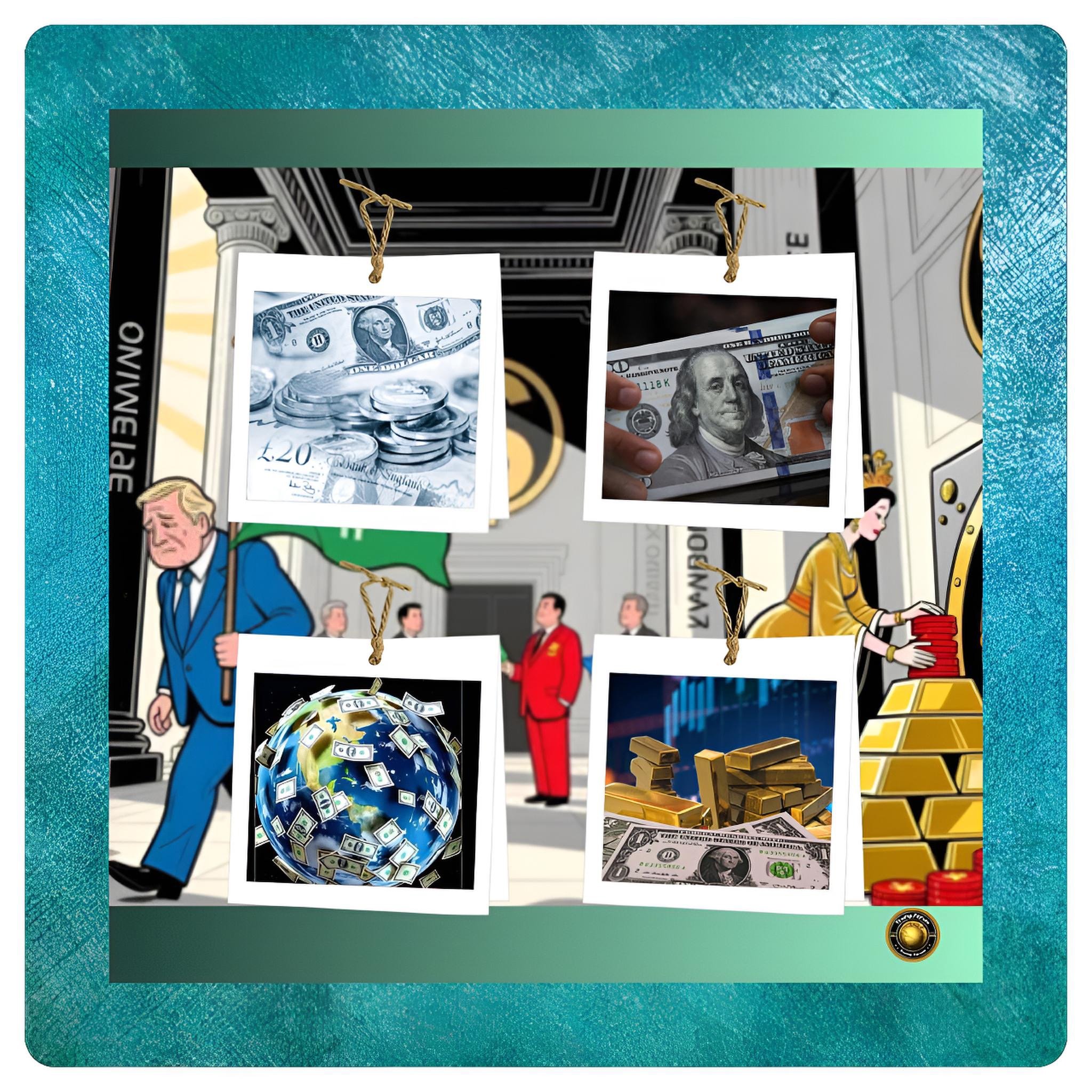
Central banks have modestly increased gold holdings and diversified reserves toward non-dollar assets. Meanwhile, US real interest rates have fluctuated sharply, increasing volatility in capital flows.
Foreign investors increasingly question whether US political institutions can manage long-term fiscal consolidation.
Concerns about the sustainability of entitlement programs, rising defense spending, and limited political appetite for tax reform add to uncertainty.
Cause-and-Effect Analysis
The weakening of the dollar is not the result of a single cause but a chain reaction.
Large fiscal deficits increase debt issuance, which raises long-term interest rate risk. Higher rates, in turn, strain domestic growth and increase debt servicing costs.
Political polarization makes fiscal correction harder, reinforcing investor anxiety. Inflation episodes weaken purchasing power confidence, prompting reserve diversification.
Sanctions accelerate the search for alternatives, which gradually reduces global dollar demand. Lower demand raises funding costs further, feeding back into fiscal stress.
This loop does not require a crisis to operate. It works slowly, through expectations and portfolio decisions made over years rather than weeks.
Future Steps
The future of the dollar depends on choices made in Washington as much as developments abroad. Restoring credibility would require credible medium-term fiscal frameworks, protection of central bank independence, reduced reliance on emergency measures, and a more restrained approach to financial coercion.
Absent such reforms, the most likely scenario is not collapse but gradual decline.
The dollar would remain important but less dominant, more volatile, and more sensitive to domestic shocks.
In that world, the US would face higher borrowing costs, reduced geopolitical leverage, and diminished capacity to externalize economic risks.
Conclusion
The Great Dollar Reversal: How the Global Investors Are Turning Away from America’s Shelter
Reserve currencies fall not when alternatives become perfect but when confidence erodes beyond repair.
The dollar still enjoys enormous advantages, but those advantages are no longer unquestioned.
When global investors begin to see US domestic politics, fiscal sustainability, and institutional reliability as sources of risk rather than stability, the logic of safe haven flows weakens.
The dollar may not be on the verge of displacement, but it may have much further to fall before a new equilibrium is reached.