The Assassination of Charlie Kirk: America’s Democratic Crisis and the Path Forward
Executive Summary
"The Assassination of Charlie Kirk: A Critical Examination of America's Democratic Crisis and the Strategies for Progress"
This work delves into the tumultuous landscape of American democracy, centering around the hypothetical assassination of conservative commentator Charlie Kirk, a figure emblematic of the polarized political climate in the United States.
The narrative explores the depths of the current democratic crisis, highlighting the increasing divisions that fracture society along ideological lines.
Through vivid descriptions, it underscores how such a tragedy could symbolize the alarming tendency towards political violence, the erosion of civil discourse, and the rising radicalization on all sides of the spectrum.
Furthermore, the text outlines potential pathways for reconciliation and revitalizing democratic ideals.
It emphasizes the importance of fostering dialogue, promoting understanding, and rebuilding trust among diverse groups to help guide the path toward a future where democracy can thrive once again.
Introduction
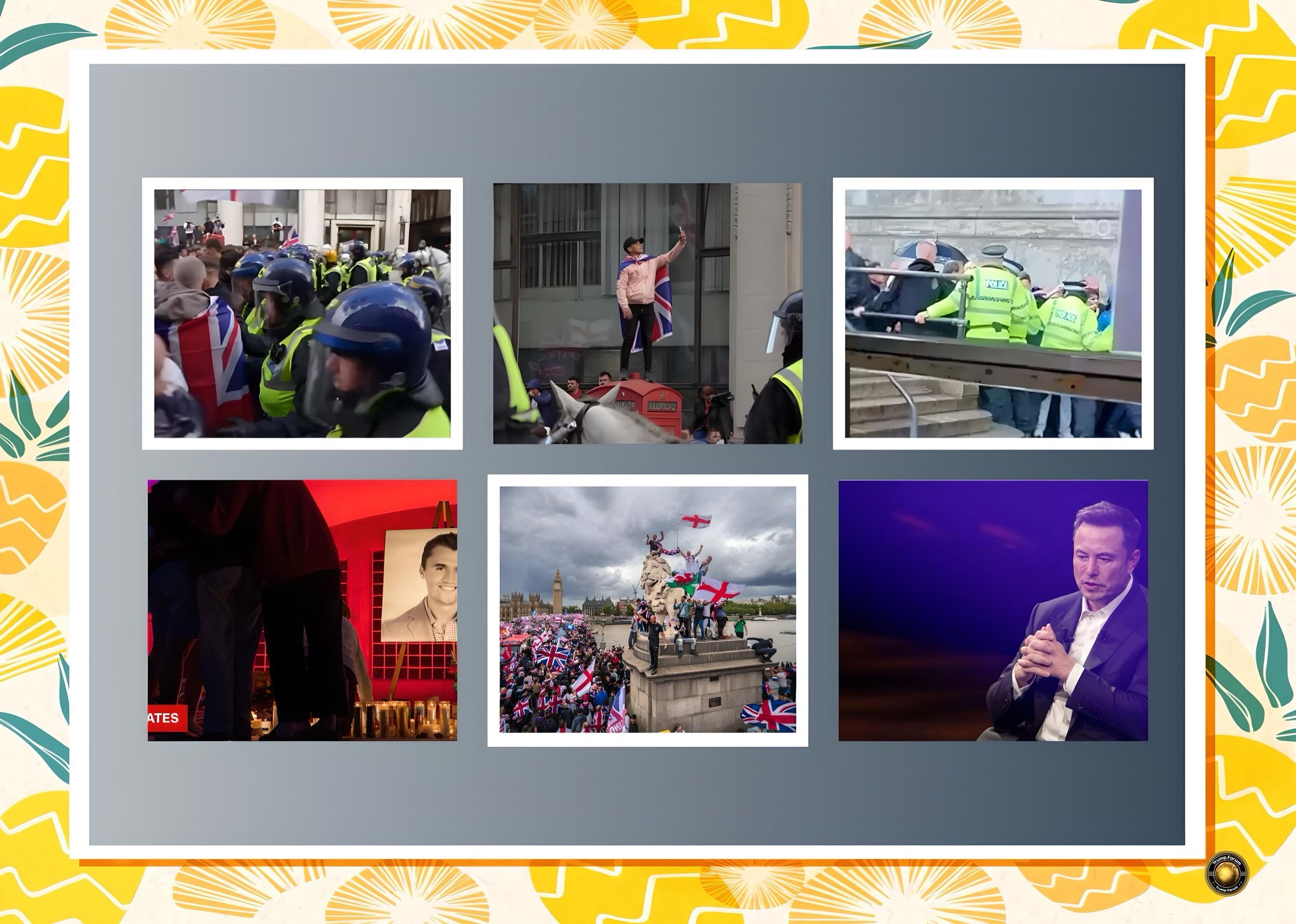
The assassination of conservative activist Charlie Kirk on September 10, 2025, at Utah Valley University exemplifies a significant crisis within the framework of American democracy, where political violence has increasingly become a normalized reaction to ideological discord.
This tragic event underscores the profound fractures in the American political landscape, raising critical inquiries regarding the integrity of free speech, the state of civil discourse, and the foundational principles of the American Dream.
Analyzing the Assassination
Charlie Kirk, then 31 and the founder of Turning Point USA, was fatally shot in the neck while leading a public forum attended by approximately 3,000 individuals.
The assassin, 22-year-old Tyler Robinson, executed the attack from a distance of 142 yards utilizing a high-powered rifle.
The incident unfolded in broad daylight, with graphic footage rapidly disseminating across social media platforms, leaving witnesses and the wider populace traumatized.
Robinson was apprehended 33 hours post-incident and was reported to have shown signs of increasing radicalization, having voiced his discontent with Kirk’s ideological positions to family members before the attack.
He is currently facing charges of aggravated murder, with investigators noting anti-fascist inscriptions on bullet casings, indicating a politically motivated agenda.
Contextualizing Political Violence in America
Kirk's assassination adds to a troubling trend that is reshaping American political culture, reflective of the most severe period of political violence since the 1970s.
Key incidents include
Two assassination attempts on President Trump in 2024.
The fatal shooting of Minnesota Democratic state Representative Melissa Hortman and her spouse.
An arson assault on Pennsylvania Governor Josh Shapiro's residence.
The December 2024 murder of UnitedHealthcare CEO Brian Thompson
Over 250 documented threats and harassment incidents targeting local officials in the first half of 2025.
Research indicates that there have been upwards of 300 instances of political violence since the Capitol insurrection on January 6, 2021, marking an unprecedented surge in politically motivated aggression in recent generations.
Furthermore, the first half of 2025 recorded approximately 150 politically motivated assaults, nearly doubling the figures from the same period in 2024, emphasizing the urgency of addressing this escalating phenomenon.
The Erosion of Free Speech and Civil Discourse
Kirk's assassination serves as a stark indicator of the declining state of free speech within the United States.
According to the Foundation for Individual Rights and Expression (FIRE), American higher education institutions have been assigned an "F" for their free speech climate.
This assessment reveals an alarming trend: Students increasingly perceive opposing viewpoints as threats rather than catalysts for constructive dialogue.
The 2026 College Free Speech Rankings further confirm a diminishing support for free speech, particularly among conservative student populations.
Free speech is under multifaceted threat beyond academic environments, manifesting in several critical areas:
Government Overreach
The encroachment of governmental authority has led to increased restrictions on journalists, repression of student protests, and the manipulation of immigration laws to curtail free expression.
There is an evident crackdown on anti-Semitism speech and action to protect American jews justly, which is possibly perceived as freedom of speech.
Digital Censorship
Global pressures—most notably the European Union's Digital Services Act—are compelling U.S. digital platforms to implement censorship mechanisms that starkly contrast the protections enshrined in the First Amendment.
Cultural Intolerance
There is a troubling rise in doxxing campaigns orchestrated by far-right factions aimed at educators and professionals who have expressed critical perspectives on Kirk's assassination.
Concurrently, the prevailing political discourse increasingly vilifies divergent viewpoints.
Erosion of American Civil Society
The circumstances surrounding Kirk's assassination illuminate systemic issues within American democracy, prompting warnings from experts of potential democratic regression akin to trends observed in Hungary and India.
Research identifies four conditions that elevate the risk of political violence, all of which are present in the U.S.
A rapidly declining democratic framework.
Societal divisions based on race, religion, or ethnicity.
Political leadership that either tolerates or incites violence.
Unrestricted access to firearms.
Traditional ideological differences have become personal vendettas, exacerbated by social media echo chambers, conspiracy theories, and individual grievances.
A study conducted by UC Davis indicates that approximately 25% of Americans consider violence to be a justified means of achieving at least one political aim. In comparison, about 20% believe political violence may be warranted under specific circumstances.
How America Can Emerge Stronger
Rebuilding National Unity and Democratic Integrity in America
Strategic Approaches
Amid the ongoing crisis, various pathways are identifiable for the United States to reconstruct unity and reaffirm the foundational principles of democracy.
Experts and institutions have delineated several critical strategies.
Leadership Accountability and De-escalation
Cross-Partisan Condemnation
It is imperative for leaders across the political spectrum to unequivocally denounce political violence through coordinated messaging strategies, leveraging video platforms and social media with the same vigor as they apply to campaign efforts.
Establishing Bright Lines Against Violence
Political parties and communities must delineate and enforce explicit boundaries against violence, thereby diminishing its viability as a political tool.
Consistent, bipartisan denunciations of violence can yield significant deterrence effects
Institutional Reforms
Democratic Strengthening
The American Academy of Arts and Sciences has proposed 31 specific reforms, which could include.
Expansion of the House of Representatives.
Implementation of ranked-choice voting.
Universal automatic voter registration.
Establishment of a federal Election Day as a national holiday.
Rule of Law Enhancement
Enhancing judicial independence is crucial, and ensuring swift justice for political violence incidents requires clear deterrent measures.
Improving police training with a focus on de-escalation techniques is also vital.
Electoral Security
Strengthening the credibility of elections through technical enhancements while preserving the federalized structure of American elections is essential for resilience against centralized threats to democracy.
Cultural and Educational Revival
Civics Education Renaissance
A reinvigorated focus on constitutional education and civic responsibility, concentrating on the principles that constitute "a nation of laws" and the historical underpinnings of American democracy, is necessary.
Service Culture
Establishing universal national service initiatives, where citizens dedicate a year to military service, AmeriCorps, or nonprofit work, can cultivate cross-ideological connections.
Dialogue Infrastructure
Creating formal mechanisms for cross-boundary discussions can foster understanding without necessitating consensus, employing methodologies like the "Decision Point Method" to mitigate political tensions.
Information Environment Reform
Algorithm Accountability
There is a pressing need to regulate social media algorithms that propagate conspiracy theories, disinformation, and extremist content, which can lead to radicalization—particularly among young males influenced by largely unregulated American tech platforms.
Public Media Investment
Implementing a tax on digital advertising to bolster public media will provide reliable and representative information sources.
Media Literacy
Enhancing curricula to promote critical thinking and source verification skills is essential for helping citizens navigate an increasingly fragmented information landscape.
Community-Level Solutions
Local Democracy Strengthening
Empowering citizens at the local level to enhance democratic structures is vital, particularly as local contexts often present the most substantial spheres of influence.
This includes support for local officials under threat and fostering cross-partisan coalitions focused on community-centric issues.
Dignity and Empathy Practices
Reinstating civil discourse through "imaginative engagement" can enable community members to appreciate diverse perspectives, even in disagreement. Communities can pursue social and economic advancement while upholding civility and dignity.
Transforming Identity Politics
Shifting from dominance-based identity politics towards a framework that recognizes shared humanity and collective interests is essential.
This approach should still allow for legitimate grievances and protests.
Economic and Social Justice
Inequality Reduction
Addressing the underlying economic instability and inequality that drive political radicalization and violence is crucial.
Policies must focus on restoring economic mobility and realizing the American Dream for all citizens.
Racial Justice
Continuing the unfinished agenda of civil rights is imperative, acknowledging that, despite legal progress, systemic inequalities persist, fueling division and societal resentment.
In summary, a comprehensive strategy that addresses leadership accountability, institutional reforms, cultural revival, information integrity, community solutions, and social justice can pave the way for America to fortify its democracy and rebuild unity.
Restoring the American Dream
The American Dream-the promise that each person can do better than their forebears through hard work— remains under threat from forces seeking to centralize power, limit freedom, and undermine institutions that bring Americans together.
Restoration requires
Constitutional Recommitment
Reaffirming the foundational premises of "life, liberty, and the pursuit of happiness" while ensuring these promises extend to all Americans regardless of background.
Free Enterprise Defense
Protecting the dynamic market economy that has enabled hundreds of millions to achieve success, while ensuring it serves broad prosperity rather than concentrated wealth.
Institutional Renewal
Rebuilding trust in democratic institutions through transparency, accountability, and responsive governance that serves the common good rather than special interests.
Conclusion
The Imperative for Action
Charlie Kirk’s assassination serves as a stark warning that American democracy stands at a crossroads.
The choice is between continued descent into political violence and tribalism or a renewed commitment to democratic values and civil discourse.
As Governor Spencer Cox noted, this represents “a turning point in American history” comparable to the political assassinations of the 1960s.
The solutions exist, but they require unprecedented cooperation across party lines and genuine commitment from leaders at all levels.
Americans must choose between the politics of resentment and division or the harder work of building bridges and finding common ground.
The stakes could not be higher—the survival of the American experiment itself hangs in the balance.
Political violence is not inevitable. Research shows it can be reduced through determined leadership, institutional reform, and cultural change toward empathy and dialogue.
But time is running short.
The 2026 and 2028 elections represent potential flashpoints that could either begin America’s democratic renewal or accelerate its decline.
The memory of Charlie Kirk—and the countless Americans who have died for democratic ideals—demands nothing less than a full commitment to the hard work of democracy.
Violence will not save America; only the patient work of citizenship, dialogue, and mutual respect can restore the promise of the American Dream for all.