Weaponization of Dollar Supremacy: Iraq's Maliki Crisis and the Broader Erosion of Geopolitical Sovereignty
Executive Summary
The United States has precipitated a critical juncture in Iraqi governance through financial coercion mechanisms intrinsically linked to dollar hegemony.
Former Prime Minister Nouri al-Maliki's candidacy for a third term has catalyzed an unprecedented escalation of American pressure, manifesting in threats to restrict Iraq's access to oil revenues sequestered at the Federal Reserve Bank of New York.
This episode exemplifies a broader systemic vulnerability confronting developing nations: the weaponization of currency dominance as an instrument of geopolitical subordination.
Concurrently, a countervailing trajectory is materializing whereby central banks globally are systematically diversifying away from $ reserves through augmented gold accumulation, engendering structural fissures in the $ system's hegemonic architecture.
Introduction
The Maliki Nomination and Washington's Financial Ultimatum
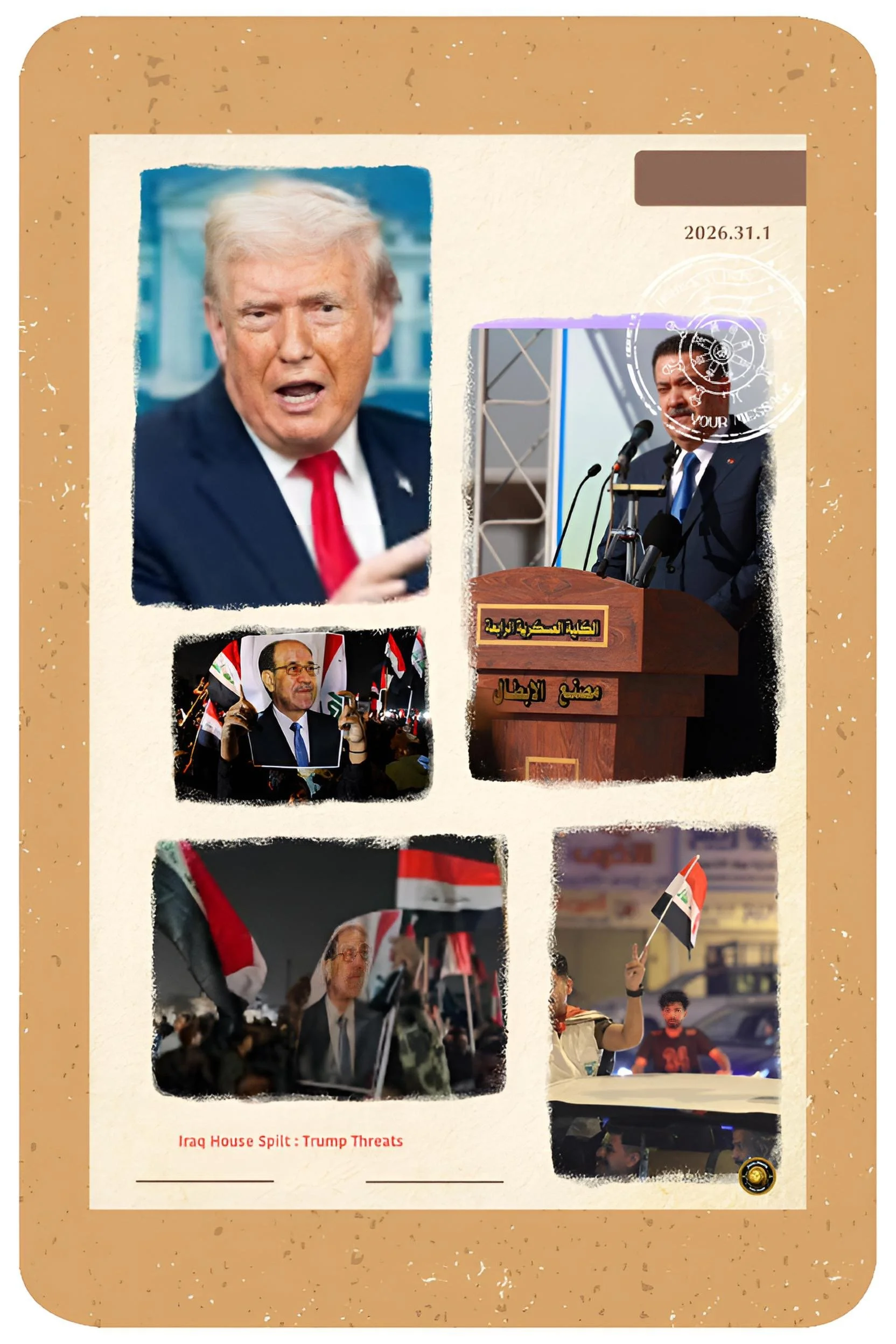
On 24 January 2026, Iraq's dominant Coordination Framework—a coalition of Shiite political blocs—formally nominated Nouri al-Maliki as its candidate for Prime Minister, precipitating the most explicit articulation of American financial coercion against an ostensible ally in contemporary geopolitical discourse.
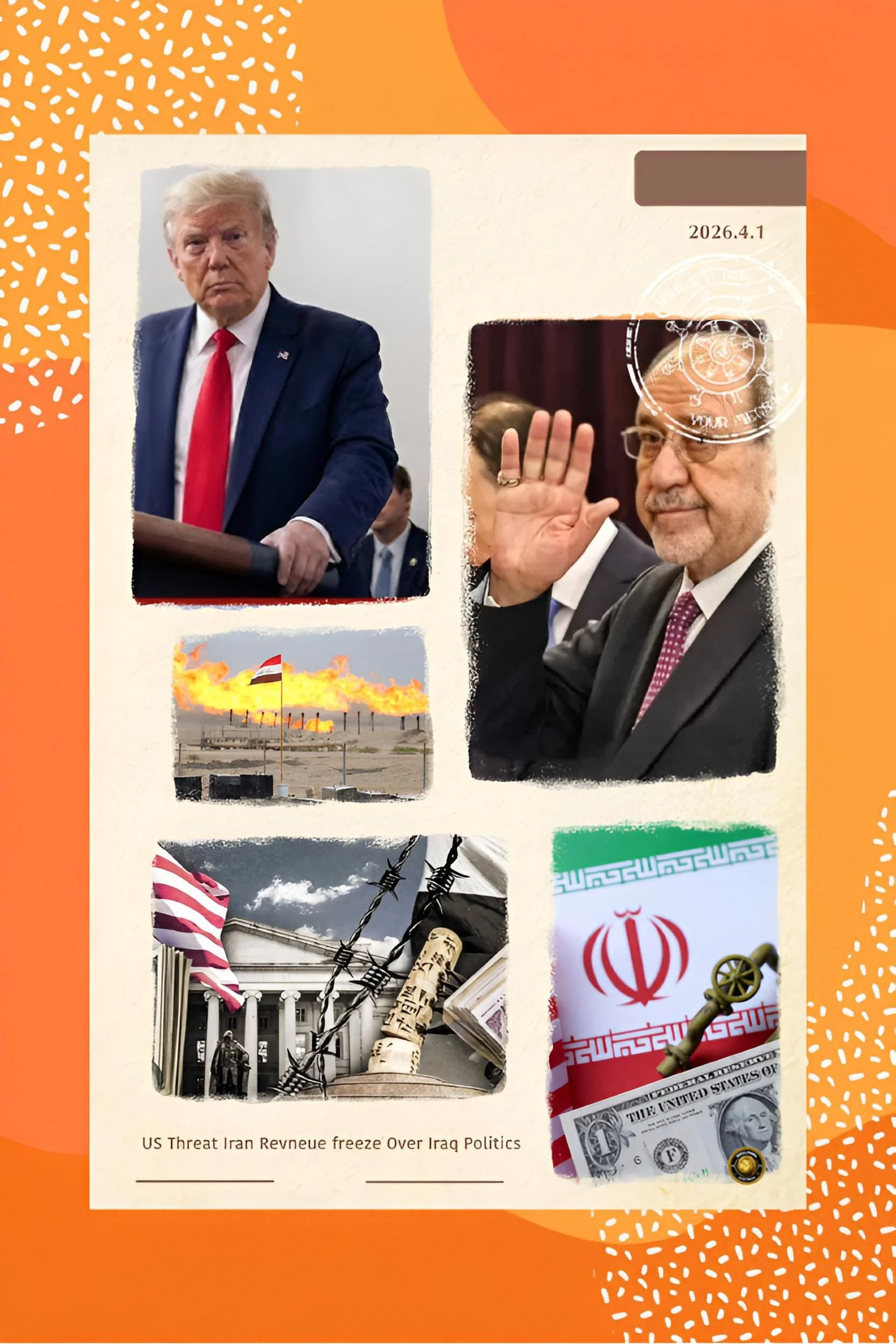
Within 72 hours, US officials initiated multivalent pressure operations: President Trump declared the United States would terminate assistance to Iraq should Maliki ascend to the premiership; Secretary of State Marco Rubio instructed Iraqi leadership that a "government controlled by Iran cannot successfully put Iraq's own interests first"; and intelligence intermediaries conveyed to Baghdad that Washington contemplated restricting Iraq's access to oil-export proceeds maintained at the New York Federal Reserve.
This intervention represents a qualitative escalation in American assertiveness regarding Iraqi sovereignty.
The United States had previously exerted diplomatic influence over Iraqi governmental formations. Still, the explicit articulation of financial sanctions contingent upon domestic political outcomes constitutes a structural transgression of the post-Westphalian paradigm in which formal sovereignty theoretically protects domestic political arrangements from external coercion.
The implicit acknowledgment by American officials that this financial leverage mechanism exists—and may be weaponized—has exposed the fiction of Iraqi monetary independence and the subordinate position occupied by resource-dependent states within the dollar-denominated global financial architecture.
Historical Context
From Colonial Extraction to Neoliberal Financial Control
The contemporary arrangement governing Iraqi oil revenues originates from the 2003 invasion and subsequent establishment of the Development Fund Iraq (DFI) under US supervision.
Following the toppling of the Baathist regime, the Bush administration issued an executive order establishing the DFI as a mechanism through which Iraq's petroleum revenues would be accumulated, theoretically to shield these funds from legal claims against Saddam Hussein's predecessor state and to reconstruct Iraq's post-conflict economy.
Critically, the DFI was operationalized through an account maintained not in Baghdad but at the Federal Reserve Bank of New York, establishing Washington as the de facto custodian of Iraqi fiscal resources.
This arrangement has persisted across Republican and Democratic administrations—Bush, Obama, Trump1.0 Biden, and Trump2.0 have each maintained the mechanism, demonstrating the bipartisan character of dollar-based coercion.
Iraqi officials have rationalized the continuation of this arrangement through reference to its stabilizing effect on currency exchange rates, prevention of capital flight, and protection against external creditor claims.
Yet this rationalization obscures the fundamental asymmetry: Iraq's capacity to conduct independent monetary and fiscal policy is structurally constrained by the fact that 90% of its federal revenue derives from oil exports, the proceeds of which are transmitted through dollar corridors controlled by US financial infrastructure.
The arrangement represents an evolution of colonial extraction methodologies. Whereas Britain's occupation of Iraq (1920-1958) relied upon formal political administration and military occupation, the contemporary dollar system achieves similar subordination through ostensibly non-political financial mechanisms. Iraq possesses nominal sovereignty while lacking substantive control over its revenue streams.
This reflects what Yale legal scholars have characterized as "dollar hegemony"—the weaponization of dollar dominance through SWIFT payment systems, Federal Reserve infrastructure, and OFAC sanctions mechanisms to impose American geopolitical preferences upon structurally subordinate states.
Current Status
The Federal Reserve as Instrument of Political Coercion
As of February 2026, Iraq retains approximately $60-70 billion in oil revenues sequestered at the New York Federal Reserve.
These funds represent the accumulated proceeds from Iraq's petroleum exports over preceding quarters, managed through the account of Iraq's Central Bank.
The arrangement functions as follows: Iraq exports crude petroleum, receiving dollar through international commodity trading markets denominated in dollar; these proceeds are transmitted to an account nominally controlled by Iraq's Central Bank yet physically domiciled within US Federal Reserve infrastructure; Iraq's government then conducts foreign exchange auctions through which it distributes dollar to private financial institutions and exchange houses for distribution throughout the Iraqi domestic economy.
This system creates a triple-lock mechanism ensuring American leverage.
First, the dollar monopsony in global petroleum markets means Iraq cannot transact its primary export in any alternative currency at scale.
Second, the physical custody of Iraqi assets within Federal Reserve facilities means the US Treasury and Federal Reserve possess technical capacity to restrict or prevent access to these funds without congressional authorization.
Third, US officials have demonstrated willingness to articulate—explicitly and publicly—their capacity and intention to weaponize this leverage to achieve political objectives unrelated to terrorism financing or sanctions evasion.
Secretary of State Rubio's communications to Iraqi PM al-Sudani, transmitted through official State Department channels and rapidly disseminated through news media, conveyed the message that a Maliki-led government would not be permitted to access oil revenues unless it demonstrated subservience to Washington's dictates regarding Iran-aligned militias.
This represents an extraordinary assertion of extraterritorial political sovereignty. Iraq's parliament—not the US government—exercises constitutional authority to select the Prime Minister. Yet the United States is deploying financial coercion to preempt Iraqi democratic processes.
Key Developments and Latest Facts
The Maliki Offer and Coalition Fractures
By 3rd February 2026, substantial fissures had materialized within the Iraqi Coordination Framework.
Ammar al-Hakim, leader of the National Wisdom Movement and a significant faction within the coalition, boycotted Framework meetings in opposition to the Maliki nomination, characterizing him as a "controversial figure" insufficiently amenable to American preferences.
Haider al-Abadi, who succeeded Maliki as PM in 2014 and leads the competing Victory Coalition, issued statements emphasizing that "the interests of the people take precedence over individuals"—a transparent intra-elite signal that Abadi represented an alternative, more pliant candidate for the premiership.
Maliki himself, cognizant of escalating American pressure and fracturing coalition support, signaled conditional willingness to step aside. Reuters reported on 3rd February that Maliki informed interlocutors he would defer to the Coordination Framework's collective judgment regarding his candidacy, should the bloc request his withdrawal.
Critically, Maliki simultaneously asserted he would not withdraw in response to "foreign demands"—a rhetorical gesture toward Iraqi nationalism while implicitly acknowledging that pressure from the Coordination Framework (itself influenced by American pressure) would constitute legitimation of any withdrawal.
This represents a sophisticated calibration: Maliki preserves his political dignity while creating pathways for his replacement that appear to emanate from Iraqi political calculations rather than American coercion.
The constitutional sequence governing Iraqi government formation has been disrupted by coalition divisions. Formally, parliament must elect a President (a largely ceremonial role reserved for a Kurdish candidate), who then nominates the Prime Minister.
This election was scheduled for 4th February 2026, contingent on securing parliamentary quorum. Yet divisions between the Kurdistan Democratic Party and the Patriotic Union of Kurdistan regarding which faction should occupy the presidency have prevented quorum formation, effectively stalling the constitutional timeline.
Kurdish negotiators have wielded this stalling tactic as leverage to extract concessions from Shiite-led blocs regarding ministerial portfolios and budgetary allocations.
The acceleration of American pressure coincides with Trump administration assertions of expansive executive authority to conduct unilateral sanctions and financial coercion.
The Trump2.0 administration has signaled intention to weaponize dollar hegemony against an expanding array of targets—not only adversarial states but also ostensible allies exhibiting insufficient deference to American preferences.
Iraq occupies an ambiguous geopolitical position: a nominal ally and beneficiary of American military training and intelligence cooperation, yet one whose political majority is sympathetic to Iran and resistant to American efforts to subordinate Iraqi state institutions to anti-Iranian strategic objectives.
The American pressure campaign has deployed multivalent messaging vectors. Trump's assertion that Iraq would lose American assistance explicitly linked economic punishment to political outcomes.
Rubio's messaging emphasized values-based concerns regarding Iranian influence while deploying the language of mutual partnership to obscure the underlying financial coercion. Intermediaries conveyed technical details regarding the Federal Reserve mechanism, implicitly communicating that this financial leverage was not merely rhetorical posturing but operationally actionable.
The combination of public presidential declarations, diplomatic representations, and backchanneled communications created a coercive environment in which Iraqi elites perceived existential threats to state financial viability.
Cause-and-Effect Analysis
Dollar Hegemony as Structural Subordination
The Maliki crisis exemplifies structural vulnerabilities inherent in the $ monetary system and dollar-dependent developing economies. The causal chain operates as follows:
Oil dependency creates currency imbalance. Iraq's petroleum revenues constitute 90-93% of federal government income.
This extreme concentration of export revenue in a single commodity creates chronic vulnerability to commodity price fluctuations and necessitates dollar reserves for economic stabilization.
Were Iraq capable of generating 40-50% of revenue from manufacturing, services, agriculture, and other diversified sources, its political independence would be substantially enhanced through reduced dependence upon external commodity trading systems.
Currency denomination in dollar creates monopsony power. Global petroleum markets are denominated exclusively in dollar, a structural fact that traces to the 1974 petrodollar agreement between Washington and Riyadh.
This prevents Iraq (or any petroleum exporter) from receiving payment in alternative currencies at scale.
Even states nominally hostile to the United States must transact petroleum exports in dollar.
This creates permanent demand for dollar and renders unavoidable Iraq's participation in dollar-denominated global financial networks.
Custody of assets in US Federal Reserve infrastructure creates coercive capacity. The DFI account arrangement establishes the Federal Reserve Bank of New York as physical custodian of Iraqi assets.
US legal and regulatory authority extends to these assets regardless of their nominal sovereign ownership by the Central Bank of Iraq.
This creates what financial theorists characterize as "dollar trap"—developing states must hold substantial dollar reserves to manage exchange rates and international liquidity, yet these reserves are physically located within institutions subject to US political direction.
American officials explicitly weaponize this coercive capacity. The statements by Trump, Rubio, and intelligence intermediaries conveyed that the US government views Iraq's asset custody at the Federal Reserve not as a neutral administrative arrangement but as a leverage mechanism.
This represents an extraordinary assertion of unilateral coercive authority unconstrained by international law, constitutional principles, or the fiction of non-interference in domestic governance.
Iraqi elites recognize themselves trapped within this architecture.
The Coordination Framework's initial support for Maliki, followed by rapid fracture under American pressure, reveals that Iraqi political actors understand their subordinate position within dollar hegemony.
The coalition's fracturing is not primarily driven by genuine domestic political disagreements regarding Maliki's governance record (which remains contested) but rather by differential assessments of American willingness to weaponize financial sanctions against particular Iraqi governments.
This mechanism operates asymmetrically relative to Iraqi political preferences. Were the United States to withdraw all military cooperation, training support, and diplomatic engagement, Iraq could sustain its governmental functions and conduct international commerce through alternative arrangements (including recourse to Chinese trade finance, BRICS payment systems, and alternative banking networks).
However, Iraq cannot unilaterally access oil revenues sequestered at the Federal Reserve absent American authorization—its own Central Bank lacks legal standing to retrieve these assets without US government permission.
This asymmetry reveals the fiction of Iraqi sovereignty regarding its most critical fiscal resource.
The broader cause-and-effect trajectory reflects what structural theorists characterize as "neoliberal imperialism"—subordination of developing states not through formal political administration or military occupation but through integration into financial systems controlled by hegemonic powers.
The dollar system, operationalized through Federal Reserve infrastructure, SWIFT payment mechanisms, and OFAC sanctions architecture, constrains the political autonomy of non-core states while the hegemonic power (the United States) retains unilateral discretion to deploy this financial apparatus for geopolitical objectives.
Global De-dollarization Movements as Structural Response
Concurrently with the Maliki crisis, central banks worldwide are executing systematic portfolio reallocation away from dollar reserves toward gold.
This represents a structural response to observations—crystallized through episodes like the Iraqi sanctions scenario, freezing of Russian central bank assets, and weaponization of financial sanctions against Iran and Venezuela—that dollar reserves constitute liabilities rather than assets for states at potential variance with American geopolitical preferences.
Central bank gold purchases have reached historic levels.
In 2024-2025, central banks accumulated approximately 1,037 tonnes of gold, the largest annual total recorded in half a century.
This acceleration follows 15-20 years of sustained central bank gold accumulation beginning after the 2008-2009 financial crisis, when emerging market central banks recognized that dollar reserves offered no protection against currency devaluation or American sanctions.
China, Russia, India, Turkey, and numerous Gulf states (including Saudi Arabia, which is diversifying away from dollar reserve accumulation despite the 1974 petrodollar agreement) have systematically augmented gold holdings.
This diversification reflects rational economic calculation by central bank governors. Gold possesses the following advantageous characteristics relative to dollar reserves
(1) it cannot be frozen or confiscated through American legal mechanisms
(2) it maintains intrinsic value independent of any particular state's monetary policy or geopolitical standing
(3) it can be physically relocated and stored outside US jurisdictional authority
(4) it serves as the ultimate store of value during monetary crises and dollar devaluation scenarios.
In contrast, dollar reserves held at the Federal Reserve remain vulnerable to sanctions, seizure, or restrictions on access, as Iraq is currently discovering.
The de-dollarization movement among central banks reflects explicit acknowledgment that dollar hegemony, while structurally durable (due to the dollar monopsony in global petroleum markets and SWIFT system dominance), is neither permanent nor benign.
The 2022 freezing of Russian central bank assets following the Ukraine invasion triggered widespread recognition among non-aligned states that dollar holdings constitute latent sanctions vulnerabilities. Iraq's current situation—confronting American threats to restrict asset access based on domestic political decisions—reinforces this recognition.
This de-dollarization trajectory creates a structural paradox for the United States. American monetary dominance derives from the dollar system's role as the global medium of exchange and store of value.
If central banks and private actors systematically reduce dollar holdings in favor of alternative assets (gold, yuan, euro, crypto currencies), the foundation of American financial power erodes.
Yet each American application of financial coercion (as in Iraq's current situation) accelerates this very process of de-dollarization, as states recognize the coercive risks inherent in dollar reserve accumulation.
Some financial analysts have characterized this dynamic as a "sanctions paradox"—the more aggressively the United States weaponizes financial coercion, the more rapidly the global financial system fragments away from dollar dominance, ultimately undermining the structural foundations of American coercive capacity.
The Maliki crisis exemplifies this paradox: American pressure to exclude Maliki simultaneously exposes the coercive mechanisms undergirding American power, accelerating Iraqi and other states' recognition of the desirability of alternative financial arrangements.
Future Steps
Trajectories and Uncertainties
Several scenarios are plausible regarding Iraqi governmental formation and US-Iraq relations:
Scenario 1
Maliki's withdrawal and replacement
The most probable scenario, reflecting American preferences, involves Maliki acceding to coalition pressure (itself orchestrated through American coercion) and stepping aside in favor of an alternative PM candidate more amenable to American preferences (potentially Haider al-Abadi or another figure).
This scenario would preserve the formal fiction of Iraqi sovereign decision-making while satisfying American strategic objectives regarding Iranian influence constraint.
Iraq's government formation would proceed on the Trump administration's preferred timeline, with a PM committed to subordinating Iraq's Iran policies to American preferences.
Scenario 2
Maliki's persistence and American financial restrictions.
If the Iraqi Coordination Framework and parliament sustain Maliki's nomination despite American pressure, the Trump administration could implement selective restrictions on Iraqi oil revenue access.
This would not necessarily entail comprehensive freezing of the DFI account (which would provoke international criticism and potential legal challenges) but rather graduated restrictions on periodic transfers of funds to Iraq's Central Bank.
Such restrictions would create acute financial pressure on the Iraqi government, constraining its capacity to fund public sector salaries and social welfare expenditures.
Scenario 3
Iraqi de-dollarization and financial autonomy
A less probable but strategically significant scenario would involve Iraqi political leadership recognizing the structural vulnerability imposed by $ dependence and initiating a deliberate diversification strategy.
This could include
(1) negotiating with China and India for petroleum transactions denominated in yuan and rupees
(2) establishing mechanisms for petroleum trading through non-SWIFT payment systems
(3) accelerating central bank gold accumulation
(4) diversifying foreign exchange reserves away from dollar.
(5) engaging BRICS payment mechanisms.
Such a trajectory would require substantial political will and coordination with other petroleum exporters (particularly Saudi Arabia and UAE, which remain more tightly integrated into dollar system), but Iraq's experience with American financial coercion provides powerful motivation for such transitions.
Scenario 4
Fragmentation of the Iraqi state and regional conflict escalation
American pressure campaigns against the Maliki nomination, if sustained and successful, could generate profound delegitimacy of Iraq's government among Shiite constituencies and Iraq's broader population.
The perception that Iraq's PM is selected by Washington rather than by Iraqi elites and popular processes could erode governmental legitimacy, strengthen Iran-backed non-state actors, and precipitate further state fragmentation.
This scenario carries risks of accelerated sectarian conflict, expansion of militant groups, and conversion of Iraq into a more explicit proxy battleground between American and Iranian interests.
The Trump administration's stated willingness to weaponize financial coercion regarding Iraqi governance creates a strategic asymmetry.
Iraq cannot retaliate against American financial pressure through analogous mechanisms (Iraq possesses no equivalent leverage over US assets or financial systems).
The raq's primary options are either compliance with American preferences or the pursuit of alternative financial arrangements that reduce dollar dependence.
The latter trajectory, if pursued at scale by multiple petroleum-exporting states, would represent a structural challenge to dollar hegemony with consequences extending far beyond Iraq.
Conclusion
Sovereignty, Currency, and the Limits of Hegemonic Power
The Maliki crisis crystallizes fundamental contradictions within the contemporary American-led international order.
The United States formally committed to respecting Iraqi sovereignty and promoting democratic governance, yet it is simultaneously deploying financial coercion to preempt democratic political processes in pursuit of geopolitical objectives (Iran containment) that diverge from Iraqi elites' and populations' stated preferences. Iraq's majority-Shiite population exhibits sympathies toward Iran that, while perhaps not identical to Iran's interests, diverge substantially from the comprehensive Iran containment strategy the Trump administration is attempting to impose.
The illusion of Iraqi sovereignty persists because formal institutions of statehood (parliament, executive, judiciary) nominally remain intact. Yet the structural dependence of Iraqi fiscal viability upon American-controlled financial infrastructure renders these formal institutions subordinate to American geopolitical direction.
This reveals the distinction between formal and substantive sovereignty—Iraq possesses the former while progressively relinquishing the latter through its integration into dollar-denominated global financial systems.
The de-dollarization movements among central banks worldwide represent a rational response to this realization.
States recognizing that currency reserves held in the hegemonic power's financial system constitute coercive vulnerabilities are systematically diversifying into gold, alternative currencies, and non-dollar payment mechanisms. If this de-dollarization trajectory accelerates, the structural foundations of American financial coercion will gradually erode.
Yet the American response demonstrates the reflexive deployment of hegemonic power. Rather than accommodating legitimate grievances regarding the use of financial coercion against developing states, the Trump administration has escalated assertions of unilateral authority to weaponize dollar hegemony.
This trajectory—explicit assertion of coercive financial authority combined with acceleration of de-dollarization movements—represents the terminal phase of a particular configuration of international monetary order.
Whether this configuration will transition to a multipolar monetary system featuring genuine competition between the dollar and alternative currencies, or whether American power will be sustained through new mechanisms of coercion, remains among the most significant geopolitical uncertainties confronting the global system in 2026.