Strategic Tariff Diplomacy: How Trump Realigned India's Energy Partnerships Through Trade Coercion
Executive Summary
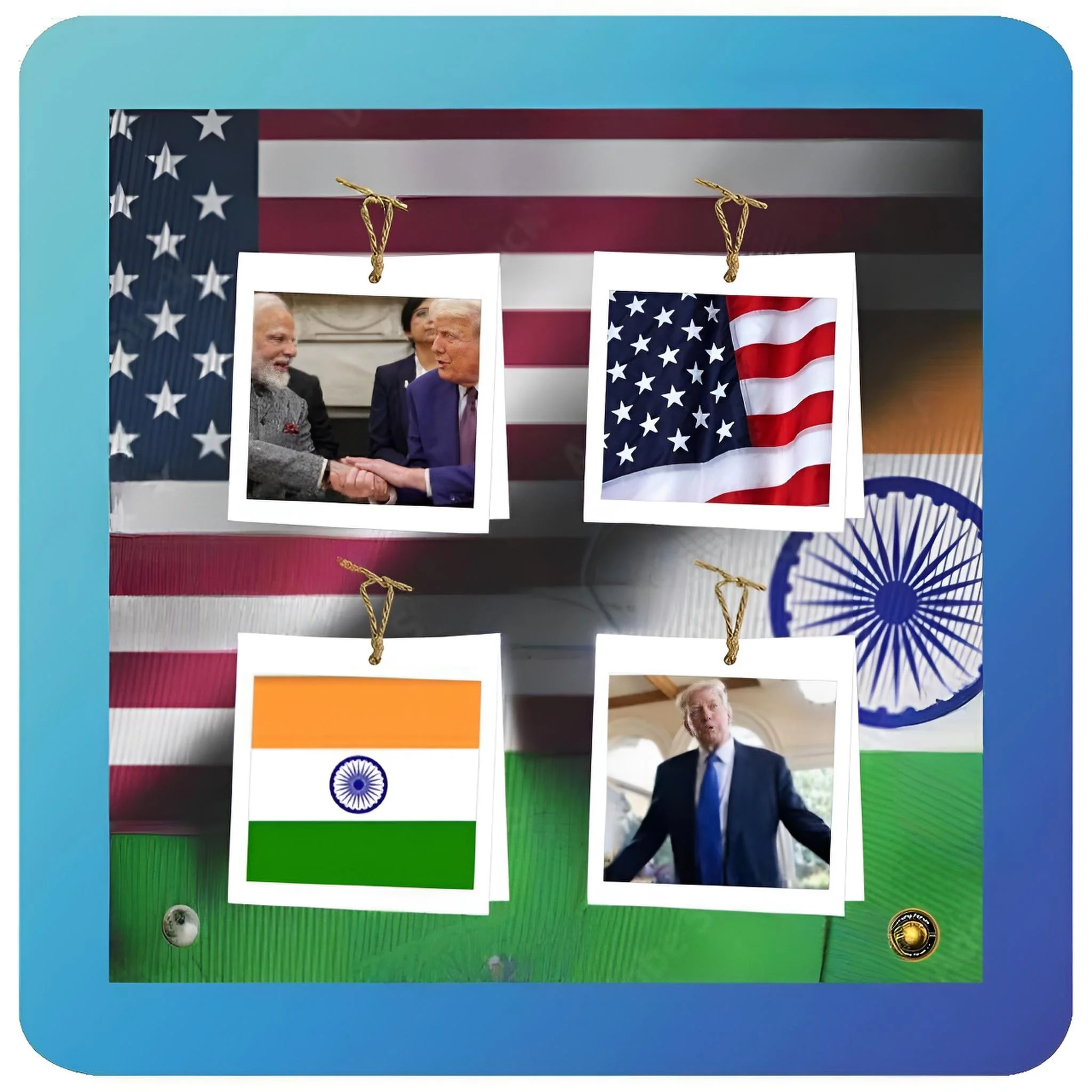
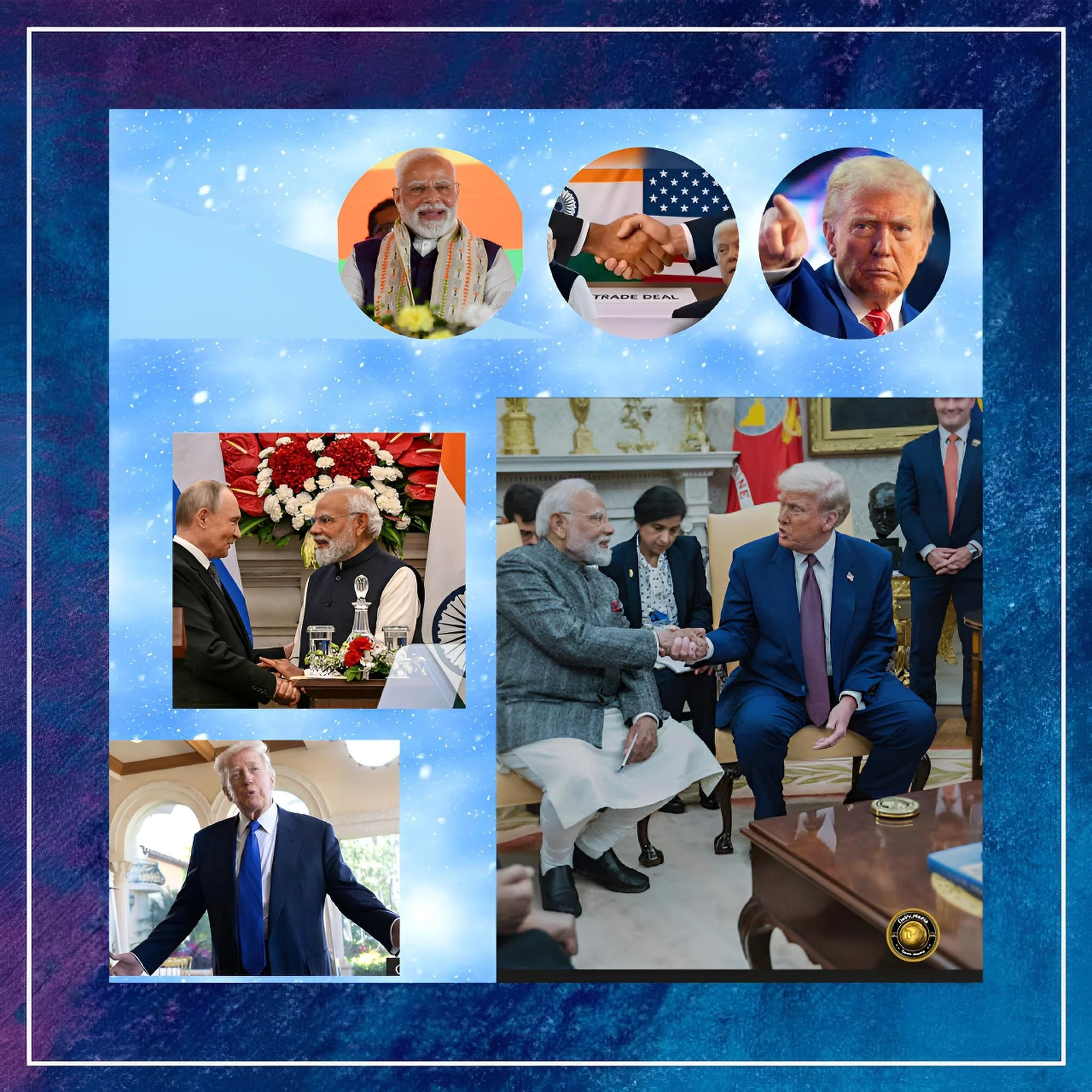
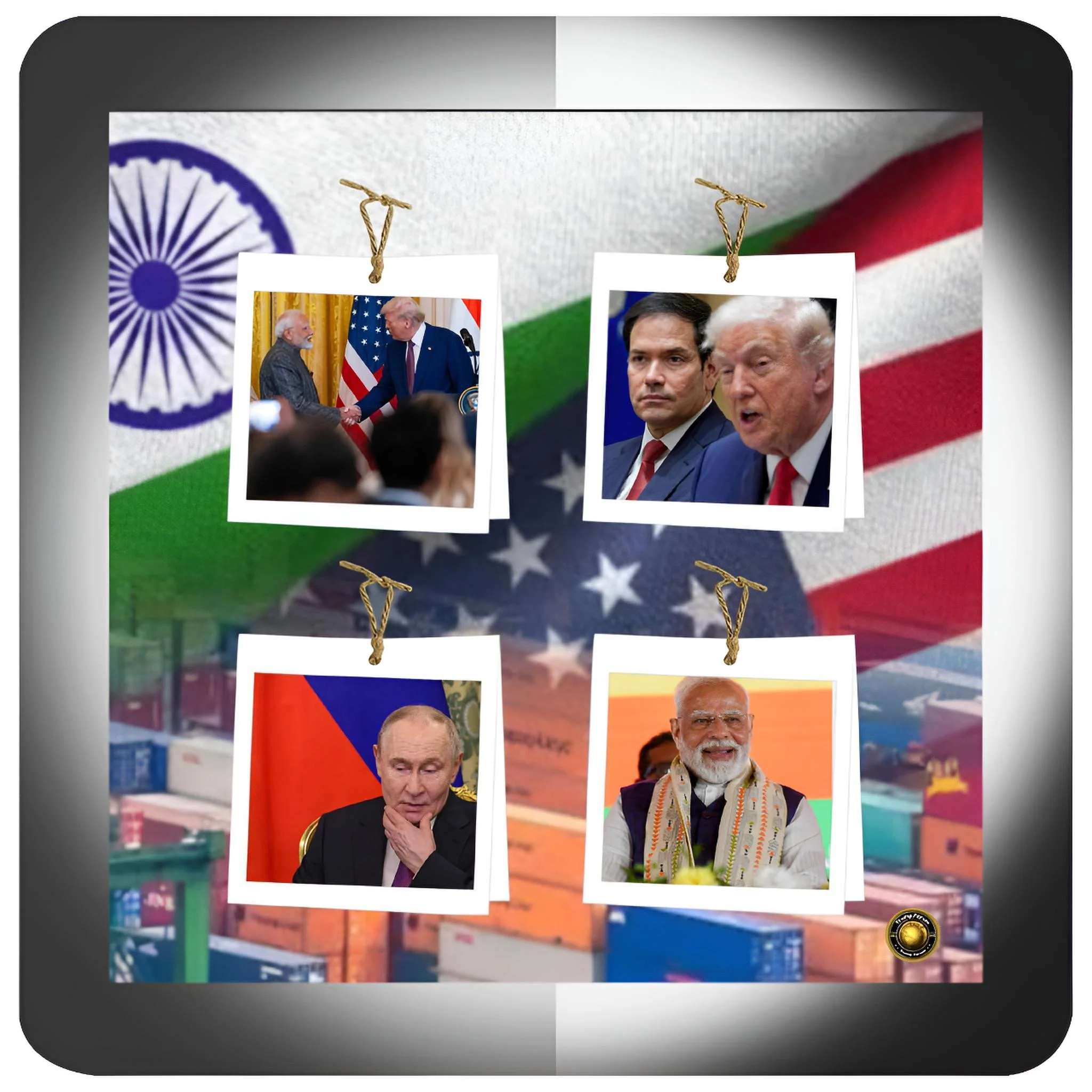
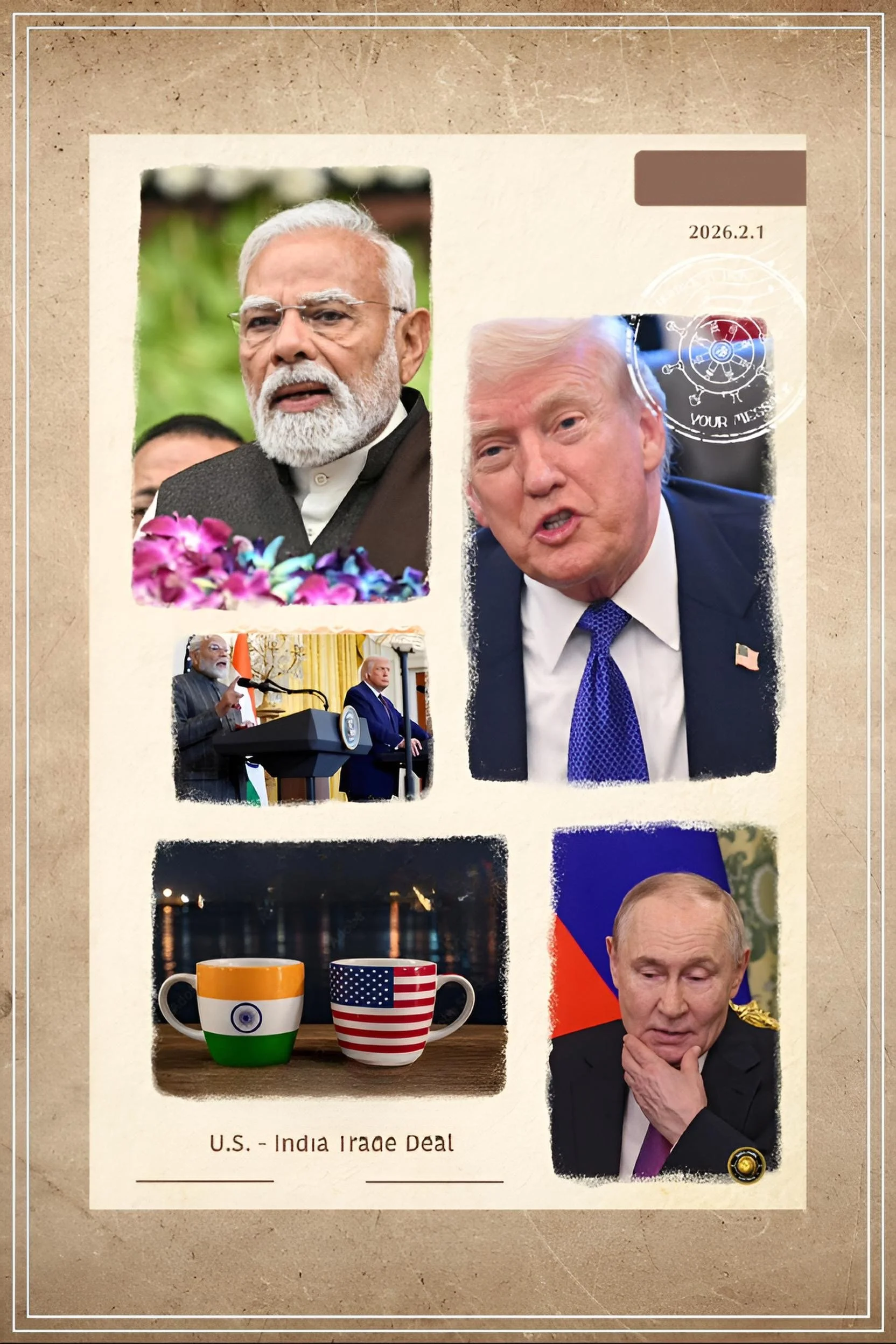
On February 2, 2026, President Donald Trump announced a pivotal trade agreement with Indian Prime Minister Narendra Modi that fundamentally restructures India's energy procurement architecture while simultaneously repositioning India as a strategic American ally within South and South-Central Asian geopolitical configurations.
The agreement reduces United States tariffs on Indian goods from a combined rate of 50% to 18% while simultaneously eliminating a separate 25% penalty tariff explicitly imposed in response to India's continued purchases of Russian crude oil.
In exchange, Modi committed India to reducing its Russian crude oil imports from approximately 1.5 million barrels per day to an estimated 500,000 to 600,000 barrels per day over the forthcoming months, while pledging to increase Indian purchases of American energy, technology, agricultural, and manufacturing products by more than $500 billion.
This arrangement represents the culmination of sustained American tariff pressure initiated in June 2025, intensified through August 2025, and now resolved through a negotiated settlement that fundamentally alters the geometry of South Asian energy security, Russian energy revenues, and the terms under which nations navigate American economic coercion.
Introduction
The Trump-India tariff agreement of February 2026 exemplifies a contemporary form of geopolitical statecraft: the weaponization of trade mechanisms to compel strategic realignment among nominally independent nations.
Unlike traditional diplomatic negotiations, which emphasize mutual benefit and shared interests, the tariff mechanism operates through the asymmetrical imposition of economic costs until a target state capitulates to demands.
India's experience between June 2025 and February 2026 demonstrates both the efficacy and the constraints of this approach.
The Trump administration calculated that India, as a nation substantially dependent on merchandise trade with the United States and vulnerable to tariff escalation, could be compelled to reduce Russian oil purchases by threatening continued economic punishment.
The calculation proved correct, though the agreement reveals underlying tensions regarding India's room for autonomous decision-making within American-dominated trade architectures and the long-term costs to India of rapid energy import diversification.
History and Current Status
The Escalation Trajectory
Before 2025, India maintained a pragmatic approach to energy procurement that prioritized cost optimization over geopolitical alignment.
Following Russia's February 2022 invasion of Ukraine and the subsequent imposition of Western sanctions on Russian energy exports, Russian crude oil became available to non-Western purchasers at substantial discounts.
By 2024, Russia supplied approximately 36% of India's total crude oil imports, with volumes reaching approximately 1.8 million barrels per day. For a nation consuming 5 million barrels daily and lacking significant domestic production, Russian oil provided critical energy security at a lower cost than OPEC-supplied crude or American imports.
The United States, under the Trump administration's return to office in January 2025, prioritized ending Russian oil revenues as a mechanism for constraining Russian financing of its Ukraine military operations.
Within this framework, India emerged as a significant target because it had become Russia's largest oil customer by volume, replacing European purchasers who had largely severed ties to Russian energy.
China purchased more Russian oil than India by volume, but it proved politically resistant to American tariff threats and maintained alternative markets, insulating itself from American economic pressure.
India, by contrast, possessed a substantial trade surplus with the United States and remained dependent on American technology imports, making it vulnerable to tariff escalation.
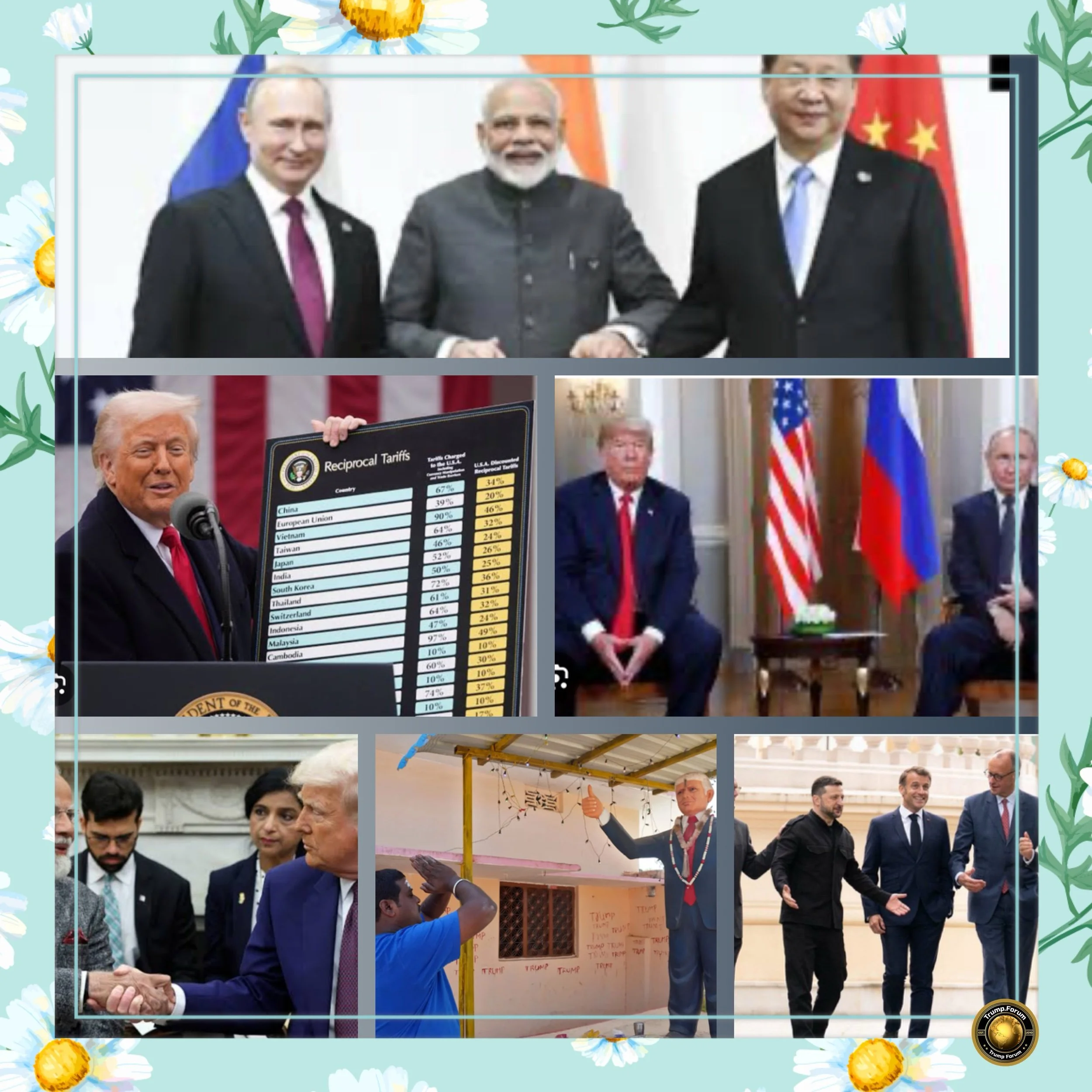
On July 31, 2025, Trump announced a 25% reciprocal tariff on Indian goods, framed as a response to India's insufficient market opening and excessive trade surplus.
This tariff targeted approximately $80 billion in annual Indian exports to the United States, including sectors such as information technology services, textiles, and jewelry.
Pharmaceuticals and electronics/IT hardware, oil and critical minerals were exempted.
IT services (software, outsourcing, BPO) were not directly hit because tariffs apply to goods, not services. Services trade faced separate dynamics but no goods tariff impact.
While ostensibly focused on trade balancing, internal Trump administration statements clarified that Russian oil purchases constituted a supplementary rationale for the tariff.
On 7th August 2025, Trump imposed an additional 25% surcharge on Indian goods, explicitly designating it as a punishment for India's continued Russian oil purchases.
The rationale, articulated by Trump and senior advisors, framed Russian oil revenues as directly financing the Ukraine conflict.
By discouraging India from purchasing Russian oil, the administration asserted it could reduce Russian war-fighting capacity.
This additional 25% tariff raised the combined rate to 50%, among the highest applied to any trading partner and substantially exceeding tariffs on the European Union (15%) and Japan (15%).
The cumulative impact of these tariffs created significant economic pressure on Indian exporters.
Major Indian technology firms, pharmaceutical manufacturers, and textile exporters faced the risk of contraction if tariffs persisted.
Indian government officials protested the linkage between trade balancing and energy policy, arguing that energy security decisions could not be subordinated to unilateral American tariff threats.
However, the potential economic damage if tariffs escalated further put pressure on the Modi administration to negotiate.
Key Developments
The Strategic Recalibration
Between August 2025 and February 2026, the trajectory of American-Indian negotiations evolved through several phases characterized by escalating American demands and incremental Indian concessions.
On January 24th 2026 at Davos conference, Treasury Secretary Scott Bessent indicated that the additional 25% Russian oil penalty tariff might be lifted if India demonstrated progress in reducing Russian crude imports.
This statement signaled that negotiation remained possible and suggested American willingness to accept partial rather than complete elimination of Russian oil imports.
Simultaneously, the United States imposed targeted sanctions on Russia's two largest oil producers—Rosneft and Lukoil—which together supplied approximately 60% of Russia's oil exports to India.
These sanctions, implemented in October 2025, created operational difficulties for Indian refiners seeking to continue purchasing Russian oil.
The sanctions effectively accomplished through regulatory mechanisms what tariffs threatened to achieve through economic coercion: the reduction of Russian oil available to Indian purchasers.
The sanctions produced immediate effects on Indian refinery behavior.
Reliance Industries, which operates the world's largest refining complex and had historically maintained a long-term contract for 500,000 barrels per day of Russian crude from Rosneft, halted new purchases.
State-owned refiners, including Indian Oil Corporation, Bharat Petroleum Corporation, and Hindustan Petroleum, also reduced or ceased their purchases of Russian oil.
By December 2025, Indian imports of Russian crude had declined to their lowest levels in two years, to approximately 1.2 million barrels per day, despite Putin's December visit to New Delhi, where he publicly affirmed Russia's willingness to continue "uninterrupted shipments."
The European Union's announcement on January 27, 2026, of a comprehensive free trade agreement named, ‘Mother of all deals ‘ , with India introduced a complicating variable into American-Indian negotiations.
The EU deal offered India unprecedented market access to 27 European nations, reducing tariffs on 90% of Indian exports while India reduced tariffs on European automobiles from 110% to 10% over five years.
The EU agreement provided India with an alternative economic partnership that reduced exclusive dependence on American markets.
This development may have paradoxically accelerated the Trump-Modi agreement by signaling to both parties that India had negotiating alternatives. That failure to reach an accommodation risked India's closer alignment with the European Union.
On January 31st, 2026, Trump announced aboard Air Force One that India would begin purchasing Venezuelan crude oil in place of Russian imports.
This announcement introduced an additional strategic dimension: the United States had captured Venezuelan leader Nicolas Maduro on January 3, 2026, and positioned itself to control Venezuela's oil industry indefinitely.
By redirecting India toward Venezuelan crude, Trump simultaneously accomplished multiple objectives: reducing Russian oil purchases, providing a market for American-controlled Venezuelan oil, and channeling revenue to a Venezuelan government aligned with American interests.
Latest Facts and Concerns
The Agreement's Substance and Tensions
The February 2, 2026, agreement, announced through Trump's Truth Social platform and subsequently confirmed by White House officials, specifies the following parameters.
The reciprocal tariff on Indian goods decreases from 25% to 18%, effective immediately.
The additional 25% Russian oil penalty tariff is eliminated.
India commits to reducing tariffs on American goods to 0%, eliminating all non-tariff barriers against United States merchandise and services, and purchasing a minimum of $500 billion in American energy, technology, agricultural, coal, and manufacturing products over an unspecified timeframe.
Regarding energy, Trump asserts that Modi committed India to ceasing purchases of Russian crude and redirecting imports to American oil and Venezuelan crude.
However, Modi's public statements notably refrain from explicitly acknowledging the Russian oil commitment.
In his X post, Modi congratulated Trump on the tariff reduction and praised his leadership for "global peace, stability, and prosperity," but made no direct reference to abandoning Russian oil.
This divergence between Trump's assertions and Modi's public acknowledgment creates ambiguity regarding the precise magnitude of India's commitment.
Trade data and refinery behavior provide greater clarity than political statements.
By late January 2026, Indian refineries had reduced Russian crude imports to approximately 1.2 million barrels per day.
Industry sources indicate further reductions to approximately 1 million barrels per day in February 2026 and 800,000 barrels per day in March 2026, with long-term targets of 500,000 to 600,000 barrels per day.
These reductions, while substantial, do not constitute a complete cessation of Russian oil purchases as Trump's language suggests.
The economic implications of this energy transition generate significant concerns among Indian policymakers and financial analysts.
Russian crude oil typically trades at a $15 to $20 per barrel discount relative to OPEC-supplied crude or American oil, reflecting Western sanctions and market isolation.
India's reduction of Russian imports by 900,000 to 1 million barrels per day would require procurement of equivalent volumes from more expensive suppliers, increasing India's annual energy import bill by an estimated $9 billion to $11 billion.
This represents a substantial cost increase for a nation already confronting energy security challenges resulting from rapid economic growth and limited domestic production.
Cause-and-Effect Analysis
Mechanisms of American Economic Coercion
The successful American compulsion of Indian energy policy realignment through tariff mechanisms reflects several underlying structural factors that rendered India vulnerable to such pressure.
Primarily, India maintains a substantial merchandise trade surplus with the United States, making American market access economically consequential for Indian exporters.
The sectors most vulnerable to tariff escalation—pharmaceuticals, information technology, textiles, and electronics—employ millions of Indian workers and generate critical foreign exchange reserves.
Tariffs affecting these sectors create political pressure on the Modi administration from affected industries and workers.
Secondarily, India's import dependence on American technology products and capital equipment creates additional leverage for the Trump administration.
American semiconductor technology, advanced manufacturing equipment, and enterprise software are critical inputs to India's manufacturing and technology sectors.
The prospect of tariff escalation across these import categories adds additional cost pressures, complementing the penalties imposed on exports.
Thirdly, the Trump administration demonstrated a willingness to escalate tariff threats beyond mere numerical adjustments.
The explicit framing of the additional 25% penalty as punishment for Russian oil purchases established a clear causal linkage between energy policy and trade terms.
This framing signaled that failure to modify energy procurement would result in further escalation. The credibility of this threat derived from Trump's demonstrated willingness to implement tariff increases without congressional authorization or reciprocal negotiations, treating tariffs as unilateral policy instruments.
However, India's negotiating position improved between August 2025 and February 2026 through several channels.
The European Union's conclusion of a comprehensive free trade agreement with India provided an alternative to exclusive reliance on the American market. If India faced indefinite 50% tariffs from the US, European market access would partially offset the economic damage.
The EU's agreement, therefore, enhanced India's negotiating leverage with the United States by offering a credible alternative.
Additionally, operational difficulties stemming from American sanctions on Rosneft and Lukoil forced Indian refineries to reduce their purchases of Russian oil, even without tariff penalties.
By the time negotiations concluded, Indian crude import patterns had already shifted substantially, reducing the magnitude of the additional adjustment required.
This reduced the cost to India of a formal commitment to continued Russian oil reduction.
Finally, India's relationship with Russia extends far beyond energy cooperation.
Russia supplies approximately 70% to 80% of India's military hardware and weaponry. Any American pressure that threatened this defense relationship would trigger Indian resistance.
However, the Trump administration carefully delinked energy policy from defense relationships, allowing India to pursue energy reorientation while preserving its Russian military supply relationship.
This delimitation of the coercive pressure made Indian capitulation more acceptable politically.
Future Steps
Implications and Trajectories
The Trump-India agreement establishes a precedent for using tariff mechanisms as instruments of geopolitical coercion extending beyond traditional trade-balancing concerns.
The successful compulsion of Indian energy policy through tariff escalation suggests that other trading partners facing American disapproval may expect similar treatment if they maintain relationships or policies that run counter to American preferences.
The agreement also demonstrates that tariff threats prove effective when imposed on nations lacking alternative market access and possessing limited ability to retaliate.
For India, the agreement creates several medium-term challenges. The $9 billion to $11 billion annual increase in energy import costs will constrain resources available for infrastructure investment and economic development. India's growth trajectory depends on controlling energy costs, and the shift away from discounted Russian oil imposes a structural penalty on Indian economic expansion.
The Modi administration accepted this penalty in exchange for tariff relief and preservation of American trade relationships, reflecting the calculation that sustained 50% tariffs would impose greater cumulative damage than the increased energy costs.
The commitment to purchase $500 billion in American products over an undefined timeframe creates additional strategic ambiguities.
No specific timeline or sectoral allocation has been detailed, and enforcement mechanisms remain undefined. If India's purchase commitments diverge from the Trump administration's expectations, the agreement could become a source of future friction rather than a sustainable partnership.
Russia faces substantial energy revenue losses if India implements the projected reduction in Russian crude imports to 500,000 to 600,000 barrels per day.
Depending on pricing assumptions, the reduction could cost Russia $23 billion to $25 billion in annual energy revenue.
However, Russia's limited ability to retaliate against India through military or energy supply disruptions—given its defense dependencies and geographic limitations—constrains its policy options.
Russia will likely accept the revenue loss while attempting to maintain a minimal presence in Indian energy markets and emphasize continuity in defense relationships.
The European Union benefits from India's energy realignment toward American and Venezuelan oil, as it reduces potential competition for Middle Eastern and African crude supplies.
The EU's agreement with India, concluded just days before the Trump-India tariff accord, positions Europe advantageously for deepened economic cooperation with Indian markets while Indian energy relationships reorient toward American suppliers.
Conclusion
The Transformation of Trade and Energy Politics
The Trump-India agreement of February 2, 2026, represents a significant demonstration of how contemporary American administrations view tariffs as instruments of geopolitical compulsion that extend far beyond traditional commercial concerns.
The successful reorientation of Indian energy procurement through sustained tariff threats establishes a precedent suggesting that American administrations will increasingly weaponize trade mechanisms to compel compliance with broader strategic objectives, particularly regarding Russian isolation and reduced energy revenue.
For India, the agreement exemplifies the constraints confronting mid-ranking powers as they navigate relationships with the hegemonic power within the global trade architecture.
India extracted maximum possible concessions—tariff reduction from 50% to 18%, elimination of the Russian oil penalty tariff, and preservation of defense relationships with Russia—but ultimately accepted the strategic reorientation the Trump administration demanded.
The agreement's durability depends on whether Indian economic interests in expanded American market access and in avoiding escalating tariffs outweigh the costs of energy import diversification. If energy costs increase substantially or if American demand escalates to encompass additional sectors, Indian political support for the agreement may erode.
However, absent fundamental shifts in the geopolitical architecture, the precedent established by the Trump-India agreement will likely persist, shaping how other nations navigate American tariff threats regarding energy, security, and strategic policy.
The realignment of India's energy partnerships thus represents not primarily a victory for Ukrainian energy security, but rather a demonstration of how the contemporary American administration perceives and utilizes tariff mechanisms as instruments of power in pursuit of objectives extending far beyond traditional international commerce.