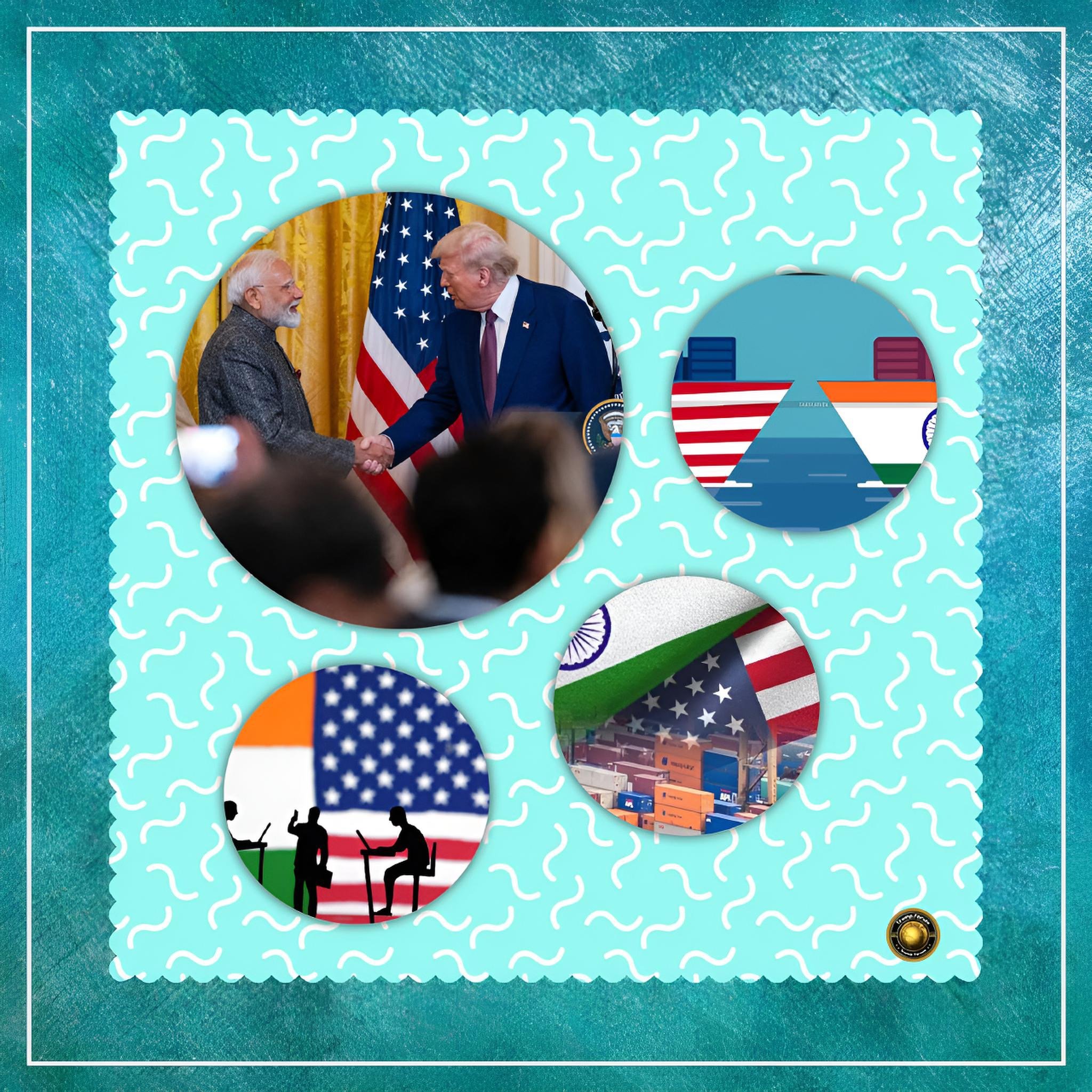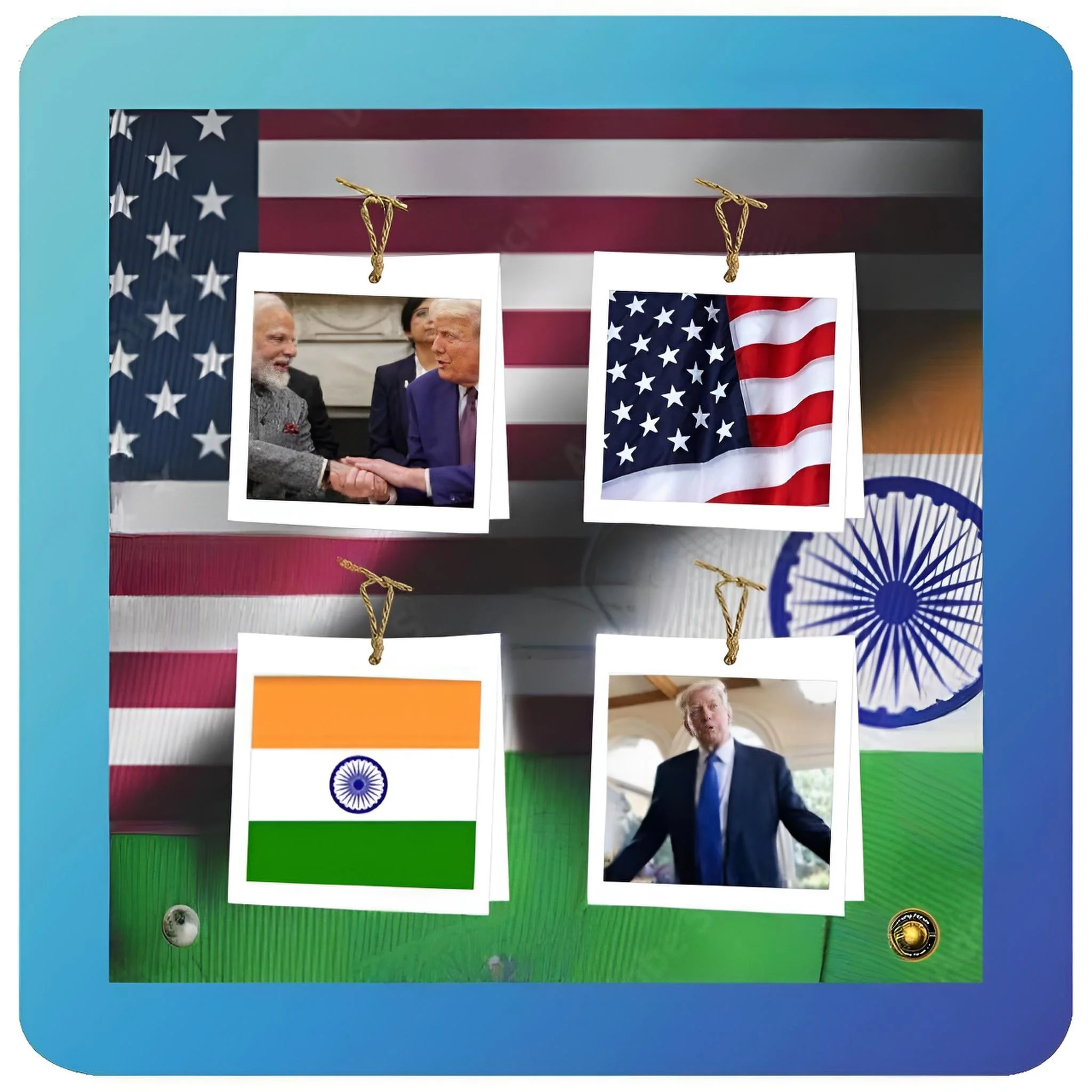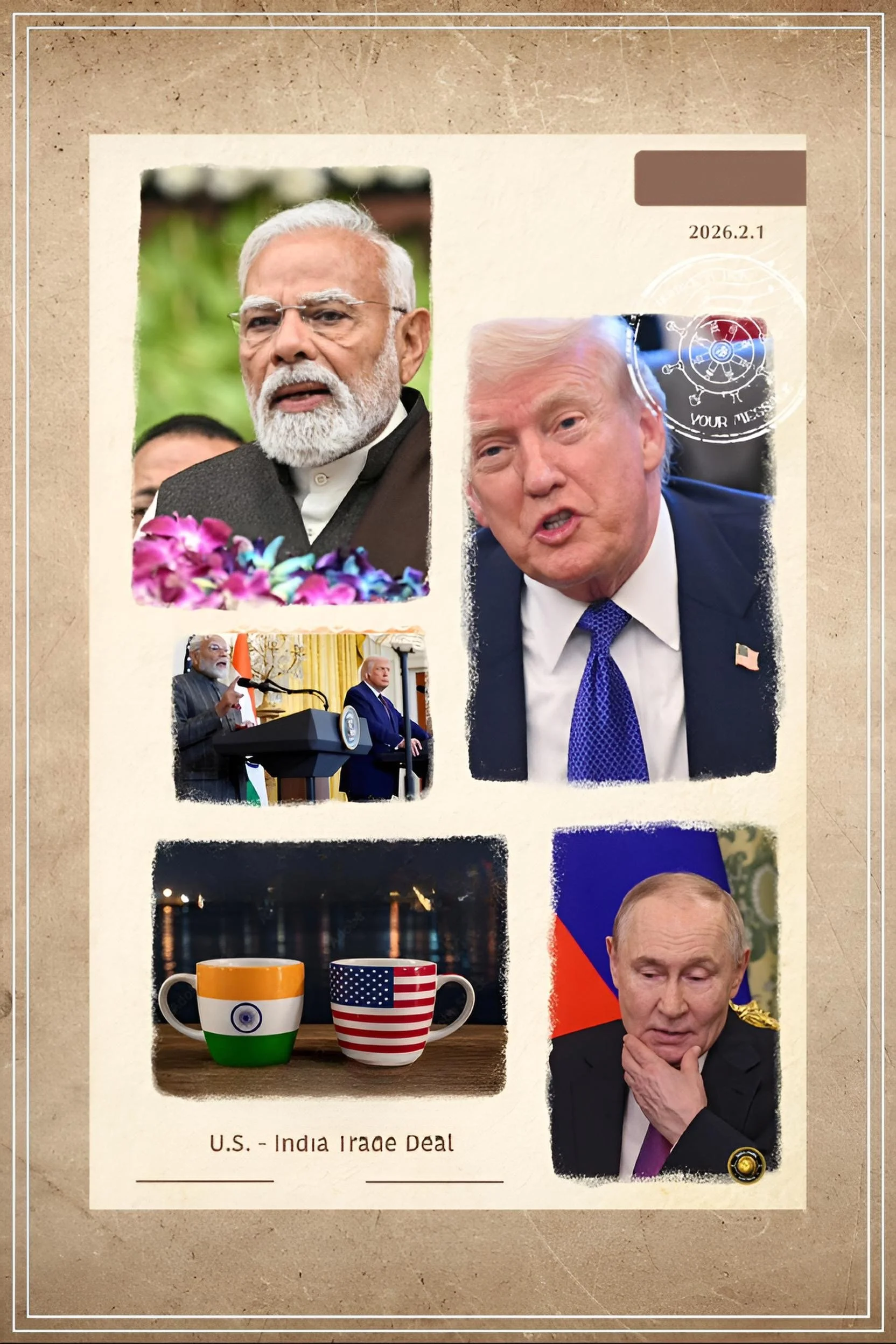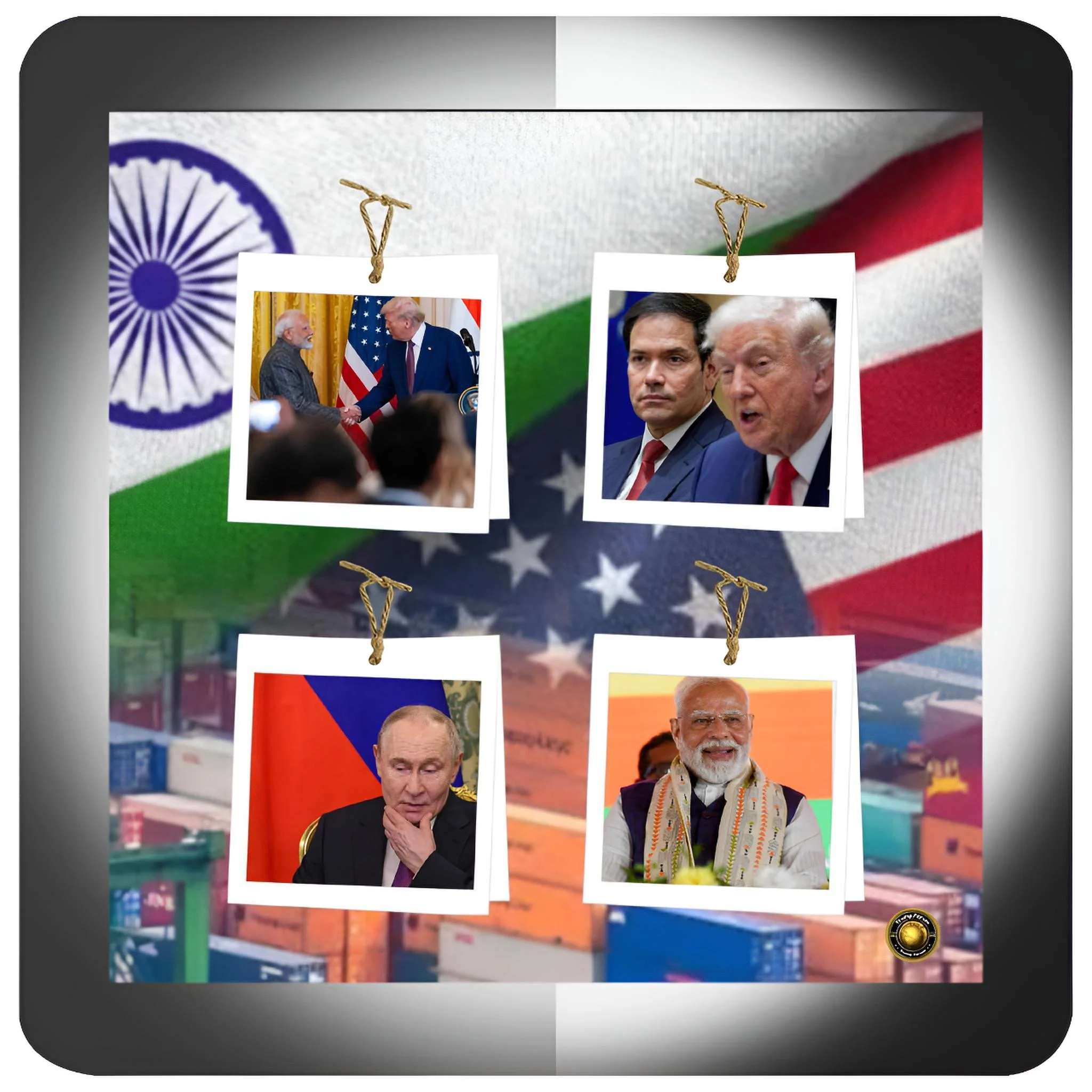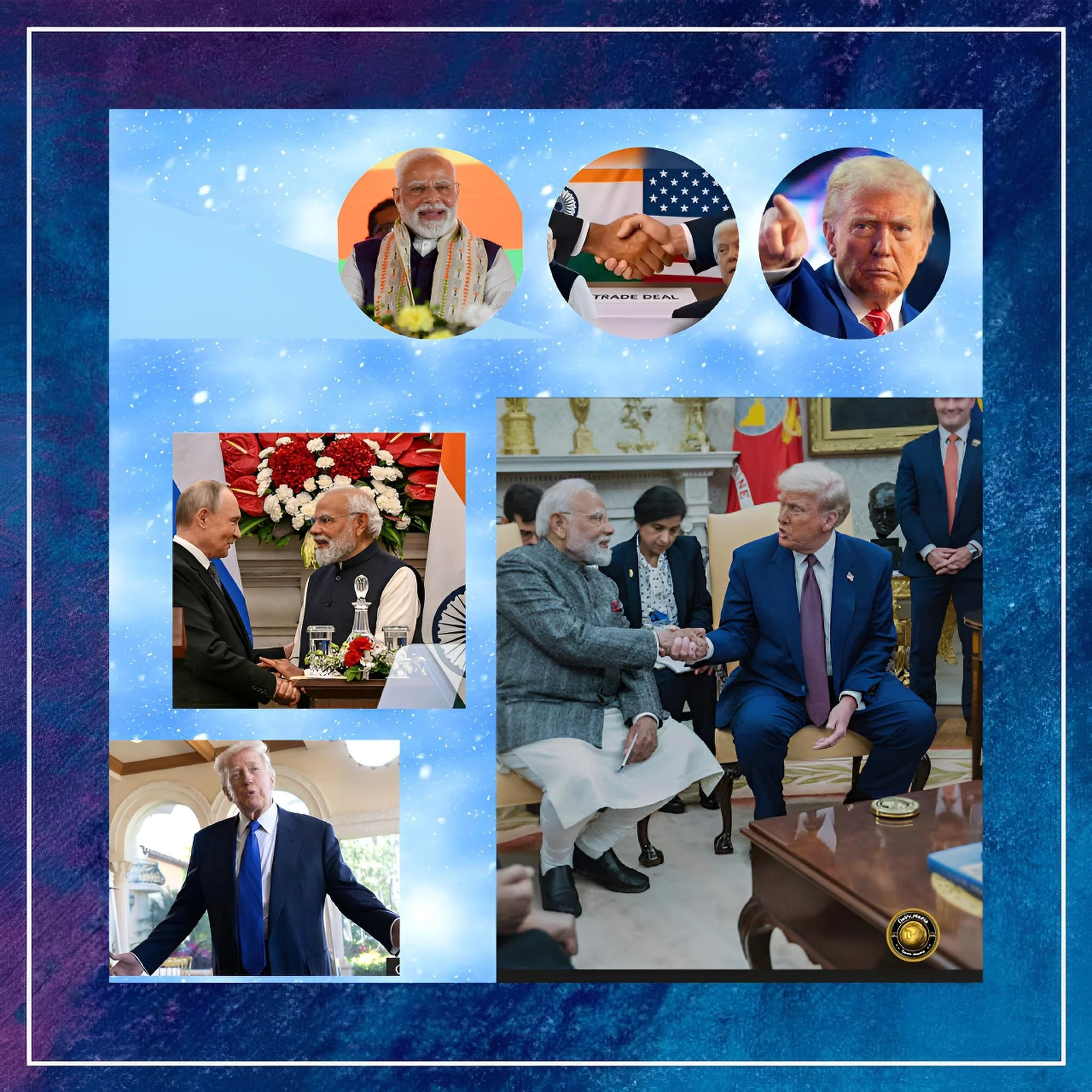
Reciprocal Tariff Realignment and Strategic Recalibration: The United States-India Trade Architecture in February 2026
Introduction
On February 2, 2026, the United States and India announced the resolution of a months-long impasse in bilateral trade negotiations, manifesting in a comprehensive tariff reduction that represents a significant reconfiguration of commercial relations between the world's two largest democracies.
This agreement, whereby the United States reduced its total tariff imposition on Indian merchandise from 50% to 18%, constitutes both a consequential economic restructuring and a nuanced geopolitical repositioning within the broader Indo-Pacific strategic landscape.
Tariff Leverage 2.0
Inside the New Playbook for Reciprocal Rate Tweaks and High‑Stakes Trade Talks
The tariff reduction architecture encompasses the elimination of a 25% punitive duty imposed specifically on Indian goods derived from or associated with Russian petroleum acquisitions, combined with a proportionate reduction of the 25% reciprocal tariff by 7% points, yielding the aggregate 18% rate.
This configuration reflects the capitulation of New Delhi's position on Russian energy imports, which had constituted a fundamental point of contention since the Russian Federation's 2022 invasion of Ukraine.
Prior to this agreement, the Indian subcontinent had emerged as the second-largest purchaser of Russian crude oil, a posture that Washington had increasingly viewed as antithetical to Western sanctions coordination and strategic objectives regarding Moscow's economic capacity to sustain military operations in Ukraine.
In exchange for this tariff concession, India has committed to a multifaceted package encompassing the cessation of Russian petroleum acquisitions, the reorientation of energy procurement toward American and potentially Venezuelan sources, the reduction of tariff impositions on United States merchandise to zero, the elimination of non-tariff barriers that have historically impeded American commercial access to the Indian market, and the undertaking of procurement commitments exceeding $500 billion for United States agricultural commodities, energy resources, technological systems, and industrial goods through 2030.
Economic Calculus
Trade War Math: How Tariff Tweaks Reshape Bilateral Bottom Lines
The reduction from 50% to 18% tariff imposes a differential of 32% points, which when applied to India's approximately $87 billion in annual merchandise exports to the United States (excluding services sector contributions of approximately $33 billion in information technology), generates theoretical tariff savings of approximately $27.66 billion annually.
However, the practical economic benefit requires downward adjustment to account for demand elasticity, competitive repositioning among other suppliers, and the substitution effects occasioned by tariff-rate changes.
Conservative economic analysis estimates the realistic annual tariff savings for Indian exporters at approximately $6 billion to $7 billion.
The primary sectors benefiting from this tariff rate reduction encompass electrical and electronic equipment, pharmaceutical formulations, precious gemstones and jewelry, machinery and nuclear reactor components, organic chemical substances, textile and apparel products, mineral fuels and oils, vehicle components, and ferrous metallurgy products.
Engineering goods, which constitute the largest categorical component of India's merchandise exports to the United States, operate on characteristically thin profit margins, rendering them particularly responsive to tariff-rate modifications.
For an Indian exporter of engineering merchandise with a free-on-board valuation of $100, the reduction from 25% to 18% tariff represents a decrease in landed cost from $125 to $118, constituting a 7% competitiveness enhancement.
Venezuela’s Oil Bind Squeezes India’s Energy Juggernaut
The geopolitical architecture surrounding India's prospective shift toward Venezuelan petroleum acquisitions represents a complex negotiation between strategic alignment with Washington and India's acute energy security imperatives.
Russian petroleum, acquired at a substantive discount of $10 to $15 per barrel relative to Brent crude benchmarks (which approximate $63 per barrel), translates into an effective acquisition cost for Indian refiners of approximately $50 to $54 per barrel subsequent to shipping expenses and logistics.
Venezuela's crude petroleum, conversely, is projected to command approximately $60 per barrel after factoring shipping routes and pricing mechanism finalization, thereby imposing an incremental cost of $7 to $10 per barrel relative to Russian supplies, or potentially substantially higher if Venezuelan pricing becomes indexed to Brent crude metrics.
India's petroleum import profile has undergone substantial modification, with Russian acquisitions declining from approximately 1.2 million barrels per day in January 2026 to projected levels of one million barrels per day in February and 800,000 barrels per day in March, with eventual stabilization anticipated at 500,000 to 600,000 barrels per day.
This represents an approximately 60% reduction in Russian energy dependence. If India were to substitute the entirety of reduced Russian petroleum with Venezuelan crude at $60 per barrel, the incremental annual energy expenditure would approximate $1.3 billion to $1.6 billion, constituting a substantial macroeconomic burden for an energy-intensive economy operating under constrained fiscal parameters.
This calculation illuminates a fundamental asymmetry: while Indian exporters realize tariff-based gains of approximately $6 billion to $7 billion annually, India's broader economy incurs an estimated petroleum cost increment of $1.3 billion to $1.6 billion per annum, yielding a net positive differential of approximately $4.4 billion to $5.7 billion, though with significant distributional consequences across industrial sectors and consumer constituencies.
The United States perspective
Tariff Cash Flow vs. Strategic Power Plays
From the American commercial perspective, the maintenance of 18% tariff impositions on Indian merchandise generates estimated annual tariff revenues of approximately $1.6 billion, predicated upon sustained import volumes at historical levels of $87 billion.
Simultaneously, the $500 billion procurement commitment by India for American energy resources, technology systems, and agricultural commodities represents the substantive commercial prize underlying this negotiation, projecting annual bilateral trade rebalancing on the order of $50 billion to $70 billion in additional American exports contingent upon fulfillment of these purchasing undertakings.
Beyond quantified commercial metrics, the agreement achieves the strategic objective of constraining Russian petroleum export revenues that finance Moscow's military operations in Ukraine.
India's petroleum import reduction from 1.2 million to 500,000-600,000 barrels per day represents an approximate 55% diminution in Russian export volumes to India, translating into estimated revenue reductions for the Russian Federation of approximately $1.8 billion to $2.2 billion per annum at contemporary petroleum prices, thereby contributing marginally to the economic attrition strategy Washington has implemented against Moscow's war-sustaining capacity.
Supreme Court Tariff Rulings: Backup Plans in the Balance
The Trump administration's capacity to sustain 18% tariffs on Indian merchandise remains contingent upon the Supreme Court of the United States rendering its decision regarding the constitutionality of tariff impositions authorized under the International Emergency Economic Powers Act (IEEPA).
The Supreme Court convened oral arguments regarding this statutory authority on November 5, 2025, with justices demonstrating apparent skepticism concerning the president's invocation of emergency economic authority for generalized tariff impositions absent demonstrable national security exigencies.
The anticipated decision date, projected for February 20, 2026 or within subsequent weeks, carries profound implications for the India-specific tariff architecture.
Should the Supreme Court determine that IEEPA-authorized tariffs exceed constitutional parameters, the Trump administration has articulated a contingency strategy whereby a 10% universal tariff would be implemented pursuant to Section 232 of the Trade Act of 1974, which permits presidential imposition of tariffs up to 15% for a duration of 150 days to address trade deficits.
This provisional measure would subsequently require more permanent tariff authority through alternative legal mechanisms, encompassing sector-specific duties or Congressional authorization.
For Indian exporters, a Supreme Court invalidation of IEEPA tariffs coupled with implementation of the Section 232 10% replacement tariff would result in an 8 percentage point reduction relative to the negotiated 18% rate, thereby further enhancing export competitiveness.
However, the administration has demonstrated capacity to formulate supplementary tariff authority, suggesting that even a Supreme Court adverse ruling would not necessarily precipitate the elimination of protectionist measures applied to Indian merchandise.
India’s Power Pivot: Geopolitical Gambits and Regional Ripples
The achievement of 18% tariff treatment represents India's most favorable rate among major Asian trading partners, exceeding the 19% rate accorded to Pakistan and substantially surpassing the elevated rates imposed upon other regional competitors.
This differential positioning reflects India's centrality to American Indo-Pacific strategy, encompassing the Quadrilateral Security Dialogue (QUAD) framework encompassing the United States, Japan, India, and Australia, which functions as the institutional mechanism through which Washington coordinates great-power competition against the People's Republic of China.
However, India's capacity to extract favorable tariff treatment must be contextualized within the broader strategic calculus regarding India's multi-alignment posture.
Simultaneously with achieving the United States tariff reduction, India finalized a comprehensive free trade agreement with the European Union on January 27, 2026, following nearly two decades of negotiation.
This agreement encompasses the reduction or elimination of tariffs on 96.6% of European Union exports, with European Union reduction of duties on 99.5% of Indian merchandise over a seven-year implementation period.
The EU-India accord, affecting approximately 2 billion individuals and representing 25% of global gross domestic product, is projected to increase bilateral trade to approximately $200 billion by 2030 and generate approximately $4.8 billion in annual tariff savings for European commercial enterprises.
This simultaneous conclusion of trade negotiations with both Washington and Brussels demonstrates India's strategic autonomy in extracting economic concessions from multiple great powers, thereby reinforcing New Delhi's positioning as an indispensable actor within the international system.
The agreement with the United States arrives contemporaneously with the European Union accord and represents a validation of India's diversification strategy initiated following the imposition of elevated American tariffs in August 2025.
$500B Buy-In Bombshell: Rewiring India’s Industrial Blueprint
The Indian commitment to acquire more than $500 billion in American merchandise through 2030 carries substantive implications for India's domestic industrial structure and developmental trajectory.
This commitment encompasses energy acquisitions (anticipated at approximately 40-50% of the total value), technology systems, agricultural commodities including grains and oilseeds, and coal resources.
The scaling of American energy imports at such magnitude presupposes significant modifications to India's energy procurement strategies, including expanded reliance upon liquefied natural gas imports and continued petroleum acquisitions from American and Venezuelan sources.
The commitment to American technology acquisitions aligns with the broader India-United States initiative regarding advanced technology supply chains, including semiconductor manufacturing and critical mineral processing.
American technology exports to India have historically encountered resistance from Indian domestic industrial protectionists, particularly in telecommunications and information technology sectors; the tariff agreement's stipulation that India shall reduce tariff barriers to zero on American merchandise necessarily encompasses these sectors, thereby creating market access for American technology vendors and potentially disrupting segments of India's protected information technology hardware manufacturing ecosystem.
The commitment to American agricultural purchases constitutes a tacit acknowledgment that Indian domestic agricultural production, whilst substantial in aggregate, remains subject to productivity constraints and sectoral imbalances that necessitate supplementary imports, particularly in grains, pulses, and oilseeds.
The agreement to acquire specified quantities of American agricultural merchandise creates a structural trade pattern whereby India becomes a consistent purchaser of American agricultural surplus, thereby buttressing American farmer constituencies and rural economic interests.
H1B Overhaul: India’s Tech Sector Faces the Heat
Contemporaneously with the tariff agreement, the Trump administration maintained its $100,000 supplemental fee on new H1B visa petitions, which took effect on September 21, 2025.
The federal courts have sustained this fee against constitutional challenge, with a federal district judge determining on December 24, 2025 that the administration possesses broad authority to regulate immigration policy and that the fee constitutes a constitutionally permissible exercise of executive authority.
Indian nationals constitute approximately 71% of all H1B visa approvals, rendering Indian technology services firms—including Tata Consultancy Services, Infosys Limited, and Wipro Technologies—disproportionately affected by this fee structure.
The $100,000 supplemental charge per petition translates into incremental annual costs of approximately $1 million for firms employing 10 H1B visa holders annually, substantially elevating the financial burden of sustaining expatriate technical workforces within the United States market.
The Trump administration has articulated no intention to eliminate or reduce this fee, instead indicating that it constitutes a component of broader immigration policy reformulation designed to prioritize higher-wage and elevated-skill visa acquisitions whilst reducing opportunities for entry-level or comparatively lower-wage technical worker employment.
The administration's simultaneous replacement of the H1B visa lottery with a wage-and-skill-based selection mechanism, to be implemented February 27, 2026, further privileges elevated-compensation technical workers whilst disadvantaging entry-level specialist personnel, a cohort in which Indian nationals have historically constituted a substantial proportion.
Conclusion
Global Triangle: Mastering Strategic Maneuvers in World Order
The India-United States tariff agreement of February 2, 2026 represents a consequential reconfiguration of bilateral commercial relations that simultaneously constitutes a validation of India's strategic value to American Indo-Pacific objectives and a manifestation of Washington's capacity to extract substantive economic concessions from nations prioritizing strategic alignment with the United States.
The agreement's $6 billion to $7 billion in annual tariff benefits for Indian exporters is substantially offset by India's $1.3 billion to $1.6 billion incremental energy costs consequent to petroleum source diversification, yielding net annual benefits of approximately $4.4 billion to $5.7 billion.
India's simultaneous conclusion of both the American tariff agreement and the European Union free trade accord demonstrates a sophisticated strategy of multi-alignment whereby New Delhi extracts economic concessions from multiple great powers whilst maintaining strategic autonomy from exclusive commitment to any singular alliance structure.
The tariff agreement validates India's membership in the QUAD framework and reinforces New Delhi's positioning as an indispensable actor in American grand strategy regarding the containment and counterbalancing of Chinese strategic expansion.
However, the concurrent commitment to energy diversification and the maintenance of bilateral engagement with Russia, predicated upon participation in the Shanghai Cooperation Organisation and the BRICS economic consortium, demonstrates India's retention of strategic flexibility and resistance to subordination within an exclusively Western-oriented alliance configuration.
The trajectory of United States-India bilateral relations through 2026 and beyond will substantially depend upon India's capacity to fulfill the $500 billion purchasing commitment whilst maintaining compliance with implicit American expectations regarding strategic orientation toward the Indo-Pacific, Russia policy constraints, and China-containment objectives, all whilst preserving domestic political legitimacy and managing the macroeconomic consequences of energy cost increments and tariff-driven industrial restructuring.