America’s Claims on Order: Trump’s Speech and the World’s Accelerating Transactionalism - Part I
Executive Summary
The State of the Union as Strategy: Trump’s Domestic Mandate Meets Global Risk
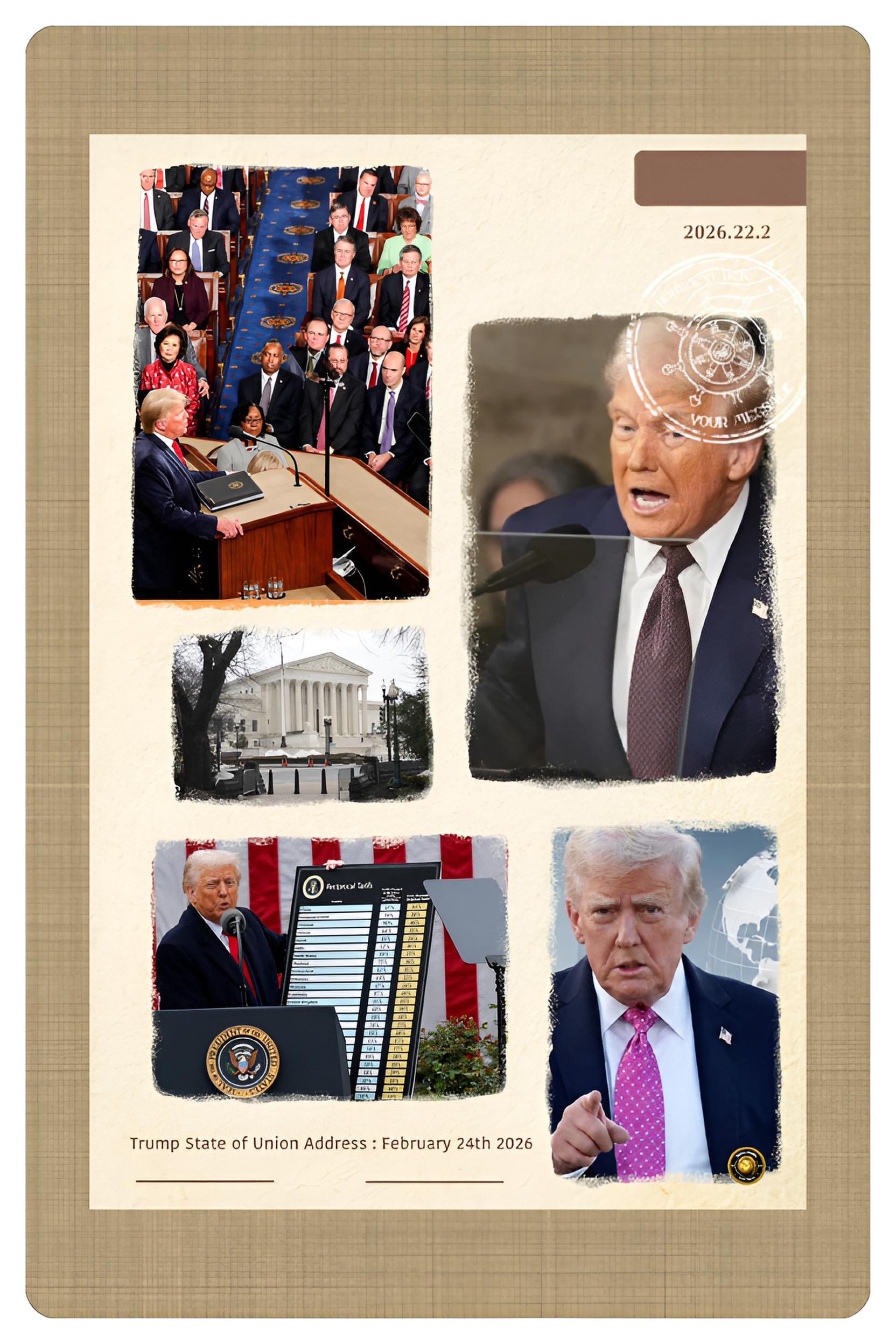
FAF analysis delves deeper into President Donald Trump’s State of the Union address delivered on Feb 25, 2026.
This speech functioned less as a constitutional report than as a full-spectrum campaign brief for a governing coalition under stress.
It was historically long—about 1 hour and 48 minutes—amplifying its role as political theatre and strategic signaling.
Trump framed his first year back in office as a “turnaround,” asserted maximalist achievements on border enforcement and domestic order, and treated economic anxiety as a problem of narrative discipline as much as policy design.
Internationally, the address blended three messages that do not naturally coexist: a promise of renewed American strength; a transactional model of economic statecraft after the Supreme Court’s tariff rebuke; and a preference for diplomacy with Iran paired with language calibrated to keep military escalation credible.
The result was a speech that may consolidate domestic allies while accelerating allied hedging abroad, because it cast U.S. policy as contingent, personalized, and enforcement-first.
The most geopolitically consequential passages were those that attempted to re-legitimate tariff politics after legal constraint, and those that made Iran central to a national story of danger and resolve—at the very moment diplomacy is scheduled to test whether coercion can substitute for trust.
The most politically consequential passages fused “fraud,” immigration, and public safety into a single moral narrative, with the Vice President assigned as the are the executive spearhead of a “war on fraud.”
The speech also carried reputational risk: it reiterated disputed claims about stopping “eight wars,” including a dramatic India–Pakistan assertion that has already provoked public pushback reporting in major outlets.
Introduction
Tariffs, Iran, and Legitimacy: Reading Trump’s Longest Address as a Governing Blueprint
FAF analysis delves deeper into why State of the Union speeches matter less for their immediate legislative yield than for how they structure belief.
In polarised systems, leaders increasingly speak past institutions and into identities; the address becomes a ritual of alignment.
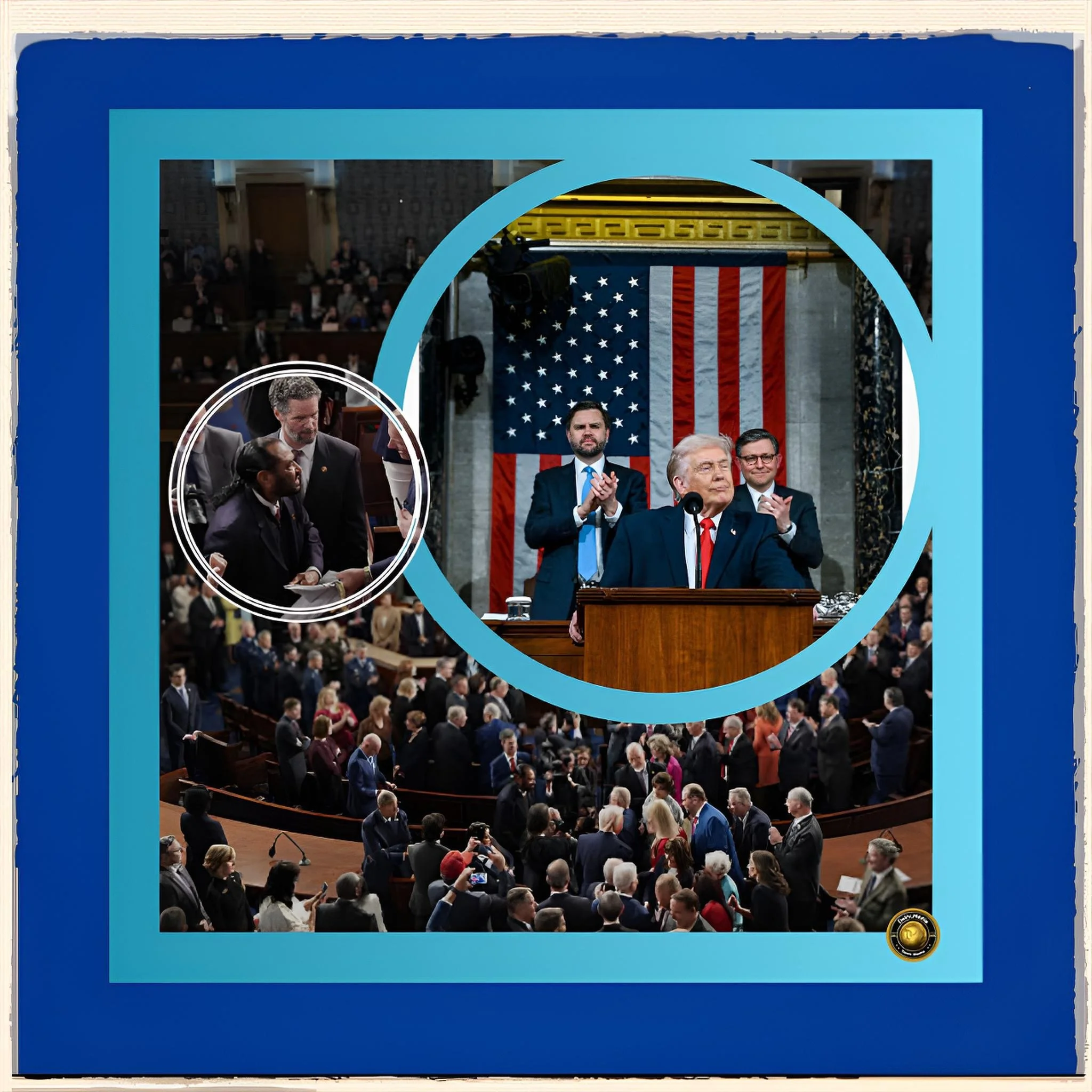
Trump’s 2026 speech made that logic explicit: Republicans applauded repeatedly while Democrats largely withheld assent, highlighting that the address was designed to define “the people” as a partisan category rather than a civic whole.
Yet the global system listens too. Allies parse whether Washington is predictable; rivals parse whether Washington is distracted; markets parse whether Washington is coherent.
The address landed amid tariff instability after the Supreme Court’s ruling, heightened Iran tensions alongside a major U.S. regional buildup, and a broader debate about whether multilateral rules are being replaced by raw bargaining.
It is precisely in such moments that a speech becomes strategy—because it tells the world what kind of state the U.S. thinks it is.
History and Current Status
Global scholors delves deeper into the historical function of the address as an instrument for managing three audiences at once: Congress, the public, and foreign capitals.
In stable eras, presidents use it to set priorities and frame compromises.
In unstable eras, presidents use it to assert sovereignty over institutions—courts, legislatures, bureaucracies—and to shift the locus of legitimacy from procedure to performance.
Trump’s 2026 address reflects the “performance” model at its most mature.
It followed his administration’s Heriff set that back, after which he argued that alternative legal mechanisms could preserve his trade posture.
In trade, the U.S. is now in a transition phase with the EU, with European officials asking for “full clarity” and warning that unilateral moves could override negotiated exemptions.
This matters because modern alliances are not just military: they are regulatory, industrial, and supply-chain architectures. When tariff policy becomes improvisational, allied planning becomes defensive.
On Iran, the address sat alongside a White House line that diplomacy is the “first option,” even as military readiness is emphasized and talks in Geneva are positioned as pivotal.
The tension is structural: coercive diplomacy works only if the opponent believes war is possible and peace is preferable, but it fails if the opponent concludes that capitulation invites domestic humiliation and regime risk.
Iran’s own messaging in recent days has stressed that an agreement is “within reach” if diplomacy is prioritized, and has floated compromise mechanisms around enriched uranium—signals of flexibility that coexist with deep distrust.
Key Developments
Trump’s State of the Union 2026: A FAF analysis of power, credibility, and the politics of disruption
FAF analysis delves deeper into five developments in the speech that carry the highest strategic weight.
First, the tariff narrative shifted from technocratic justification to moral insistence. Trump called the Supreme Court ruling “disappointing” and framed tariffs as a foundation for national renewal.
Yet investors heard less clarity than they wanted; market participants described the speech as leaving tariff direction insufficiently definitive. This gap between political certainty and policy specificity is itself a driver of volatility.
Second, the speech formalized a domestic governance posture centered on “fraud,” assigning Vice President J.D. Vance to lead a “war on fraud” and claiming fraud recovery could balance the budget.
Even if rhetorically effective, this is institutionally expansive: it implies a federal enforcement campaign that may collide with state authority, administrative law, and evidentiary standards.
Third, immigration and public safety were fused into a single legitimacy claim.
The address highlighted hardline border assertions and showcased victims and guests to dramatize a theory of order.
This approach is persuasive because it is concrete; it is also polarising because it implies that dissent is complicity.
Fourth, Iran was elevated from a foreign policy file into a civilizational antagonist, described as the world’s leading sponsor of terrorism, with Trump insisting he prefers diplomacy but will not allow a nuclear weapon.
The strategic effect is to lock the administration into a public “resolve” posture that narrows off-ramps in Geneva, because the deal must now look like victory at home as well as compromise abroad.
Fifth, the address blurred the line between geopolitical fact and geopolitical storytelling. Trump repeated claims about stopping “eight wars,” including an India–Pakistan claim that is disputed in public reporting and has previously been rejected by India’s foreign ministry in earlier episodes of similar assertions.
The risk is not merely diplomatic embarrassment; it is credibility erosion, which is cumulative and strategically expensive.
Latest Facts and Concerns
FAF analysis delves deeper into the most time-sensitive facts surrounding the address.
The speech’s length itself was a fact with political meaning: by running about 1:48, it became the longest modern State of the Union on record, a deliberate saturation tactic that leaves opponents arguing about fragments rather than confronting a coherent whole.
On trade, the EU has described the current moment as transitional, with a 10% U.S. import surcharge discussed as time-limited and a July 24 horizon referenced for resolution, while uncertainty persists after the Supreme Court decision constrained prior tariff tools.
The concern is that repeated “temporary” measures create a permanent expectation of arbitrariness, pushing firms to reprice risk and governments to seek alternatives.
On Iran, U.S. officials reiterate diplomacy-first while maintaining readiness to use force; Iran’s foreign minister has said a deal is “within reach” if diplomacy is prioritized and has outlined possible uranium-related compromises.
The concern is escalation by misinterpretation: maximalist rhetoric signals resolve, but it also signals domestic constraint, raising the chance that talks fail because neither side can appear to yield.
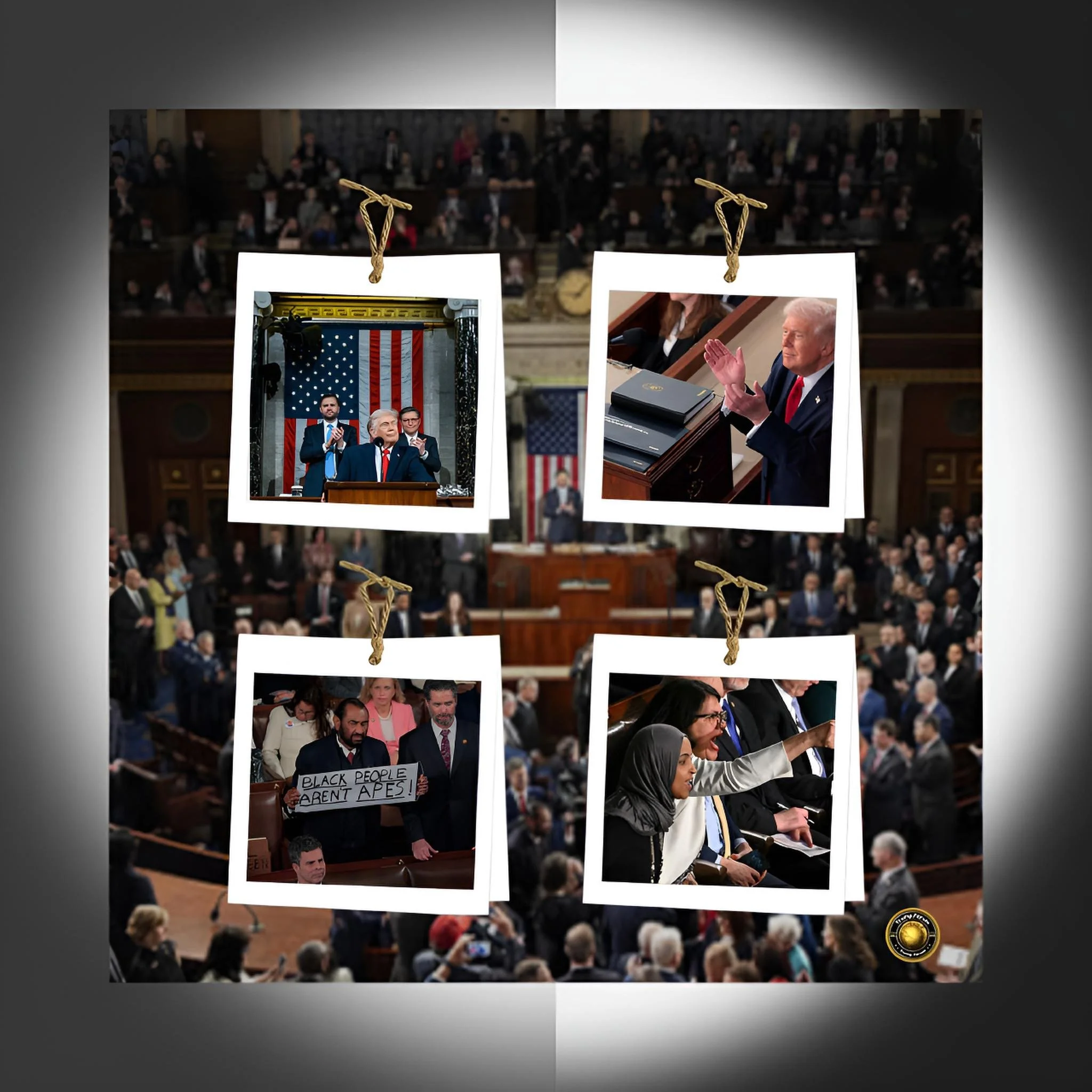
On political polarization, the address featured visible protest and disruption, including the removal of a member of Congress after a confrontation linked to a racist Obama video controversy—an episode that underscores how domestic legitimacy struggles now spill into the ritual of governance itself.
The concern is that legitimacy contests at home can become strategic signals abroad: rivals read paralysis; allies read fragility.
Current Geopolitical Environment
Comprehensive analysis delves deeper into how the speech fits a 2026 environment marked by three overlapping systems: a hot war in Europe, a coercive standoff in the Middle East, and a trade order in legal and political flux.
In Europe, Ukraine’s war remains a live test of Western endurance.
On the four year anniversary of Russia’s full-scale invasion, Zelensky urged Trump to visit Ukraine to see the war’s impact, while European leaders demonstrated solidarity in Kyiv.
In Washington, bipartisan senators introduced a resolution reaffirming support for Ukraine hours before the speech, signaling that Congress is still an independent actor in the coalition structure—even if the executive’s rhetoric is more transactional.
In the Middle East, the U.S.–Iran standoff has reached an “armada plus talks” moment: visible military capability coupled to a diplomatic window.
Trump’s address tried to domesticate this strategy by making diplomacy appear tough rather than conciliatory, yet the harder the public posture, the more fragile the negotiating space.
In trade, allies are no longer just partners; they are risk managers.
The EU’s demand for clarity reflects a deeper change: even friendly governments now treat U.S. policy as a variable to be hedged, not a constant to be trusted.
Cause-and-Effect Analysis
A deeper analysis looks beyond headlines to trace causal chains, since the long-run geopolitical impact of speeches emerges from their second-order consequences.
When a leader frames economic strategy as moral struggle, policy becomes less adjustable.
That increases the odds that tariff tools will be pursued through alternative authorities after judicial limits, which in turn increases litigation risk, administrative churn, and uncertainty for supply chains.
Uncertainty then becomes a cost that firms pass through into prices and investment decisions, producing the very “cost of living” unease the speech seeks to counter.
When a leader fuses fraud, immigration, and public safety into a single narrative of restoration, the effect is political consolidation through moral clarity.
The cost is that policy disputes become existential, raising the social temperature and making bipartisan correction harder.
In democracies, high temperature is not just a domestic problem: it is a strategic vulnerability, because it signals that policy may swing sharply with electoral cycles, encouraging allies to decouple and rivals to wait.
When Iran is cast as a civilizational enemy while diplomacy is pursued, the cause-and-effect risk is negotiation collapse through “audience costs.”
Each side becomes trapped by its own slogans. If talks fail, the escalation ladder is already rhetorically climbed, increasing the chance of rapid military action or accidental escalation—especially in a crowded theatre with proxies, missiles, and domestic unrest.
Strategic Lessons for 2026
A sharper kind of analysis digs into lessons that aren’t moral takeaways but practical playbooks for how power really works.
The 1st lesson is that credibility is a strategic asset with a balance sheet.
Claims that are contested—especially regarding third-party conflicts—can yield short-term applause but impose long-term costs, because allies begin to discount not only statements but commitments.
The 2nd lesson is that courts now shape geopolitics.
The Supreme Court’s tariff ruling did not merely restrain a president; it forced a reconfiguration of bargaining strategy with the EU and others, proving that domestic institutions are now external variables in international negotiation.
The 3rd lesson is that escalation is often born from domestic narrative needs. Iran policy in this moment is not only about centrifuges and enrichment; it is about proving “resolve” to domestic audiences.
The more policy is designed to win the nightly news, the less room exists for patient compromise.
The 4th lesson is that allies are adapting by building resilience rather than pleading for reassurance.
Merz’s recent public emphasis that the U.S. cannot “go it alone” and that Europe must reduce dependence is part of this broader trend: partnership becomes conditional when predictability weakens.
Future Steps
The strategic review delves deeper into what “next” would look like if strategy, not performance, governs decisions.
On trade, the U.S. can pursue leverage without improvisation by publishing stable tariff pathways and explicit legal rationales, reducing the “policy surprise” premium markets and allies now price in.
The EU’s demand for clarity is not rhetorical; it is the minimum requirement for ratification, investment planning, and supply chain redesign.
On Iran, the U.S. can preserve deterrence while expanding diplomacy’s room by shifting public rhetoric from humiliation to verification—focusing on enforceable limits, monitoring, and reversible steps.
Iran has signaled potential technical compromises in public reporting; the U.S. can test them without narrating the process as capitulation.
On allied politics, Washington can slow hedging by demonstrating that commitments outlast personalities: that means predictable consultation, fewer unilateral shocks, and clearer division of labor on Ukraine, where congressional signals still matter and European capabilities are becoming decisive.
On domestic legitimacy, any “war on fraud” posture must be constrained by transparent metrics and due process, because campaigns framed as moral purges can easily be interpreted—domestically and internationally—as politicized enforcement.
Conclusion
A Golden Age or a Breaking Point: The State of the Union as Political Warfare
Comprehensive analysis delves deeper into the speech’s core geopolitical meaning: Trump’s 2026 State of the Union was an assertion that sovereignty is best expressed through pressure—pressure at the border, pressure in trade, pressure in diplomacy.
The address therefore clarifies the administration’s governing philosophy, but it also clarifies why allies are recalibrating: pressure is effective only when it is predictable, lawful, and tethered to institutions that outlive the leader.
The central risk is not that the U.S. chooses strength; it is that it chooses volatility as a style of strength. Volatility taxes alliances, confuses markets, and compresses diplomatic timelines until miscalculation becomes the default path.
The central opportunity is that institutions—courts, Congress, allied coalitions, and negotiated frameworks—can still convert performance politics into durable policy, if the administration decides that credibility is worth more than applause.
Global Reaction
Real-time comments from six world leaders
Donald Trump, United States: In the address, Trump defended his 1st year back, called the tariff ruling “disappointing,” pushed a “war on fraud,” and insisted he prefers diplomacy with Iran while vowing never to allow an Iranian nuclear weapon.
Friedrich Merz, Germany: Merz has publicly emphasized limits to U.S. unilateralism and urged a partnership-based approach, reflecting European concerns that U.S. policy unpredictability is widening the transatlantic gap.
Mark Carney, Canada: Carney has argued that middle powers must coordinate to resist coercion, capturing Canada’s move to diversify away from U.S.-centric dependence as tariff and sovereignty rhetoric intensifies.
Volodymyr Zelensky, Ukraine: Zelensky urged Trump to visit Ukraine to see the war firsthand and reaffirmed Ukraine’s refusal to surrender core interests, signaling that peace requires legitimacy, not mere speed.
Abbas Araqchi, Iran: Iran’s foreign minister stated a deal is “within reach” if diplomacy is prioritized and outlined compromise possibilities, indicating Tehran’s attempt to keep talks alive under threat.
Ursula von der Leyen, European Union: The EU’s leadership position—expressed through official trade posture and demands that the U.S. honor commitments—has centered on “clarity” and stability as a precondition for cooperation in the tariff transition period.