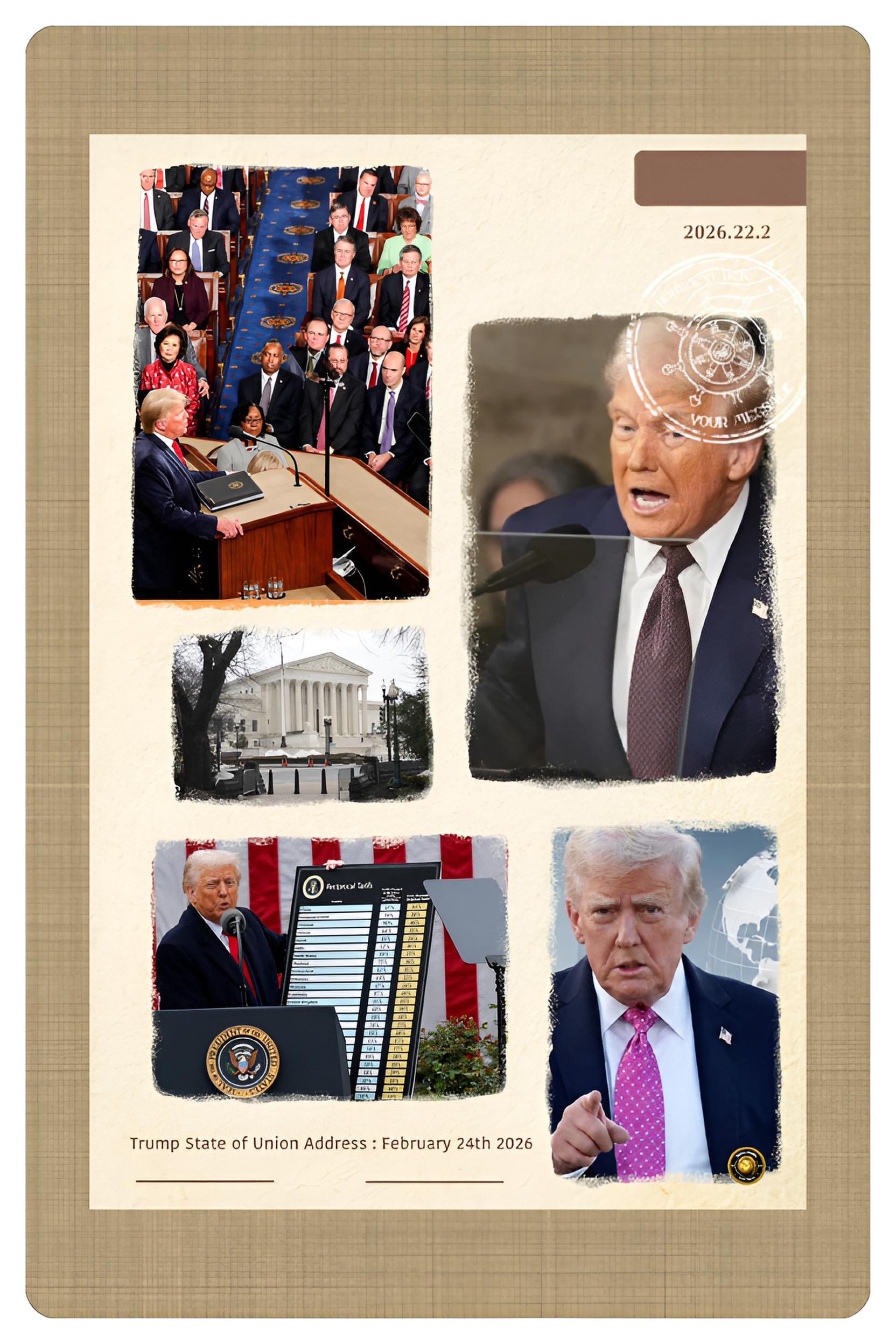
Trump’s Upcoming State of the Union After the Tariff Rebuke: Power, Persuasion, and the New Uncertainty
Executive summary
A joint address that doubles as a referendum on competence, legality, and economic pain
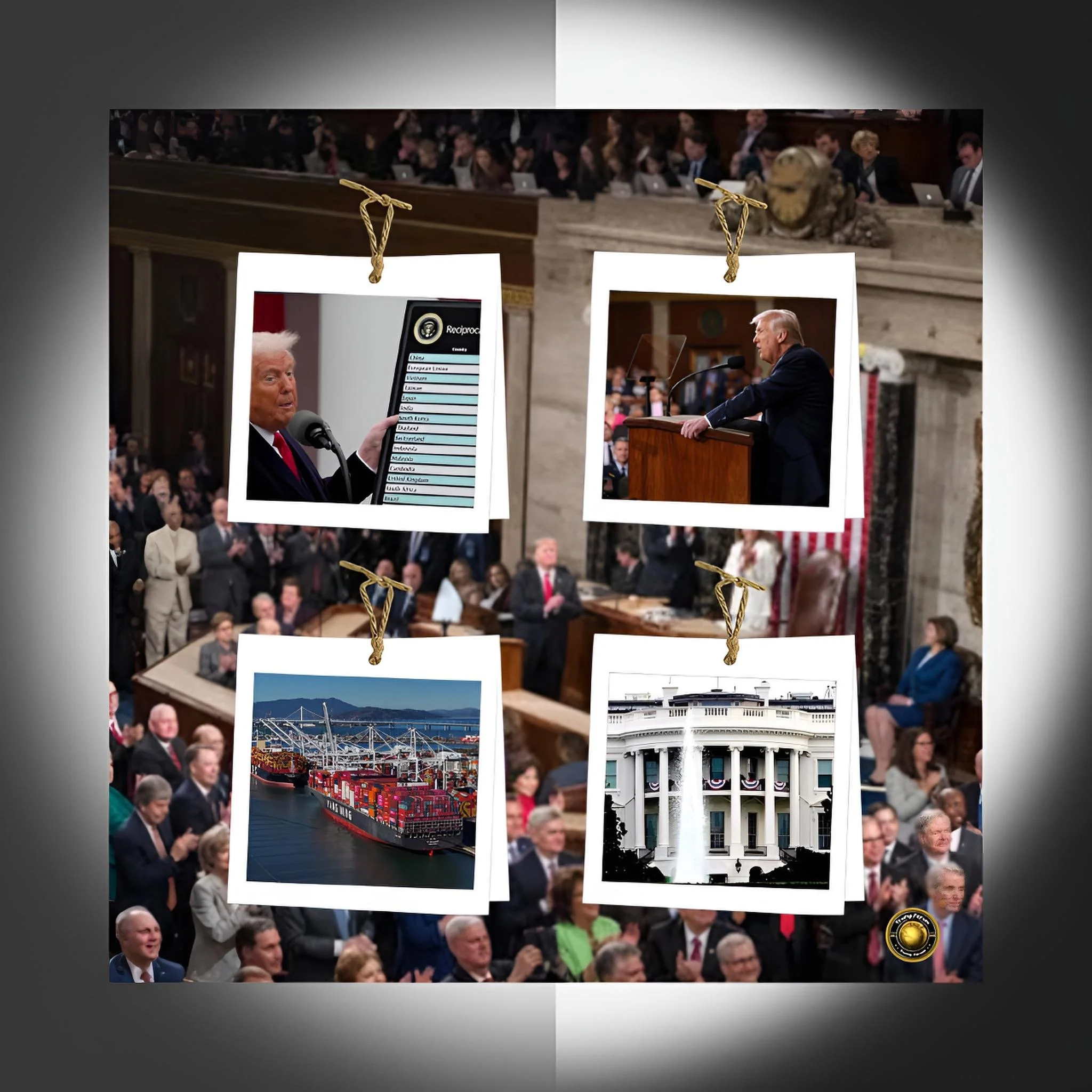
FAF analysis delves deeper into why Tuesday night’s State of the Union is less a ceremonial update than an argument over the architecture of American power.
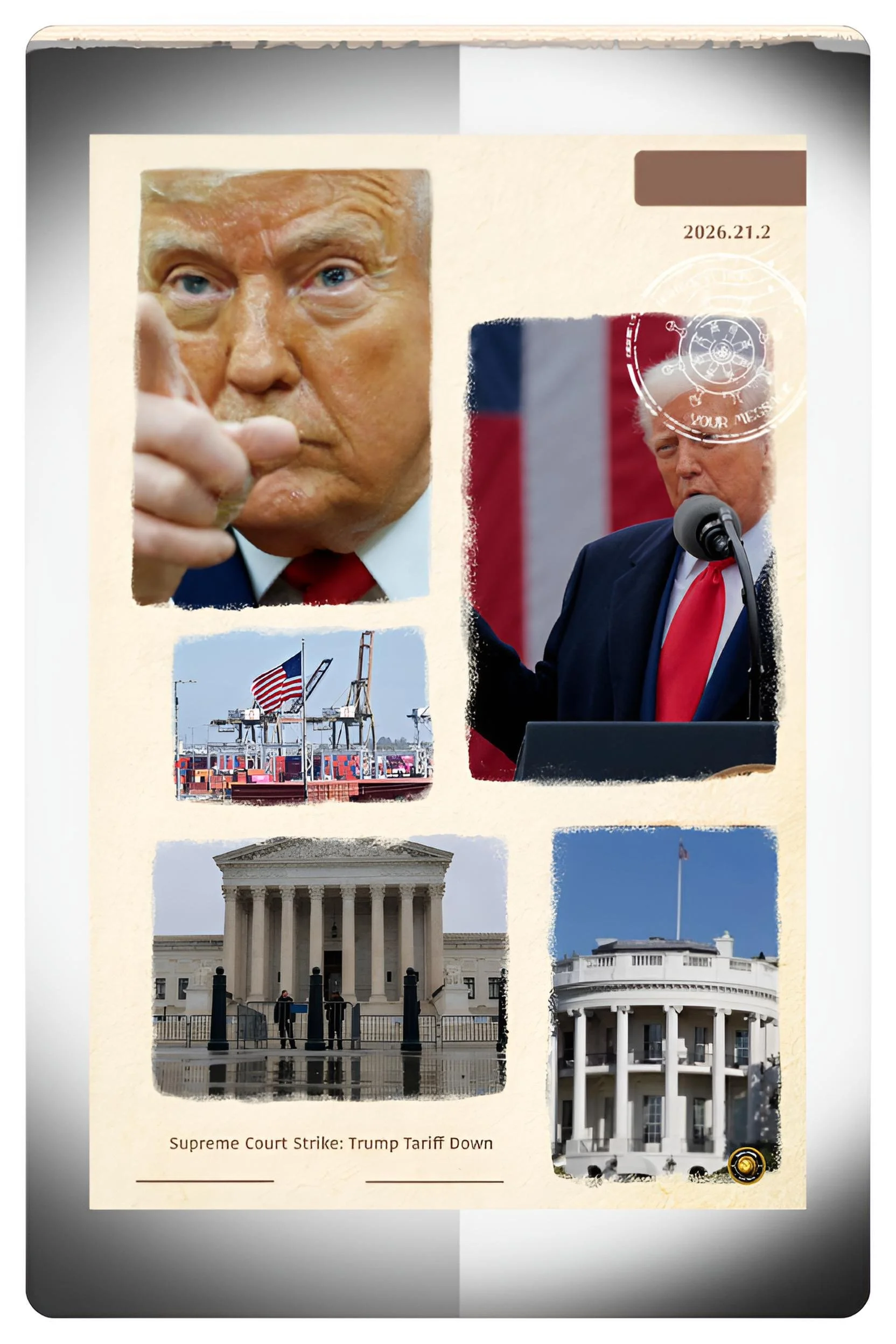
The immediate backdrop is legal: the U.S. Supreme Court’s February 20, 2026 ruling in Learning Resources, Inc. v. Trump rejecting the administration’s broad tariff program under IEEPA, a decision that narrows the presidency’s most improvisational economic weapon while opening a messy corridor of uncertainty around refunds, enforcement, and ongoing deals.
The political backdrop is equally sharp: polling that shows Trump’s standing underwater and a midterm environment that historically punishes the incumbent party, making the address as much about mobilization and narrative as about policy.
The economic backdrop is deteriorating at the margins: U.S. growth slowed sharply in Q4 2025 to 1.4%, with trade and manufacturing signals complicating any claim that tariffs have already produced an industrial renaissance.
The address will therefore operate on 3 levels at once.
First, it will be a legal-theater moment in which Trump must reconcile a rhetoric of decisive action with a court-imposed reminder that statutory limits matter.
Second, it will be a credibility test on affordability and growth, made harder by macro data and by the administration’s tendency to proclaim victory faster than households experience it.
Third, it will be a strategic communication event for allies and adversaries who increasingly read U.S. policy not as a stable line but as a sequence of reversible bursts, especially on trade and the use of force.
In that sense, the most consequential parts of the speech may be what it commits to procedurally—how it will pursue tariffs, how it will seek congressional partnership or bypass it, and what it signals about escalation pathways with Iran—rather than what it promises substantively.
Introduction
Why this State of the Union matters more than the applause lines
Presidential speeches rarely move public opinion for long, but they can reset the terms of elite debate and re-anchor coalitions.
The State of the Union is uniquely suited to that second function because it compels a single, televised storyline that binds Congress, the judiciary, the military, and foreign observers into one frame.
The problem for Trump is that the frame is now crowded with contradictions: a presidency that sells control but governs amid compounding uncertainty; a trade strategy that promises manufacturing revival but meets unfavorable goods-balance and factory-employment trajectories; and a preference for maximal executive latitude that has now been narrowed by a Supreme Court majority that, at least on IEEPA tariffs, refused the White House’s interpretation.
The address is scheduled for Tuesday at 9 p.m. E.S.T., and the White House has offered limited detailed previewing, which is typical but more consequential when markets and allies are trying to infer the next legal pathway for tariffs.
That timing matters because the Court decision is fresh enough to dominate coverage but not settled enough to provide operational clarity.
It is the worst of both worlds: a rebuke that constrains improvisation, combined with a transition period in which new improvisations—Section 122 tariffs, accelerated investigations, sectoral statutes—can proliferate before courts, Congress, or diplomacy re-impose coherence.
History and current status
From “trade war” instrument to constitutional boundary fight
Trump’s modern tariff policy has always carried two logics that are not naturally compatible.
The first is economic nationalism: tariffs as leverage to move supply chains, rebalance goods trade, and force foreign concessions.
The second is political landscape: tariffs as proof of toughness and as a narrative device to allocate blame for price pain and job anxiety.
When a presidency leans on both, it tends to treat process as obstacle and speed as virtue.
IEEPA offered the most tempting route because it promised a “national emergency” rationale with fewer of the procedural throttles embedded in other trade laws.
The Supreme Court’s February 20, 2026 decision rejected that approach for Trump’s sweeping tariff program, reasserting that emergency authorities cannot be stretched into a general tariff legislature by executive fiat.
The practical effect is not “no tariffs,” but “tariffs that now travel through narrower pipes.”
Trump immediately signaled that he would route around the decision, including through Section 122 of the Trade Act of 1974, which allows a temporary global tariff capped at 15% and expiring after 150 days unless Congress extends it.
That cap and clock matter because they change bargaining dynamics: foreign governments can wait out a tariff they expect to lapse, while Congress gains a scheduled veto point.
At the same time, the administration has leaned on other tools, including investigations under Section 301, but those tend to be slower and more contestable, often requiring lengthy fact-finding and inviting targeted retaliation.
This is the strategic situation going into the speech: Trump can still threaten, but his threats are more time-bound, more procedurally encumbered, and more vulnerable to the perception that “policy” is now a legal workaround rather than a stable plan.
Key developments
The week that turned a policy into a courtroom and campaign issue
The Supreme Court ruling is the catalytic development, but it sits atop a wider stack of pressures that give the speech its unusually contested character.
One pressure is macroeconomic messaging. U.S. GDP growth slowed to 1.4% in Q4 2025, a sharp downshift from the prior quarter’s pace and below what many forecasters expected, complicating any triumphant “mission accomplished” narrative on affordability.
Another pressure is the trade account itself. Reuters reported a sharp widening in the goods trade gap in late 2025, while official releases showed the broader deficit remains politically salient even when services surpluses partially offset it.
A third pressure is industrial labor: U.S. factory headcount has been falling despite tariff promises, undercutting the claim that tariffs have already delivered a manufacturing boom.
There is also the institutional choreography. Supreme Court justices typically attend the State of the Union, and the optics can become news if the president attacks the Court directly.
The administration’s rhetoric—denouncing justices after the ruling—raises the likelihood that legal conflict becomes televised conflict, a dynamic that can energize partisans but also deepen swing-voter fatigue with institutional crisis.
Finally, foreign policy overlays trade policy rather than staying neatly separate.
Tariffs are not only about prices; they are now entangled with alliances, with fentanyl diplomacy, with supply-chain security, and with the broader question of whether U.S. commitments can be trusted when domestic legal fights keep rewriting the instruments of statecraft.
Latest facts and concerns
What is true right now, and what remains dangerously unclear
The most important “now” fact is legal: on February 20, 2026, the Supreme Court struck down major elements of Trump’s IEEPA-based global tariff program.
The most important “now” consequence is administrative: Trump pivoted to Section 122 and then raised the announced global tariff rate from 10% to 15%, underscoring that the administration will treat the ruling as a constraint to route around, not a constraint to internalize.
The most important “now” uncertainty is fiscal and procedural: analysts have warned that more than $175 billion in tariff collections could become subject to refund claims, but the pathway, timing, and legal liability remain contested and operationally complex.
The concerns cluster into four categories.
The first is credibility: a White House that claims quick victories on affordability must confront data that indicates slower growth and stubborn cost pressures, inviting a widening gap between narrative and lived experience.
The second is investment: policy volatility, not tariff levels alone, chills capex because firms cannot compute durable payback horizons when rules may change by court order, statute, or executive improvisation within months.
The third is allied alignment: partners may accept temporary deals but hesitate to make politically costly concessions if the legal basis is unstable or subject to reversal.
The fourth is escalation management: when trade tools are used as “economic weapons,” they interact with security dilemmas—especially in regions where the U.S. is simultaneously signaling possible military action.
Real-time comments from six world leaders and senior officials
How capitals are reading Washington’s legal turn in real time
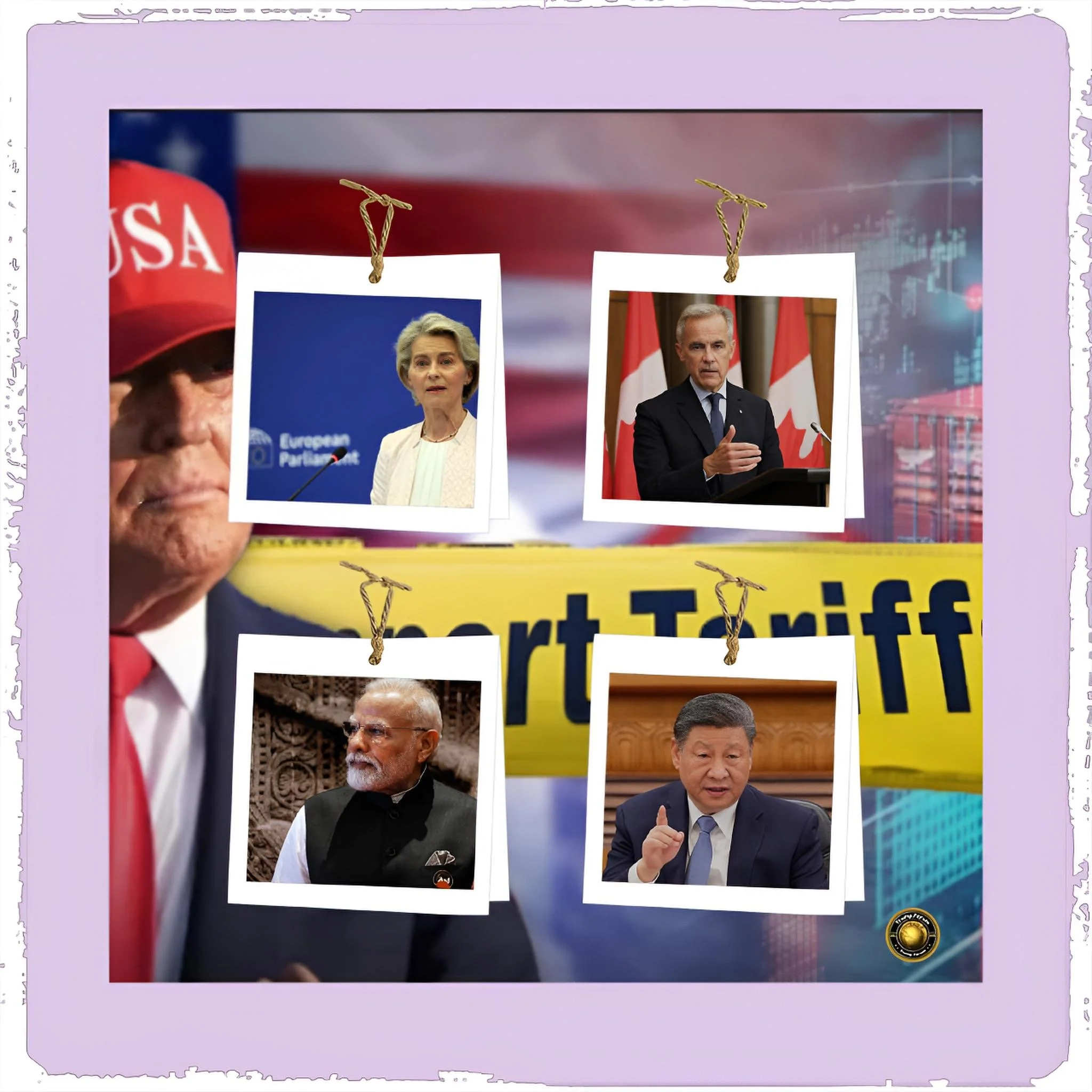
French President Emmanuel Macron framed the ruling as proof that democratic “counterweights” matter, and said France would respond calmly and reciprocally to new U.S. tariff moves.
German Chancellor Friedrich Merz welcomed the prospect of lower tariff pressure but warned that uncertainty is “poison” for economies on both sides of the Atlantic, pressing for a unified EU approach.
Brazil’s Vice President Geraldo Alckmin said the decision restored Brazil’s competitiveness in the U.S. market by removing Brazil-specific levies, while urging caution as the situation evolves.
A Japanese government spokesman said Tokyo would carefully examine the ruling and Washington’s response and “respond appropriately,” signaling watchful pragmatism rather than immediate retaliation.
Hong Kong’s finance secretary Christopher Hui called the U.S. situation a “fiasco” and used it to advertise Hong Kong’s predictability to investors, turning U.S. volatility into a branding contrast.
Taiwan’s cabinet said it was monitoring the situation closely, emphasizing that implementation details remained unclear and that Taipei would maintain close communication with Washington.
Cause-and-effect analysis
Why the tariff rebuke changes the presidency even if tariffs persist
The Court’s decision matters not because it ends tariffs, but because it changes the structure of executive action.
Under an expansive IEEPA reading, tariffs functioned as an immediately deployable instrument: announce, impose, bargain, and adjust, with Congress watching from the sidelines.
Under the post-ruling environment, the president must either use narrower statutes like Section 122 with an explicit cap and expiration, or accept slower pathways such as Section 301 investigations that require documentation, process, and time.
That structural shift triggers five effects.
The first effect is bargaining power dilution. A tariff that expires in 150 days unless Congress extends it is less coercive against large economies with domestic political capacity to absorb short-run pain.
The target can wait, retaliate symbolically, or offer minimal concessions while betting on the clock.
The second effect is legislative re-entry. Even if Congress does not immediately reclaim authority, the statutory architecture now forces a moment when lawmakers must decide whether to renew, revise, or reject.
That re-entry creates lobbying wars inside the U.S. political economy—between protected sectors and tariff-exposed sectors—that complicate the president’s narrative control.
The third effect is market pricing of volatility. Markets can handle bad news; they struggle with rule instability.
When policy becomes a sequence of legal pivots, the “risk premium” attaches not only to imports but to investment planning, inventory strategy, and the credibility of forward guidance.
The refund uncertainty alone can distort corporate accounting and customs strategy, creating a shadow cost beyond the tariff rate itself.
The fourth effect is diplomatic skepticism. Trade partners learn to discount commitments that rest on contested legal foundations.
Deals become provisional. Concessions become reversible. And the incentive grows to diversify away from U.S.-centric exposure, not primarily out of ideology but out of governance risk.
The fifth effect is domestic institutional polarization. When a president publicly attacks the Court after losing a signature policy, the dispute shifts from “what is the best tariff level” to “who governs.”
That may rally a base, but it can also repel voters exhausted by perpetual constitutional drama—especially when households feel that affordability has not improved as promised.
Future steps
What to watch in Tuesday’s speech and the 150-day clock afterward
The most meaningful near-term question is whether Trump uses the speech to outline a procedural plan rather than a rhetorical one.
A procedurally credible plan would clarify which statutory authorities the administration will rely on, how it will sequence investigations, what role it expects Congress to play, and what standards will trigger escalation or de-escalation.
Without that, the speech may entertain but still leave allies, firms, and voters with the same fog.
On trade, watch for three signals.
First, whether Trump treats Section 122 as a bridge to longer-lasting authorities or as a recurring crutch, implying serial “temporary” tariffs that normalize permanent temporariness.
Second, whether he frames the Supreme Court as an obstacle to growth, which would intensify institutional conflict, or as a boundary that he will respect while pursuing alternative lawful routes, which would lower constitutional temperature but may disappoint maximalists.
Third, whether he acknowledges refund uncertainty and proposes an administrative pathway—because unresolved refunds can become a slow-motion credibility crisis with importers and courts.
On the economy, watch whether Trump connects tariffs to a plausible affordability chain. Tariffs can, in theory, support domestic production, but in the short run they often function as a tax on imported inputs and consumer goods.
The political test is whether the White House can argue that the transitional costs are temporary, targeted, and outweighed by wage and capacity gains—an argument made harder by slowing GDP growth and by continued manufacturing headcount pressure.
On foreign policy, watch for the relationship between “economic coercion” and “military coercion.”
When the U.S. speaks loudly about tariffs and simultaneously signals possible strikes, foreign actors can interpret both as a single theory of power. That can deter, but it can also accelerate hedging behavior, encourage counter-coalitions, and narrow diplomatic off-ramps.
Conclusion
The speech is not just a message to voters; it is a message to the system
FAF analysis delves deeper to conclude that Tuesday’s State of the Union is best understood as a test of governance under constraint.
Trump will attempt to project decisive control at a moment when the Supreme Court has reminded the presidency that control must move through law. He will attempt to claim economic victory at a moment when growth has slowed and when trade and manufacturing indicators complicate the promise of a near-term renaissance.
And he will attempt to reassure allies and intimidate rivals at a moment when many foreign governments are publicly emphasizing predictability, reciprocity, and institutional “counterweights”—a diplomatic way of saying that America’s internal arguments now shape everyone else’s risk calculus.
If the speech matters, it will not be because it persuades skeptics in the instant. It will matter if it clarifies the administration’s theory of lawful action: how power will be exercised, bounded, and made credible over time. In the current environment, credibility is policy.