Carl Sagan’s Warning and the Political Crisis of Truth in Modern America
Executive Summary
The Demon-Haunted Republic: Knowledge, Fear, and the Erosion of Reason
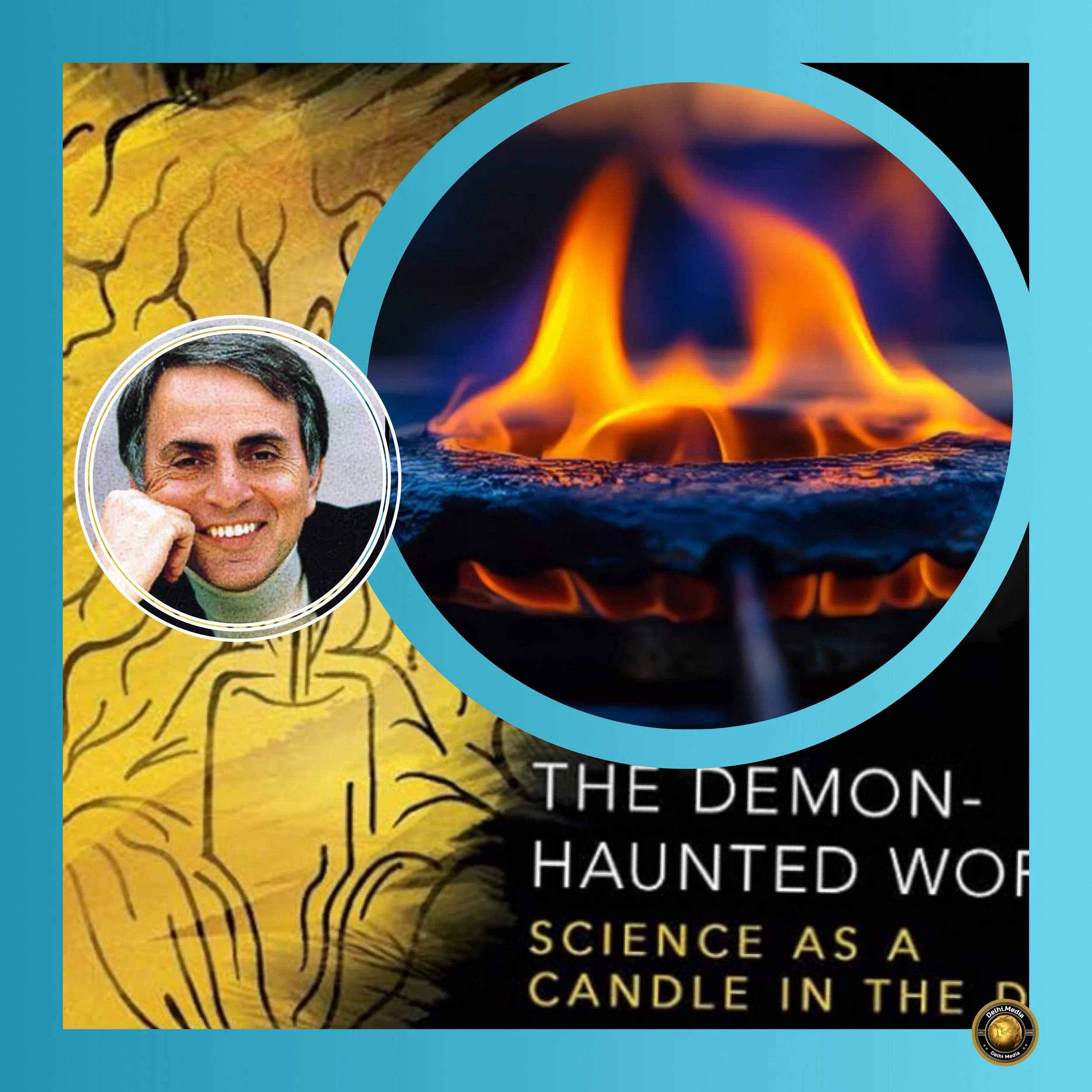
In 1995, astronomer and science communicator Carl Sagan published The Demon-Haunted World: Science as a Candle in the Dark, a work that now reads less as a defense of scientific literacy and more as a prescient warning about democratic decay.
Sagan argued that societies dependent on advanced science and technology yet insufficiently grounded in critical thinking would become vulnerable to superstition, authoritarianism, and manufactured fear.
He described a future in which citizens, unable to distinguish evidence from assertion, would surrender autonomy to charismatic figures and conspiratorial narratives.
Nearly three decades later, the geopolitical landscape appears increasingly aligned with Sagan’s anxieties.
From the politicization of public health to electoral disinformation campaigns, from digital echo chambers to institutional distrust, the erosion of epistemic consensus has become a structural feature of modern politics.
In the United States, where technological supremacy coexists with declining trust in institutions, Sagan’s metaphor of science as a fragile candle flickering against encroaching darkness resonates with particular force.
FAF analysis explores the key arguments of Sagan’s work, situates them within contemporary geopolitical developments, and examines whether current American turbulence constitutes a fulfillment of his forecast.
It contends that Sagan did not predict specific events but diagnosed enduring structural vulnerabilities: the commodification of ignorance, the politicization of uncertainty, and the strategic weaponization of doubt.
These vulnerabilities now shape global power competition, domestic polarization, and democratic resilience.
Introduction
The Fragility of Enlightenment in an Age of Information
When Sagan wrote in the mid-1990s, the Cold War had ended, liberal democracy appeared ascendant, and the internet was emerging as a democratizing force.
The triumphalist atmosphere of the post-Soviet era suggested that reason, markets, and representative governance had prevailed.
Yet Sagan perceived beneath this optimism a paradox: technological sophistication does not guarantee intellectual maturity.
He observed that advanced societies were becoming increasingly dependent on scientific systems they did not understand. Citizens relied on nuclear power, genetic engineering, and global telecommunications yet lacked foundational scientific literacy.
This asymmetry, he argued, would create a dangerous dependency. When complex systems falter or appear threatening, fear fills the explanatory vacuum. Into that vacuum enter demagogues, pseudoscientists, and conspiratorial entrepreneurs.
The central metaphor of the candle in the dark was not sentimental. It was diagnostic.
Enlightenment is neither self-sustaining nor irreversible. It must be cultivated institutionally, culturally, and educationally. Without reinforcement, it decays.
History and Current Status
From Cold War Rationalism to Post-Truth Politics
Sagan’s intellectual formation occurred during the Cold War, when scientific credibility underpinned geopolitical competition.
The space race symbolized rational progress; nuclear deterrence depended on technocratic expertise. Science was not politically neutral, but it was publicly valorized.
The collapse of bipolar rivalry transformed the information environment. With the rise of digital platforms in the early 2000s, epistemic authority fragmented.
The gatekeeping functions of universities, scientific journals, and professional media weakened. The democratization of speech did not automatically produce democratization of knowledge.
By the 2010s, the term “post-truth” entered political vocabulary. Social media accelerated the circulation of unverified claims.
Algorithmic amplification rewarded outrage over nuance. Foreign adversaries exploited these vulnerabilities through coordinated disinformation campaigns.
Electoral interference, conspiracy movements, and online radicalization became routine features of political life.
In the United States, trust in federal institutions declined markedly over three decades.
Surveys indicated persistent erosion in confidence in Congress, media, and even scientific agencies.
Public health crises revealed sharp divides in the acceptance of empirical evidence. Electoral disputes amplified suspicions about democratic procedures themselves.
Internationally, epistemic fragmentation reshaped geopolitics. Authoritarian regimes harnessed digital tools to manage domestic narratives and project influence abroad.
Hybrid warfare increasingly relied not on kinetic force alone but on cognitive disruption. Truth became a contested strategic resource.
Key Developments
The Weaponization of Doubt and Institutional Erosion
Sagan devoted considerable attention to what he termed the “baloney detection kit,” a framework for critical thinking.
He emphasized falsifiability, independent verification, and proportional evidence. These principles are now routinely challenged in public discourse.
One key development has been the professionalization of disinformation.
Political consultants, state actors, and digital mercenaries refine narratives designed to exploit cognitive biases.
Conspiracy theories once confined to margins now reach millions within hours.
Another development involves the politicization of scientific uncertainty.
Science advances through provisional conclusions, yet political actors often portray revision as weakness or deception.
This dynamic was evident in debates over climate science, public health, and technological regulation.
The decline of local journalism has further weakened epistemic infrastructure.
In many regions, local newspapers have collapsed, creating “news deserts” susceptible to rumor and manipulation.
Simultaneously, geopolitical rivalry has intensified.
Strategic competitors recognize that destabilizing public trust in democratic institutions can yield asymmetric advantage.
Information operations blur the boundary between domestic politics and foreign interference.
Latest Facts and Concerns
America’s Institutional Stress Test
Contemporary American politics exhibits several features consistent with Sagan’s warnings.
Polarization has deepened to levels unseen in modern history.
Partisan identity increasingly shapes perceptions of factual reality. Competing media ecosystems reinforce divergent narratives.
Technological concentration has also introduced new dynamics.
A small number of platforms mediate global discourse. Their algorithmic incentives privilege engagement over verification.
Economic inequality compounds epistemic fragmentation.
Communities experiencing industrial decline and social dislocation may become more receptive to narratives attributing hardship to hidden enemies or conspiratorial elites.
Yet countervailing forces exist. Scientific institutions continue to produce world-leading research.
Civil society organizations promote media literacy. Courts and electoral systems, despite strain, have largely maintained procedural continuity.
The central concern is not imminent collapse but cumulative corrosion.
Democratic legitimacy erodes gradually when citizens lose confidence in shared facts.
Cause-and-Effect Analysis
Structural Vulnerability and Political Opportunism
Sagan identified a structural cause: dependence on advanced technology without corresponding scientific literacy.
This gap produces epistemic dependency. When citizens cannot independently evaluate claims, they rely on intermediaries.
If intermediaries are discredited or politicized, the vacuum invites opportunism. Political actors can exploit uncertainty to mobilize support.
Repetition of falsehoods creates familiarity, which can substitute for evidence in perception.
Internationally, adversaries can amplify internal divisions at relatively low cost. The effect is not necessarily persuasion but confusion. Strategic ambiguity weakens coherent policymaking.
Thus, the causal chain runs from educational deficits to institutional distrust, from distrust to susceptibility, and from susceptibility to democratic fragility.
Future Steps
Rebuilding Epistemic Infrastructure
Addressing these vulnerabilities requires long-term investment in scientific education and media literacy.
Educational reform must prioritize critical reasoning over rote memorization.
Institutional transparency is equally crucial. Scientific agencies and regulatory bodies must communicate uncertainty honestly while resisting politicization.
Digital governance frameworks must balance free expression with accountability for coordinated manipulation. This challenge is complex but unavoidable.
Internationally, democratic states may need cooperative norms against information warfare, akin to arms control in earlier eras.
Conclusion
The Candle and the Republic
Sagan did not predict specific electoral outcomes or partisan configurations.
He diagnosed a recurring human tendency: the allure of simple explanations in complex worlds. What is unfolding in America today does not represent deterministic fulfillment of prophecy but manifestation of structural risks he described.
The durability of democracy depends not merely on constitutional design but on epistemic culture.
Science as a candle in the dark remains a metaphor for disciplined inquiry, humility before evidence, and resistance to intellectual complacency.
Whether the candle flickers or strengthens will shape not only American stability but the geopolitical order that depends upon it.