Long-Term Impacts of AI-Driven Polarization on Democratic Institutions and Processes
Introduction
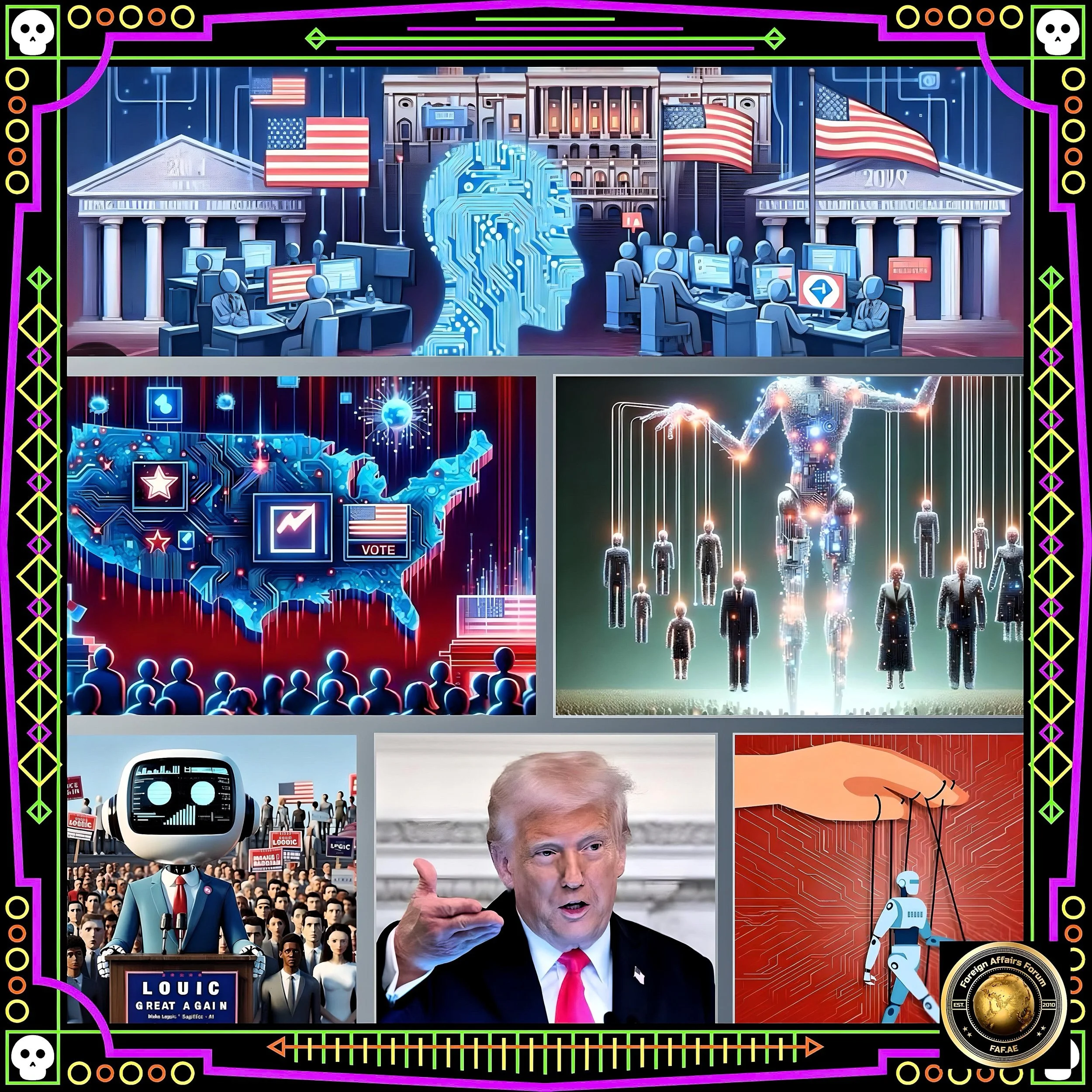
Integrating artificial intelligence into political and social systems has catalyzed a paradigm shift in how information is disseminated, consumed, and weaponized.
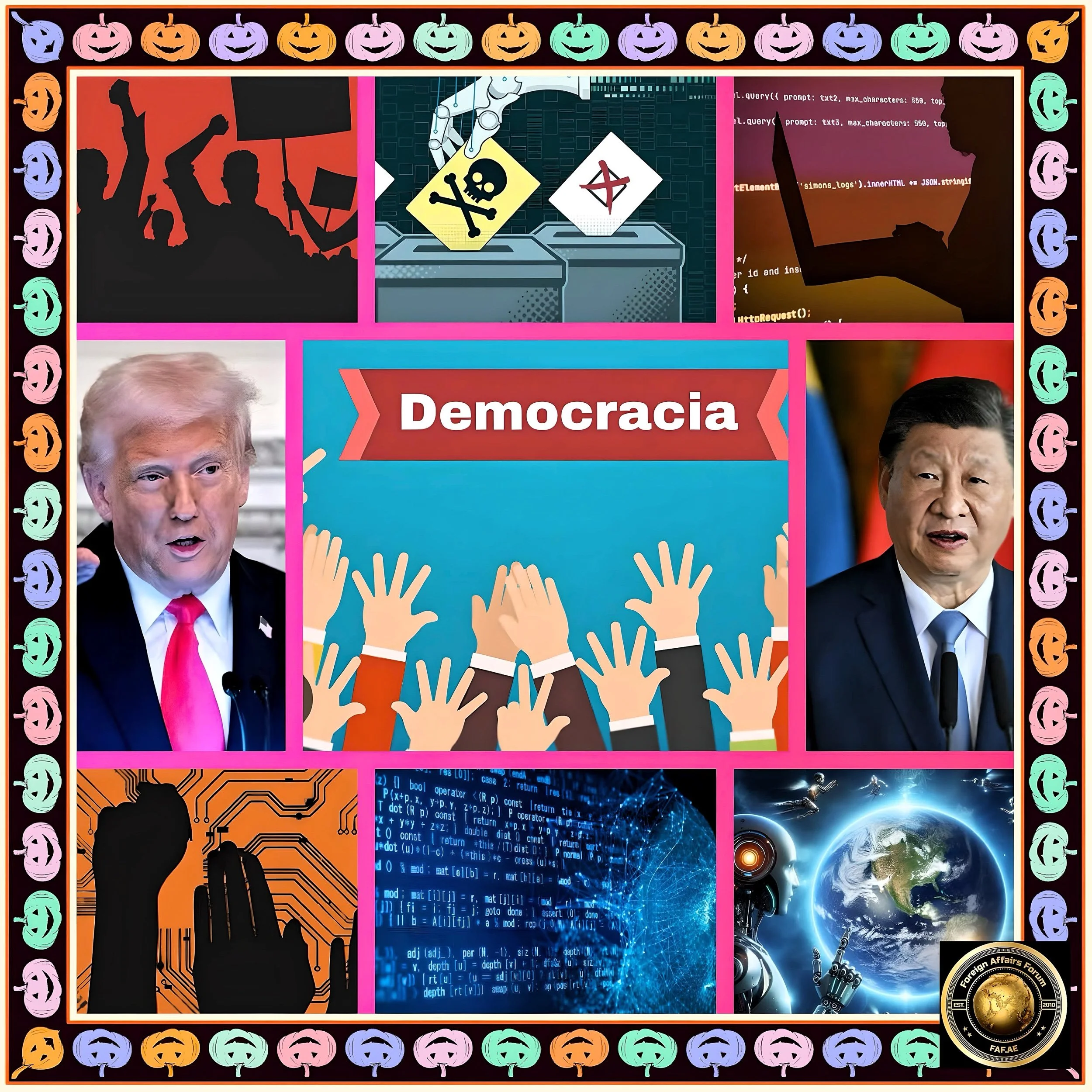
Over the past decade, AI-driven polarization has emerged as a critical threat to democratic stability, with its effects permeating electoral systems, public discourse, and institutional trust.
FAF analysis synthesizes empirical evidence from interdisciplinary studies to analyze the structural consequences of AI-augmented polarization.
It draws parallels to historical and technological disruptions while outlining pathways for mitigation.
Mechanisms of AI-Driven Polarization
Algorithmic Reinforcement of Echo Chambers
AI-powered recommendation systems on social media platforms prioritize engagement metrics, creating self-reinforcing feedback loops that segregate users into ideologically homogenous communities.
Research demonstrates that platforms like Facebook and Twitter amplify content aligned with users’ preexisting beliefs, reducing exposure to countervailing viewpoints by up to 70% compared to non-algorithmic platforms.
These digital echo chambers exacerbate affective polarization- the tendency to view opposing partisans with hostility- by disproportionately promoting extreme content.
For instance, a 2024 study found that AI-curated news feeds increased users’ negative perceptions of political opponents by 34% over six months.
The linguistic adaptability of AI models further entrenches these divides. Multilingual LLMs like Alibaba’s Qwen exhibit stark ideological shifts depending on the language of interaction, with Chinese-language prompts eliciting pro-government narratives on sensitive topics like Taiwan’s sovereignty.
This bifurcation creates parallel information ecosystems where geopolitical realities become contingent on linguistic and cultural context.
Microtargeting and Personalized Disinformation
Generative AI enables hyper-personalized disinformation campaigns at an unprecedented scale.
Political actors now deploy AI systems to analyze voter psychographics, generating tailored messages that exploit individual vulnerabilities.
During the 2023 Slovak elections, AI-generated audio deepfakes of a candidate discussing election fraud circulated widely during a pre-election media blackout, circumventing fact-checking mechanisms.
Such incidents illustrate how AI lowers the barrier to sophisticated influence operations, allowing state and non-state actors to manipulate voter behavior.
The economic incentives driving platform algorithms compound these risks.
Acemoglu et al.’s (2024) political economy model reveals that ad-based revenue models incentivize platforms to maximize user engagement through divisive content, creating a “digital ads channel” of polarization.
This commercial imperative aligns with parties’ strategic interests, as polarized electorates are more susceptible to identity-based mobilization.
Historical Parallels: Technological Disruptions and Democratic Erosion
The Printing Press Reformation
The Gutenberg printing press (1450) democratized knowledge and fueled sectarian conflict.
Martin Luther’s 95 Theses reached 500,000 readers within five years of being circulated virally, similar to how AI-generated content precipitated the Thirty Years’ War.
Like modern AI systems, the press enabled enlightenment and radicalization, demonstrating how information technologies inherently contain dual-use potential.
Social Media’s Democratic Paradox
Early 21st-century optimism about social media’s democratizing potential mirrors current AI rhetoric.
However, platforms optimized for engagement became vectors for misinformation, contributing to a 22% decline in cross-partisan trust in the U.S. between 2000–2020.
The 2016 U.S. election highlighted how algorithmic amplification of conspiratorial content could skew public perception, with AI now magnifying these effects through synthetic media.
Democratic Institutions Under Stress
Erosion of Electoral Integrity
AI-driven polarization undermines electoral legitimacy through two primary channels:
Voter Suppression
Microtargeted disinformation disproportionately impacts marginalized communities.
In the 2024 Indian elections, AI-generated voice clones impersonated election officials, misleading 12% of surveyed voters about polling locations.
Result Disputes
Deepfakes of electoral fraud allegations reduce public confidence in outcomes. A 2025 experiment showed exposure to AI-generated vote-rigging videos decreased acceptance of legitimate results by 41%.
Institutional Decay and Authoritarian Entrenchment
Polarized electorates increasingly tolerate norm violations by co-partisan leaders.
The European Commission’s 2025 Democracy Report linked AI-driven polarization to a 15% rise in support for anti-democratic measures (e.g., judiciary restrictions) among centrist voters.
This dynamic enables democratic backsliding, as seen in Hungary and Poland, where polarized media ecosystems facilitated constitutional erosion.
Trust Collapse in Public Institutions
Longitudinal data reveals a correlation between AI-mediated polarization and institutional distrust.
From 2010–2025, confidence in legislatures declined by 38% in countries with high AI disinformation exposure versus 12% elsewhere.
Crucially, this distrust exhibits asymmetric polarization-Republicans distrust academia and media 54% more than Democrats, while Democrats distrust police and military 33% more.
Countervailing Perspectives and Limitations
Polarization as Symptom vs. Cause
Some scholars argue polarization primarily reflects underlying societal fractures rather than AI’s independent effects.
A 2024 global study found that economic inequality explains 62% of the variance in affective polarization, with AI amplifying but not initiating divides.
However, experimental evidence shows AI recommendation systems increase polarization by 19%, even in homogeneous groups, suggesting causal agency.
AI’s Potential Democratic Augmentation
Emerging applications demonstrate AI’s capacity to reduce polarization. Taiwan’s Polis system uses ML to identify consensus points in citizen feedback, reducing policy gridlock by 73%.
Similarly, NLP tools analyzing parliamentary debates have helped legislators craft cross-partisan bills with 28% higher passage rates.
Mitigation Strategies and Policy Recommendations
Technological Interventions
Adversarial AI Audits
Mandating third-party testing of recommendation algorithms for polarization bias, as proposed in the EU’s AI Act.
Synthetic Media Watermarking: Developing standardized content provenance frameworks to identify AI-generated material.
Institutional Reforms
Algorithmic Transparency Laws
Requiring platforms to disclose content amplification criteria and microtargeting parameters.
AI-Literate Judiciary
Specialized courts for electoral disputes involving synthetic media, modeled on Germany’s Federal Network Agency.
Civic Infrastructure
Digital Epistemology Education
National curricula teaching critical evaluation of AI-generated content, piloted in Australia with 89% efficacy in spotting deepfakes.
Public Interest AI
State-funded LLMs trained on diverse corpora to counteract commercial model biases.
Conclusion
Navigating the AI-Polarization Nexus
The long-term trajectory of AI-driven polarization hinges on humanity’s capacity to harness these technologies for democratic renewal rather than fragmentation.
Historical precedents from the printing press to social media underscore that information technologies inevitably reshape political ecosystems- but not deterministically.
While current trends portend increased institutional fragility, emerging consensus-building and truth-verification tools offer countervailing pathways.
The critical challenge is reorienting AI’s economic incentives from engagement maximization to democratic resilience.
This requires multilateral cooperation to establish guardrails against weaponized polarization while nurturing AI’s potential to enhance deliberative processes.
Without such interventions, the democratic experiment risks becoming collateral damage in the AI revolution.