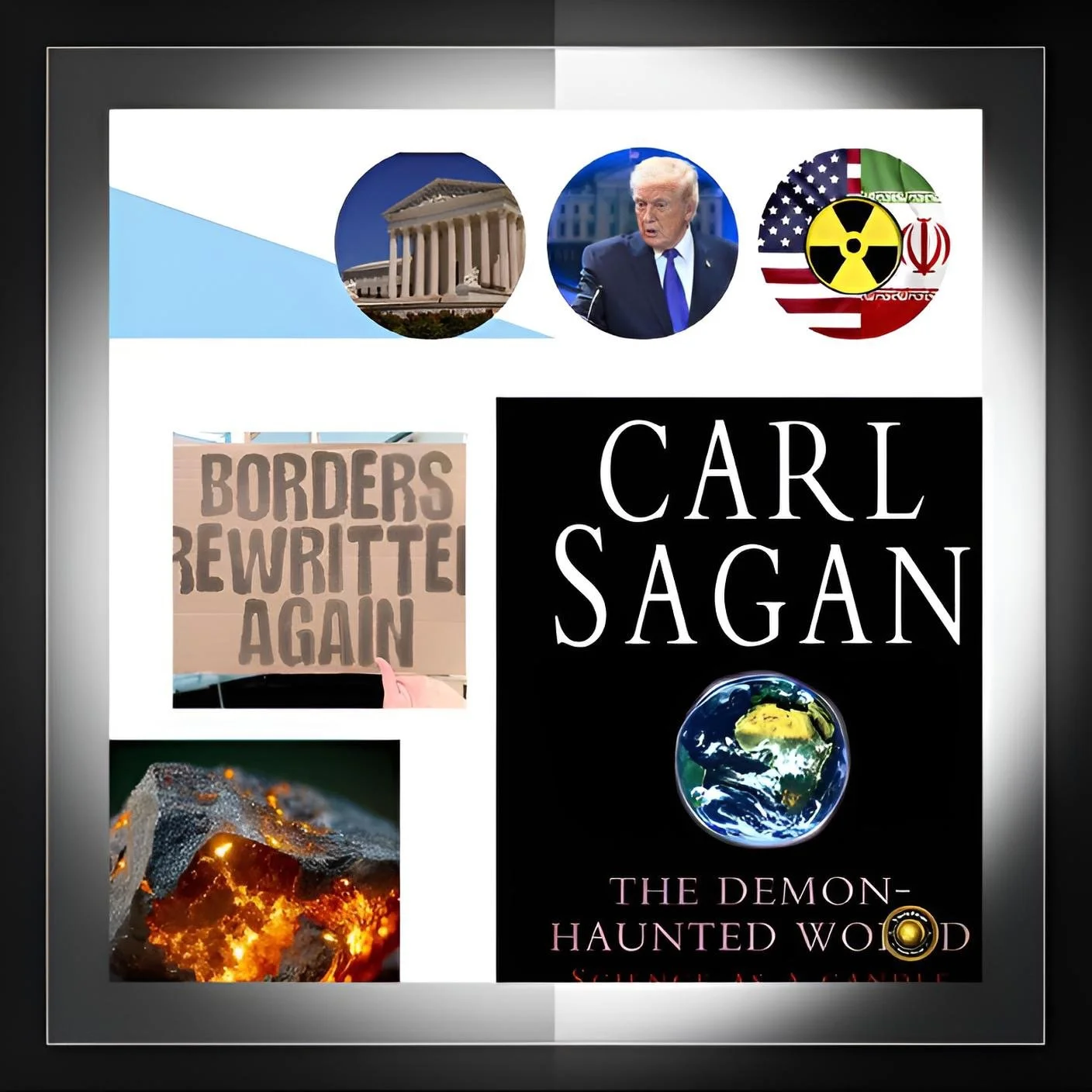
The Demon-Haunted World and What It Means Today: 101 Beginners Guide to Carl Sagan’s Prediction on Today’s Geopolitics
Executive Summary
In 1995, Carl Sagan wrote The Demon-Haunted World.
He warned that modern societies depend on science but do not always understand it.
When people lose trust in evidence and institutions, they can believe false stories, conspiracy theories, and strong leaders who promise simple answers.
Today, many events in America and around the world show that his warning was serious.
Introduction
Why the Book Still Matters
Sagan believed that science is not just about laboratories and space.
It is a way of thinking. It teaches people to ask for proof, check facts, and change opinions when new evidence appears.
He feared that if citizens stop thinking critically, democracy becomes weak.
History and Current Situation
From Cold War Science to Social Media
During the Cold War, science was respected.
The space race showed national strength. Universities were trusted.
Today, social media spreads information very fast. But it also spreads false information very fast.
Many people get news from online platforms instead of newspapers.
For example, during public health crises, different groups believed very different “facts.” Some trusted scientists.
Others trusted influencers online.
Key Developments
Conspiracy Theories and Political Division
Conspiracy theories are now common in politics.
Some people believe elections are fake without strong evidence.
Others believe climate change is a hoax despite scientific agreement.
When leaders repeat false claims, supporters may accept them as truth.
Over time, society splits into groups that do not share the same basic facts.
Latest Concerns
Trust Is Falling
Surveys show that trust in government and media has declined.
When trust falls, people look for alternative explanations.
Sometimes those explanations are not based on evidence.
For example, if a factory closes, people may blame secret plots instead of economic change.
This makes anger stronger.
Cause and Effect
Why This Happens
If education does not teach critical thinking, people struggle to judge information.
If media companies focus on clicks and profit, extreme stories spread more quickly.
The result is confusion.
Confusion weakens democracy.
When citizens cannot agree on facts, they cannot solve problems together.
Future Steps
How to Protect Democracy
Schools can teach students how to check sources.
Governments can be more transparent.
Technology companies can reduce fake accounts and organized manipulation.
Citizens also have responsibility.
Each person can ask simple questions: Who is the source? What is the evidence? Is there independent proof?
Conclusion
Was Sagan Right?
Sagan did not predict exact events.
But he warned that advanced technology without understanding would create danger.
In many ways, what is happening in America today reflects his concern.
The lesson is clear. Science is not only about discoveries.
It is about habits of mind.
If societies protect those habits, democracy remains strong.
If they do not, the darkness grows.