The Post-Ukraine Order and Europe’s Dangerous Strategic Vacuum
Executive Summary
After Ukraine: How Europe Could Slide Into NATO–Russia War
The war in Ukraine has reshaped European security more profoundly than any crisis since the height of the Cold War.
Although policymakers in Washington, Berlin, Paris, Warsaw, and other European capitals remain focused on ending active hostilities between Russia and Ukraine, the cessation of large-scale combat will not restore continental stability.
Instead, the structural forces unleashed by the invasion—military rearmament, hardened threat perceptions, economic decoupling, institutional erosion, and ideological confrontation—have already set the stage for a more volatile and less predictable European order.
A cease-fire may freeze the front lines, but it will not dissolve the antagonism between Moscow and the North Atlantic Treaty Organization.
Russia is likely to rebuild its forces, intensify hybrid operations, and probe alliance cohesion. NATO, having abandoned decades of strategic ambiguity toward Russia, is entrenching forward deployments, expanding membership, and accelerating defense industrial mobilization.
The United States, regardless of political leadership, remains deeply embedded in European security structures, even as domestic pressures encourage strategic retrenchment.
The resulting environment—characterized by prolonged distrust, military buildup, limited communication channels, and a degraded arms-control architecture—creates numerous pathways to escalation.
Miscalculation in the Baltic region, maritime confrontation in the Black Sea, cyber disruption of critical infrastructure, or accidents involving air and naval patrols could trigger rapid crisis spirals.
The risk increases if transatlantic cohesion weakens or if domestic political shifts alter alliance credibility.
Preventing a direct NATO–Russia war will require deliberate institutional innovation, sustained deterrence coupled with structured dialogue, and a reimagined security framework suited to a fragmented multipolar era.
Without such efforts, Europe could drift into a prolonged era of militarized confrontation in which even minor incidents carry the seeds of catastrophic escalation.
Introduction
Rearmament, Mistrust, and the Fragile Peace Between NATO and Moscow
The European security order that emerged after 1991 was built on a series of optimistic assumptions: that Russia would gradually integrate into the Western economic system, that NATO expansion would stabilize rather than provoke, and that interdependence would soften geopolitical rivalry.
These premises have collapsed. The invasion of Ukraine marked not simply a territorial assault but a systemic rupture.
Today, Europe faces a paradox. Even if the fighting in Ukraine subsides, the continent may enter a more dangerous phase.
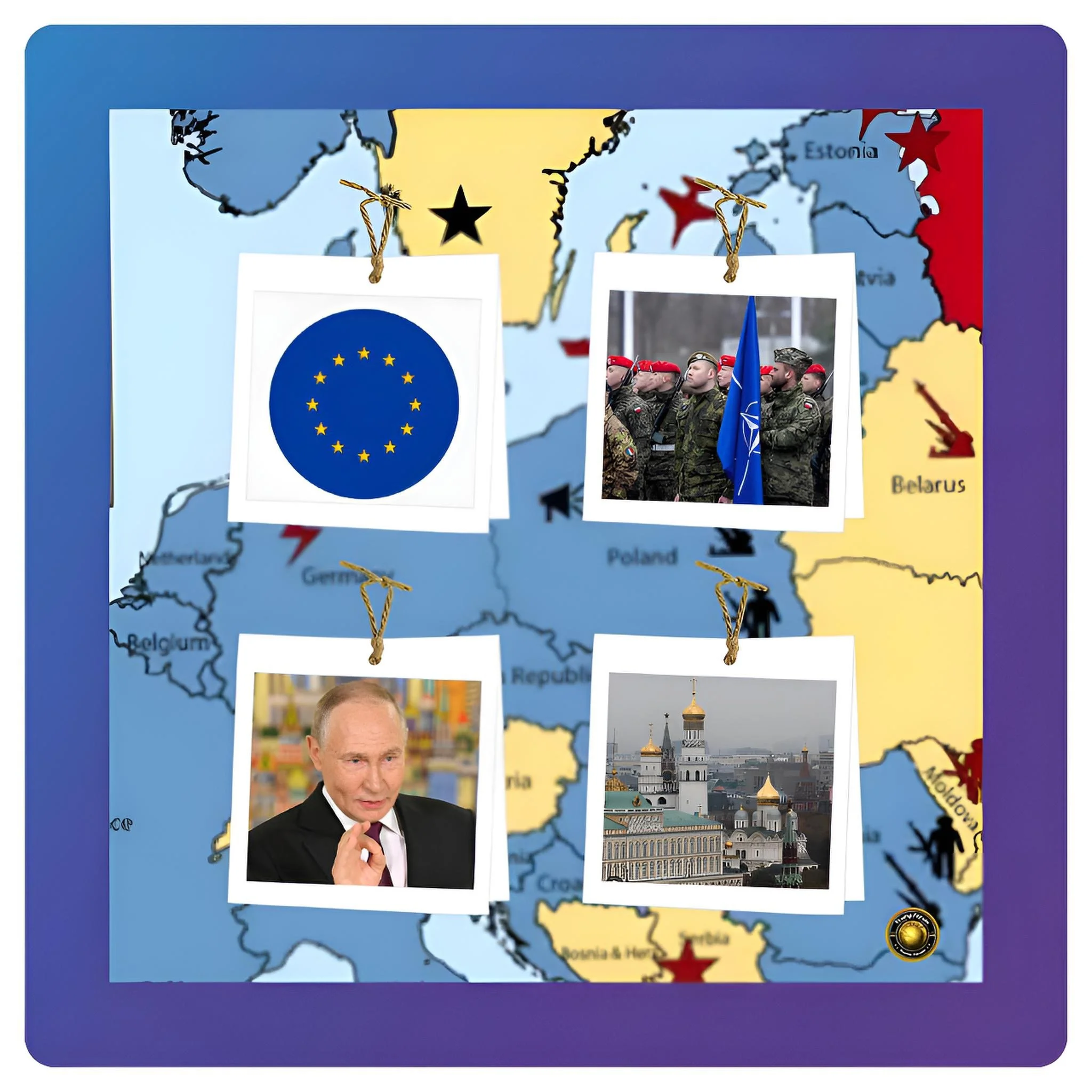
During active war, lines are clear, diplomatic energy is concentrated, and escalation management is a priority. In the aftermath of a cease-fire, ambiguity returns. Russia and NATO will confront one another along an extended frontier stretching from the Arctic to the Black Sea.
Military assets will be positioned closer than at any time since the Cold War.
Yet the institutional guardrails that once managed superpower rivalry—arms control treaties, regular military-to-military contacts, crisis hotlines, and confidence-building measures—have largely eroded.
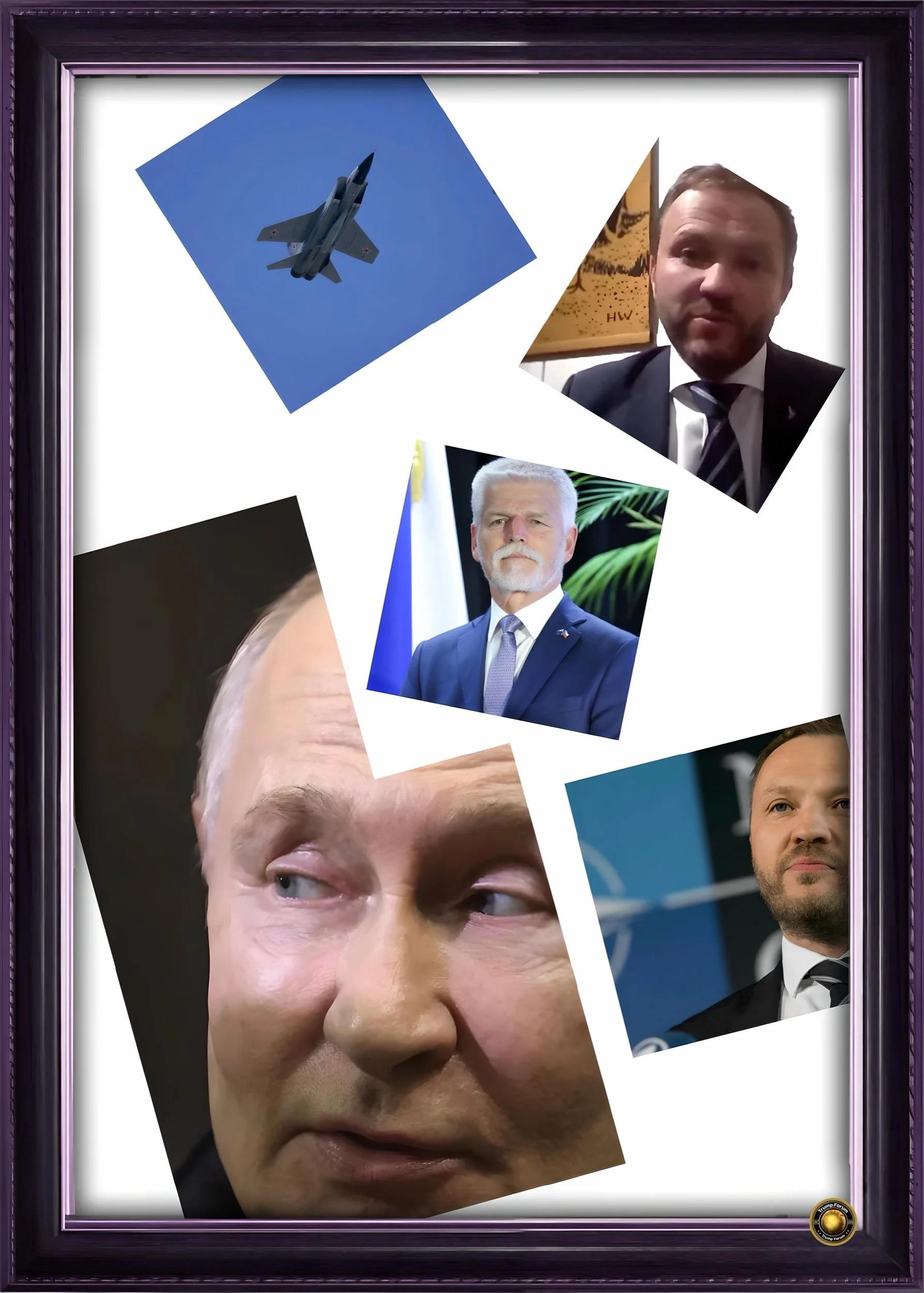
Statements by six major world leaders underscore this emerging tension. United States President Donald Trump has publicly insisted that NATO members must shoulder greater defense burdens, warning that American commitment depends on allied seriousness.
Ex-German Chancellor Olaf Scholz has described the period as a Zeitenwende, acknowledging that Europe must assume strategic responsibility.
French President Emmanuel Macron has repeatedly argued that Europe must prepare for a “long war” and strengthen autonomous defense capabilities.
Polish Prime Minister Donald Tusk has emphasized that Eastern Europe lives under immediate threat and cannot afford complacency. British Prime Minister Keir Starmer has framed the conflict as a test of democratic resilience.
Russian President Vladimir Putin, meanwhile, has portrayed NATO enlargement as existential encirclement, asserting that Moscow will respond proportionately to any perceived threat.
These remarks reveal a shared recognition: the war in Ukraine is not an endpoint but a pivot.
History and Current Status
The NATO–Russia relationship has undergone three distinct phases since the Cold War ended. The first phase, spanning the nineteen nineties, was marked by cautious optimism.
The creation of the NATO–Russia Founding Act and the NATO–Russia Council symbolized aspirations for partnership. Economic integration deepened, and European energy dependence on Russian gas expanded significantly.
The second phase, beginning in the early two thousands, introduced friction. NATO’s enlargement to include Baltic states, combined with Western interventions in Kosovo, Iraq, and Libya, reinforced Russian suspicions. Moscow’s military modernization and assertiveness increased. The brief war in Georgia signaled willingness to use force in the near abroad.
The third phase commenced with the annexation of Crimea and accelerated dramatically with the full-scale invasion of Ukraine. NATO shifted from reassurance to deterrence.
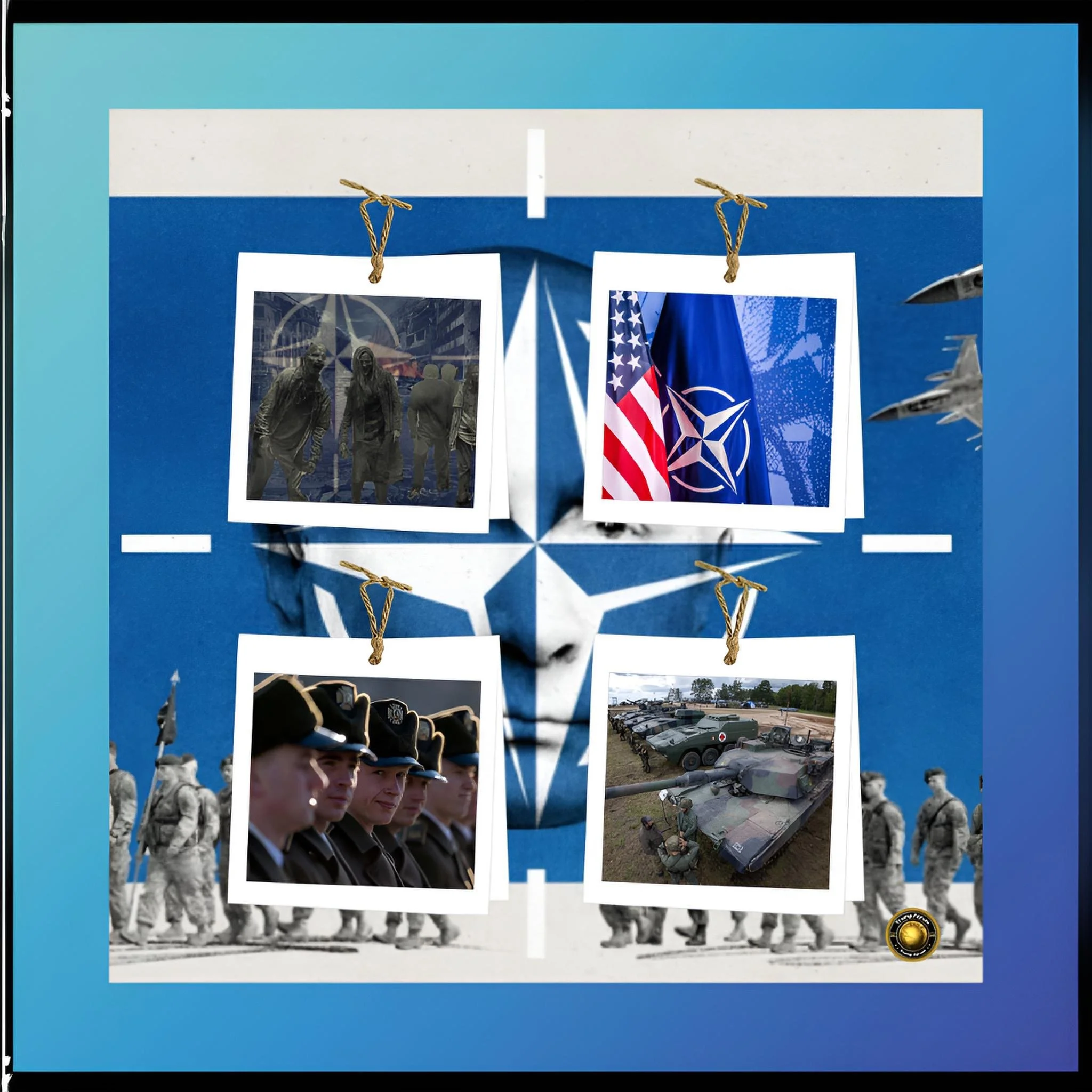
Forward deployments multiplied across Poland and the Baltic states. Finland and Sweden abandoned long-standing neutrality and sought alliance membership, transforming the Baltic Sea into a predominantly NATO maritime space.
Defense budgets across Europe surged. Germany committed € one hundred billion to military modernization. Poland announced defense spending exceeding four % of gross domestic product.
At the same time, the traditional arms-control architecture collapsed. The Intermediate-Range Nuclear Forces Treaty ended. The Conventional Armed Forces in Europe framework became effectively obsolete. Mutual accusations of treaty violations eroded trust. Strategic stability talks stalled.
Today, NATO fields multinational battlegroups along its eastern flank. Russia maintains substantial forces near the alliance’s borders and continues military exercises simulating high-intensity conflict.
Hybrid tactics—cyber intrusions, disinformation campaigns, energy coercion—persist. The geopolitical center of gravity in Europe has shifted eastward, while Western European states confront the challenge of scaling industrial production for sustained deterrence.
Key Developments
Several developments have intensified the structural risk of confrontation. First, NATO enlargement has altered the strategic geography of Europe. Finland’s accession extends the alliance’s direct border with Russia by over one thousand kilometers.
The Baltic Sea, once a contested zone, increasingly resembles a NATO-dominated environment. From Moscow’s perspective, this transformation narrows strategic depth.
Second, European rearmament is accelerating. Defense procurement cycles, once measured in decades, are being compressed. Ammunition production lines are expanding. Air-defense systems are proliferating.
Joint procurement initiatives aim to reduce fragmentation. While these efforts strengthen deterrence, they also reinforce mutual suspicion.
Third, economic decoupling is deepening. Energy interdependence has declined sharply. Sanctions regimes remain extensive. Financial, technological, and trade restrictions are likely to persist even after active hostilities cease. This separation reduces leverage for cooperative engagement and entrenches bloc-based economics.
Fourth, domestic politics across the Atlantic introduce volatility. Populist movements question alliance commitments. Budgetary pressures strain defense spending promises. Electoral cycles inject uncertainty into long-term strategy. Russia may interpret such fluctuations as opportunities to test resolve.
Latest Facts and Concerns
Military analysts warn that the density of forces in the Baltic region creates acute escalation risks. Air patrols operate in close proximity. Naval vessels shadow one another in confined waters. Accidental collisions or misinterpreted maneuvers could escalate rapidly.
Cybersecurity experts report persistent targeting of European infrastructure, including telecommunications, transportation networks, and energy grids. While attribution remains complex, many governments attribute disruptive activities to Russian-linked actors.
Intelligence assessments suggest that Russia is reconstituting key military capabilities despite battlefield losses. Defense production has shifted to a wartime footing. Western officials express concern that Moscow may adopt a long-war strategy designed to exhaust alliance unity.
Simultaneously, public opinion within NATO states reveals fatigue. Inflationary pressures and competing domestic priorities challenge sustained military aid. If unity fractures, deterrence credibility may weaken, raising miscalculation risks.
Cause-and-Effect Analysis
The risk of NATO–Russia war emerges from interconnected causal mechanisms rather than a single trigger.
First, sustained militarization increases interaction density. When forces operate in proximity, opportunities for misperception multiply.
A reconnaissance flight interpreted as preparation for strike, a radar lock perceived as hostile intent, or a cyber intrusion misattributed to state command could initiate escalation.
Second, the erosion of arms-control frameworks removes stabilizing constraints. Without transparency mechanisms, worst-case assumptions dominate planning. Each side prepares for high-end scenarios, reinforcing security dilemmas.
Third, economic decoupling reduces the cost of confrontation. During periods of deep interdependence, escalation threatened shared prosperity.
As trade links diminish, mutual vulnerability declines, potentially lowering perceived barriers to coercive action.
Fourth, domestic political fragmentation within NATO states may embolden risk-taking. If Moscow doubts alliance solidarity, it may test boundaries through limited provocations.
Conversely, if NATO leaders fear appearing weak, they may respond forcefully to ambiguous incidents.
Fifth, the absence of sustained dialogue increases misinterpretation. Crisis management requires communication channels capable of clarifying intent. Their absence magnifies uncertainty.
Future Steps
Preventing a continental conflagration demands a dual-track strategy combining deterrence and diplomatic innovation. NATO must maintain credible forward defenses while avoiding unnecessary provocation. Clear signaling of defensive intent is essential.
Revitalizing structured dialogue with Moscow, even amid hostility, remains crucial. Military-to-military deconfliction channels should be restored. Confidence-building measures tailored to contemporary realities—such as transparency in large-scale exercises and notification of troop movements—could reduce miscalculation.
European states must strengthen defense industrial capacity sustainably rather than episodically. Long-term procurement commitments can prevent boom-and-bust cycles that undermine readiness.
Transatlantic cohesion requires political investment. Leaders must articulate to domestic audiences why European stability remains central to American and European prosperity. Without public support, deterrence lacks durability.
Finally, a broader European security conversation—one acknowledging that the pre-two thousand twenty-two order cannot be restored—should explore new institutional frameworks capable of managing rivalry without normalizing aggression.
Conclusion
Ceasefire Illusions and the Gathering Storm Across Europe’s Eastern Frontier
Europe stands at a strategic inflection point. The end of large-scale fighting in Ukraine, should it occur, will not restore the optimism of the post–Cold War era.
Instead, it will inaugurate a prolonged confrontation defined by rearmament, ideological divergence, and strategic suspicion.
The probability of direct NATO–Russia war remains uncertain, yet the structural conditions for escalation are intensifying.
Military proximity, weakened communication channels, economic decoupling, and political volatility create an environment in which minor incidents could carry disproportionate consequences.
Avoiding catastrophe will require disciplined statecraft. Deterrence must remain firm yet measured. Dialogue must persist even when trust is absent. Alliance cohesion must be cultivated rather than assumed.
The next European war is not inevitable. But without sustained effort to manage rivalry responsibly, the continent could once again become the epicenter of global conflict.