Europe Confronts Strategic Vacuum Amid American Retrenchment Fears
Executive Summary
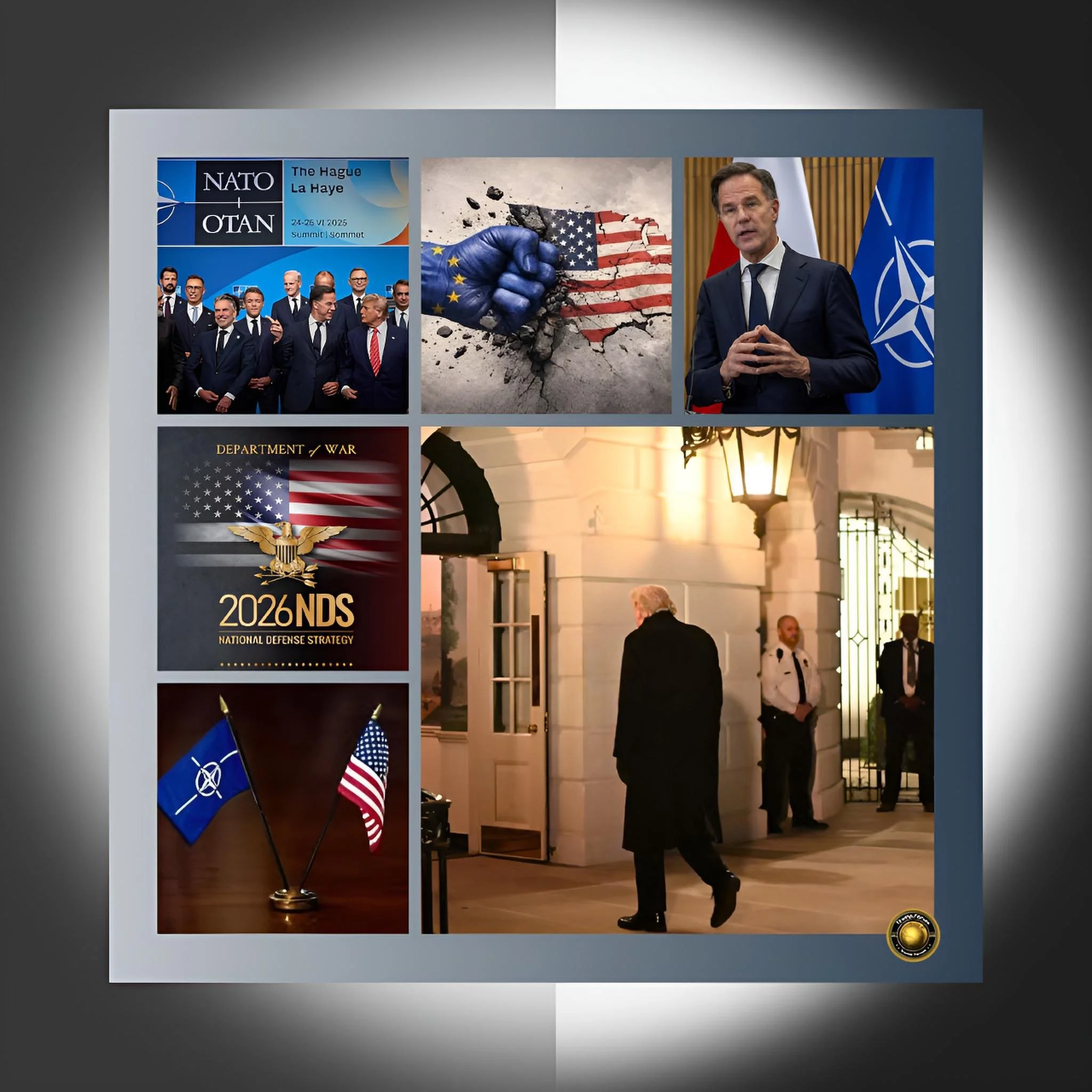
NATO at the Brink as Transatlantic Trust Unravels
The North Atlantic Treaty Organization stands at a moment of acute strategic uncertainty.
Formally, its structures endure: Article 5 remains intact, integrated military commands operate efficiently, and substantial American forces remain stationed across Europe.
Yet beneath this institutional continuity lies a more troubling reality. Political cohesion has eroded, strategic clarity has diminished, and confidence in the permanence of American commitment has weakened.
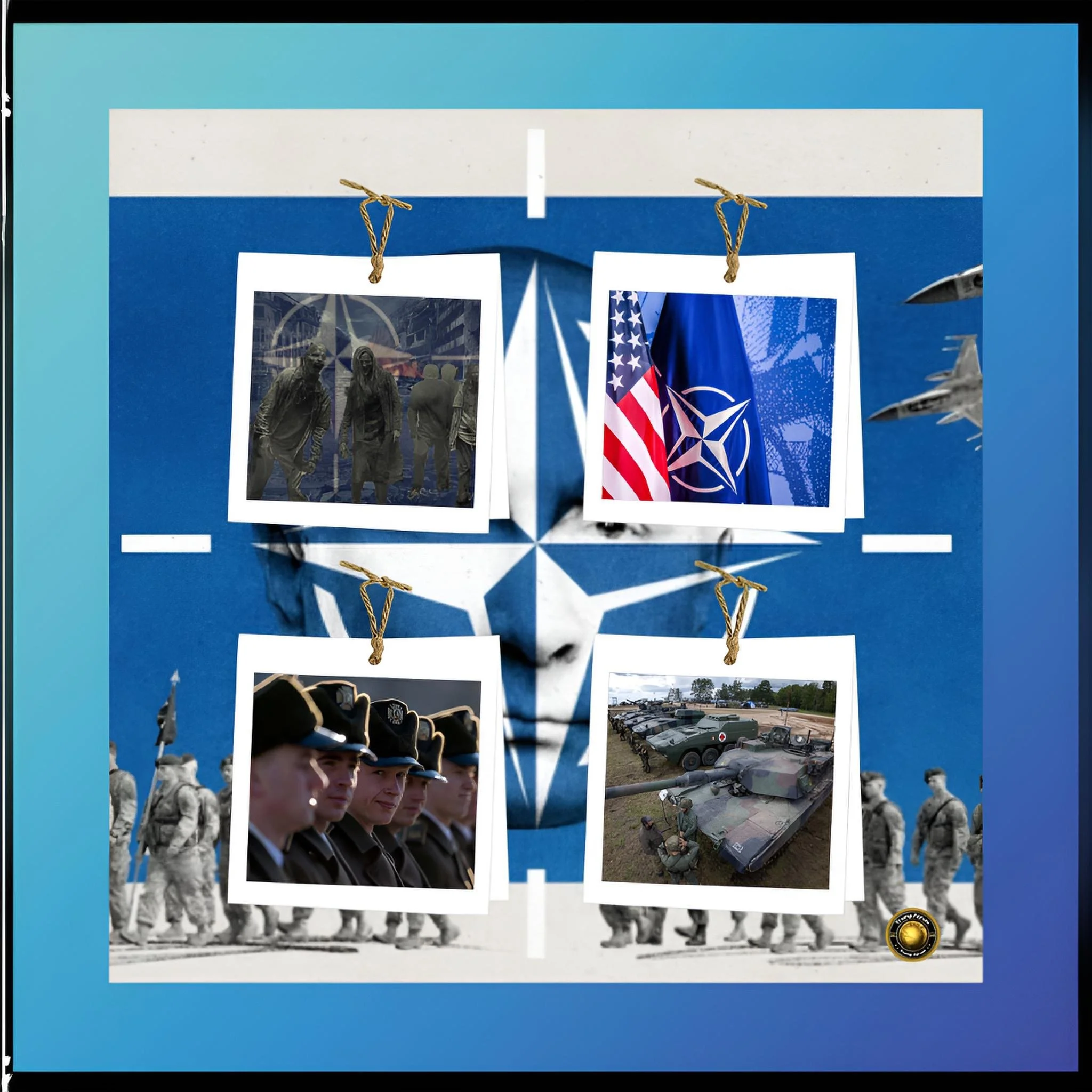
NATO today risks becoming what may be termed a “zombie alliance”: operational in appearance but strategically hollow at its core.
FAF delves into a comprehensive analysis with main key note, that NATO’s malaise is neither sudden nor accidental.
It reflects cumulative strains produced by divergent threat perceptions, chronic European underinvestment, American strategic reorientation toward Asia, and the disruptive effects of populist politics on both sides of the Atlantic.
Russia’s war against Ukraine initially appeared to revive NATO, prompting increases in defense spending and renewed unity.
However, unity forged in crisis has not resolved structural asymmetries. European dependence on American capabilities remains profound, even as Washington debates burden-sharing and strategic prioritization.
The cause-and-effect dynamic is clear.
Perceived American ambivalence encourages European hedging; European hesitation reinforces American doubts; adversaries exploit ambiguity; deterrence credibility erodes incrementally rather than catastrophically.
Without decisive reform and political renewal, NATO may survive procedurally while losing strategic relevance.
Revitalization requires Europe to assume greater responsibility, the United States to reaffirm credible commitments, and both to articulate a shared grand strategy adapted to a multipolar order.
Introduction
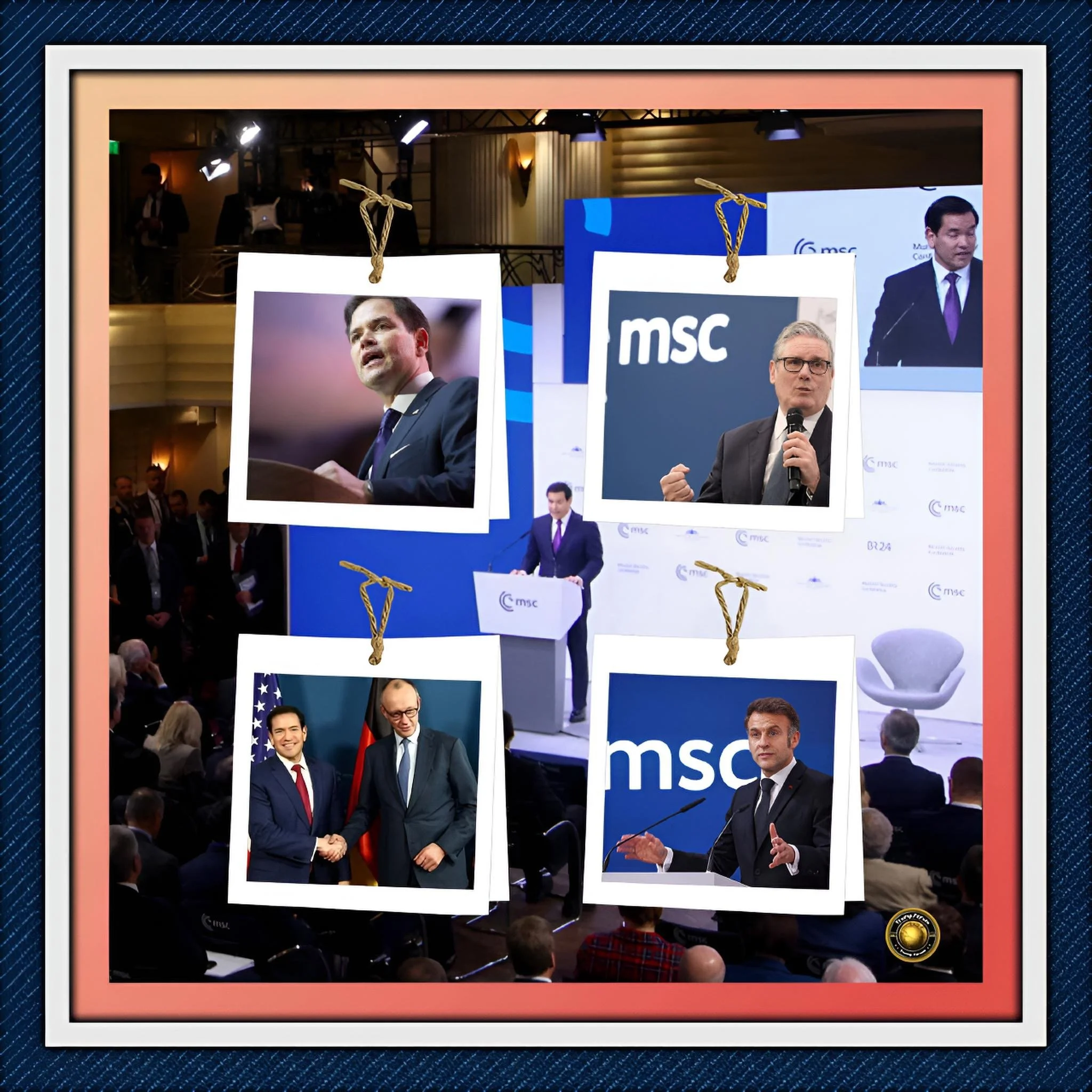
Munich Security Conference Tests West’s Fractured Defense Pact
In the corridors of the Munich Security Conference and within NATO’s headquarters in Brussels, the language of unity persists. Leaders invoke shared values, common defense, and transatlantic solidarity.
Yet rhetoric increasingly obscures a disquieting divergence between form and substance.
The alliance that once embodied Western resolve during the Cold War now confronts an existential paradox: it is simultaneously indispensable and fragile.
NATO’s durability has long rested upon an implicit bargain. The United States would provide the ultimate security guarantee, backed by unmatched military capabilities. In return, European allies would align strategically with Washington and contribute to collective defense.
This arrangement functioned effectively when threat perceptions were aligned and American primacy was uncontested. Today, both conditions are in flux.
The United States faces intensifying competition with China, fiscal pressures, and domestic polarization that periodically questions overseas commitments.
Europe faces a resurgent Russia, economic stagnation in parts of the continent, demographic pressures, and political fragmentation.
These dynamics have exposed the alliance’s internal contradictions. NATO’s institutional machinery remains active, yet its political soul appears unsettled.
History and Current Status
NATO emerged in 1949 as a response to Soviet expansionism and the perceived vulnerability of Western Europe.
Its foundational premise was collective defense under Article 5, declaring that an attack on one would be considered an attack on all.
Throughout the Cold War, this commitment was underwritten by substantial American troop deployments and nuclear deterrence.
The alliance deterred direct Soviet aggression and provided a framework for Western political cohesion.
Following the Soviet Union’s collapse in 1991, NATO entered a period of strategic redefinition. Enlargement to Central and Eastern Europe expanded the alliance’s geographic scope and political symbolism. Interventions in the Balkans demonstrated operational adaptability.
After the attacks of 2001, NATO invoked Article 5 for the first time, participating in operations in Afghanistan.
However, these out-of-area missions exposed divergent priorities and limitations in European military capabilities.
The 2014 annexation of Crimea marked a turning point. Russia’s assertiveness forced NATO to refocus on territorial defense. Enhanced Forward Presence battlegroups were deployed to the Baltic states and Poland.
Yet despite rhetorical recommitment, defense spending disparities persisted. By 2023, although more allies reached the 2% of GDP benchmark, the United States still accounted for approximately 70% of total NATO defense expenditure.
Russia’s full-scale invasion of Ukraine in 2022 appeared to galvanize the alliance. Finland and Sweden sought membership, reflecting heightened threat perceptions.
Defense budgets increased across Europe, with Germany announcing a €100 billion special fund to modernize its armed forces. The United States surged additional forces to Eastern Europe. On the surface, NATO seemed revitalized.
Yet beneath these developments, structural asymmetries remained unchanged.
European militaries continued to rely heavily on American intelligence, surveillance, strategic lift, missile defense, and nuclear deterrence. The alliance’s operational readiness improved incrementally, but dependence endured.
Key Developments
Several developments have intensified debate about NATO’s future.
First, American strategic reorientation toward the Indo-Pacific has accelerated. Washington increasingly frames China as the primary long-term competitor.
Military resources, diplomatic attention, and political capital are increasingly allocated to Asia. This shift, while rational from an American perspective, raises European concerns about residual commitment.
Second, domestic political volatility in the United States has introduced unpredictability. Statements questioning the automaticity of Article 5 or linking defense guarantees to defense spending levels have unsettled European capitals.
Even when such statements are tempered by institutional continuity, their psychological impact is significant.
Third, European discourse on “strategic autonomy” has gained traction. Leaders in Paris and elsewhere argue that Europe must develop independent capabilities to act without exclusive reliance on Washington.
However, autonomy remains aspirational. Institutional fragmentation, duplication of efforts, and uneven political will limit progress.
Fourth, the war in Ukraine has imposed economic and military strains. European states have provided billions in assistance and transferred significant stocks of ammunition and equipment.
Replenishment rates, however, reveal industrial bottlenecks. Defense-industrial capacity, shaped by decades of post-Cold War downsizing, has struggled to scale rapidly.
Fifth, alliance enlargement has both strengthened and complicated NATO.
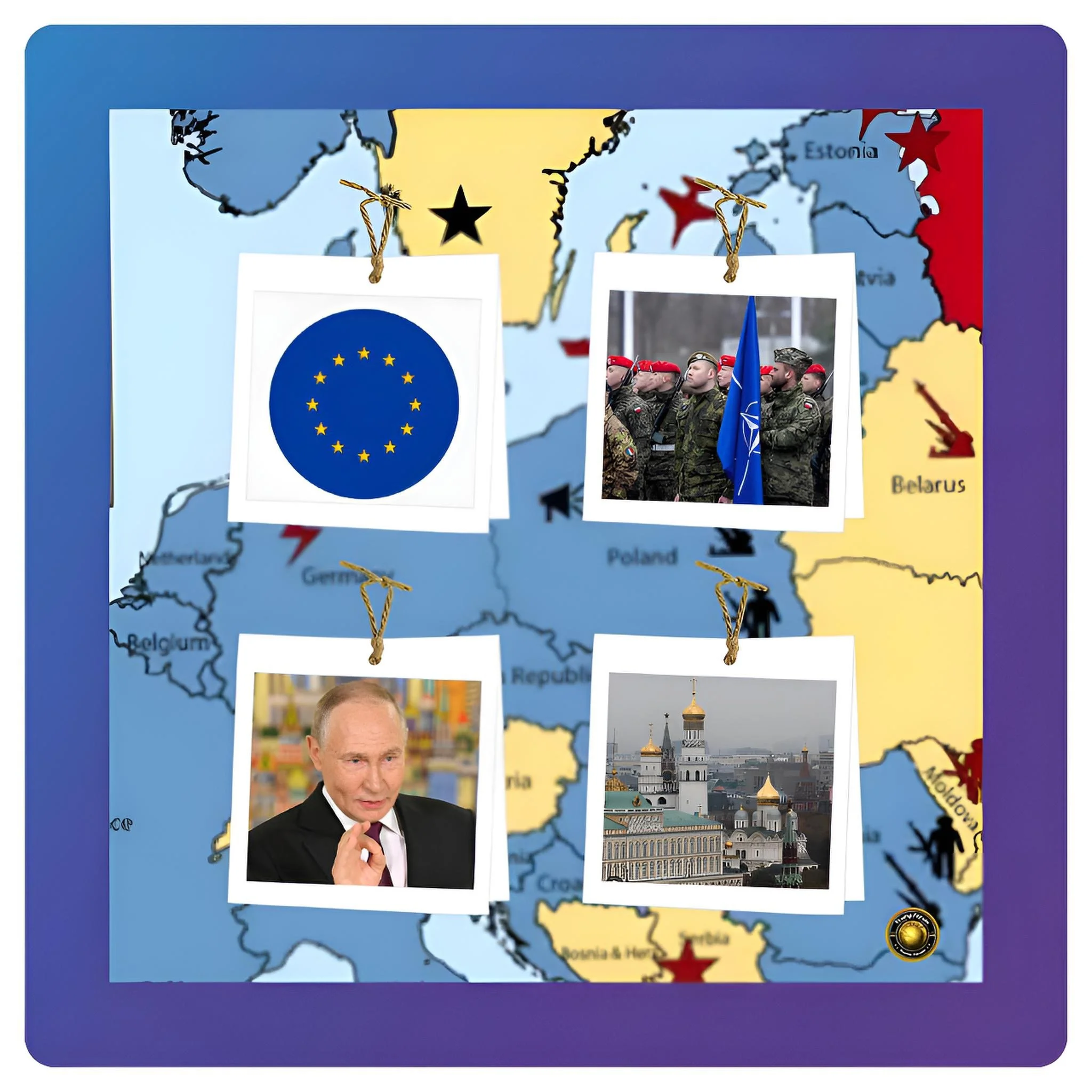
Finland’s accession extends NATO’s border with Russia by over 1,300 kilometers. While strategically advantageous, it increases defense obligations and requires adaptation of force posture.
Latest Facts and Concerns
As of 2025, more than 20 NATO members meet or exceed the 2% GDP defense spending guideline, a notable improvement from previous years. Nonetheless, capability gaps persist in areas such as integrated air and missile defense, long-range fires, and logistics.
The United States continues to provide the majority of high-end enablers.
European defense expenditures collectively exceed €350 billion annually, yet fragmentation across national systems reduces efficiency.
Over ten types of main battle tanks and multiple fighter platforms complicate interoperability and maintenance. Industrial duplication raises costs without proportionate gains in readiness.
Public opinion across Europe supports NATO membership at levels exceeding 60% in many states. However, support for increased defense spending varies significantly. Economic pressures, including inflation and energy costs, constrain fiscal flexibility.
Meanwhile, Russia has adapted to sanctions, expanded military production, and deepened partnerships with non-Western actors. Although its economy remains smaller than that of NATO collectively, its capacity for sustained mobilization presents a long-term challenge.
Concerns also extend beyond Russia. Cyber threats, hybrid warfare, and disinformation campaigns blur the line between peace and conflict. NATO’s consensus-based decision-making, while politically inclusive, can slow responses to ambiguous threats.
Cause-and-Effect Analysis
The alliance’s current fragility results from interacting causes rather than a singular failure.
Chronic European underinvestment after 1991 created structural dependency. When American administrations pressed for burden-sharing, European responses were often incremental.
This imbalance fostered American frustration. Political rhetoric questioning allied commitment further eroded trust.
American strategic pivot toward Asia signals prioritization. European leaders interpret this as potential retrenchment.
Anticipating diminished U.S. presence, some advocate autonomy. Yet partial moves toward autonomy, without comprehensive capability development, can be perceived in Washington as hedging rather than partnership. This dynamic produces mutual suspicion.
Domestic populism amplifies uncertainty. Leaders appealing to nationalist constituencies may frame alliances as transactional rather than value-based. When commitments appear conditional, deterrence credibility weakens.
Adversaries calculate risk based on perceived political cohesion. Ambiguity invites probing actions below the threshold of open conflict.
Industrial atrophy compounds strategic vulnerability. Decades of peace dividends reduced stockpiles and production lines.
When crisis erupted in Ukraine, replenishment proved slow. This lag affects deterrence calculations: if ammunition production cannot sustain prolonged conflict, adversaries may perceive windows of opportunity.
Finally, enlargement without proportional capability expansion increases obligations. As NATO’s geographic scope widens, resource demands grow. If resources do not expand correspondingly, deterrence may thin across a broader frontier.
Future Steps
Revitalizing NATO requires simultaneous action on political, military, and industrial fronts.
Politically, the United States must articulate a clear and consistent commitment to European security. Bipartisan reaffirmation of Article 5’s unconditional nature is essential. Ambiguity may be tactically flexible but strategically corrosive.
Europe must move beyond rhetorical autonomy toward tangible capability development.
Meeting 2% targets is a baseline, not an endpoint. Investment should prioritize critical enablers such as air defense, cyber resilience, space assets, and logistics.
Greater consolidation of defense industries could enhance efficiency and interoperability.
Operationally, NATO should refine regional defense plans and accelerate readiness cycles. Multinational formations with prepositioned equipment can reduce deployment timelines.
Joint exercises must simulate high-intensity scenarios, including hybrid and cyber contingencies.
Industrial policy is equally crucial. Long-term procurement contracts can incentivize production expansion.
Harmonizing standards across European states would reduce duplication. Cooperation with trusted partners can diversify supply chains.
Strategically, the alliance must reconcile European and Indo-Pacific priorities.
Rather than viewing them as zero-sum, NATO could conceptualize security as interconnected. Coordination with Indo-Pacific partners, without overextension, may enhance resilience against systemic challengers.
Finally, public communication matters. Sustained public support requires transparent articulation of threats and responsibilities. Democratic societies must understand that deterrence entails costs.
Conclusion
Zombie Alliance or Sleeping Giant The Future of NATO
NATO is neither moribund nor invincible. It occupies an intermediate condition in which institutional vitality coexists with strategic uncertainty.
The metaphor of a zombie alliance captures this paradox: movement without direction, presence without conviction. Yet decline is not destiny.
The transatlantic alliance remains the most formidable military coalition in history, representing nearly 50% of global GDP and commanding unparalleled technological capacity. Its weakness lies not in hardware but in cohesion.
If Europe accepts greater responsibility and the United States recommits credibly, NATO can adapt to contemporary realities. Failure to act, however, risks gradual erosion of deterrence and the emergence of a security vacuum that adversaries would exploit.
Munich and other diplomatic gatherings will produce declarations of unity.
Whether those declarations translate into structural reform and sustained investment will determine whether NATO reawakens as a revitalized guarantor of stability or drifts further into strategic irrelevance.
The choice remains political. The consequences, however, would be geopolitical.