AI Summits Showcase India’s Quest for Digital Autonomy : Search for a Third Digital Path - Part I
Executive Summary
New Delhi Seeks Sovereign Tech Path Between Superpowers
India's recent AI summits mark a decisive attempt to move from being a rule-taker in global technology governance to acting as a rule-shaper.
The Global IndiaAI Summit in July 2024 and the India–AI Impact Summit in February 2026 frame this ambition in unusually explicit terms: India wants to democratize access to compute, build indigenous foundational models, and position itself as a "third way" between a market‑driven US ecosystem and a state‑steered Chinese model, while still engaging with European regulatory thinking.
These summits are anchored in the IndiaAI Mission, approved with an outlay of about $1.25 billion, including roughly $245 million ring‑fenced for startups and subsidised access to GPU infrastructure.
They are also embedded in a wider diplomatic strategy that leverages India's leadership roles in initiatives like the Global Partnership on Artificial Intelligence and the new sequence of global AI safety and impact summits.
The history and current configuration of these summits reveal three layers.
First, a domestic policy layer in which AI is framed as an instrument for development, embedded in digital public infrastructure and oriented toward social sectors such as health, agriculture, education, and welfare.
Second, a geopolitical layer in which India positions itself as spokesperson and convenor for the "global majority" or Global South, hosting the first major AI summit in the developing world and emphasizing themes of inclusion, affordability, and sovereign control over data and models.
Third, a political‑economy layer that seeks to turn India's data scale and engineering talent into bargaining chips in negotiations with large technology firms and advanced economies, even as domestic concerns about concentration of compute, regulatory capacity, and civil liberties sharpen.
Key developments at these summits include the articulation of seven pillars for the IndiaAI Mission, covering compute capacity, foundational models, datasets, applications, skills, startup financing, and safe and trusted AI; an integrated partnership between the OECD and the Global Partnership on Artificial Intelligence; and the launch of challenge‑based global programs that foreground women innovators and youth.
The 2026 Impact Summit adds a distinctive normative vocabulary of "3 Sutras" – People, Planet, Progress – and "Seven Chakras" that translate these into thematic tracks on human capital, inclusion, resilience, safety, innovation, democratization, and development impact.
Yet the latest facts and concerns show that India's AI diplomacy is outpacing its capacity to implement it.
The IndiaAI Mission's budget is modest compared with US and Chinese spending, the domestic GPU base remains shallow, and India still depends heavily on foreign firms for leading-edge hardware, cloud infrastructure, and frontier models.
Civil society groups and some policy analysts worry that the summits may privilege commercial deal‑making and diplomatic signaling over concrete commitments on accountability, surveillance limits, labour transitions, and environmental costs.
Critical commentary has already described New Delhi's gathering as a potentially "lost opportunity" if it fails to move from glossy declarations to verifiable guardrails and redistributive mechanisms.
A cause‑and‑effect analysis suggests that these summits are both products and drivers of a shifting global AI order. India's domestic digital model – built around interoperable public platforms and low‑cost services – gives it real credibility when it talks of "AI for all."
That in turn enables diplomatic coalition‑building with other middle‑income and low‑income states that do not want to be locked into either Washington's or Beijing's technological spheres of influence.
But global expectations generated by the summits also feed back into domestic politics: they create pressure to deliver quick wins, elevate the political stakes of AI governance, and risk centralising authority in the executive at the expense of regulators, parliaments, and courts.
Looking ahead, the most consequential future steps will involve institutional design rather than summit choreography.
For India, the test is whether it can build an independent but globally networked AI safety and standards regime; distribute compute and data access beyond a narrow set of firms; integrate labour, environmental, and competition concerns into its AI strategy; and ensure that Global South diplomacy is backed by real capacity‑building.
Internationally, the India–AI Impact Summit will be judged by whether it can move the global AI conversation from existential risk and great‑power rivalry toward concrete development outcomes, verifiable transparency norms, and credible pathways for countries with limited fiscal and technological resources.
Introduction
India’s AI Summits Signal a Bold Third Digital Way
By early 2026, India will have hosted two distinct but interlinked AI summits that together illuminate its evolving role in the global technology order.
The Global IndiaAI Summit in July 2024 was explicitly framed as a national‑cum‑multilateral convening under India's chairmanship of a leading international AI partnership, focused on core pillars of the AI ecosystem and the launch of the IndiaAI Mission.
The India–AI Impact Summit in February 2026, in contrast, is presented as the 4th in a chain of world AI gatherings after Bletchley, Seoul, and Paris, and the first to be hosted in the Global South.
These summits take place against a backdrop of intense global contestation.
In North America, a handful of companies dominate access to cutting‑edge models and computing.
In Europe, regulators are building a risk‑based regime that treats AI as a product‑safety issue, while also wrestling with industrial competitiveness.
In China, AI is increasingly integrated into state capacity, censorship, and security apparatuses.
Across the global majority, countries face an uncomfortable combination of dependency, hype, and vulnerability: they are told AI will revolutionise agriculture, health, and education, but they lack the leverage to shape the underlying rules, infrastructure, and incentives.
India's AI summits must therefore be read as part of a broader diplomatic script.
Hosting such gatherings is not merely a branding exercise. It is a way to anchor India in conversations that had previously been staged largely in and for the industrialised North, while pushing development‑centric themes and seeking recognition of India's model of digital sovereignty and open infrastructure.
At the same time, these summits expose the tensions within India's own trajectory: between export‑oriented IT services and domestic regulatory reform, between state‑led platforms and private innovation, and between grand strategy and the slow, grinding work of institution‑building.
History and Current Status
The genealogy of India's AI summits can be traced to three converging developments.
First is the maturation of India's domestic digital public infrastructure over the past decade, notably identity, payments, and data‑exchange rails, which created a template for low‑cost, interoperable, state‑backed digital systems.
Second, India's growing participation in plurilateral technology initiatives, including the Global Partnership on Artificial Intelligence, where it served as lead chair in 2024.
Third is the shift in global AI politics after 2023, when frontier model releases triggered new regulatory and diplomatic activity, and states began to experiment with AI safety summits, action summits, and ministerial tracks.
In March 2024, India's Union Cabinet approved the IndiaAI Mission with an outlay of about $1.25 billion, including dedicated resources for compute infrastructure, datasets, foundational models, and innovation ecosystems.
The mission's financial architecture earmarks around $220 million for supporting AI startups, especially those building indigenous models and sectoral applications.
It promises subsidised access to GPU infrastructure, shared datasets curated for Indian conditions, and programs to build "future skills" in the workforce.
These objectives set the policy frame for the Global IndiaAI Summit held that July.
The Global IndiaAI Summit in New Delhi brought together roughly 2,000 in‑person participants and over 10,000 virtual attendees from government, industry, academia, and civil society.
The discussions were organised around seven pillars that mirror the IndiaAI Mission: compute capacity, foundational models, datasets, application development, future skills, startup financing, and safe and trusted AI.
A notable development was the announcement of an integrated partnership between the OECD and the Global Partnership on Artificial Intelligence, aimed at strengthening AI governance and better aligning deliberations across advanced and emerging economies.
The summit simultaneously became a stage for Global South diplomacy.
Delegations from developing countries used the platform to articulate their concerns about unequal access to computing, the concentration of AI capabilities in a few jurisdictions, and the risk that new technological divides will reinforce older hierarchies.
India's role as host and chair of the partnership allowed it to present itself as a bridge between OECD and non‑OECD members, even if some trade‑offs remained, such as retaining the partnership's secretariat within an advanced‑economy institution.
By 2025, the IndiaAI Mission began to take on a more outward‑facing dimension.
India co‑chaired a major AI Action Summit in Europe, and its leadership announced that New Delhi would host the next major global convening in 2026, explicitly pitched as the first such event in the Global South.
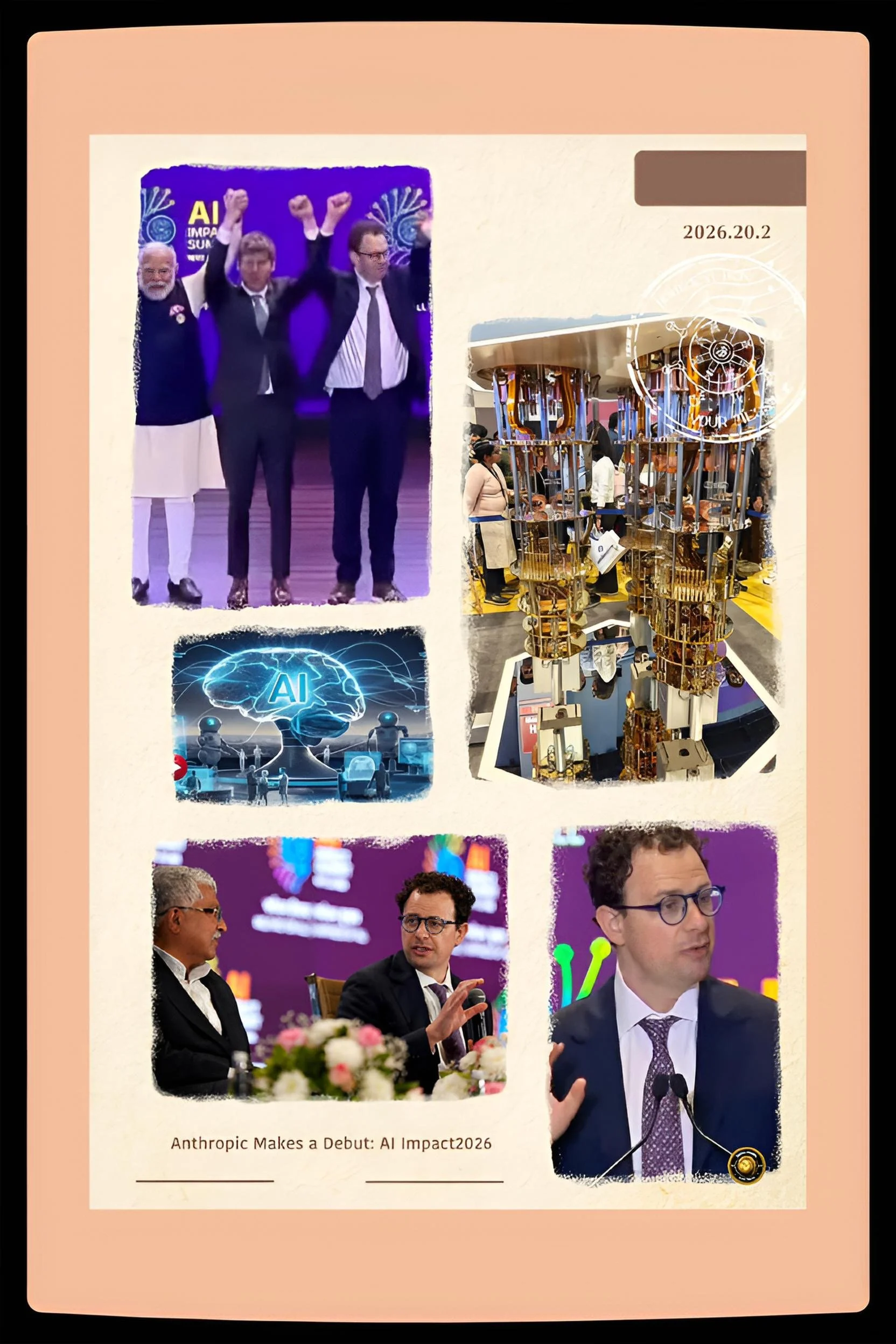
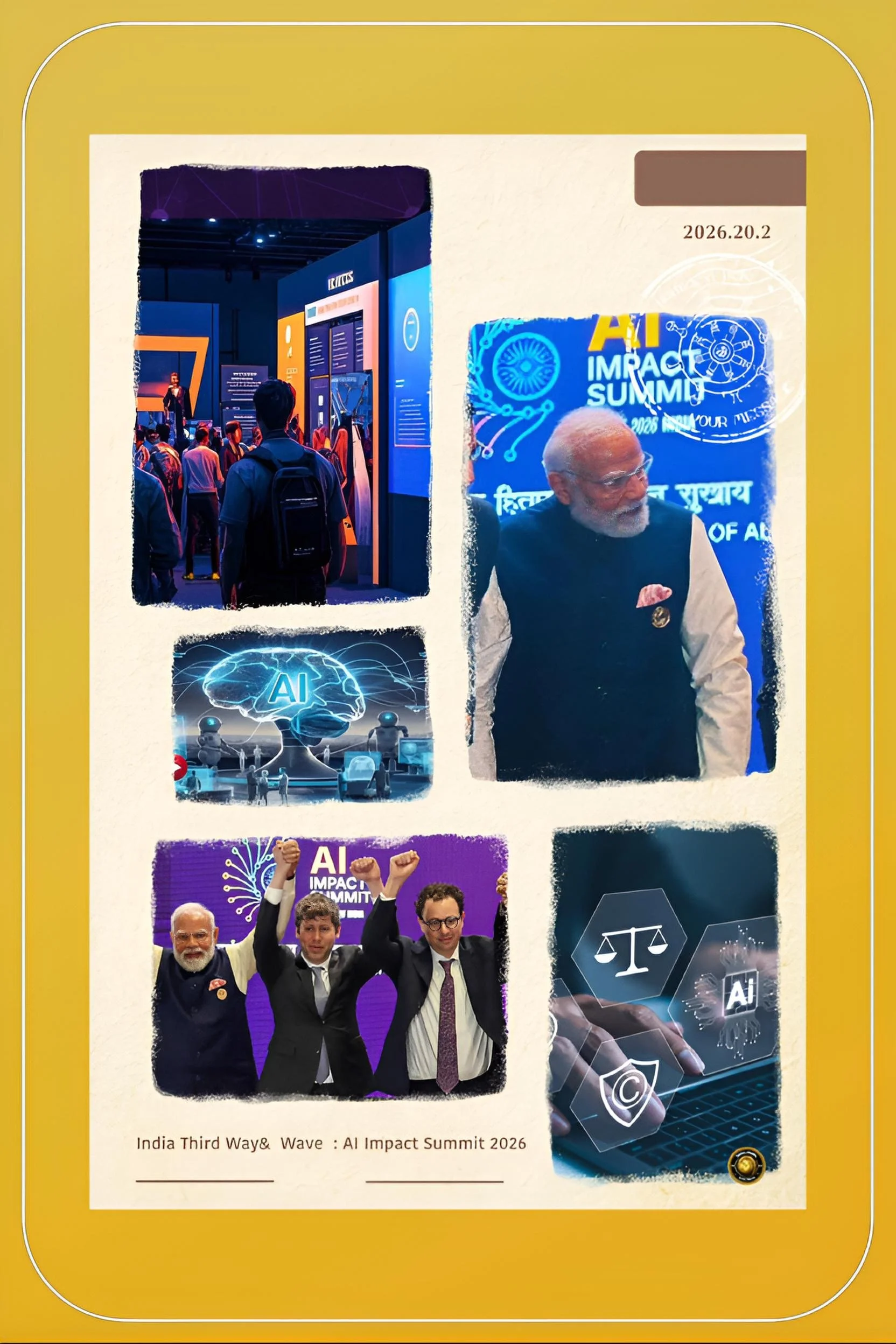
The India–AI Impact Summit 2026, scheduled and then opened at Bharat Mandapam in February 2026, built on this trajectory. It brings together more than 20 heads of state, about 60 ministers, and around 500 global AI leaders, according to official background notes, alongside hundreds of CEOs, investors, and technical experts.
The current status, as the summit unfolds, is a complex hybrid.
On the one hand, there is a large business and technology expo featuring over 300 exhibitors and numerous sessions showcasing AI solutions across health, education, agriculture, manufacturing, and finance.
On the other hand, there are high‑level plenaries, CEO roundtables, and working groups organised around the Three Sutras of People, Planet, and Progress and the Seven Chakras, spanning human capital, inclusion, resilience, safety, innovation, democratization, and development impact.
The India–AI Impact Summit explicitly builds on earlier summits in the UK, Korea, and France. Still, it aims to pivot the conversation from speculative existential risk to development‑oriented, people‑centric AI.
Key Developments
India’s AI Diplomacy Shapes an Alternative Digital Order
Several developments stand out across the India AI summits, together defining their strategic significance.
First, the articulation and operationalisation of the IndiaAI Mission as the backbone of the national AI strategy marks a shift from scattered pilot projects to a more integrated approach.
The mission's seven pillars reflect an attempt to think about AI as an ecosystem: without affordable compute, curated datasets, and incentives for foundational models, application‑layer innovation cannot scale, and without investments in future skills and safe AI, such scaling can generate new risks.
By tying the Global IndiaAI Summit directly to these pillars, India signaled that global conversations would be grounded in concrete domestic policy architecture rather than abstract rhetoric.
Second, the summits institutionalise India's dual role as both regulator and promoter of AI.
On the regulatory side, India has announced plans for an AI Safety Institute and committed to safe, secure, and trustworthy AI, echoing language used in other major jurisdictions but insisting that such safety should not become a pretext for techno‑protectionism.
On the promotional side, government leaders use the summits to court investment, highlight the scale of India's digital market, and announce collaborations between Indian and global firms.
High‑profile participation from leading global technology companies at the 2026 summit underscores how these events are also platforms for commercial positioning and alliance‑building.
Third, the summits have catalysed initiatives aimed specifically at diversifying who builds and benefits from AI.
The India–AI Impact Summit is explicitly tied to challenge programs such as AI for All, AI by Her, and youth‑focused innovation tracks that seek to identify and support transformative AI solutions from women‑led teams and young creators.
These initiatives sit alongside broader innovation support under the IndiaAI Mission, including subsidised compute for startups and programs to expand AI‑related skills in the workforce.
Fourth, AI diplomacy has become an explicit vector of India's foreign policy.
Official documents and commentary surrounding the 2026 summit frame it as part of a sequence of high‑level global AI convenings, but emphasise that hosting it in the Global South shifts both geography and emphasis.
Indian officials and sympathetic commentators describe India's approach as a "third way" that combines openness, interoperability, and rights‑respecting governance with a strong developmental orientation.
This framing has resonated with several middle‑power and developing‑country governments that fear being locked into either US platform dependence or Chinese infrastructure entanglement.
Fifth, the summits have triggered more critical external analysis, particularly from major powers and regional observers.
Chinese commentary, for example, has portrayed India's AI summitry as a bid for visibility and influence, rather than a fully fledged technological breakthrough, while still acknowledging the potential of India's data scale and talent pool if leveraged effectively.
Western media coverage has highlighted the contrast between earlier AI safety gatherings, dominated by risk talk and regulatory anxiety, and New Delhi's more commerce‑heavy, partnership‑oriented atmosphere, where investment announcements and applied solutions share the stage with governance debates.
Latest Facts and Concerns
The most recent phase of India's AI summit diplomacy reveals both growing ambition and persistent constraints.
On participation and scale, the India–AI Impact Summit is remarkable: more than 20 heads of state, around 60 ministers, and hundreds of global AI leaders converge in New Delhi, with sessions that range from leaders' plenaries to technical working groups and CEO roundtables.
The expo space features hundreds of firms and organisations showcasing AI solutions across climate resilience, precision agriculture, telemedicine, logistics optimisation, and financial inclusion.
For many countries of the global majority, this is the first time a major AI summit is held in a setting that shares some of their structural constraints and policy priorities.
Yet the resource base behind these ambitions remains modest compared with those of advanced economies.
The IndiaAI Mission's budget, at roughly US $1.25 billion, is significant by domestic standards but small relative to annual AI investments by US or Chinese firms and governments.
India's domestic GPU capacity remains limited, forcing many startups and research institutions to rely on cloud services from foreign companies.
Building and maintaining sovereign or quasi‑sovereign compute infrastructure will demand far greater capital expenditure, energy planning, and supply‑chain diplomacy than is currently visible.
There are also mounting concerns about governance capacity.
India does not yet have a comprehensive cross‑sectoral AI law. Its data protection framework is nascent, sectoral regulators have uneven technical resources, and parliamentary oversight of digital policy remains relatively weak.
While the summits repeatedly invoke "safe and trusted AI," the details of audit mechanisms, redress systems, and liability rules are still being worked out.
Critics worry that the gap between ambitious summit rhetoric and national regulatory infrastructure could produce a permissive environment in which powerful actors experiment on vulnerable populations without adequate safeguards.
From a political‑economy perspective, the summits sharpen questions about concentration and capture.
Subsidized access to compute and curated datasets will almost certainly be allocated through some form of gatekeeping.
Without transparent criteria and strong competition policy, such mechanisms could entrench a small group of incumbent firms, favour those with close ties to the state, or marginalize smaller innovators and civil society actors.
Commentators have already warned that, unless carefully designed, India's AI strategy could replicate global patterns of concentration under the banner of "democratisation."
Internationally, there is both enthusiasm and scepticism.
Many governments from Africa, Latin America, and Asia welcome India's focus on development outcomes, inclusion, and sovereign choice, and see value in aligning around shared demands for openness, interoperability, and fair access to models and compute.
At the same time, some advanced‑economy observers question whether the India–AI Impact Summit will deliver more than carefully worded declarations.
Critical analyses argue that New Delhi risks missing opportunities to lead on hard questions such as export controls, cross‑border audit rights, and enforceable transparency standards for frontier model providers.
Cause‑and‑Effect Analysis
The India AI summits illustrate a dense web of causation spanning domestic politics, global governance, and corporate strategy.
At the domestic level, India's long‑standing emphasis on digital public infrastructure has created both the possibility and the necessity of an AI‑centric pivot.
Successful platforms in identity, payments, and data exchange have raised expectations that similar architectures can be extended to AI services, embedding models into welfare delivery, health insurance, agriculture extension, and educational content.
This fuels political incentives for leaders to claim that AI will help deliver inclusive growth by 2047, when India aims to become a developed country.
In turn, such claims make the staging of high‑profile summits an attractive tool for demonstrating momentum and attracting investment.
Internationally, the earlier sequence of AI safety and action summits created a template – and a gap.
When initial gatherings in Europe and East Asia focused heavily on existential risk, catastrophic scenarios, and the regulation of frontier models, a space emerged for a host that could retain safety concerns while foregrounding development, inclusion, and concrete applications.
India's decision to bid for and host the 2026 Impact Summit is both a response to that gap and a product of its growing confidence as a diplomatic convenor after other recent global events.
The summits then feed back into global AI governance by legitimising certain narratives and norms.
When dozens of heads of state and ministers endorse language on AI for development, human‑centric innovation, and countries' rights to choose their digital pathways, they create political cover for governments to demand more from major technology providers and advanced economies.
In particular, they strengthen calls for open model interfaces, transparent safety evaluations, and shared international financing mechanisms for computing and capacity‑building.
These processes also influence corporate behaviour. Leading AI companies are keenly aware that public‑sector contracts, regulatory approval, and access to large emerging markets are shaped by government perceptions of their trustworthiness and alignment with public objectives.
Participation in India's summits allows them to signal responsiveness to developmental priorities, announce partnerships, and shape the emerging discourse on standards.
In some cases, firms may adjust their product roadmaps – for example, by prioritising multilingual models tailored to Indian and Global South languages – to secure political goodwill and market access.
At the same time, each summit intensifies expectations and scrutiny. Domestically, civil society and policy analysts use the high visibility of these events to press for stronger safeguards against surveillance, discrimination, and exclusion.
When leaders repeatedly state that AI must be safe, inclusive, and rights‑respecting, they create rhetorical commitments that can be invoked later in litigation, advocacy, and parliamentary debates.
Internationally, India's self‑presentation as a third way invites evaluation: if, for example, its export control practices, procurement policies, or surveillance frameworks come to resemble those of the major powers it seeks to distinguish itself from, the credibility of that narrative will erode.
There is thus a circular causality at work.
India's digital and geopolitical trajectory made AI summits likely; the summits, in turn, reshape that trajectory by hardening narratives, generating commitments, and institutionalising certain pathways while foreclosing others.
The outcomes are still contingent.
For instance, depending on how India designs its AI Safety Institute, the institution could evolve into either a genuinely independent authority with global influence or a primarily symbolic body whose main function is to bless government and corporate initiatives.
Similarly, the promised support to startups could either broaden the innovation base or consolidate a narrow elite.
Future Steps
Over the next 5 to 10 years, the legacy of India's AI summits will depend less on the eloquence of declarations and more on the design of institutions and policies that follow. Several directions seem especially consequential.
First, India will need to translate its rhetorical leadership on "safe and trusted AI" into a credible, layered regulatory architecture.
This will likely involve empowering the planned AI Safety Institute with technical capacity, statutory backing, and procedural independence; strengthening sectoral regulators in finance, health, education, and labour to deal with AI‑specific risks; and ensuring that courts and parliamentary committees can scrutinise algorithmic decision‑making.
Embedding participatory mechanisms – including public consultations, impact assessments, and redress processes – will be essential if safety does not become a merely technocratic exercise.
Second, the promise of "democratised" access to computing and datasets will require hard choices on industrial policy and public finance. Building domestic GPU farms, negotiating long‑term supply contracts, and investing in energy‑efficient data centres are capital‑intensive undertakings.
India will need to decide how far to pursue sovereign infrastructure versus hybrid models that rely on foreign cloud providers, subject to stricter regulatory obligations.
There is also the question of how to allocate subsidised compute: whether to prioritise public‑interest research, early‑stage startups, state‑level innovations, or strategic sectors such as defence and critical infrastructure.
Third, if India is serious about representing the global majority in AI governance, the India–AI Impact Summit must evolve into a sustained platform rather than a one‑off spectacle.
This could mean establishing permanent working groups or networks on development‑oriented AI, with dedicated funding for pilot projects in partner countries; creating fellowship programs that bring regulators, researchers, and practitioners from the Global South into India's institutions; and advocating for new international financing tools that support AI infrastructure in low‑income states.
Here, India's own experience with low‑cost digital public infrastructure can be a powerful reference point, but only if it is adapted rather than exported wholesale.
Fourth, labour and social protection issues will need far more explicit attention than they have so far received at the summits.
AI‑driven automation, algorithmic management, and platformisation are already reshaping work in sectors such as logistics, gig services, and back‑office processes.
Without anticipatory policies on reskilling, wage protection, collective bargaining, and social security, the developmental promise of AI could be undermined by rising precarity and inequality.
Future iterations of India's AI summits could foreground labour ministries, trade unions, and worker organisations as core stakeholders, rather than treating employment primarily as a skills pipeline issue.
Fifth, environmental considerations will become harder to sideline. Training and deploying large models requires substantial energy and water, and even inference at scale could stress fragile grids.
India's own energy transition – with competing demands from industry, households, and climate commitments – makes the sustainability of AI infrastructure a non‑trivial question.
By integrating carbon and resource accounting into AI planning and promoting energy‑efficient architectures and the regional distribution of data centres, India could differentiate its model from less transparent approaches elsewhere.
Finally, India's diplomatic positioning will need to remain agile.
The global AI landscape is fluid, with shifting coalitions, evolving export controls, and potential fragmentation of technical standards.
India's aspiration to act as a bridge and a third way will periodically be tested by crises – whether around model misuse, cyber incidents, trade disputes, or human rights abuses linked to AI.
The choices New Delhi makes in those moments, including which side it aligns with, how it votes in multilateral fora, and whether it is willing to champion uncomfortable norms such as limits on AI‑enabled surveillance, will matter as much as the staged images from summit photo‑ops.
Conclusion
AI Summits Showcase India’s Quest for Digital Autonomy
India's AI summits are, at once, performances of ambition and laboratories of a still‑unsettled order.
They crystallise a set of claims about how AI should be governed: that it must serve development as much as security or profit; that the global majority should not be mere takers of rules and technology; and that there is room for digital pathways that are neither laissez‑faire nor authoritarian.
The Global IndiaAI Summit and the India–AI Impact Summit together knit these claims into agendas, communiqués, and partnerships that now form part of the reference frame for global AI debates.
But these summits also expose the fragility of India's position. The gap between the promises of democratisation and the realities of concentrated compute, data, and capital remains wide.
Regulatory and institutional capacity is catching up rather than leading. Domestic contestation over surveillance, content moderation, and discrimination is intensifying, and external observers remain divided on whether India can convert convening power into enduring influence on standards and norms.
In that sense, the true legacy of India's AI summits will be determined not in the halls of Bharat Mandapam but in a longer arc of policy and practice.
If India can build robust, accountable institutions; share its digital lessons without exporting control; align its foreign policy with the interests of a diverse global majority; and sustain a regulatory environment that is both enabling and rights‑protecting, then these summits will be remembered as inflection points.
If not, they risk joining a long list of global meetings that generated eloquent communiqués and fleeting headlines, but left the underlying structures of technological power largely unchanged.