Introduction
In the last few years, India has begun hosting major artificial intelligence meetings. These meetings are called AI summits.
They bring together leaders from many countries, big technology companies, experts, and students.
One summit in 2024 was called the Global IndiaAI Summit.
Another, in 2026, is the India–AI Impact Summit.
Both are held in New Delhi at a large conference space called Bharat Mandapam.
These AI summits are important because they show that India does not want to buy AI tools from other countries.
It wants to help shape the rules, build its own AI systems, and ensure AI is used to solve real problems in health, farming, and education.
The summits are also a way for India to show that it can host major global events, not only on trade or climate, but also on new technologies.
History and where things stand now?
For many years, India was known mainly for its software services and back‑office work.
Recently, the government decided that this is not enough. It created the IndiaAI Mission.
This plan sets aside money to build computer power, support startups, and train people in AI skills.
The budget is about $1.24 billion, and around $245 million is meant to help Indian AI startups with money and cheaper access to powerful computer chips called GPUs.
The Global IndiaAI Summit in July 2024 was the first big public show of this plan.
About 2,000 experts came in person, and more than 10,000 joined online.
They discussed seven main topics: computer power, large AI models, datasets, apps, skills, startup funding, and safe AI.
At the same time, India hosted members of an international AI group, and a new partnership was announced to develop AI rules and standards.
In 2025, India agreed to host a new global summit in 2026, called the India–AI Impact Summit.
This summit is described as the first major global AI meeting held in the Global South, meaning in a developing country, not in Europe or North America.
It is part of a series of AI meetings that started in the UK, then moved to Korea and France.
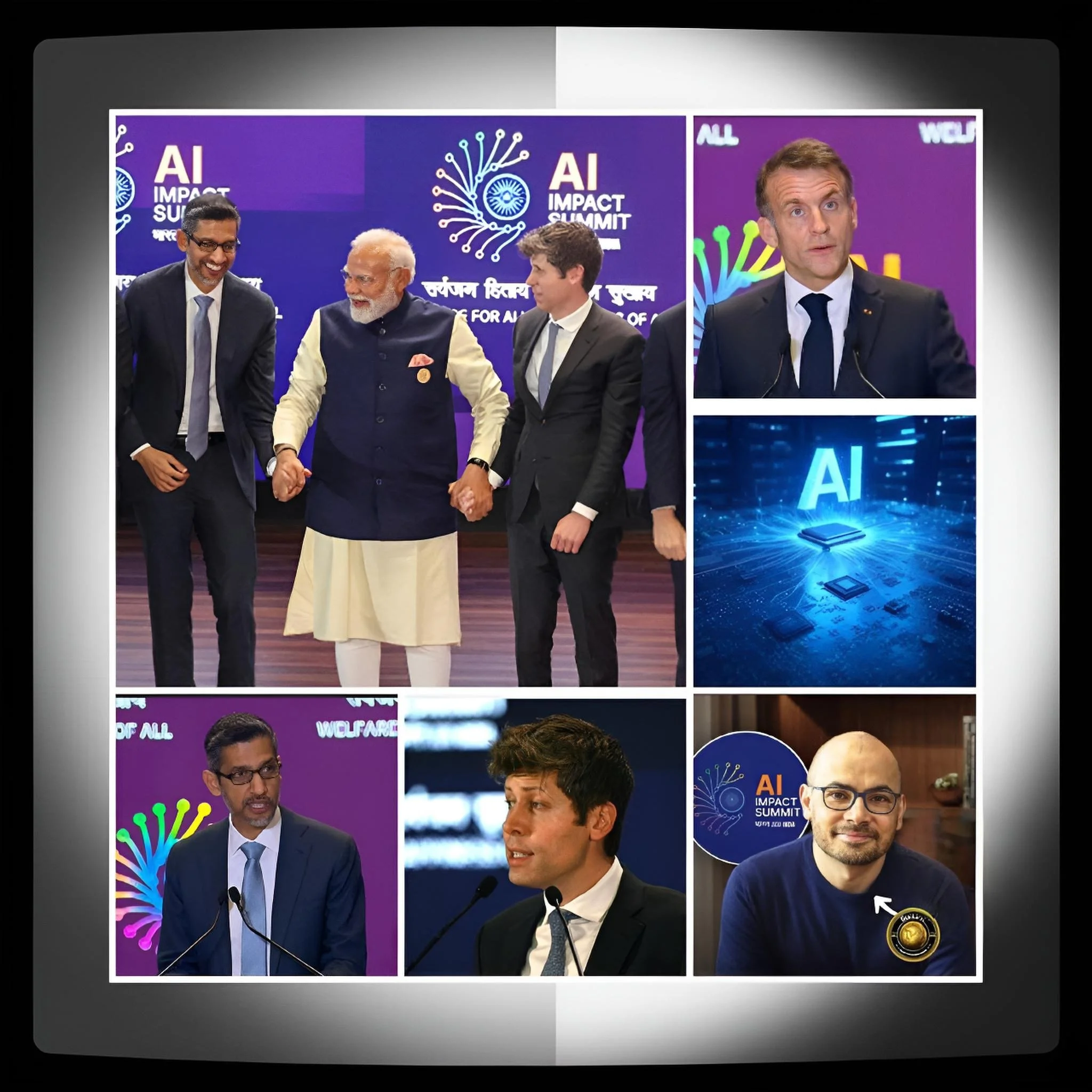
The 2026 summit in New Delhi brings together more than 20 heads of state, about 60 ministers, and hundreds of AI leaders and company heads.
Key highlights of the summits
One key highlight is the focus on "AI for all." Indian leaders repeat this phrase often.
They say AI should not just help rich people or big companies.
It should help farmers decide when to plant crops, help teachers understand which students need extra help, help doctors diagnose diseases faster, and help local officials deliver welfare benefits more fairly.
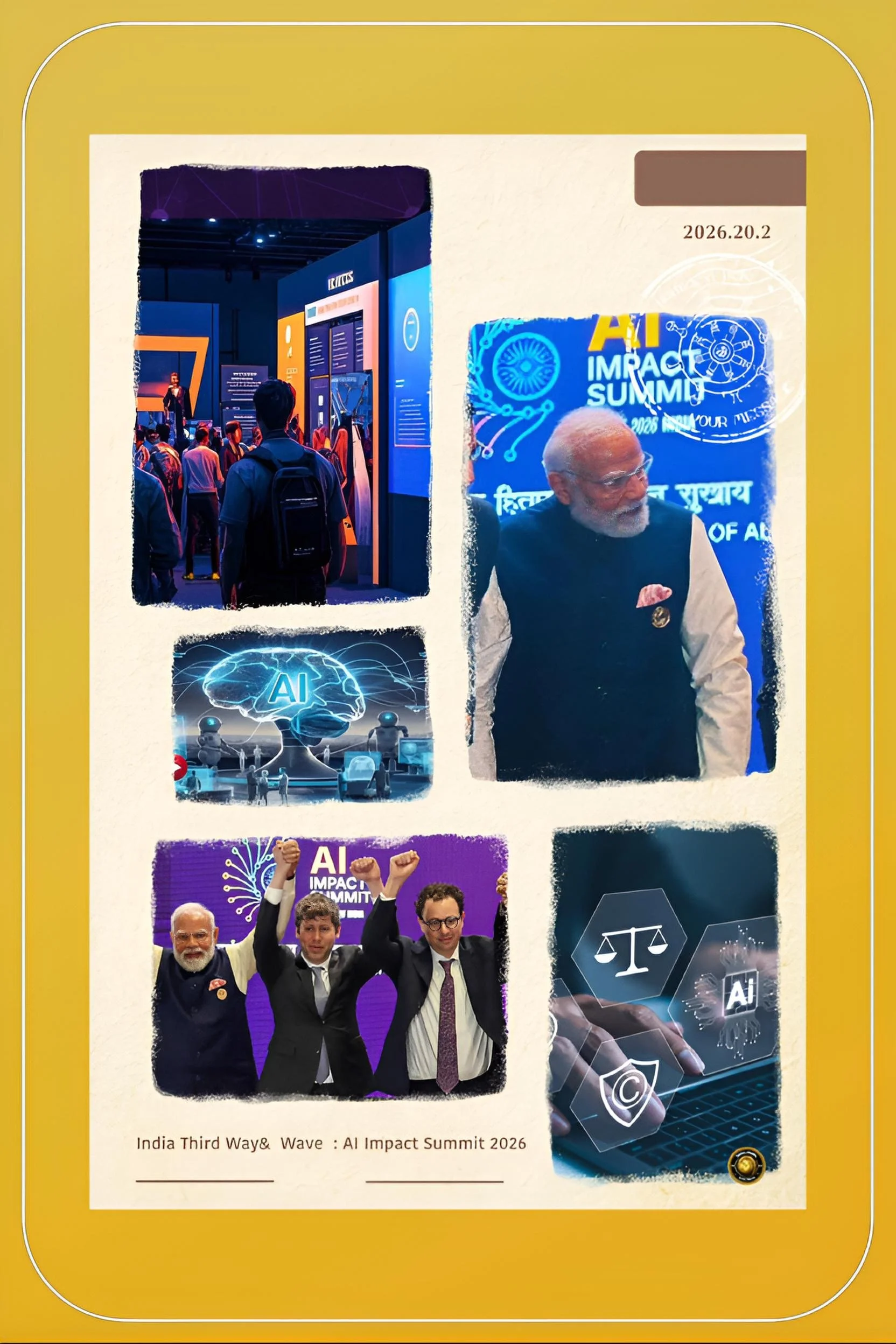
For example, at the expo linked to the 2026 summit, visitors can see tools that use AI to read X‑rays in small clinics, chatbots that answer government questions in local languages, and systems that predict floods or crop failures.
Another highlight is India's attempt to offer a "third way" for AI governance.
Many people see the US model as driven by large companies, with lighter rules, and the Chinese model as driven by the state, with tight control and heavy use of security and censorship.
India tries to say: there is another path. In this path, governments build open digital platforms, but private companies and communities can build on top of them.
The goal is to protect rights and competition while still allowing innovation.
A third highlight is the language of the 2026 summit. It is built around three big ideas, called Sutras: People, Planet, and Progress.
These ideas are then turned into seven themes, called Chakras.
They include human skills, inclusion, safety, resilience, and the use of AI for jobs and growth.
This simple language helps leaders from many countries understand that the summit is not only about future robots or science fiction.
It is about how AI touches people, the environment, and economies today.
Latest facts and main worries
Right now, the India–AI Impact Summit is taking place over several days in New Delhi.
There are leaders' sessions, closed‑door CEO meetings, and many technical talks.
The expo features more than 300 companies and organisations, and the official notes state that over 500 global AI leaders are present.
India uses this moment to announce new partnerships, funding schemes for startups, and pilot projects in areas like health and agriculture.
However, there are serious worries beneath the optimism.
One worry is about computer power. Training and running advanced AI models needs huge numbers of GPUs and large data centres.
India still depends a lot on foreign cloud companies for this.
The IndiaAI Mission's budget is big for India, but small compared with what US or China spend’s each year on AI.
This makes it hard for India to fully control its own AI stack.
Another worry is about rules and rights. India talks a lot about "safe and trusted AI," but many details are not clear yet.
For example, how will people know if an algorithm made a wrong decision in welfare or policing?
How can they challenge that decision? Which agency will check whether AI systems are fair and unbiased?
A new AI Safety Institute has been proposed, but its powers and independence are still being shaped.
There are also concerns about who really benefits. When the state gives cheaper GPU access or special support, there is a risk that the same big firms or well‑connected startups get most of the help.
Smaller groups, universities, and civil society may be left behind.
Some analysts worry that India could end up copying global patterns of concentration, while still using the language of "democratising" AI.
Cause and effect in simple terms
The story of India's AI summits is a chain of actions and reactions. India built strong digital platforms for ID and payments.
This success made leaders believe they could repeat the story in AI. That led to the IndiaAI Mission.
Once the mission was approved, it made sense to host a big summit at home, to show the plan to the world and attract partners.
That summit in 2024, in turn, made it easier to argue that India should host a larger global summit in 2026.
Hosting the 2026 summit then changes how others see India.
Many countries from Africa, Asia, and Latin America feel that their views on AI were not heard enough at earlier meetings in Europe and East Asia.
When they see a major AI summit in the Global South, with themes about inclusion and development, they feel more willing to join and speak.
This gives India diplomatic credit and helps it build new coalitions.
At the same time, the summits create pressure at home. When leaders promise "AI for all" on a global stage, people inside India can later ask: where are the results?
Are farmers actually getting better tools?
Are schools using AI in a fair way?
Are jobs protected or at risk?
In this way, global speeches come back as local demands.
The summits raise hopes, and those hopes can turn into criticism if delivery is slow or unfair.
Future steps
In coming years, India will need to move from big events to daily work.
It will have to set up strong institutions, like an AI Safety Institute that has its own experts and is not under full control of any single ministry.
It will need better laws and clear rules so that companies know what is allowed, and citizens know what rights they have.
It will also have to train judges, regulators, and local officials to understand AI, not only engineers.
India will also face choices on where to spend scarce money. Building local data centres and GPU farms is expensive, but so is buying foreign cloud services every year.
Supporting startups is important, but so is funding universities and non‑profit work on open models and public‑interest AI.
The way India answers these questions will decide whether its vision of "AI for all" becomes real, or remains a slogan.
Conclusion
In simple terms, India's AI summits are a sign that the country wants to be at the main table when the world decides how AI will be built and governed.
They highlight India's wish to offer a middle path between two extremes and to remind the world that billions of people in the global majority cannot be an afterthought.
But these summits are only the beginning.
The real test will be whether a farmer in a small village, a nurse in a public clinic, or a worker in a factory actually feels any benefit from AI in daily life, and whether they are protected from new harms.
If India can connect the grand speeches in New Delhi with fair, safe, and useful AI in these everyday settings, then its AI summit diplomacy will have true impact.
If not, the risk is that the summits will be remembered mainly for lights, slogans, and photo‑ops, rather than for real change.