Energy And Seafood Production Merge Across China’s Expanding Water Surfaces
Executive summary
Hybrid water infrastructure reshapes energy production and aquatic economies
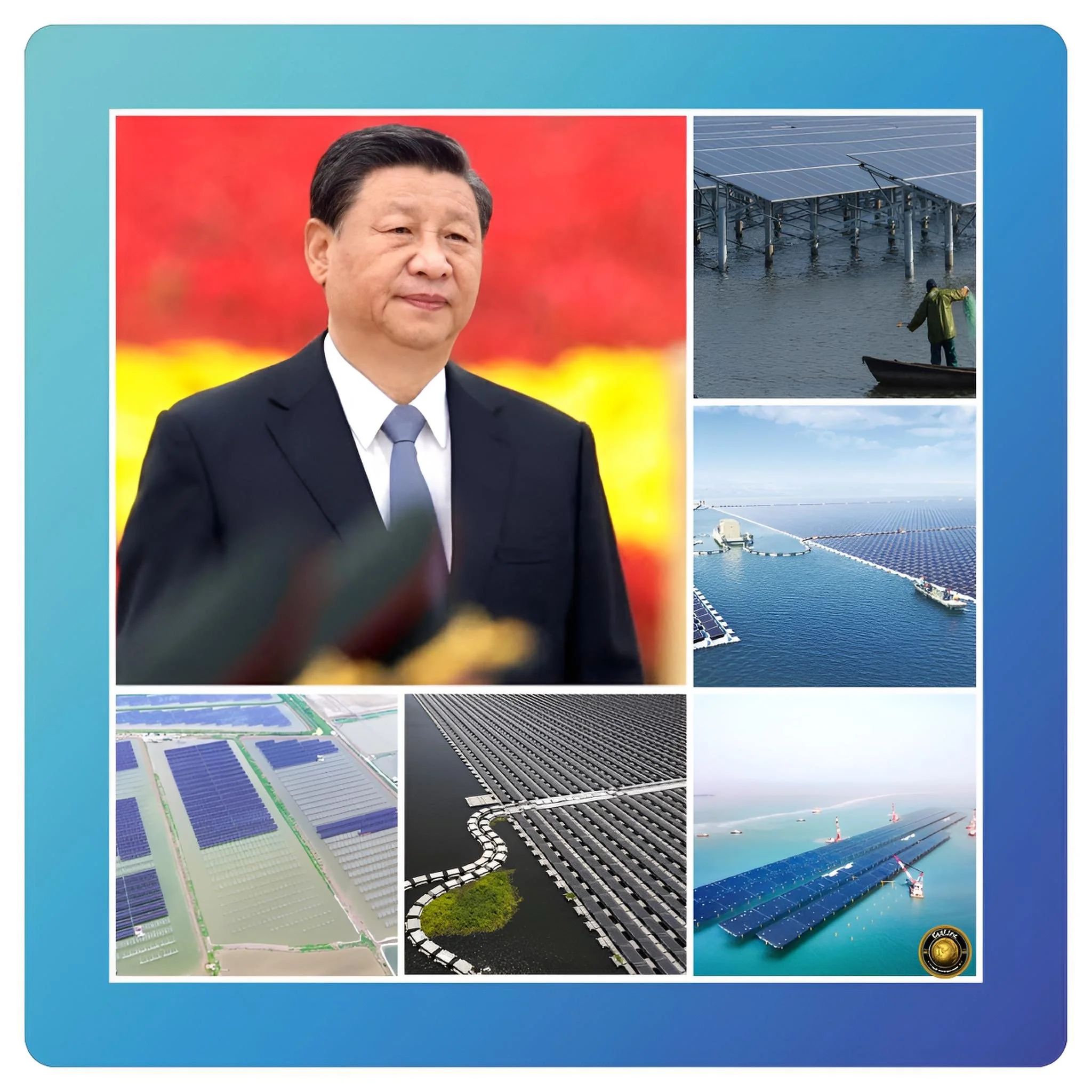
FAF comprehensive article delves into the emergence of integrated floating solar and aquaculture systems across China, where photovoltaic arrays installed on lakes and reservoirs coexist with underwater farming of fish, shrimp, and crabs.
This dual-use model reflects a broader strategic effort to maximize resource efficiency while advancing energy transition goals and strengthening food security.
Major developers including Sungrow, China Three Gorges Corporation, and State Power Investment Corporation have played central roles in scaling these projects, often in former mining subsidence lakes and artificial reservoirs.
Their initiatives illustrate how state-supported industrial policy and technological innovation have combined to create one of the world’s most extensive floating solar networks.
While proponents emphasize land conservation, reduced evaporation, and improved economic productivity, environmental concerns persist regarding water quality, habitat disruption, and long-term ecological balance.
The evidence suggests that outcomes depend heavily on site selection, design standards, and regulatory oversight.
The analysis concludes that floating solar-aquaculture systems represent a significant evolution in infrastructure planning, offering potential benefits but requiring careful governance to ensure environmental sustainability.
Introduction
Technological convergence reflects shifting priorities in resource management
China’s rapid industrialization and urbanization have intensified pressure on land, water, and energy systems, prompting policymakers to pursue innovative solutions that reconcile economic growth with environmental constraints.
Floating solar installations paired with aquaculture represent a striking example of this approach, transforming previously underutilized water surfaces into productive energy and food platforms.
These projects embody a broader philosophy of integrated resource management in which infrastructure serves multiple functions simultaneously.
By generating electricity above water while cultivating aquatic species below, developers seek to optimize spatial efficiency and enhance economic returns.
The concept has gained international attention as countries confront competing demands for renewable energy deployment and food production.
China’s experience provides a large-scale case study of how technological innovation can reshape the relationship between energy systems and natural ecosystems.
History and current status
Industrial policy accelerates deployment across reservoirs mining subsidence lakes
Floating solar technology first emerged as a niche innovation in the early 21st century, driven by the need to overcome land constraints and improve photovoltaic efficiency through natural cooling from water surfaces.
China began experimenting with pilot projects in the mid-2010s, particularly in regions with flooded coal mining subsidence areas that offered large expanses of calm water.
By the late 2010s and early 2020s, rapid cost declines in solar modules and strong government support enabled large-scale deployment.
Several provinces began integrating floating solar with aquaculture, recognizing the potential to generate electricity while maintaining traditional livelihoods dependent on fish farming.
Today, China hosts the world’s largest floating solar installations, with multiple gigawatt-scale projects operating across inland water bodies.
Aquaculture beneath solar arrays continues to expand, particularly in freshwater systems where species such as carp, shrimp, and crabs are cultivated.
Key developments
Corporate leadership and technological advances drive rapid expansion
The growth of floating solar-aquaculture systems has been shaped by collaboration between state-owned energy companies, private technology firms, and local governments.
Sungrow has developed floating inverter and platform technologies designed to withstand harsh environmental conditions, while China Three Gorges Corporation has invested heavily in large reservoir-based solar projects.
State Power Investment Corporation and China Huaneng Group have also advanced hybrid projects integrating renewable generation with fisheries, reflecting a broader push to diversify energy portfolios while supporting rural economies.
Technological improvements in anchoring systems, corrosion-resistant materials, and digital monitoring have enhanced reliability and reduced maintenance costs.
These advances have made floating solar increasingly competitive with land-based installations, accelerating adoption.
Latest facts and concerns
Environmental monitoring intensifies amid rapid infrastructure scaling nationwide
As of 2026, China’s floating solar capacity continues to expand as part of national renewable energy targets. Hybrid projects are increasingly promoted as models of efficient land use, particularly in densely populated regions where available land is limited.
However, environmental researchers have raised concerns about potential impacts on aquatic ecosystems.
Reduced sunlight penetration can alter photosynthesis in aquatic plants and affect oxygen levels, while construction activities may disturb sediment and release pollutants.
Water temperature changes and altered nutrient cycles could influence fish behavior and biodiversity.
Although many studies indicate that moderate coverage levels minimize ecological disruption, uncertainty remains regarding cumulative impacts over long time horizons.
Cause and effect analysis
Integrated infrastructure produces economic gains alongside ecological uncertainties
The primary drivers of floating solar-aquaculture systems include land scarcity, rising energy demand, and the need to reduce carbon emissions.
By utilizing existing water bodies, developers avoid land acquisition conflicts while benefiting from improved solar panel efficiency due to cooling effects.
These advantages contribute to lower electricity costs and increased revenue streams for local communities engaged in aquaculture. At the same time, shading from solar arrays can reduce algal blooms and evaporation, potentially improving water management.
Yet the same shading effect can disrupt natural light cycles essential for aquatic ecosystems, potentially affecting species composition.
Infrastructure installation may also alter hydrodynamics and habitat structure, creating both positive and negative ecological outcomes depending on local conditions.
Future steps
Regulatory refinement and scientific monitoring essential for sustainable growth
Ensuring the long-term sustainability of floating solar-aquaculture systems will require robust environmental assessment and adaptive management.
Regulators are increasingly emphasizing environmental impact studies, coverage limits, and biodiversity monitoring to mitigate potential risks.
Technological innovation is likely to focus on optimizing panel spacing, improving water circulation, and integrating ecological design principles that support aquatic habitats.
Greater transparency and data sharing will help policymakers refine standards and build public confidence.
International collaboration may also expand as other countries explore similar models, positioning China as a key exporter of floating solar technology and expertise.
Conclusion
Balancing innovation with ecological stewardship defines long-term success
China’s floating solar-aquaculture systems represent a compelling example of how infrastructure innovation can address multiple policy objectives simultaneously.
By generating renewable energy while supporting food production, these projects illustrate the potential of integrated resource management.
However, their long-term viability depends on careful balancing of economic benefits with ecological protection.
Effective governance, rigorous monitoring, and continued technological improvement will determine whether the model can deliver sustainable outcomes.
If managed responsibly, floating solar integrated with aquaculture could become a cornerstone of the emerging blue economy, offering a pathway toward cleaner energy and more efficient use of natural resources while preserving ecosystem health.