Rubio’s Strategic Recalibration: Reassurance, Realignment, and the Future of the Transatlantic Order -Part I
Executive Summary
Rubio Softens Tone Toward Europe Amid Strategic Realignment
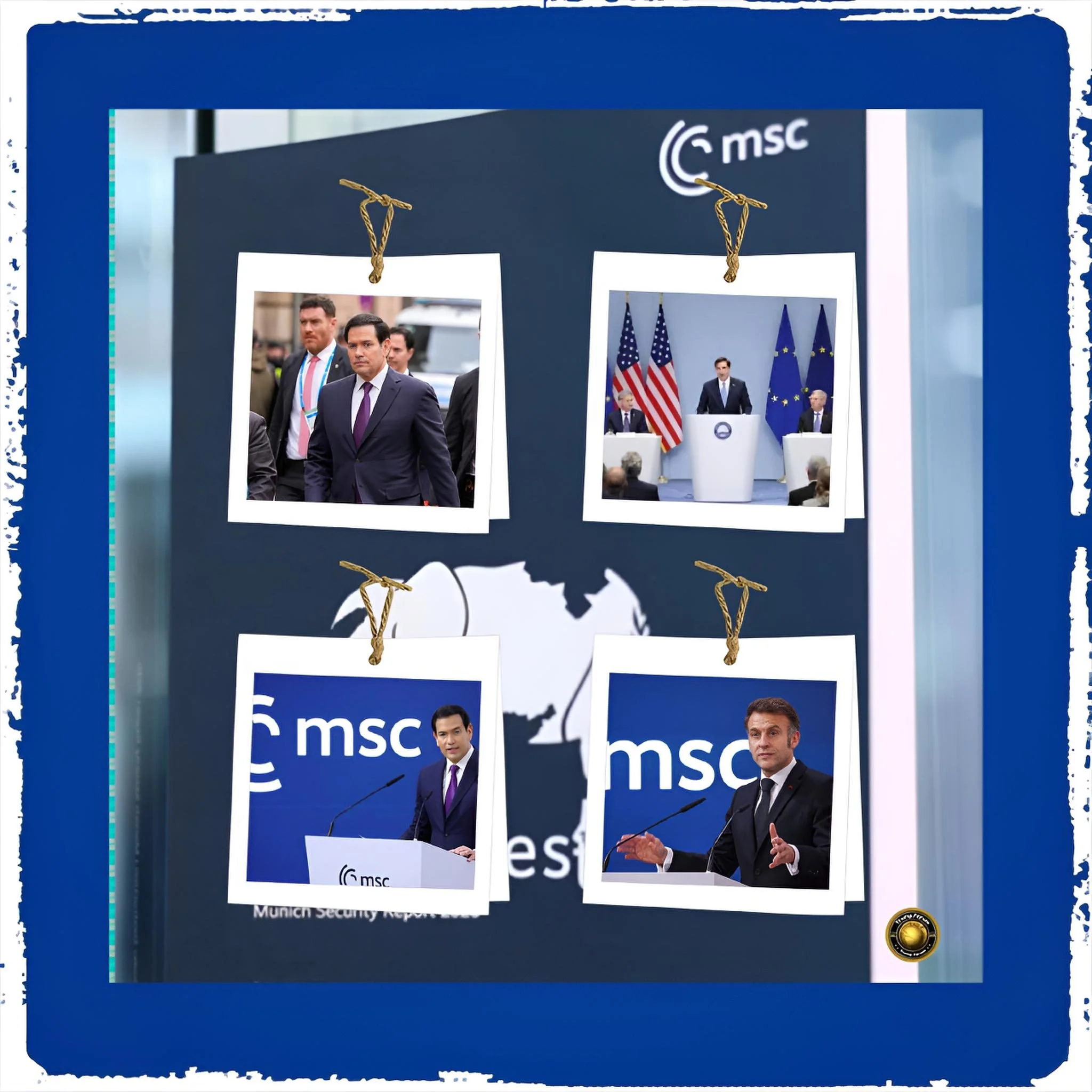
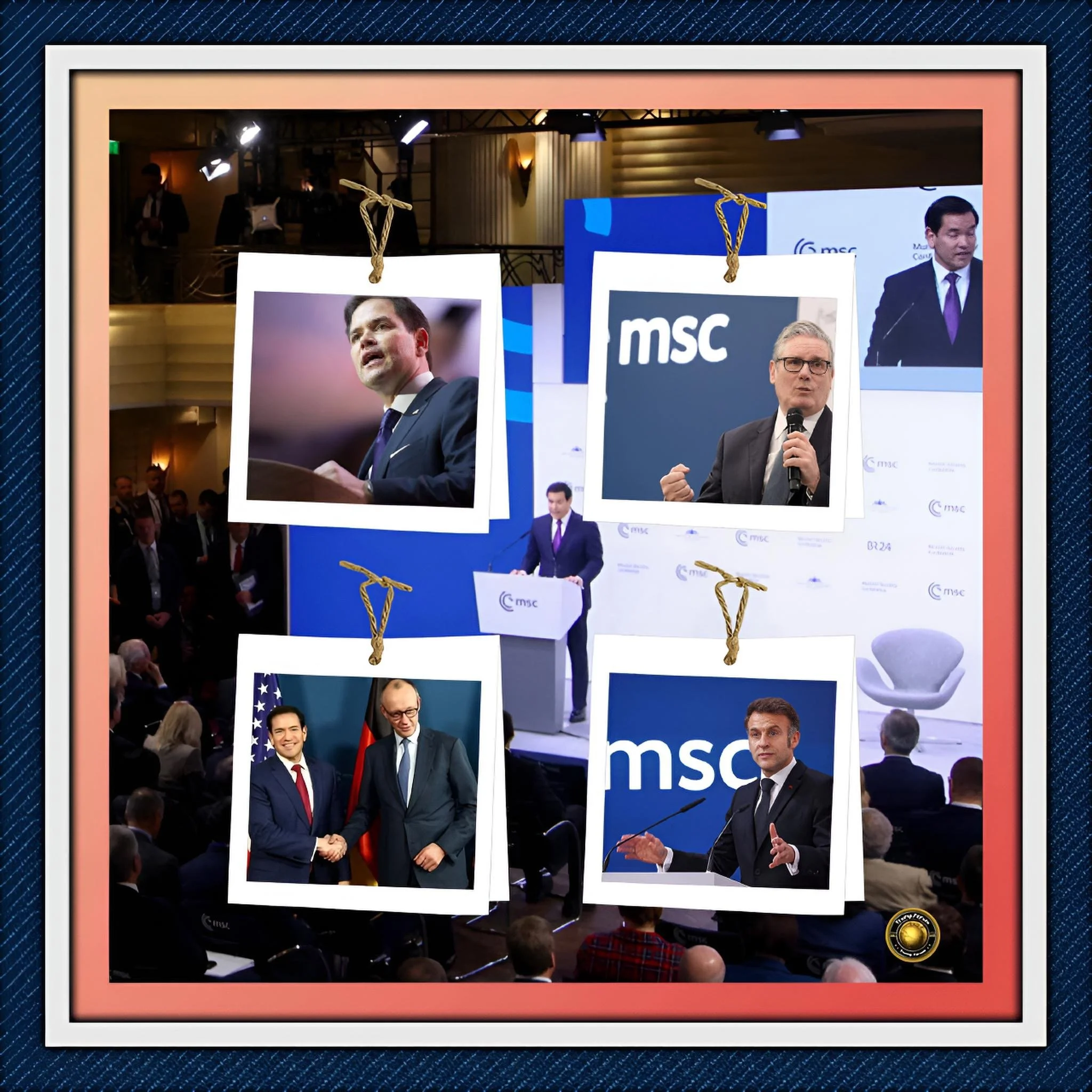
At the 2026 Munich Security Conference in Munich, Germany, U.S. Secretary of State Marco Rubio delivered a markedly conciliatory speech toward European allies, signaling a tactical recalibration in Washington’s transatlantic posture.
The address stood in contrast to the confrontational tone adopted the previous year by U.S. Vice President JD Vance at the same forum, where criticism of European governance and free speech norms unsettled European leaders.
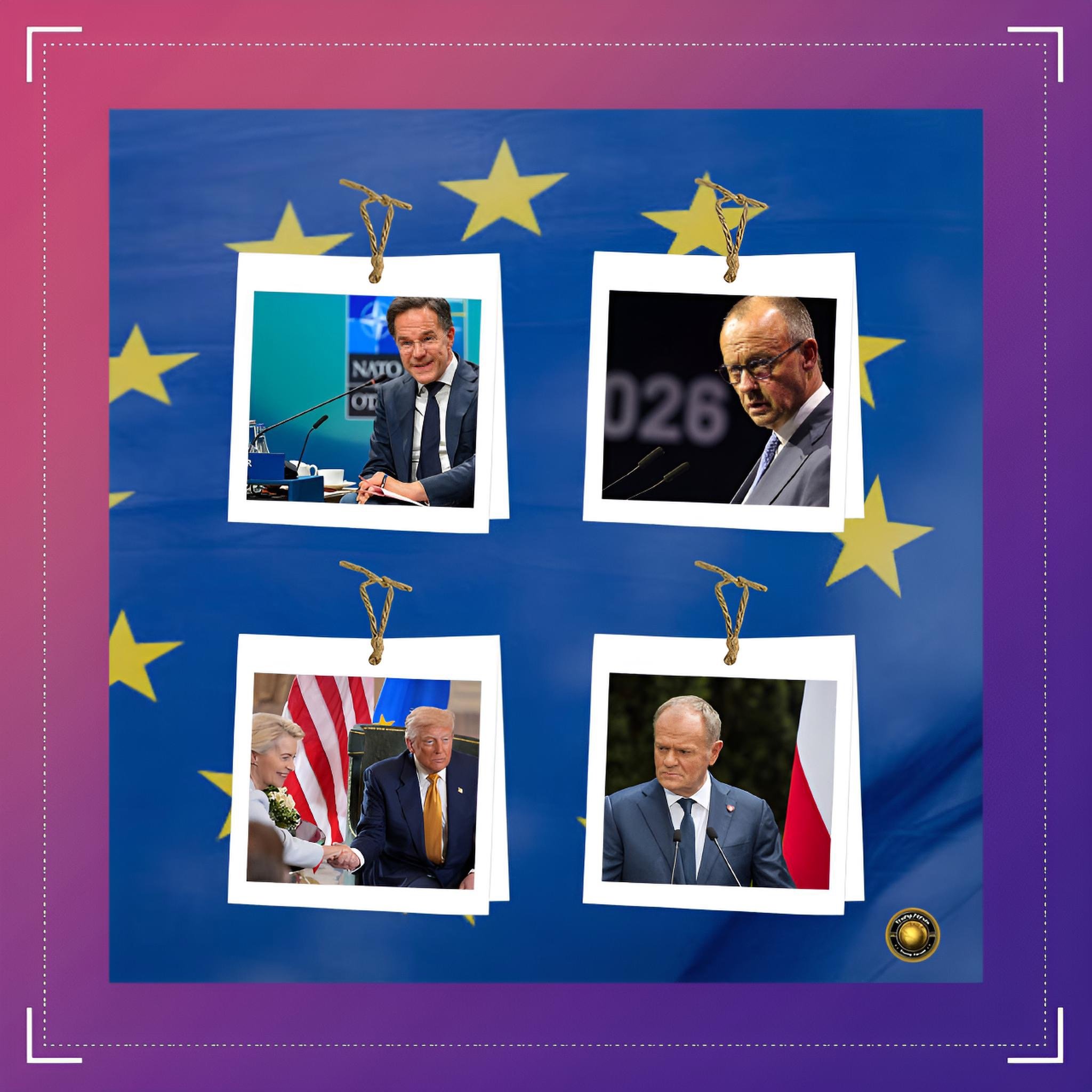
Rubio’s softened rhetoric, welcomed publicly by European Commission President Ursula Von der Leyan, reflects not a fundamental ideological shift but a strategic adjustment shaped by geopolitical necessity, alliance management imperatives, domestic political calibration, and mounting global instability.
The speech underscores Washington’s recognition that sustaining Western cohesion amid intensifying rivalry with China, ongoing confrontation with Russia, and volatility in the Middle East requires disciplined diplomacy rather than rhetorical rupture.
Yet beneath the conciliatory veneer remain substantive divergences over climate governance, multilateral institutions, the use of force, economic security, and burden-sharing within NATO.
Rubio’s message represents an attempt to stabilize optics while preserving core policy commitments aligned with President Donald Trumps second-term strategic doctrine.
Introduction
Munich Reset Signals New Phase in Transatlantic Relations
The Munich Security Conference has long functioned as a barometer of the transatlantic relationship. When J. D. Vance addressed the forum in 2025, European policymakers interpreted his critique of European domestic governance as a harbinger of structural estrangement.
The speech symbolized an emerging pattern: Washington’s impatience with what it perceived as European strategic dependency and ideological divergence.
One year later, Marco Rubio sought to recalibrate that trajectory. His declaration that the United States and Europe share a “Western civilization” and that Washington “cares deeply” about Europe’s future was carefully constructed to reassure without conceding policy ground.
The tonal shift was immediate and deliberate.
This recalibration invites a central question: why now?
History and Current Status of the Transatlantic Relationship
The post-1945 transatlantic order was constructed upon shared security guarantees, economic integration, and institutional architecture. NATO institutionalized collective defense. The United Nations embodied multilateral cooperation.
Economic frameworks bound markets across the Atlantic.
After the Cold War, the alliance evolved from containment to stabilization, enlargement, and crisis management. Yet over three decades, structural asymmetries deepened.
The United States consistently carried disproportionate defense burdens. European strategic autonomy remained aspirational.
Under Trump’s first presidency, disputes over defense spending, trade imbalances, and climate commitments strained the alliance.
European leaders began speaking openly about “strategic autonomy.” Defense expenditures rose incrementally, yet reliance on U.S. security guarantees persisted.
By 2025, 23 NATO members had reached or surpassed the 2% defense spending benchmark, yet the United States still accounted for roughly 65% of total alliance defense expenditure. Structural dependency endured.
The 2025 Munich rupture crystallized tensions. European leaders feared that Washington’s political rhetoric signaled possible disengagement. Investor sentiment reflected transatlantic uncertainty.
Policy coordination on Ukraine, Iran, and supply chains showed signs of fragmentation.
Rubio’s 2026 speech must be interpreted against this backdrop of accumulated friction.
Key Developments Leading to the Tone Shift
Several developments shaped Washington’s recalibration.
First, geopolitical competition intensified. China’s industrial policy, semiconductor ambitions, and naval expansion increased pressure for coordinated Western response.
European participation in export controls and investment screening became strategically indispensable.
Second, Russia’s war in Ukraine entered a protracted phase. European states bore increasing financial and military burdens. A public rupture between Washington and Brussels risked emboldening Moscow.
Third, financial volatility underscored Western interdependence. Transatlantic trade exceeds $1 trillion annually. Supply chain security, especially in energy and critical minerals, requires alignment.
Fourth, domestic political considerations in the United States demanded balance. While President Trump’s electorate favors assertive sovereignty, American corporate and security establishments advocate alliance stability.
Rubio’s tone reflects synthesis: ideological firmness combined with diplomatic reassurance.
Latest Facts and Emerging Concerns
Rubio Reassures Allies While Defending Hardline American Policies
Rubio’s speech emphasized civilizational unity but included pointed references to European regulatory overreach, migration policy, and energy transition models.
His dismissive remarks regarding certain United Nations initiatives unsettled European diplomats. Yet the framing avoided direct rebuke.
Von der Leyen described the speech as “reassuring,” though European officials privately voiced concern that rhetorical warmth might mask transactional expectations.
Rubio defended U.S. assertiveness in Venezuela and Iran, reaffirming willingness to employ force if national interests demand. European capitals remain wary of unilateral escalation.
Climate policy divergence persists. The European Union maintains aggressive decarbonization targets and carbon border adjustment mechanisms.
The U.S. administration questions economic costs and regulatory overreach.
The transatlantic relationship therefore occupies a paradoxical space: rhetorically stabilized, strategically interdependent, yet ideologically divided.
Cause and Effect Analysis
Rubio’s softened tone is best understood as strategic causality rather than ideological evolution.
Cause 1: Strategic Rivalry With China
Effect: Necessity of Allied Cohesion
The United States cannot sustain technological and industrial competition without European alignment on export controls and investment regimes.
Cause 2: Russian Aggression
Effect: Preservation of NATO Unity
Visible fissures risk emboldening Moscow and undermining deterrence credibility.
Cause 3: Economic Interdependence
Effect: Market Stability Imperative
Investor confidence depends on predictable alliance structures.
Cause 4: Domestic Political Optics
Effect: Calibrated Diplomacy
The administration seeks to appear firm but responsible.
Cause 5: European Strategic Autonomy Debate
Effect: U.S. Reassurance to Prevent Decoupling
Washington recognizes that excessive rhetorical aggression accelerates European independence initiatives.
Future Steps and Strategic Trajectories
Several trajectories are plausible.
Scenario 1: Managed Alignment
The United States and Europe maintain cooperative tension. Disagreements persist, but institutional frameworks endure.
Scenario 2: Transactional Convergence
The alliance evolves toward explicit burden-sharing negotiations. Defense spending increases further across Europe. U.S. rhetorical moderation continues in exchange for tangible commitments.
Scenario 3: Structural Drift
If rhetoric re-hardens or policy coordination fails, Europe accelerates strategic autonomy. NATO cohesion weakens incrementally.
Short-term indicators will include NATO defense commitments, coordinated China policy, Ukraine funding structures, and climate trade negotiations.
Conclusion
From Confrontation to Conciliation in U.S.–Europe Diplomacy
Marco Rubio’s softened tone at Munich represents neither capitulation nor transformation. It is a strategic recalibration born of necessity.
The United States recognizes that confrontation with Europe weakens its own global position. Europe recognizes that American security guarantees remain foundational.
The transatlantic relationship thus enters a phase of disciplined pragmatism. The rhetoric of rupture has given way to the language of reassurance. Yet structural tensions remain unresolved.
The question is not whether Washington cares deeply about Europe.
The deeper question is whether shared civilizational rhetoric can withstand divergent political economies, strategic cultures, and domestic pressures in an era of geopolitical fragmentation.
Rubio’s Munich moment may be remembered not as reconciliation, but as recalibration.