The Puzzling Passivity of Russian: Repression Alone Cannot Explain the Vast Protest Gap
Executive Summary
Structural Forces Behind Russia’s Limited Mass Mobilization
FAF comprehensive article delves into the enduring question of why Russians, despite prolonged war, economic strain, and political repression, have not mobilized collectively at levels comparable to Iranians confronting clerical authority or Ukrainians resisting corrupt and externally aligned leadership.
Repression alone cannot explain this divergence. Although the Kremlin has constructed one of the most technologically advanced authoritarian systems of the 21st century, coercion operates in conjunction with historical memory, political economy, identity formation, and institutional architecture.
This article argues that 5 structural dynamics account for the protest gap: centralized presidentialism, fragmented civil society, hydrocarbon-funded distributive stability, imperial-national identity consolidation, and generational risk aversion shaped by post-Soviet trauma.
In contrast, Iran’s factional elite structure and Ukraine’s competitive oligarchic pluralism created protest openings absent in Russia. Russia’s apparent passivity reflects constrained collective coordination rather than genuine political indifference.
Introduction
Comparative Protest Patterns Across Post-Soviet and Middle Eastern Societies
The absence of sustained mass protest in Russia since 2012 presents a striking anomaly in comparative politics.
From Tehran’s recurring uprisings to Kyiv’s revolutionary mobilizations, societies under pressure have repeatedly challenged entrenched authority. Russia, however, has remained largely quiescent.
This divergence demands structural explanation. Iran has experienced severe repression, including mass arrests and lethal crackdowns.
Ukraine prior to 2014 faced corruption and coercive pressures. Yet both societies overcame fear thresholds repeatedly. Russia did not. Understanding this requires examining institutional design, economic stabilization, identity narratives, and collective memory.
History and Current Status
From Soviet Mobilization to Post-Soviet Stabilization
During glasnost and perestroika in the late 1980s, Russians and Ukrainians alike mobilized in significant numbers.
The collapse of the Soviet Union in 1991 generated both political liberation and socioeconomic dislocation. In Russia, the 1990s were marked by hyperinflation, GDP contraction, institutional fragility, and declining living standards. This period profoundly shaped collective psychology.
When Vladimir Putin assumed office in 2000, he prioritized order and centralization. Rising oil prices allowed income growth, pension stabilization, and state-sector expansion. Between 2000 and 2008, real incomes increased substantially.
A tacit social contract emerged: political acquiescence in exchange for material predictability.
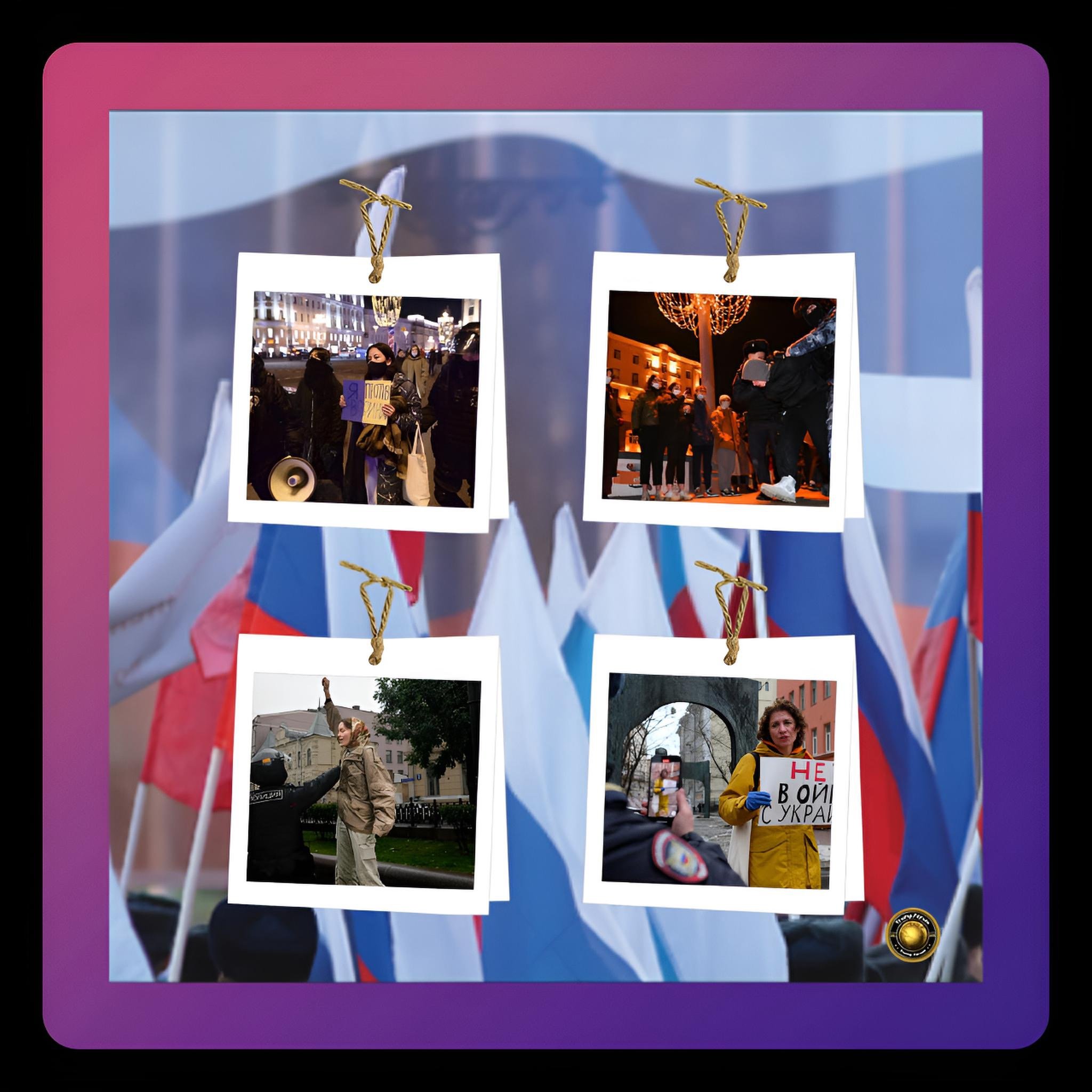
Mass protests reappeared in 2011–2012 following contested parliamentary elections. However, the state responded with calibrated repression and legislative tightening. Laws regulating NGOs, foreign funding, media, and public assembly narrowed civic space.
By the time Russia launched its full-scale invasion of Ukraine in 2022, opposition networks were organizationally weakened and socially fragmented.
Key Developments
Digital Authoritarianism and Wartime Consolidation After 2014
Several developments intensified Russia’s protest gap after 2014. The annexation of Crimea produced a surge in patriotic sentiment. Approval ratings exceeded 80%. National pride reinforced regime legitimacy.
Simultaneously, the state invested in digital control mechanisms. Content filtering, platform regulation, and surveillance infrastructure limited rapid protest coordination. While not replicating comprehensive internet isolation, Russia developed hybrid tools sufficient to disrupt collective mobilization.
After 2022, wartime legislation criminalized “discrediting” the armed forces, sharply increasing the legal risks of dissent.
Selective prosecution targeted prominent organizers, reinforcing deterrence without widespread indiscriminate violence. Emigration provided an exit channel for dissatisfied citizens, reducing internal mobilization pressure.
Latest Facts and Concerns
War Economy Expansion and Institutional Brittleness Risks
As of 2026, Russia’s political system remains highly centralized. Military expenditure consumes a significant share of federal spending. Wartime production has stimulated segments of the defense-industrial complex, partially offsetting sanction pressures.
Casualty estimates remain politically sensitive, yet independent assessments indicate losses in the tens of thousands. Mobilization disproportionately affects peripheral and economically disadvantaged regions, reducing protest likelihood in major metropolitan centers.
Economic adaptation through redirected trade toward Asia, currency controls, and fiscal management has prevented systemic collapse. Inflation persists but is managed administratively. However, long-term technological constraints and capital limitations pose structural growth challenges.
The principal concern lies in institutional overcentralization. Feedback mechanisms are weak. Elite cohesion remains intact but could fracture under prolonged military or economic stress. Apparent stability may conceal latent fragilities.
Cause-and-Effect Analysis
Interlocking Mechanisms Producing Political Quiescence
Repression interacts with deeper structural variables.
First, collective memory of 1990s instability fosters risk aversion. The regime equates protest with chaos, reinforcing societal caution.
Second, hydrocarbon revenues historically financed distributive stability.
Even under sanctions, pensions and public salaries continue, dampening material grievances that might otherwise catalyze protest.
Third, elite cohesion limits protest openings. Iran’s factional competition and Ukraine’s oligarchic pluralism created elite splits that protesters could exploit.
Russia’s centralized presidentialism suppresses such fragmentation.
Fourth, imperial and civilizational identity narratives legitimize sacrifice. Crimea’s annexation and wartime rhetoric frame external confrontation as defensive necessity, strengthening national solidarity.
Fifth, emigration substitutes for domestic dissent. Exit reduces pressure for collective voice.
These factors reinforce one another. High protest costs discourage organization; weak organization increases perceived risks; economic stabilization reduces urgency; identity narratives justify endurance. The result is constrained agency within an authoritarian equilibrium.
Future Steps
War Outcomes, Economic Sustainability, and Elite Cohesion
Russia’s political trajectory will hinge on 3 interrelated variables.
War outcomes remain central. A decisive military setback could undermine legitimacy narratives. Conversely, prolonged stalemate may sustain controlled mobilization without systemic rupture.
Economic sustainability constitutes a second variable. Prolonged sanctions constrain technological modernization and productivity. If living standards decline sharply, the social contract could erode.
Elite cohesion forms the third variable. Highly centralized systems often encounter instability during leadership transitions. Succession uncertainty could create elite fissures, potentially reopening protest space.
Generational change may gradually reconstitute civic activism. Younger Russians exposed to global networks could reshape political expectations, though institutional barriers remain formidable.
Conclusion
Authoritarian Resilience Masks Latent Structural Vulnerabilities
Russia’s protest gap cannot be reduced to repression alone. Historical trauma, distributive political economy, centralized institutional design, identity consolidation, and emigration collectively constrain collective action.
Compared with Tehran’s factional volatility and Kyiv’s mobilizational pluralism, Moscow’s vertical power structure forecloses protest pathways.
Russian passivity reflects not apathy but constrained coordination under high perceived risk.
Authoritarian resilience, however, is rarely permanent. Overcentralization often produces brittleness beneath apparent stability.
Whether Russia’s political equilibrium endures or fractures will depend on contingencies that remain uncertain. History suggests that when transformation occurs in highly centralized systems, it frequently unfolds with unexpected speed.