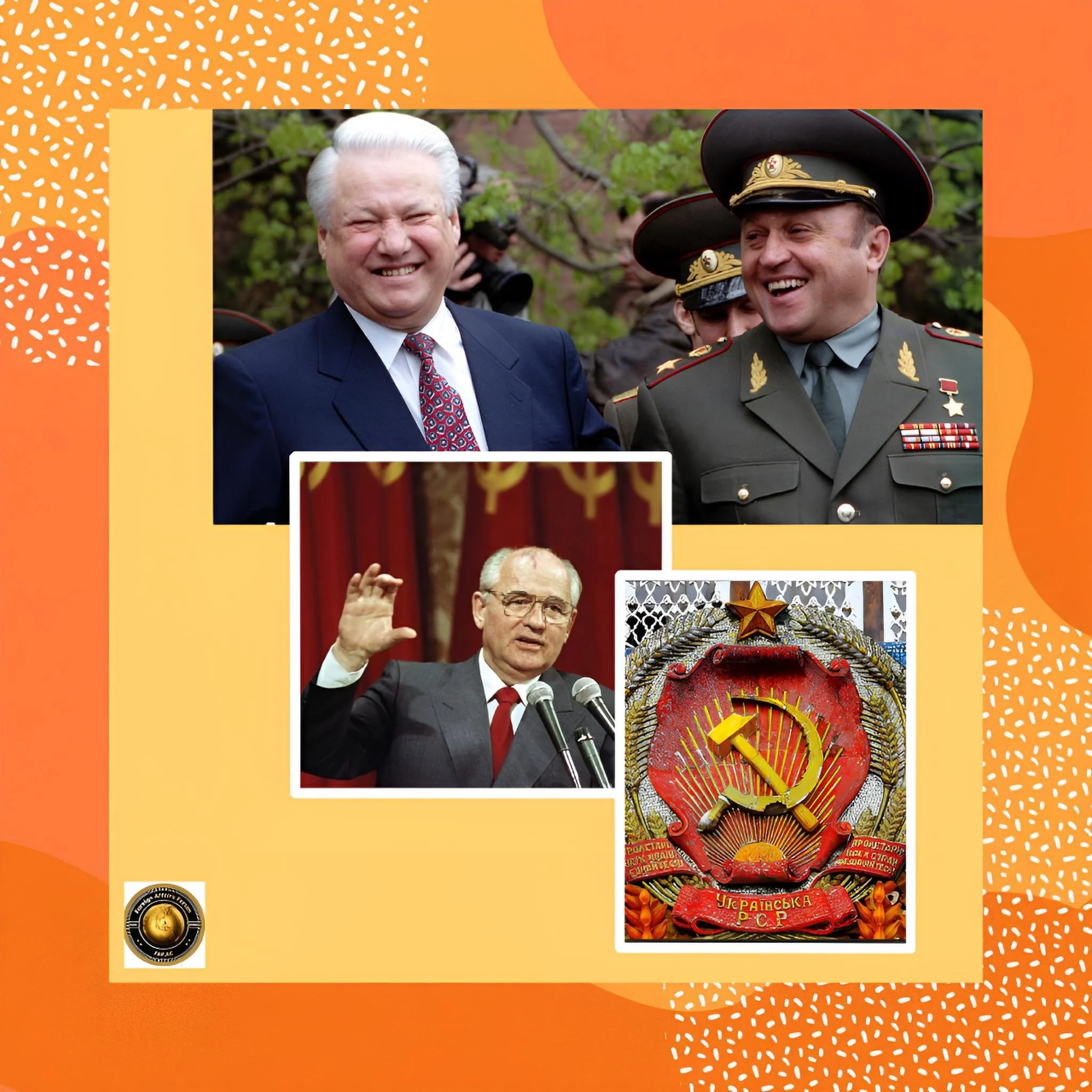
The Fragility of Empires: Political and Social Dynamics Lessons from the Soviet Collapse for 21st-Century Major Powers -Part V
Executive Summary
The political and social dissolution of the Soviet Union between 1985 and 1991 reveals mechanisms of regime disintegration that remain critically relevant for twenty-first-century major powers managing multiethnic federations, elite coalitions, and nationalist pressures.
The Soviet collapse was not primarily the consequence of economic exhaustion. However, economic failure contributed substantially, but was ultimately driven by the simultaneous erosion of ideological conviction amongst the regime’s elite, the loss of institutional cohesion within the Communist Party, the emergence of nationalism within ethnically defined republics, and, ultimately, the defection of regional elites from the Soviet project. Contemporary powers—particularly those structured as multinational federations with diverse ethnic populations, reliant upon elite consensus for regime stability, or facing nationalist movements—require a comprehensive understanding of these political and social mechanisms to maintain institutional integrity.
The evidence demonstrates that regime survival depends upon four foundational requirements: sustained elite consensus with transparent mechanisms for elite access to power and resources, institutional stability that permits elite predictability and reduces uncertainty, maintenance of ideological conviction or credible repression mechanisms when conviction erodes, and effective mechanisms for managing nationalism and ethnic identity within federal structures.
This analysis examines fifteen specific mechanisms through which the Soviet regime failed across these dimensions and derives actionable lessons for contemporary powers seeking to prevent comparable institutional collapse.
Introduction
The disintegration of the Soviet Union represents not merely a historical anomaly but a comprehensive case study in the political and social conditions through which large-scale states fragment. Whilst economic analysis focuses on productivity stagnation and resource misallocation, political analysis reveals a more complex dynamic: the simultaneous failure of the mechanisms by which authoritarian regimes maintain internal cohesion and suppress competing centres of power.
The regime possessed vast military resources, control over enormous territory and populations, and a sophisticated security apparatus; yet all these material attributes proved insufficient when the elite consensus sustaining the regime eroded, and alternative power structures emerged through which regional and nationalist forces could organise.
The Soviet case differs from democratic regime breakdown, in which popular mobilisation and electoral mechanisms provide transparent pathways for regime displacement. Instead, the Soviet collapse proceeded through elite defection cascades, nationalist mobilisation within permissible political spaces, and the emergence of an alternative power centre (Boris Yeltsin’s Russian republic) that provided an institutional framework for opposition to the Soviet centre.
The Western interpretation emphasising the triumph of democracy and capitalism over communism obscures the actual mechanisms: the regime’s own elite proved unwilling to maintain it once ideological conviction had evaporated and alternative paths to power became available.
For twenty-first-century major powers, this case study provides crucial intelligence on threats to regime stability, mechanisms for elite management, management of nationalism in multinational federations, and the relationship between institutional transparency and elite defection.
The evidence suggests that conventional wisdom regarding authoritarian stability—that repression ensures regime persistence, that economic growth purchases loyalty, that multinational federations naturally fragment—requires substantial qualification. Regimes have varied substantially in their capacity to manage challenges identical to those that destroyed the USSR, and this variation correlates more with elite cohesion mechanisms, institutional clarity, and adaptive capacity than with military power or economic resources.
Key Political Dynamics: The Cascade Mechanisms of Regime Disintegration
The Soviet Union’s political dissolution proceeded through a cascade mechanism wherein each elite decision created conditions for subsequent decisions that progressively weakened the regime.
Understanding this cascade requires examining the specific mechanisms through which glasnost (openness) destroyed institutional capacity, through which elite consensus eroded, and through which alternative power structures emerged to challenge the centre.
Glasnost, introduced as a controlled liberalisation of public discourse, functioned as an uncontrollable destabiliser precisely because permitting limited criticism inevitably leads toward fundamental system critique. Once the regime permits discussion of specific failures—economic stagnation, technological lag, the Chernobyl disaster—logical progression toward questioning fundamental system premises becomes politically impossible to contain.
The Chernobyl nuclear accident of April 1986, initially subject to a three-day coverup by Soviet authorities, exposed the regime’s capacity for systematic dishonesty precisely when glasnost was supposed to guarantee truthfulness. When radioactive fallout reached Scandinavia and international media reported radiation levels, Soviet authorities were forced to acknowledge disaster they had initially denied.
The subsequent media coverage—investigative journalists reporting on state incompetence, environmental catastrophe, and systematic official deception—demonstrated that glasnost had created institutional spaces the regime no longer controlled.
The erosion of party discipline followed inexorably from the loss of ideological conviction. Democratic centralism, the Communist Party’s hierarchical discipline mechanism, functioned by requiring party members to subordinate personal preferences to party decisions, justified through belief in the party’s historical mission and ideological correctness.
By the mid-1980s, even the party’s elite had lost this conviction. High-ranking officials including Alexander Yakovlev and Eduard Shevardnadze privately admitted that the Soviet model had failed. The KGB briefed Gorbachev that the Soviet Union could not prevail in the Cold War through military competition; the contest had shifted to ideological and economic domains where the West possessed overwhelming advantages. Once the regime’s own elite recognised ideological bankruptcy, the principle through which party discipline functioned—belief in the party’s rightness—became inoperative. Party members began calculating whether maintaining Communist Party affiliation served their interests, particularly as Yeltsin and nationalist movements offered alternative power bases.
The introduction of contested elections to the Congress of People’s Deputies in 1989, intended as mechanism for competitive pressure within the party apparatus, instead mobilised political forces external to party structure. Democratic elections in the Baltic republics produced overwhelming pro-independence majorities. In the Russian republic, Boris Yeltsin won election from Moscow through independent campaign against the official party apparatus, demonstrating that alternative power bases could emerge and mobilise popular support outside central control. The electoral mechanism, designed to strengthen party legitimacy through controlled competition, instead delegitimised the party by demonstrating that competing forces could mobilise substantial support.
Nationalism and Ethnic Federalism: Controlled Secessionism
The USSR’s fundamental structural vulnerability concerned its multinational federal structure combining fifteen ethnically defined republics under Russian dominance disguised through communist ideology and federal fiction. Glasnost, by permitting expression of suppressed national identities previously forbidden through the totalitarian apparatus, created institutional opportunity structures through which suppressed nationalism could mobilise into coherent political movements. The process retrospectively termed the “parade of sovereignties” commenced in 1988 and accelerated inexorably toward complete dissolution.
Estonia, whose nationalist movement had organised since the mid-1980s, declared sovereignty in November 1988 and proceeded toward full independence. Lithuania followed with independence declaration on 11 March 1990, an act of extraordinary political courage given that Soviet authorities responded with economic blockade (restricting oil and gas supplies) and military occupation. When Soviet paratroopers attacked civilian protesters in Vilnius on 13 January 1991, killing fourteen demonstrators, the action demonstrated Gorbachev’s fundamental ambivalence: unwilling to use decisive military force to prevent nationalist movements, yet unwilling to accept their success. This ambivalence proved catastrophically destabilising. It signalled to other republics that the centre lacked coherence to impose either suppression or accommodation, creating vacuum conditions within which separatist movements could organise confidently.
The critical phenomenon, however, concerned not nationalism in non-Russian republics but rather Russian secessionism. Whilst nationalism in Ukraine, the Caucasus, and Central Asia contributed to fragmentation, it was the retreat of the dominant nationality—Russia, which provided most Soviet leadership, resources, and military force—from the imperial project that proved ultimately fatal.
Boris Yeltsin, positioning himself as champion of Russian sovereignty against the supposedly oppressive Soviet centre, reframed Russia as oppressed despite Russia’s dominance within the system. This paradoxical framing possessed political genius: Yeltsin articulated Russian resentment that the union’s obligations (subsidising less-developed republics, maintaining military commitments) exceeded Russian benefits, and that Russia would flourish only by withdrawing from the multinational federation.
The “parade of sovereignties” created what was termed the “War of Laws”: escalating legislative conflicts between republics asserting priority of their laws and the Soviet centre claiming overriding authority. The mechanism through which federation supposedly functioned—democratic centralism and Communist Party hierarchical discipline—had become inoperative. Republics possessed legislatures with contested elections that increasingly elected officials hostile to Soviet authority.
The centre possessed legal authority but lacked enforcement mechanisms to compel obedience from republics that possessed territory, populations, and resources. The regime’s fundamental problem was neither purely ideological nor purely economic; it was structural: the centre had deliberately weakened itself by introducing democratic mechanisms without establishing functional mechanisms for centre-periphery negotiation and accommodation.
Elite Defection: The Mechanism of Regime Dissolution
Scholarly research on contemporary autocracies demonstrates that elite defection—the departure of regime-supporting elites to opposition or alternative power centres—constitutes the proximate mechanism through which regimes disintegrate. Elite defection increases systematically when: regime electoral vulnerability increases, access to spoils and patronage declines, uncertainty about the regime’s future commitment increases, and elites possess independent political resources (personal followings, business connections) permitting pursuit of goals without regime support.
The Soviet collapse exemplifies each of these conditions. As the regime’s legitimacy eroded, elites began calculating whether continued affiliation with the Communist Party served their interests. Regional officials, sensing that Yeltsin’s Russian republic offered alternative power base, began shifting allegiances. Communist Party cadres who had operated for decades within democratic centralism suddenly discovered that alternative political identities—regional nationalism, democratic reformism, Russian sovereigntism—offered superior career prospects. The cascade character of elite defection meant that as some high-visibility elites departed, remaining elites faced increased uncertainty about the regime’s stability, which accelerated additional defections.
The August 1991 coup attempt by hardline communists, intended to reverse this trajectory through military enforcement of communist orthodoxy, instead demonstrated the regime’s inability to command even its own elites’ obedience. Military units sent to suppress anti-coup protests refused to fire on civilians. The putschists lacked sufficient conviction within their own institutions to compel coercive force deployment. The failed coup’s consequences proved decisive: it eliminated the last obstacles to elite defection by demonstrating that the regime lacked capacity to repress its challengers effectively.
Gorbachev, the regime’s nominal leader, emerged from the coup politically mortally wounded. His authority, already erosion through glasnost and perestroika’s failures, became completely delegitimised. Yeltsin, who had defied the coup and mobilised popular resistance, emerged as the clear power centre. The logic of elite calculation became evident: Gorbachev represented a weakening regime; Yeltsin represented rising power. Rational elites, particularly those with independent political resources, rapidly defected to Yeltsin’s camp.
The Institutional Foundations of Elite Cohesion: Contemporary Implications
Contemporary research on authoritarian stability identifies institutional factors determining whether regimes can maintain elite consensus or whether circumstances favour elite defection. Regimes maintaining elite cohesion exhibit characteristics that the Soviet Union progressively lost: transparent mechanisms for elite access to power and resources, predictable succession rules reducing elite uncertainty, clear property rights and patronage distribution rules, and credible commitment mechanisms ensuring that regime support guarantees benefits.
The Soviet Union’s institutional weakness in these domains became progressively apparent as the regime attempted limited reform. The Communist Party’s hierarchical structure, effective when party members believed in the party, became source of uncertainty once conviction evaporated. Regional elites, uncertain whether the centre could enforce discipline and increasingly sceptical of the centre’s viability, began seeking alternative arrangements. The absence of clear succession mechanisms, orderly processes for elite access to high office, and transparent rules governing property and patronage distribution meant that elites faced constant uncertainty about their future status and prospects.
Contemporary China explicitly addressed these institutional weaknesses identified in the Soviet case. The CCP, through systematic study of the Soviet collapse between 1993 and 2004, extracted forty-four lessons organised into political, economic, social, and international dimensions.
The political lessons (17 lessons) emphasised party dominance of the state, power concentration, and prevention of political ossification through ideological discipline and elite circulation. The CCP implementation of these lessons included strict information control to prevent glasnost-style delegitimisation, maintenance of ideological education to preserve elite conviction, institutionalised succession mechanisms to reduce elite uncertainty, and sustained central control over resource distribution to maintain patronage networks.
Ideological Conviction and the Limits of Repression
The Soviet collapse exposed the fragility of regimes lacking ideological conviction. Democratic centralism required party members to believe the party was right; without conviction, the discipline mechanism became merely assertion that leadership was correct because it held power—which is circular authoritarianism rather than ideology. Once the elite lost belief in communism’s historical inevitability and moral superiority, the principle through which the regime had sustained itself through previous economic difficulties evaporated.
The evidence demonstrates that regimes functioning without genuine ideological conviction must rely entirely upon repression mechanisms and patronage distribution to maintain elite loyalty. Such regimes become vulnerable in multiple ways.
First, once economic conditions deteriorate sufficiently that patronage distribution becomes inadequate, elites lack ideological justification for continued sacrifice.
Second, once alternative power bases emerge (regional autonomy, democratic elections, nationalist movements), elites can calculate that pursuing power outside the regime structure offers better prospects than remaining within it.
Third, repression mechanisms—the security apparatus, military, internal police—function only if their personnel believe the system worth defending; once that conviction erodes, repression becomes unreliable.
The Soviet case demonstrated each of these dynamics.
The regime lacked coherent repression capacity precisely when it needed it most because the security personnel tasked with enforcement had lost conviction in the system’s worth. The hardline coup attempt failed because the military, police, and security forces would not obey orders to suppress civilians protecting their parliament. Repression, divorced from ideological justification, became merely violence, and those tasked with enforcement increasingly questioned whether the regime deserved their violent support.
Contemporary authoritarian regimes have adapted to this vulnerability through sophisticated information control and ideological management. Rather than permitting the glasnost that delegitimised the Soviet system, contemporary authoritarian regimes maintain tight information control combining heavy censorship, sophisticated disinformation, and restrictions on public discourse. Rather than permitting elite ideological divergence, they enforce ideological discipline through party control, educational manipulation, and repression of intellectual dissent. The mechanisms are designed to prevent the elite loss of conviction that proved fatal to the Soviet Union.
The Dangers and Limits of Controlled Liberalisation
Gorbachev’s approach—introducing glasnost and perestroika as controlled reforms intended to strengthen the system whilst maintaining Communist Party control—represented a fundamentally unstable compromise. The regime attempted to permit sufficient criticism to generate elite and public support for reform whilst preventing that criticism from challenging fundamental system legitimacy. This strategy failed because the distinction between controlled critique and fundamental challenge proved politically impossible to maintain.
Once the regime permits public criticism of specific failures, the logical progression toward questioning fundamental premises becomes inevitable. Intellectuals, previously dependent on regime approval to publish, gain platforms to articulate comprehensive critiques. Media, previously monolithic party apparatus, begins acting as investigative organisation. Party members, previously required to maintain strict discipline, begin asking why they should subordinate interests to a party that admits its fundamental failures.
The Soviet experience suggests that regimes face a strategic choice rather than possessing options along a continuum. Either regimes maintain tight information control, enforce ideological discipline, and suppress independent organising—permitting them to avoid glasnost-style delegitimisation but requiring constant repression—or regimes permit genuine intellectual and political freedom, risking system-threatening critique but building legitimacy sufficient to weather challenges without constant repression. The middle position—controlled liberalisation—proves unstable, as the Soviet case demonstrated.
Contemporary China has recognised this insight and chosen the tight control path, maintaining strict censorship and information control rather than attempting glasnost-style liberalisation. This path avoids the legitimacy crisis that Soviet glasnost created, but it requires constant institutional investment in repression and information control mechanisms. Russia under Putin has similarly chosen the control path, moving away from the Yeltsin-era liberalism toward tighter centralisation and information restriction.
Multi-ethnic Federalism: Power-Sharing Requirements
The Soviet federal structure, ostensibly designed to grant national groups autonomy whilst maintaining political unity, actually created contradictions that became evident once central repression weakened. Federations comprising ethnically defined units inherently contain structural tensions.
Each federal unit has incentives to maximise control over resources and policy within its territory, yet the centre has incentives to maintain control over federation-wide matters. Ethnic federalism compounds these tensions by making ethnic identity the basis of territorial units, thereby transforming all federal disputes into ethnic disputes.
The parade of sovereignties demonstrated how ethnic federalism, combined with democratic mechanisms and weakened central authority, creates cascading secessionism. Once one republic demonstrated capacity to declare independence and survive (Lithuania, albeit with blockade), other republics faced incentive to secede before the centre could react or consolidate. The federation’s inherent contradictions—ethnic units within multiethnic state, federal authority versus republic autonomy—became unmanageable once central repression weakened and democratic mechanisms created forums for nationalism to organise.
Scholarly research on multi-ethnic federalism identifies conditions under which such federations maintain stability rather than fragmenting. Stability requires: (1) genuine power-sharing mechanisms ensuring that ethnic groups have meaningful influence over decisions affecting them, (2) federal arrangements with clear division of powers between centre and republics reducing dispute sources, (3) territorial arrangements where ethnic groups are concentrated rather than dispersed (permitting meaningful autonomy), and (4) elite commitment to federation through institutional mechanisms rewarding federal loyalty over secessionism.
The Soviet federation violated most of these requirements. Power-sharing was nominal; the Communist Party’s democratic centralism meant that all decisions flowed from centre.
The federal structure nominally granted republics autonomy, but the party structure subordinated all republics to central control. Ethnic groups were geographically dispersed (Russian minorities throughout republics, non-Russian minorities within Russia), complicating meaningful autonomy arrangements. Most critically, the regime provided no institutional mechanisms making federal loyalty rewarding compared to secessionism.
Contemporary federations managing ethnic diversity face similar challenges. India’s federal structure, allocating linguistic states to accommodate ethnic groups, has maintained union despite extraordinary diversity through power-sharing mechanisms, strong democratic institutions, and federal arrangements that make secessionism less attractive than participation in national politics.
Spain’s federal structure, accommodating Catalan and Basque nationalism, has been more conflict-prone, with periodic secessionist pressures and constitutional crises. The variation correlates less with ethnic diversity per se than with institutional mechanisms for accommodation.
Succession Mechanisms and Elite Uncertainty
Authoritarian regimes managing leadership succession face a fundamental problem: successors require power base sufficient to command state apparatus, yet too powerful a successor threatens the incumbent’s post-retirement security. Regimes resolving this succession problem through institutionalised mechanisms (clear rules for succession, staged power transfer, succession training) maintain stability across leadership transitions. Regimes lacking institutionalised succession mechanisms experience elite uncertainty precisely when transition occurs.
The Soviet Union lacked institutionalised succession mechanisms, contributing substantially to the elite uncertainty and defection that preceded collapse. The party hierarchy provided nominal succession pathways, but the absence of clear rules, the personal nature of power relationships, and the failure to establish transparent succession protocol meant that elite uncertainty about post-Gorbachev arrangements increased as Gorbachev’s power eroded. Regional elites, uncertain whether the centre would endure Gorbachev’s successor, began calculating whether maintaining Soviet allegiance offered security, or whether regional/nationalist autonomy offered better prospects.
Contemporary China, learning from Soviet collapse, institutionalised succession mechanisms including term limits (subsequently abandoned under Xi), clear protocols for power transfer, and elite circulation processes ensuring that regional officials gain experience in central positions.
This institutionalisation reduces elite uncertainty about post-leader arrangements, thereby reducing incentives for defection during succession transitions.
Russia under Putin developed somewhat different succession mechanisms—personalised rather than institutionalised—with Putin maintaining ultimate authority through constitutional changes and elite management, which has proven stable thus far but contains vulnerabilities in potential post-Putin succession.
Conclusion
Integrated Regime Stability Framework
The Soviet collapse reveals that regime stability depends upon functional integration across four interdependent domains: elite consensus with transparent mechanisms for elite access to power and patronage, institutional clarity reducing elite uncertainty about future prospects, ideological conviction (or credible repression) providing justification for regime support, and effective mechanisms for managing nationalism and ethnic identity within federal structures. Failure within any single domain creates vulnerabilities; simultaneous failure across multiple domains produces systemic collapse.
The Soviet regime failed across all four dimensions simultaneously. Elite consensus eroded as ideological conviction vanished. Institutional mechanisms for elite access to power and patronage became opaque and unreliable as central authority weakened. Glasnost undermined rather than strengthened ideological conviction. Federal mechanisms proved incapable of managing nationalism once central repression weakened and democratic mechanisms permitted nationalist organisation.
For twenty-first-century major powers, particularly those structured as multinational federations or reliant upon elite consensus for regime stability, the Soviet experience provides comprehensive warning. Maintaining regime stability requires sustained attention to elite management mechanisms, institutional clarity and predictability, ideological or repression mechanisms providing justification for regime support, and effective federalism arrangements in multiethnic states. Regimes attempting simultaneous liberalisation across multiple domains without establishing functional mechanisms for managing resulting pressures invite comparable cascading institutional collapse.
Contemporary powers have learned these lessons with variable effectiveness. China has consolidated information control, intensified ideological discipline, institutionalised succession mechanisms, and tightened central authority in multiethnic regions. Russia has moved toward centre consolidation, information control, and repression of political opposition whilst attempting elite management through personalised power networks. India has maintained federal stability through democratic power-sharing institutions and federal arrangements. Others remain vulnerable to elite defection cascades, nationalist fragmentation, or ideological delegitimisation should elite consensus erode and alternative power structures emerge.
The Soviet collapse was not inevitable but resulted from discrete political choices by rational actors responding to institutional structures and strategic incentives. Contemporary regimes have greater knowledge of these dynamics and varied institutional mechanisms available for addressing them. Whether they possess sufficient adaptive capacity to avoid comparable institutional fragmentation remains a question determined not by ideology or economic resources but by institutional design choices and elite commitment to regime stability mechanisms.